




Washington
Home Additions and ADUs in Seattle: Your Ultimate Guide
03.11.2026

03.06.2026


In This Article
Seattle homeowners are sitting on some of the most underused square footage in their homes—their garages. Whether you’re looking at a basic garage remodel to improve storage and functionality, or you want to convert a garage into a living space, bedroom suite, or accessory dwelling unit, the opportunity is real. But so are the local regulations, weather challenges, and design considerations that make Seattle garage renovations a unique undertaking.
This guide covers the practical details you need to plan a successful garage renovation in Seattle, including permitting requirements, common garage types in the area, weatherproofing essentials, and the rules governing garage-to-ADU conversions.
Seattle’s residential architecture spans more than a century, and garage styles vary accordingly. In neighborhoods like Ballard, Fremont, and Wallingford, you’ll frequently find detached single-car garages positioned at the back of narrow lots, often accessed via alleyways. These older structures—many built in the 1920s through 1950s—tend to be modest in size (roughly 200 to 400 square feet) and may lack insulation, proper foundations, or modern electrical systems.
In mid-century neighborhoods like Wedgwood and View Ridge, attached two-car garages become more common. These are typically better integrated into the home’s footprint, which can make conversions more straightforward from a structural standpoint but more complex from a permitting one, since changing the use of attached space may trigger additional building code requirements.
Newer developments in areas like Beacon Hill and Rainier Valley sometimes feature tuck-under garages at the street level with living space above. These garages often have ceiling heights of eight feet or more, making them strong candidates for conversion to a living area or home office.
Seattle receives an average of 37 inches of rain per year, and the cool, damp climate creates specific challenges for any garage renovation. Moisture control should be the top priority in your planning.
Heating is the other side of the weatherproofing equation. Most Seattle garages have no heating system at all. For conversions, ductless mini-split heat pumps are the most common choice—they’re energy-efficient, provide both heating and cooling, and don’t require ductwork. A single-zone mini-split for a garage conversion typically costs $3,000 to $6,000 installed. This is a practical necessity, not a luxury—Seattle’s heating season runs roughly seven months, and an unheated converted garage will be uncomfortable from October through April.
The permitting landscape for garage work in Seattle depends heavily on the scope of the project. A straightforward remodel—adding shelving, replacing the garage door, upgrading lighting, or adding drywall—may only require a subject-to-field-inspection (STFI) permit from the Seattle Department of Construction and Inspections (SDCI), provided the garage is 750 square feet or less and single-story with beams spanning 14 feet or less.
If you’re converting the garage into habitable living space, however, the requirements become significantly more involved. You’ll need a full construction addition/alteration permit, which requires design review by SDCI. You’ll also need electrical and plumbing permits if you’re adding outlets, lighting circuits, a bathroom, or a kitchenette. Expect the permitting timeline to run four to eight weeks for straightforward conversions, and potentially longer if your property is in an environmentally critical area or a historic district.
One important local detail: Seattle’s lot coverage limits restrict the combined footprint of all structures, covered areas, and decks above 36 inches. In Neighborhood Residential zones, total lot coverage is capped at 35 percent for lots 5,000 square feet or larger. If your garage conversion adds habitable square footage, make sure it doesn’t push you past this threshold.
Converting a garage into a living space is one of the most popular renovation projects in the Seattle area right now, and the numbers reflect this popularity. The space is already built, the foundation exists, and the shell provides a starting point that eliminates much of the framing cost of a new addition.
To qualify as habitable space under Seattle’s building code, the converted garage must meet minimum ceiling height requirements (generally 7 feet for most rooms), have adequate natural light and ventilation (typically a window area equal to at least 8 percent of the floor area), provide proper egress (an openable window or door to the exterior), and include smoke and carbon monoxide detectors.
If you’re adding a bathroom, you’ll need plumbing permits from Public Health—Seattle & King County. Electrical work for outlets, lighting, and HVAC will require a separate electrical permit through SDCI. Each of these trades may trigger its own inspection schedule.
A bedroom suite conversion is among the highest-value garage renovations you can pursue, especially in Seattle neighborhoods where single-story homes have limited bedroom counts. Converting a two-car garage into a primary suite with an en-suite bathroom and walk-in closet can add significant functional value and appeal to buyers in a competitive market.
Key considerations for bedroom conversions include soundproofing (especially for attached garages, where traffic noise and household sounds can be a factor), heating (you’ll need to extend your HVAC system or add a ductless mini-split, which is common in Seattle conversions), and flooring (replacing the concrete slab with a properly insulated and leveled subfloor before installing hardwood, LVP, or carpet).
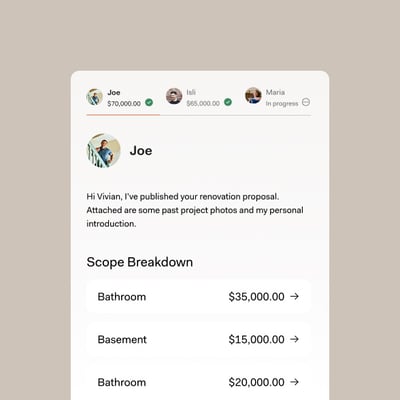
Compare Proposals with Ease
One of the biggest shifts in Seattle’s housing landscape has been the rapid expansion of accessory dwelling unit (ADU) regulations. Under Washington State’s HB 1337, garage conversions into ADUs are explicitly allowed—even if the existing garage doesn’t meet current setback or lot coverage requirements. This is a significant change that has opened up conversion possibilities for thousands of Seattle homeowners.
Seattle now allows two ADUs per single-family lot, which can be any combination of attached and detached units. If your garage is detached and has its own entrance, it would be classified as a detached ADU (DADU). If it’s attached to the main house, it would be an attached ADU. Either way, the unit must include a kitchen, bathroom, and sleeping area to qualify as an ADU.
There’s no longer an owner-occupancy requirement in Seattle—meaning you don’t have to live in the main house to rent out the ADU, or vice versa. Off-street parking requirements for ADUs have also been eliminated. ADUs in Seattle can be up to 1,000 square feet (with proposals to increase this to 1,500 square feet), which comfortably fits within the footprint of most two-car garages.
The financial incentive for garage-to-ADU conversions in Seattle is substantial. Rental rates for studio and one-bedroom ADUs in the city currently range from $1,200 to $2,200 per month depending on the neighborhood, condition, and amenities. For homeowners who invest $150,000 to $200,000 in a garage-to-ADU conversion, the rental income can offset a significant portion of the mortgage or provide meaningful supplemental income. Some homeowners are also using ADUs to house family members—aging parents who want to live nearby but independently, or adult children returning to the Seattle area.
Design-wise, the most successful garage-to-ADU conversions in Seattle maximize the available square footage with efficient layouts. Open-concept living and kitchen areas, compact but well-designed bathrooms, and creative storage solutions help a 500- or 600-square-foot unit feel spacious and livable. Vaulted ceilings (if the roof structure allows), large windows, and light color palettes all contribute to a sense of space that belies the actual square footage.
Costs for garage renovations in Seattle vary widely depending on the scope. A basic garage remodel focused on storage, insulation, and cosmetic improvements might run $5,000 to $15,000. A full conversion to habitable living space—including insulation, drywall, flooring, electrical, HVAC, and a bathroom—typically falls in the $40,000 to $80,000 range for a standard two-car garage. A complete ADU conversion with a kitchen, bathroom, and separate utilities can reach $100,000 to $200,000 or more depending on finishes and site conditions.
Seattle’s labor market for skilled trades remains tight, and permitting fees add to the overall cost. SDCI permit fees are based on project value, with roughly 75 percent due when you submit plans and the remainder at pickup. Budget an additional 10 to 15 percent as contingency for surprises behind walls—older Seattle garages frequently reveal outdated wiring, insufficient framing, or moisture damage during demolition.
A garage renovation in Seattle requires a contractor who understands local building codes, the permitting process at SDCI, and the specific moisture and weather challenges of the Pacific Northwest. Finding the right professional can be time-consuming, which is why many homeowners turn to platforms like Block Renovation to connect with vetted Seattle contractors and custom home builders who are matched to their specific project type and location.
Remodel with confidence through Block

Connect to vetted local contractors
We only work with top-tier, thoroughly vetted contractors

Get expert guidance
Our project planners offer expert advice, scope review, and ongoing support as needed
Enjoy peace of mind throughout your renovation
Secure payment system puts you in control and protects your remodel

Renovate confidently with Block
Easily compare quotes from top quality contractors, and get peace of mind with warranty & price protections.
Washington
Home Additions and ADUs in Seattle: Your Ultimate Guide
03.11.2026
.png?width=640&name=u5821215421_A_full-view_modern_bathroom_where_the_shower_wall_1701a353-5767-42e1-888d-4580f573878f_1%20(1).png)
Washington
Seattle Bathroom Remodeling Trends – 10 Design Ideas for 2025
03.10.2026

Washington
Deck Building and Remodeling for Seattle Homes: What to Know
03.10.2026

Washington
Kitchen Remodeling Projects That Add the Most Value in Seattle
03.09.2026

Washington
Building a Custom Home For Your Family in Spokane, WA
03.09.2026