


Bathroom Remodel Guide: Costs, Design Tips, and Local Insights for Boulder

Budget your upcoming Boulder bathroom remodel with help from Block
How we get your estimate
Fill out the form above to either connect with contractors for a personalized quote or estimate your costs with Block's Renovation Studio.
A moody powder room featuring black wallpaper with a gold tree-and-forest design, a dark wood floating vanity with a white vessel sink, and brass fixtures.

In This Article

    Boulder blends foothills beauty with a lively, walkable city feel, and that mix shows up in its housing—from classic streets near Mapleton Hill to newer townhomes around North Boulder. In communities like Table Mesa and Gunbarrel, you see everything from mid-century layouts to contemporary updates. Because so many homes are tuned to outdoor living, bathrooms here often need to work harder for busy households and active lifestyles.

    Investing in a bathroom remodel improves daily comfort in Boulder by modernizing ventilation, storage, and durability for a climate that can swing quickly. It also supports your home’s resale value in a market where buyers and renters pay close attention to finish quality, water efficiency, and how well the layout functions.

    Turn your renovation vision into reality

    Get matched with trusted contractors and start your renovation today!

    Find a Contractor

    Typical costs of bathroom remodeling in Boulder

    Compared to the national average, bathroom remodeling in Boulder often lands on the higher side. Labor costs are elevated, demand for experienced trades is strong, and older homes can hide surprises behind the walls that add work once demolition begins.

    Project scope

    Cost range in Boulder

    Cosmetic bathroom updates

    $6,000–$18,000

    Mid-level bathroom renovations

    $20,000–$45,000

    Major bathroom overhaul

    $50,000–$100,000+

    Cosmetic bathroom updates: These projects typically include paint, new light fixtures, a vanity swap, updated mirrors, and simple hardware changes, and they may include a toilet replacement if plumbing stays put. They generally exclude layout changes, moving plumbing, fully replacing tile showers, or correcting hidden water damage. In Boulder, a common example is replacing a builder-grade vanity with a stock cabinet, adding a basic cultured-marble top, and updating the sconce lighting for warmer, more natural light. To keep budgets lower, you might choose LVP flooring, acrylic shower surrounds, or standard porcelain tile rather than handmade tile or custom stone.

    Mid-level bathroom renovations: These projects usually include a new vanity, new flooring, upgraded lighting, new toilet, and a refreshed shower or tub area without moving major plumbing lines. Many Boulder homeowners at this level also add better ventilation, a new fan/light combo, and improved storage like a recessed medicine cabinet. Costs rise or fall based on tile coverage, the waterproofing system, and whether you’re upgrading to semi-custom cabinetry or sticking to standard sizes.

    Major bathroom overhauls: These projects often involve changing the floor plan, replacing everything down to the studs, and upgrading plumbing and electrical across the space. Cost drivers include moving supply and drain lines, reframing, extensive waterproofing, custom tile work, and higher-end fixtures that can have long lead times. In Boulder, examples include converting a tub alcove into a curbless shower, relocating the toilet for better clearances, or moving a wall to borrow space from a closet. You may also see premium additions like heated floors, a wall-hung toilet carrier, a steam shower generator, or a freestanding tub that requires reinforced subflooring. Because big changes can uncover old venting, undersized electrical, or prior DIY work, a contingency of roughly 10–20% is especially helpful at this scope.

    Danny Wang-Block Renovation copy-Feb-20-2026-09-51-00-0519-PM

    “Rushing the planning phase leads to regrets. When decisions are made under pressure, homeowners often settle for materials and details they don’t actually want.”

    What Boulder residents commonly care about when renovating their bathroom

    Every Boulder bathroom has its own constraints, from plumbing locations to square footage, but certain themes come up repeatedly. Homeowners tend to focus on how the space handles temperature swings, moisture, hard water, and the realities of older construction and strong rental demand.

    Anticipating Boulder’s extreme climate with smart bathroom design

    Boulder’s weather can move quickly from sunny to snowy, and those swings show up in how your bathroom feels day to day. Tile floors can be harsh on winter mornings, colder exterior walls can invite condensation, and wind-driven storms put more pressure on window and wall waterproofing. A climate-aware plan reduces maintenance headaches and improves comfort.

    • Prioritize airtight, quiet ventilation. A properly sized, low-sone fan helps clear shower moisture fast in all seasons, and venting directly outdoors (not into an attic or soffit cavity) reduces condensation in cold snaps.
    • Choose floor comfort upgrades strategically. Electric radiant floor heat under tile or stone can make snow-day mornings in Boulder much more comfortable; pairing it with a programmable or smart thermostat keeps energy use in check.
    • Use temperature-stable, low-movement materials. Porcelain tile, cement board, and quality grout systems tolerate thermal expansion and contraction better than some natural stones or cheaper substrates, reducing cracking over time.
    • Detail windows and exterior-wall showers carefully. If your shower backs an exterior wall, ask your contractor to review insulation, air sealing, and waterproofing so cold spots don’t lead to hidden condensation and long-term damage.

    Budgeting for older homes’ bathroom needs

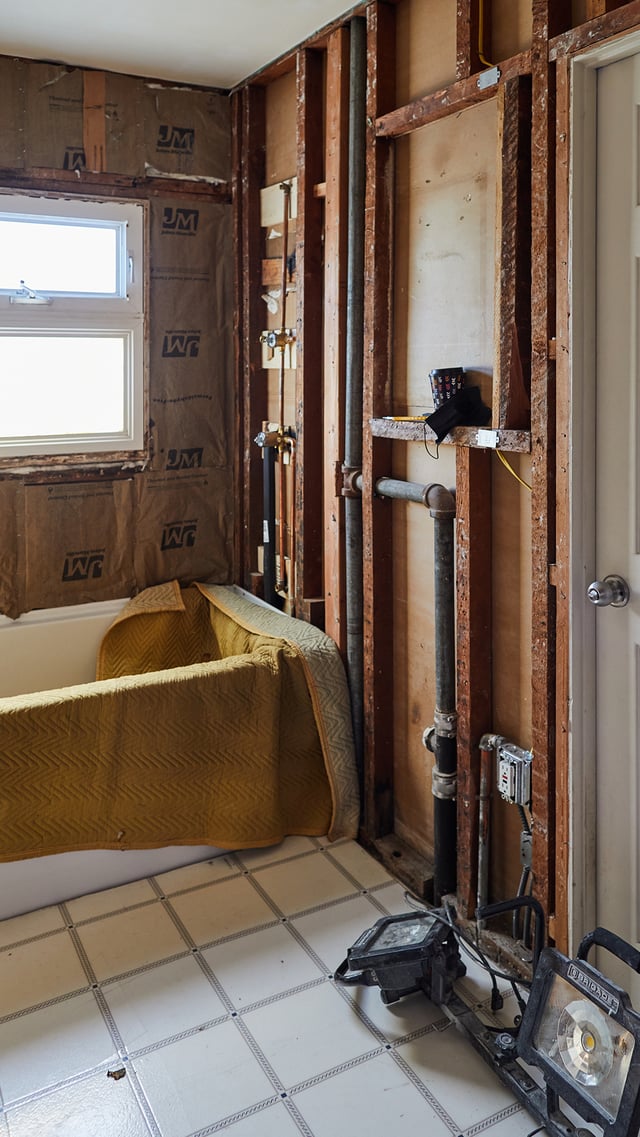
    Many Boulder neighborhoods, like Mapleton Hill and Whittier, have bathrooms tucked into older structures that were never designed for modern plumbing, electrical, or venting. Once tile and plaster come down, contractors often uncover outdated wiring, galvanized pipes, or framing that needs shoring before new finishes go up.

    • Expect the possibility of hidden water damage. Older tub and shower surrounds often hide rot at subfloors or studs, which adds demolition and carpentry but protects your new tile and finishes from early failure.
    • Plan for plumbing updates while walls are open. Replacing old galvanized or corroded lines with modern materials during a remodel improves water pressure and reduces the risk of future leaks inside finished walls.
    • Bring electrical up to current code. Upgrading to GFCI or GFCI/AFCI protection, adding dedicated bathroom circuits, and improving lighting layouts make the space safer and more functional for the long term.
    • Address out-of-level or bouncy floors. Shimming, adding underlayment, or reinforcing joists may be needed to create a solid base for tile and prevent cracked grout in Boulder’s older homes.
    • Rework improper or missing venting. Many older baths have fans that vent to attics or not at all; correcting this during a remodel avoids moisture problems that are far more expensive to fix later.

    Making the most of smaller bathroom footprints

    Closer to central Boulder, homes and condos often have compact bathrooms. That doesn’t automatically mean you need an addition. Careful layout and smart storage can make a small room feel more open and easier to navigate.

    • Wall-hung or furniture-style vanities with open toe-kicks
    • Pocket doors or out-swing doors where code allows safe egress
    • Large-format, light-colored porcelain tile to reduce grout lines
    • Recessed medicine cabinets set between studs for extra storage
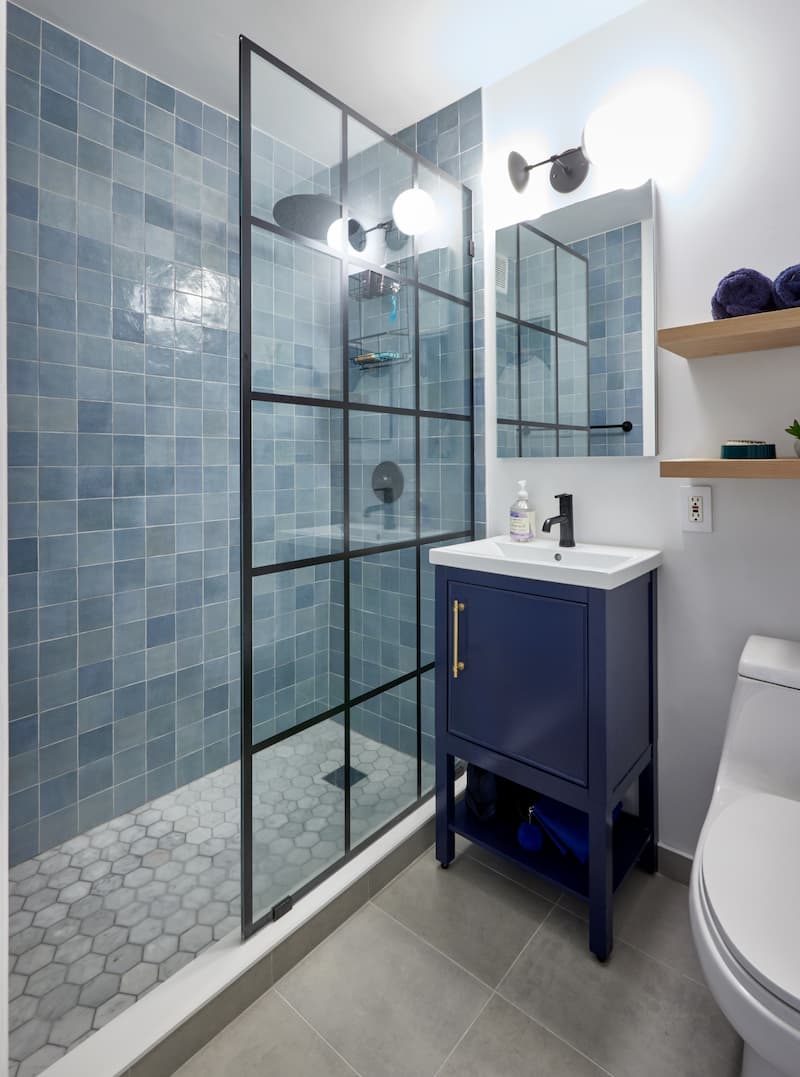
    • Frameless shower glass instead of a curtain or heavy framed enclosure
    • Layered lighting: vanity lighting, general ceiling light, and a shower-rated fixture

    Remodeling your Boulder bathroom to intuitively limit water waste

    Because Boulder plans around drought cycles and seasonal water constraints, water efficiency is more than a bonus feature. Building conservation into your fixtures and layout helps reduce bills and aligns with local expectations.

    • Install WaterSense-labeled toilets with strong performance. Modern models use less water per flush while still clearing the bowl effectively, which matters for both comfort and utility bills.
    • Choose low-flow showerheads that preserve good pressure. Air-injection or pressure-compensating technology can keep showers pleasant even at lower gallons per minute.
    • Add a thermostatic mixing valve in upgraded showers. These valves reach and hold your preferred temperature faster, so you waste less water waiting for the mix to feel right.
    • Use faucet aerators sized for bathroom use. Lower-flow aerators at sinks cut water use for handwashing and toothbrushing without feeling stingy.
    • Consider leak-detection shutoffs or smart monitors. Monitoring systems can alert you to slow leaks behind walls or under vanities before they cause structural damage and water waste.

    Renovating bathrooms for renters – smart design tips

    With a large renter population and frequent turnovers around the University of Colorado, Boulder landlords see a lot of bathroom wear. Choosing durable, easy-to-clean finishes directly affects how much work and cost you face between tenants and how appealing your listing looks online.

    • Use porcelain tile flooring for durability. Porcelain resists scratching and moisture better than many laminates or softer tiles and stands up well to frequent cleanings.
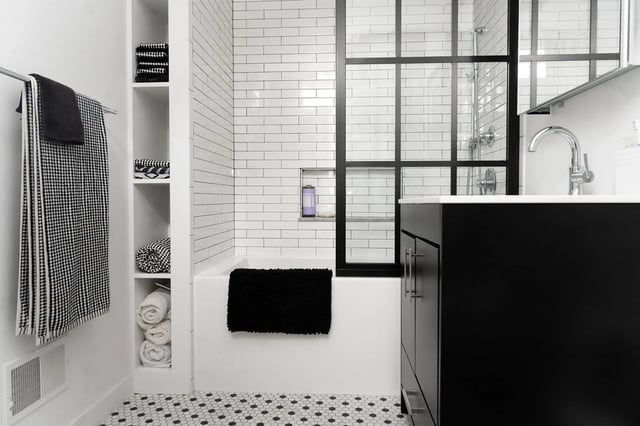
    • Choose simple, broadly appealing shower surrounds. Classic white subway tile or large-format panels look clean in listing photos and are less likely to put off a potential renter than highly specific patterns.
    • Install a quartz or solid-surface vanity top. These resist staining and light abuse better than laminate, and you won’t need to reseal them like some natural stones.
    • Specify a quiet exhaust fan with an automatic timer. Autotimer fans help control moisture without relying on tenant habits, reducing mold complaints and repainting frequency.
    • Pick satin or brushed hardware finishes. These finishes hide fingerprints and water spots, making a basic bathroom still photograph well after everyday use.
    • Add practical storage. Recessed medicine cabinets, shelving, and sturdy towel hooks encourage tenants to store items off countertops, which helps the room feel tidier and reduces damage from clutter.

    Renovate with confidence every step of the way

    Step 1: Personalize Your Renovation Plan

    Step 2: Receive Quotes from Trusted Contractors

    Step 3: Let Us Handle the Project Details
    Get Started

    Finding inspiration for your Boulder remodel in your home’s architectural roots

    Boulder’s mix of Craftsman bungalows, mid-century ranches, Victorian homes, and contemporary foothills properties gives you a rich set of cues for your bathroom design. Aligning your remodel with your home’s era—while still meeting modern needs—usually creates a more coherent, comfortable result.

    Look at your existing trim, door profiles, window proportions, and rooflines. These details point you toward fixtures, tile shapes, and colors that will feel like they belong, even if the bathroom itself is newly rebuilt.

    Ideas for Craftsman bathrooms in Boulder

    Craftsman homes often feature stained woodwork, built-ins, and a solid, handcrafted sensibility. Bathrooms are sometimes modest in size, so the goal is usually to respect that character while improving storage, light, and moisture resistance.

    • Use simple ceramic field tile with a restrained accent. Subway or square tile with a narrow border echoes Craftsman simplicity without overwhelming a small room.
    • Choose deeper-toned metals that pair with wood. Oil-rubbed bronze or aged brass coordinates well with original doors and trim and suits the style better than very shiny finishes.
    • Add a furniture-style or inset vanity. Cabinetry with legs or inset doors mirrors the built-in feel elsewhere in the house and can hide modern storage inside a classic exterior.
    • Favor warm, diffused lighting. Schoolhouse-style or lantern-inspired fixtures provide soft illumination that flatters wood tones and tile.
    • Protect original trim with moisture-smart paint. If you have wood windows or casing in the bathroom, use high-quality primers and enamel paints that handle condensation well.

    Ideas for mid-century ranch bathrooms in Boulder

    Mid-century ranch homes usually have straightforward, horizontal lines and practical layouts. Bathrooms may already have a tub/shower combo and a long vanity but lack storage or good lighting.

    • Lean into flat-front cabinetry. Slab cabinet fronts with simple pulls feel period-consistent and keep the room looking clean and uncluttered.
    • Introduce geometric tile patterns in measured doses. Rectangular or hex tile in soft neutrals or muted colors nods to mid-century design without feeling like a theme room.
    • Widen the mirror where possible. A longer mirror above the vanity stretches the room visually and supports multiple users in a busy household.
    • Upgrade to bright, even LED lighting. Linear vanity lights or simple sconces on either side of the mirror improve grooming light while staying true to the home’s character.
    • Choose durable, unfussy materials. Porcelain tile and solid-surface counters suit the practical nature of these homes and stand up to family use.

    Ideas for Victorian bathrooms in Boulder

    Victorian-era homes often bring taller ceilings, detailed trim, and more ornate profiles. Bathrooms may occupy carved-out spaces with angles, chimney chases, or older windows that you want to preserve.

    • Use mosaic or patterned floor tile. Small hex, penny rounds, or classic patterns can echo the age of the home while still accommodating modern waterproofing systems.
    • Consider more traditional plumbing silhouettes. High-tank or traditional-style toilets and pedestal or console sinks can feel appropriate in visible baths, especially on the main floor.
    • Stage lighting rather than relying on a single fixture. Combining a ceiling fixture with wall sconces near the mirror gives layered light that suits the scale of taller rooms.
    • Pair framed mirrors with detailed molding. Mirrors that echo your window or door trim profiles help tie the bathroom to the rest of the house.
    • Hide modern systems behind classic finishes. You can keep period-appropriate tile and trim while using modern vent fans, waterproofing membranes, and valves behind the scenes.

    Ideas for contemporary foothills bathrooms in Boulder

    Contemporary homes in the foothills tend to emphasize open views, clean lines, and natural materials. Bathrooms often feel more spacious, with opportunities for generous showers, freestanding tubs, and larger windows.

    • Use large-format porcelain or slab-look tile. Bigger tiles minimize grout lines, keep the eye moving, and let mountain light bounce around the room without visual clutter.
    • Consider linear drains and curbless entries. A single continuous floor plane from bathroom to shower works well with the simple geometry common in these homes and improves accessibility.
    • Specify minimal-profile fixtures. Simple, well-crafted faucets and shower sets in matte black, brushed nickel, or stainless complement the architecture instead of drawing attention away from it.
    • Plan layered, dimmable lighting. Recessed fixtures, integrated shower lights, and subtle vanity illumination help your bathroom work for bright mornings and low-key evenings.
    • Balance privacy with views. Frosted glass, clerestory windows, or carefully placed openings can protect privacy while still capturing foothills light and scenery.

    Visualize and budget your bathroom remodel with Renovation Studio

    Renovation Studio helps you plan a remodel by letting you visualize a designed space before construction begins. You can work through a structured set of design choices, review how they look together, and adjust based on your priorities.

    The platform supports budgeting by organizing your selections into a clear plan that connects scope to expected costs. For Boulder homeowners, that means you can test different tile coverage, fixture levels, or layout changes and understand how each direction could affect your overall budget. Renovation Studio keeps your plan, visuals, and cost expectations aligned in one place so you enter construction with fewer surprises.

    Bring Your Dream Bathroom to Life

    Explore stunning design ideas, materials, and color schemes tailored to your space—no guesswork, just inspiration.
    Start Designing

    Ready to build? Let Block help you find top-rated contractors in Boulder

    Block connects homeowners with vetted contractors based on project needs, so you spend less time cold-calling and more time reviewing options that already match your scope and general budget.

    Once you’re ready to move ahead, Block Protections and structured payments help reduce common remodeling risks by adding clarity to how milestones and payments line up. That additional structure can make it easier to stay confident through demolition, inspections, and finish work while your Boulder bathroom comes together.

    Remodel with confidence through Block

    Happy contractor doing an interview

    Connect to vetted local contractors

    We only work with top-tier, thoroughly vetted contractors

    Couple planning their renovation around the Block dashboard

    Get expert guidance

    Our project planners offer expert advice, scope review, and ongoing support as needed

    Familty enjoying coffee in their newly renovated modern ktchen

    Enjoy peace of mind throughout your renovation

    Secure payment system puts you in control and protects your remodel

    Get Started

    Frequently asked questions

    Generally, what kind of bathroom features do Boulder homebuyers value?

    Buyers in Boulder tend to gravitate toward bright, clean finishes; strong ventilation; and durable materials that feel current without being overly trendy. Water-efficient fixtures with good real-world performance, heated floors in primary baths, thoughtful storage, and showers with quality tile often stand out during showings.

    How long does a typical bathroom remodel take in Boulder?

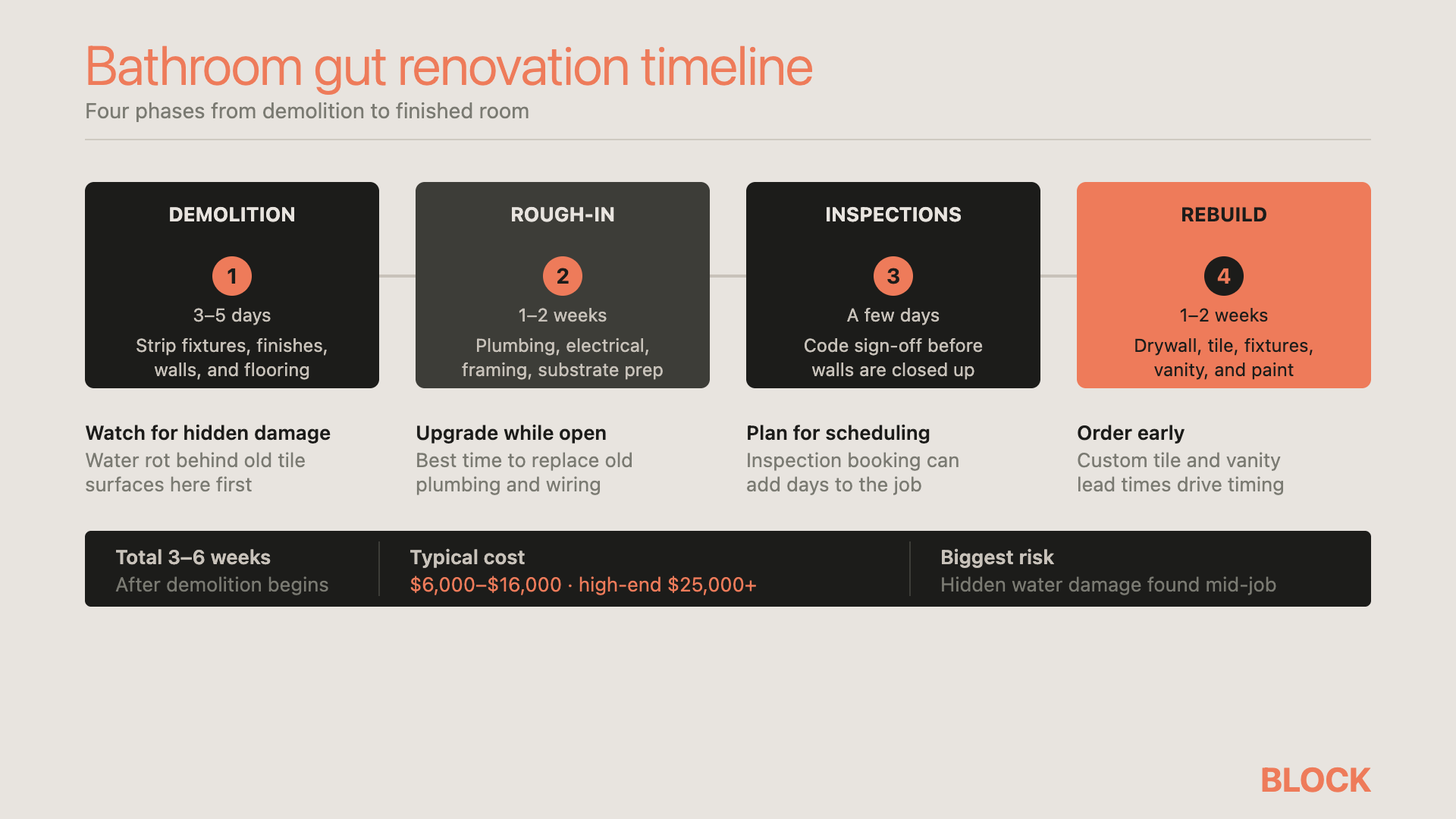
    A cosmetic update might involve about 1–2 weeks of active work once everything is on site. Mid-level bathroom remodels in Boulder often run 3–6 weeks, depending on tile scope, inspections, and lead times. Major overhauls that include layout changes, structural work, or extensive repairs frequently take 6–10+ weeks from demolition through final punch list.

    What is the most expensive part of bathroom renovations in Boulder?

    Labor-intensive wet-area work—such as building and waterproofing tile showers, moving plumbing, or correcting structural issues—usually commands the largest portion of the budget. In older Boulder homes, costs also rise when you need to replace subfloors, update electrical systems, or swap outdated plumbing while the walls are open.