


Garage
Denver, CO Garage Renovation: Costs, Tips & Local Styles
04.08.2026
In This Article
Denver homeowners have a particular relationship with their garages. Winters on the Front Range bring meaningful snow accumulation, road salt that corrodes everything it touches, and the practical reality that a well-functioning garage is as much about protecting your car from the elements as it is about storage or utility. At the same time, Denver's outdoor culture means garages often serve as staging grounds for ski gear, mountain bikes, camping equipment, and trail running supplies—which creates a genuine need for smart organization alongside structural durability. The city's housing stock is wonderfully layered, from Victorian and Craftsman-era homes in Capitol Hill, the Highlands, and Washington Park to the postwar ranch homes of Harvey Park and Virginia Village to the contemporary builds of Central Park and Stapleton. Each architectural era presents its own renovation context, and Denver's active development environment means permitting requirements and zoning allowances for ADUs and garage conversions are more evolved here than in many comparable cities.
Design a Home That’s Uniquely Yours
Block can help you achieve your renovation goals and bring your dream remodel to life with price assurance and expert support.
Get Started
Denver's construction market has been in sustained high demand for over a decade, which has driven labor costs above national averages and tightened contractor availability. Garage renovation costs in Denver are shaped by the city's climate demands, the high frequency of older structures requiring significant preparation work, and a permitting environment that is thorough but navigable with an experienced contractor.
In Denver, the combination of snow, road salt, and freeze-thaw cycling makes the garage floor one of the most demanding surfaces in the home. Heated garage floor systems—either electric radiant mat installations or hydronic systems tied to a boiler—are a popular upgrade in Denver, particularly among homeowners who use the garage as a workshop or who want to keep the floor clear of ice melt puddles in winter. An electric radiant mat system for a two-car garage runs $2,000 to $5,000 installed, while a hydronic system costs $6,000 to $15,000 depending on whether it can tie into an existing boiler. Even without radiant heat, applying a penetrating concrete sealer specifically formulated for freeze-thaw resistance runs $300 to $700 for a two-car garage and dramatically extends slab life in Denver's climate. The trade-off to understand is that radiant electric systems add meaningfully to monthly utility costs during the winter months; calculating operating cost against the convenience benefit is an honest part of the decision.
An uninsulated Denver garage in January is an exercise in futility if you want to use it as anything beyond vehicle storage. Wall insulation using closed-cell spray foam or rigid foam board runs $1,200 to $3,500 for a standard two-car garage, with spray foam commanding a premium but providing both thermal resistance and air-sealing against Denver's cold winds. Ceiling insulation, often overlooked, is equally important given that heat rises and a finished living space above a garage loses significant heat through an uninsulated ceiling; R-30 is the sensible target for Denver's climate zone. Garage door insulation panels—a lower-cost retrofit for existing doors—run $150 to $500 and provide meaningful improvement over an uninsulated door for homeowners who aren't ready to replace the door itself. The most consequential weatherization investment for a Denver garage is addressing air infiltration at the bottom seal, side jambs, and the shared wall with the house, since cold air infiltration accounts for more energy loss than conduction through walls alone.
Denver's altitude, temperature range, and occasional high-wind events place meaningful demands on garage doors. A standard insulated steel door for a two-car garage runs $1,500 to $4,000 installed in the Denver market, with carriage-house wood or composite doors popular on Craftsman, Victorian, and Denver Square homes running $3,500 to $8,000. The key specification for Denver is selecting a door with continuous weatherstripping that is rated for low-temperature performance, as standard vinyl weatherstripping can crack and stiffen significantly below freezing, leaving gaps that allow cold air infiltration and moisture intrusion. In Denver's older neighborhoods where alley-access detached garages are the norm, door replacement requires measuring carefully—historic garages often have non-standard opening widths that require custom fabrication, which adds cost and lead time.
“Heated floors are often cut from budgets—and frequently regretted once winter arrives.”
Danny Wang, Block Renovation Expert
Denver's garages reflect the city's layered architectural history, from the alley-accessed detached structures that define its historic walkable neighborhoods to the attached multi-car garages of its newer eastern and southern suburbs. Each type comes with its own renovation calculus.
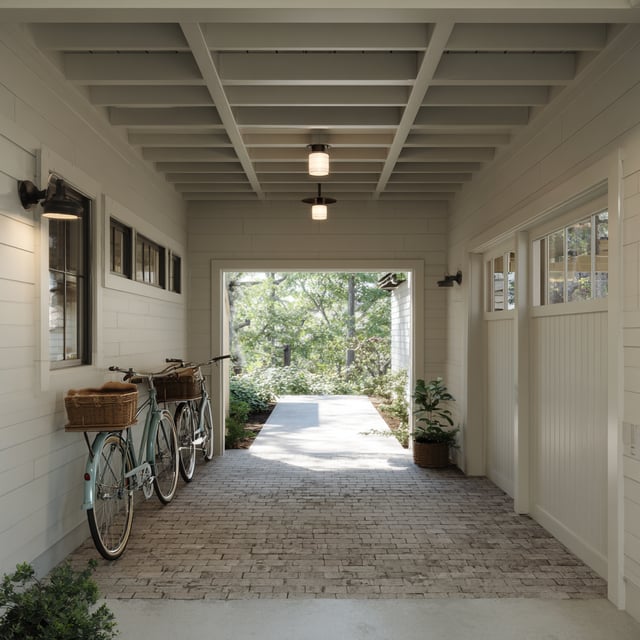
The alley-access detached garage is the defining garage type of Denver's most beloved historic neighborhoods: the Highlands, West Highlands, Berkeley, Sunnyside, Washington Park, and Congress Park, among others. Nearly every bungalow and Denver Square on a standard 25- to 33-foot lot was built with a small detached garage at the rear of the property accessed from the alley, typically a single-car structure of 12 to 16 feet wide. These garages are wood-framed, often built without insulation or electrical service, and frequently in need of structural attention after a century or more of Denver winters.
Renovation complexity here is significant. Wood-framed sills and base plates are frequently compromised by moisture in Denver's older detached garages, and a thorough structural inspection before investing in finishes is essential. The alley-access configuration is a genuine asset for ADU conversion, and Denver's updated zoning code has made detached garage ADUs considerably more feasible than in prior years, though the permitting process is involved and requires specific fire separation, egress, and utility connection work. For homeowners who want to stay at the garage level—insulation, electrical, flooring—the character of these structures is genuinely worth preserving, and materials that reference the original construction (wood trim details, natural finishes) tend to read well in these historically sensitive neighborhoods.
Denver's postwar suburban expansion between the 1940s and 1970s produced an enormous number of ranch-style homes across neighborhoods like Harvey Park, Virginia Village, Barnum, Wellshire, and Athmar Park. These homes feature attached garages—single-car originally on smaller footprints, often expanded to two-car on larger lots—with the garage door as a prominent feature of the street-facing facade. They are built on concrete slab foundations, which generally means the garage floor is level, accessible, and a good candidate for coating.
The renovation priority in these structures is typically insulation and weatherization of the shared wall and ceiling, floor coating, and door replacement. Denver's mid-century ranch garages are often still operating on their original doors, which provide minimal insulation and deteriorating weatherstripping. An insulated replacement door with a low-temperature seal package is the single highest-impact upgrade for these garages in terms of energy performance. Slab condition varies significantly across this era of construction; some original Denver slabs from the 1950s have held up remarkably well while others have cracked from decades of freeze-thaw cycling, so a slab assessment before committing to floor coatings is important.
The newer suburban areas east and south of Denver—Stapleton/Central Park, Lowry, Highlands Ranch, and Littleton—feature contemporary homes with large attached garages that are prominently placed on the street-facing facade. Two-car configurations are standard; three-car tandem garages are common in larger homes. These structures are built with drywall-finished interiors, pre-wired electrical, insulated doors as standard, and engineered slab construction that holds up well to Denver's thermal cycling. Ceiling heights of 9 to 10 feet are typical.
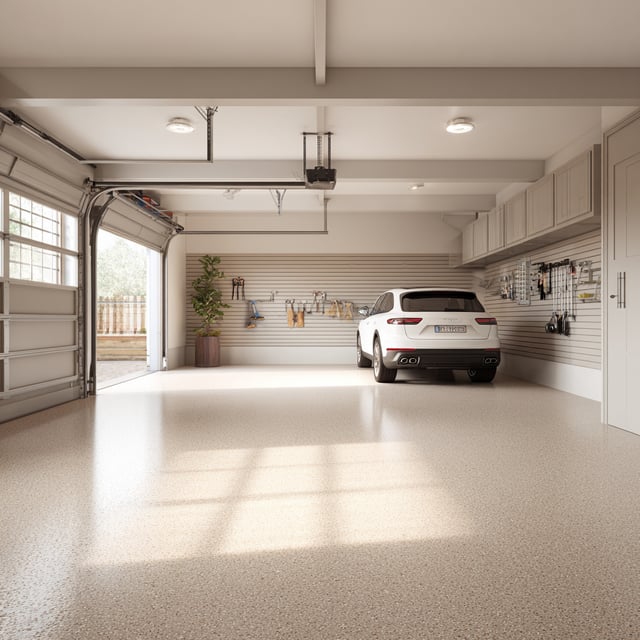
The renovation conversation in these spaces is largely about optimization: epoxy or polyaspartic flooring to protect the slab from road salt and moisture brought in by vehicles, overhead storage systems to maximize the volume of the space, cabinet and wall storage for outdoor gear, and EV charging infrastructure for a metro area with one of the highest EV ownership rates in the country. HOA requirements in these communities are active and exterior changes require approval, but interior upgrades almost always fall outside HOA jurisdiction in most governing documents.
Transparent Pricing You Can Trust
Denver's ADU-friendly zoning updates and the value placed on additional living space and storage in the city's tight real estate market have made new garage construction a more common project than in many comparable cities. Here is what to plan for if you are considering building from scratch.
These Block Renovation guides offer useful context for Denver homeowners at every stage of a garage renovation, from budgeting to structural decisions.
Block Renovation connects Denver homeowners with thoroughly vetted local contractors handpicked for the project's scope and style. Every contractor undergoes background checks, insurance verification, and reference reviews through a rigorous multi-step vetting process. A dedicated Project Planner provides expert guidance through proposals, timelines, and contractor selection at no cost.
Block manages payments through a secure, progress-based system ensuring contractors are paid as work gets done. Every project scope is reviewed by renovation experts and AI-enabled tools to spot gaps and minimize change orders. Every contractor in the Block network provides a workmanship warranty.
Remodel with confidence through Block

Connect to vetted local contractors
We only work with top-tier, thoroughly vetted contractors

Get expert guidance
Our project planners offer expert advice, scope review, and ongoing support as needed

Enjoy peace of mind throughout your renovation
Secure payment system puts you in control and protects your remodel

Written by Cheyenne Howard
Cheyenne Howard
Does Denver's climate impact garage design or materials in any way?
What's the easiest way to save on a garage remodel?
How long does a garage renovation typically take in Denver?
Renovate confidently with Block
Easily compare quotes from top quality contractors, and get peace of mind with warranty & price protections.
Thousands of homeowners have renovated with Block
4.5 Stars (100+)
4.7 Stars (100+)
4.5 Stars (75+)
Garage
Denver, CO Garage Renovation: Costs, Tips & Local Styles
04.08.2026
Garage
Garage Renovation in Phoenix, AZ: Costs, Tips & Local Styles
04.07.2026
Garage
Dallas, TX Garage Renovation: Costs, Tips & Local Styles
04.02.2026
Garage
Garage Renovation in Tampa, FL: Costs, Tips & Local Styles
04.01.2026
Garage
Converting a 2-Car Garage Into an ADU: A Complete Guide for Homeowners
03.27.2026
Renovate confidently