





Ceilings
Tongue and Groove Plank Ceiling - Inspiration for Modern Homes
03.17.2026
03.05.2026


In This Article
Corrugated metal ceiling panels have quietly moved from barns and workshops into some of the most beautifully designed interiors around. Once considered strictly utilitarian, this material is now showing up in luxury lofts, farmhouse great rooms, and modern bedrooms—bringing texture, dimension, and character in a way that flat drywall simply can't match.
Whether you're drawn to the industrial edge of raw galvanized tin or the warmth of a rust-toned patina, a corrugated metal ceiling offers a surprisingly versatile design element. Metal ceiling panels catch and reflect light in interesting ways, add visual rhythm through their repeating ridges, and pair well with everything from reclaimed wood beams to polished marble floors. And because corrugated tin ceiling panels are relatively affordable compared to other specialty ceiling treatments, they're an accessible way to make a strong design statement.
If you've been curious about corrugated metal ceiling ideas for your own home, this guide walks through the advantages, shares interior corrugated metal ceiling ideas inspired by real spaces, and covers a few potential downsides worth knowing about before you commit.
Design a Home That’s Uniquely Yours
Block can help you achieve your renovation goals and bring your dream remodel to life with price assurance and expert support.
Get Started
Now that you understand the practical benefits, here are some of the most compelling interior corrugated metal ceiling ideas we've seen—along with tips for bringing each look into your own home.
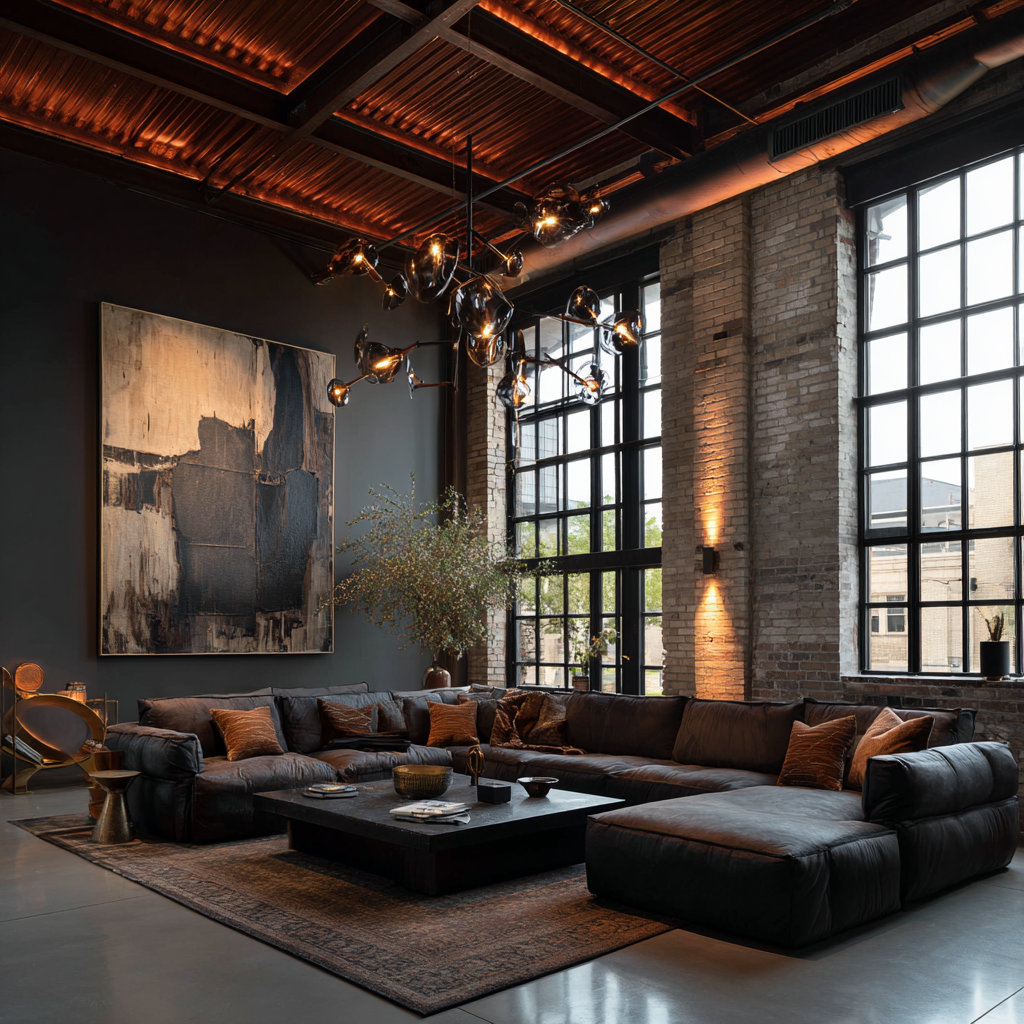
If the idea of a corrugated metal ceiling conjures images of cold, industrial spaces, consider the warmth that a rust-toned finish can bring. Corrugated metal panels with an oxidized or rusted patina introduce rich amber, copper, and burnt sienna tones overhead—creating a canopy of warmth that makes a room feel grounded and inviting.
.png?width=1024&height=1024&name=u5821215421_Open_dining_room_with_double-height_ceilings_feat_7968f476-b8ac-40e2-9abc-a3171ed3a23b_3%20(1).png)
This approach works particularly well in dining rooms, living spaces, and bedrooms where you want to create a cocooning atmosphere. Pair rusted corrugated metal ceiling panels with plaster walls, linen upholstery, and natural wood furniture to lean into the earthy, organic quality of the material. The patina also plays beautifully with candlelight and warm-toned fixtures, making evening gatherings feel especially inviting.
Keep in mind that you don't need actual rust to get this look—many manufacturers offer corrugated metal panels with a faux-rust or pre-weathered finish that gives you the visual warmth without the structural concerns of genuine oxidation. If you do want authentic patina, talk to your contractor about proper sealing to prevent flaking.
If you love the texture of a corrugated metal ceiling but want something moodier than the standard silver or galvanized finish, consider painting the panels black or a very dark charcoal. A dark-painted corrugated tin ceiling adds depth, drama, and an enveloping quality to any room—especially smaller spaces where the effect can feel almost cocoon-like.
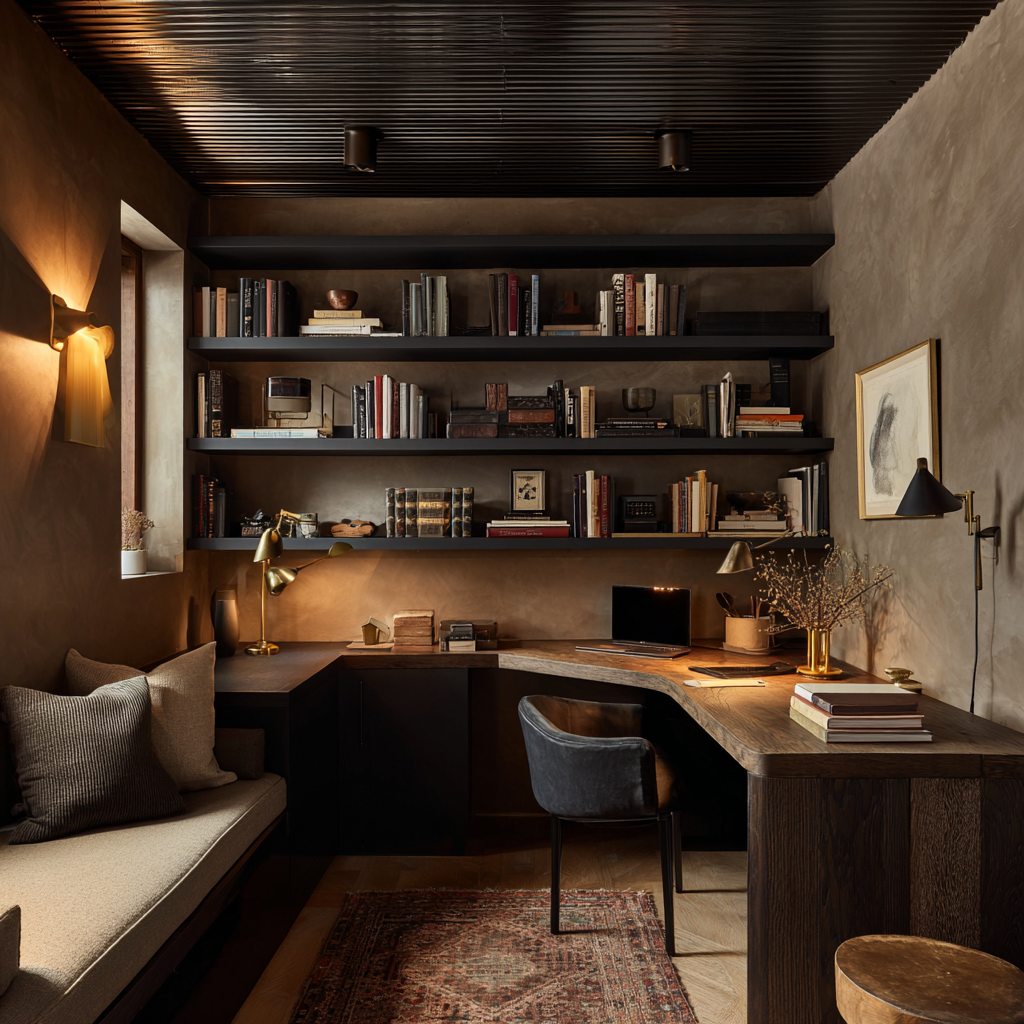
In these home offices, the dark corrugated metal ceiling panels work in harmony with moody wall colors, warm wood desks, and brass lighting to create spaces that feel focused and intimate. The corrugated texture is still visible—you can see the ridges and shadow lines—but the dark color absorbs light rather than reflecting it, which brings the ceiling down visually and makes the room feel cozier.
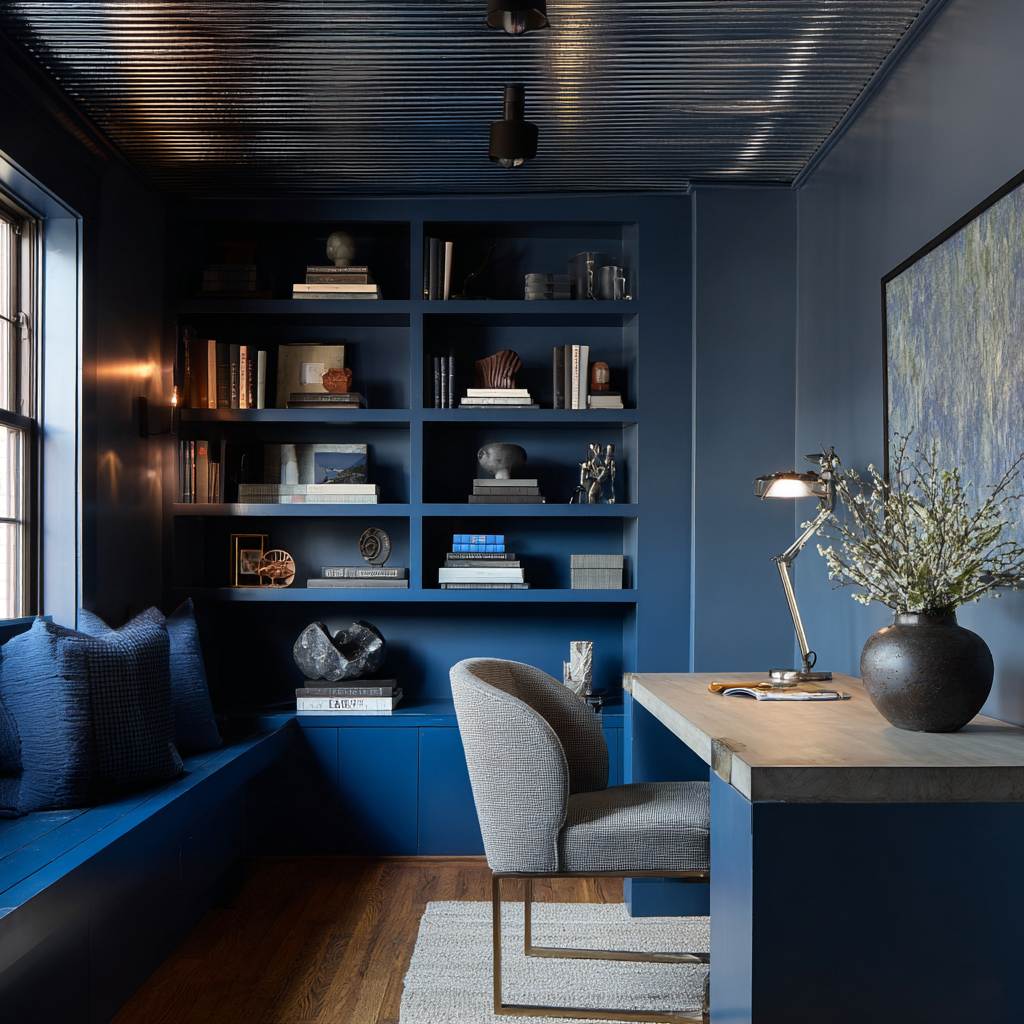
This is one of the most underrated metal ceiling ideas for smaller rooms. While a bright silver corrugated ceiling might feel overwhelming in a compact space, a matte black or dark bronze finish feels deliberate and grounding. Pair it with warm task lighting and natural materials like leather, wool, and aged wood for maximum effect.
Black isn't the only bold option for a painted corrugated metal ceiling. Going with a saturated, nontraditional color—deep navy, forest green, terracotta, even a rich plum—turns the ceiling into the defining design element of the entire room. The corrugated ridges give painted color extra dimension that you'd never get from a flat drywall surface, because light catches each peak and settles into each valley differently, creating subtle tonal variation across the whole ceiling.
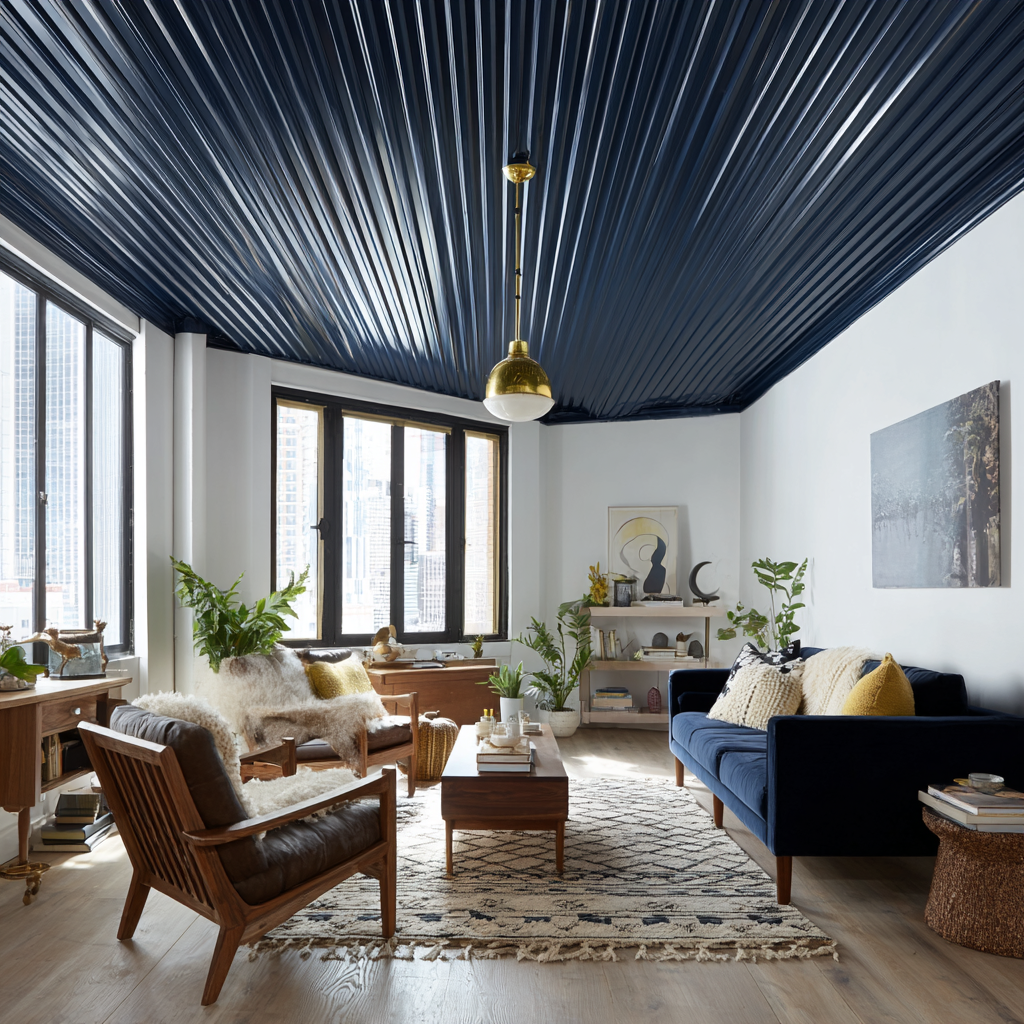
In this living room, corrugated metal ceiling panels painted a rich navy blue set the tone for the entire space. The color ties directly into the velvet sofa below, while warm wood furniture, a patterned rug, and a brass pendant light keep the room from feeling cold or one-note. The navy overhead feels confident and grounding—dramatic without being dark the way black can be.
When choosing a color for your corrugated tin ceiling, consider the size and natural light in the room. Deeper colors work beautifully in well-lit spaces with tall ceilings, where the saturated tone adds depth without making the room feel smaller. In compact rooms, a muted or mid-tone color—slate blue, sage, warm clay—can add personality without closing the space in. A matte or satin finish tends to look more sophisticated on corrugated metal than a high gloss, which can feel overly reflective when paired with the ridged texture.
Rather than treating your corrugated metal ceiling as a separate element from the rest of the room, consider wrapping the material down from the ceiling onto one or more walls. This technique creates a continuous visual flow that makes the metal feel like an architectural feature rather than just a surface treatment.
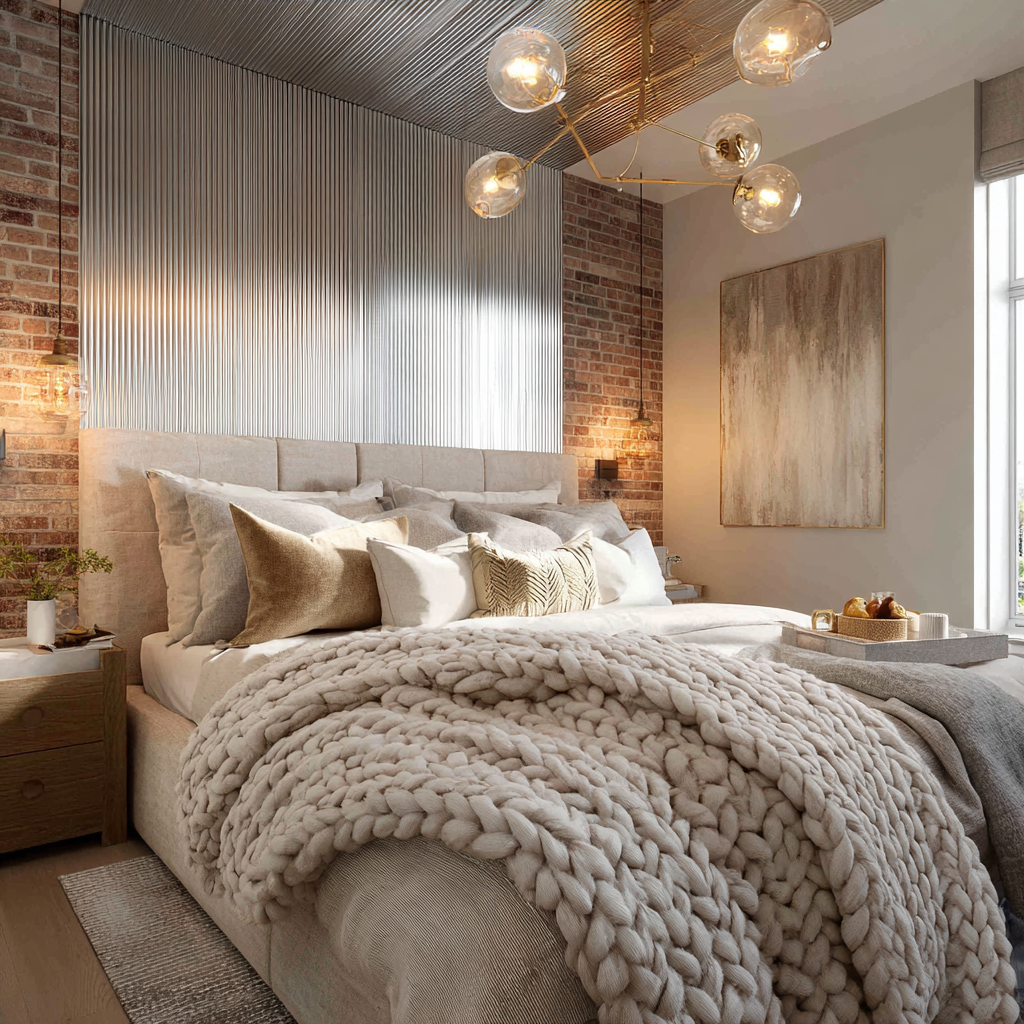
In this bedroom, corrugated metal ceiling panels in a silvery finish extend down the wall behind the bed, framing the headboard and creating a dramatic focal wall. The result is a room that feels intentionally designed from top to bottom. The exposed brick on the adjacent walls adds warmth and contrast, while the gold-toned chandelier softens the industrial edge of the metal.
This approach is particularly effective in bedrooms, where the wall behind the headboard is a natural place for an accent treatment, and in living rooms, where wrapping the metal around a fireplace wall can create a bold, cohesive statement. The key is to let the corrugated panels flow naturally between surfaces so the transition feels like an extension of the architecture rather than an afterthought.
A tray ceiling—where the center section is recessed higher than the perimeter—is already a strong architectural detail on its own. Filling that recessed center with corrugated metal ceiling panels takes it a step further, giving the room a layered, dimensional look that feels both intentional and elevated. The surrounding drywall or trimmed-out border acts as a frame, presenting the corrugated metal as a curated accent rather than a wall-to-wall surface treatment.
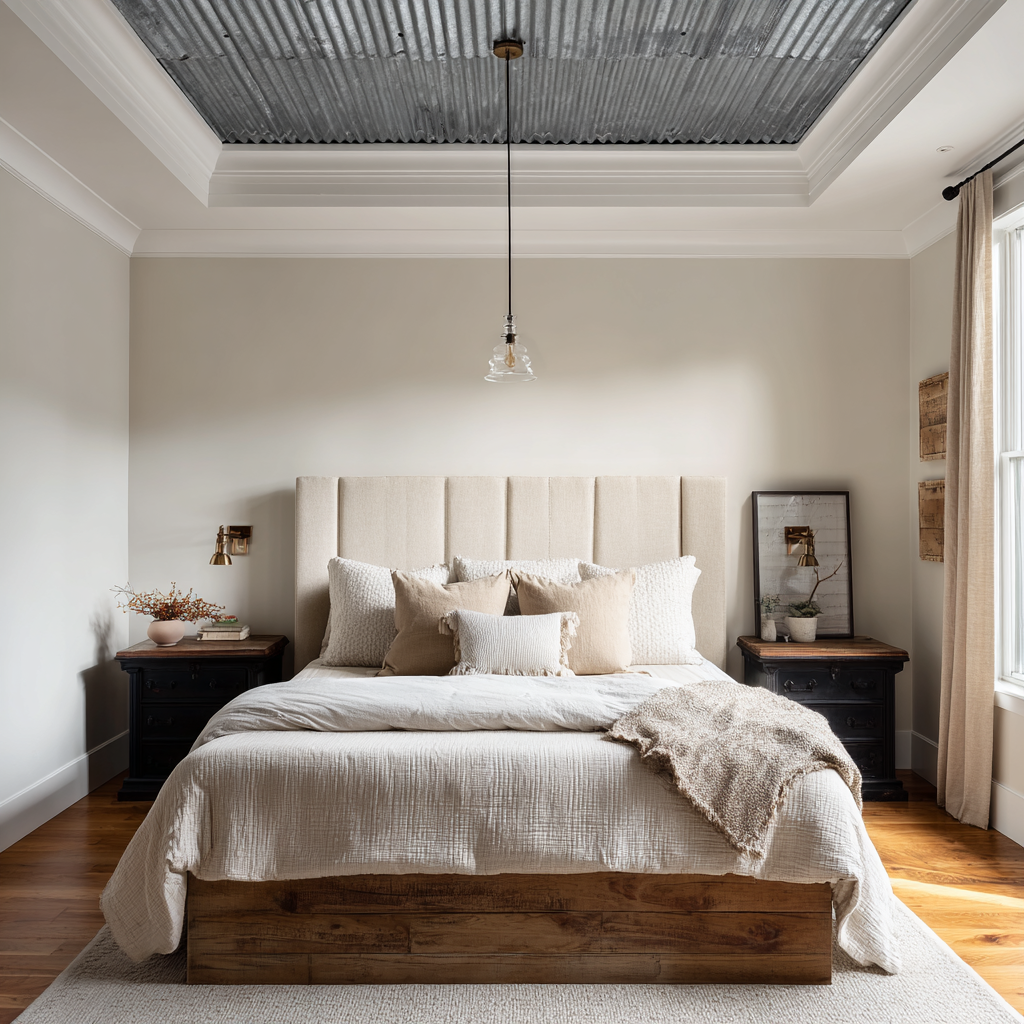
If your home already has a tray ceiling, swapping out the recessed surface for corrugated tin is a relatively straightforward upgrade that delivers a big visual payoff. And if you're building new or opening up a ceiling during a renovation, ask your contractor about creating a tray detail specifically to showcase the metal. It's a smart way to introduce corrugated metal ceiling panels into a room that might feel too polished for full coverage.
One of the most effective corrugated metal ceiling ideas is to lean into contrast. A corrugated tin ceiling is inherently raw and textural—so when you hang an elegant chandelier or statement light fixture against it, the juxtaposition creates a striking tension between rough and refined.
In this grand entry foyer, square metal ceiling panels in a silvery galvanized finish cover the soaring ceiling, while a cascading crystal chandelier becomes the undeniable focal point. The combination works because each element amplifies the other: the metal makes the chandelier feel more glamorous, and the chandelier makes the corrugated metal ceiling feel intentional and curated rather than unfinished.
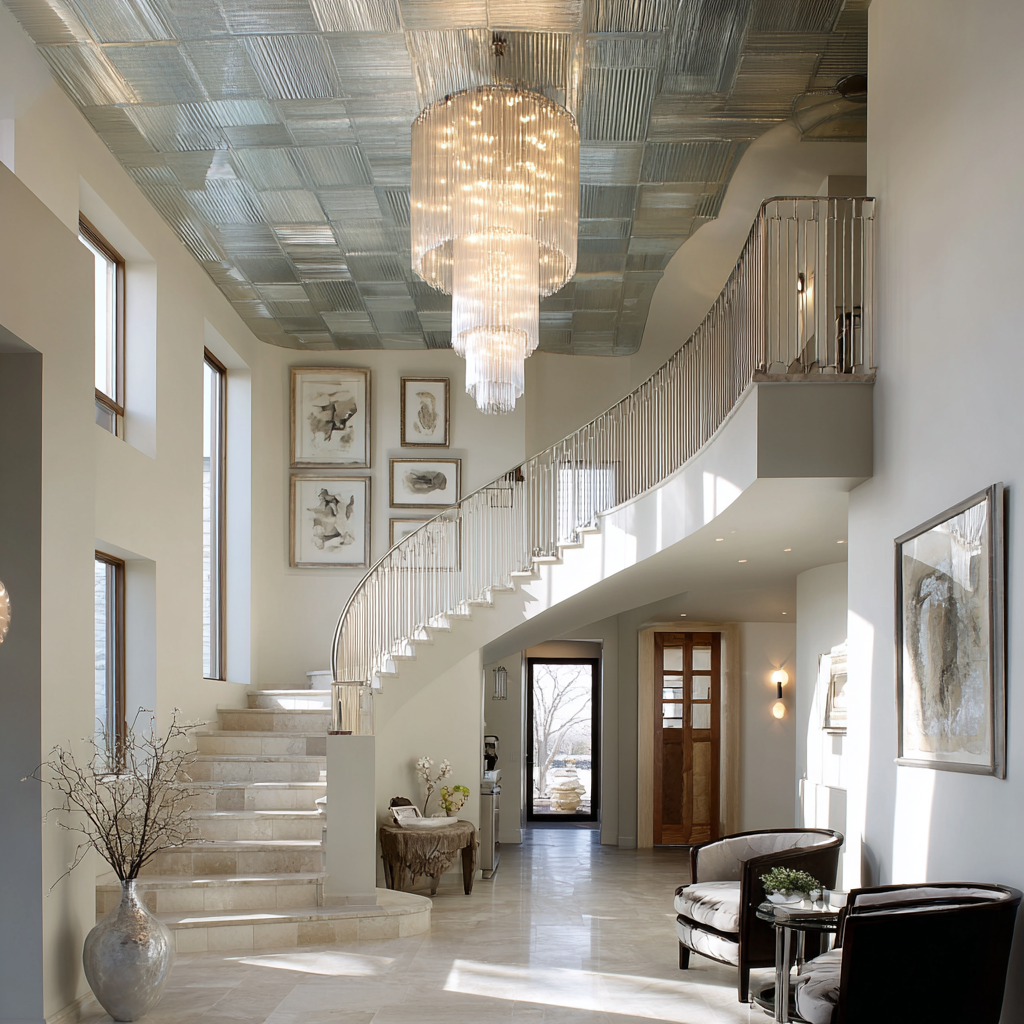
This metal ceiling idea is especially effective in double-height spaces like entryways and great rooms where the ceiling itself becomes a major design surface. Whether you choose a sleek modern pendant, a wrought iron candelabra, or a glittering crystal fixture, the key is to let the contrast between the rough corrugated texture and the refined light fixture tell a story.
Corrugated metal ceiling panels are a natural fit for angled, vaulted, and cathedral ceilings. The linear ridges of the corrugated material follow the slope of the roofline, drawing the eye upward and emphasizing the height and drama of the space. On a flat ceiling, the texture is appealing; on a vaulted ceiling, it becomes truly architectural.
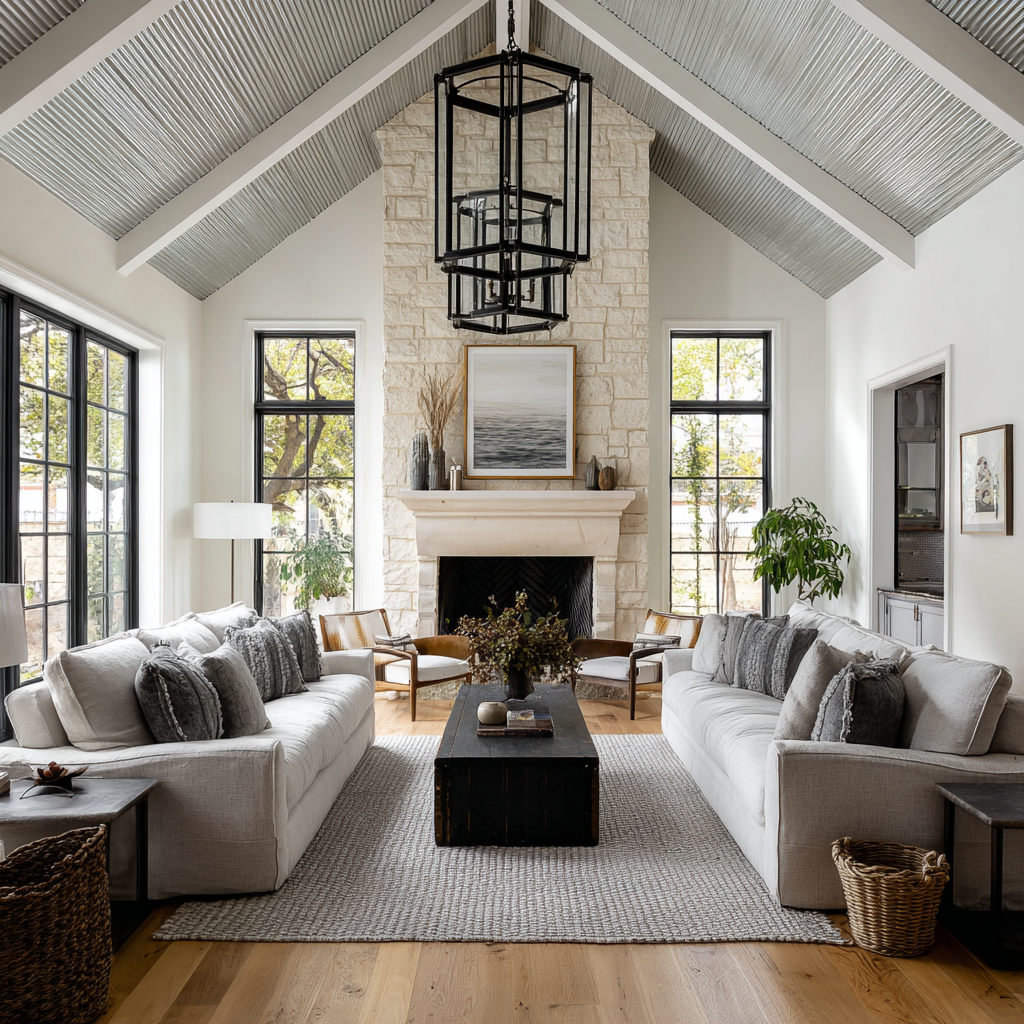
In this great room, corrugated metal ceiling panels in a soft silver tone follow the steep pitch of the vaulted ceiling, with painted white beams creating a grid pattern that adds visual structure. The height of the ceiling becomes the defining feature of the room, and the metal panels amplify that by catching light along every ridge. A large lantern-style pendant hangs at the apex, grounding the soaring space.
If your home has angled ceilings in a loft, attic conversion, or A-frame structure, metal ceiling panels can emphasize the unique geometry rather than fight against it. The material is lightweight enough to install on sloped surfaces without the sagging concerns you might encounter with drywall, and the natural lines of the corrugation complement the angular architecture.
One of the more unexpected corrugated metal ceiling ideas is using the material to give a fresh, modern edge to traditional or farmhouse-style interiors. When paired with classic design elements—shiplap walls, stone fireplaces, linen sofas, natural wood floors—a corrugated metal ceiling introduces just enough industrial grit to keep the space from feeling overly precious or predictable.
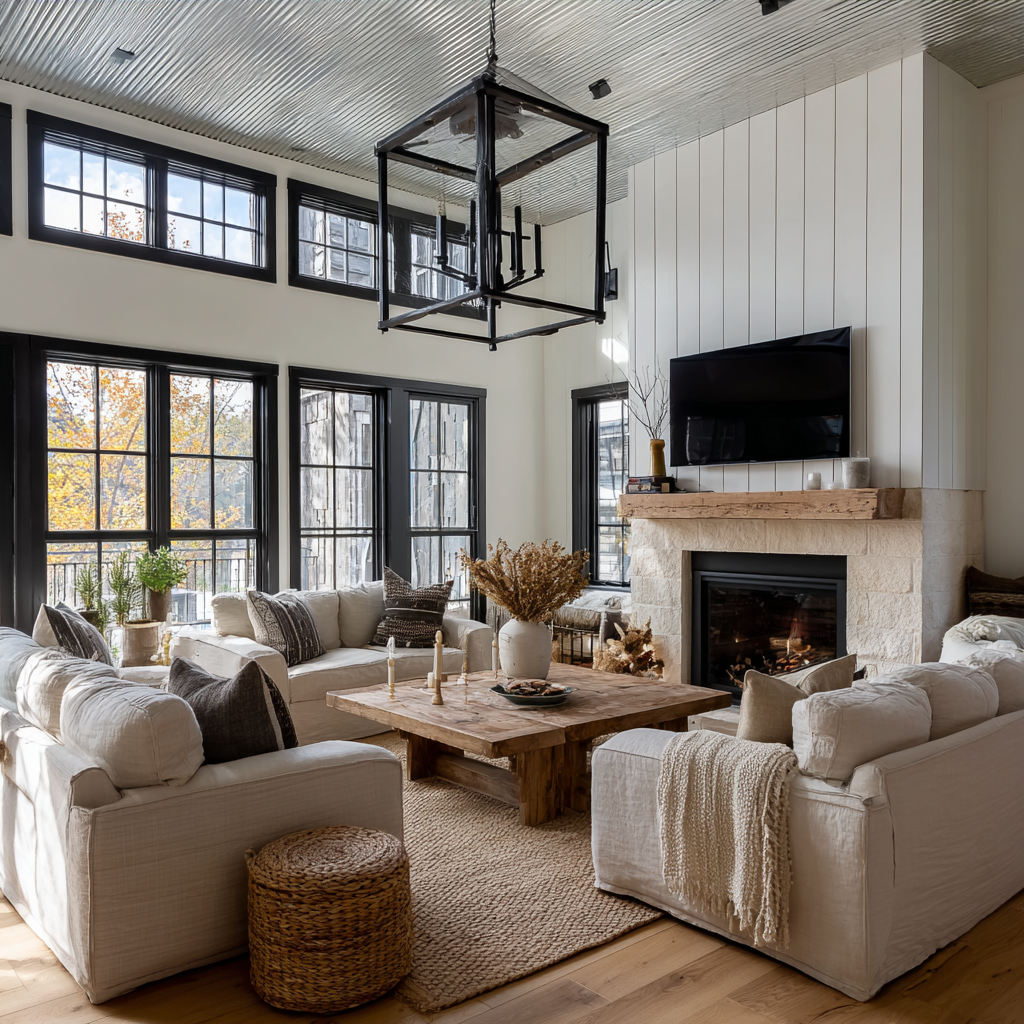
In this farmhouse-inspired great room, the corrugated tin ceiling overhead provides a subtle counterpoint to the shiplap-clad fireplace wall, stone hearth, and linen-covered furniture below. The metal reads as modern and slightly edgy, while everything else in the room feels warm and classic. The result is a space that avoids cliché and feels fresh without trying too hard.
This balance is especially valuable in homes that draw from popular design styles like modern farmhouse or transitional. A corrugated metal ceiling can be the element that keeps a room from tipping into territory that feels too expected. It's a way to honor the warmth and comfort of traditional design while adding a layer of personality that feels distinctly yours.
Of course, corrugated metal ceiling ideas don't always need to play against type. In converted warehouse lofts and industrial-style spaces, a corrugated metal ceiling feels right at home—literally. Exposed brick walls, steel-framed windows, concrete floors, and galvanized metal overhead create a cohesive look that celebrates raw materials and honest construction.
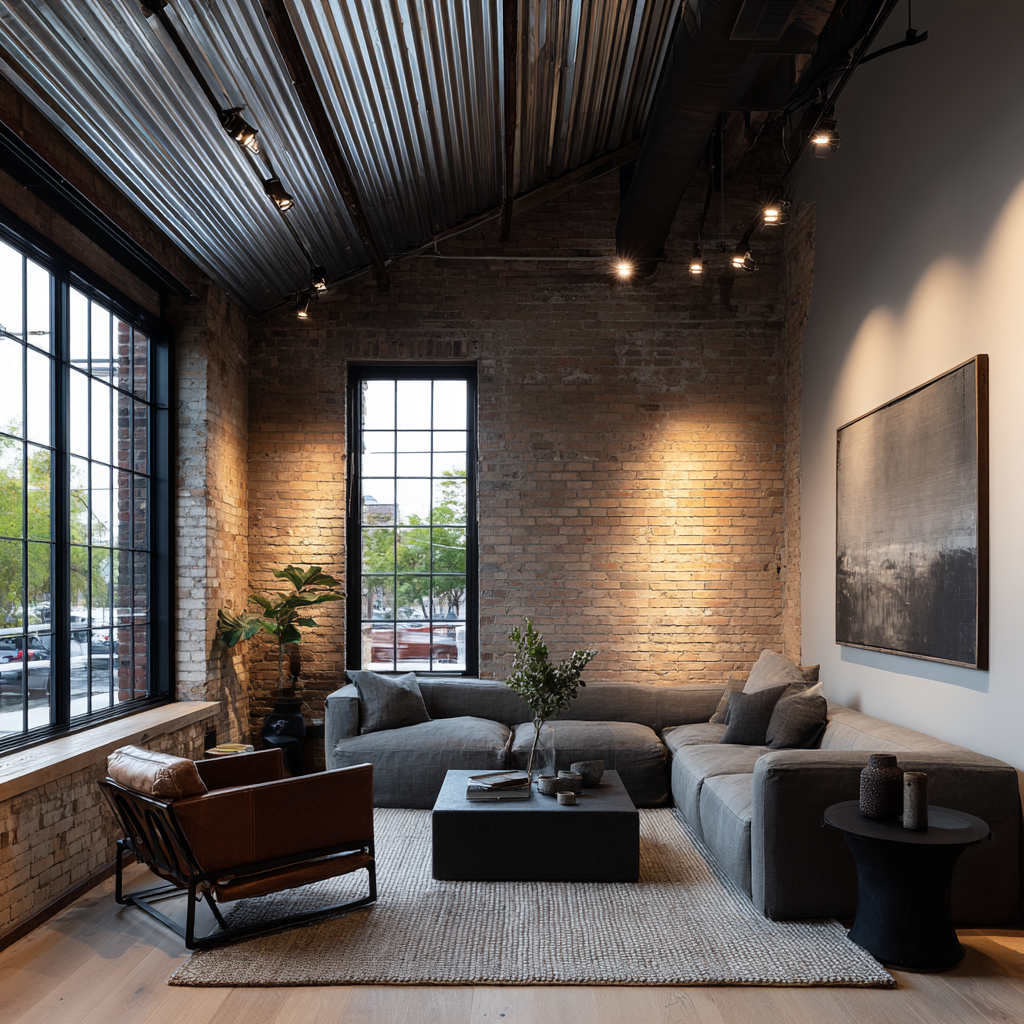
In these loft spaces, the corrugated tin ceiling is part of a larger story of adaptive reuse—a building that once served an industrial purpose now reimagined for residential living. Track lighting, oversized abstract artwork, and deep-seated sectional sofas bring comfort and personality to the raw bones of the space. The metal ceiling ties everything together, serving as a reminder of the building's history while also functioning as a visually interesting fifth wall.
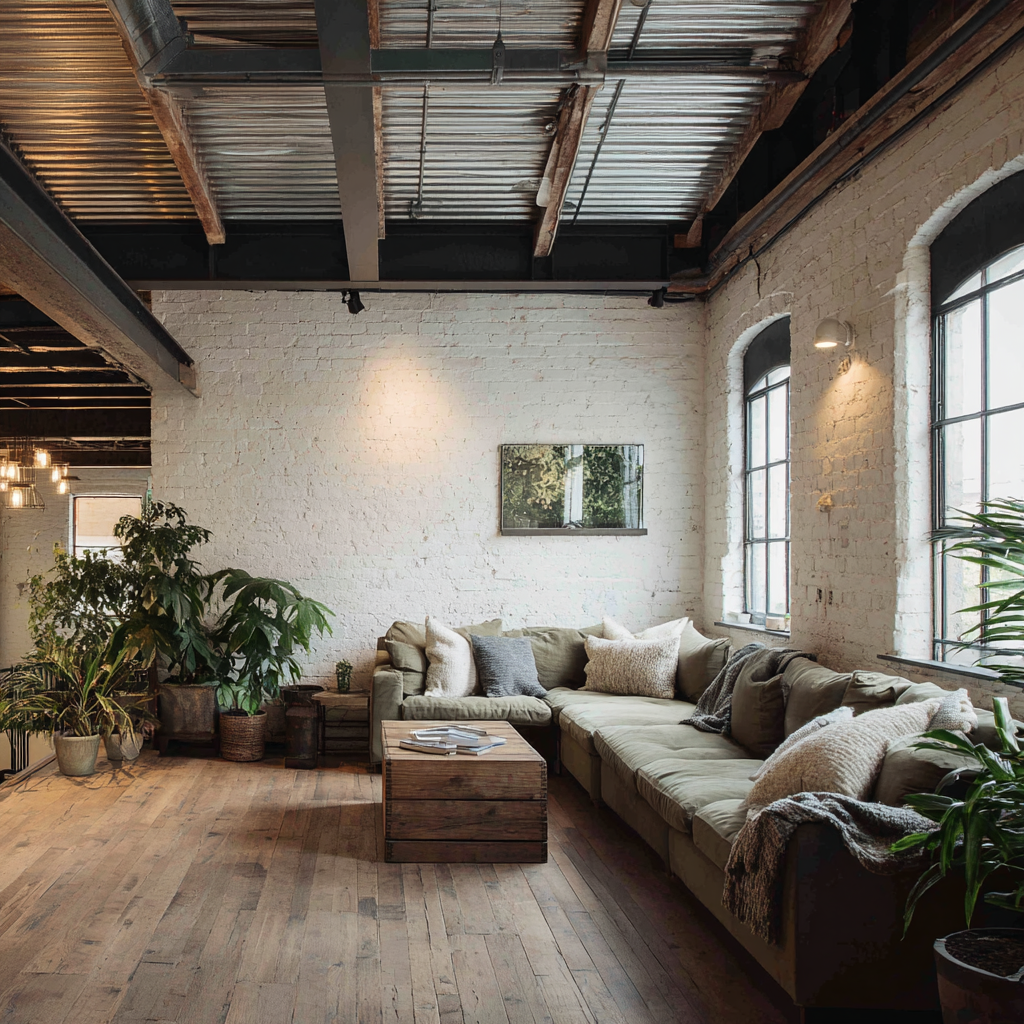
If you live in a loft or open-concept space with existing industrial elements, leaning into the corrugated metal ceiling rather than covering it up is often the strongest design move. Add warmth through textiles, area rugs, and leather accent pieces to keep the space feeling livable and inviting.
If traditional corrugated metal feels too raw for your space, consider installing the panels in a structured grid pattern with visible framing between each section. This approach gives corrugated metal ceiling panels a more finished, architectural quality—closer to a coffered ceiling than to a barn roof.
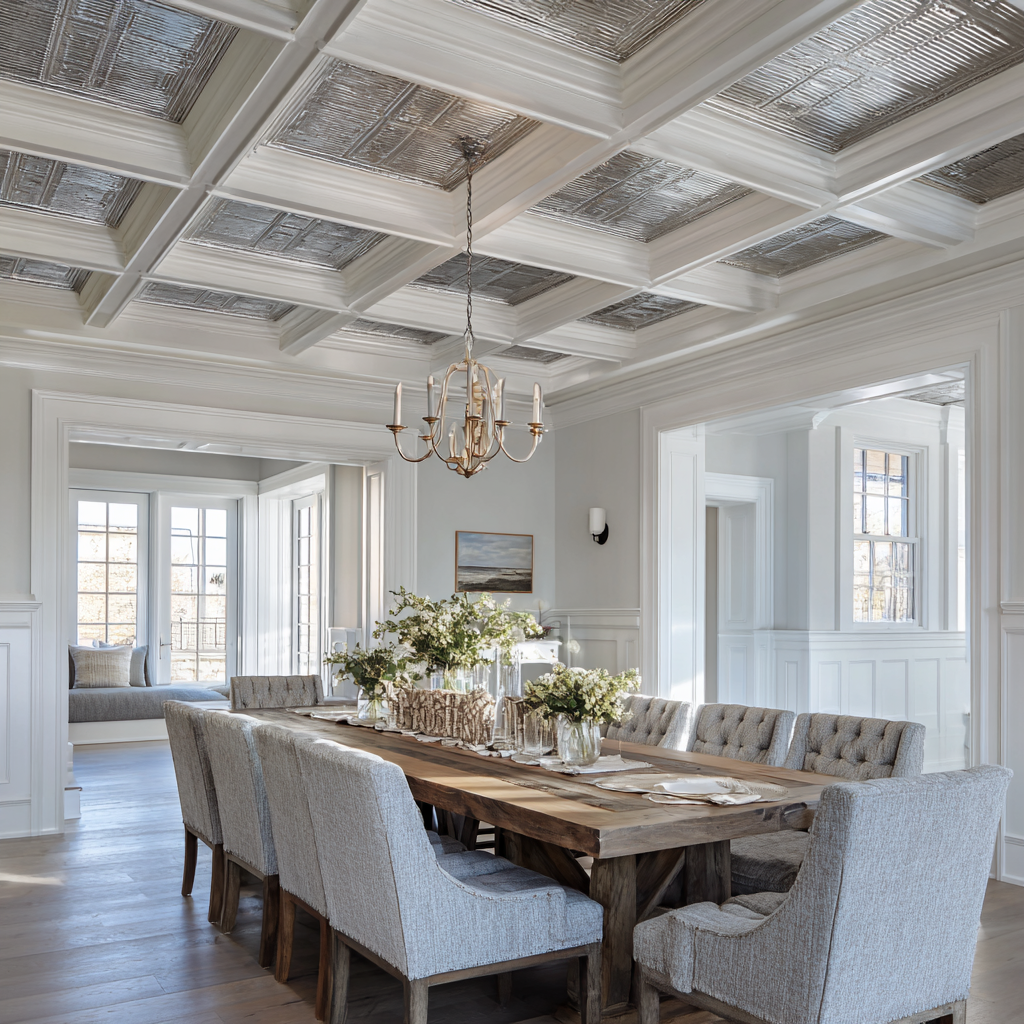
In this dining room, corrugated tin ceiling panels are inset within a classic white coffered framework, blending industrial texture with traditional elegance. The white trim channels create clean lines and visual order overhead, while the galvanized metal fills each coffer with subtle shimmer and depth. Paired with wainscoting, a rustic farmhouse table, tufted upholstered chairs, and a delicate chandelier, the ceiling feels like it belongs in the room rather than fighting against it. It's proof that corrugated metal can work beautifully in even the most polished, traditional settings.
While corrugated metal ceiling panels offer real design versatility, they're not the right fit for every situation. Here are some factors worth weighing before you move forward.
A corrugated metal ceiling is one of those design choices that can completely shift the character of a room—but getting the details right matters. From choosing the right finish and gauge to ensuring proper insulation and ventilation behind the panels, this is a project where working with an experienced contractor makes all the difference.
Block Renovation connects homeowners with thoroughly vetted, licensed contractors who understand the nuances of specialty ceiling installations like these. Whether you're wrapping a vaulted great room in galvanized panels or adding a moody black corrugated accent to your home office, Block's platform makes it simple to compare quotes, review past projects, and find a professional who's the right fit for your vision.
Remodel with confidence through Block

Connect to vetted local contractors
We only work with top-tier, thoroughly vetted contractors

Get expert guidance
Our project planners offer expert advice, scope review, and ongoing support as needed

Enjoy peace of mind throughout your renovation
Secure payment system puts you in control and protects your remodel


Renovate confidently with Block
Easily compare quotes from top quality contractors, and get peace of mind with warranty & price protections.