




Ceiling
Wallpaper on Ceiling: Ideas and Cost Ranges
08.01.2026
12.15.2025



In This Article
Some spaces draw you in before you even set foot on the rug. A master bedroom with a well-designed tray ceiling does exactly that, lifting your gaze, changing the mood, and quietly making the architecture feel one-of-a-kind. Rather than settling for the ordinary, a tray ceiling uses depth and shadow to give every morning and evening a sense of arrival. Whether your style leans refined and quiet or expressive and bold, the right approach to a tray ceiling brings personality above, transforming your bedroom into a true retreat.
A tray ceiling changes the perception of space the moment you walk in. The raised center and surrounding step give your bedroom a more open and layered feel without adding square footage. This feature can make even average-height ceilings appear taller, adding a sense of airiness while providing a distinct architectural outline. Tray ceilings also offer a dedicated space for creative lighting—whether that’s soft cove lights for a gentle glow or a striking fixture placed perfectly in the center.
There’s also an opportunity for personal expression. A tray ceiling can highlight your room’s color palette, frame the bed, or draw attention to unique finishes like wood, metal, or textured paint. By choosing trim and molding styles that fit your vision, the ceiling detail becomes a quiet complement to the rest of your design or a bold statement piece in its own right. Ultimately, a well-designed tray ceiling doesn’t just add a design upgrade—it brings a thoughtful sense of visual order and comfort unique to your bedroom.
Design a Home That’s Uniquely Yours
Block can help you achieve your renovation goals and bring your dream remodel to life with price assurance and expert support.
Get Started
The shape of your tray ceiling is one of the key details that steers the design of your master bedroom. If your room is rectangular, a tray that follows that same outline naturally centers the bed, lending symmetry and a tidy sense of balance. Square bedrooms often look best with a matching tray, but if your space feels boxy, consider a tray with softened angles or curves to introduce a gentler, more relaxed atmosphere. For master bedrooms with architectural quirks—or perhaps a dramatic window wall—a custom-shaped tray can echo those features, giving your ceiling a sense of harmony with the rest of the space.
Depth and proportion matter as much as shape. Rooms with eight-foot ceilings generally benefit from shallower trays (three to five inches deep), so you keep an open feel overhead. Higher ceilings offer space for deeper recesses, multiple steps, or creative layered effects.
The right trim or molding amplifies the tray’s character: slim profiles and crisp lines bring modern energy, while layered or curved details can create a softer, transitional edge. Every detail—shape, depth, molding—should work together to support your vision and ensure the ceiling feels truly tailored to your bedroom.
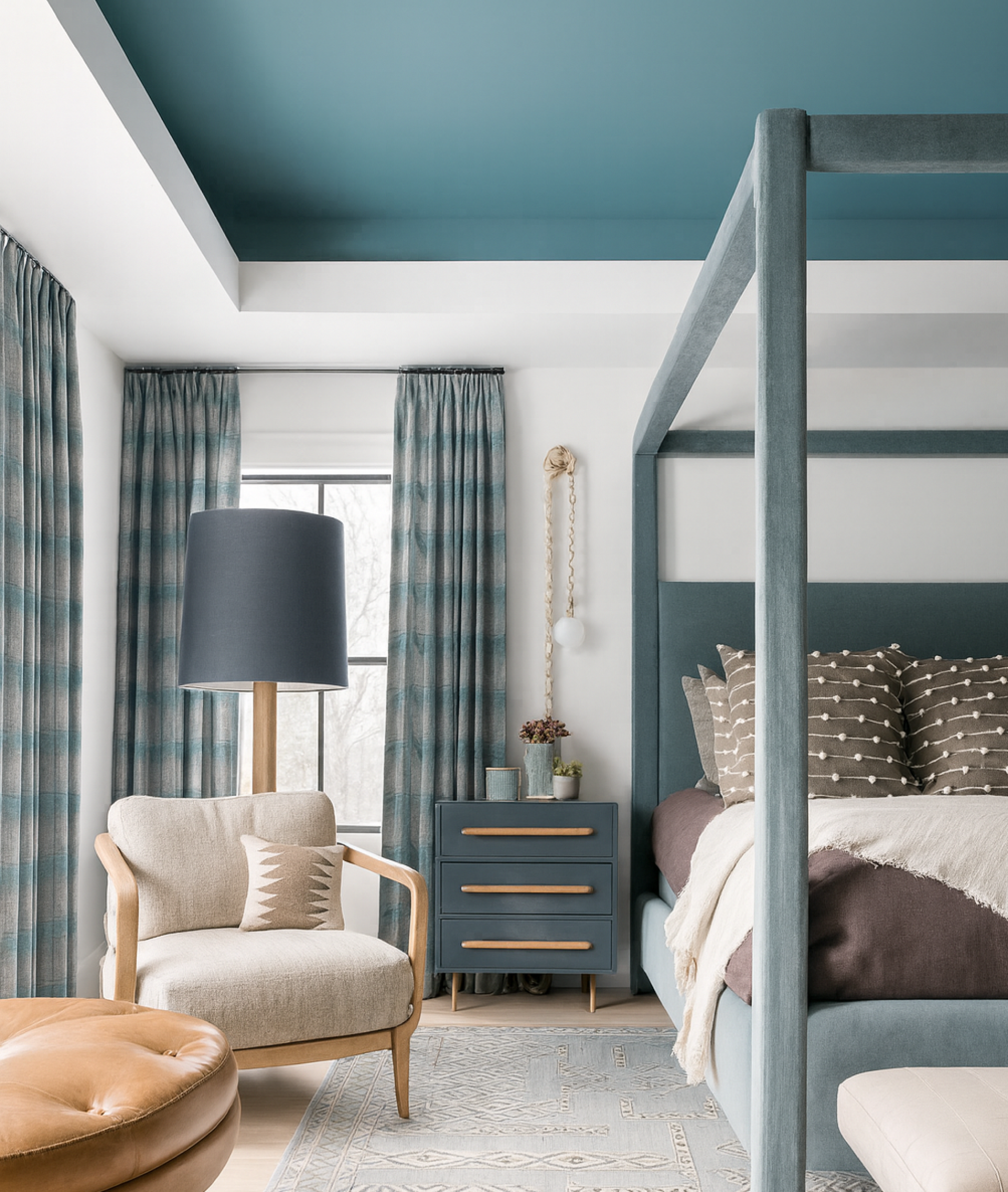
A subtle tray ceiling brings tasteful nuance with just enough interest overhead without dominating the space. The below ideas work with a variety of bedroom decor themes and can have universal appeal.
A single paint color across the tray, main ceiling, and trim creates a sense of unity and calm. The change in depth is highlighted by shifting shadows, not contrasting color, so the look stays soft and restful. This bedroom ceiling idea is perfect for minimalists or anyone who wants to prioritize bedding, art, or natural views. Use low-sheen paint to help light flow evenly without glare.
Paint the trim molding in the same shade as the ceiling for a gentle outline and clean finish. The step remains defined, but the effect is understated, ideal for master bedrooms where comfort and cohesion matter most. This ceiling idea helps frame cove lighting or a central pendant, quietly supporting the tray’s design. It’s especially fitting for spaces with already-layered textures and patterns.
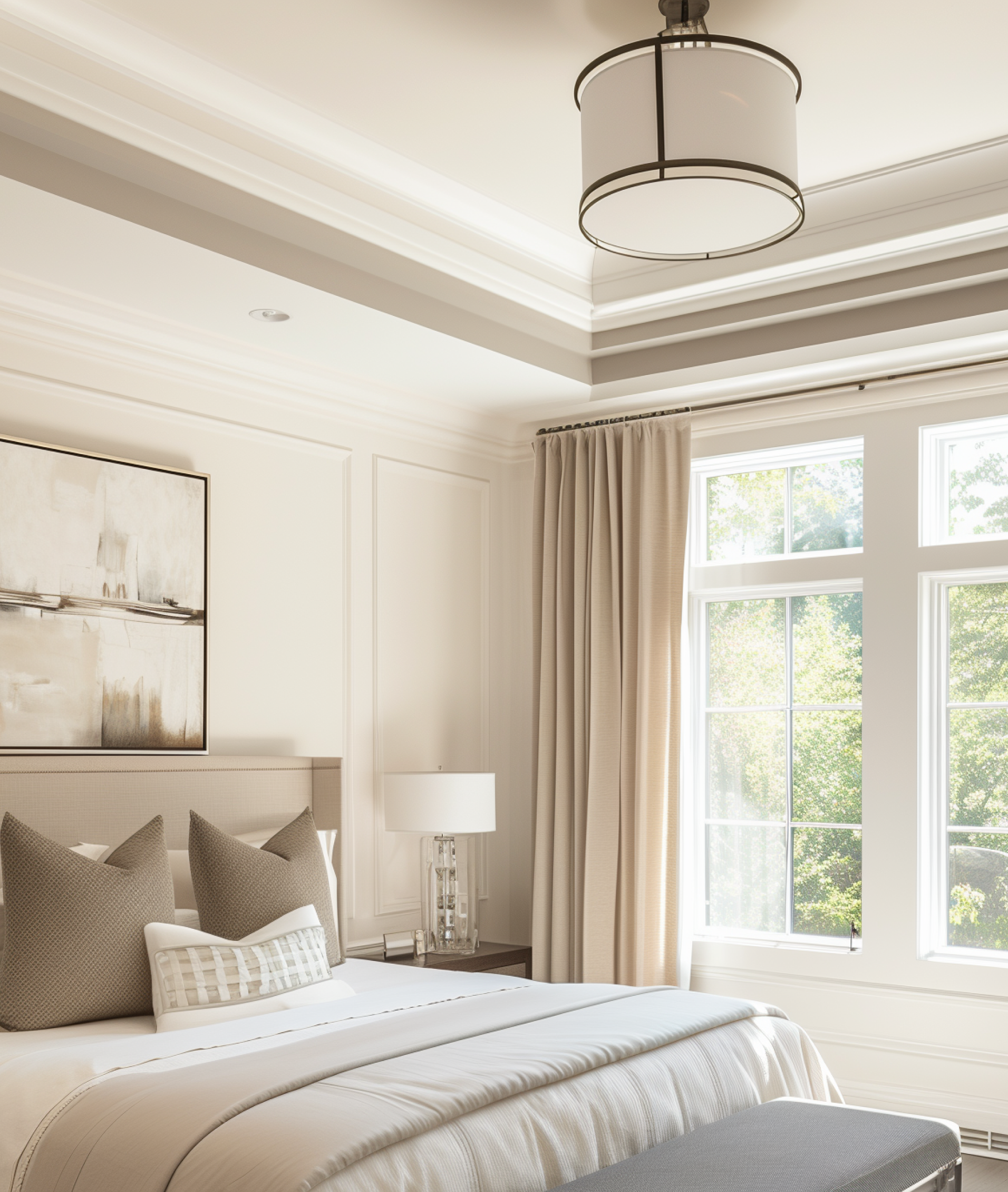
A subtle color contrast—like greige, blue-gray, or taupe molding against a pale ceiling—frames the tray in a measured, modern way. Try referencing wood tones or soft furnishings already present in the bedroom. The contrast brings gentle attention to the tray without overwhelming the senses. Use a simple molding profile so the color takes center stage.
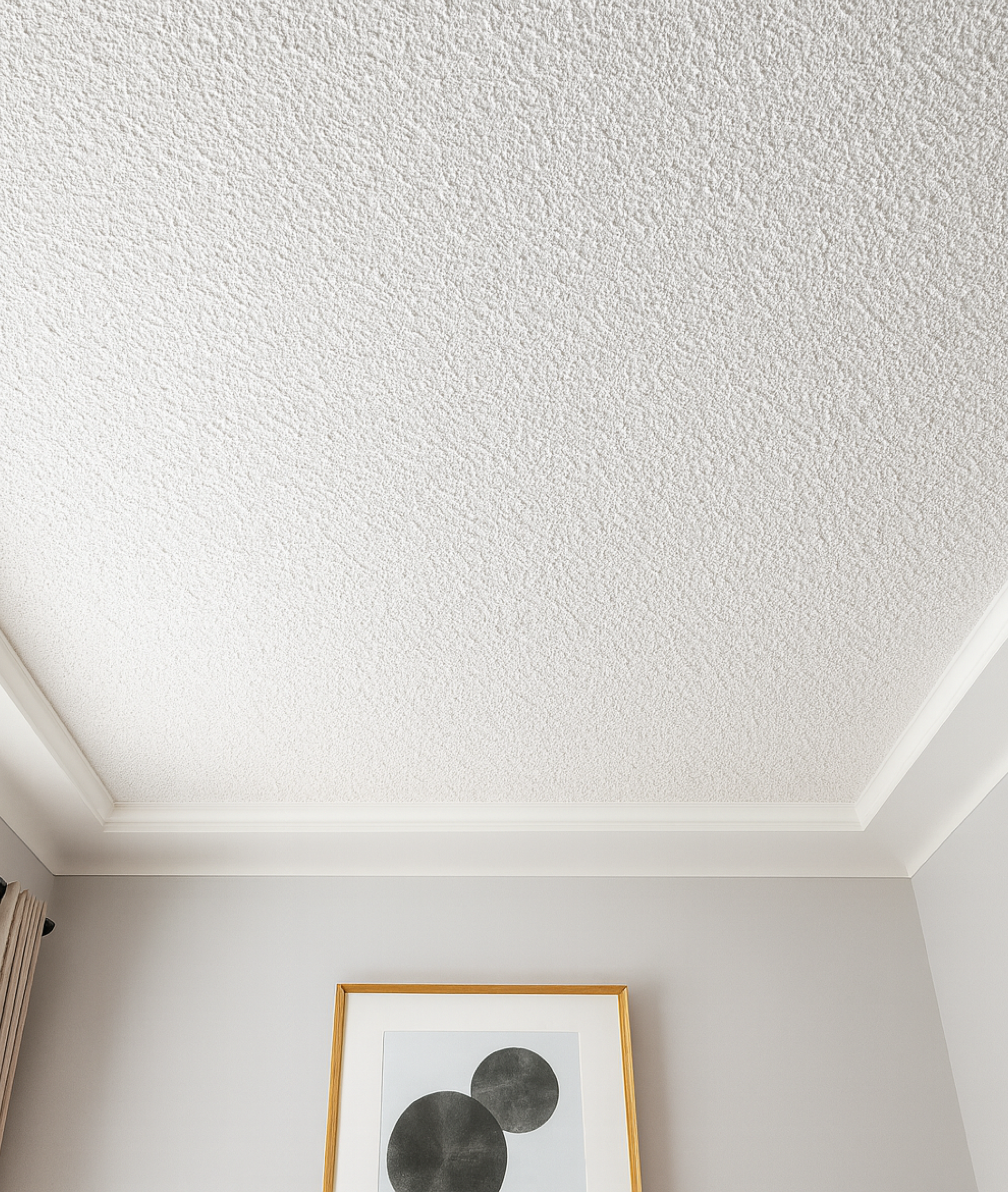
Select a specialty texture—limewash, matte plaster, or softly sanded paint—for just the tray’s interior. This draws in the light and creates visual movement without heavy contrast. The effect is inviting when colors are kept tonal, such as warm whites, soft blushes, or gentle taupe. This approach feels current and works beautifully in modern bedrooms.
Hidden LED strips offering indirect light in the tray’s recess give the bedroom a glow that’s both practical and inviting. During the day, the ceiling detail recedes; at night, the glowing tray ceiling becomes a gentle focal point. Low-profile cove lights elevate even the most minimalist space. Dimmer switches maximize flexibility for relaxation.
Skip the ornate details for slim, flat, or bullnose molding. This detail carves a crisp edge, setting off the tray in a modern or transitional bedroom. The eye reads subtle craftsmanship rather than decoration. It’s a versatile choice that can adapt as your style evolves.
For those ready to make a statement, these tray ceiling ideas take the master bedroom from ordinary to unforgettable.
Wallpaper in the ceiling's tray adds pattern, color, or texture overhead—introducing instant personality above the bed. Options range from subtle grasscloth to bold geometric prints or metallic finishes. Balance the energy with pared-down wall and bedding palettes. Peel-and-stick choices make it easy to swap patterns for future tray ceiling refreshes.
Slim bands or inlays of brass, bronze, or matte black metal set a contemporary tone. These accents reflect light and complement fixtures or hardware elsewhere in the master bedroom. Quantities matter—a little shine goes a long way to make the tray ceiling stand out. The result feels polished and quietly distinctive rather than flashy.
Line the ceiling tray’s recess with wood planks or panels for warmth and depth. Light oaks and ash keep the look open and bright, while walnut or smoked finishes provide contrast and mood. Running boards parallel to the bed can elongate or anchor the room thoughtfully. Matte finishes feel most modern and inviting.

Narrow beams, whether painted or stained, add structure and pattern to the tray. Spacing beams evenly creates rhythm overhead without crowding the room. Modern bedrooms benefit from slender beams or flat profiles, while reclaimed wood beams make a rustic statement. Concealed lighting between beams can further amplify the effect.
A deep or saturated color overhead—like navy, forest, or charcoal—brings drama without overwhelming walls or furnishings. The tray ceiling’s contrast grounds tall rooms and makes the architectural detail feel deliberate. A bold tray often becomes the master bedroom’s signature feature and pairs well with neutral linens and understated decor.
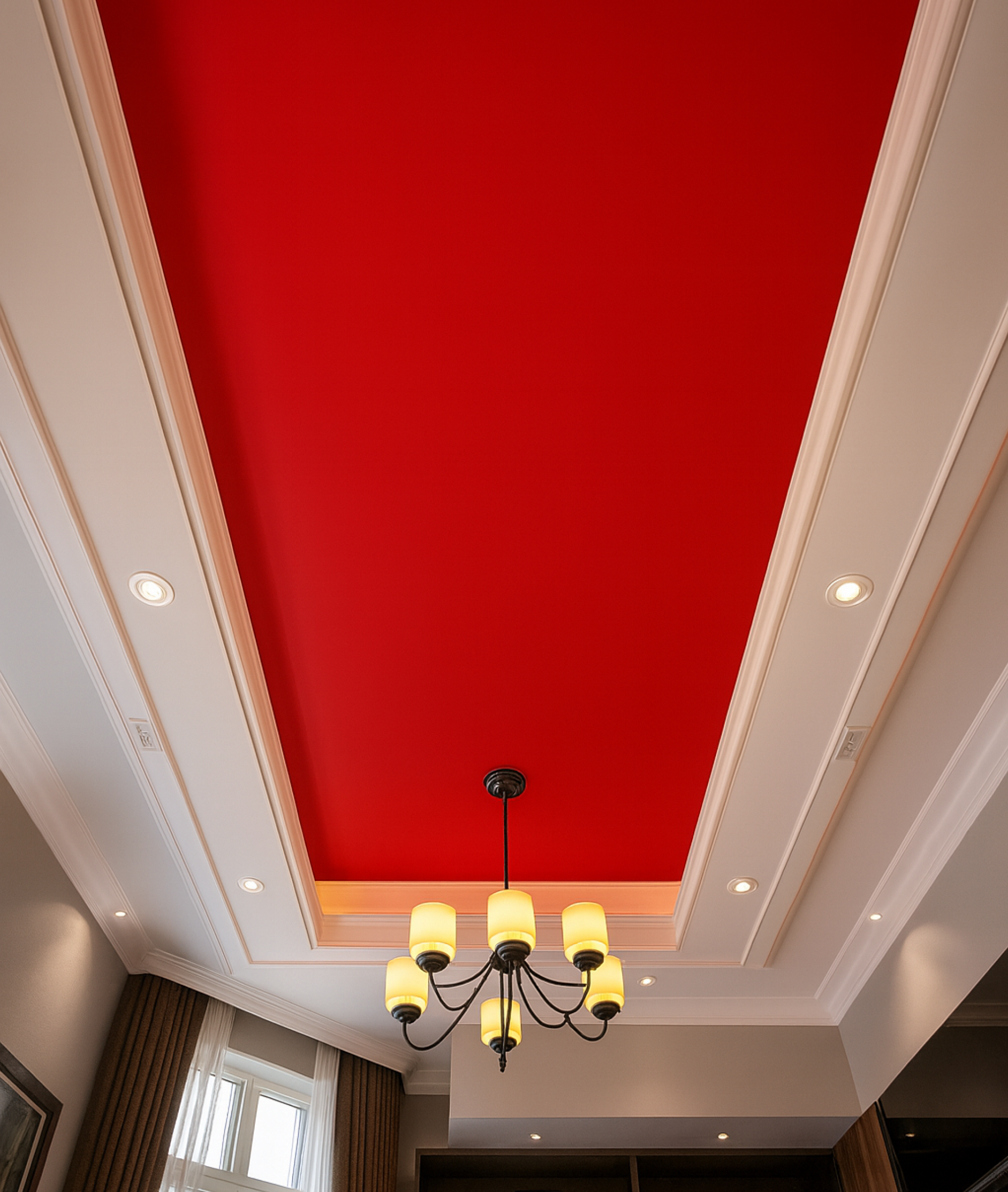
Divide the master bedroom’s tray ceiling into geometric sections with thin strips of molding, such as herringbone, chevrons, or large-scale rectangles. This detail is subtle in a monochrome palette and more graphic with contrasting tones. Paneling offers movement and depth, especially when highlighted by strategic lighting.
Combine the tray with a subtle grid of beams or molding for a coffered look within the recess. The interplay of light and shadow has a strong architectural presence, especially in grand master bedrooms. Keep the palette restrained for a modern take, or add contrast for bolder personality. This effect pairs well with layered lighting and restrained styling.
Layering different types of lighting fixtures and illumination help your master bedroom feel relaxing, functional, and uniquely yours. Ideas for your tray ceiling include:
By combining these lighting options, your tray ceiling becomes a versatile and integral part of your bedroom’s design—supporting both everyday activities and relaxing routines.
The cost of installing a tray ceiling in your master bedroom depends on the size of the space, the type of ceiling and finishes you want, and what adjustments are needed to the existing structure. For straightforward framing, drywall, and paint, expect to spend between $1,500 and $3,000 for a standard bedroom.
Advanced tray ceiling ideas—like double-layered trays, custom moldings, detailed woodwork, or specialty lighting—can raise costs to $4,000–$6,000 or more.
Labor and materials both influence the price. More intricate plans call for skilled carpentry and possibly changes to wiring or fixtures. Luxury finishes, such as wood cladding or metal inlays, will also add to your budget. Planning your project as part of a larger remodel can help with coordination and may reduce overall costs. The most reliable way to budget is by sharing your ideas and needs with a trusted contractor up front for clarity about pricing, timing, and potential options.
Compare Proposals with Ease

Block Renovation makes it possible to turn your inspiration into reality by matching you with a vetted contractor who’s right for the job. Every contractor in the network is reviewed for quality, professionalism, and experience, so you can focus on your vision, not worry over who to trust.
Transparency is at the center of every step with Block. You’ll receive a detailed scope review up front, and you’ll see line-by-line pricing with no surprises. Payments are managed through a secure, progress-based system, which means your contractor is paid as project milestones are achieved—not before. Throughout the process, you have real support, regular updates, and access to planning resources. When it’s time to build, Block ensures your bedroom evolves with the clarity, control, and comfort you expect.
Remodel with confidence through Block

Connect to vetted local contractors
We only work with top-tier, thoroughly vetted contractors

Get expert guidance
Our project planners offer expert advice, scope review, and ongoing support as needed
Enjoy peace of mind throughout your renovation
Secure payment system puts you in control and protects your remodel

Renovate confidently with Block
Easily compare quotes from top quality contractors, and get peace of mind with warranty & price protections.
Ceiling
Wallpaper on Ceiling: Ideas and Cost Ranges
08.01.2026

Ceiling
Drop Ceiling Makeover: Before and After Ideas
06.19.2026
Ceiling
Popcorn Ceiling Removal: Before and After + Cost
06.19.2026
.png?width=640&name=Moody%20Dining%20Room%20Painted%20Ceiling%20Walls%20(2).png)
Paint & Color
Painting Ceilings the Same Colors as the Walls: Pros & Cons
04.22.2026
Ceiling
Low Ceiling Renovation Before-and-Afters: Basements & Attics
04.16.2026