



Commercial
Commercial Tenant Improvement Contractors Explained
07.27.2026
02.05.2026


In This Article
Converting a single family home into a duplex is a complete reimagining of how a property functions and will come with its own unique requirements. Done right, a duplex conversion can generate steady cash flow, increase property value, and provide flexible living arrangements that serve a multigenerational family for years to come.
Here, we’ll walk through the key considerations, costs, and steps involved in turning one home into two distinct units so you can make informed decisions and set your project up for success from the start.
| Budget for the second unit | The expensive part is not the new finishes. It is the second unit’s plumbing, electrical, kitchen, bath, HVAC, fire separation, and sound control. Plumbing and electrical alone can add $15,000 to $40,000. |
| Measure before designing | A house under 1,500 to 2,000 square feet may need added space to function as two legal units. That changes the math quickly: a conversion budget of $80,000 to $200,000 can become a $150,000 to $250,000-plus construction project. |
| Check the lot first |
A clean floor plan will not overcome zoning or parking limits. If the property needs a variance or special-use permit, approvals can add weeks or months before construction starts. |
Not every single-family home is suited for conversion. Before you invest time and money into planning, it's important to assess whether your property has the right foundation, both literally and figuratively.
Successful duplex conversions typically require homes with at least 1,500 to 2,000 square feet. After all, each unit needs its own kitchen, bathroom, living area, and bedroom—plus their own access points.
Converting a home often involves significant changes to load-bearing walls, plumbing systems, and electrical infrastructure. Your home's structure must be sound enough to support these modifications. Older homes may require foundational work or reinforcement before conversion is feasible—which means you'll want to bring in a structural engineer early to assess what's possible and what's not.
Each unit must have its own entrance to meet building codes and provide tenants with privacy. If your home has a side door, basement entrance, or the potential to add an exterior staircase, conversion becomes more straightforward. Creating new access points can add substantial cost and complexity, but it's non-negotiable for a legal duplex.
Many jurisdictions require additional parking spaces for multi-unit properties. If your lot doesn't have room for two or more vehicles, you may face permitting challenges or need to apply for a variance—another reason to check in with your local planning department before you get too far into the process.
The most critical factor is whether local zoning laws permit duplex conversions in your neighborhood. Many municipalities have strict regulations about multi-unit dwellings, particularly in areas zoned exclusively for single-family homes. Contact your local planning department to confirm that conversion is allowed and to understand what approvals or variances you'll need. In some areas, you may need to apply for a zoning variance or special use permit—a process that can take weeks or even months, so it's worth starting early.
The total cost of converting a single family home into a duplex varies widely based on your home's size, condition, and location. However, most projects fall between $80,000 and $200,000.
Sometimes your existing single family home simply isn't large enough to accommodate two comfortable, self-contained units. In these cases, adding square footage through an addition or expansion can make duplex conversion feasible. However, it will significantly increase your total project cost, often pushing the total investment to $150,000, $250,000, or more.
Second-story additions: Building up creates natural separation between units and allows for independent access through exterior staircases. Expect to invest $150 to $300 per square foot, plus structural reinforcement costs to ensure your foundation can support the additional weight.
Rear or side additions: Expanding horizontally works well if you have lot space and setback allowances, and typically costs $100 to $250 per square foot. This approach can house a complete second unit while leaving your original home largely intact.
Garage conversions: Converting an existing detached garage or carport into living space can be more economical than a full addition. Just make sure local codes allow for the loss of covered parking—or plan to replace it elsewhere on your property.
Basement buildouts: Finishing existing basement space adds livable square footage without changing your home's exterior footprint, typically running $50 to $150 per square foot. However, you'll likely need to add egress windows, moisture barriers, and address ceiling height requirements to meet code.
Attic conversions: Transforming attic space into a full unit can work well for creating separation between living areas. You may need to add dormers for headroom, reinforce floor joists, and install proper access stairs—but the cost is often lower than building an entirely new structure.
At first glance, the price tag for a duplex conversion might seem excessive compared to a whole-home renovation, but there's a reason these projects demand a larger budget.
The result? A project that demands more labor, more materials, more oversight, and more expertise than a typical renovation. But for homeowners who want rental income, multigenerational living options, or a significant boost in property value, the investment often pays off over time.
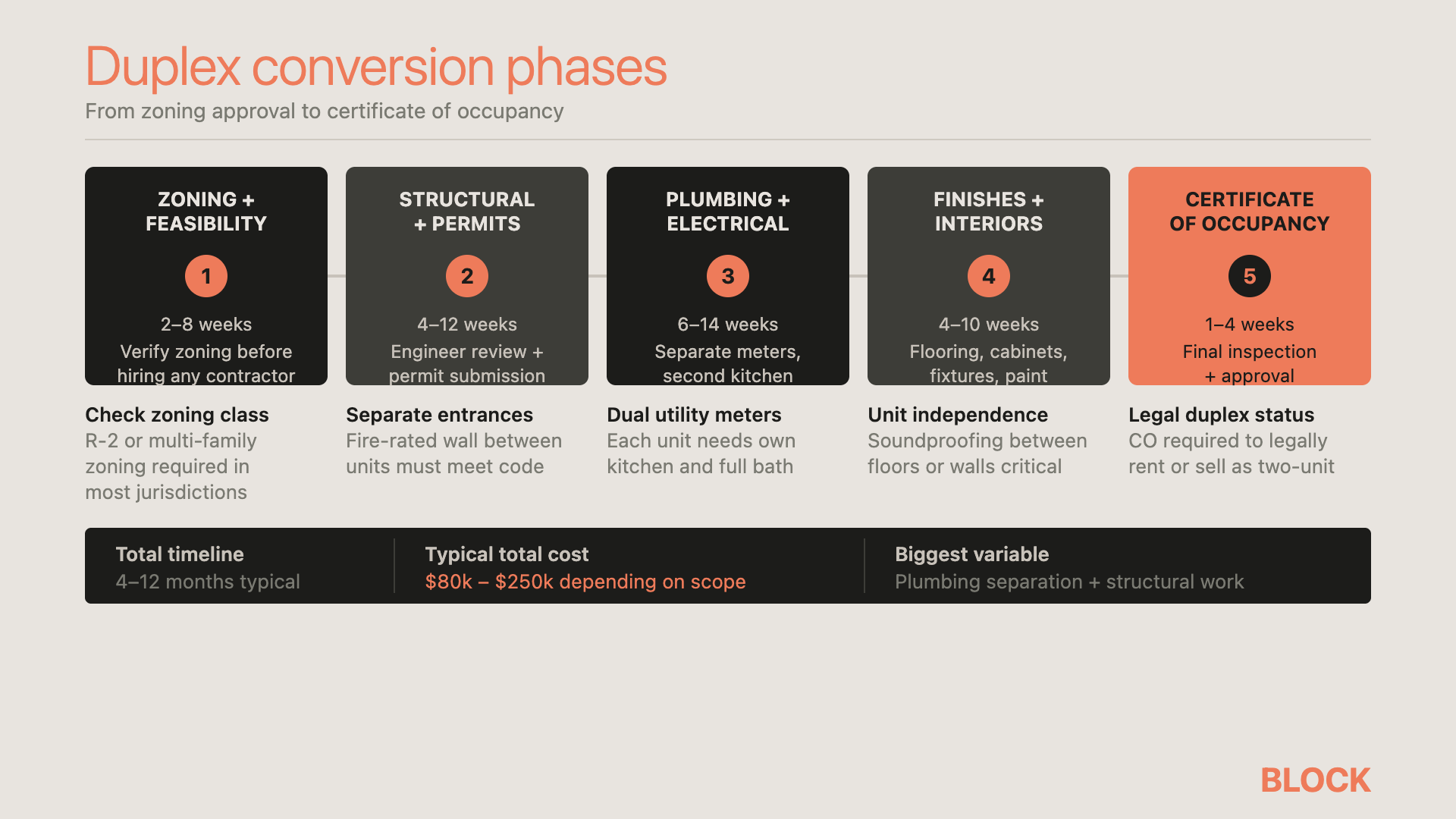
Transforming a single-family home into a duplex is a multi-phase project that requires coordination across design, permitting, construction, and compliance. Here's what the process typically looks like.
Before you get too far into planning, confirm that your property is eligible for conversion. Contact your local zoning board or planning department to discuss whether duplexes are permitted in your zone, along with parking requirements, setback rules, and occupancy limits. In some areas, you may need a zoning variance or special use permit—a process that can take weeks or months, so start early. If you're facing restrictions, consider working with a land use attorney.
Once conversion is legally possible, bring in a licensed architect who specializes in multi-unit projects. They'll design two self-contained units with separate kitchens, bathrooms, entrances, and utilities—while ensuring compliance with fire separation, soundproofing, and egress codes. Your architect will produce detailed drawings that serve as the blueprint for permitting and construction.
At this stage, connecting with a contractor through Block Renovation can help you understand feasibility and refine your budget. Many of Block's vetted contractors have experience with complex conversions and can provide early guidance on structural requirements, timelines, and potential challenges before you commit to final plans.
With conversion costs typically ranging from $80,000 to $200,000 or more, you'll need a solid financing plan. Options include home equity loans or HELOCs, cash-out refinancing, construction loans with staged funding, or FHA 203(k) loans if you're purchasing to convert. Work with your lender early to understand documentation requirements and how conversion affects your loan-to-value ratio.
With permits approved, construction begins. The scope typically includes structural modifications, separate plumbing and electrical systems, kitchen and bathroom installation, fire-rated walls and soundproofing, exterior access points, and independent HVAC systems. Most projects take three to six months, though extensive renovations may run longer.
Your contractor will coordinate required inspections—framing, electrical, plumbing, and final occupancy. Once you receive certificates of occupancy for both units, your duplex conversion is complete. Block's progress-based payment system ensures you only pay as milestones are met, protecting your investment throughout the build.
Converting your home into a duplex is a significant upfront investment, but it can also deliver strong financial returns over time.
Rental income potential: The most immediate benefit is the ability to generate rental income. In many markets, renting out one unit can cover a substantial portion—or even all—of your mortgage payment. Research comparable rental rates in your area to estimate what you can reasonably charge. Moreover, consult with our guide to renter-friendly renovations to consider long-term appeal.
Increased property value: Duplexes often command higher sale prices than single-family homes, particularly in areas with strong rental demand. The ability to market your property to investors or owner-occupants expands your pool of potential buyers.
Tax benefits: If you rent out one unit, you may be eligible for deductions on mortgage interest, property taxes, insurance, maintenance, and depreciation. Consult with a tax professional to understand how conversion affects your tax situation.
Cash flow and equity building: Rental income not only offsets your housing costs but also accelerates your ability to build equity. Over time, this can create meaningful financial flexibility and security.
Renovate with confidence every step of the way
Step 1: Personalize Your Renovation Plan
Step 2: Receive Quotes from Trusted Contractors
Step 3: Let Us Handle the Project Details
Use this checklist to stay organized and ensure nothing falls through the cracks as you plan your conversion.
Pre-construction:
During construction:
Post-construction:
Converting a single family home into a duplex doesn’t happen overnight, and even well-planned renovations can encounter obstacles. Here are some of the most common challenges and strategies for managing them.
Zoning restrictions: If your property isn't zoned for multi-unit use, you may need to apply for a variance or conditional use permit. This process can be lengthy and requires a compelling case for why your conversion serves the community's interests. Work with a land use attorney if you encounter resistance.
Parking requirements: Many municipalities require one or two parking spaces per unit. If your lot doesn't have room for additional parking, you may need to apply for a waiver or consider alternative solutions like tandem parking or street parking permits.
Unexpected structural issues: Older homes often hide surprises behind walls—outdated wiring, plumbing leaks, or structural weaknesses. Budget generously for contingencies and work with contractors who have experience navigating these challenges.
Cost overruns: Material costs, permitting delays, and design changes can push budgets higher than anticipated. Protect yourself by setting aside a 10 to 20 percent contingency and maintaining open communication with your contractor throughout the project.
A duplex conversion is one of the most ambitious projects a homeowner can undertake. It demands technical expertise, attention to code compliance, and a contractor who understands the nuances of creating two functional, safe, and attractive living spaces from one.
Block Renovation connects you with thoroughly vetted, licensed general contractors who specialize in complex projects—including multi-unit conversions. Our platform makes it simple to compare detailed proposals, review past work, and select a professional who's the right fit for your vision and budget.
With Block, you'll benefit from expert scope reviews that catch potential issues early, transparent pricing that keeps you informed, and progress-based payments that protect your investment at every stage. Our team is here to guide you through planning, permitting, and construction—so you can focus on the exciting outcome: a home that works smarter, generates income, and serves your family's evolving needs.
Ready to explore whether a duplex conversion is right for you? Start your project with Block Renovation and get matched with contractors who understand how to turn your vision into reality.
Remodel with confidence through Block

Connect to vetted local contractors
We only work with top-tier, thoroughly vetted contractors

Get expert guidance
Our project planners offer expert advice, scope review, and ongoing support as needed
Enjoy peace of mind throughout your renovation
Secure payment system puts you in control and protects your remodel

Renovate confidently with Block
Easily compare quotes from top quality contractors, and get peace of mind with warranty & price protections.
Commercial
Commercial Tenant Improvement Contractors Explained
07.27.2026

Working with Contractors
Is a Property Renovation Company Worth the Cost?
06.24.2026

Commercial
Commercial Remodeling in San Diego by Neighborhood | Block Renovation
04.27.2026

Commercial
Commercial Remodeling and Buildouts in Dallas-Fort Worth | Block Renovation
04.24.2026
Commercial
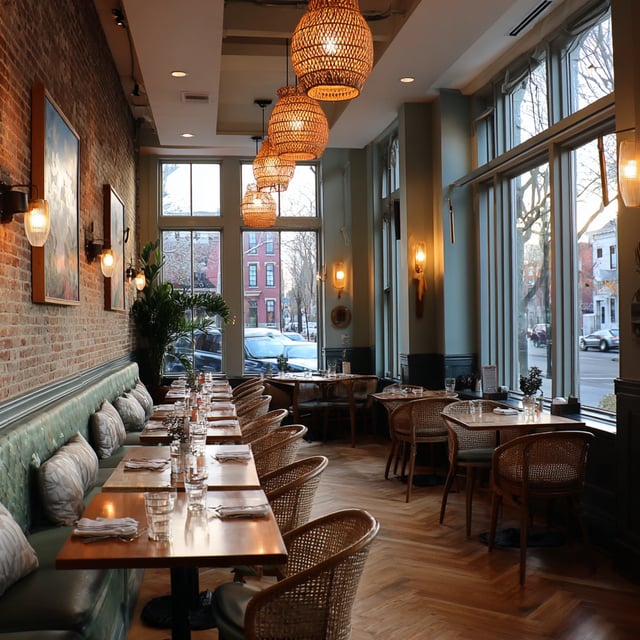
2026 Restaurant Design: 11 Trends Defining the Industry
04.24.2026