




Oregon
Portland Renovation Permits: What They Really Cost
07.01.2026

05.04.2026


In This Article
Eugene does not have a neutral position on how homes should be built. The University of Oregon's architecture program, a deep local culture of environmental consciousness, and decades of building innovation have produced a contractor and design ecosystem that pushes toward high performance as a matter of course. If you are planning to build a custom home here and are thinking seriously about energy efficiency, passive house principles, or mass timber construction, you will find more fluency in those approaches among Eugene's builders than in almost any comparable city in the country.
The tradeoff is that Eugene is not an easy place to build from a land supply standpoint. Oregon's urban growth boundary system limits how far the city can expand, and that constraint is felt in how few buildable parcels are available within or adjacent to the city. Finding the right lot takes work. The permitting process, while not as complicated as coastal California, requires preparation.
Turn your renovation vision into reality
Get matched with trusted contractors and start your renovation today!
Find a Contractor
Most mid-size cities have a construction market shaped primarily by production homebuilders and general renovation contractors. Eugene has those too, but it also has something unusual: a pipeline of architects, designers, and builders who have been influenced directly or indirectly by the University of Oregon's College of Design.
The UO is one of the few architecture programs in the country where sustainable design is treated as a core competency rather than an elective orientation. Graduates who stay in Eugene - and many do - bring those values into practice. Over time, this has shaped what clients expect, what local builders have learned to deliver, and what the market rewards.
The result: Eugene has builders who understand passive house certification, who have worked with CLT and glulam structural systems, and who can price high-performance envelope assemblies without treating them as unusual requests. Not every builder here is fluent in every approach, but the pool of those who are runs deeper than in most markets this size.
This also sets expectations for the project. A code-minimum home in Eugene - standard 2x6 framing with fiberglass batt, conventional HVAC, builder-grade windows - will perform adequately by the numbers but will not hold its value the way a high-performance home does. Eugene buyers, real estate professionals, and appraisers are attuned to the difference. Building to the floor of what is required is not the local norm here.
Oregon's Urban Growth Boundary (UGB) around Eugene limits residential development to land inside the boundary, protecting agricultural and forest land outside it from conversion. The consequence for custom home buyers is a constrained lot supply within reach of the city.
Buildable parcels inside Eugene's UGB fall into a few categories. Infill lots in established neighborhoods exist, though they are not abundant. Lots in planned subdivisions with remaining inventory are available in some outer areas of the boundary. And occasionally, properties with existing structures come up where the value is in the land rather than the building - situations where starting fresh with a new build rather than renovating is clearly the right call.
Outside the UGB, rural residential parcels exist in Lane County at larger lot sizes and lower prices. These are an option for buyers who want acreage and are comfortable with well and septic systems and rural site conditions. The tradeoff is distance from Eugene's services, longer commutes, and the fact that very rural lots sit outside the UGB and cannot typically be subdivided further in the future.
Land in Eugene moves when it becomes available. If you find a lot that works, the evaluation process needs to be thorough but efficient. Sitting on a decision for weeks while you consider it is often a decision by default.
Oregon's residential energy code - the Oregon Residential Specialty Code, which incorporates ASHRAE 90.2 - sets a baseline that is higher than what most states require. Eugene sits in Climate Zone 4C, characterized by cool, wet winters and mild summers, which shapes the specific requirements around insulation, air sealing, windows, and mechanical systems.
But in Eugene, code minimum is the starting point of the conversation, not the end of it.
Eugene has a higher concentration of certified Passive House projects and passive-house-informed builders than almost any city its size in the United States. Passive house construction - which targets very low energy use through a combination of superior insulation, airtight construction, mechanical heat recovery ventilation, and optimized window placement - is well suited to Eugene's climate. The mild summers mean cooling loads are low, making it easier to hit passive house targets without sacrificing comfort.
If full passive house certification is not your goal, the underlying principles still apply. Continuous exterior insulation, triple-pane windows, an HRV or ERV for mechanical ventilation, and very tight air sealing will produce a home that performs significantly better than code minimum and that reads as high-quality to Eugene's market.
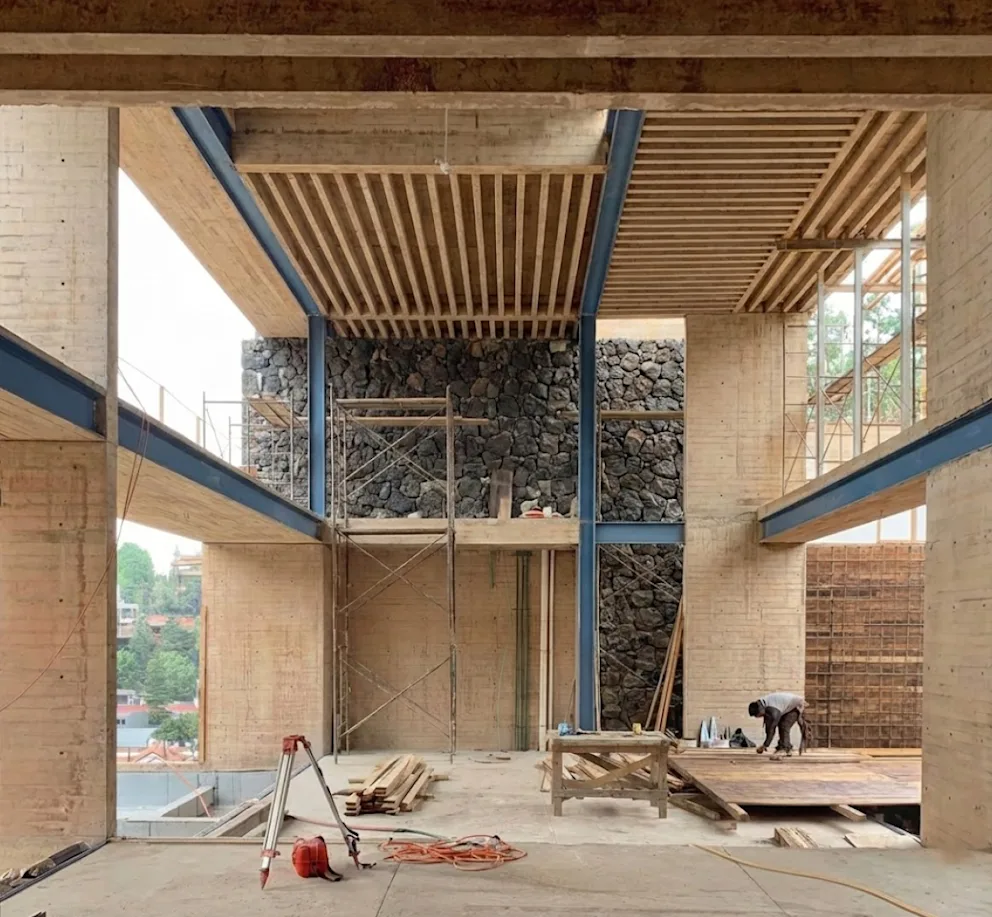
Eugene sits in a region with deep ties to the timber industry, and that history has carried forward into contemporary construction innovation. Cross-laminated timber (CLT), glulam beams, and other engineered wood products are more commonly used in Eugene custom homes than in most markets. Local contractors have experience sourcing and installing these systems, and local architects are comfortable designing around them.
Mass timber is not the right choice for every project, and it is not inexpensive. But if exposed structural wood is part of your design vision, Eugene is a market where that aspiration meets builders who actually know how to deliver it.
Heat pump systems - air source heat pumps for heating and cooling, heat pump water heaters - are standard in high-performance Eugene builds. Natural gas connections are available in most of the city, but the direction of both Oregon policy and local building culture is toward electrification. Designing around an all-electric system from the start avoids the cost and disruption of conversion later.
Transparent Pricing You Can Trust

Eugene's Building and Permit Services department manages permits for new residential construction within city limits. Lane County handles permitting for unincorporated parcels.
For a complete application on a new single-family custom home within Eugene, permit review typically runs 8 to 14 weeks. Oregon has made investments in permitting technology and staffing, but demand in Eugene remains high and the review process is thorough. Budget for this timeline from the start rather than treating it as a contingency.
Expect permit review to cover:
Oregon requires all contractors performing residential construction to be licensed through the Oregon Construction Contractors Board (CCB). Verify the CCB license number for the general contractor and any specialty subcontractors before signing any agreement. The CCB license lookup is available online and takes two minutes. Do not skip it.
Eugene is not an inexpensive market. The combination of Oregon's labor costs, the high-performance construction standards the market expects, and the constrained land supply all push project costs upward.
Custom home construction in Eugene currently runs approximately $275 to $425 per square foot for the structure, depending on complexity, finish level, and performance specification. A 2,200 square foot home at the midpoint represents roughly $770,000 in construction cost before land and soft costs. Given that, thinking carefully about cost-effective home design choices early in the process has more impact here than in most markets. Passive house-level construction adds roughly 10 to 15% to the structural cost but can substantially reduce operating costs over the life of the home.
Land inside Eugene's UGB is expensive relative to comparable Oregon markets outside the Portland metro. Expect to pay $150,000 to $400,000 or more for a buildable lot, depending on location, size, and whether existing structures need to be removed.

“DIY work feels like a cost saver, but it often takes longer and delivers lower quality than expected.”
Eugene's contractor market has real depth in high-performance residential construction, but that depth is not uniformly distributed. There is a difference between builders who speak the passive house language and those who have actually delivered certified or near-certified projects. Ask for specifics.
Ask to see completed custom home projects, with references from clients whose projects are similar in scope and performance specification to yours. Visit completed homes where possible. Ask specifically about their approach to air sealing, insulation assembly, and mechanical system design - not to test them, but because their answers will tell you whether their orientation matches yours.
Verify CCB licensing. Confirm general liability insurance and workers' compensation coverage with certificates directly from the insurer.
Three bids minimum, and make sure they are responding to the same scope. High-performance custom home bids in Eugene can vary significantly because different contractors have different cost structures for these assemblies. A low bid may be leaving out the continuous exterior insulation or specifying a lower-performance window package. Line-item scopes are not optional here.
Block Renovation's contractor vetting process covers licensing, insurance, background checks, and workmanship review. For a custom home build in Eugene, Block matches you with contractors who have documented experience with the local market and the performance standards it demands, reviews your project scope for gaps before bids are finalized, and provides a payment structure that protects your investment throughout the project.
Eugene has a long wet season running October through April, with mild winters and genuinely good summers. The wet-season construction considerations are the same as anywhere in the Pacific Northwest: site drainage, envelope closure timing, moisture management in framing.
Eugene's additional variable is its seismic context. The Willamette Valley sits in a region with known seismic risk from the Cascadia Subduction Zone. Oregon's residential building code includes seismic design requirements that are more stringent than most of the country. Your structural engineer and contractor should be working from current Oregon seismic requirements without prompting.
A custom home in Eugene typically takes 12 to 16 months from permit approval to certificate of occupancy. Passive house and advanced structural projects can run longer due to the additional design and engineering coordination required. Permit review itself is 8 to 14 weeks from a complete submission - add that to the front end of your schedule.
The contractor ecosystem here is strong, the design community is engaged, and the performance standards the market expects are achievable. But they require a contractor who can actually deliver them, a scope that specifies them clearly, and a payment structure that holds everyone accountable.
Block Renovation connects you with vetted contractors matched to your project, reviews your scope before you commit to a bid, and provides progress-based payments that keep things moving. If you are serious about building a high-performance home in Eugene, start by getting the team and the process right.
Lay the groundwork for a successful custom home
Match with vetted builders
Receive quotes from experienced contractors aligned to your vision.
Hire with confidence
Partner with Block experts to review quotes and timelines for end-to-end clarity.

Stay in control
Avoid surprises with Block Protections and a progress-based payment system.

Renovate confidently with Block
Easily compare quotes from top quality contractors, and get peace of mind with warranty & price protections.
Oregon
Portland Renovation Permits: What They Really Cost
07.01.2026

Oregon
34 Top Oregon ADU Buidlers and Contractors
05.12.2026
Oregon
Custom Home Building in Eugene, Oregon: Local Guide
05.04.2026

Oregon
Sustainable Custom Home Building in Portland, OR
03.13.2026

Oregon
Eugene, OR, Bathroom Remodel Costs & Tips
03.10.2026