



Cabinets
How to Choose Kitchen Cabinets for Your Goals
06.24.2026
02.23.2026


In This Article
Floor-to-ceiling kitchen cabinets give you something most standard cabinet configurations can't: full use of your vertical space, from countertop to ceiling line. That's a meaningful upgrade, especially if your current kitchen has a dusty, unused gap above the uppers. But extending cabinetry all the way up also comes with real design risks. Done carelessly, a full wall of cabinets can make a kitchen feel closed in, visually heavy, or monotonous.
The good news is that there are clear ways to pull this off well. When the design choices are intentional, floor-to-ceiling cabinetry can:
Maximize storage by turning wasted vertical space into functional shelving for items you don't reach for daily
Create clean, uninterrupted lines that make the kitchen feel more architectural and finished
Draw the eye upward, which can make ceilings appear taller than they actually are
Give the room a custom, built-in quality—even when working with semi-custom or stock options
Eliminate the hard-to-clean gap above upper cabinets where dust and grease tend to collect
The added storage capabilities are well worth the cost and effort. In fact, Kur Win, CEO of MyRenoService, suggests homeowners prioritize extra cabinets above countertops, seating, and most other kitchen elements.

In a small kitchen, the most important thing is storage space. Counter space and seating appear important, but clients regret counter space far less than they would regret storage space.
The details matter more here than with standard cabinetry, because there's simply more of it in view. Every choice—from panel style to color to hardware—is amplified.
When cabinetry covers an entire wall from floor to ceiling, ornate or heavily detailed door fronts can quickly feel like too much. Flat-panel (slab) doors and simple shaker profiles tend to work best here because they keep the visual weight low. The goal is to let the cabinetry read as a cohesive surface—almost like paneling—rather than a grid of individual doors competing for attention.
This is especially true in modern and contemporary kitchens, where clean lines are the priority. But even in more traditional spaces, a simpler panel profile on full-height cabinets lets other design elements—your backsplash, countertops, or a statement range hood—take center stage.
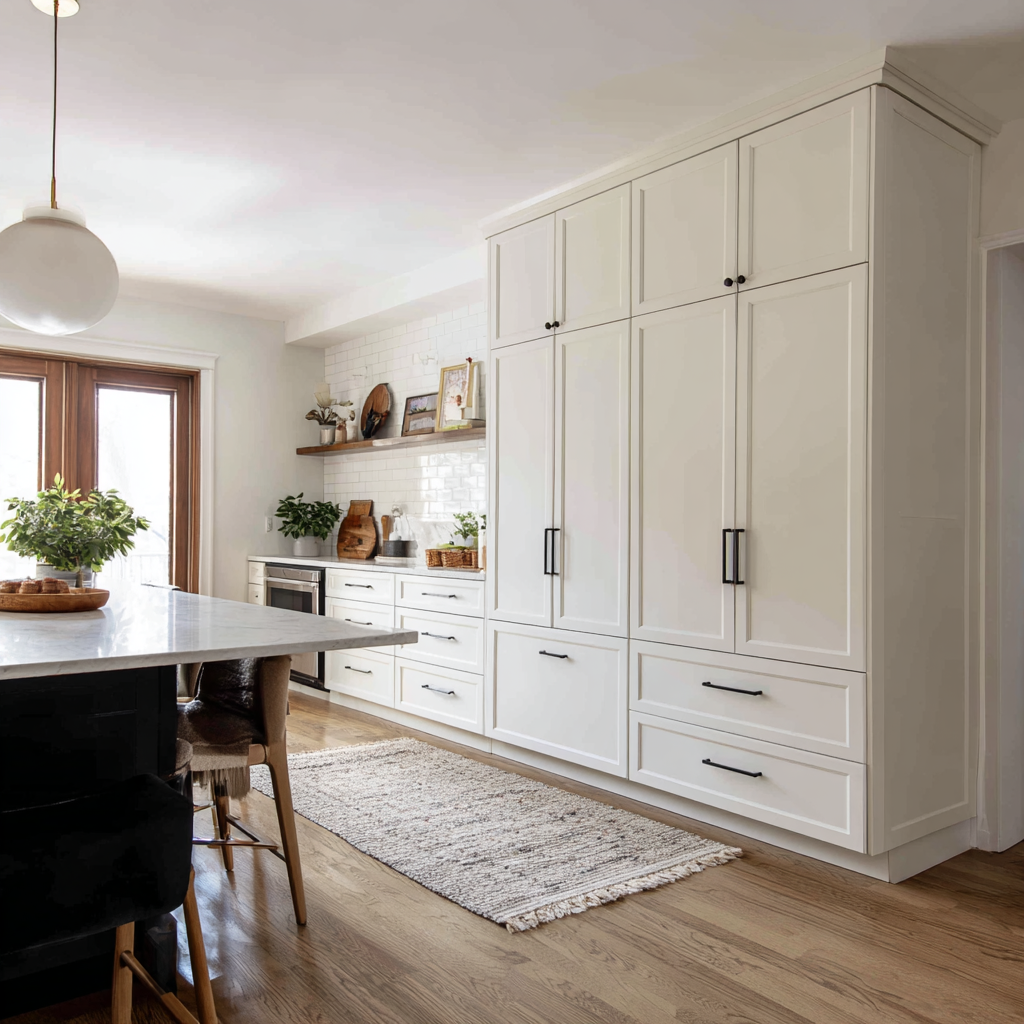
One of the most striking applications of floor-to-ceiling cabinetry is the panel-ready refrigerator. When your fridge is clad in the same door fronts as the surrounding cabinets, it disappears into the wall of cabinetry, creating a smooth, unbroken look that feels intentional and polished.
This approach works particularly well with counter-depth or integrated refrigerators, which sit flush with the cabinet line rather than protruding into the kitchen. If you're already investing in full-height cabinets, a panel-ready fridge is worth considering—it's the kind of detail that makes the whole kitchen feel more cohesive. Your contractor can help you coordinate the panel dimensions and installation, since getting the alignment right is key.
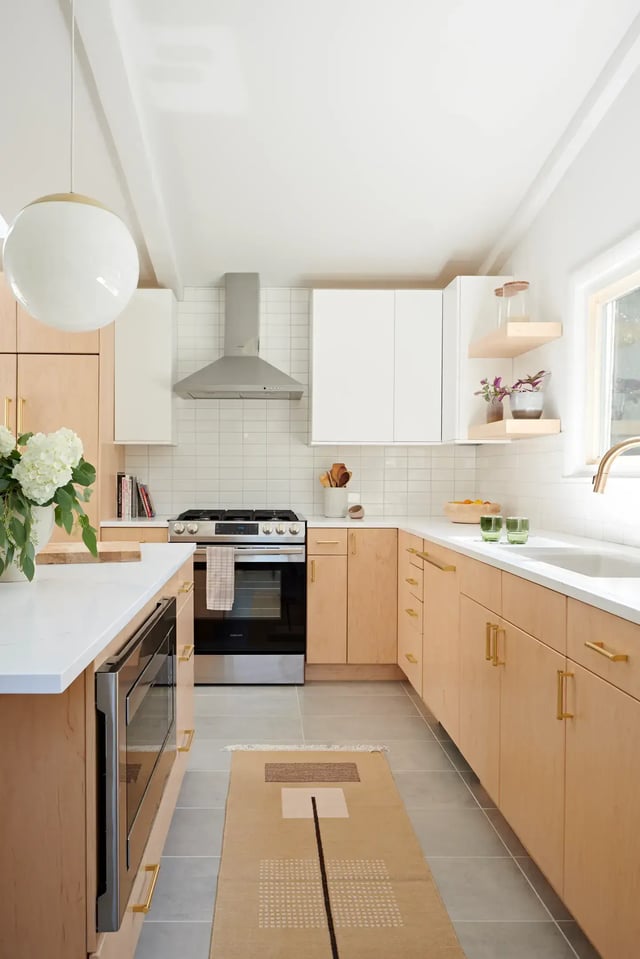
A full wall of identical cabinet doors can start to feel monotonous, no matter how beautiful the individual panels are. Breaking up the rhythm with a few different door treatments keeps the design from feeling flat.
Glass-front doors are a natural choice for upper cabinets, especially if you have dishware or glassware you'd like to display. Frosted or reeded glass adds texture without putting everything on full display. You might also consider leaving a few sections as open shelving—a vertical column of shelves between cabinet towers, for instance, is a great spot for cookbooks, decorative objects, or frequently used items. The contrast between closed and open storage adds depth and personality to the design.
Another way to keep a full wall of cabinets from feeling one-dimensional is to use two different colors—one for the upper cabinets and another for the lowers. This creates a natural visual break at the countertop line and gives the kitchen a sense of depth and intention. A popular pairing is lighter uppers with darker or warmer-toned lowers, which grounds the room while keeping the upper portion of the wall feeling open.
You could also reverse this, or introduce a contrasting color on a single tall pantry column or appliance tower to draw the eye. The key is choosing tones that complement each other rather than compete—think soft white uppers with sage green lowers, or warm oak bases beneath matte gray uppers. Two-tone designs also pair naturally with the minimal hardware approach, since the color contrast itself provides enough visual interest without needing hardware to do the heavy lifting. For inspiration, check out our guide to mixing natural wood and painted cabinets.
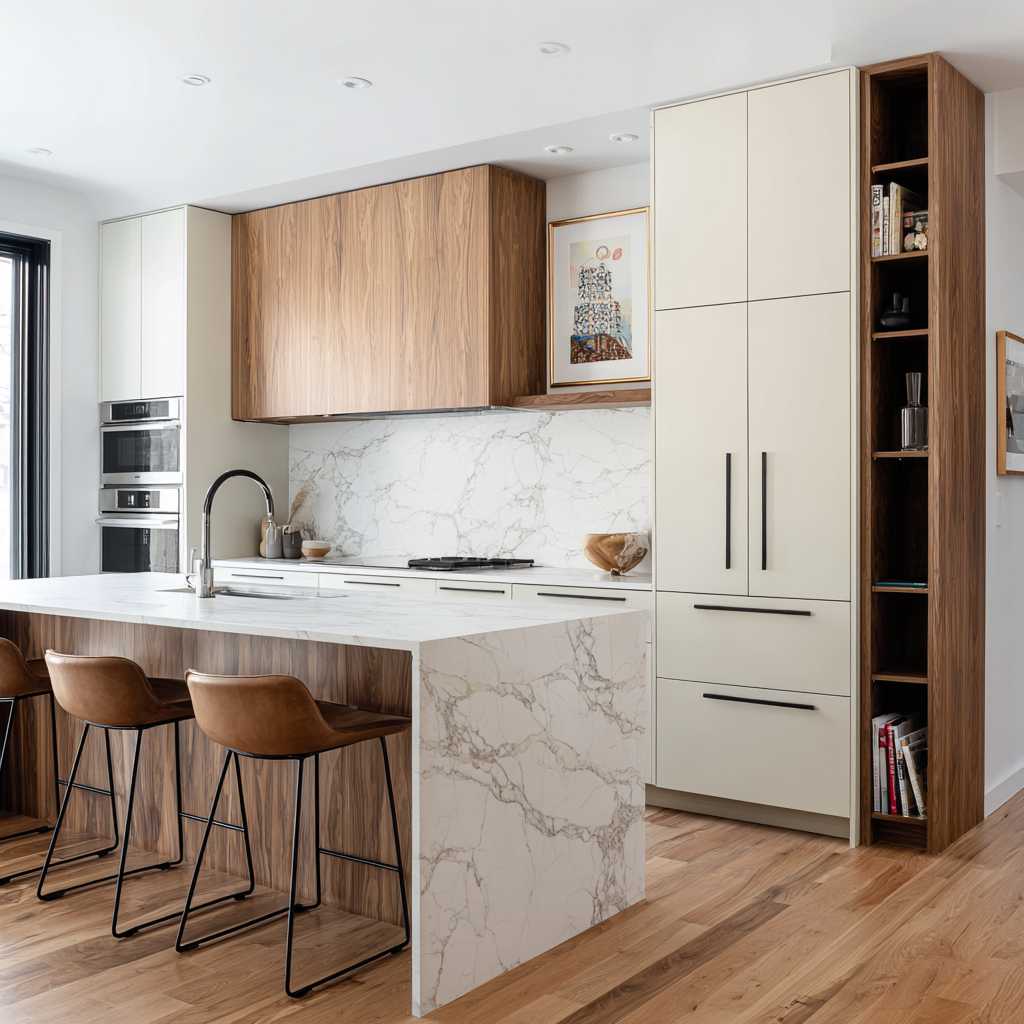
When cabinets stretch from floor to ceiling, hardware becomes one of the most visible design elements in the room. Lots of pulls and knobs on a full wall of cabinetry can create visual clutter, so many designers recommend a restrained approach.
Handleless cabinets with push-to-open mechanisms or integrated finger pulls offer the cleanest look. If you prefer traditional hardware, choose slim, understated pulls in a finish that blends with your door color—matte black on dark cabinetry or brushed nickel on lighter tones, for example. The less the hardware competes with the overall composition, the more polished the result.
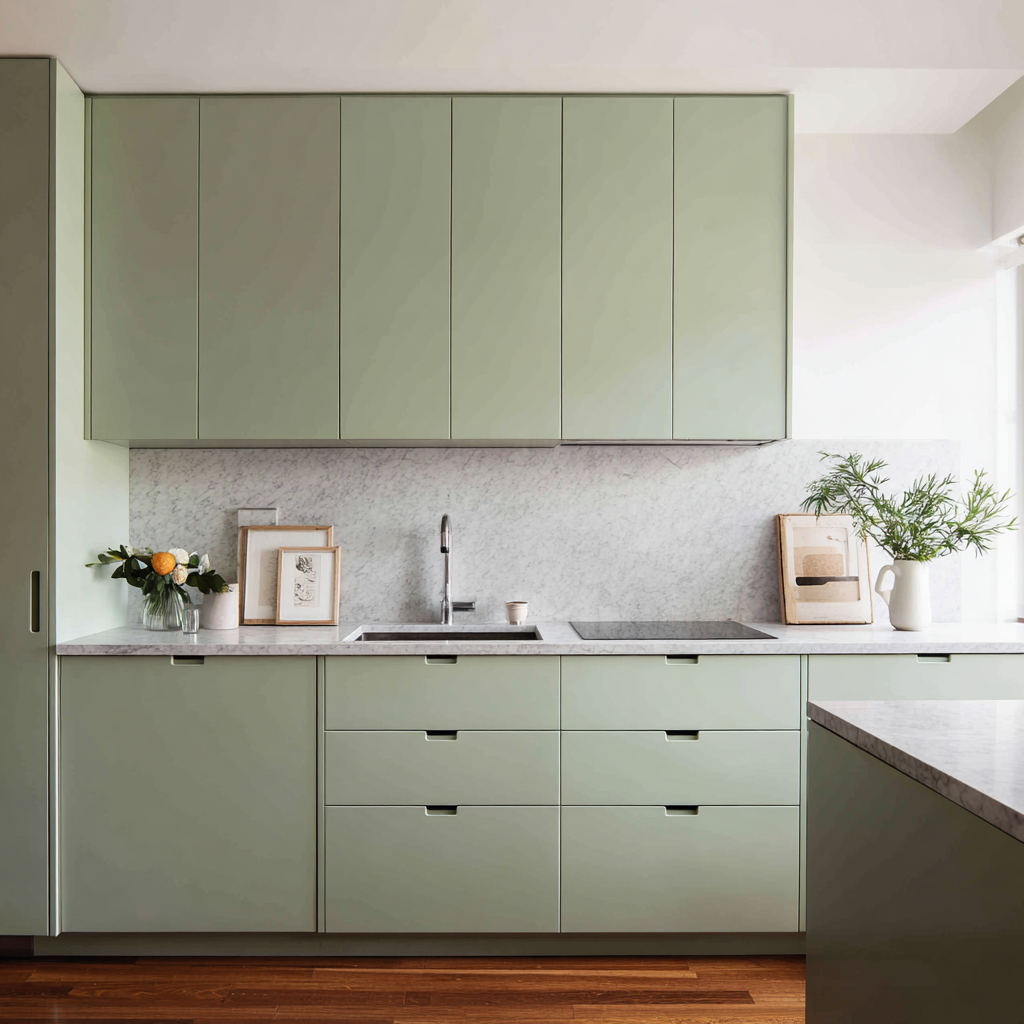
Light-colored cabinetry—whites, soft grays, warm beiges, and muted sage greens—tends to be the most forgiving choice for floor-to-ceiling applications. Lighter tones reflect more light and help a full wall of cabinets feel airy rather than imposing. They also make the cabinetry recede slightly, which is especially helpful in kitchens with limited natural light.
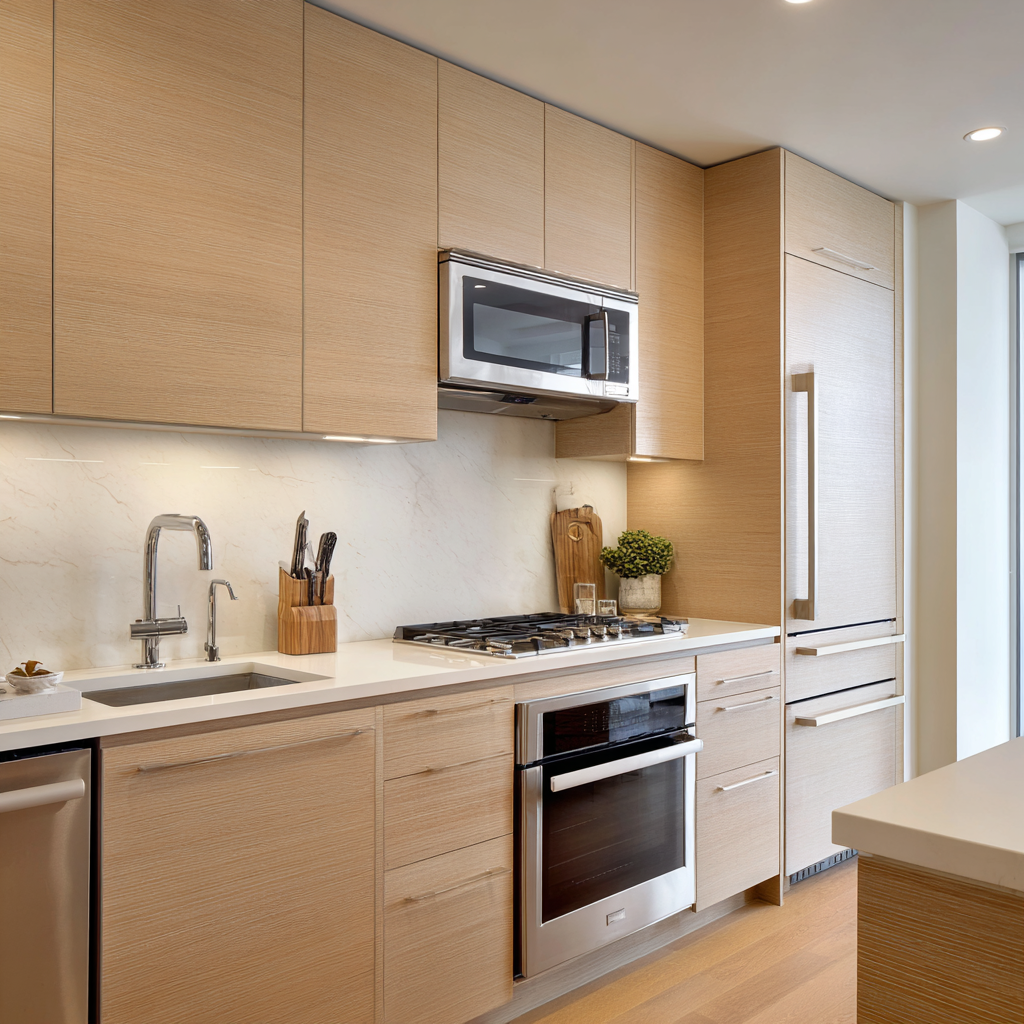
Warm wood tones like light oak or maple offer a similar effect while adding natural texture. These materials work beautifully in Scandinavian-inspired or mid-century modern kitchens and pair well with marble or quartz countertops and backsplashes.
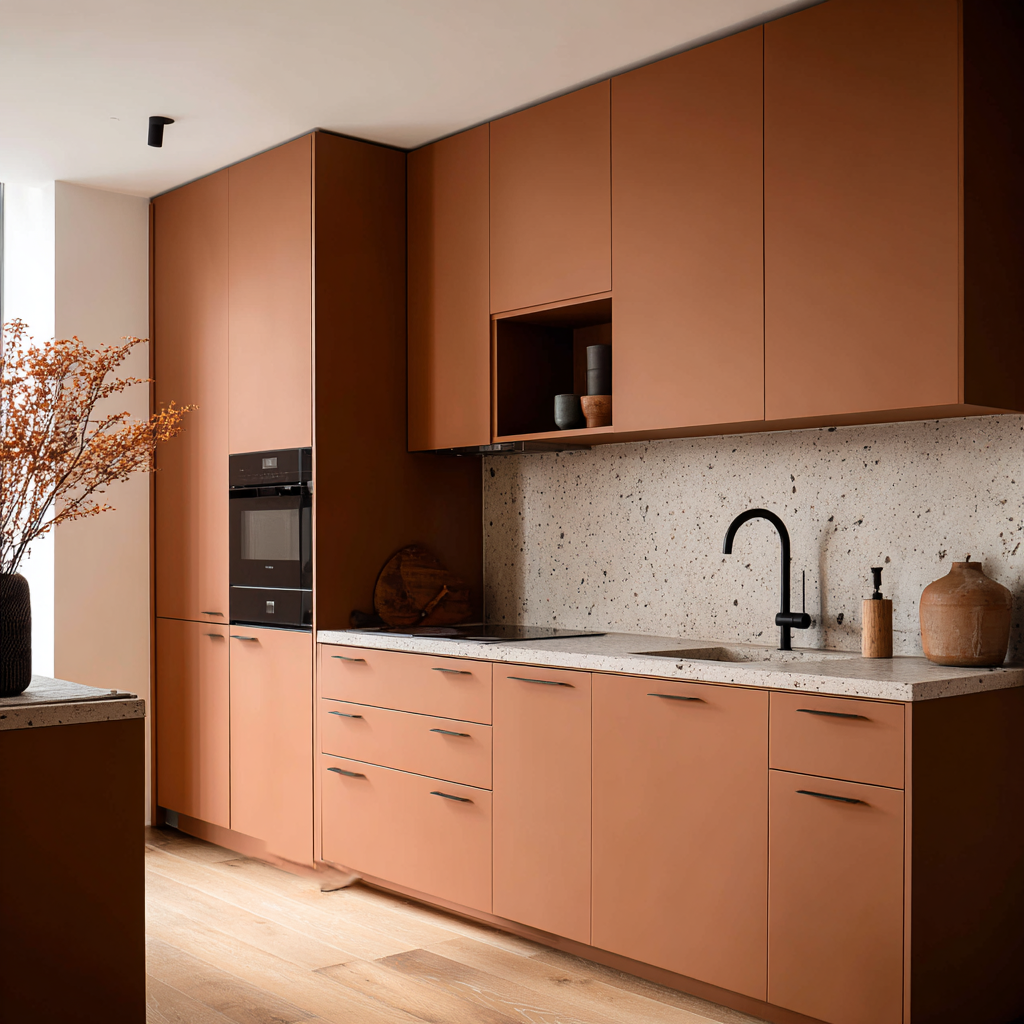
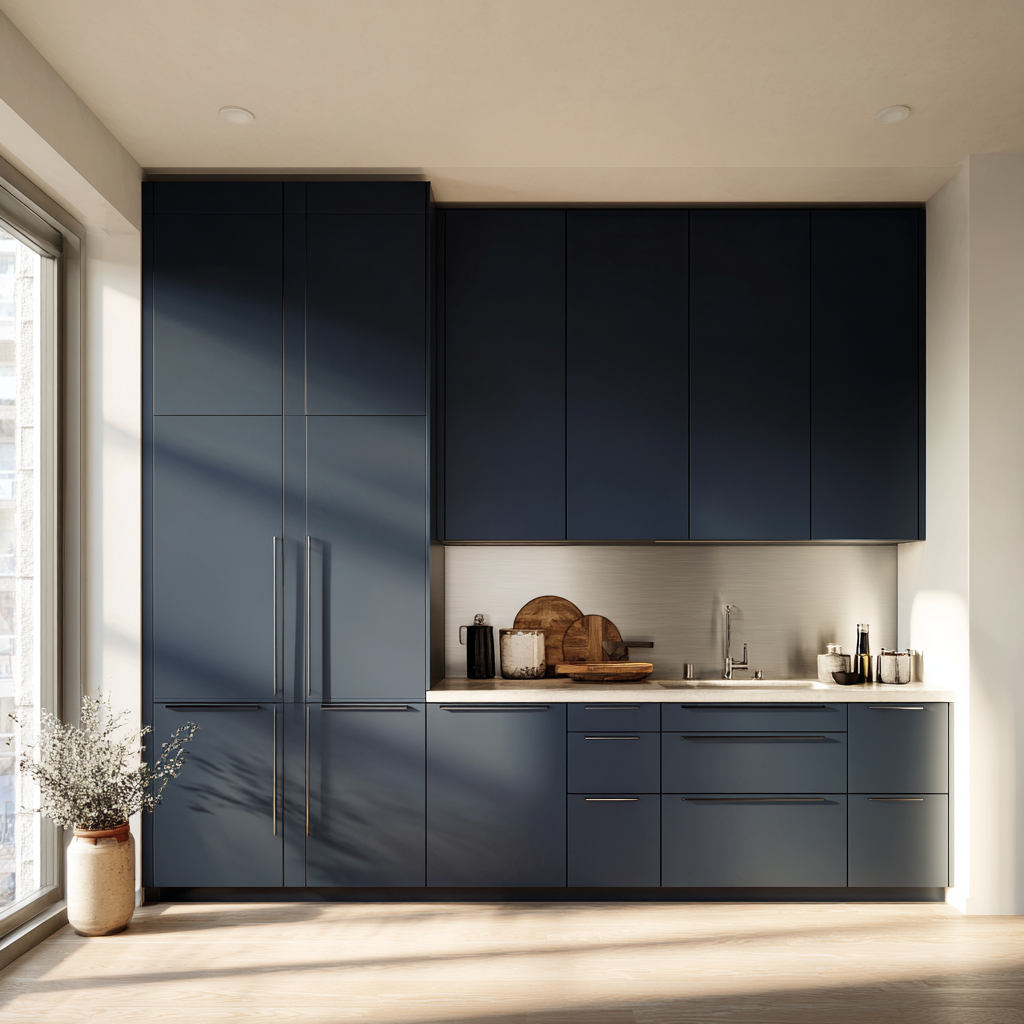
Dark cabinetry—deep navy, charcoal, rich terracotta, or forest green—can look absolutely stunning in a floor-to-ceiling application. But without careful balancing, a full wall of dark cabinets can make the kitchen feel closed in.
The key is contrast. Pair dark cabinetry with a light countertop and backsplash to create breathing room in the design. A white marble or light quartz backsplash, for instance, breaks up the visual weight and draws light into the space between your uppers and lowers. Light flooring also helps—it prevents the room from feeling like a cave. The interplay between dark cabinets and light surfaces is what gives this look its drama without tipping into heaviness.
You don't necessarily need floor-to-ceiling cabinets on every wall. In many kitchens, the most effective approach is to concentrate full-height cabinetry on one or two walls and let the others breathe with standard-height uppers, floating shelves, or a window.
A common and effective layout is to run floor-to-ceiling cabinets along the wall opposite your main work area, often flanking a panel-ready fridge or a tall pantry column. This anchors the room with a strong visual statement while leaving the cooking and prep zones feeling open. If your kitchen has a window, avoid blocking it with tall cabinetry—natural light is too valuable, and the contrast between a full cabinet wall and an open, light-filled wall creates a more dynamic and comfortable kitchen.
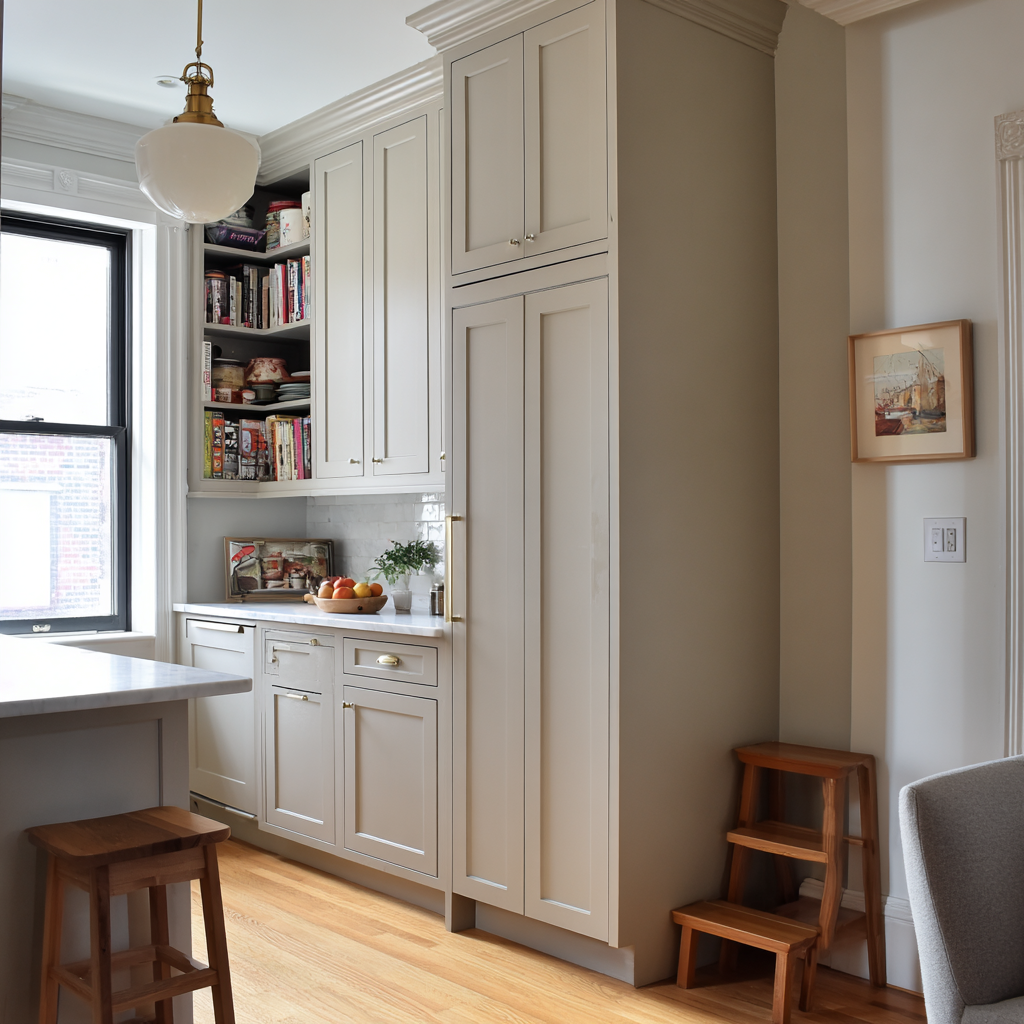
A solid wall of cabinetry—especially in darker tones—can feel a bit heavy after the sun goes down. Thoughtful lighting makes a noticeable difference. Under-cabinet task lighting is a practical starting point, illuminating your countertops and adding a warm glow that breaks up the visual mass of the cabinets above and below.
If your design includes glass-front doors, interior cabinet lighting can highlight what's inside and create a softer, layered look in the evening. LED strip lighting above the cabinet line (if there's a small reveal between cabinets and ceiling) can also wash the ceiling with light, making the room feel taller. These touches don't just look good—they make the kitchen more functional and comfortable to spend time in.
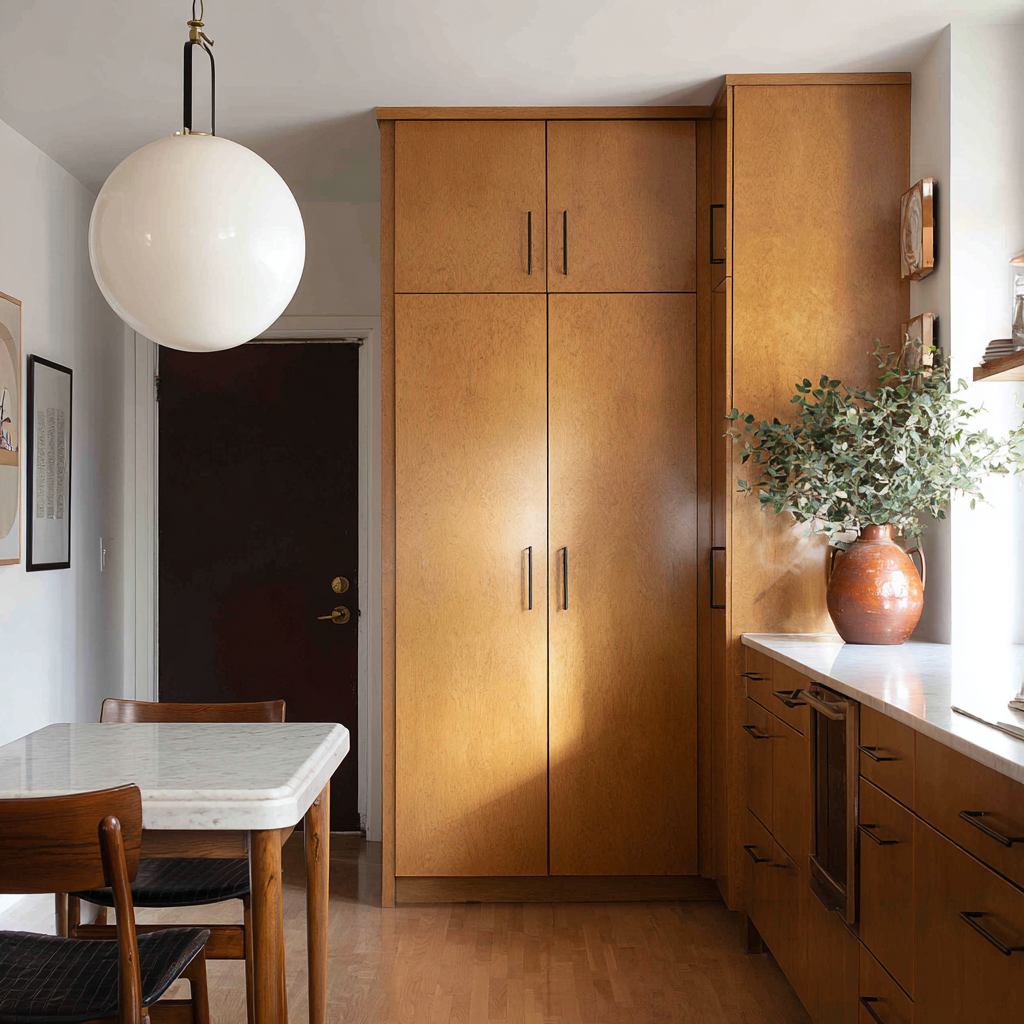
Floor-to-ceiling cabinets require precise measurement and professional installation. The tolerances are tight—walls and ceilings are rarely perfectly straight, so fillers, scribe molding, and careful shimming are almost always part of the process. Cabinets that aren't properly secured at full height can sag or pull away from the wall over time, and uneven gaps along the ceiling line will undermine the entire look. A licensed contractor experienced in kitchen renovations will know how to handle these details and coordinate with electricians or plumbers as needed. Block Renovation connects homeowners with vetted professionals who specialize in exactly this kind of work.
Block's Renovation Studio is a free tool that lets you experiment with cabinet styles, colors, and materials in a visual rendering of your actual space—so you can see how floor-to-ceiling cabinetry will look before a single wall is touched. You'll also get real-time cost estimates as you adjust your selections, giving you a clear sense of how each design decision affects your overall budget. It's a low-pressure way to refine your vision and walk into contractor conversations with confidence and clarity. Click here to visualize different cabinet options.
Floor-to-ceiling cabinets are one of those design choices that reward careful planning—and the right team makes all the difference. Block Renovation can match you with vetted, licensed contractors who are the right fit for your project, style, and location. It's the kind of support that helps you move from inspiration to a finished kitchen you'll love coming home to.
Remodel with confidence through Block

Connect to vetted local contractors
We only work with top-tier, thoroughly vetted contractors

Get expert guidance
Our project planners offer expert advice, scope review, and ongoing support as needed
Enjoy peace of mind throughout your renovation
Secure payment system puts you in control and protects your remodel

Renovate confidently with Block
Easily compare quotes from top quality contractors, and get peace of mind with warranty & price protections.
Cabinets
How to Choose Kitchen Cabinets for Your Goals
06.24.2026
Cabinets
Kitchen Cabinet Planning: Layout, Order, Organize
06.22.2026
Cabinets
Brown Cabinets With White Countertops: Design Guide
06.04.2026
.webp?width=640&name=u5821215421_Three-quarter_angle_view_where_70_of_the_frame_is_6ec560a5-707c-4e76-b31c-a0fdeb867a6d_0%20(2).webp)
Cabinets
Extending Kitchen Cabinets to the Ceiling: Before & After
05.25.2026
Cabinets
Refacing vs. Replacing Cabinets - 2026 Costs
05.08.2026