



Structural Changes
How to Close an Open Concept Floor Plan
07.11.2026
04.23.2026


In This Article
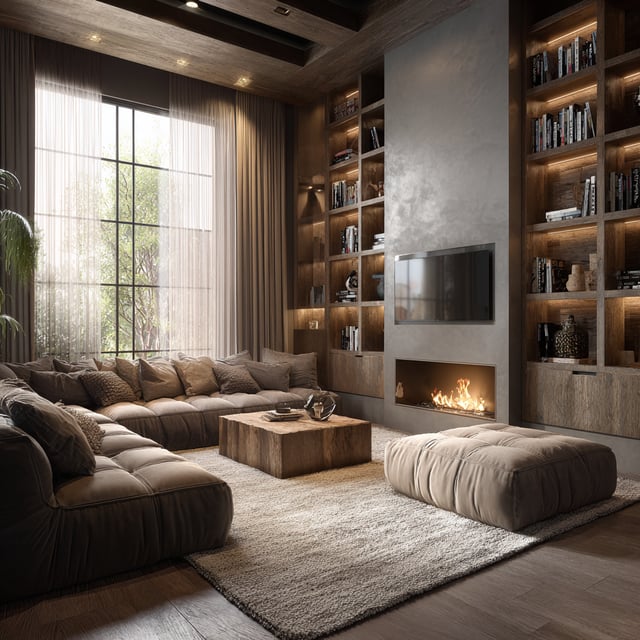
Gas fireplaces have become one of the most requested upgrades in home renovations, and it's not hard to see why. They're warm, they look good, and compared to a wood-burning fireplace, the day-to-day experience is far easier. No logs to haul, no ash to sweep, no chimney to clean every year. Just heat, on demand, at the turn of a dial.
The cost question has a lot of variables baked into it. What you buy and where you put it matter as much as any single line item on a contractor's estimate. Get both right and you have a feature you'll use every day for years. Get either one wrong and you've spent serious money on something that mostly gets ignored.
Most homeowners skip this decision too quickly, and it affects both your installation cost and your long-term experience. There are three main venting configurations, and they are not interchangeable.
The other major decision is form factor. Traditional firebox designs mimic the look of a wood-burning fireplace with realistic logs and an upright opening. Linear fireplaces are the wide, horizontal units you've seen in contemporary interiors and they tend to cost more, both for the unit and for installation. A quality linear model starts around $2,800-$4,200 for the unit alone, while traditional designs begin closer to $1,600. Neither price includes installation, venting, gas line work, or any finish work around the unit.
Turn your renovation vision into reality
Get matched with trusted contractors and start your renovation today!
Find a Contractor
Costs have moved in the past few years. Supply chain pressures and tariffs hit construction materials hard through 2024 and into 2025, and those increases haven't fully reversed.
Unit costs (appliance only, before installation)
Total installed costs (unit + labor + venting + gas line)
These figures don't include surround, mantel, hearth, or decorative tile work, which can add $2,000-$10,000+ depending on your material choices. Budget for these from the start, not as an afterthought.
Where you live matters too. Labor rates in major metro areas like Seattle and Chicago run 20-30% above national averages. Permit fees are higher on the East Coast and in California, where stricter building codes add both cost and timeline. In rural markets, labor can be cheaper, but limited contractor availability and delivery fees often close that gap.
Location is the biggest variable in what a gas fireplace costs to install. It's also the biggest variable in whether you'll actually use it.
If you have an underused wood-burning fireplace, converting it with a direct vent gas insert is the most cost-effective path available. The structure is there, the chimney is there, and the gas line extension is typically straightforward. You're turning dead space, usually a significant source of drafts, into something that actually works.
This is also where you tend to see the best return. You're not building something new; you're reviving something that already has presence in the room.
For a from-scratch installation, a main floor room on an exterior wall keeps costs down and delivers the best everyday value. The vent run is short, the gas line routing is simple, and the framing is predictable.
The living room, family room, or a well-used open-concept space is the right home for this. A fireplace in a room where your household actually gathers every evening is one that earns its place.
If your you’re remodeling a sunken living room, that architectural detail that's been making a well-deserved comeback, a gas fireplace is practically made for it. The lowered floor draws the eye, creates a naturally intimate atmosphere, and a fireplace on the feature wall anchors the whole room. It's a space people actually sit in, which is the whole point.
Venting runs longer in a basement, which adds cost, but gas line routing is often easier since pipes are more accessible. The installation math is manageable.
The real question is how often your household actually uses that space. A finished basement that functions as a rec room or regular hangout is a reasonable candidate. A basement that mostly serves as overflow storage isn't. A fireplace in a room that only gets used a handful of weekends a year won't deliver what you're hoping for.
Every floor you go up adds complexity. Venting runs get longer, gas lines extend further, and you may need a custom chase built to route everything out properly. Total project costs can easily push $12,000-$20,000 or more.
A primary bedroom fireplace can be worth it. It's a room you use every day, and there's something hard to put a number on about a fire on a cold morning. Just be clear-eyed about the premium you're paying for that location.
A guest bedroom is a much harder sell. The fireplace will sit dormant most of the year.
Both scenarios add cost without adding much. Gas line extensions run roughly $15-$30 per linear foot, so a fireplace on the opposite end of the house from the meter can add well over a thousand dollars before you've bought a single component. Interior walls require venting to travel through finished ceilings or up through the roof, which means more framing and finishing work.
Neither is a dealbreaker, but your contractor should walk the full routing path before you commit to a location. Finding out about a complicated vent path after you've ordered the unit is an expensive surprise.
The return on a gas fireplace varies more than the industry's talking points suggest, and where you live matters a lot.
Studies point to property value increases of 6-12% in markets where fireplaces are highly desirable, but that range assumes buyers in your market actually want one. In Seattle, where winters are long, grey, and persistently damp, a gas fireplace is something buyers factor into their offer. In Anchorage, where heating costs are high and zone heating is a practical matter, a well-placed fireplace can pay for itself in energy savings over time. In Phoenix or Miami, you're largely buying comfort and ambiance, and the resale math reflects that.
Placement factors here too. Realtors consistently note that fireplaces in main living areas carry more resale weight than those in bedrooms or basements. Buyers need to picture themselves using it.
On energy, a gas fireplace running at roughly $0.50-$0.60 per hour lets you heat the room you're in and pull back on central heat elsewhere. Estimated annual savings run $200-$500 depending on climate, usage, and how efficient your central system is. In colder markets that number tends to run higher.
If you're installing one purely as a financial investment, manage your expectations. Most homeowners don't recoup the full installation cost at resale. The real case for a gas fireplace is daily use and the kind of appeal that slows buyers down during a showing.
Gas fireplaces have a well-earned reputation for being low-maintenance, and compared to a wood-burning fireplace, they are. No ash cleanup, no chimney sweeping, no hauling logs. But low-maintenance isn't the same as maintenance-free.
Plan for an annual inspection and service visit where a technician checks connections, cleans the burner and glass, and inspects the venting. That typically runs $100-$200. Factor in periodic glass cleaning and the occasional battery swap for remotes and thermostats.
Boston homeowner Aaron Long chose gas specifically because he assumed it would be hands-off. "I thought I was getting something I'd never have to think about," he said. "The annual service appointment caught me off guard. Not a big deal financially, but it wasn't something I'd factored in." He's quick to add that he doesn't regret the decision. His smaller sitting room off the kitchen heats up in about ten minutes, and he and his wife essentially stopped using central heat from November through March.
Permits: Required for most installations. Budget $200-$600 depending on your municipality, and more in dense cities with stricter codes.
Gas line extension: Get this quoted explicitly. The further your chosen location is from the gas meter, the more it adds, and the number can grow quickly.
Vent termination requirements: Where the vent exits your home must meet minimum clearance rules from windows, doors, and corners. Obstructions on your preferred wall can add cost or force a redesign.
Surround, mantel, and hearth: The unit is just the beginning. Budget separately for finishes. The range from modest tile and a stock mantel to custom stonework is enormous, so know your number before you fall in love with an inspiration photo.
The homeowners who end up happiest with their gas fireplaces chose a location they actually live in, picked the right unit type for their home, and went into the project knowing the full scope. None of that requires being a renovation expert. It just requires asking the right questions before anything gets ordered or installed.
Block Renovation's network of vetted, licensed contractors includes professionals experienced in this kind of work, from direct vent inserts in prewar homes to new linear fireplaces in modern open-concept renovations.
Remodel with confidence through Block

Connect to vetted local contractors
We only work with top-tier, thoroughly vetted contractors

Get expert guidance
Our project planners offer expert advice, scope review, and ongoing support as needed
Enjoy peace of mind throughout your renovation
Secure payment system puts you in control and protects your remodel

Renovate confidently with Block
Easily compare quotes from top quality contractors, and get peace of mind with warranty & price protections.
Structural Changes
How to Close an Open Concept Floor Plan
07.11.2026
Structural Changes
Cost to Enlarge a Window: What to Expect and Decide
06.15.2026
Structural Changes
Minimum Hallway Width: Residential Code Guide
06.03.2026
Flooring
Subfloor Replacement Costs and Processes
05.15.2026
.webp?width=640&name=Contractors_-_What_you_c_an_expect%20(2).webp)
Structural Changes
Duplex Conversion to Single Family Home: A Practical Guide
05.11.2026