





Pennsylvania
Pittsburgh Home Additions: Cost Guide by Neighborhood
06.30.2026

04.24.2026


In This Article
Lancaster County is one of the most distinctive places in Pennsylvania to build a custom home, and one of the easiest to get wrong. The agricultural landscape, the plain-sect community, the township design boards, the land preservation program that restricts which parcels can be developed: none of these are obstacles to building in Lancaster. They are the conditions of it. Buyers who treat them as background noise end up with expensive houses that sit awkwardly on land they did not design for, in communities that never quite accepted them.
The buyers who get this right are the ones who let the land lead. What is the topography? What does the site face? What are the neighboring structures, and what do they say about what belongs here? A custom home in Lancaster County that takes those questions seriously will almost always outperform one that imports a floor plan from another market and figures out the site later.
Design a Home That’s Uniquely Yours
Block can help you achieve your renovation goals and bring your dream remodel to life with price assurance and expert support.
Get Started
Lancaster County has one of the most active farmland preservation programs in the United States. Act 319, known as Clean and Green, is a Pennsylvania preferential assessment program that reduces property taxes on agricultural, forest, and open space land in exchange for a use restriction: the land must stay in qualifying use, and development triggers rollback taxes and penalties that can run to tens of thousands of dollars.
A large portion of the agricultural land in Lancaster County is enrolled in Act 319 or under an agricultural conservation easement held by the Lancaster Farmland Trust or another preservation entity. These easements run with the land permanently. A parcel with an agricultural conservation easement cannot be subdivided for residential development regardless of its zoning classification. The easement wins.
Before pursuing any rural or agricultural parcel in Lancaster County, confirm:
The Lancaster County Planning Commission and individual township zoning officers are the right starting points for these questions. Your real estate attorney and a local land use consultant should be engaged before you make an offer on any parcel with agricultural characteristics.
The effect of Act 319 and easement programs is that the supply of developable rural land in Lancaster County is more constrained than the acreage figures suggest. Large parcels exist and some come to market. Many of them have preserved portions, agricultural use requirements, or Act 319 enrollment that limits what can be built and where on the tract. Understanding that constraint before you fall in love with a piece of land is the first discipline of building well here.
Lancaster County is a patchwork of townships, boroughs, and municipalities, each with its own zoning ordinance, subdivision and land development ordinance, and in some cases an architectural or design review process.
Several Lancaster County townships with strong agricultural and plain-sect community character have adopted design standards that reflect the Pennsylvania German building traditions of the region. These standards favor:
A contemporary flat-roof structure with horizontal cedar cladding and floor-to-ceiling glazing may be architecturally sophisticated by any national standard. In some Lancaster County townships, it will face a design review process that is skeptical of it, and a neighborhood that will be indifferent to it at best.
Engage an architect who understands this landscape, one who knows the difference between a design that is modern and a design that ignores where it is. The best custom homes in Lancaster County find ways to be contemporary within a vernacular framework: clean forms that reference the agricultural barns and stone farmhouses that define the region's visual character without copying them literally.
Before finalizing your design, request a pre-application meeting with your township's zoning officer or planning commission.
The county's planning commission provides review and commentary on subdivision and land development plans but approval authority rests with township supervisors and borough councils.
For a new single-family custom home in a Lancaster County township, the process typically involves:
Much of Lancaster County outside borough centers relies on on-lot septic. Pennsylvania's sewage program requires a sewage permit from the local sewage enforcement officer (SEO), and the feasibility of an on-lot system depends on soil perc test results. Lancaster County's clay-heavy agricultural soils can fail perc tests in areas that otherwise look buildable. Get the soil and perc evaluation done before you commit to a parcel.
Pennsylvania does not have a statewide general contractor license for residential construction. Home improvement contractors must register with the Pennsylvania Attorney General's office under the Home Improvement Consumer Protection Act. Verify that registration and confirm general liability and workers' compensation insurance before any work begins.
Lancaster County attracts buyers who want land. Acreage, privacy, views over farmland, the feeling of being somewhere distinct from suburban Philadelphia or the Route 30 corridor. That desire is real and the land here can deliver on it. The problem is when buyers purchase ten acres to feel rural and then hand the project to an architect or design-build firm without a clear brief about how that land should shape the house.
The result is usually a house that could be anywhere. It sits in the middle of a field facing the road because that is the easiest configuration. The views from the principal rooms do not capture what made the land worth buying. The building has no relationship to the topography, the tree lines, the drainage patterns, or the agricultural structures nearby. It is a suburban house that happens to have a big yard.
The antidote is site analysis before design. Where does the sun track across the property? Where is the high ground, and what does it see? Where are the prevailing winds coming from, and where does the land provide shelter from them? Where do the existing tree lines create enclosure, and where do they create a frame for a view? A good architect working in this landscape will spend time on-site before drawing a single plan line. Orientation, entry placement, how the porch or terrace meets the view: those decisions are the difference between a house that belongs here and a house that was installed here.
Engage your architect before you buy the land if possible. Walking a prospective site with the person who will design the house on it is one of the most valuable hours you can spend. It changes what you see, and sometimes it changes the decision.
Know the Cost Before You Start
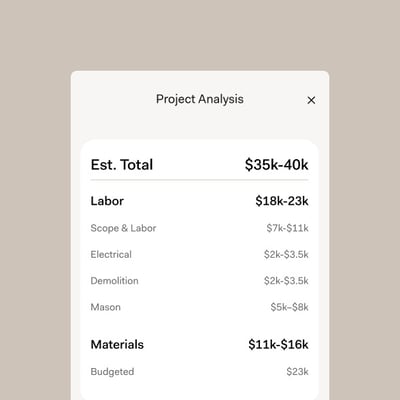
By Pennsylvania standards, Lancaster County is a mid-cost construction market. It runs more expensive than rural central Pennsylvania and less expensive than the Philadelphia Main Line or the New Jersey Shore.
Custom home construction in the Lancaster area currently runs approximately $200 to $310 per square foot for the structure, depending on finish level, complexity, and whether natural stone or other regional materials are specified. A 2,600 square foot home at the midpoint represents roughly $660,000 in construction cost before land and soft costs. Decisions about cost-effective home design made early have an outsized effect at this price point.
Land in Lancaster County varies considerably. Agricultural parcels in Act 319 enrollment are assessed at reduced value for tax purposes but sell at market prices that reflect their development potential. Given preservation constraints, that potential can be lower than buyers expect for the acreage involved. Developable rural lots with good site characteristics and municipal sewer access typically run $80,000 to $200,000. More remote parcels requiring well and septic run lower but carry utility installation costs.
The exterior envelope matters more in Lancaster County than in most markets because the relationship between the house and the land is what people see first and what endures. Cutting corners on roofing materials, exterior cladding, or window quality to save money is visible at 200 feet and regrettable within five years. Invest in materials that age well in this climate and that suit the regional context. The mechanicals and insulation are the other priority: Lancaster County has hot, humid summers and cold winters, and a tight, well-insulated building envelope pays back consistently.

“Small details like upgraded light switches can create outsized impact. Thoughtful design moments make buyers fall in love.”
The challenge is finding contractors whose experience extends to the specific demands of rural site work, on-lot utility systems, and the design review expectations of individual townships.
Ask to see completed custom home projects on rural parcels similar to yours, not just residential projects generally. Site work on a five-acre lot in Earl Township is different from a suburban infill build in Lancaster city. Contractors with rural site experience understand drainage, well and septic coordination, agricultural easement constraints, and the logistics of building away from municipal infrastructure.
Ask specifically about their experience with the township where your project will be permitted. Township relationships matter in Lancaster County. A contractor who has navigated a particular township's design review process before will move faster and with fewer surprises than one doing it for the first time.
Three bids minimum, all responding to the same detailed scope. Lancaster's market has real price variation, and the differences often come down to how site work is priced and how the contractor accounts for rural utility costs. Line-item proposals are the only way to understand what you are comparing.
Lancaster County's seasons are distinct and affect the construction schedule. Concrete pours and foundation work should avoid the harshest winter months; most projects target a spring start to get the foundation in before the summer heat and humidity arrive. The summer building season is productive, but framing lumber in Lancaster's humid summers should be protected from prolonged moisture exposure before the envelope is closed.
A custom home in Lancaster County typically takes 12 to 16 months from permit approval to certificate of occupancy. Rural sites with septic systems add time at the front end. Sewage planning module approval and perc testing can add 6 to 12 weeks before the building permit application can even be submitted. Factor this into your overall project timeline from the start.
Block Renovation connects you with contractors matched to your project's specific demands, reviews your scope before bids are finalized, and provides a payment structure where your contractor is paid as work is completed.
The best custom homes built here in the last decade share one thing: the house looks like it belongs on that specific piece of land. That does not happen by accident. It happens when the site shapes the design from the first conversation, not the last.
Lay the groundwork for a successful custom home
Match with vetted builders
Receive quotes from experienced contractors aligned to your vision.

Hire with confidence
Partner with Block experts to review quotes and timelines for end-to-end clarity.

Stay in control
Avoid surprises with Block Protections and a progress-based payment system.


Renovate confidently with Block
Easily compare quotes from top quality contractors, and get peace of mind with warranty & price protections.
Pennsylvania
Pittsburgh Home Additions: Cost Guide by Neighborhood
06.30.2026

Pennsylvania
Home Additions in Pittsburgh: Working With Hills & History
05.07.2026
Pennsylvania
Custom Home Building in Lancaster County, Pennsylvania: Local Guide
04.24.2026

Pennsylvania
Pittsburgh Deck and Patio Ideas | Hillside Decks, Four-Season Design
04.17.2026
Pennsylvania
Home Renovation ROI in Pittsburgh: Local Quirks, Value-Add, and What New Buyers Want
04.10.2026