




Pennsylvania
Pittsburgh Home Additions: Cost Guide by Neighborhood
06.30.2026
04.10.2026


In This Article
Pittsburgh occupies a genuinely unusual position in the national housing market. At a median sale price of $230,000 to $270,000 depending on source and month, it is one of the most affordable major metros in the country and the only major US city where the monthly cost of owning a starter home is cheaper than renting. That affordability is drawing a growing stream of buyers from expensive coastal cities: remote workers priced out of New York, DC, and the Bay Area; CMU and Pitt graduates who have decided to stay; and a healthcare and tech sector creating consistent, well-paying employment.
These incoming buyers, who may have a $350,000 budget that felt impossible in their previous city, arrive in Pittsburgh with different expectations than long-term locals. They are accustomed to renovated homes with contemporary finishes, open layouts, and intentional design. When they find a well-presented home in Lawrenceville, Squirrel Hill, or Shadyside that delivers those things within their budget, they are often willing to move quickly and competitively.
The renovation opportunity for Pittsburgh sellers is specific: understanding what these buyers are looking for, what the city's housing stock can and cannot do, and where to invest to close the gap between the two. It is not about erasing what makes Pittsburgh homes distinctively Pittsburgh. It is about presenting those qualities, including the character, the views, and the neighborhood density, through a lens that resonates with a buyer who was comparing your rowhouse to listings in DC's Shaw neighborhood last month.
Design a Home That’s Uniquely Yours
Block can help you achieve your renovation goals and bring your dream remodel to life with price assurance and expert support.
Get Started
What makes Pittsburgh's housing stock different
Pittsburgh's hills are not incidental to its housing: they define it. Neighborhoods like Mount Washington, Duquesne Heights, Beechview, and Brookline are built on steep terrain that produces home types found almost nowhere else in the country. These include hillside homes with garages or living space at street level and main living floors reached by ascending interior stairs, Pittsburgh polebarn structures with foundations that descend four or more stories down the hill, and properties with rear yards that are more accurately described as cliffs. These topographical quirks create both limitations and genuine selling features. A home on the Monongahela-facing slope of Mount Washington with downtown views is a dramatically different product from an identical floor plan in a flat suburb.
Renovation decisions for hillside homes must account for access and structural realities that do not apply elsewhere. A deck that would be straightforward on a flat lot requires engineered structural supports on a hillside. A finished lower level that walks out to grade on a Mount Washington home has a completely different character than a conventional basement.
Pittsburgh's urban neighborhoods are filled with rowhouses and double houses, a local variant on the two-family flat that places two units side by side rather than stacked. These buildings are an important part of Pittsburgh's housing economics: many owner-occupants live in one unit and rent the other, making the renovation calculus different from a straightforward single-family sale. If you are selling a Pittsburgh double house, the renovation investment needs to consider the condition of both units and the income potential that buyers will factor into their offer.
Pittsburgh's strongest housing demand is concentrated in and around its university and hospital corridors: Squirrel Hill, Shadyside, and Point Breeze near CMU and Pitt; Lawrenceville, East Liberty, and Polish Hill within reach of the tech and innovation economy built around the universities; and the South Side near UPMC and Mercy. Homes in these neighborhoods face a buyer pool that includes medical residents, faculty, tech workers, and coastal transplants all competing in the same price range, which creates genuine pricing power for well-presented properties.
Transparent Pricing You Can Trust

The coastal transplant buyer arriving in Pittsburgh with a $300,000 budget has typically been looking at homes in markets where $300,000 is impossible. They are thrilled by Pittsburgh's affordability and the quality of its neighborhoods, but they arrive with taste expectations shaped by renovated properties in more expensive markets. The specific friction points they encounter in typical Pittsburgh older housing stock:
The highest-impact structural renovation in Pittsburgh's older rowhouses is the wall removal that opens the kitchen to the living and dining area. This single change, typically $5,000 to $15,000 depending on whether load-bearing elements are involved, fundamentally changes how the home reads on a showing, makes photography dramatically better, and directly addresses the compartmentalization objection that incoming buyers carry with them.
The caveat for Pittsburgh: many rowhouse walls that appear non-structural in a standard balloon-frame building are actually involved in the structural system of a brick masonry building in non-obvious ways. Any wall removal in a masonry Pittsburgh rowhouse requires a structural engineer's assessment before work begins, not after. This adds cost and timeline, but it prevents the far more expensive outcome of discovering structural complications mid-demolition.
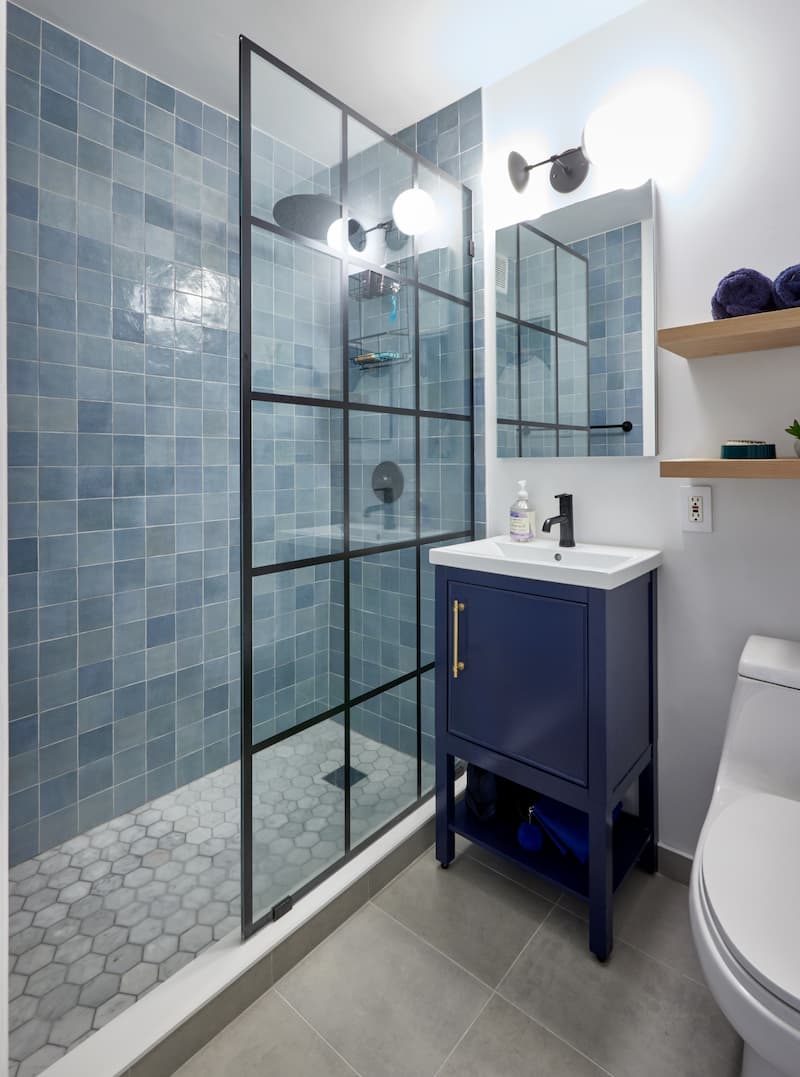
In a city where one full bathroom per home is common, bathroom condition and bathroom count are among the most impactful renovation variables available to Pittsburgh sellers. A dated but structurally sound bathroom can be refreshed with a new vanity, updated fixtures, retiled shower, and improved lighting for $8,000 to $15,000 in Pittsburgh's labor market, which is more affordable than coastal cities. The return is disproportionate in a market where the alternative is a buyer calculating the renovation cost themselves and deducting it from their offer.
Adding a half-bath where a home currently has only one full bathroom is one of the highest-ROI investments available to Pittsburgh sellers targeting the incoming buyer pool. The space requirements for a powder room are minimal: a closet converted under a staircase, a corner of an unfinished basement finished off, or a small bathroom carved from adjacent space. In older Pittsburgh homes where plumbing is being relocated or extended for this work, understanding the cost implications of rerouting plumbing helps sellers budget accurately before committing to the scope.

“Kitchens, bathrooms, floors, and simple cosmetic updates deliver the strongest resale impact. You don’t always need a gut renovation to wow buyers.”
Pittsburgh's labor costs are lower than coastal cities, which means a kitchen renovation that would cost $35,000 in DC or San Francisco might be achievable for $20,000 to $28,000 here. This changes the ROI calculation: a full kitchen renovation that would not pencil out in a higher-cost market can justify itself in Pittsburgh's more affordable construction environment.
For Lawrenceville and Shadyside homes targeting the incoming buyer pool at $280,000 to $400,000, a complete kitchen renovation including removing the wall to the dining area, installing new cabinetry and appliances, and adding an island or peninsula is increasingly the expected move. Buyers comparing your home to a renovated comparable are doing so against properties that have already made this investment.
For South Side and Polish Hill homes targeting first-time buyers at $200,000 to $250,000, a targeted refresh covering painted cabinets, new countertops, updated hardware, and lighting at $8,000 to $14,000 is the more appropriate investment level. Know your comparables before deciding how far to go.
The homes that command top dollar in Pittsburgh's in-demand neighborhoods, including Squirrel Hill, Shadyside, and Point Breeze, are the ones with intact original character: original hardwood floors in good condition, original woodwork and built-ins, and period-appropriate details that cannot be replicated at any price. Incoming buyers who have been looking at generic suburban inventory elsewhere specifically seek these features.
For sellers with homes where original materials have been covered rather than removed, including hardwood under carpet, woodwork under layers of paint, and original tile behind a dropped ceiling, restoration is almost always more valuable than replacement. Block's guide to remodeling an old home on a budget covers strategies for revealing and restoring original character without the cost of a complete gut renovation.
Pittsburgh's finished-basement culture means an unfinished basement is a genuine buyer objection rather than a neutral feature. A finished basement with drywall, flooring, lighting, and an egress window where required adds functional square footage that Pittsburgh buyers actively value, particularly for families and remote workers who need a dedicated home office. A basic finish typically costs $15,000 to $35,000.
Mount Washington, Duquesne Heights, and the hillside neighborhoods have something nearly unique in American urban residential real estate: dramatic downtown views from affordable homes. A home on the South Side Slopes or Mount Washington with a clear downtown sight line commands a premium that has nothing to do with interior finishes. For these properties, outdoor space such as a deck, terrace, or viewing platform that captures and showcases the view is one of the highest-ROI investments available. Buyers from New York or San Francisco who are accustomed to paying $1.5 million for a skyline view are willing to pay Pittsburgh's premium for the same experience at a fraction of the cost.
|
Renovation |
Estimated cost in Pittsburgh |
ROI profile |
Notes |
|
Wall removal (kitchen/dining open plan) |
$5,000-$15,000 |
Very high |
Structural assessment required for masonry buildings |
|
Bathroom refresh (single full bath) |
$8,000-$15,000 |
Very high |
Disproportionate impact in 1-bath homes |
|
Half-bath addition |
$8,000-$18,000 |
High |
Meaningfully expands buyer pool |
|
Kitchen renovation (mid-range) |
$18,000-$28,000 |
High in demand areas |
Lower labor costs than coastal markets |
|
Basement finishing |
$15,000-$35,000 |
Strong |
Expected feature in Pittsburgh's market culture |
|
Original hardwood restoration |
$3-$5/sq ft |
Very high |
Coastal buyers specifically seek this |
|
Deck addition with view emphasis |
$12,000-$25,000 |
Very high (hillside) |
View premium is real and significant |
|
Fresh paint and curb appeal |
$4,000-$8,000 |
Very high |
Foundation regardless of other investment |
Block Renovation is a technology-powered renovation platform that protects homeowners from common and costly renovation pitfalls. With Block, homeowners can receive personalized price estimates before construction begins. Block connects each project with thoroughly vetted local contractors, facilitates competitive bidding with expert-reviewed scopes, and manages payments through a secure, progress-based system.
Remodel with confidence through Block
Connect to vetted local contractors
We only work with top-tier, thoroughly vetted contractors

Get expert guidance
Our project planners offer expert advice, scope review, and ongoing support as needed
Enjoy peace of mind throughout your renovation
Secure payment system puts you in control and protects your remodel

Renovate confidently with Block
Easily compare quotes from top quality contractors, and get peace of mind with warranty & price protections.
Pennsylvania
Pittsburgh Home Additions: Cost Guide by Neighborhood
06.30.2026

Pennsylvania
Home Additions in Pittsburgh: Working With Hills & History
05.07.2026

Pennsylvania
Custom Home Building in Lancaster County, Pennsylvania: Local Guide
04.24.2026

Pennsylvania
Pittsburgh Deck and Patio Ideas | Hillside Decks, Four-Season Design
04.17.2026
Pennsylvania
Home Renovation ROI in Pittsburgh: Local Quirks, Value-Add, and What New Buyers Want
04.10.2026