




Building Your Custom Home in Santa Fe, New Mexico

Budget your upcoming Santa Fe custom home build with help from Block
How we get your estimate
Fill out the form above to either connect with contractors for a personalized quote or estimate your costs with Block's Renovation Studio.
Modern desert home with white stucco and wood accents.

In This Article

    Santa Fe is one of the most architecturally distinctive cities in the United States, with a building aesthetic rooted in centuries of Pueblo, Spanish Colonial, and Territorial traditions that the city has actively protected through its development code. At 7,000 feet in the Sangre de Cristo Mountains, it offers a four-season high-desert climate, a world-class arts community, a culinary scene that draws from deep Indigenous and New Mexican cultural traditions, and a pace of life that attracts retirees, artists, and remote-working professionals from across the country. The city's land values have appreciated significantly over the past decade, and the custom home market now competes with Aspen and Santa Barbara for high-end buyers who want the Southwest on their own terms.

    Building here involves navigating one of the most prescriptive architectural review processes in any American city, a limited contractor pool that commands premium rates, and a terrain and soil profile that differs meaningfully from the Phoenix and Albuquerque markets that supply much of the region's construction labor. Getting it right requires engaging with Santa Fe's specific conditions from day one rather than applying generic Southwest construction practices.

    Design a Home That’s Uniquely Yours

    Block can help you achieve your renovation goals and bring your dream remodel to life with price assurance and expert support.

    Get Started
    Cost and timeline overview for future Santa Fe homeowners

    Custom home construction in Santa Fe typically runs between $300 and $500 per square foot, with adobe or rammed earth builds and high-end finishes reaching $600 or beyond. The Historic Arts District and its surrounding neighborhoods carry the highest land premiums, while lots in the South Capitol area, along the Gonzales Road corridor, and in the newer subdivisions of Las Campanas and Aldea offer more predictable build environments at varying price points.

    Labor costs are elevated because Santa Fe's small local contractor pool is in consistent high demand, and specialty trades such as adobe masons, plaster finishers, and Saltillo tile setters carry rates that reflect skills not widely available outside New Mexico. Material costs for adobe block, vigas, latillas, and locally sourced stone add to both the budget and the authenticity of a well-executed Santa Fe custom home.

    The Historic Style Ordinance, which governs the exterior appearance of nearly all construction within the city limits, means that exterior design decisions are subject to architectural review approval, and deviations from approved Pueblo Revival, Territorial, or other traditional styles require a variance process that can add three to six months to the permitting timeline.

    The largest factors in determining cost

    Adobe and earthen construction, which is often required or strongly incentivized by Santa Fe's design standards, carries significantly higher labor costs than wood-frame construction due to the skilled craftsmanship required and the slower pace of earthen building relative to conventional framing. Vigas, the exposed round timber ceiling beams that are a defining interior and exterior element of Pueblo Revival design, need to be properly dried, sized for span, and installed with precise bearing details, and quality viga timber sourced from New Mexico or Colorado adds a material premium on top of the skilled installation labor. High-altitude mechanical derating affects HVAC, water heating, and gas appliance sizing in the same way as in Flagstaff, and Santa Fe's cold winters, which can drop below 10 degrees Fahrenheit and average over 12 inches of snow, require heating systems sized for genuine load rather than minimum code.

    Water rights and Santa Fe's tiered water rate structure are a planning consideration for homeowners specifying outdoor irrigation, pools, or water features, as Santa Fe's semi-arid high desert location makes water an expensive and politically charged resource. Architectural review fees and the extended permitting process through the Historic Design Review Board add soft costs to projects in the historic district that buyers from other markets often underestimate.

    Examples of upgrades that will push your budget higher

    These additions most consistently expand Santa Fe custom home budgets beyond initial estimates:

    • True adobe construction with stabilized block: Authentic adobe block walls, plastered with traditional earthen or cement stucco, require skilled craftspeople whose rates reflect a specialized trade with a limited regional labor pool.
    • Vigas, latillas, and corbel detailing throughout: Exposed round timber ceiling beams, diagonal latilla infill, and carved wood corbel brackets are defining Santa Fe interior elements that add both material cost and skilled installation labor.
    • Radiant floor heating beneath Saltillo or Mexican tile: Hydronic radiant under earthen tile floors is the most common and appropriate heating approach for adobe homes with thermal mass floors, adding to both the slab work and the mechanical scope.
    • Plaster finish walls throughout: Traditional or synthetic Santa Fe-style plaster in lieu of drywall requires multiple coats, trowel skill, and significant labor time that adds meaningfully to interior finish costs.
    • Custom woodwork and carved doors: Hand-carved entry doors, custom window surrounds, and painted furniture-style cabinetry in the New Mexican tradition are common high-end requests in Santa Fe custom homes.
    • Kiva fireplaces: The rounded corner fireplace that is a signature of Pueblo Revival interiors requires a skilled mason and adds to both the structural and finish budget, but it is among the most regionally distinctive elements in any Santa Fe home.
    • Courtyard design with privacy walls: Santa Fe's indoor-outdoor lifestyle centers on the enclosed courtyard or portal, and designing a walled courtyard with gate, portal, and landscaping adds both architectural interest and outdoor living utility at meaningful cost.

    Finding the right site in Santa Fe for your custom home

    Santa Fe's varied terrain, from the flat river valley bottomlands along the Santa Fe River to the rolling high desert foothills near the Sangre de Cristo range, creates lot conditions that differ significantly within short distances.

    Considerations will include:

    • Soil quality and site stability: Santa Fe sits on a mix of alluvial sediments deposited by the Rio Grande drainage system and residual soils developed over volcanic and sedimentary bedrock in the foothills. The alluvial deposits in the lower Santa Fe River valley can be expansive, with clay-rich profiles that shrink and crack in the dry season and swell with monsoon rains in ways that require engineered foundation solutions similar to those used in other Southwestern clay markets. Foothill lots near the Sangre de Cristo range often encounter shallow rocky profiles or caliche layers that complicate excavation and below-grade utility installation, and a geotechnical investigation is the responsible approach before foundation design is finalized on any lot outside a well-documented subdivision.
    • Utilities access: Santa Fe city water and sewer serve most of the incorporated city, though some parcels on the city's edges require well and septic systems and must navigate New Mexico's water rights framework, where domestic use permits are required and the available water budget is constrained by the region's senior water rights holders. Santa Fe's tiered water rate structure makes large-lot irrigation design an ongoing cost consideration rather than a one-time budget item.
    • Zoning and restrictive covenants: Santa Fe's Historic Style Ordinance applies to the entire city and governs exterior materials, massing, roofline profiles, wall height, and color for all new construction, not just properties within the historic district. The Historic Design Review Board reviews applications for projects that deviate from the prescriptive standards in the ordinance, and the review process can add three to six months to the permitting timeline.
    • Lot slope and drainage: Foothill lots in the areas northeast of the city toward the ski basin offer views of the Sangre de Cristo range but introduce slope stability and drainage challenges that flat lots don't carry. Santa Fe's monsoon season delivers concentrated rainfall in July and August that alluvial soils and compacted clay can't absorb quickly.
    • Proximity to amenities: Walkability to the Plaza, Canyon Road galleries, and the Railyard arts district carries consistent pricing premiums in Santa Fe's real estate market, and proximity to the Santa Fe Farmers Market and the city's excellent restaurant and cultural infrastructure shapes buyer preferences across price points.
    • Environmental concerns or hazards: Santa Fe faces documented wildfire risk in the foothills and mountain neighborhoods, a risk made vivid by the Hermits Peak and Calf Canyon fires of 2022 that burned over 340,000 acres in the Sangre de Cristo Mountains northeast of the city and displaced thousands of northern New Mexico residents. Radon is another documented concern in Santa Fe's geology, as New Mexico's high-uranium granite formations produce radon gas at concentrations that exceed EPA action levels in many local basements and crawl spaces, requiring passive or active mitigation systems in new construction.
    • View, orientation, and privacy: South-facing orientation delivers passive solar gain that is genuinely meaningful in a heating climate with 300 days of sunshine per year, and homes designed around that orientation can dramatically reduce heating loads through a combination of direct gain glazing, thermal mass storage, and roof overhangs sized for Santa Fe's solar angles. Sangre de Cristo mountain views carry strong pricing premiums and are protected in some neighborhoods by view corridor easements that limit the height and massing of new construction on downslope parcels.

    Preparing for unique local challenges

    Historic Style Ordinance compliance

    Santa Fe's Historic Style Ordinance is not a set of suggestions; it is a binding design framework that governs exterior appearance for all new residential construction within the city limits. Pueblo Revival style requires flat or low-sloped rooflines, parapet walls, smooth exterior plaster in earth tones, rounded corners, and vigas or simulated viga ends visible at the roofline. Territorial style allows for more formal symmetry, brick coping on parapets, and wood trim, but still requires plaster or stucco exteriors and specific massing standards. The Historic Design Review Board reviews applications that request deviations, and the board's decisions can require significant design revisions before a permit is approved. Working with an architect who has a strong track record of approved projects in Santa Fe is not optional for homeowners who want a design that moves efficiently through the review process.

    Water scarcity and water rights

    Santa Fe is one of the most water-stressed cities in the United States, operating in a semi-arid high desert at the headwaters of the Rio Grande basin where senior water rights holders and Pueblo water rights complicate the allocation of available supply. The city's water utility has implemented tiered pricing that makes landscape irrigation expensive at volumes common in wetter markets, and new residential developments are required to demonstrate compliance with water conservation design standards. Homeowners planning pools, water features, or extensive turf irrigation need to evaluate those choices against both the operating cost of Santa Fe's tiered water rates and the cultural expectation of drought-tolerant, xeriscape design that pervades the city's residential aesthetic. Homes relying on private wells must navigate New Mexico's Office of the State Engineer permitting requirements, where domestic well permits are not automatically available in all areas and must be evaluated against existing senior water rights in the applicable hydrologic basin.

    Adobe and earthen construction quality control

    Adobe construction looks simple and isn't. The performance of an earthen wall, whether built from traditional sun-dried adobe block, stabilized compressed earth block, or rammed earth, depends critically on proper foundation design, wall thickness, moisture protection detailing at the base and top of wall, and finish plaster that is compatible with the movement characteristics of the earthen substrate. Adobe walls that lack a proper bond beam at the top, that sit on foundations without adequate damp course protection, or that are finished with hard Portland cement stucco rather than a compatible lime or earthen plaster will crack, spall, and deteriorate in ways that are expensive to remediate. Hiring a contractor with documented adobe construction experience and references from completed projects that have been occupied for at least five years is the most reliable quality control measure available to a Santa Fe homeowner. The New Mexico Adobe and Rammed Earth Builders Association is a useful starting point for identifying contractors with demonstrated earthen construction credentials.

    Bring Your Dream Bathroom to Life

    Explore stunning design ideas, materials, and color schemes tailored to your space—no guesswork, just inspiration.
    Start Designing

    Wildfire risk in the Sangre de Cristo interface

    The Hermits Peak and Calf Canyon fires of spring 2022, which became the largest wildfire in New Mexico history, burned into communities northeast of Santa Fe and demonstrated that the wildland-urban interface risk in the Santa Fe area is not theoretical. Homes in the foothills neighborhoods above the city, in the area toward Bishop's Lodge and the ski basin access roads, sit in high fire-hazard terrain where ember transport during wind events can ignite structures a quarter mile from the active fire front. New Mexico's State Forestry Division provides Wildfire Risk Assessment Portal mapping that is worth consulting before purchasing any foothill parcel, and IBHS Wildfire Prepared Home standards provide a framework for construction choices, defensible space management, and vegetation maintenance that meaningfully reduces ignition risk. Insurance underwriters for Santa Fe foothill properties are increasingly using parcel-level fire risk scores to determine premium levels and, in some cases, coverage availability.

    Practical tips for keeping your custom home build drama-free

    Santa Fe's building process has specific friction points that first-time local builders frequently underestimate. The architectural review process, the limited contractor pool, and the specialty material requirements all reward proactive management.

    • Engage an architect with Historic Design Review Board experience before designing anything: The fastest path through Santa Fe's design review process runs through an architect who has submitted and received approval for multiple projects before yours. Designers unfamiliar with the ordinance's specific requirements routinely produce initial schemes that require extensive revision, adding months and fees to the pre-construction phase.
    • Secure your builder before your lot purchase is finalized: In Santa Fe's thin contractor market, the builders with the strongest track records for earthen construction, architectural review navigation, and quality finish work carry wait lists. Getting your preferred builder's input on a prospective lot before closing can prevent purchases that the site conditions make difficult to build on economically.
    • Budget for water-efficient landscape design as a primary cost, not an afterthought: Santa Fe's water costs and cultural expectations around xeriscape design mean that a well-executed drought-tolerant landscape is a significant budget line. Treating it as an afterthought leads either to cost surprises or to a finished home that looks incomplete in a city with high design expectations.
    • Obtain a Phase I environmental assessment on any infill or previously developed lot: Santa Fe's compact, centuries-old development pattern means that many apparently clean infill parcels have prior use histories that warrant environmental screening, particularly lots with prior commercial or industrial use adjacent to or within former dry cleaning or military operations areas.
    • Plan for a longer permitting timeline than in other markets: Even projects that comply fully with the Historic Style Ordinance can take four to six months to permit in Santa Fe, and projects requiring any board review take longer. Building that timeline into your project plan from the start prevents the scheduling pressure that causes builders to start mobilizing before permits are fully issued.
    Meredith Sells

    “Architects focus on structure and systems, while interior designers shape how a space looks, feels, and functions day to day.”

    Additional articles to help prepare you for the home building process

    • Buy vs. Building Your Next Home: Detailed Cost Breakdown. In Santa Fe's tight market, where existing adobe homes sell quickly and often above asking, understanding the true cost comparison between buying and building requires more detail than most buyers apply.
    • New Home Construction Timelines and Important Factors. Santa Fe's architectural review process and specialty trade scheduling make timeline management more complex than in most markets, and this guide identifies the factors that most commonly extend custom home builds.
    • Large Kitchen Designs: Practical Layouts and Inspiring Ideas. Santa Fe's food culture is sophisticated, and homeowners who entertain frequently want kitchens that can handle serious cooking for groups. This guide covers the layout configurations that make large kitchens work as both functional cooking spaces and social centers.
    • Building an In-Law Suite: Ideas and Budgeting. Santa Fe's high land values and multi-generational family culture make in-law suites a common custom home request, and designing one into the original plan is far more cost-effective than adding it later.

    Partner with Block to find your ideal Santa Fe home builder

    Block connects Santa Fe homeowners with vetted custom home builders who have been screened through a multi-step process covering license verification, insurance, background checks, and references from completed northern New Mexico projects. Rather than navigating a contractor market where earthen construction expertise and Historic Design Review Board familiarity are genuinely specialized qualifications, you receive personalized matches based on your project scope and site conditions. A dedicated Project Planner guides you through proposal comparison and builder selection at no cost and with no obligation.

    Every Santa Fe project managed through Block benefits from a progress-based payment system that releases contractor funds only as work is verified complete, protecting your investment through a build with more regulatory and material complexity than most markets require. Block Protections include expert-reviewed project scopes designed to catch missing line items before they become change orders, plus a workmanship warranty backed by every builder in the network. Your full project timeline and payment schedule are visible through Block's dashboard from the first engagement through final walkthrough.

    Vetting potential builders for your Santa Fe custom home

    Santa Fe's architectural requirements and earthen construction tradition mean that builder qualifications matter here in ways that go beyond license status and insurance verification.

    • Ask for examples of adobe or earthen construction they have completed and references from the owners: Adobe construction quality is only fully visible over several years of occupancy, and references from homeowners who have lived in a completed adobe project through multiple seasonal cycles are the most useful measure of quality.
    • Confirm direct experience with Santa Fe's Historic Design Review Board process: Builders who have navigated multiple successful HDRB submissions understand which design details trigger board scrutiny and how to prepare application packages that move efficiently through review.
    • Verify familiarity with New Mexico's water rights and Santa Fe's tiered water rate structure: Builders who understand these constraints will design site drainage, irrigation systems, and plumbing fixtures that keep operating costs reasonable rather than leaving water cost management as a post-construction problem.
    • Evaluate their subcontractor network for specialty trades including adobe masons, viga installers, and plaster finishers: In Santa Fe's thin specialty trades market, a builder's relationships with skilled craftspeople are a direct indicator of the quality and schedule reliability they can deliver on your project.

    Lay the groundwork for a successful custom home
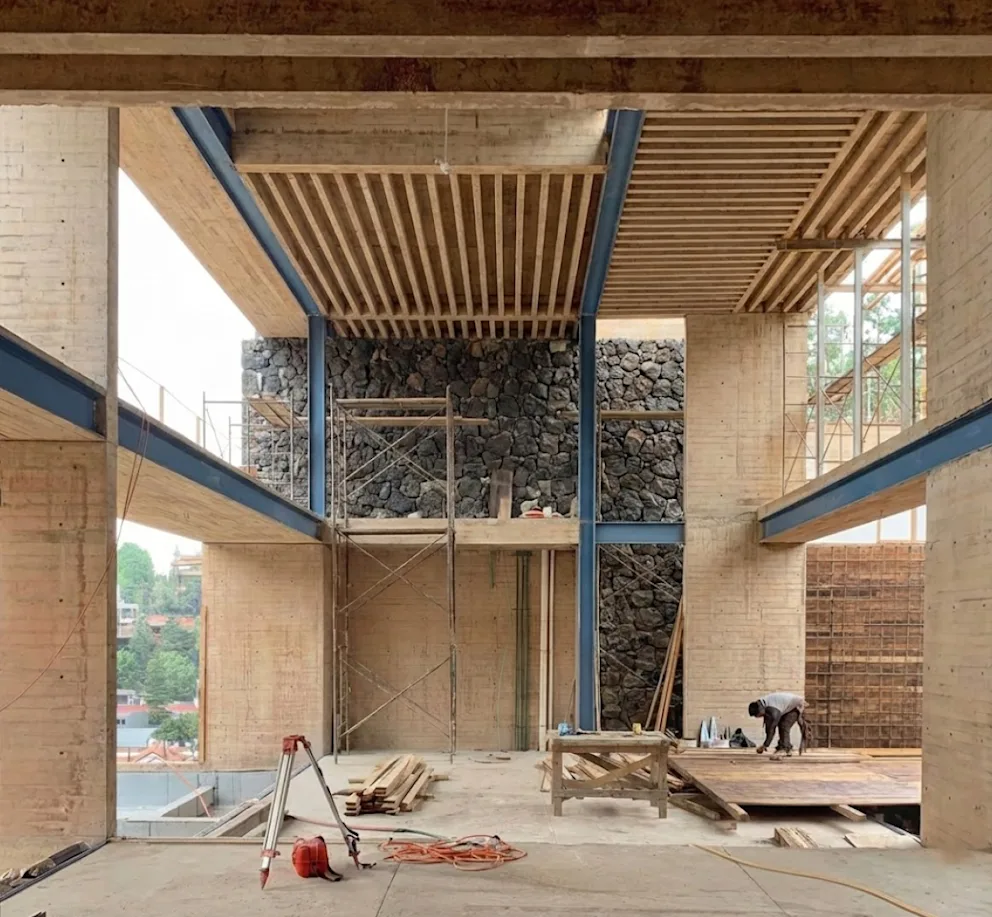
    New construction home build

    Match with vetted builders

    Receive quotes from experienced contractors aligned to your vision.

    Block experts reviewing quotes and timelines

    Hire with confidence

    Partner with Block experts to review quotes and timelines for end-to-end clarity.

    Homeowner staying in control of their renovation

    Stay in control

    Avoid surprises with Block Protections and a progress-based payment system.

    Get Started

    Frequently asked questions

    I want to build a second home on my property; how do I know if it qualifies as an ADU?

    In Santa Fe, ADUs are regulated under the city's zoning code, which has been updated in recent years to make ADU development more accessible as part of the city's affordable housing strategy. An ADU qualifies if it is a secondary dwelling unit on a lot with an existing or simultaneously constructed primary residence, and it must comply with size limits, setback requirements, and the same Historic Style Ordinance design standards that govern the primary structure's exterior. The maximum size for a detached ADU in most Santa Fe residential zones is 800 to 1,200 square feet, depending on the zone classification, and the ADU must be compatible in exterior design language with both the primary structure and the prevailing neighborhood character. Attached ADUs created through conversion of existing garage, basement, or accessory space are generally subject to less restrictive permitting processes than new detached structures. The city's One-Stop Development Services Center offers pre-application consultations that clarify what is permitted on a specific parcel, and that meeting is the most efficient way to determine whether your property supports an ADU before investing in design work.

    How much cheaper is it to build a ranch home versus a multi-story house?

    In Santa Fe, the cost relationship between ranch and multi-story construction is more nuanced than in most markets because the city's Historic Style Ordinance strongly favors single-story or low-profile massing for most residential construction, particularly in the Pueblo Revival style. A single-story home requires a larger foundation footprint and larger roof area relative to its conditioned square footage, both of which are significant cost drivers, while a two-story home can deliver more living area over a smaller foundation and roof. In Santa Fe's adobe construction tradition, however, the cost of earthen wall construction per square foot is relatively consistent regardless of stories, and the structural engineering requirements for an adobe second story add cost that partially offsets the foundation savings. The practical cost premium for a ranch over a comparably sized two-story home in Santa Fe's market tends to run $20 to $40 per square foot when built in wood frame, but the comparison narrows in adobe construction where wall cost is the dominant structural variable. Most Santa Fe custom homeowners choose single-story designs not primarily for cost reasons but because the Pueblo Revival aesthetic and the indoor-outdoor courtyard lifestyle it supports work best in a one-story building form.

    What are common issues that cause permits to be denied?

    In Santa Fe, the most common reasons for permit denial or application return involve non-compliance with the Historic Style Ordinance rather than structural or code violations. Proposed exterior materials that are not on the city's approved list, rooflines that exceed the allowable pitch for the applicable style, window and door proportions that conflict with the traditional design standards, and exterior colors outside the approved earth tone palette all trigger Historic Design Review Board referral that can delay permitting by months. Missing or incomplete water conservation plan documentation, which is required for all new construction under Santa Fe's water efficiency standards, is another frequent cause of application return. Geotechnical report requirements for foundation design in areas with documented soil variability are sometimes overlooked by applicants unfamiliar with the city's technical review requirements. Permits for properties within or adjacent to acequia rights-of-way, the historic irrigation channels that cross many Santa Fe neighborhoods, require coordination with the acequia associations that may not be obvious from the parcel's zoning designation.
