




Kitchen
Kitchen Plumbing Remodel Tips: 50+ from Planning to Inspection
07.26.2026
03.13.2026


In This Article
Small kitchens in older homes share a common story. They were designed when the kitchen was a utilitarian room—closed off, built for efficiency rather than gathering, and outfitted with whatever was standard at the time. That might mean honey oak cabinets from the '80s, dark cherry Tuscan-style cabinetry from the late '90s, or original prewar woodwork that hasn't been touched in decades.
The countertops are laminate or busy granite. The lighting is a single dome fixture or a fluorescent box. And yet these kitchens often have something going for them: well-proportioned layouts, solid construction, and occasionally a detail—stained glass windows, exposed brick, leaded glass cabinet fronts—that you simply can't get in new construction.
An old house small kitchen remodel is about working with what you have: making tight square footage feel more functional, updating finishes that have fallen behind, and deciding which parts of your home's history are worth keeping. The before-and-after images throughout this guide show what's possible across a range of styles and budgets—but the real value is in the ideas behind them, approaches that work whether your kitchen is 60 square feet or 120.
Design a Home That’s Uniquely Yours
Block can help you achieve your renovation goals and bring your dream remodel to life with price assurance and expert support.
Get Started
In a large kitchen, you can get away with one or two dated elements because the eye has room to wander. In a small kitchen, every surface is in your line of sight at all times. That's the challenge—but it's also the opportunity. Because the space is compact, a cosmetic renovation covers less square footage, requires less material, and can deliver a transformation that feels far more dramatic than the budget might suggest.
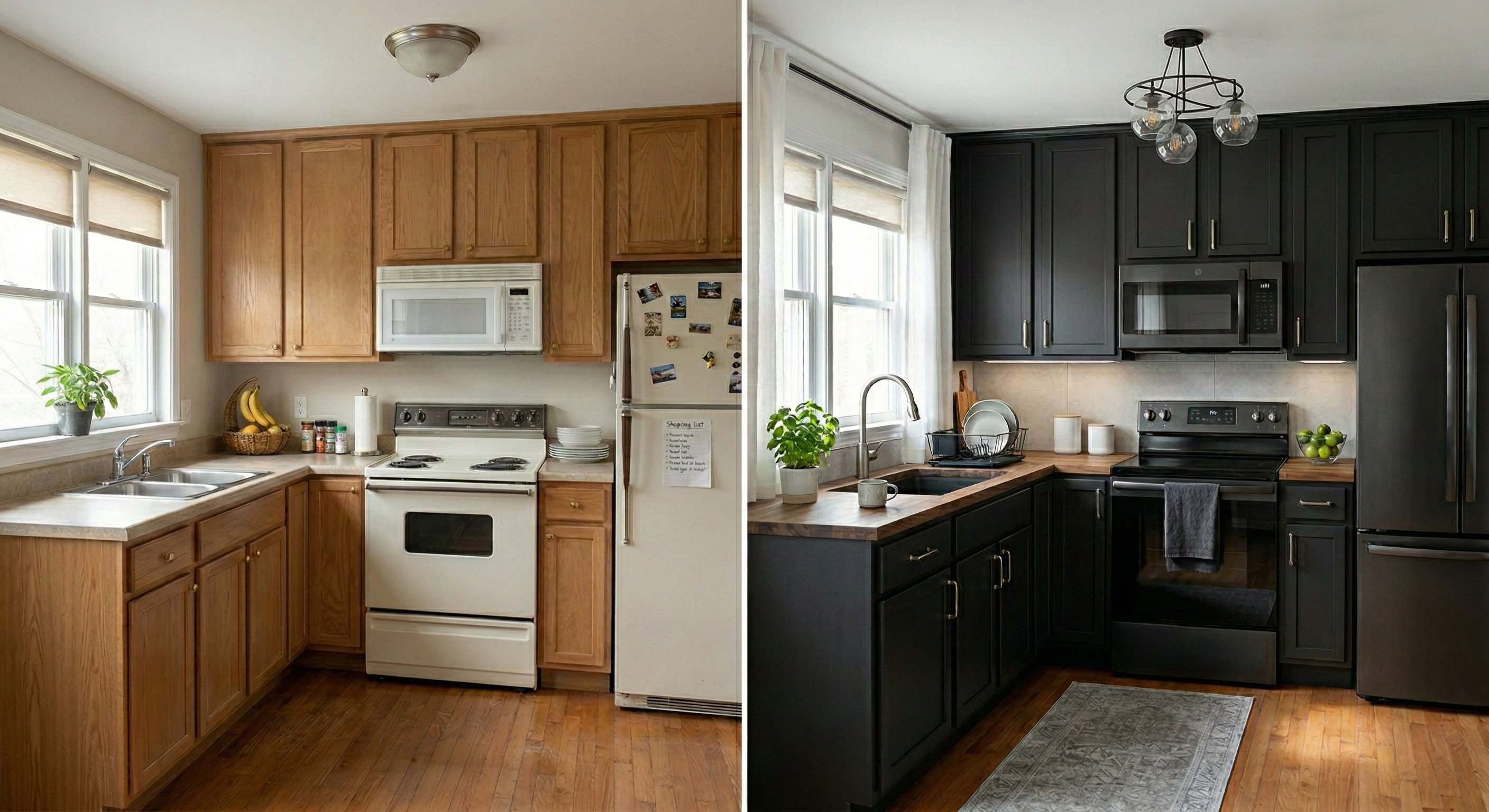
Cabinet color is your most powerful tool. Light tones are the conventional wisdom for small spaces, and they do work—but going dark can be just as effective when you commit fully. A small kitchen in matte black or deep charcoal with coordinating black stainless appliances and warm butcher block countertops feels confident rather than cramped. The key is consistency: carry the color across every cabinet and let the countertops provide contrast. Half-measures show in a small room. A bold direction, carried through, reads as design rather than risk.
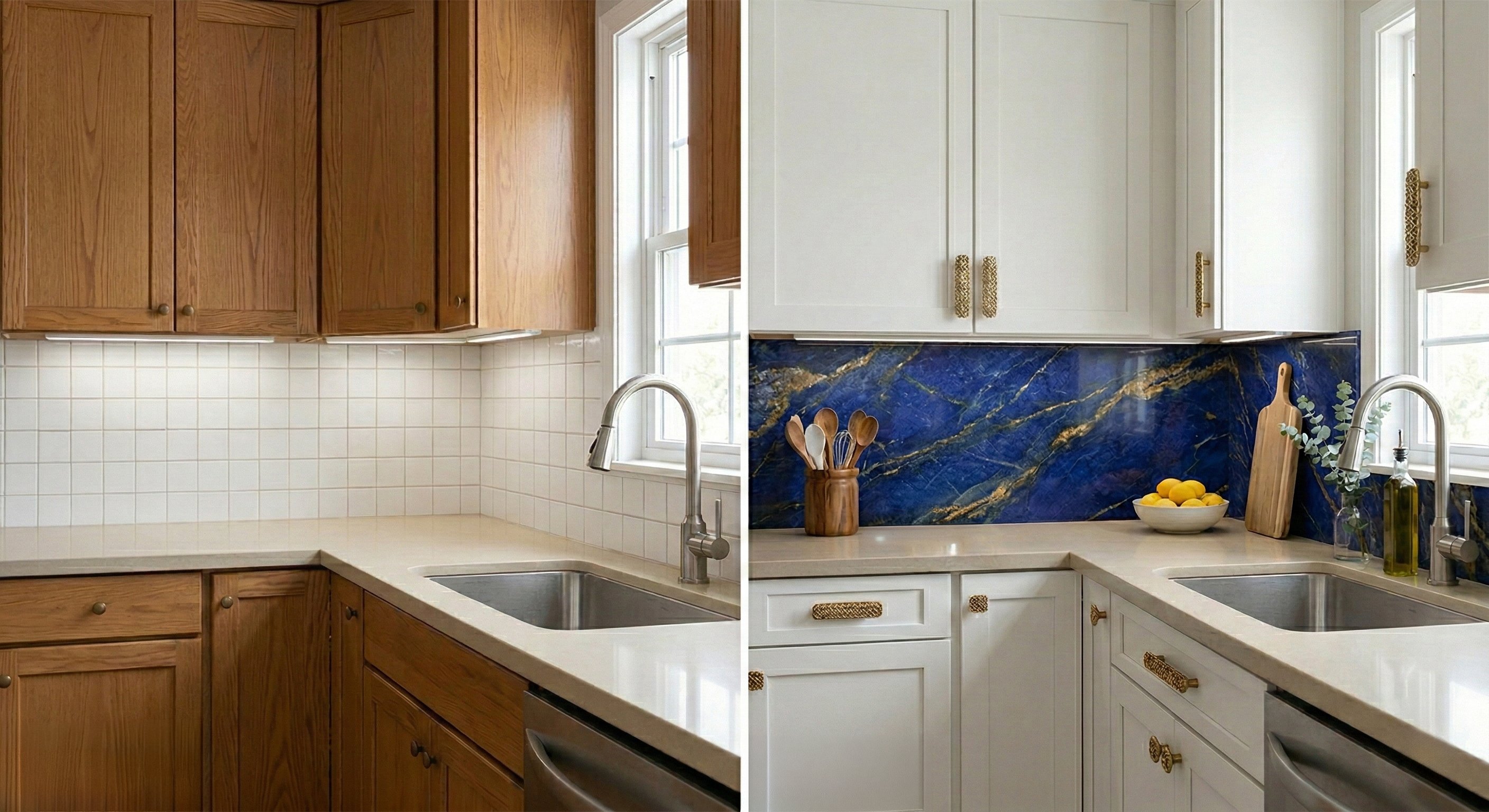
When wall space is mostly cabinets and counter space is measured in inches, you don't have room for competing design elements. That's actually a gift. Choose one bold material—a dramatic stone slab backsplash, a richly veined marble, a handmade large-format tile in an unexpected color—and keep everything else quiet.
White or neutral cabinets become the backdrop, and your one bold move becomes the thing people notice when they walk in. This approach is especially effective on a tighter budget: rather than spreading your dollars across upgrades that each make a modest impact, concentrate them on one surface that makes a real statement.
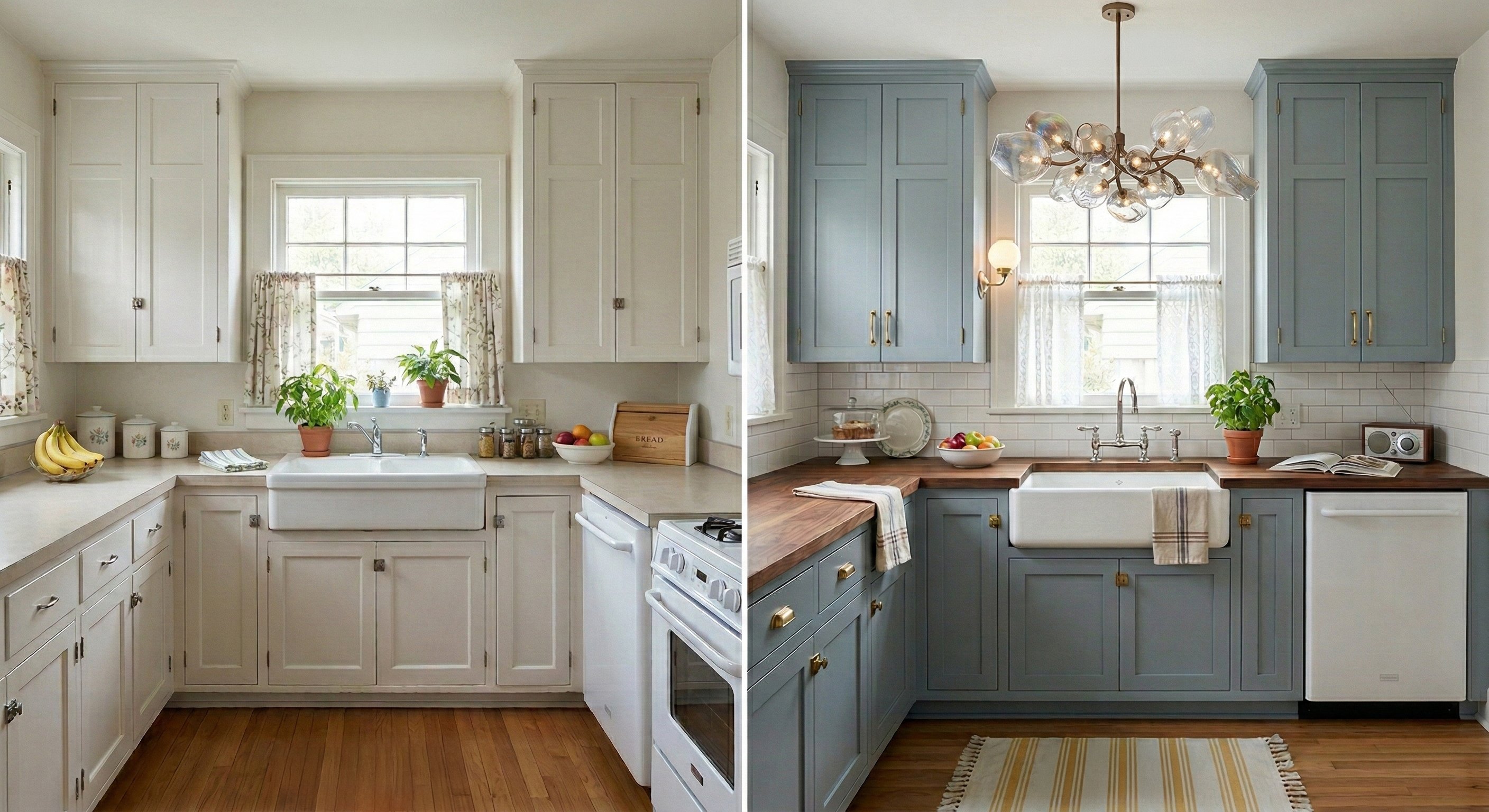
Between all-white and all-dark, there's a wide middle ground that works especially well in small older kitchens. Dusty blue, sage green, warm putty, soft gray—these tones give a compact kitchen personality without visual weight. Pair them with a natural material countertop like butcher block or honed marble and the room feels collected and warm rather than decorated. If your older kitchen already has solid cabinet boxes in decent condition, painting or refinishing them is one of the most cost-effective transformations you can make—and in a small space, you'll need far less paint and labor than you might expect.
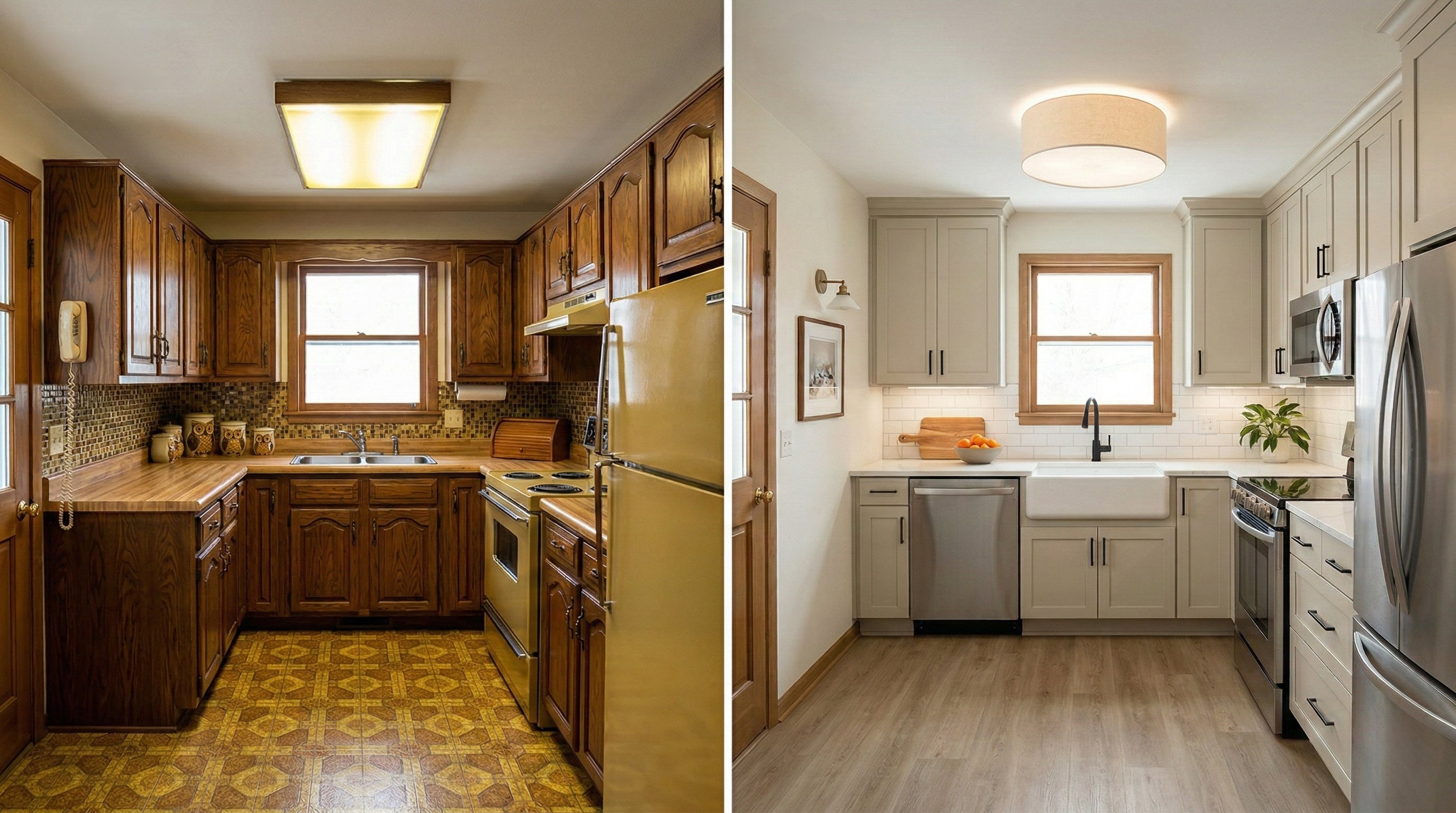
Sometimes the most impactful cosmetic update is also the simplest idea: make everything lighter. Dark cabinets, warm-toned walls, busy flooring, and a dim overhead light can make a small kitchen feel like a cave.
Replacing all of those surfaces with light-toned cabinetry, a bright countertop, and clean flooring doesn't add a single square foot—but it can make the room feel twice as spacious. When you combine lighter surfaces with better lighting, the effect compounds. This is the highest-return, lowest-risk approach for any old house small kitchen remodel.
Many older kitchens weren't just dated—they were designed around a specific aesthetic that the homeowner chose with intention. Tuscan kitchens with cherry cabinets and wrought iron. Midcentury kitchens with pastel colors and chrome hardware. Craftsman kitchens with built-in details and warm woodwork. The problem usually isn't the theme itself—it's that the materials and execution haven't aged gracefully. Rather than abandoning the spirit of your kitchen entirely, consider updating it through a modern lens. The bones of the style can remain while the surfaces and finishes come forward by a few decades.
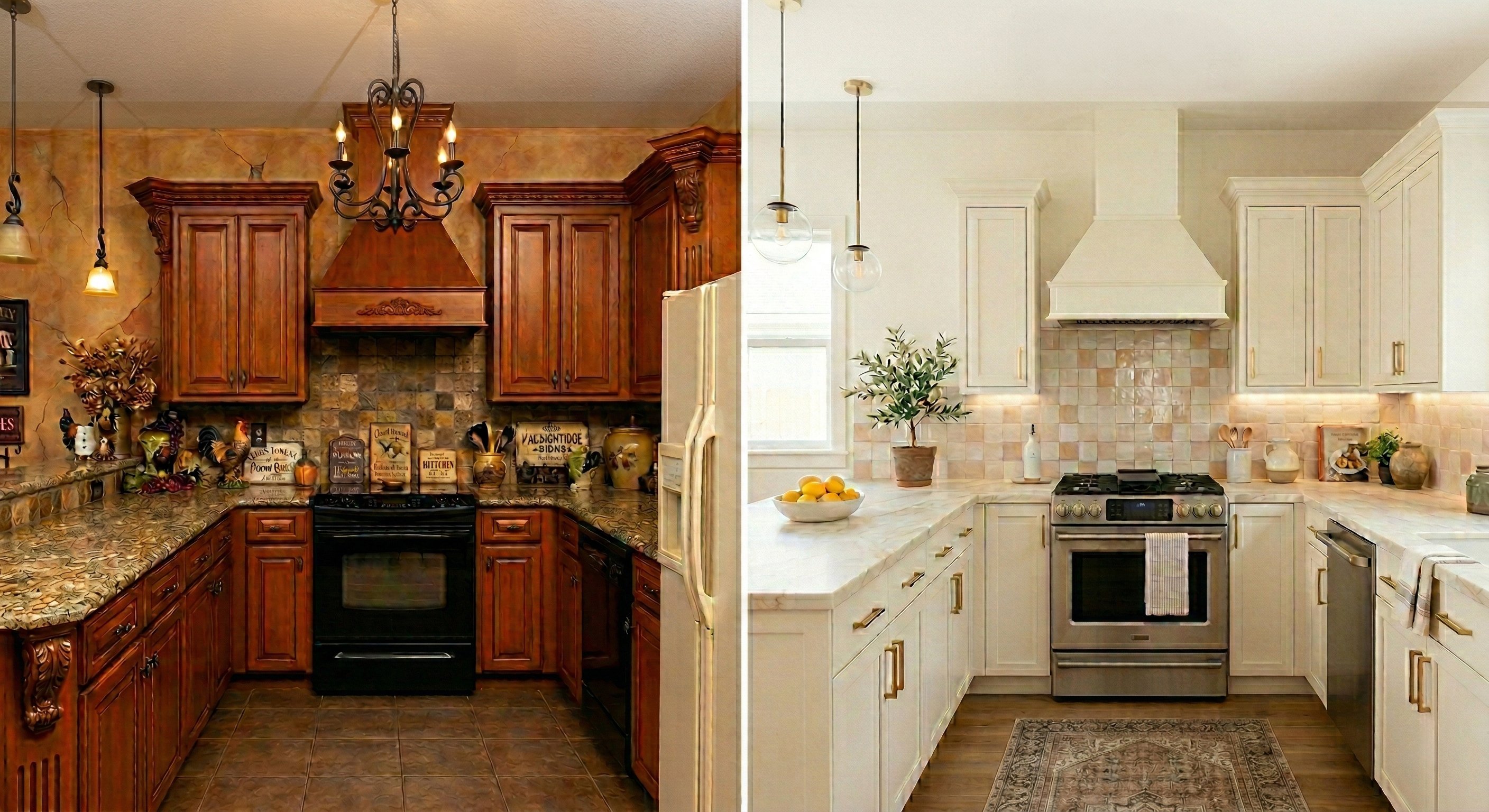
The Tuscan kitchen was one of the most popular styles of the late '90s and early 2000s—and in a small kitchen, the dark wood, ornate molding, and busy stone could make an already compact room feel cavelike. But the warmth and personality that drew homeowners to the style doesn't have to disappear.
Swap the dark wood for warm cream or putty-toned shakers, trade the busy stone for a hand-glazed tile with movement and warmth, and replace the iron chandelier with something cleaner. The kitchen still feels inviting and European-influenced—it just doesn't feel like 2003. For a deeper look at carrying that spirit forward, our guide to a modern version of Tuscan kitchen style explores the full range of possibilities.
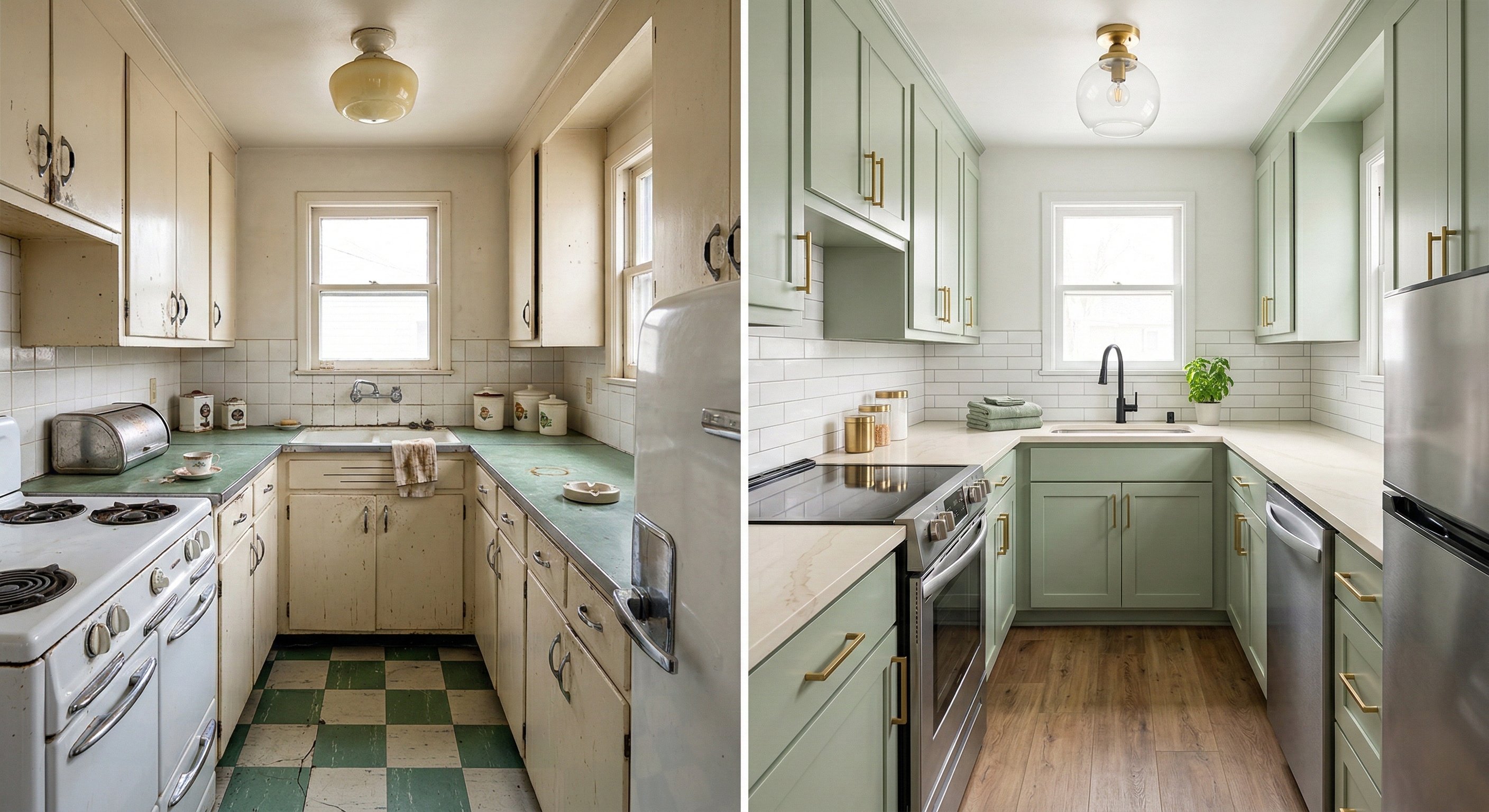
Midcentury kitchens had a palette all their own—mint greens, pale yellows, robin's egg blue—applied to laminate surfaces and vinyl floors. If your small, older kitchen still carries traces of that era, a renovation is a chance to honor the color story while replacing the materials that haven't held up.
A kitchen that once had green laminate and checkerboard linoleum might inspire a remodel with sage green cabinets, brass hardware, and warm wood floors. The original palette is gone, but its spirit carries through in a way that feels intentional. In a small kitchen especially, this kind of continuity—where the renovation feels like an evolution rather than an erasure—helps the room sit naturally within the rest of the home.
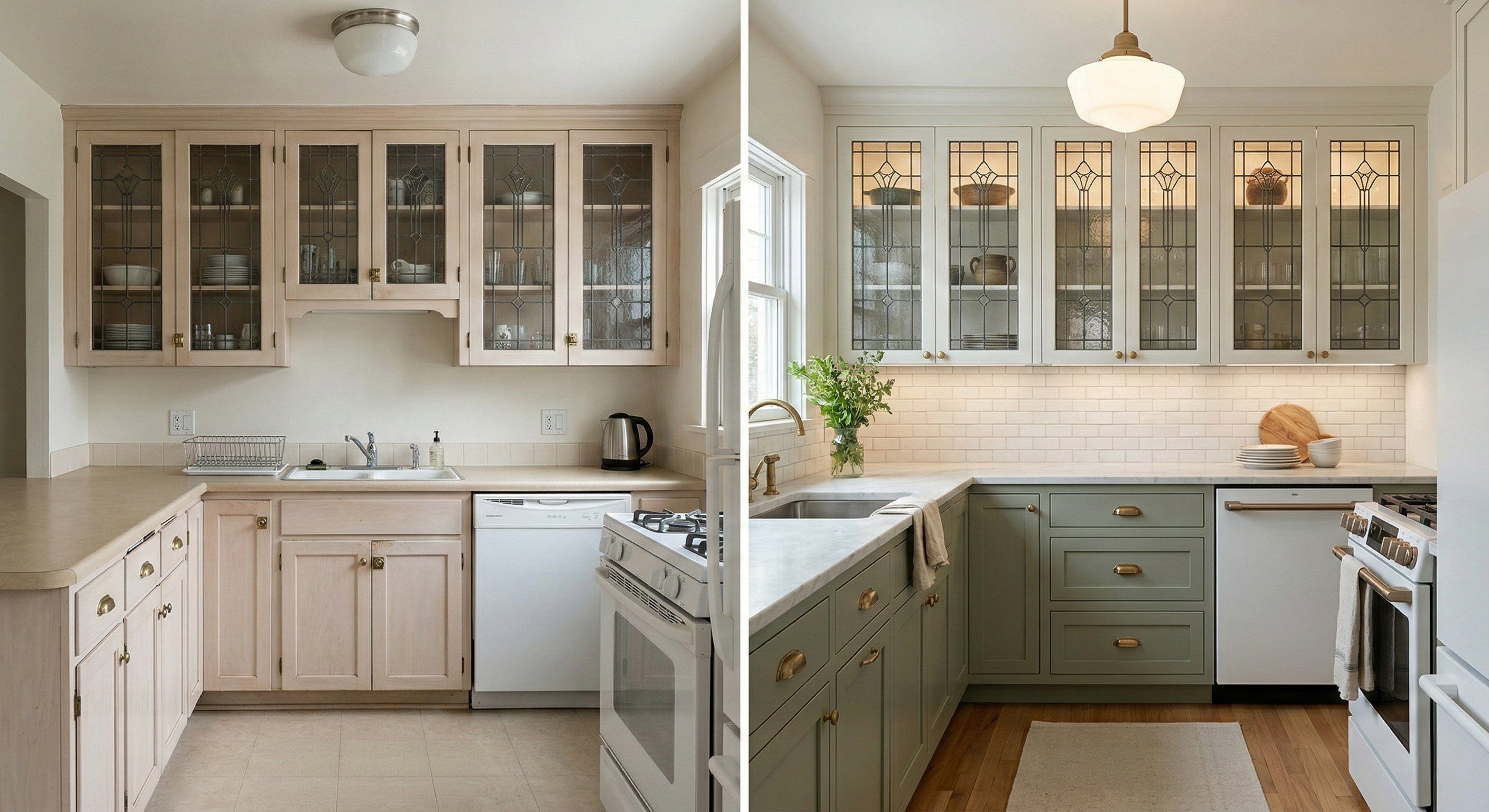
Craftsman and early 20th century homes sometimes come with kitchen details that are genuinely irreplaceable—leaded glass cabinet doors, built-in plate racks, period hardware. Replacing them with something modern often makes the kitchen feel less interesting, not more. The smarter approach is to build the renovation around them. Keep the original upper cabinet glass and design new lowers, countertops, and lighting that complement rather than compete. Adding interior cabinet lighting can transform old glass panels from a background detail into the room's defining feature. In a small kitchen, one element worth celebrating is often all the design direction you need.
Looks matter, but in a small kitchen, function matters just as much. Older homes come with functional limitations that go beyond aesthetics—bad lighting, inefficient storage, worn-out fixtures, and layouts that waste precious inches. These are the updates that change how you actually use the room.
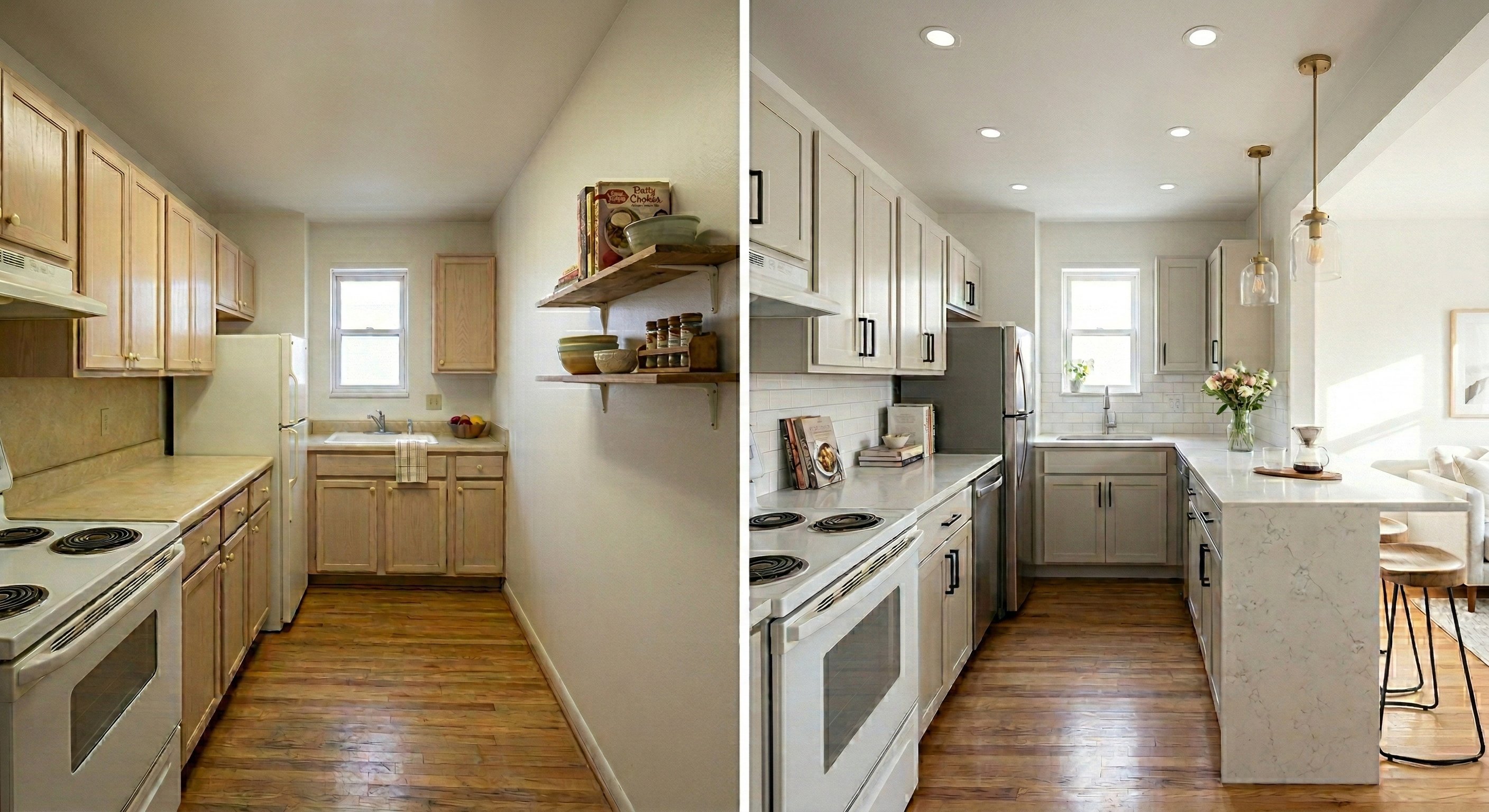
Lack of counter space is the number one complaint homeowners have about small kitchens. If your galley or one-wall kitchen ends at a wall or opens to an adjacent room, a small peninsula or narrow breakfast bar can add a meaningful work surface without a major structural change.
Even 12 to 18 inches of depth is enough for prep, serving, or morning coffee. It also gives a narrow kitchen a visual endpoint that makes it feel more like a room and less like a corridor. Of all the practical upgrades in this guide, this is one of the few that actually adds usable square footage.
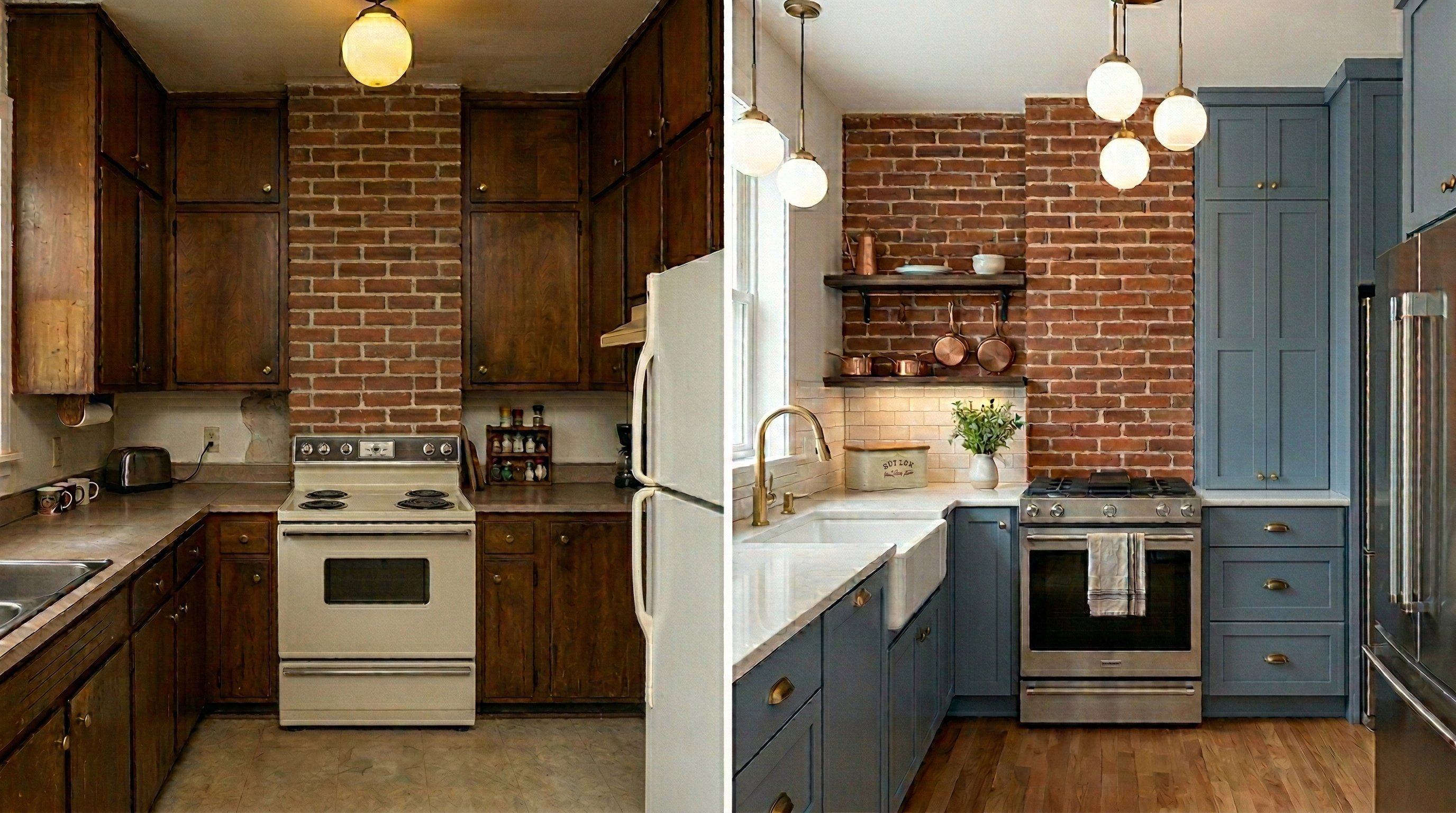
In a small kitchen, there's no room for decorative clutter—but there's also no need for it when you have an original feature worth showing off. Exposed brick, original beadboard, or a distinctive architectural detail can do the work of art and accessories if you give it room to breathe. Sometimes that means removing upper cabinets on a feature wall and replacing them with a single floating shelf—you lose some storage, but you gain a focal point that gives the kitchen its entire identity. In a compact room, one strong feature fills the visual field. You don't need much else.
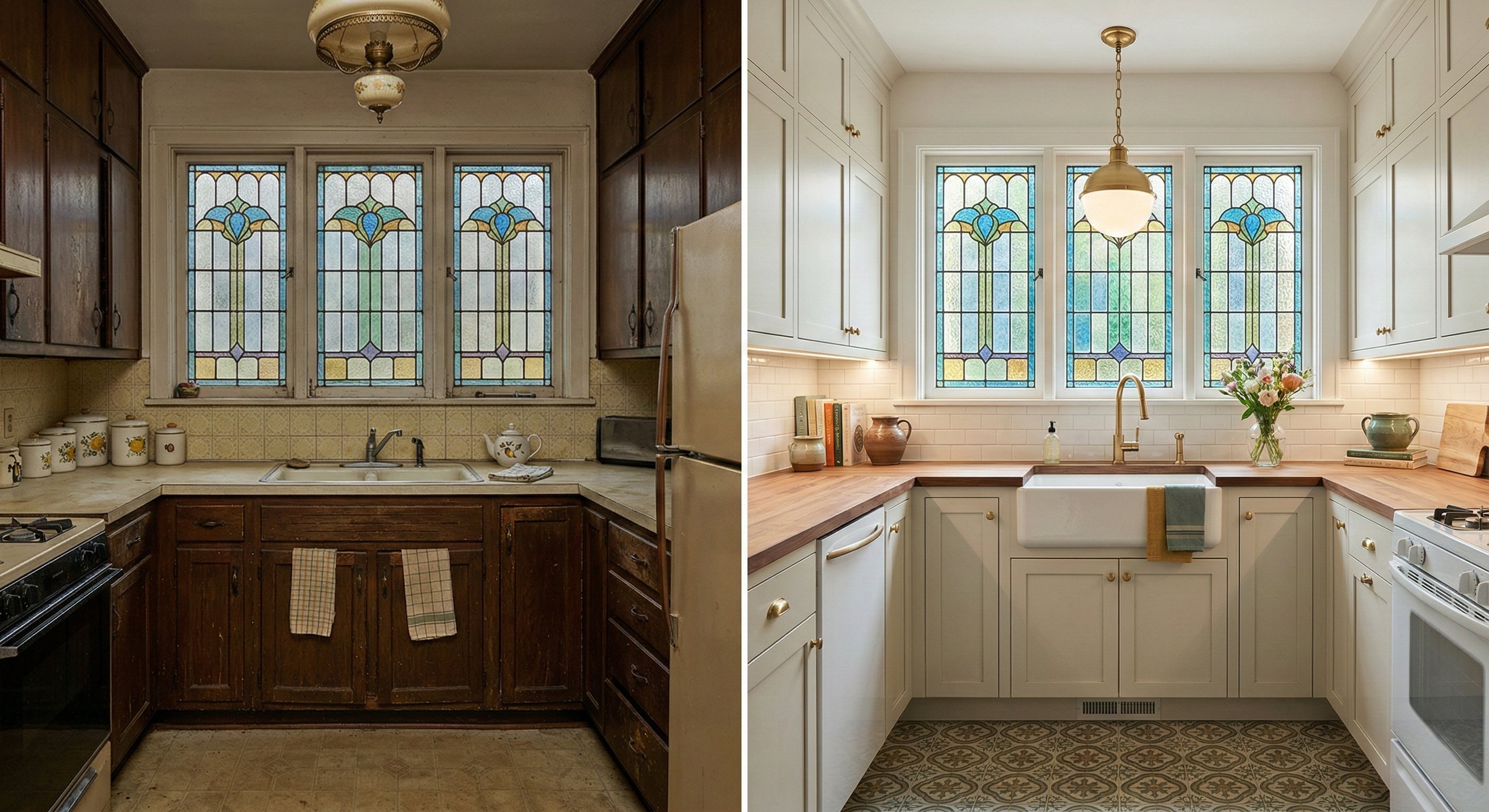
Some older kitchens contain a single element so beautiful that the entire renovation should orbit around it. Stained glass windows, a hand-laid mosaic floor, an original cast-iron stove alcove—these are the kinds of details that give a small kitchen a sense of place and story that no amount of new material can replicate.
The renovation strategy is simple: preserve the kitchen feature, then build everything else around it in warm, quiet tones that don't compete. In a small room, that one element fills the visual field and carries the entire design. Everything else just needs to support it.
A renovation is the natural time to address the things you can't see in a photo but feel every day: a faucet that drips, a range that heats unevenly, a dishwasher that's louder than the conversation in the next room, plumbing connections that might surprise you with a leak.
In a small kitchen especially, modern appliances can make a practical difference beyond their appearance. A counter-depth refrigerator won't protrude as far into the room. A slide-in range eliminates the gap between stove and counter. Even swapping a shallow double-basin sink for a deeper single basin changes how you prep and clean.
Block Renovation helps homeowners take on exactly this kind of project—kitchens where the space is tight, the home has history, and the right contractor makes all the difference. Start with our free Renovation Studio to visualize kitchen designs, experiment with materials, and get a personalized cost estimate for your kitchen. When you're ready, tell us about your project and we'll match you with up to four vetted, licensed contractors who understand the specific challenges of renovating older homes.
Remodel with confidence through Block

Connect to vetted local contractors
We only work with top-tier, thoroughly vetted contractors

Get expert guidance
Our project planners offer expert advice, scope review, and ongoing support as needed

Enjoy peace of mind throughout your renovation
Secure payment system puts you in control and protects your remodel


Renovate confidently with Block
Easily compare quotes from top quality contractors, and get peace of mind with warranty & price protections.
Kitchen
Kitchen Plumbing Remodel Tips: 50+ from Planning to Inspection
07.26.2026
Kitchen
High End Kitchen Renovation Cost: 2026 Budget Guide
07.15.2026
Kitchen
Remodeling Your Kitchen After a Fire: What to Know
07.15.2026
Kitchen
Kitchen Renovation Ideas on a Budget
07.08.2026
Kitchen
A Galley Kitchen Remodel in NYC - Adding a Breakfast Bar
07.02.2026