



Kitchen
Kitchen Remodel Mistakes to Avoid When Planning
08.13.2026
04.28.2026


In This Article
When you're planning a kitchen renovation, the big decisions tend to get all the attention: countertops, cabinetry, layout. The sink is often an afterthought. But think about how often you actually use it. You're at the sink dozens of times a day, and the material you choose affects how your kitchen looks, sounds, and feels for years to come.
Most people default to stainless steel, and most people are fine with that choice. But "fine" and "best for your project" aren't always the same thing.
|
Stainless steel |
Granite composite |
|
|---|---|---|
|
Average cost |
$100 to $600 |
$250 to $800+ |
|
Material |
18/8 or 18/10 chromium-nickel steel alloy |
~80% crushed granite or quartz + ~20% acrylic resin |
|
Weight |
Lightweight (15 to 25 lbs typical) |
Heavy (40 to 60 lbs typical) |
|
Scratch resistance |
Low: scratches are visible within weeks of use |
High: up to 80% more scratch-resistant than stainless |
|
Heat resistance |
Excellent: virtually immune to thermal shock |
Very good: tolerates up to ~536°F, though extreme thermal shock can stress resin over time |
|
Noise level |
Louder, even with sound-dampening pads |
Naturally quiet: the dense material absorbs sound |
|
Water spots |
Highly visible, especially with hard water |
Rarely visible |
|
Color options |
Silver/brushed metallic (some PVD coatings available) |
Wide range: black, white, gray, brown, and more |
|
Lifespan |
15 to 30+ years |
15 to 30+ years (some manufacturers cite up to 50) |
|
Installation |
Easy: lightweight, standard mounting |
May require reinforced cabinetry due to weight |
|
Best for |
Budget-conscious projects, rental properties, flexible design |
Design-forward kitchens, open-concept spaces, homeowners who want low visual maintenance |
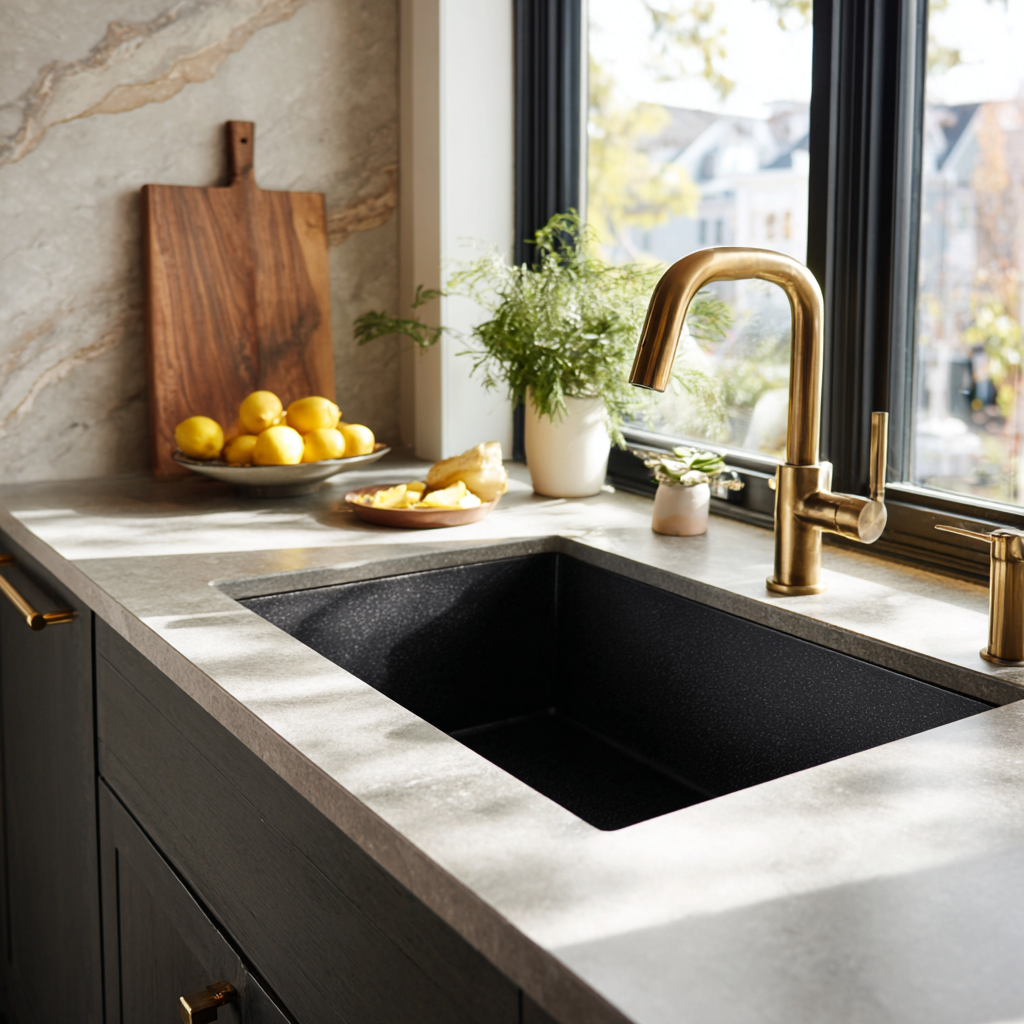
My kitchen sink is stainless steel, and there's a good chance yours is too. According to the National Kitchen & Bath Association (NKBA), stainless steel is the most commonly installed sink material in U.S. kitchens, used in the majority of projects. It's the default for a reason: it's affordable, lightweight, and pairs with practically any countertop material or cabinet finish.
If you're working within a tight renovation budget, a solid stainless steel sink can cost as little as $100, and even at the premium end, you're rarely spending more than $500 or $600. That leaves more room in your budget for the choices that tend to have a bigger visual impact, like countertops or fixtures.
Stainless steel can take real punishment without failing:
For rental properties or investment homes where you need something universally appealing and easy to replace, stainless steel is hard to argue with.
Because stainless steel is so light (typically between 15 and 25 pounds), you don't need to reinforce your cabinetry or hire extra hands to hold it in place. That keeps your labor costs down, which is a genuine advantage when every dollar in your renovation budget counts.
Design a Home That’s Uniquely Yours
Block can help you achieve your renovation goals and bring your dream remodel to life with price assurance and expert support.
Get Started
This is where the standard stainless-steel-vs.-granite-composite conversation tends to gloss over some important nuances.
Stainless steel is structurally durable, meaning the sink itself will last for decades without cracking, warping, or failing. No argument there. But how it looks and feels after a year or two of real kitchen use is a different conversation entirely.
Despite the word "stainless" in its name, stainless steel is a relatively soft metal, and its surface is more vulnerable to abrasion than most people expect. Pots, pans, utensils, even the grit from rinsing vegetables: all of it leaves marks.
Some manufacturers will tell you that these hairline scratches eventually "blend together into a patina," and to some degree that's true. But let's call it what it is: your sink looks worn. Most stainless sinks lose that factory-fresh appearance within a few months of daily use. Keeping them looking sharp means polishing along the grain of the metal on a regular basis, and if you skip that, a dull hazy film starts to build up.
If you live in an area with hard water (and many parts of the country qualify), you're going to see white mineral deposits forming on the surface every single day. The fix is simple: wipe the sink dry after every use. In practice, though, that's a habit most households don't sustain for long.
Stainless steel is, by nature, resonant. Running the faucet, dropping a spoon, flipping on the garbage disposal: all of it is louder than you'd expect if you've never lived with a stainless sink before. This is especially noticeable in open-concept layouts where the kitchen shares airspace with the living area. Higher-end stainless sinks include sound-dampening pads and undercoating, which do help, but even with those features, metal produces more noise than a stone-based material.
None of this means stainless steel is a bad choice. But the common narrative (that stainless is basically indestructible) deserves an asterisk. It's structurally tough and cosmetically delicate, and that distinction matters when you're spending thousands of dollars on a kitchen renovation.
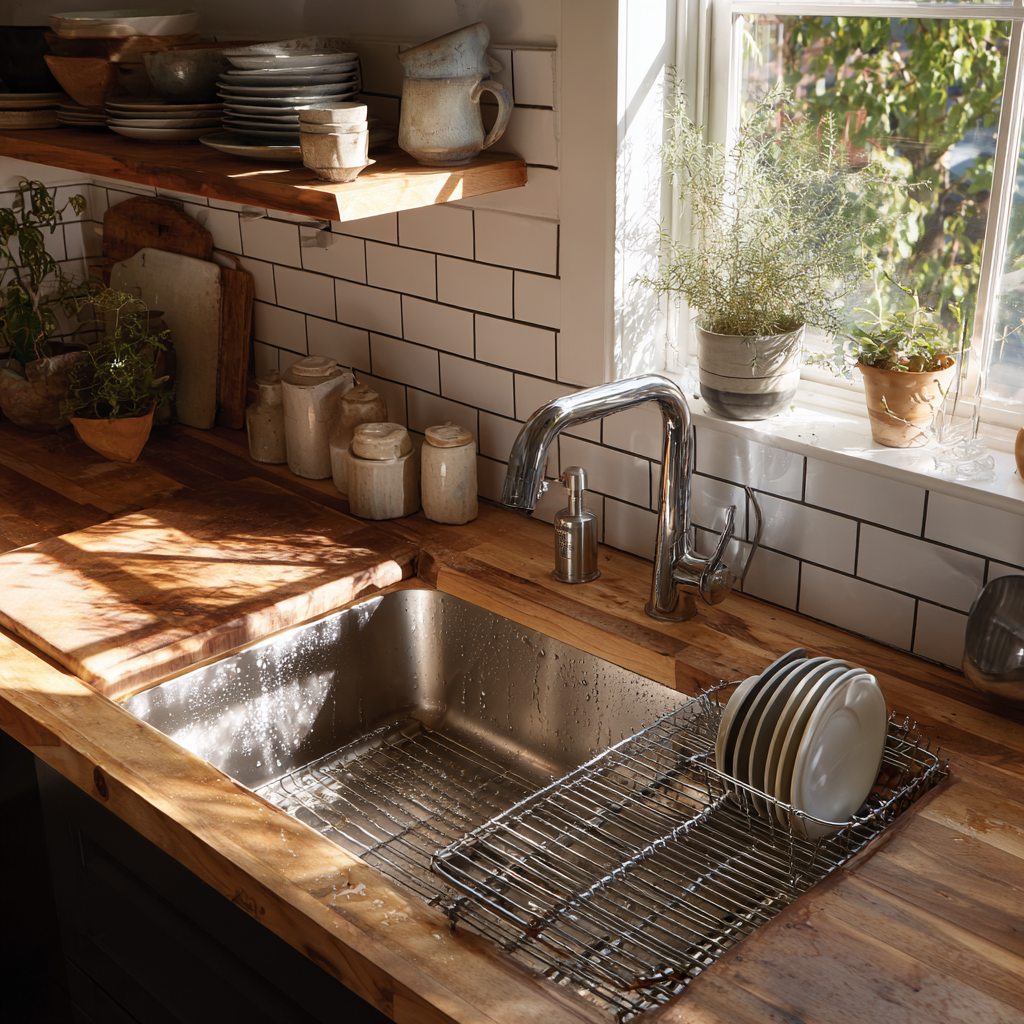
Granite composite sinks have been gaining ground steadily, and there's a reason for the momentum. It goes beyond aesthetics (though the aesthetics are a real selling point).
This is the single biggest advantage of granite composite, and it's the one that matters most in the context of a renovation. Where stainless steel starts showing wear within weeks, a granite composite sink looks virtually the same after years of daily use:
If you're investing in a kitchen renovation and you want the finished product to still look polished a few years later without regular upkeep rituals, granite composite has a real edge here.
This sounds like a small thing until you experience the difference. Granite composite absorbs sound in a way that metal simply can't. Running water is noticeably softer, dishes don't clang against the basin, and the garbage disposal doesn't echo through the room the way it does with stainless.
For open-concept kitchens (which are increasingly common in modern renovations and remodels), that acoustic difference adds up quickly. It's one of those upgrades that doesn't make anyone's initial wish list but ends up mattering more than expected.
Stainless steel is, by definition, one look: silver and metallic. It works everywhere, but it doesn't make a statement. Granite composite comes in a wide range of matte finishes (black, white, warm gray, brown, and more) that can either coordinate with your countertops or contrast against them. A black granite composite sink against a white quartz countertop creates the kind of visual focal point that stainless simply can't replicate. If your renovation is design-forward and you're making deliberate material choices throughout the kitchen, the sink is one more place to reinforce that.
One of the common arguments against granite composite is that it can't handle heat as well as stainless steel. That's technically true: stainless is essentially immune to thermal shock, while granite composite has an upper limit (around 536°F for most brands). But in practice, this difference rarely matters. You're not placing items in your sink that exceed 400°F in a normal kitchen. The only realistic risk scenario is extreme thermal shock, like pouring boiling water directly into an ice-cold basin, and even that is uncommon with normal use.
For most renovations, stainless steel is the more practical pick. It costs less, installs more easily, and does the job without drama. A quality 16-gauge stainless steel sink with sound-dampening pads is a solid investment if you're renovating on a budget, updating a rental property, or simply want something reliable that doesn't require much thought.
Granite composite is worth serious consideration if a few things are true for you:
The upfront cost is higher (typically $150 to $300 more than a comparable stainless option, plus potentially more for installation if your cabinets need reinforcement), but for the right homeowner and the right project, that premium pays off in daily comfort and long-term visual appeal.
Remodel with confidence through Block

Connect to vetted local contractors
We only work with top-tier, thoroughly vetted contractors

Get expert guidance
Our project planners offer expert advice, scope review, and ongoing support as needed

Enjoy peace of mind throughout your renovation
Secure payment system puts you in control and protects your remodel

Renovate confidently with Block
Easily compare quotes from top quality contractors, and get peace of mind with warranty & price protections.
Kitchen
Kitchen Remodel Mistakes to Avoid When Planning
08.13.2026
Kitchen
Rental Kitchen Renovation: Smart Materials & Design Choices
08.08.2026
Kitchen
Wall Oven Installation Cost & Are Wall Ovens Worth It?
08.07.2026

Kitchen
Wet Bar Installation Cost: A Line-by-Line Breakdown
08.01.2026
Kitchen
Kitchen Remodel Tips & Advice From the Pros
07.28.2026