



Kitchen
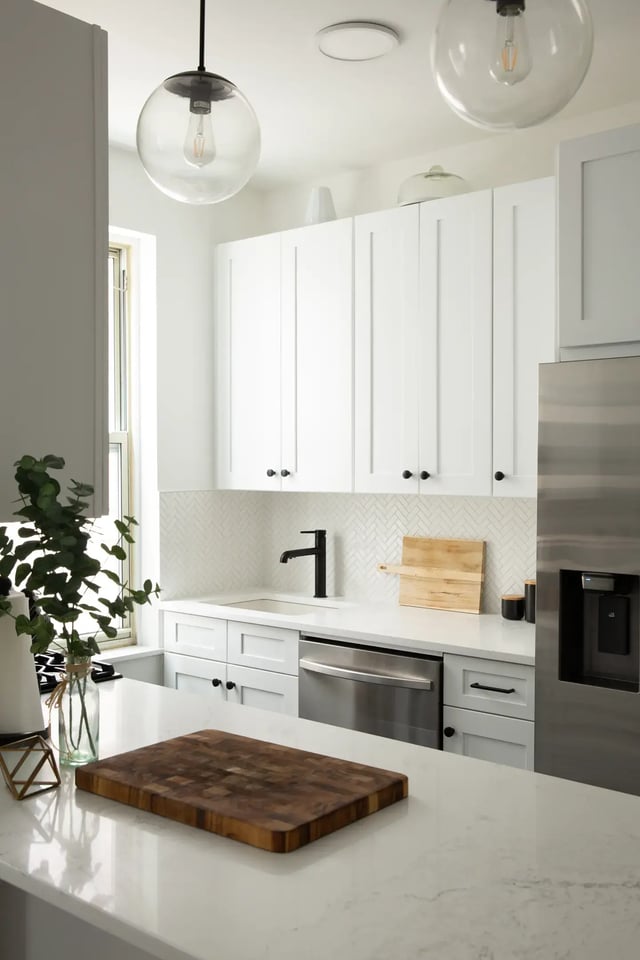
A Galley Kitchen Remodel in NYC - Adding a Breakfast Bar
07.02.2026
04.23.2026


.png?width=640&name=Farmhouse%20sink%20bungalow%20kitchen%20(1).png)
In This Article
Here's a scenario that plays out in kitchen renovations all the time: a homeowner in Phoenix falls in love with a fireclay apron-front sink, picks it out, and is ready to order — until her kitchen contractor asks one question. What's your water like? The answer, in Phoenix, is that it's some of the hardest in the country. Her contractor steered her toward cast iron instead, explaining that fireclay would show mineral buildup far more and be harder to keep clean. She'd never thought about it. Most people don't.
That's the thing about choosing between fireclay and cast iron. Both are premium materials. Both last decades. Both look great in the right kitchen. But the decision isn't really about aesthetics — it's about your water, your cooking habits, your cabinet situation, and how much maintenance you're actually willing to do. Here's what you need to know.
Fireclay sink pros and cons
When talking to Vermont homeowner Sara Riedell about her fireclay sink, she mentioned that she had chipped her multiple times. "Honestly it turned me into a bit of an expert at touching sinks up. You can get a porcelain repair kit for like twelve dollars and, if you take your time color-matching, it's basically invisible.”
Cast iron sink pros and cons
Cast iron’s ability to disguise signs of hard water is what persuaded Las Vegas resident Hye Jeong to choose it for his condo remodel. "My contractor pushed hard for me to get cast iron, specifically because I live somewhere where the water is so hard. I'm not someone who's going to be scrubbing my sink every weekend, so cast iron made a lot more sense for my lifestyle."
Bring Your Dream Bathroom to Life

Both materials are extremely durable, but in different ways. Cast iron holds up better to impact and resists chipping more reliably. Fireclay resists rust completely but is more vulnerable to chips from heavy cookware. Cast iron has the edge for households with heavy daily use.
Winner: Cast iron
Neither material is high-maintenance in absolute terms, but both require some attention. Cast iron needs prompt attention when chips appear and regular cleaning to prevent enamel staining. Fireclay needs descaling in hard-water areas and touch-up work if chips occur. Roughly equal on effort, though cast iron staining tends to be a more frequent issue.
Winner: Fireclay
Fireclay handles heat better. It's more resistant to thermal shock and less likely to show discoloration from hot pans. Cast iron can handle heat but rapid temperature changes can stress the enamel over time.
Winner: Fireclay
Cast iron tends to be louder unless it's specifically coated for sound dampening. Fireclay absorbs sound slightly better due to its density and composition.
Winner: Fireclay
Both materials sit in the premium tier. Entry-level cast iron sinks start around $300 to $400. Quality fireclay, especially in an apron-front style, typically starts closer to $500 and can go well above $1,000. Installation costs are similar, though apron-front configurations of either material require more cabinet modification and labor.
Winner: Cast iron
Fireclay has a brighter, crisper white and is almost always the right choice for a farmhouse or traditional kitchen. Cast iron offers more color flexibility and suits a broader range of kitchen styles, from traditional to transitional to contemporary.
Winner: Tie. Fireclay wins on the farmhouse look, cast iron wins on versatility.
Choose fireclay if:
Choose cast iron if:
Rohl Shaw's Original Fireclay Farmhouse Sink: Made in Lancashire, England, in the same factory using the same molds since 1897, the Shaw's is the sink that established what a fireclay farmhouse sink is supposed to look like. Each one is hand-poured and stamped by the artisan who made it. It's expensive, starting around $1,200, but the quality shows — and Rohl covers it with a 10-year warranty against fading and staining.
Ruvati Fiamma Fireclay Reversible Farmhouse Sink: Handmade in Italy from true fireclay fired at 2,900 degrees Fahrenheit, the Fiamma is one of the few mass-market sinks that uses actual Italian fireclay rather than the vitreous china that many competitors pass off under the same name. The reversible apron lets you choose between a flat or fluted front at installation.
BOCCHI Classico Fireclay Farmhouse Sink: The best entry point into fireclay if you want a real apron-front sink without spending Rohl money. Starting around $500, the Classico comes with a free bottom grid and strainer, is available in nine colors including matte options, and BOCCHI's Clean+ glaze coating does a good job of resisting lime scale and mineral buildup.
Kohler Whitehaven Apron-Front Cast Iron Sink: The reference standard for cast iron farmhouse sinks. Kohler's Self-Trimming apron overlaps the cabinet face, which makes installation significantly easier than most apron-front alternatives. The enamel is hard, the basin is deep, and the sink has a track record measured in decades. Budget $900 to $1,300 depending on size and configuration.
American Standard Delancey Cast Iron Apron-Front Sink: A solid alternative to the Whitehaven at a lower price point, typically around $500 to $700. The enamel finish is thick and nonporous, and the sloped bottom drains better than most fireclay competitors. Worth considering if the Kohler price feels steep and you still want a cast iron apron front.
Kohler Iron/Tones Cast Iron Kitchen Sink: For homeowners who want cast iron without the apron-front commitment. It's a top-mount or undermount design that fits standard cabinet openings without modification, comes in a wide range of Kohler colors, and starts around $400.
Whichever material you choose, get your contractor involved before you purchase. Both fireclay and cast iron apron-front sinks require specific cabinet modifications and careful measurement, and an undermount cast iron sink requires cabinet reinforcement to support the weight. The wrong sink for your cabinet situation is an expensive mistake.
Block connects homeowners with thoroughly vetted kitchen contractors who can walk you through these decisions before you buy anything. Getting a professional opinion costs nothing at the quote stage.
Remodel with confidence through Block

Connect to vetted local contractors
We only work with top-tier, thoroughly vetted contractors

Get expert guidance
Our project planners offer expert advice, scope review, and ongoing support as needed

Enjoy peace of mind throughout your renovation
Secure payment system puts you in control and protects your remodel


Renovate confidently with Block
Easily compare quotes from top quality contractors, and get peace of mind with warranty & price protections.
Kitchen
A Galley Kitchen Remodel in NYC - Adding a Breakfast Bar
07.02.2026

Kitchen
Adding a Pass Through Window to Your Kitchen
06.12.2026

Kitchen
Retro Kitchen Design Ideas: 7 Modern Renovations
05.18.2026
Kitchen
L-Shaped Kitchen Layouts & Designs: 6 Floor Plans
05.13.2026
Kitchen
Closet to Pantry Conversion: Ideas, Costs, and Tips
05.04.2026