



Kitchen
Kitchen Remodel Mistakes to Avoid When Planning
08.13.2026
03.02.2026


In This Article
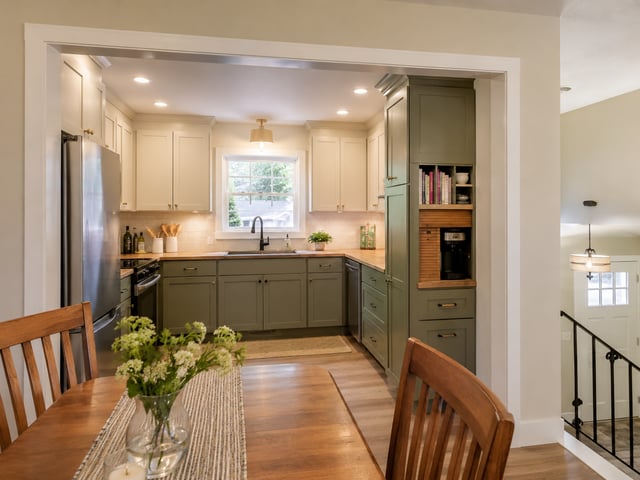
The appeal of expanding your kitchen into the dining room usually comes down to a few concrete improvements. A small kitchen that can't fit an island, prep counter, or second cook can often be transformed once it borrows square footage from an underused dining room. When cooking and dining happen in the same visual space, hosts stay part of the conversation instead of disappearing behind a wall. And many kitchens—especially those in the center of older floor plans—are dark; removing a wall can route natural light from dining room windows back into the kitchen. Open-concept kitchens also remain highly desirable to buyers, so the renovation tends to pay back well in most markets.
Most homeowners focus on what they gain. The better question is what you're giving up—because the tradeoffs are real, and some people only discover them after the wall is already gone.
Bring Your Dream Bathroom to Life

One of the key decisions in this project is how far to take it. There's a meaningful difference between partially moving or removing a wall—creating a pass-through, a half-wall, or a wide cased opening—and fully committing to an open floor plan with no visual separation between spaces. Both approaches have real advantages and real costs.
A partial opening—whether that's a pass-through window, a lowered half-wall, or a wide doorway where a solid wall once stood—preserves some acoustic separation and contains cooking smells more effectively than a fully open plan. It's also typically less expensive, since you're working with a smaller structural change and less finish work. The tradeoff is that it doesn't deliver the same dramatic sense of space, and it may feel like a half-measure if your goal is a truly connected, open layout.
Removing the wall entirely creates the most visual impact and the greatest sense of combined space. It's what most people picture when they imagine an expanded kitchen. But it requires the most thorough structural assessment (especially if the wall is load-bearing), the most finish work to unify the two former spaces, and the highest tolerance for the kitchen being permanently "on display." Once the wall is gone, there's no going back without a significant rebuild.
The right choice depends on how you actually live. Families with young children or people who cook seriously every night often prefer some separation—a partial opening gives them connection without total exposure. Frequent entertainers and people who want the home to feel as large as possible tend to prefer full removal.
Cost depends heavily on what's in the wall, what you want to do with the new space, and what condition the kitchen is in before the project starts. At the low end, removing a non-structural wall with no utilities runs roughly $1,500–$5,000 once you factor in demo, patching the ceiling and floors where the wall stood, and finish work.
When the wall is load-bearing—which is frequently the case—costs climb to $5,000–$20,000 or more. A structural engineer needs to specify the right beam, temporary supports have to go in, and the beam itself can run several thousand dollars in materials alone for a wide opening. Permits and engineering drawings typically add another $1,000–$3,500 on top of that.
If you're actually expanding the kitchen—moving cabinets, appliances, or the sink into the new space—you're looking at a kitchen remodel on top of the structural work. A mid-range kitchen expansion with new cabinetry, countertops, and appliances typically runs $25,000–$45,000 in most markets, though full high-end renovations can exceed $60,000. Countertops alone vary widely: laminate starts around $30 per square foot installed, while quartz runs $70–$150 and natural stone can go higher.
Flooring is one of the most frequently overlooked line items. When two rooms merge into one, you almost always need to unify the flooring across the entire combined space—because the old kitchen and dining room floors rarely match. Running new hardwood, LVL, or tile across the full area adds $3,000–$10,000 depending on material choice and square footage. Budget for it from the start rather than being surprised mid-project.
Turn your renovation vision into reality
Get matched with trusted contractors and start your renovation today!
Find a Contractor
Expanding your kitchen into your dining room doesn't mean losing a real dining space; it means designing one intentionally. Without walls to define the room, you have to use other tools to make the area feel purposeful rather than like an afterthought.
Use visual dividers to define zones
A large area rug anchored under the dining table is one of the most effective—and affordable—ways to separate the dining zone without blocking light or sightlines. Similarly, a pendant lighting hung low over the table creates intimacy and signals that this is a distinct space.
Architectural details like half-walls, open shelving units, or a change in ceiling treatment (coffered, dropped soffit) add definition without enclosure. Consistent flooring throughout with a rug layer on top tends to look more intentional than using different floor materials to define zones
Open floor plans expose everything—clutter in the dining area becomes clutter in the whole room. A built-in sideboard, banquette with drawers underneath, or floor-to-ceiling cabinetry keeps the space functional without sacrificing the open feel
If you're doing a full renovation, build in what you need now rather than relying on freestanding furniture added later. Built-in bookcase and storage reads as designed; a mismatched credenza pushed against the wall reads as an afterthought
The dining table shouldn't sit in the natural path between the kitchen and the rest of the house—if it does, every trip to the living room means squeezing past chairs. Allow 36 inches of clearance between the table and any wall or obstacle for comfortable circulation, and 48 inches if the path doubles as a main thoroughfare. Map out where people naturally walk—front door to kitchen, kitchen to living room, table to back door—and position the dining area beside those paths, not across them
Block Renovation specializes in exactly this kind of project: complex, multi-trade renovations where the details matter. We work with homeowners to scope the project accurately before construction begins, connect you with vetted contractors who do this work regularly, and help you manage the process from first estimate to final walkthrough.
If you're thinking about expanding your kitchen into your dining room, start with a conversation. We'll help you understand what you're looking at, what it's likely to cost in your market, and whether the project makes sense for your home.
Remodel with confidence through Block

Connect to vetted local contractors
We only work with top-tier, thoroughly vetted contractors

Get expert guidance
Our project planners offer expert advice, scope review, and ongoing support as needed
Enjoy peace of mind throughout your renovation
Secure payment system puts you in control and protects your remodel

Renovate confidently with Block
Easily compare quotes from top quality contractors, and get peace of mind with warranty & price protections.
Kitchen
Kitchen Remodel Mistakes to Avoid When Planning
08.13.2026
Kitchen
Rental Kitchen Renovation: Smart Materials & Design Choices
08.08.2026
Kitchen
Wall Oven Installation Cost & Are Wall Ovens Worth It?
08.07.2026
Kitchen
Wet Bar Installation Cost: A Line-by-Line Breakdown
08.01.2026
Kitchen
Kitchen Remodel Tips & Advice From the Pros
07.28.2026