




Kitchen
Kitchen Remodel Mistakes to Avoid When Planning
08.13.2026
05.01.2026


In This Article
Commonly described as “narrow” and “awkward,” galley kitchens haven’t earned themselves many fans. However, they’re not without their upsides, as it is actually one of the most efficient layouts ever designed, with the sink, range, and fridge usually within two steps of each other.
The eight before-and-after pairings below show what changes when intention shows up to a galley kitchen. Same constraints, eight very different rooms, from quiet cream-and-brass to deep green with mixed metals to matte black with open shelves.
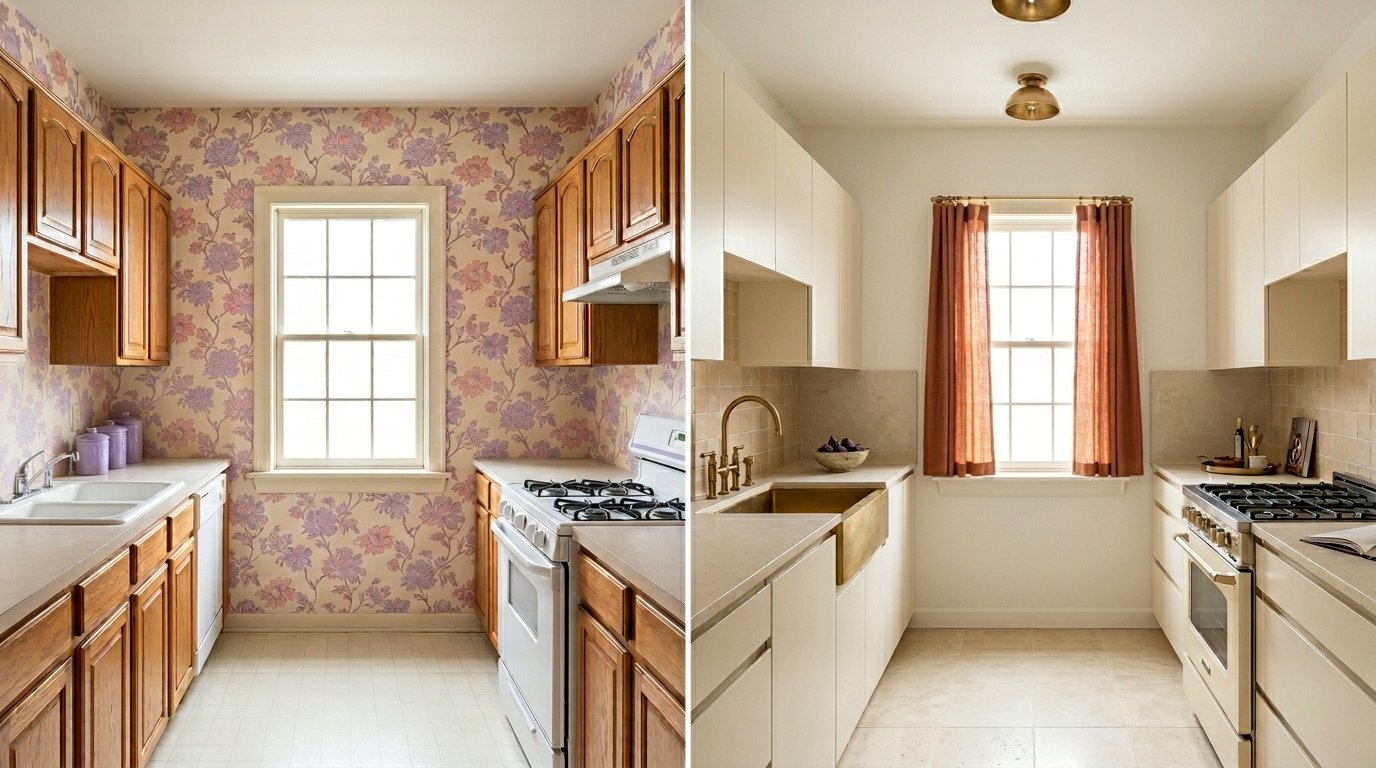
The fastest way to make a small galley kitchen feel calmer is to pull the wall, cabinet, and counter colors into the same family. Cream cabinets against a stone-colored backsplash. Counters that don't fight for attention. The contrast comes from one or two warm metal accents, like an unlacquered brass faucet or aged-brass cabinet pulls.
This works in a galley because there's no visual break between zones. The cabinets sit right next to the counters which sit right next to the wall. Match the temperatures and the wall reads as one surface instead of three. A saturated curtain at the far end (terracotta linen, dusty pink, anything with weight to it) gives the eye somewhere to land.
A galley kitchen remodel in this style typically runs $35,000 to $60,000, depending on whether you're refacing or replacing cabinets, and whether the brass fixtures are solid or plated.
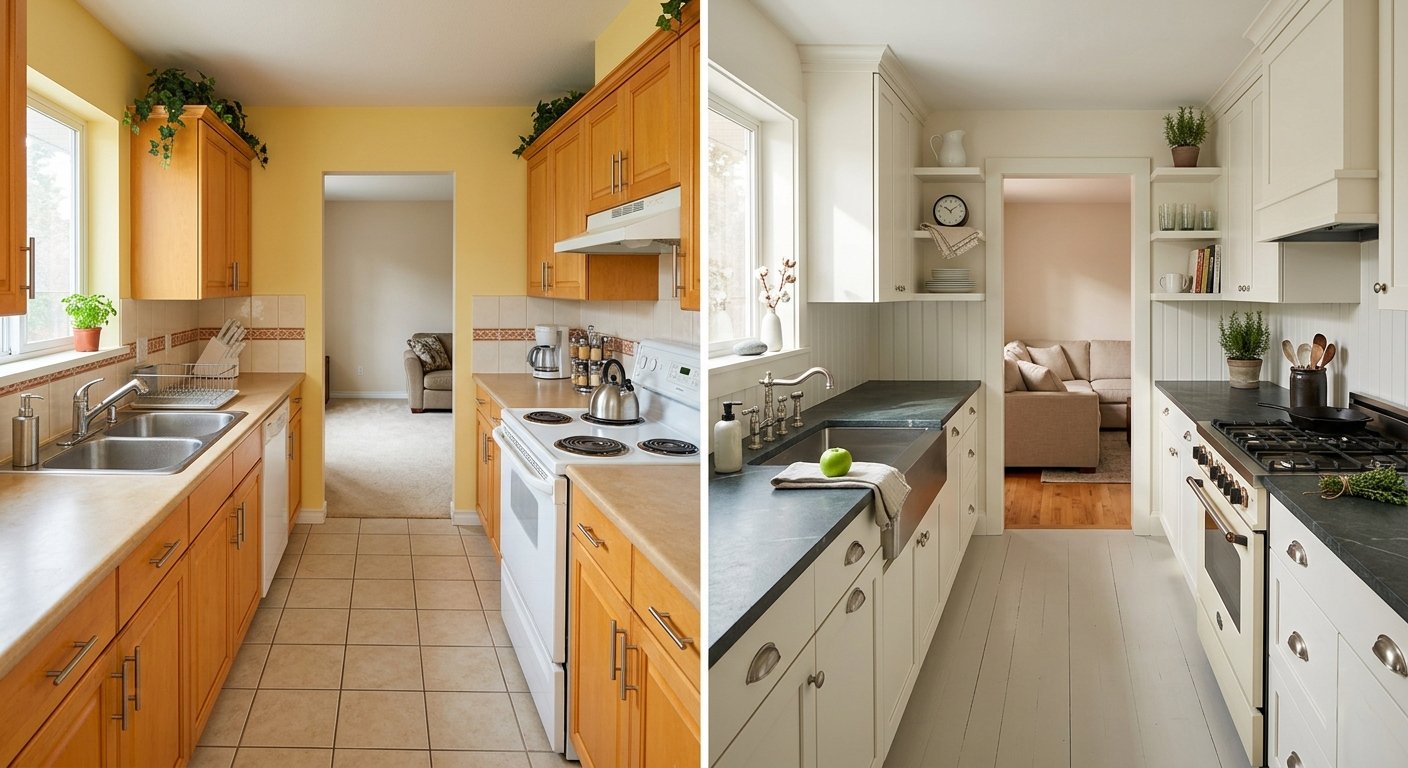
Most kitchens default to a dark floor and lighter counters above it. In a galley, that formula leaves the room top-heavy. Inverting it (a bright floor below, a dark stone counter at waist height) gives the eye something to land on at the right level and grounds the whole space.
Painted wood floors are one way to get there in older homes where the original boards run continuously through the kitchen and adjacent rooms. White, cream, or a soft greige extends the visual line of the room and bounces light back up. Pair it with a dark soapstone or concrete counter and the room stops looking washed out. Open shelving on at least one wall keeps the upper half from feeling cabinet-heavy. A galley with cabinets on both sides, top to bottom, can start to feel like a hallway lined with closets. Breaking up one run with two or three open shelves changes the proportions completely.
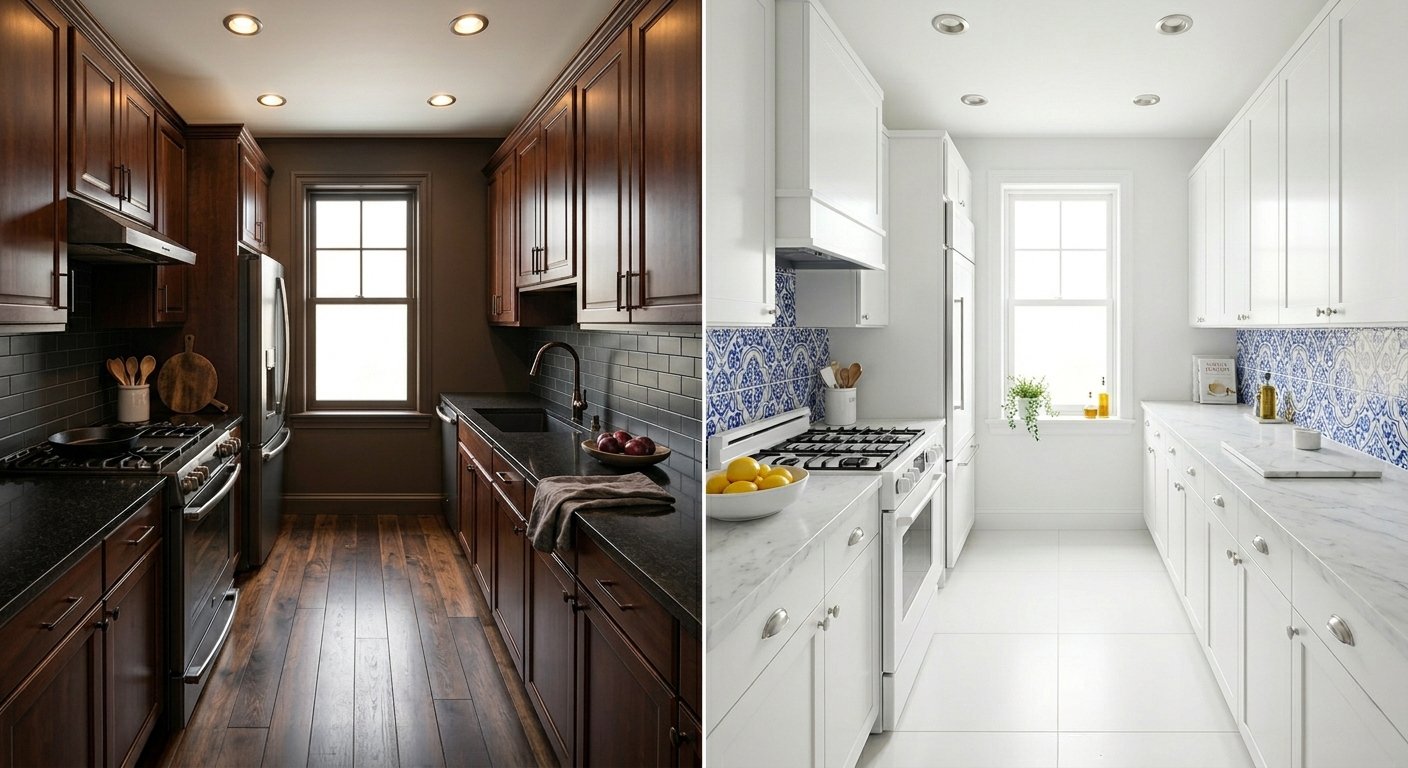
In a galley kitchen, the backsplash is the one wall surface you can see clearly. The counters block the lower half of the wall. The upper cabinets block most of the rest. Concentrating the design budget on that single visible band, rather than spreading it thin across paint, hardware, and decor, gives a much bigger return.
This is why a patterned tile, a saturated color, or a hand-painted ceramic can carry an entire kitchen. When the rest of the room is quiet (white cabinets, white counters, simple appliances), the backsplash becomes the personality. A bold blue azulejo or a hand-glazed zellige can run $15 to $40 per square foot, and a typical galley needs 30 to 50 square feet of backsplash.
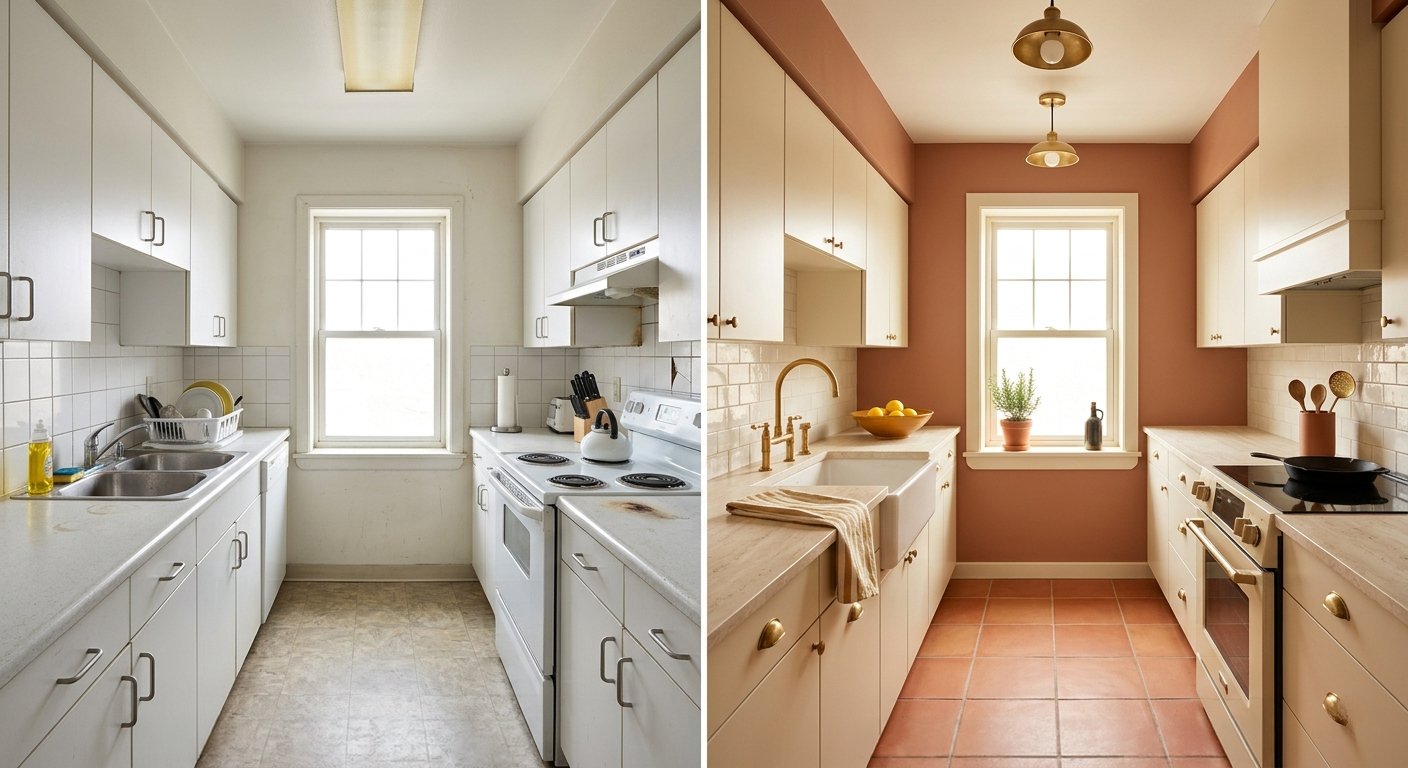
Warm colors visually advance, which sounds like a problem in a narrow room but actually works in your favor. A warm wall at the end of a galley pulls the eye and tells you where the room ends. Terracotta, ochre, dusty rose, and warm clay all do this work.
The trick is keeping the values close across the room. If the end wall is a deep terracotta, the floor should be in the same warm range, not a cool gray that fights with it. Cabinets in cream or unbleached linen sit comfortably between the two. Hardware in aged brass or oil-rubbed bronze ties the metals to the warm palette.
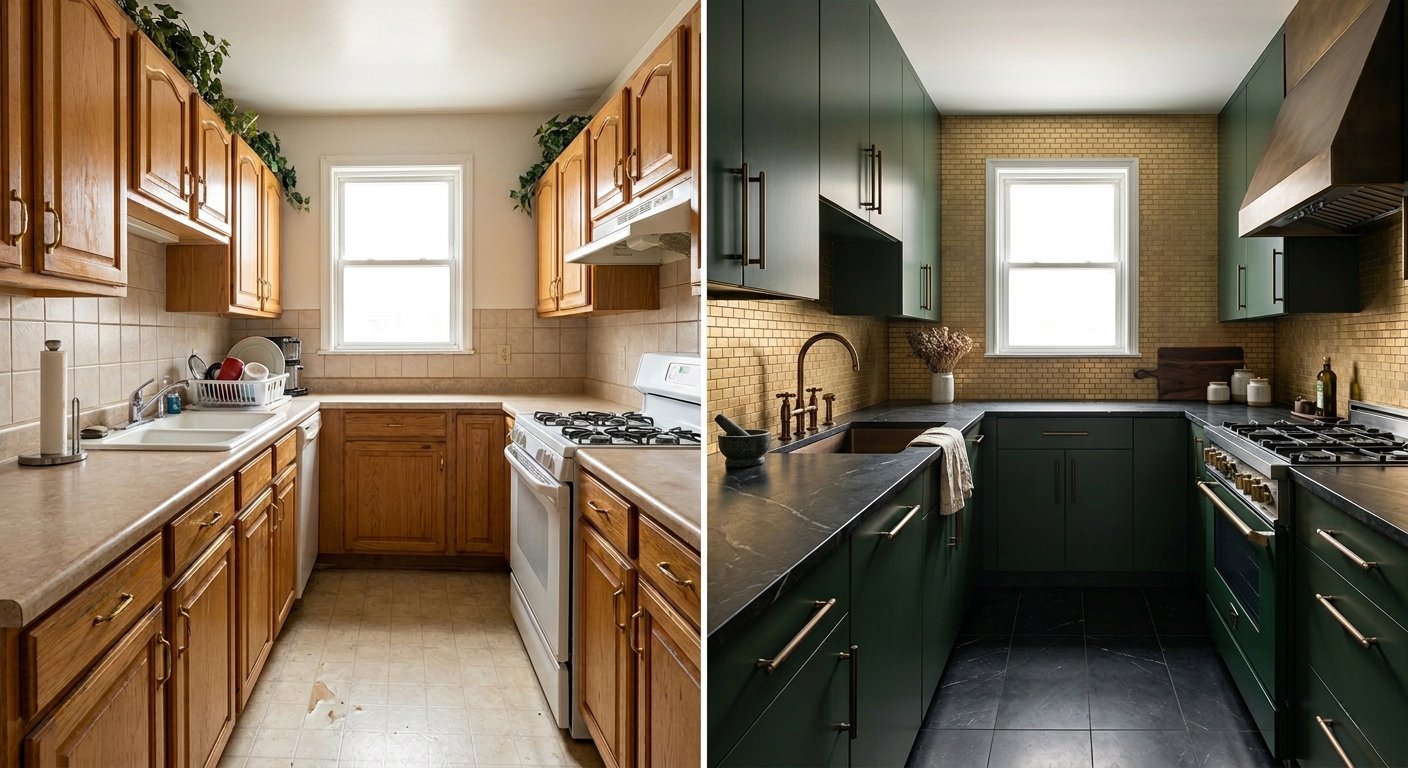
Saturated cabinet colors used to feel like a risk in small kitchens. The thinking was that dark colors would make a narrow space feel narrower. In practice, going all the way dark on cabinets, counters, and backsplash makes a galley feel like a room you chose, not a room you got stuck with. The half-measure (one accent wall in green, the rest white) is what actually fails. The room reads as indecisive rather than bold.
The supporting players matter once you commit. A green or navy cabinet wants warm metals nearby, like aged brass, copper, or unlacquered brass that will patina, rather than chrome or polished nickel, which can read cold against the depth of the color. The counters can go darker (soapstone) or lighter (a creamy quartzite). What doesn't work is matching the counter exactly to the cabinet, which flattens everything.
Saturated colors also reward good lighting. Plan on under-cabinet LEDs and at least one ceiling fixture per 30 square feet of floor space. A dark galley without enough light just reads as dim.
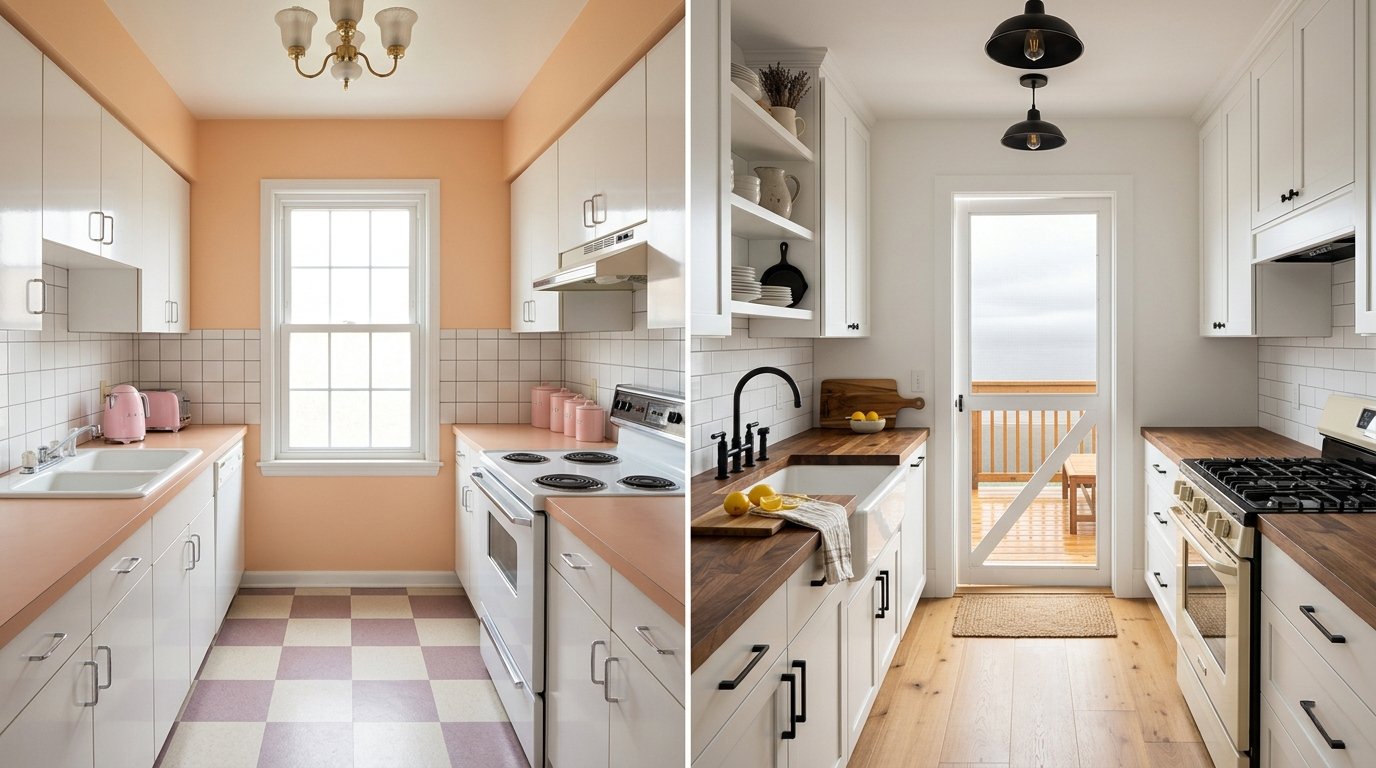
The all-white galley kitchen has been the dominant look for years, and for the homeowners who want it, the question isn't whether to do it but how to keep it from feeling like a showroom. The answer is usually wood, and usually in a horizontal surface where it gets touched. Butcher block counters bring in warmth without disrupting the bright, airy quality that draws people to white kitchens in the first place.
Walnut and white oak are the most common choices, and they age differently. Walnut deepens to a richer brown over years of use. White oak stays lighter but develops a soft patina around the sink where it gets the most water exposure. Both need oiling every few months in a working kitchen.
Black hardware, a black faucet, and matte black pendant lights pull the look toward the modern farmhouse end of the spectrum. Swap those for unlacquered brass and the same kitchen reads more traditional. The cabinet color and counter material do most of the work, but those small finish choices set the personality.
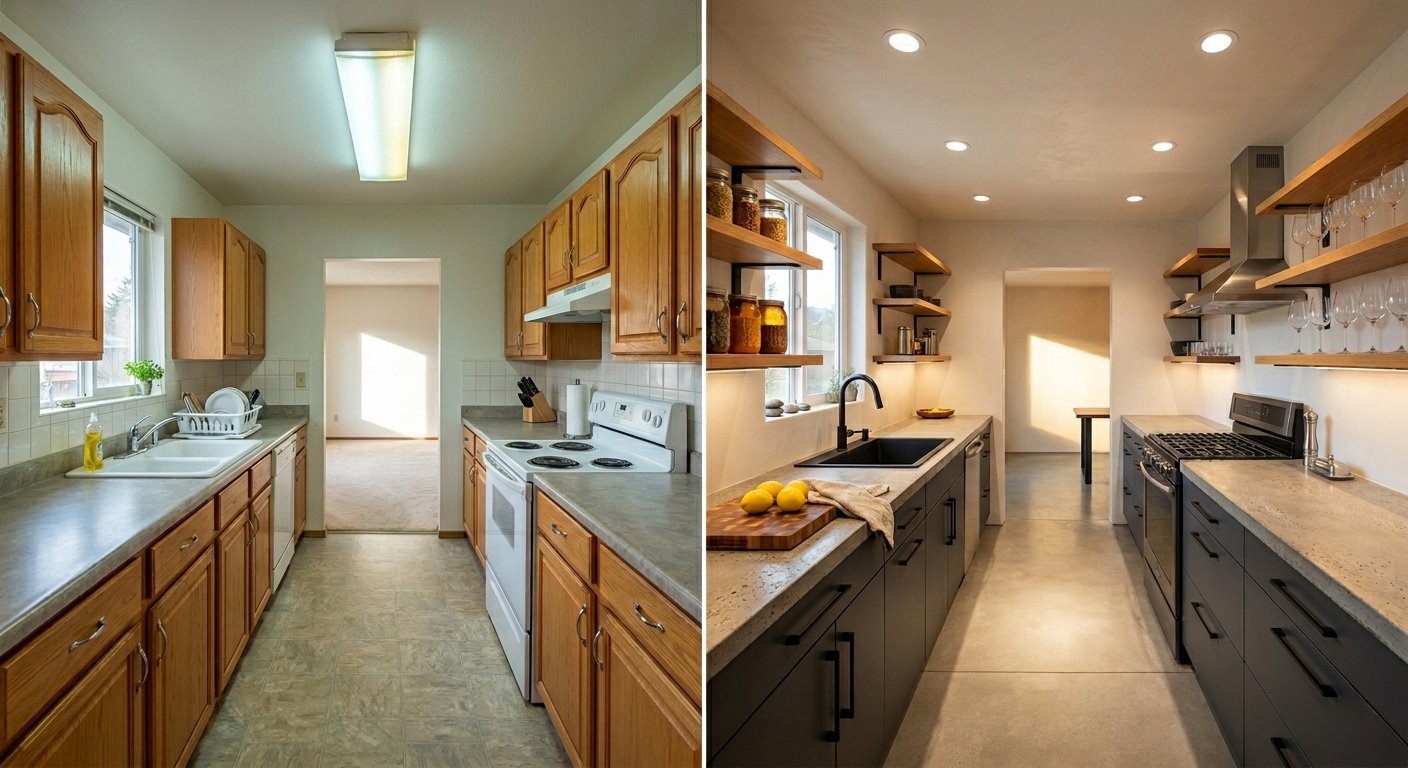
The single biggest move for making a narrow galley kitchen remodel feel less closed in is removing upper cabinets from one wall. The trade is real (you lose dish and pantry storage) but the perceived width gain is immediate. Pulling cabinets off one wall pushes the apparent width of the room by 12 to 15 inches, which matters when the actual width is 8 feet.
Open wood shelving in their place keeps some of the storage but visually reads as part of the wall rather than a heavy box mounted to it. The catch is that everything on those shelves is on display. Open shelving punishes clutter. It rewards a small set of dishes you actually use and the discipline to keep cereal boxes elsewhere.
For homeowners who already cook a lot and have a clear sense of what they own, the trade is worth it. For those who don't, glass-front uppers on one side and solid uppers on the other split the difference.
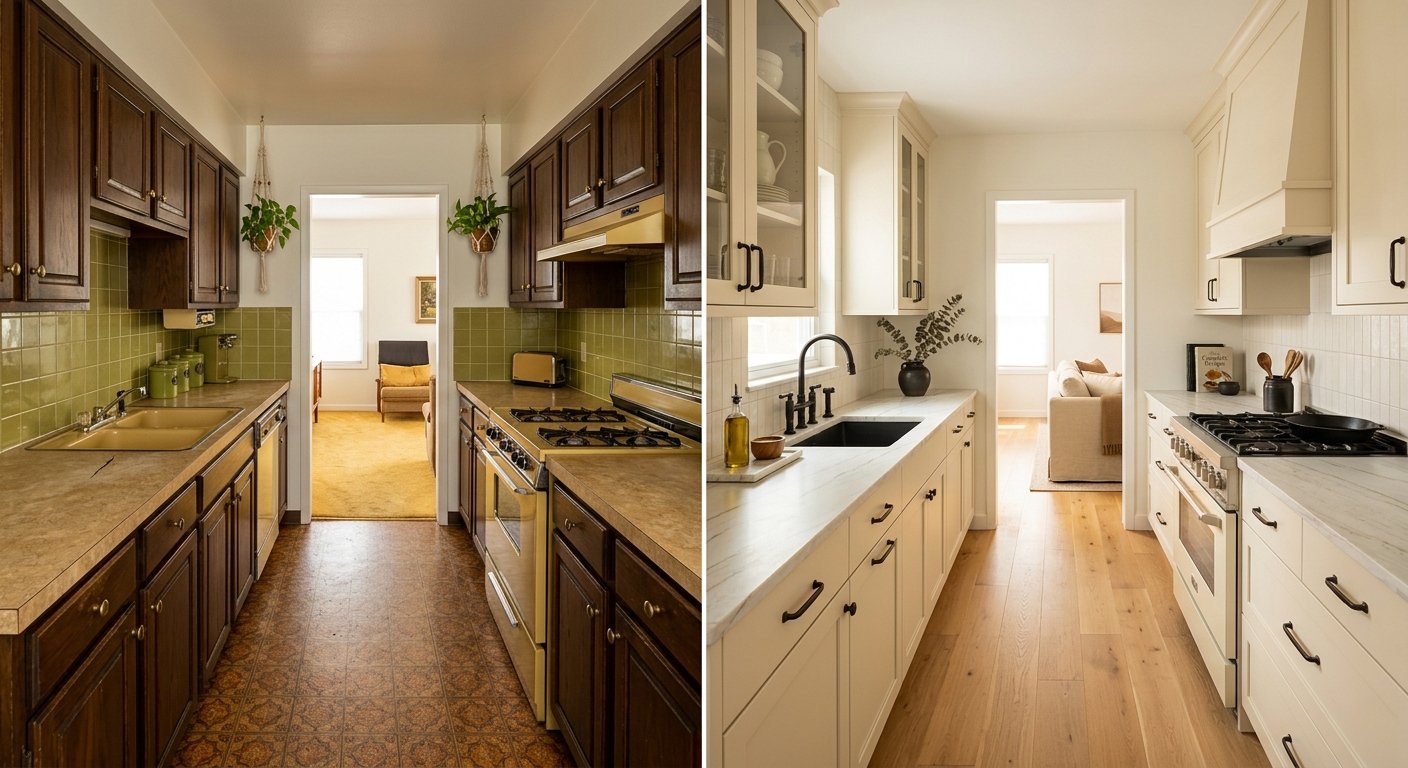
Galley kitchens often open directly into a living or dining space and get seen from every angle. That's the case for choosing a kitchen style that doesn't fight with the rooms around it. Trend-driven finishes (high-gloss lacquer, very specific cabinet colors, statement-tile flooring) can look great in isolation and out of place when viewed from the next room over.
Cream shaker with marble counters, oak floors, and black hardware is one version that holds up. The shaker door has been a standard for a century and isn't going anywhere. Cream warms the room without going as far as cottage yellow or buttery beige. Black hardware adds enough contrast to keep the cabinets from disappearing into the walls.
The eight remodels above show how much variety is possible in a narrow footprint. The principles below apply across styles and are worth thinking through before you commit to a direction.
Galley kitchens almost always have a window at one end and not much else. The natural light is uneven, and overhead lighting alone leaves the counters in shadow. Plan for layered light: ceiling fixtures, under-cabinet LEDs along every working run, and ideally a pendant or flush mount above the sink. A typical galley needs 200 to 300 watts of total light output, more if the cabinets and counters are dark.
Standard upper cabinets stop at 84 or 90 inches, leaving a foot of dead space above. In a galley with limited storage, that space is too valuable to waste. Cabinets that run to the ceiling add 25 to 40% more storage and visually elongate the room. The top shelf is a fine place for things you use twice a year (large platters, holiday dishes, the stand mixer attachments you forgot you owned).
A galley kitchen reads as longer and wider when the flooring runs in long planks parallel to the longer dimension and continues without a transition into adjacent rooms. Switching flooring at the kitchen entrance creates a visual stop that makes the space feel boxed in. Hardwood, large-format tile, or LVP in long planks all work.
Standard counter depth is 25 inches. In a tight galley, every inch matters. Reducing one run to 21 or 22 inches gives the room another 4 inches of floor space, which is significant when the original walkway was only 36 inches wide. This works best on the non-cooking side, where you don't need full appliance depth.
The classic galley puts the sink on one side and the range on the other. That works if no one else needs to walk through. If the kitchen is a pass-through to another room, consider putting the sink and range on the same side, leaving the opposite wall for storage and counter space. Two cooks won't be happy in any galley, but one cook plus one person walking through can coexist with the right layout.
A galley kitchen remodel typically runs $25,000 to $75,000 depending on materials, layout changes, and region. Hidden plumbing, outdated wiring, and subfloor repairs are common in older homes. Set aside 15 to 20% of the total budget as a contingency. For a $40,000 kitchen, that's $6,000 to $8,000 in reserve.
Block Renovation was built around the kind of project where every decision shows. The free Renovation Studio lets you visualize cabinet colors, counter materials, and finishes in your actual space, with real-time cost estimates as you make changes. When you're ready to hire, vetted local contractors compete for your project with detailed scopes reviewed by Block's experts before any work begins, so you know what you're paying for and why.
Remodel with confidence through Block

Connect to vetted local contractors
We only work with top-tier, thoroughly vetted contractors

Get expert guidance
Our project planners offer expert advice, scope review, and ongoing support as needed

Enjoy peace of mind throughout your renovation
Secure payment system puts you in control and protects your remodel


Renovate confidently with Block
Easily compare quotes from top quality contractors, and get peace of mind with warranty & price protections.
Kitchen
Kitchen Remodel Mistakes to Avoid When Planning
08.13.2026
Kitchen
Rental Kitchen Renovation: Smart Materials & Design Choices
08.08.2026
Kitchen
Wall Oven Installation Cost & Are Wall Ovens Worth It?
08.07.2026
Kitchen
Wet Bar Installation Cost: A Line-by-Line Breakdown
08.01.2026
Kitchen
Kitchen Remodel Tips & Advice From the Pros
07.28.2026