



Kitchen Floor Plans
Galley Kitchen Floor Plans and Ideas That Work | Block
07.15.2026
02.13.2026


In This Article
A 9x9 kitchen lives in a kind of middle ground. At 81 square feet, it's noticeably roomier than the tightest galley or apartment kitchens, but it's still well short of the 10x10 benchmark that most cabinet and renovation pricing is built around. That extra footage matters — it can mean the difference between squeezing in a narrow aisle and having room for two people to work comfortably, or between choosing a compact fridge and fitting a standard-size one.
You'll find 9x9 kitchens in split-levels, ranch-style homes, mid-century builds, and older condos — places where the kitchen was designed for a different era of cooking and living. The good news is that a 9x9 footprint gives you enough room to work with almost any layout type, as long as you're deliberate about where things go.
This guide covers what it costs to renovate a 9x9 kitchen, the most common frustrations homeowners face at this size and how to address them, six distinct floor plan configurations, and practical strategies for making the space feel larger and more functional than its dimensions suggest.
Turn your renovation vision into reality
Get matched with trusted contractors and start your renovation today!
Find a Contractor
Renovation pricing is rarely one-size-fits-all, but understanding the general ranges for a kitchen this size helps you set expectations and make trade-offs with confidence. A 9x9 kitchen falls just under the industry-standard 10x10 benchmark, so material and cabinetry packages designed for that standard may need slight adjustments — which can sometimes work in your favor on cost.
Here's what homeowners can generally expect:
Basic refresh: $20,000–$30,000. Stock or ready-to-assemble cabinetry, standard appliances, new countertops and backsplash, and fresh paint. The existing layout stays mostly intact, and plumbing and electrical aren't relocated.
Mid-range renovation: $30,000–$50,000. Semi-custom cabinets, upgraded appliances, improved lighting, and some plumbing or electrical adjustments. This is where most homeowners land when they want to meaningfully improve how the kitchen functions — relocating a sink or adding a dishwasher, for instance.
High-end renovation: $50,000–$70,000+. Custom cabinetry, premium appliances, full layout reconfiguration, and finish-level details like specialty tile, integrated storage, or architectural lighting. At this level, you're reshaping the room, not just updating it.
Layout complexity is one of the biggest cost drivers. A single-wall configuration keeps plumbing and electrical runs short and cabinetry quantities low, while L-shaped, galley, and U-shaped layouts add linear feet of countertop, more cabinet boxes, and potentially more complex utility routing. Where you live also plays a significant role — labor rates, permit requirements, and material availability shift from city to city. Block's Renovation Studio shows you location-specific pricing in real time, so your budget reflects your actual zip code rather than a national average.
Homeowners renovating a 9x9 kitchen tend to run into the same set of frustrations. The space isn't tiny, but it's small enough that everyday annoyances compound quickly.
"There's nowhere to put anything down”: This is the number one complaint in kitchens this size. When counter space is limited, every meal becomes a juggling act — cutting boards balanced on stovetops, groceries stacked on chairs.
Solution: The fix isn't always adding more countertop. Sometimes it's about redistributing what's already on the counter. Moving the knife block, toaster, and coffee maker to a wall-mounted shelf or an inside-cabinet organizer can reclaim a surprising amount of usable prep surface. If you are reconfiguring the layout, prioritize at least 18 inches of clear landing space on each side of the stove and beside the sink.
"Two people can't be in here at the same time”: Tight circulation is usually a layout problem, not a square footage problem. In a 9x9 kitchen, you have enough room for comfortable movement if the walkways are planned correctly.
Solution: Aim for 36 to 42 inches of clearance in the primary traffic path. If your current layout funnels all movement through one narrow gap, consider whether a different configuration — like shifting from a U-shape to an L-shape — could open a second circulation route.
"The kitchen feels dark, even during the day”: Overhead fluorescent fixtures and a wall of upper cabinets are the usual culprits.
Solution: Replacing a single ceiling light with a combination of recessed downlights and under-cabinet LED strips immediately changes how the room feels. If your kitchen has a window, avoid heavy treatments and keep the area around it free of tall cabinetry so daylight can reach deeper into the room.
"There's no room for a dishwasher”: This is more solvable than most people think. A standard dishwasher is 24 inches wide — roughly the same as a base cabinet.
Solution: In most 9x9 layouts, swapping one base cabinet for a dishwasher is a straightforward trade, especially if you position it adjacent to the sink where the water supply and drain lines are already located. Compact 18-inch dishwashers are another option if you'd rather keep the cabinet and still gain the convenience.
"The layout just doesn't make sense”: Older 9x9 kitchens were often designed around habits that don't match how people cook today. The stove might be stranded on one wall while the sink sits across the room, or the refrigerator blocks a doorway when it's open.
Solution: A renovation is your chance to rethink the work triangle from scratch — and in a 9x9 footprint, even moving one appliance a few feet can dramatically improve the flow.
Renovate with confidence every step of the way
Step 1: Personalize Your Renovation Plan
Step 2: Receive Quotes from Trusted Contractors
Step 3: Let Us Handle the Project Details
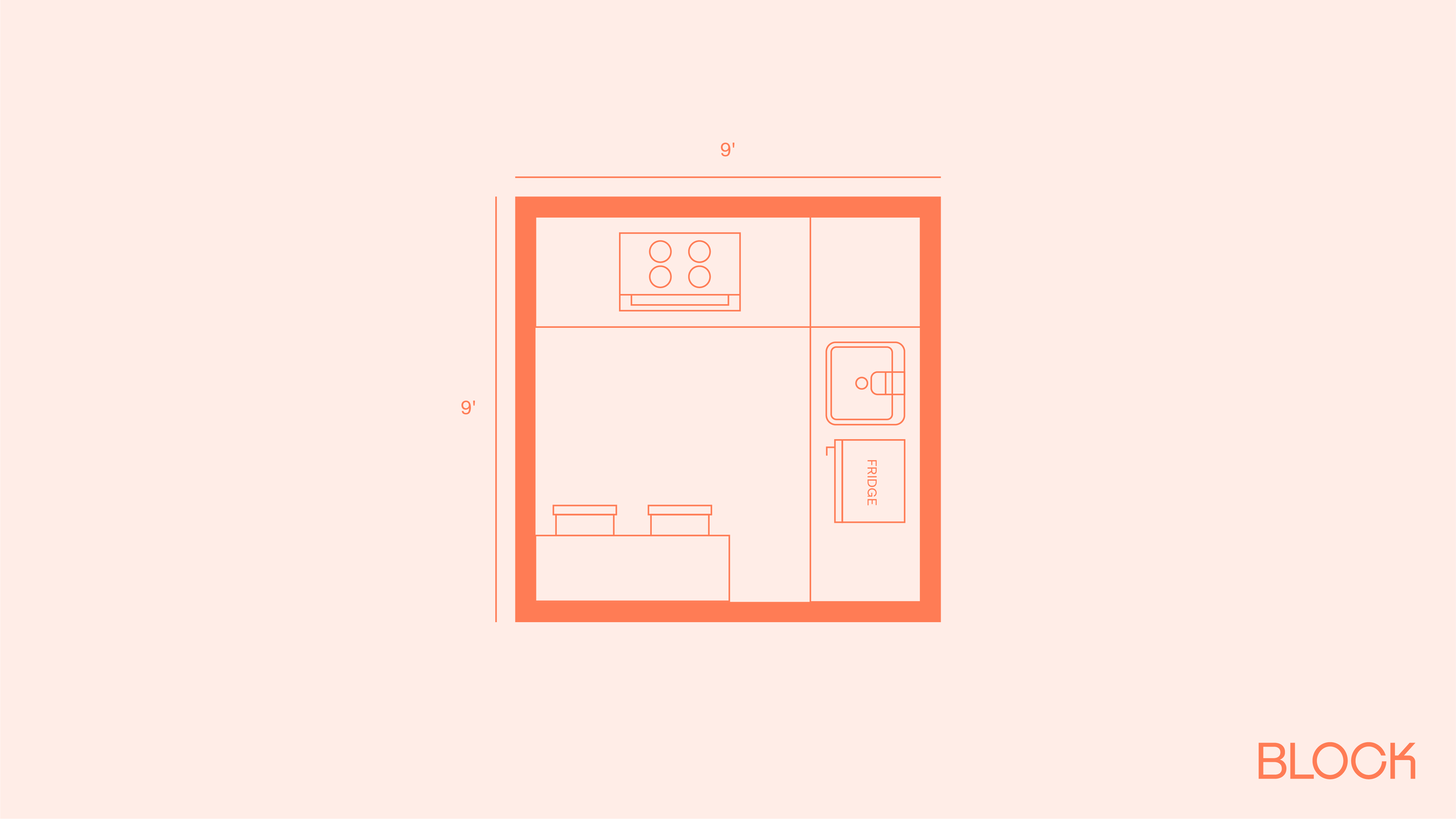
Cabinetry and appliances run along two adjacent walls in an L formation. The stove occupies the upper wall, with the sink and refrigerator along the right-hand wall. The bottom-left quadrant of the room remains open, providing a generous clearance zone and room for a mobile cart or small table if needed.
In a 9x9 footprint, the L-shape hits a sweet spot between efficiency and openness. The work triangle stays tight — you can move from fridge to sink to stove without crossing paths with anyone else in the room — while the open corner gives you breathing room that most other configurations at this size can't offer. That open floor area is also where you gain the most flexibility over time. A rolling butcher block can serve as extra prep space on busy cooking nights and tuck against a wall the rest of the time.
Corner cabinetry is the one area that needs attention. Without the right interior hardware — pull-out trays, a lazy Susan, or a swing-out shelf — the deep corner cabinet becomes a black hole where small appliances go to disappear. Plan those details during the design phase, not after install.
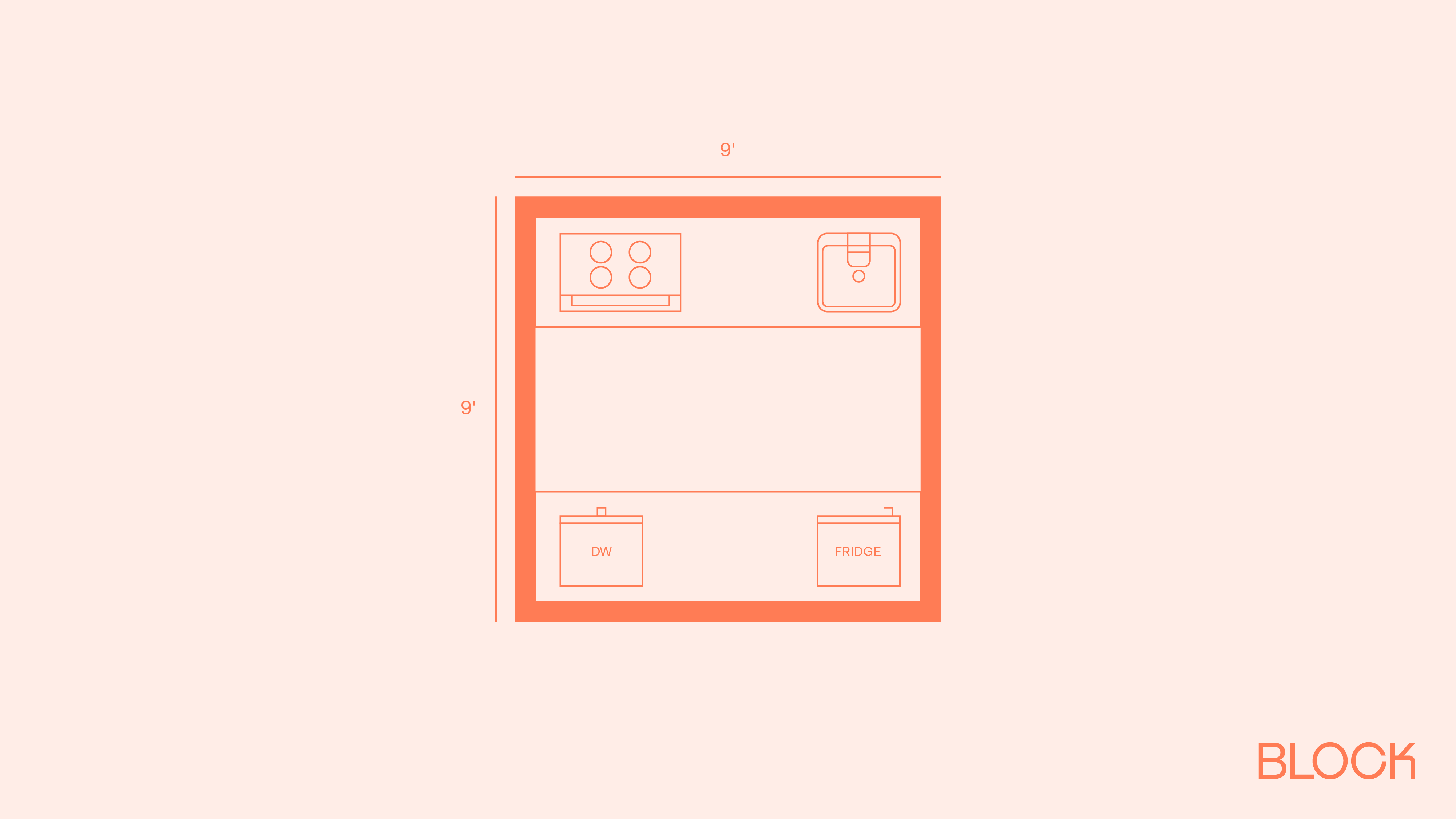
Two parallel walls of cabinetry and appliances face each other. The stove and sink line the upper wall, while the dishwasher and refrigerator anchor the lower wall. The aisle between the two runs serves as the main work corridor.
The galley is where a 9x9 kitchen starts to feel genuinely efficient. With an extra foot of width compared to an 8x8, you gain a wider central aisle — potentially 42 inches or more — which makes the difference between a kitchen that feels cramped and one that feels purposeful. You also gain the most combined counter and storage space of any layout at this size, because you're working both sides of the room.
The risk with a galley configuration is visual heaviness, especially if both walls carry floor-to-ceiling cabinetry. One effective counter to this: install uppers on only one wall and use the opposite wall for a combination of open shelving and task lighting. This keeps the storage advantage while letting the eye travel further, which makes the aisle feel wider than it measures.
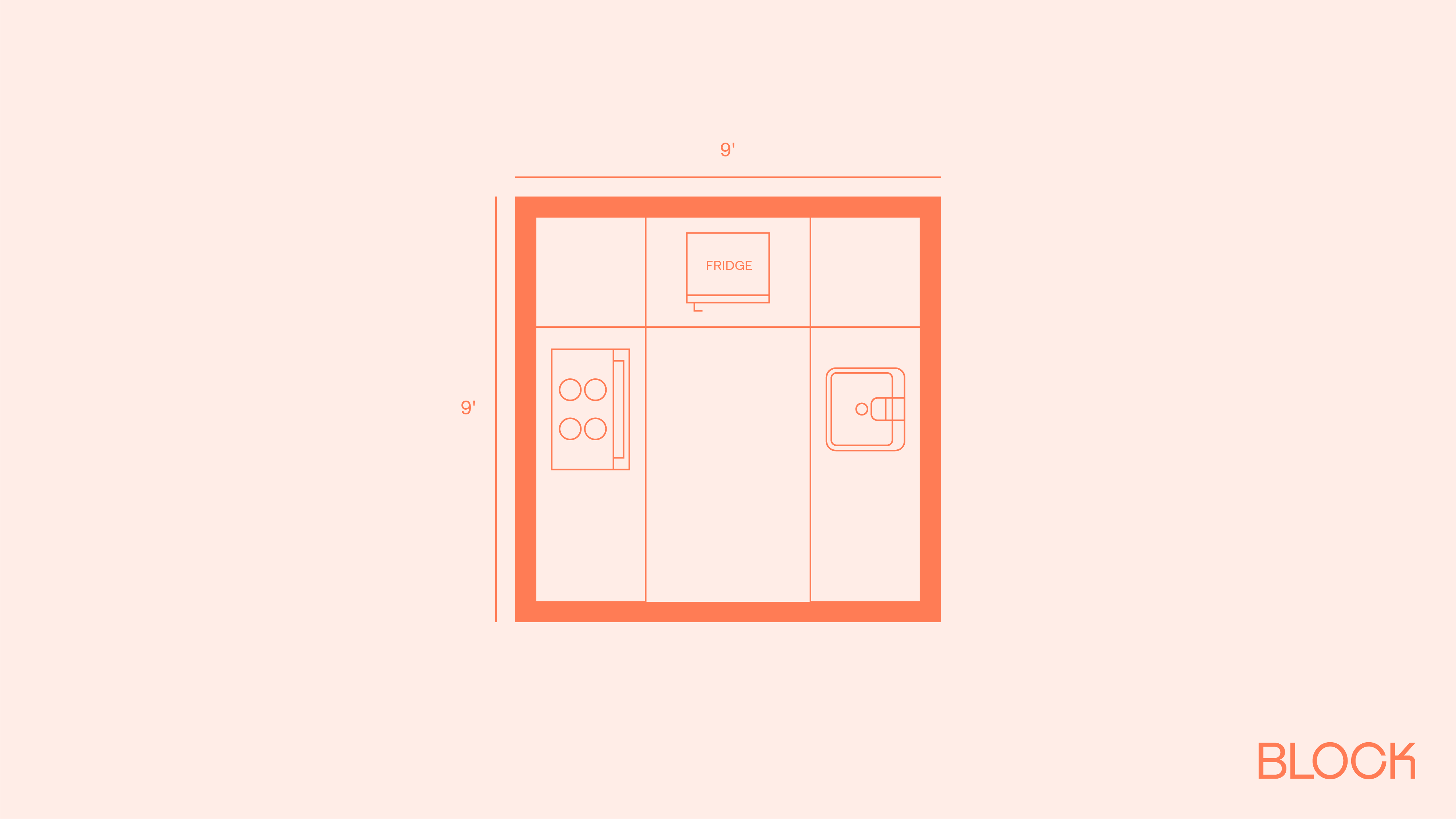
Appliances and cabinetry wrap three walls. The refrigerator is centered on the upper wall, with the stove on the left and the sink on the right. The fourth wall — the entry side — remains open.
This is the maximum-storage configuration. Every reachable surface is working for you, and the work triangle is about as compact as it gets — you can practically pivot between all three stations without taking a step. For homeowners who stock a deep pantry, own a lot of cookware, or simply want every item to have a designated home, the U-shape delivers where other layouts fall short.
The trade-off is spatial perception. Three walls of cabinetry can make even an 81-square-foot room feel smaller than it is. To offset this, keep upper cabinets to two walls maximum, use lighter finishes, and make sure the open entry wall stays uncluttered. Good lighting is especially critical here — under-cabinet strips on all three runs eliminate the shadows that can make a U-shaped kitchen feel like a cave.
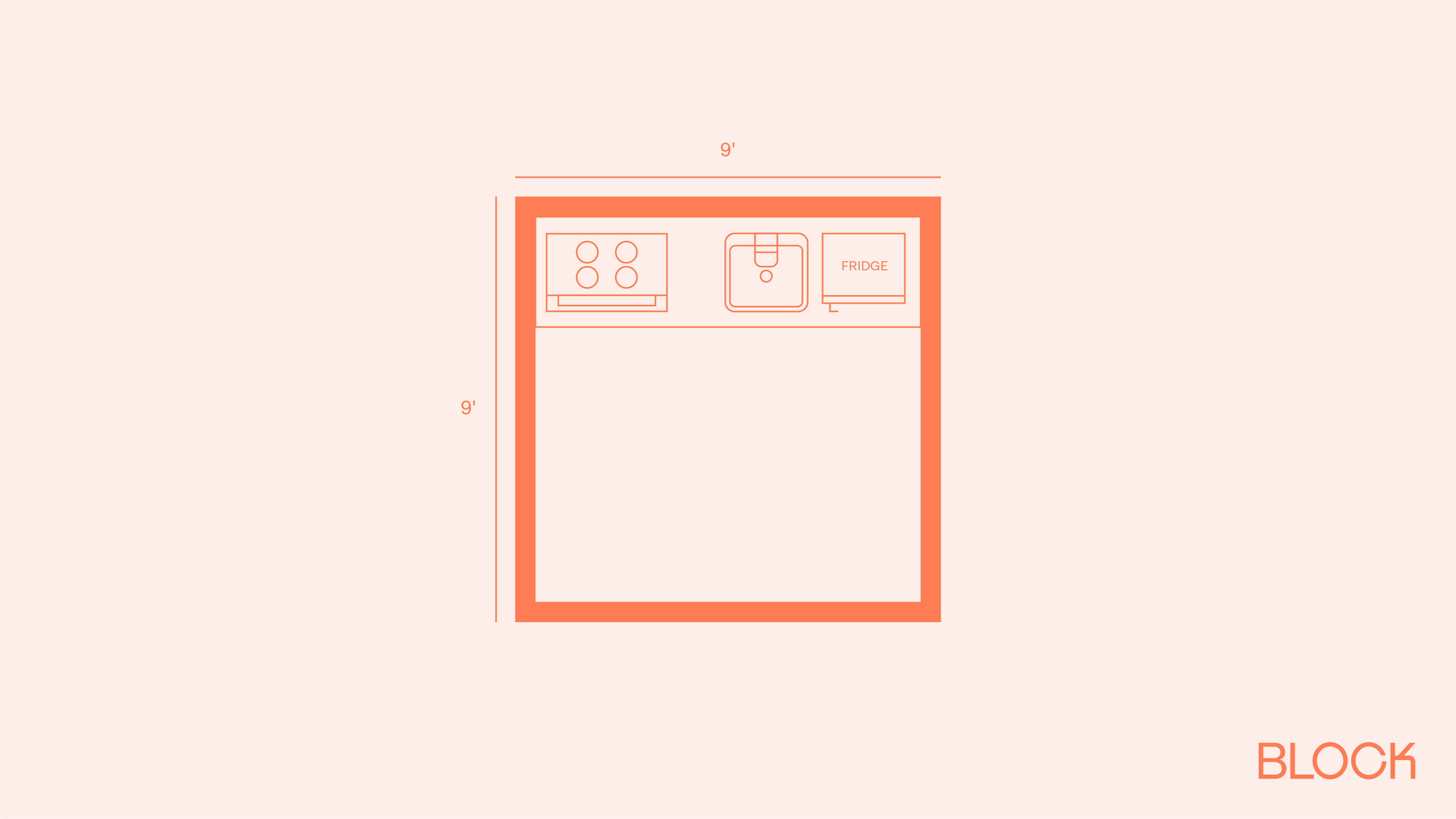
All appliances — stove, sink, and refrigerator — are arranged in a linear run along one wall. The rest of the room is completely open.
If your priority is making the kitchen feel as large and unencumbered as possible, this is the layout that delivers. It reads less like a traditional kitchen and more like a cooking wall within a larger living space, which makes it especially well-suited for open floor plans, studios, and any home where the kitchen is visible from adjacent rooms. The uninterrupted open area also means you could add a freestanding island, a small table, or simply enjoy the room to move.
The honest trade-off is storage and prep space. With only one wall in play, you have roughly half the cabinet and counter capacity of an L-shaped or galley layout. You'll need to be disciplined about what stays in the kitchen and what moves to a nearby closet or pantry. Wall-mounted shelving, a magnetic knife strip, and a ceiling-hung pot rack can all help compensate without eating into your clean sightlines.
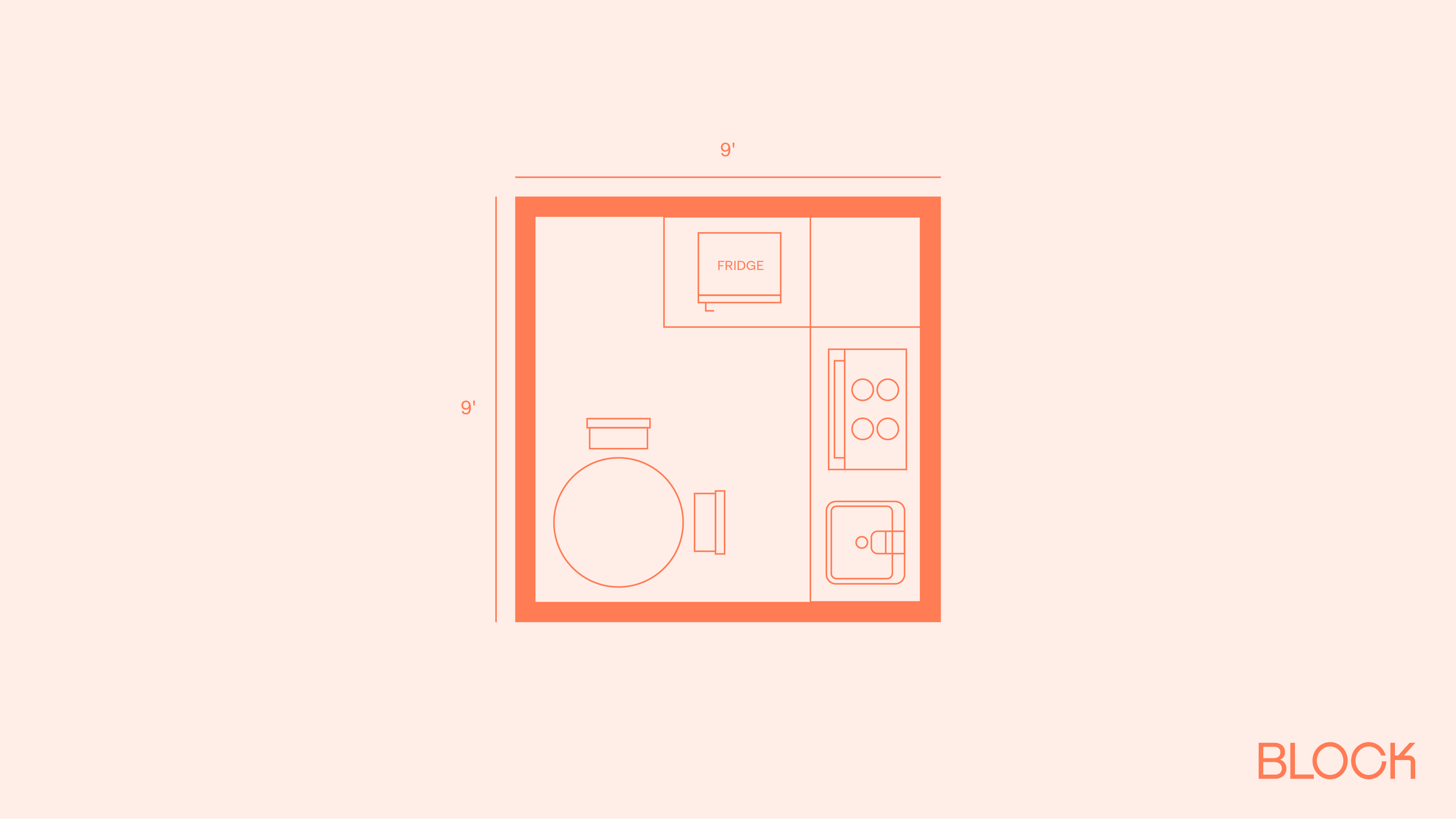
The refrigerator anchors the upper wall, with the stove and sink arranged along the right-hand wall in an L. The open floor area accommodates a round dining table with seating, turning the kitchen into a combined cooking and eating space.
For households where the kitchen doubles as the dining room — common in apartments, smaller homes, and older floor plans without a formal eating area — this layout makes the most of a single room. The 9x9 footprint offers a meaningful advantage over smaller kitchens here: that extra square footage translates directly into a more comfortable table size and better clearance around the chairs.
The design challenge is making sure the dining area doesn't steal from the cooking zone. Keep the table round rather than rectangular to preserve walkways on all sides, and position it so chairs don't block the path between the stove and the refrigerator. A compact or under-counter dishwasher can free up base cabinet space along the working wall if you need the extra storage that a full dining setup tends to displace.
Square footage is fixed, but the way a kitchen feels is something you can design around. A few deliberate choices during renovation can shift a 9x9 kitchen from feeling adequate to feeling genuinely comfortable.
Eighty-one square feet is enough to build a kitchen that genuinely works — one that supports real cooking, holds the tools and ingredients you actually use, and still feels comfortable to spend time in. The key is starting with a layout that fits how you live, not just what fits on paper.
With Block Renovation, you can test different configurations and see how material choices affect your budget before any work begins — all through the free Renovation Studio. And when you're ready to build, Block connects you with vetted local contractors who understand how to get the most out of a compact kitchen, backed by progress-based payments and a one-year workmanship warranty.
Whether you're solving for storage, improving circulation, or finally getting the dishwasher you've been wanting, the right plan makes all the difference.
Remodel with confidence through Block

Connect to vetted local contractors
We only work with top-tier, thoroughly vetted contractors

Get expert guidance
Our project planners offer expert advice, scope review, and ongoing support as needed
Enjoy peace of mind throughout your renovation
Secure payment system puts you in control and protects your remodel

Renovate confidently with Block
Easily compare quotes from top quality contractors, and get peace of mind with warranty & price protections.
Kitchen Floor Plans
Galley Kitchen Floor Plans and Ideas That Work | Block
07.15.2026
.webp?width=640&name=King%20-%20Final%20Kitchen%20(1).webp)
Kitchen Floor Plans
AI Floor Plan Generator: Best Free & Paid Software
06.26.2026
Kitchen Floor Plans
U-Shaped Kitchen Layouts & Floor Plans: 8 Designs
05.28.2026

Kitchen Floor Plans
Kitchen Floor Plans With Islands: 6 Layouts That Work
05.14.2026

Kitchen Floor Plans
12x10 Kitchen Layouts: 5 Designs That Work
04.26.2026