


Building Your Custom Home in Toledo, Ohio

Budget your upcoming Toledo custom home build with help from Block
How we get your estimate
Fill out the form above to either connect with contractors for a personalized quote or estimate your costs with Block's Renovation Studio.
Symmetric living room with white sofas and a large window.

In This Article

    Toledo occupies a position at the western edge of Lake Erie that shapes both its economy and its character in ways that outsiders often underestimate. The University of Toledo, a major automotive glass and manufacturing sector anchored by Owens Corning, and a healthcare system centered on ProMedica and Mercy Health give the city a stable employment base that has supported steady residential investment. The Maumee River corridor, an improving downtown arts and restaurant district anchored by spots like Muddy Waters and Maumee Bay Brewing, and a collection of established residential neighborhoods from Old West End to Sylvania Township give Toledo a livability that its national reputation hasn't always reflected. Land prices here remain among the most affordable in any Great Lakes city, making custom home building accessible to buyers who would be priced out of comparable markets in Columbus or Cleveland.

    Building custom in Toledo means working with soils and drainage conditions shaped by the post-glacial Lake Erie basin, navigating a construction market with a strong union trades presence, and planning for winters that combine Lake Erie snowfall with freeze-thaw cycles that test every foundation and building envelope decision.

    Design a Home That’s Uniquely Yours

    Block can help you achieve your renovation goals and bring your dream remodel to life with price assurance and expert support.

    Get Started

    Cost and timeline overview for future Toledo homeowners

    Toledo's construction market offers genuine value relative to other Ohio cities, but understanding where the local cost variables concentrate helps you build a budget that accounts for what the site and the climate actually require.

    Custom home construction in Toledo and the surrounding Lucas County and Wood County area typically runs between $155 and $260 per square foot for the structure, excluding land. High-performance builds with finished basements, premium insulation packages, and quality outdoor spaces push toward $300. Land costs in Toledo proper remain accessible, with infill lots in desirable neighborhoods like Ottawa Hills, Westmoreland, and the Kenwood and Franklin Park corridors carrying moderate premiums relative to suburban alternatives in Sylvania, Maumee, and Perrysburg. Perrysburg in particular has emerged as a strong custom home destination, offering Wood County school district access and proximity to I-75 with a build environment that is somewhat easier than Toledo's clay-heavy urban soil conditions. Labor in the Toledo market is shaped by a strong union trades presence, which sets a floor on skilled contractor rates that generally runs above national averages for comparable work.

    Full basements are close to standard in Toledo custom home programs, both because buyers expect them and because they provide practical mechanical space and storage in a climate that produces serious winter and spring conditions. Finishing the basement to habitable standards adds to the initial budget but represents some of the best value-per-square-foot in the Toledo market.

    The largest factors in determining cost

    Foundation and drainage work is the most significant local cost variable in Toledo custom home construction. The silty clay loam and lacustrine clay soils that dominate the Toledo basin are poorly drained, frost-heave susceptible, and require full basement construction with exterior waterproofing and drain tile systems that are more demanding than what comparable construction requires in better-drained markets. Basement wall waterproofing in Toledo's saturated soil environment is not optional: hydrostatic pressure against unprotected concrete or block basement walls is a predictable source of water intrusion that shows up within the first few years of occupancy in homes where it was not properly addressed during construction. Insulation and air sealing for a building envelope that must perform through Toledo's combination of Lake Erie-effect snow, ice storms, and extended below-zero periods requires specifications that exceed what is adequate in milder Ohio markets like Cincinnati. HVAC systems sized for the actual heating load of a well-insulated Toledo home, rather than oversized systems that cycle too quickly to effectively dehumidify in the spring and fall, add design cost but deliver measurably better performance and operating costs over the ownership period.

    Examples of upgrades that will push your budget higher

    These additions most reliably expand Toledo custom home budgets past initial estimates:

    • Full basement with egress windows and finished living area: Toledo buyers factor below-grade square footage heavily into value assessments, and finishing the basement to include a legal bedroom, full bath, and flex space adds resale value that typically exceeds the incremental construction cost.
    • Exterior basement waterproofing system with drain tile: Properly applied exterior waterproofing membrane, insulation board, and perimeter drain tile at the footing is the standard Toledo specification for keeping basements dry through the high water table conditions that affect much of the basin.
    • High-performance triple-pane windows: Toledo's Lake Erie effect snow and extended cold periods make high-performance glazing a practical comfort and energy investment rather than a luxury specification.
    • Spray foam insulation in rim joists, exterior walls, and attic kneewalls: Toledo's heating-dominated climate makes air sealing at the critical thermal bypass zones the highest-return envelope investment in the construction budget.
    • Whole-home standby generator: Lake Erie ice storms and wind events regularly interrupt power in the Toledo area for extended periods, and standby generators with automatic transfer switches have become standard infrastructure in higher-end Toledo custom homes.
    • Mudroom designed as a functional winter entry system: Toledo winters demand a serious mudroom with heated tile, built-in storage for winter gear, boot dryers, and direct garage access as a baseline entry sequence rather than a coat closet.
    • Three-season or four-season porch: Extending comfortable outdoor use into Toledo's spring and fall shoulder seasons through a conditioned or partially conditioned porch addition is a popular request that adds both livability and resale value.

    Finding the right site in Toledo for your custom home

    Toledo's flat lakeshore plain and clay-heavy soils mean that lot conditions differ significantly from one parcel to the next based on drainage patterns, proximity to the Maumee River and its tributaries, and prior land use history. An experienced local builder can assess a site's subsurface drainage, soil saturation risk, and prior development history in ways that a listing sheet won't reveal.

    Considerations will include:

    • Soil quality and site stability: Toledo sits on the bed of proglacial Lake Warren, a predecessor to Lake Erie, which deposited thick layers of fine-grained lacustrine clay across the entire Toledo basin. These clays have low bearing capacity when saturated, are subject to frost heave during freeze-thaw cycles, and have very poor natural drainage that creates perched water tables above the clay layer after rain and snowmelt events. The combination of high water tables and frost-susceptible soils makes full basement construction with exterior waterproofing and drain tile a standard requirement rather than an option, and foundation systems that perform well in better-drained Ohio markets may not be adequate for Toledo's lacustrine conditions.
    • Utilities access: The City of Toledo and the established suburbs of Sylvania, Maumee, and Perrysburg are well-served by municipal water, sewer, gas, and electric infrastructure, but infill lots in city neighborhoods that have experienced significant demolition and depopulation may have had utility service connections interrupted and require restoration at the homeowner's cost and on the utility's schedule. Suburban Wood County communities including Millbury, Haskins, and Bowling Green have their own utility service territories with varying connection fee structures, and confirming active service availability before finalizing a lot purchase avoids surprises that affect project feasibility.
    • Zoning and restrictive covenants: The City of Toledo administers zoning under its zoning code, which has been updated to encourage infill development and accessory dwelling units in residential zones. Suburban municipalities and townships in Lucas and Wood Counties have their own zoning regulations, and some communities including Ottawa Hills and the Sylvania Township area carry design standards or historic district overlays that add exterior design review requirements.
    • Lot slope and drainage: Toledo's nearly flat topography means drainage is almost entirely a function of site grading rather than natural terrain, and lots in low-lying positions relative to adjacent streets and properties can experience standing water for days after significant rain or snowmelt events when the saturated lacustrine clay can't accept additional infiltration. Proximity to the Maumee River, Swan Creek, and Ottawa River and their mapped floodplains is a meaningful lot selection consideration, as FEMA Special Flood Hazard Areas along these corridors impose first-floor elevation requirements and flood insurance costs that affect both construction budget and ongoing ownership expense.
    • Proximity to amenities: The Westgate and Franklin Park Mall corridors in west Toledo provide suburban retail access that shapes household convenience for buyers in the western suburbs, while proximity to the University of Toledo campus and the Mercy Health and ProMedica healthcare campuses is a meaningful attractor for academic and healthcare professional households. The Perrysburg waterfront and the Maumee River parks system provide recreational access that commands premiums in adjacent residential areas.
    • Environmental concerns or hazards: Toledo's industrial heritage has left environmental contamination at specific documented sites across the city and inner suburbs, particularly near former glass manufacturing, refining, and chemical processing operations along the Maumee River corridor. The Ohio EPA's DERR (Division of Environmental Response and Revitalization) database is the appropriate resource for identifying known contaminated parcels before purchase. Toledo also has a documented history of lead service line infrastructure in older city neighborhoods, and new construction that involves reconnecting to older utility infrastructure may require coordination with Toledo Water and verification that the service lateral meets current standards.
    • View, orientation, and privacy: South-facing lots in Toledo maximize passive solar gain across a heating season that runs from October through April, and well-insulated south-facing homes with appropriately sized glazing and properly designed overhangs outperform equivalently built north-facing homes on both energy cost and interior comfort during the long grey winters that Lake Erie proximity produces. Lake Erie waterfront access in communities like Oregon, Lakeside, and Catawba Island carries premium pricing that reflects both the recreational access and the visual quality of the lakeshore setting.

    School district quality and attendance boundaries drive suburban lot selection strongly in the Toledo metro. Perrysburg City Schools, Ottawa Hills Local Schools, and Sylvania City Schools draw consistent buyer demand and premium lot pricing, and families typically research those boundaries before narrowing their lot search to specific areas. Access to I-75, I-475, and the Anthony Wayne Trail shapes commuter household decisions, and proximity to the ProMedica campus in downtown Toledo and the University of Toledo medical center attracts healthcare workers to adjacent neighborhoods.

    Preparing for unique local challenges

    Toledo's position on the Lake Erie plain creates building conditions that differ from the rest of Ohio in specific ways. The combination of lacustrine clay soils, lake-effect weather, proximity to an industrial legacy, and a high water table require planning that is specific to northwest Ohio.

    Lacustrine clay soils and basement waterproofing

    Toledo's lacustrine clay soils are among the most challenging residential foundation substrates in the Midwest, combining poor bearing capacity, high frost susceptibility, and essentially no natural drainage. Homes built on these soils without exterior waterproofing and perimeter drain tile systems routinely develop basement water intrusion within five to ten years as hydrostatic pressure overcomes concrete's resistance to moisture transmission. The correct specification includes a waterproofing membrane applied to the exterior face of the foundation wall from the footing to above grade, two inches of drainage board to protect the membrane and direct water downward, perimeter drain tile at the footing elevation draining to a sump pit, and proper backfill with granular material rather than the native clay. Homeowners who accept interior waterproofing systems as an alternative to proper exterior waterproofing during construction are managing a symptom rather than the cause, and interior systems require ongoing maintenance and power to operate the sump pump they depend on.

    Lake Erie snow and ice and construction scheduling

    Toledo sits at the western end of Lake Erie, where the lake's relatively shallow western basin generates significant lake-effect snow enhancement when cold Arctic air flows over open water, typically from November through January before the western basin freezes. The city averages approximately 38 inches of snow annually, with individual lake-effect events occasionally producing a foot or more in 24 hours in communities east and southeast of the city. Ice storms are an additional winter hazard, and the combination of freezing rain and wind regularly causes tree and utility damage that interrupts construction site work and access. Experienced Toledo builders sequence foundation and exterior work for the April through October window and use the winter months for interior rough-in and finish work in a weathered-in structure, with heated enclosures for any concrete placement required during cold weather.

    Renovate with confidence every step of the way

    Step 1: Personalize Your Renovation Plan

    Step 2: Receive Quotes from Trusted Contractors

    Step 3: Let Us Handle the Project Details

    Get Started

    Maumee River flooding and floodplain considerations

    The Maumee River, which drains an agricultural watershed extending into Indiana and Michigan, has produced major flooding events in Toledo and the surrounding communities with some regularity, most recently in the spring flooding years of 2019 and 2021 that inundated portions of Maumee, Perrysburg, and the river corridor south of downtown Toledo. FEMA flood maps for Lucas and Wood Counties identify broad Special Flood Hazard Areas along the Maumee, Ottawa, Portage, and Swan Creek corridors, and new construction within these zones must comply with first-floor elevation requirements and flood-resistant construction standards that add to both foundation cost and architectural constraints. The Ohio DNR and Lucas County engineer maintain additional floodplain mapping and stormwater infrastructure data that is worth reviewing for any lot within a half mile of a named waterway.

    Lead service infrastructure and aging utility systems on infill lots

    Toledo made national news in 2014 with its municipal water crisis involving elevated lead and microcystin levels in the city's water supply, and the episode accelerated a long-overdue assessment of the city's aging water and sewer infrastructure. While the city's water treatment system has been substantially upgraded, infill lots in older Toledo neighborhoods may have lead service line connections that predate EPA's current lead service line replacement requirements, and new construction that reconnects to these older lateral connections should verify that the service lateral from the main to the meter meets current lead-free standards. Clay sewer pipes, common in Toledo's pre-1960 infrastructure, are subject to tree root intrusion and have failure rates that increase with age, and new construction that connects to an older clay lateral should have that lateral inspected and, if necessary, relined before the new home is occupied.

    Practical tips for keeping your custom home build drama-free

    Toledo's specific soil conditions, weather exposure, and the complexity of infill construction in an older industrial city all create predictable pressure points that careful early planning can address. The homeowners who navigate this process most successfully are those who engage with the local conditions specifically rather than applying generic construction assumptions.

    • Confirm basement waterproofing specification in detail before signing any contract: In Toledo's lacustrine clay environment, the difference between exterior membrane waterproofing with drain tile and interior channel-and-sump systems is the difference between a dry basement and a managed wet one. Confirm the approach in writing before the contract is signed.
    • Commission a geotechnical investigation for any lot where the soil profile is unclear: Toledo's clay soils are consistently challenging, but their specific bearing capacity, frost susceptibility, and drainage characteristics vary by location, and a geotech report eliminates the foundation design assumptions that produce change orders.
    • Verify flood zone status independently from the listing: Flood zone designations along Toledo's river corridors are updated periodically, and a lot's current FEMA designation should be confirmed through the FEMA Flood Map Service Center or a licensed surveyor rather than relying on a listing agent's representation of prior map data.
    • Plan material procurement with Great Lakes freight patterns in mind: Some specialty materials for Toledo custom homes, including certain window systems and mechanical equipment, have lead times that are longer in northwest Ohio than in major metro distribution hubs; front-loading procurement by four to six months on long-lead items prevents schedule gaps during the active construction season.
    • Engage subcontractors early given Toledo's union trades scheduling dynamics: Toledo's union trades market means that the most experienced mechanical, electrical, and framing subcontractors plan their schedules several months in advance, and builders who lock in subcontractor commitments early in the process are in a materially better position than those who schedule closer to the start date.
    Danny Wang

    “HGTV has distorted renovation budgets. Homeowners often underestimate real labor and material costs, then feel blindsided mid‑project.”

    Additional articles to help prepare you for the home building process

    • Buy vs. Building Your Next Home: Detailed Cost Breakdown. Toledo's affordable existing home market makes the buy-versus-build comparison genuinely worth doing carefully, and this guide provides a cost breakdown that helps homeowners make the comparison honestly rather than relying on assumptions that may not hold in northwest Ohio's specific market conditions.
    • New Home Construction Timelines and Important Factors. Toledo's compressed outdoor construction season and the complexity of basement waterproofing and foundation work in lacustrine clay soils affect timelines in specific ways that this guide helps homeowners anticipate and plan around.
    • Large Kitchen Designs: Practical Layouts and Inspiring Ideas. Toledo custom homeowners who entertain frequently and who want kitchens designed for real cooking and social gathering benefit from understanding the layout options that make large kitchens genuinely functional. This guide covers the configurations that perform best for everyday use and larger gatherings.
    • Building an In-Law Suite: Ideas and Budgeting. Toledo's multi-generational family culture and the affordability of larger lots make in-law suites a practical addition to many custom home programs. This guide covers what different suite configurations cost and how to design them for genuine independence and privacy.

    Partner with Block to find your ideal Toledo home builder

    Block connects Toledo homeowners with vetted custom home builders who have been screened through a rigorous process covering license verification, insurance, background checks, and references from completed northwest Ohio projects. Rather than navigating a market where basement waterproofing expertise and lacustrine clay foundation experience are genuine differentiators, you receive personalized contractor matches based on your project scope, your lot conditions, and your timeline. A dedicated Project Planner guides you through proposal comparison and builder selection at no cost and with no obligation.

    Every Toledo project managed through Block benefits from a progress-based payment system that releases contractor funds only as work is verified complete, protecting your investment through a multi-season build where soil and weather conditions can create unexpected decision points. Block Protections include expert-reviewed project scopes designed to surface missing line items before they become change orders, along with a workmanship warranty backed by every builder in the network. Your complete project timeline and payment schedule are visible through Block's dashboard from first contact through final walkthrough.

    Vetting potential builders for your Toledo custom home

    Toledo's specific soil and drainage challenges mean that builder qualifications here go beyond standard license and insurance checks. The right vetting process focuses on the local technical experience that distinguishes builders who know northwest Ohio's conditions from those who don't.

    • Ask specifically what exterior basement waterproofing system they use as their standard specification and request references from homeowners whose basements have remained dry through five or more Toledo winters: The long-term performance of a Toledo basement waterproofing system is only verifiable through time and occupancy, and references from homeowners with multi-year experience in a home the builder completed are the most reliable quality indicator.
    • Confirm their familiarity with Lucas County and Wood County permit requirements and their track record for complete first-submission applications: Builders who permit regularly in both jurisdictions understand the specific documentation requirements that each county's building department requires and are less likely to experience plan review delays.
    • Evaluate their subcontractor relationships and their ability to schedule union trades in advance of the project start: Toledo's union trades market rewards builders who have established long-term relationships with their mechanical, electrical, and framing subcontractors and who book those trades in advance rather than at the last minute.
    • Ask how they handle warranty service for moisture-related issues that emerge in the first few springs after occupancy: Toledo's spring snowmelt and rainfall season is when basement waterproofing performance is most tested, and knowing how your builder responds to warranty calls during that period is important due diligence.

    Ready to move ahead? Talk to Toledo custom home builders to get started.

    Toledo offers some of the most accessible land prices of any Great Lakes city along with a community that has been quietly improving its neighborhoods, its cultural infrastructure, and its employment base for the better part of a decade. Building a custom home here means getting the soil and weather conditions right, and the builders who have been doing that work in northwest Ohio know exactly what those conditions require. Connect with Block today to get matched with experienced Toledo custom home builders and start moving your plans from design to foundation.

    Lay the groundwork for a successful custom home
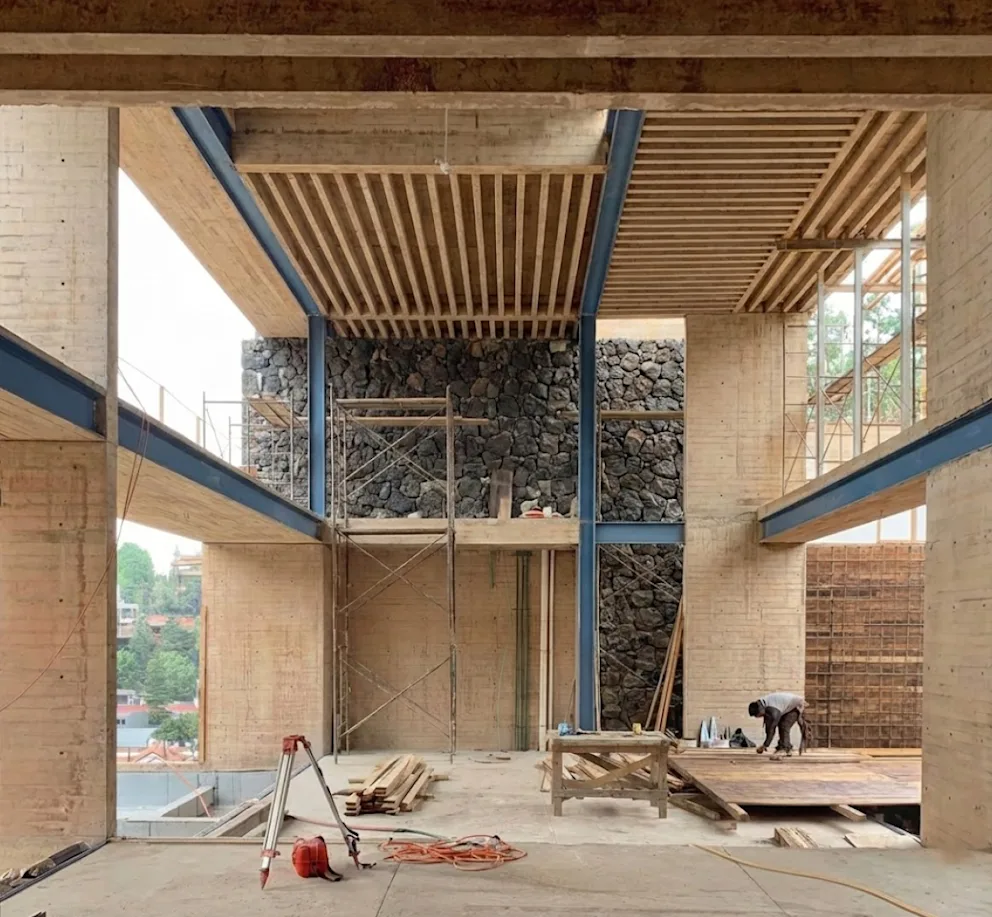
    New construction home build

    Match with vetted builders

    Receive quotes from experienced contractors aligned to your vision.
    Block experts reviewing quotes and timelines

    Hire with confidence

    Partner with Block experts to review quotes and timelines for end-to-end clarity.

    Homeowner staying in control of their renovation

    Stay in control

    Avoid surprises with Block Protections and a progress-based payment system.

    Get Started

    Frequently asked questions

    I want to build a second home on my property; how do I know if it qualifies as an ADU?

    In Toledo, accessory dwelling units are regulated under the city's zoning code, which was updated in recent years to allow ADUs by right in single-family residential zones subject to size, setback, and design standards. A qualifying ADU must be a complete independent dwelling unit with its own kitchen, sleeping area, and bathroom, located on the same lot as a primary single-family residence, and it can be either attached to the main structure or a detached accessory building. In Toledo's residential zones, ADU floor area is typically capped at 800 square feet or a percentage of the primary structure's floor area, whichever is less, and the ADU must maintain the required setbacks from all property lines specified for the applicable zone. Toledo's updated code also allows existing garages and other accessory structures to be converted to ADU use subject to meeting the applicable construction and habitability standards for residential occupancy. The most reliable way to determine whether your specific lot and existing structure can support an ADU is a pre-application meeting with Toledo's Division of Urban Development, where a staff planner can review your parcel's zoning, existing conditions, and the specific standards that would apply to your proposed ADU configuration.

    How much cheaper is it to build a ranch home versus a multi-story house?

    Ranch homes are generally more expensive per square foot to build than two-story homes of equivalent total living area because they require a larger foundation footprint and a larger roof area, both of which are among the most cost-intensive elements in a residential construction budget. In Toledo specifically, where full basement construction is standard and exterior waterproofing and drain tile are necessary given the lacustrine clay soils, the larger foundation footprint of a ranch home amplifies this differential compared to markets with simpler below-grade conditions. A two-story home delivers more living area over a smaller foundation and roof, reducing those cost-intensive elements per square foot of finished space, and Toledo buyers who build two-story homes with full basements are maximizing the ratio of finished area to expensive structural elements. The practical cost premium for a ranch versus a comparable two-story in the Toledo market runs approximately $15 to $25 per square foot, with the foundation and basement cost differential as the largest contributor. Ranch homes retain strong market preference among Toledo's large retiree and accessibility-conscious demographic, and their resale demand in that segment of the market can partially offset the higher construction cost over time.

    What are common issues that cause permits to be denied?

    In Toledo, permit applications are most frequently returned for incomplete documentation rather than outright code non-compliance, with the most common triggers being incomplete or missing structural engineering drawings for foundation systems, incomplete energy code compliance worksheets under Ohio's adopted energy code, and site plans that fail to show required setback dimensions or grading and drainage information. For properties in or adjacent to mapped floodplains along the Maumee River and its tributaries, missing floodplain development permit applications or incomplete documentation of proposed first-floor elevations relative to the Base Flood Elevation are a consistent source of plan review holds. Electrical and plumbing plan submissions that reference outdated code editions, or that are signed by contractors whose licenses have lapsed, are caught during plan review and require resubmission. Lead service line verification documentation, which is increasingly required for new construction connections to Toledo's water distribution system in areas of known lead infrastructure, is sometimes overlooked by applicants unfamiliar with the city's water service requirements. Engaging a builder with recent Toledo permitting experience and a record of complete first-submission applications is the most reliable way to move through plan review without delays.