



Bathroom Floor Plans
300 Sq Ft Bathroom: 7 Large Master Bath Layouts
06.05.2026
04.17.2026


In This Article
An 8x10 bathroom gives you 80 square feet. That's enough for a freestanding tub, a double vanity, a separate toilet zone, and even a dedicated shower, but only if the layout is doing real work. Put those same fixtures in the wrong configuration and the room feels tight, cluttered, and hard to share.
It's large enough to support a primary bath with the features homeowners actually want, but compact enough that every decision (which wall the tub goes on, where the door opens, whether the toilet gets its own enclosure) has a measurable effect on how the room functions day to day.
The 10-foot wall gives you length to work with. That's where you can run a double vanity, anchor a freestanding tub, or position fixtures end to end with breathing room between them. The 8-foot wall is your depth, generous enough to keep the room from feeling like a corridor, but not so deep that space goes to waste in the middle of the room.
The four 8x10 bathroom floor plans below are the configurations that hold up: the ones that don't require you to squeeze past the toilet to reach the shower, or sacrifice storage to make the tub fit.
An 8x10 bathroom is a primary-bath-sized space, and renovation costs reflect that. You're almost always working with multiple plumbing fixtures and significant surface area: flooring, tilework, and walls that take real investment to do well.
In an 8x10 bathroom, labor accounts for 60 to 70% of the total budget. The room is larger than a hall bath, which means more tile to set, more walls to prep, and more surface area across every trade.
.png?width=4001&height=2251&name=Block_Plans_Bathrooms_April_V2_Block_Plans_Bathroom_8x10-26%20(1).png)
The shower occupies the upper-left zone. The tub sits along the right wall. The toilet is partitioned into a dedicated enclosure in the lower-right corner. The double vanity runs across the lower wall, centered between the shower and toilet zones.
The partial wall around the toilet isn't a full enclosure and doesn't need to be, but it provides enough visual separation that the toilet isn't the focal point when the door opens. In a bathroom shared between adults, that matters more than most floor plans suggest.
This is one of the more complex layouts in the set. A few cost factors to plan for:
Budget an additional $2,000 to $4,000 over a single-vanity layout for the plumbing alone. It's the most expensive layout in this set, and for two people sharing a bathroom every morning, it's also the most livable.
If you're including both a walk-in shower and a freestanding tub, make sure the shower is sized with intention. A shower less than 36x36 inches becomes uncomfortable to use regularly. Aim for at least 36x48, or 36x60 if the budget allows.
.png?width=4001&height=2251&name=Block_Plans_Bathrooms_April_V2_Block_Plans_Bathroom_8x10-28%20(1).png)
The freestanding tub anchors the upper-left. The toilet sits in the upper-right corner. The double vanity, with sinks stacked vertically, runs along the right wall below the toilet. The shower occupies the lower-left.
This is the most open layout in the set. Everything is arranged along the perimeter, leaving the center of the room as clear floor. It's the only layout here where the room breathes:
The trade-off is privacy. With no separation between the toilet and the vanity, and no enclosed shower, this layout works best as a private primary bath used by one person or a couple who share without concern.
Two sinks positioned vertically, one above the other on the same wall, rather than side by side frees up the horizontal run and gives each sink its own mirror zone without requiring a long countertop. Most people haven't seen it done this way, which is part of why it works. It doesn't look like a compromise.
The tub, shower, and double vanity can all be roughed in along two adjacent walls, which reduces the length of drain runs and supply lines. For homeowners working with a fixed budget, this open plan tends to cost less in plumbing labor than layouts that spread fixtures across all four walls.
One thing to flag with your contractor: with a freestanding tub and a shower both on the left wall, make sure the waterproofing membrane extends across the entire wall behind both wet zones, not just behind the shower tile. A moisture problem in that wall won't show up until it's expensive to fix.
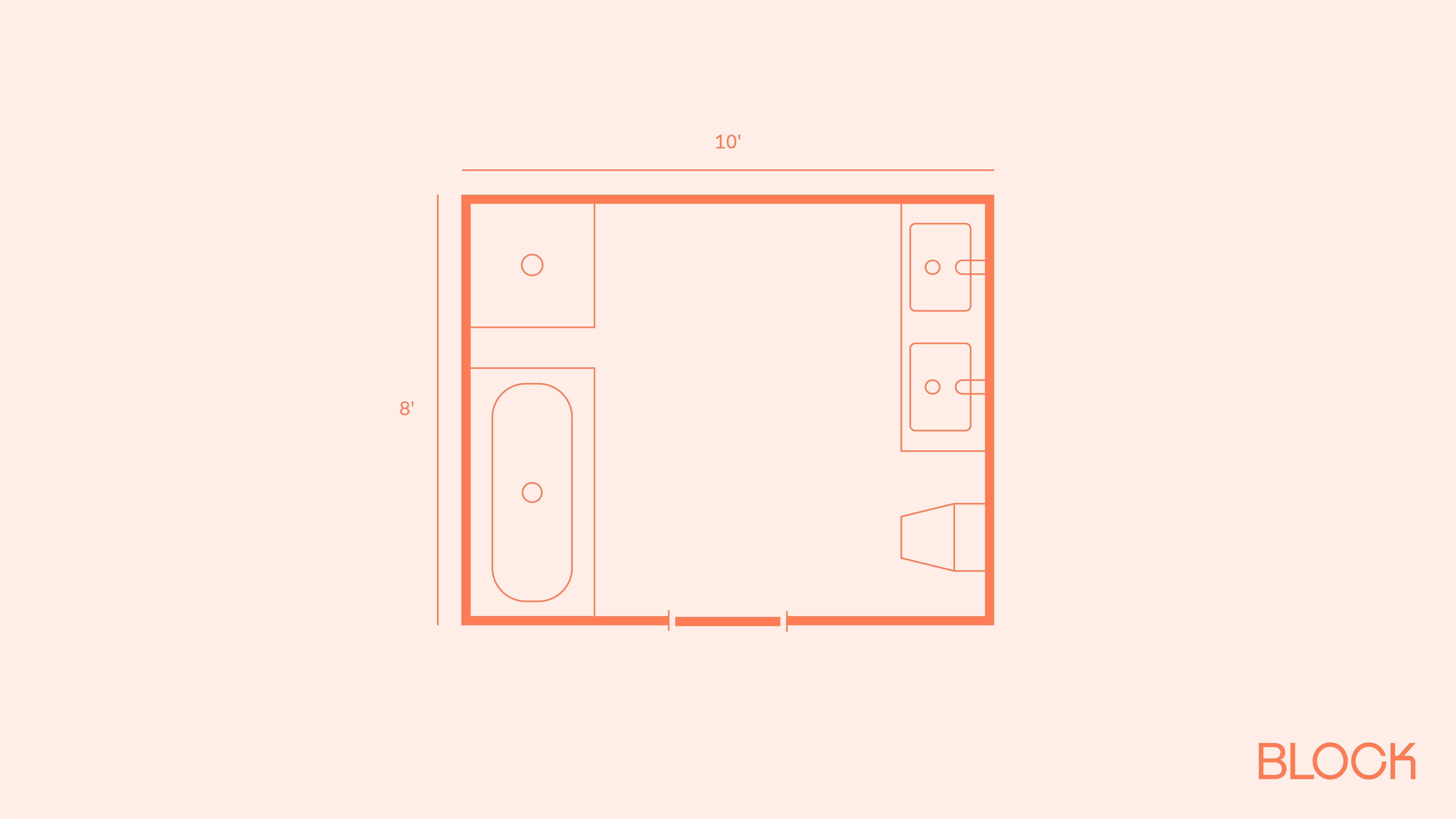
The shower occupies the upper-left. The freestanding tub sits below it. The toilet is in the upper-right corner. A single vanity is positioned in the lower-right. A partial wall at the top of the room separates the entry from the main fixtures.
The partial wall at the entry is what distinguishes this layout. When you walk through the door, the wall creates a small vestibule effect. You don't see the toilet and tub immediately. You turn, and the room opens to you. It's a detail that's easy to underestimate on a floor plan and immediately noticeable in person.
This 8x10 bathroom layout has a clear wet zone on the left side: shower and tub stacked vertically, sharing a plumbing wall. That consolidation keeps costs down because:
For homeowners who want both a shower and a soaking tub without paying to move plumbing across the room, this layout is the most direct path to getting there.
The single vanity in the lower-right is the layout's main limitation. In an 8x10 bathroom, there's room for a double, and dropping to a single feels like a missed opportunity in a space this size. A compact double (two 18-inch sinks rather than two 24-inch ones) could replace the single vanity without significantly complicating the plumbing.
One permitting note: the partial entry wall is framed and tiled, which means it's structural, not cosmetic. In municipalities that require permits for bathroom renovations involving structural framing, it needs to be included in your drawings. Ask your contractor early whether it triggers a separate line item in your scope.
.png?width=4001&height=2251&name=Block_Plans_Bathrooms_April_V2_Block_Plans_Bathroom_8x10-30%20(1).png)
The freestanding tub runs along the left wall. The stacked double vanity occupies the center-right wall. The toilet sits below the vanity in the lower-right corner. A large open shower entry spans the top of the room between the tub and vanity zones.
This layout prioritizes the shower. The entry at the top-center of the room isn't a corner shower. It's a wide, walk-in opening that occupies the full upper wall between the two side zones.
For households where daily showering is the priority and the soaking tub is a secondary feature, this floor plan 8x10 bathroom layout gets the hierarchy right:
A wide, walk-in entry without a door or curtain requires a carefully designed floor slope to keep water contained. Getting that slope wrong is one of the more common sources of post-renovation water damage. A few things to confirm with your contractor before work begins:
The difference in material cost between standard and proper waterproofing at this scale is modest. Skip it and you'll find out why it mattered about three years after the tile goes down.
At 80 square feet, you have enough room that upgrade decisions actually matter. The ones below are worth the budget not because they look good in photos, but because you'll notice them every single morning.
A freestanding tub in an 8x10 bathroom transforms the space quite differently than an alcove tub. It gives the room a focal point, creates negative space around it, and signals that the space is a primary fixture rather than a utility room. They range from $800 to $4,000+ before installation. If you're already gutting the bathroom, the incremental cost to go freestanding is usually smaller than people expect.
In bathrooms with multiple zones, it's tempting to tile the wet areas differently from the vanity and toilet zone. Resist it. Continuous flooring (one tile, one grout, from wall to wall) makes the room feel larger and more cohesive. In an 8x10 bathroom, a single large-format tile (24x24 or 24x48) with minimal grout joints can make the floor feel like it belongs in a much larger room.
If you have both a shower and a freestanding tub, both deserve recessed niches for shampoo, soap, and accessories. A tub-side niche is often omitted because it requires planning before the walls are tiled, but installing one during renovation costs a fraction of what it would cost to add later. Two niches, one per wet area, typically run $300 to $700 total in added labor and material.
An 8x10 bathroom used as a primary bath needs more than one light source:
A single overhead fixture with a combined fan unit (the standard builder solution) is inadequate for a room this size. A proper lighting plan typically runs $800 to $2,000 installed and changes how the room feels at every time of day.
In a bathroom used by two people simultaneously, a toilet zone with even partial visual privacy changes the dynamic of the room. It doesn't need to be a full water closet. A knee wall or half-height partition does the job. Expect to add $800 to $2,000 for framing, tile, and finishing.
Most bathroom mistakes at this size aren't about fixtures. They're about layout decisions made before anyone pulled a permit. The four 8x10 bathroom floor plans above are a starting point, not a prescription. Your plumbing rough-in, your door swing, and how many people share the room every morning will all shape which one actually fits.
With Block Renovation's free Renovation Studio, you can test different configurations and see how each decision affects your cost estimate before any work begins. When you're ready to move forward, Block connects you with thoroughly vetted local contractors who provide detailed, line-item proposals, backed by progress-based payments and a one-year workmanship warranty.

Renovate confidently with Block
Easily compare quotes from top quality contractors, and get peace of mind with warranty & price protections.
Bathroom Floor Plans
300 Sq Ft Bathroom: 7 Large Master Bath Layouts
06.05.2026
Bathroom Floor Plans
100 Square Foot Bathroom Layout: Make It Work
06.02.2026
Bathroom Floor Plans
Rectangular Bathroom Layout Guide: Plans & Costs
05.11.2026
Bathroom Floor Plans
5x7 Bathroom Floor Plans: Layouts & Fixture Guide
04.29.2026

Bathroom Floor Plans
7x9 Bathroom Layout: 4 Floor Plans + Real Costs
04.27.2026