



Bathroom Floor Plans
4x10 Bathroom Floor Plans With Showers
08.26.2026
05.11.2026


In This Article
Most American bathrooms are rectangles, and there's a reason for it. The shape is a direct consequence of how plumbing gets roughed in. A single "wet wall," the wall that carries supply lines, drains, and vent stacks, is dramatically cheaper to build than two or three. Stack a tub, vanity, and toilet along that one wall and you've solved most of the plumbing puzzle before you've picked a single tile.
That logic shapes nearly every rectangular bathroom layout in the country, from a 5x8 hallway bath to a 12-foot primary suite. It also shapes the decisions you'll make when you renovate one. The rectangle gives you a lot to work with, and a few things to fight against. Understanding the difference is the first real step in planning a renovation that won't surprise you halfway through.
This guide walks through how rectangular bathrooms work, the clearances that govern what fits, real cost ranges for the most common moves, and five floor plans that show how a few feet in either direction change the conversation.
Rectangular bathrooms cluster the wet stuff. When the tub, sink, and toilet share a wall, plumbers run shorter pipes and inspectors have less to flag. That efficiency is why builders favor the shape and why it's the most common footprint in single-family homes and multi-unit buildings alike.
For renovators, this matters in two ways. If your bathroom is already rectangular and the wet wall is established, keeping fixtures roughly where they are is the fastest path to a clean budget. And even when you do want to change things, the rectangle gives you predictable options. There's a finite number of ways to arrange three or four fixtures in a long, narrow room, and most of them have already been tested.
Not every rectangular bathroom layout is created equal. The difference between a bathroom that feels generous at 50 square feet and one that feels cramped at 60 usually comes down to two decisions made early.
In most rectangles, the wet wall runs along one of the long walls or one of the short walls. Long-wall configurations let you line up tub, toilet, and vanity in a row, which is space-efficient and visually orderly. Short-wall configurations push the tub or shower to one end, leaving a more open feel along the length of the room.
A door eats more square footage than people expect. A standard 30-inch interior door, swinging into the bathroom, claims roughly 9 square feet of floor space that no fixture can occupy. In a 5x8 bath, that's almost a quarter of the room. Pocket doors and outward-swinging doors recover that space, but they come with their own constraints (pocket doors need a clear stud bay, outward swings need clear hallway).
Vanity size, shower vs. tub, where storage goes: every other choice follows from these two. Get them right and the rest of the layout almost designs itself. Get them wrong and you'll spend the rest of the project working around them.
Building codes set minimums that govern what you can legally install, and industry design guidelines layer more comfortable recommendations on top of those minimums. Both matter when you're sizing a layout, because inspectors check the code numbers and a layout that fails clearance gets reworked at your expense.
The numbers worth knowing:
These minimums also explain why certain rectangles support certain fixtures and others don't. A 5-foot-wide bathroom barely accommodates a standard 60-inch tub plus a vanity wall opposite it. Push the width to 6 feet and the room opens up. Drop it to 4'6" and you're looking at a corner shower instead of a tub.
The five rectangular floor plans below cover the rectangles most homeowners are working with. They're not templates so much as worked examples of how dimensions drive decisions.
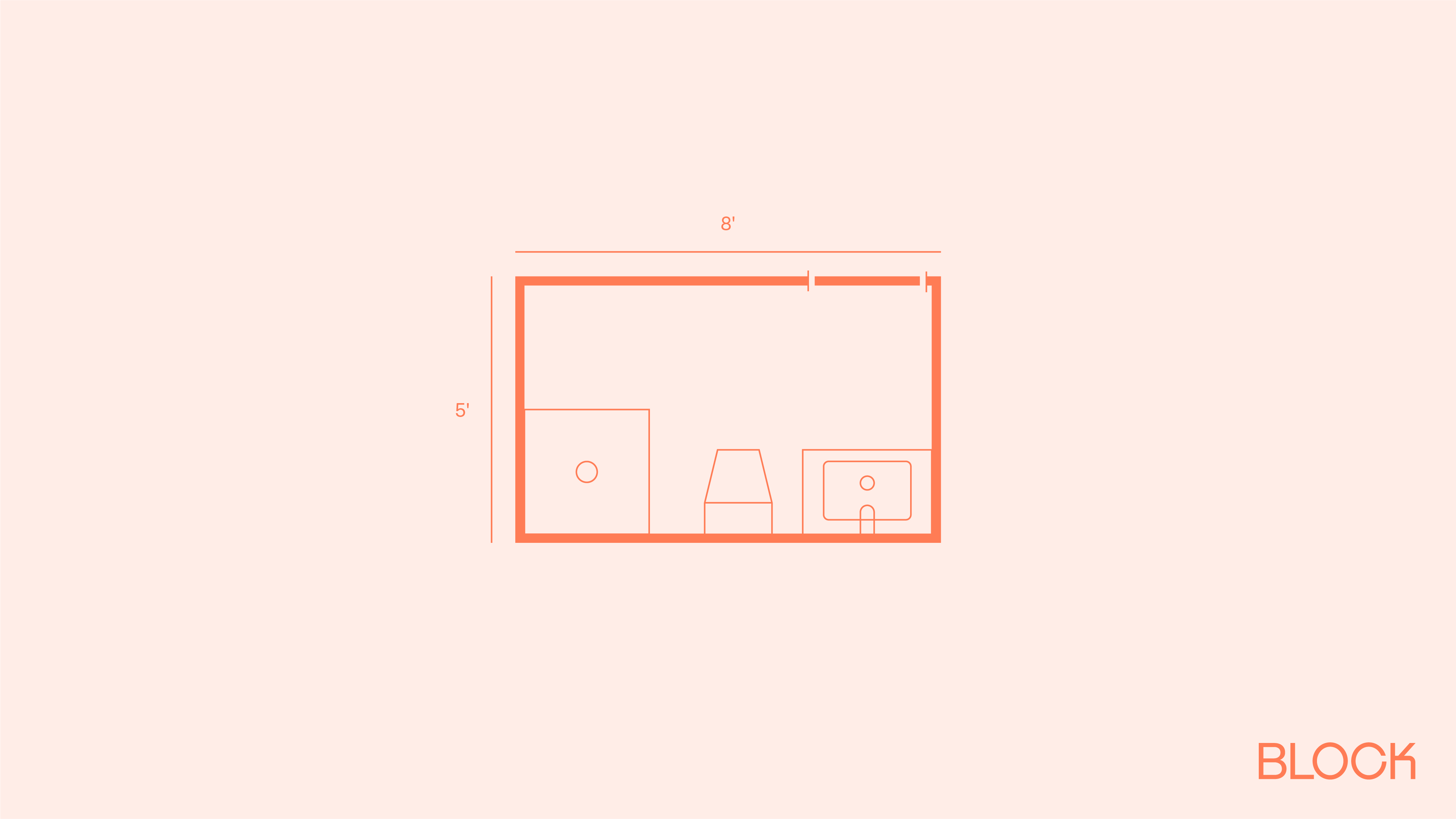
A 5x8 floor plan is arguably the smallest footprint that comfortably holds a tub, toilet, and vanity. With the shower on the short wall and toilet and vanity along the long wall opposite the door, the room hits code on every clearance with little to spare. Swap the tub for a 36-inch shower and you free up about 18 inches of length, which can go toward a longer vanity or a small linen closet.
The 5x8 with a walk-in shower is a common move in older homes where a tub is no longer a daily-use fixture. It opens the room visually and adds storage flexibility, and it costs less than a tub conversion if the existing drain location can be reused.
.png?width=4001&height=2251&name=Block_Plans_Bathrooms_April_V2_Block_Plans_Bathroom_5x9-33%20(1).png)
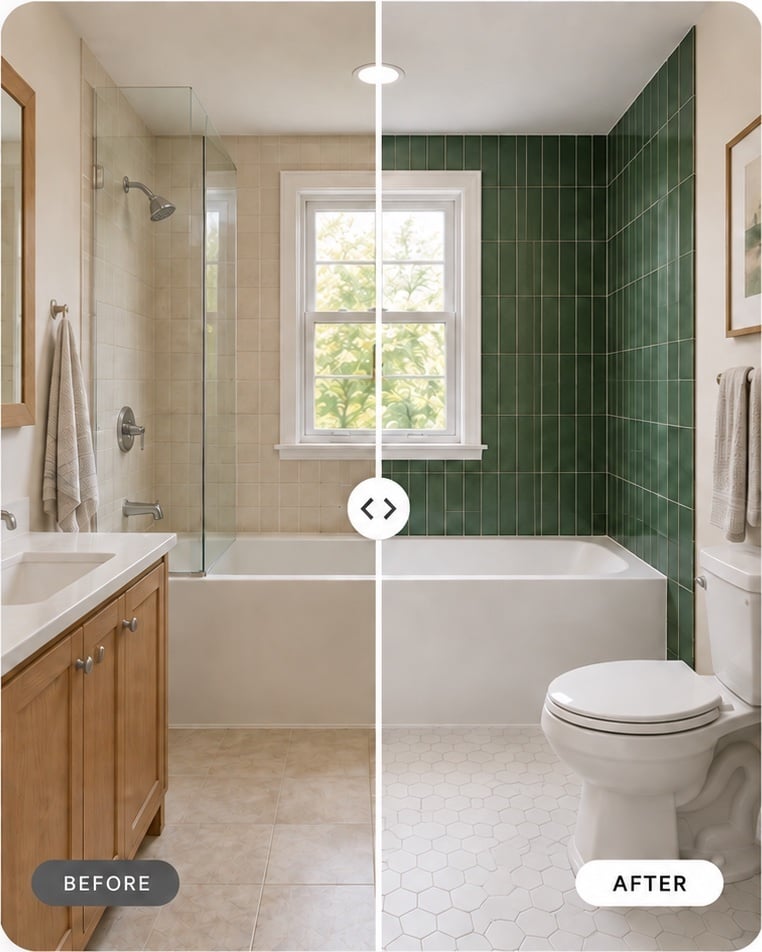
The 5x9 layout looks nearly identical to a 5x8 on paper, but the extra foot lets you separate the toilet from the vanity by a usable margin instead of a code-minimum one. A 30-inch vanity becomes a 36-inch vanity. A door that was tight to swing now clears the toilet without choreography. That extra six inches of vanity is also the difference between a sink with no counter on either side and a sink with room for a soap dish, a toothbrush holder, and a small tray.
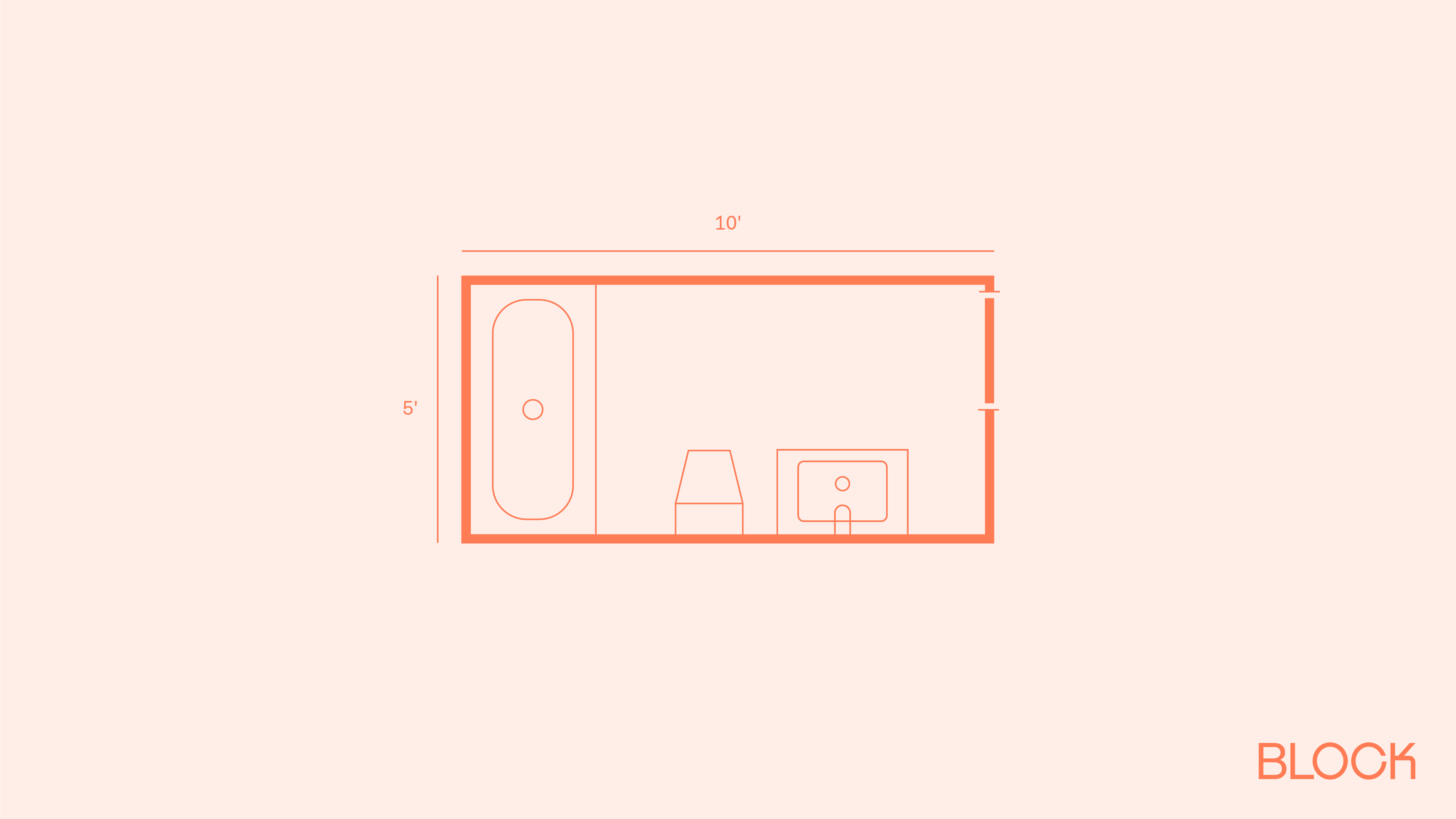
Push to 5x10 and the proportions change again. You can fit a 60-inch tub on the short wall, a 36-inch vanity, a toilet between them, and still have breathing room. The long, narrow proportions start to feel intentional rather than constrained. A 5x10 bathroom remodel typically runs $12,000 to $18,000 for mid-range finishes, which is roughly the size where a long rectangular bathroom layout stops fighting you.
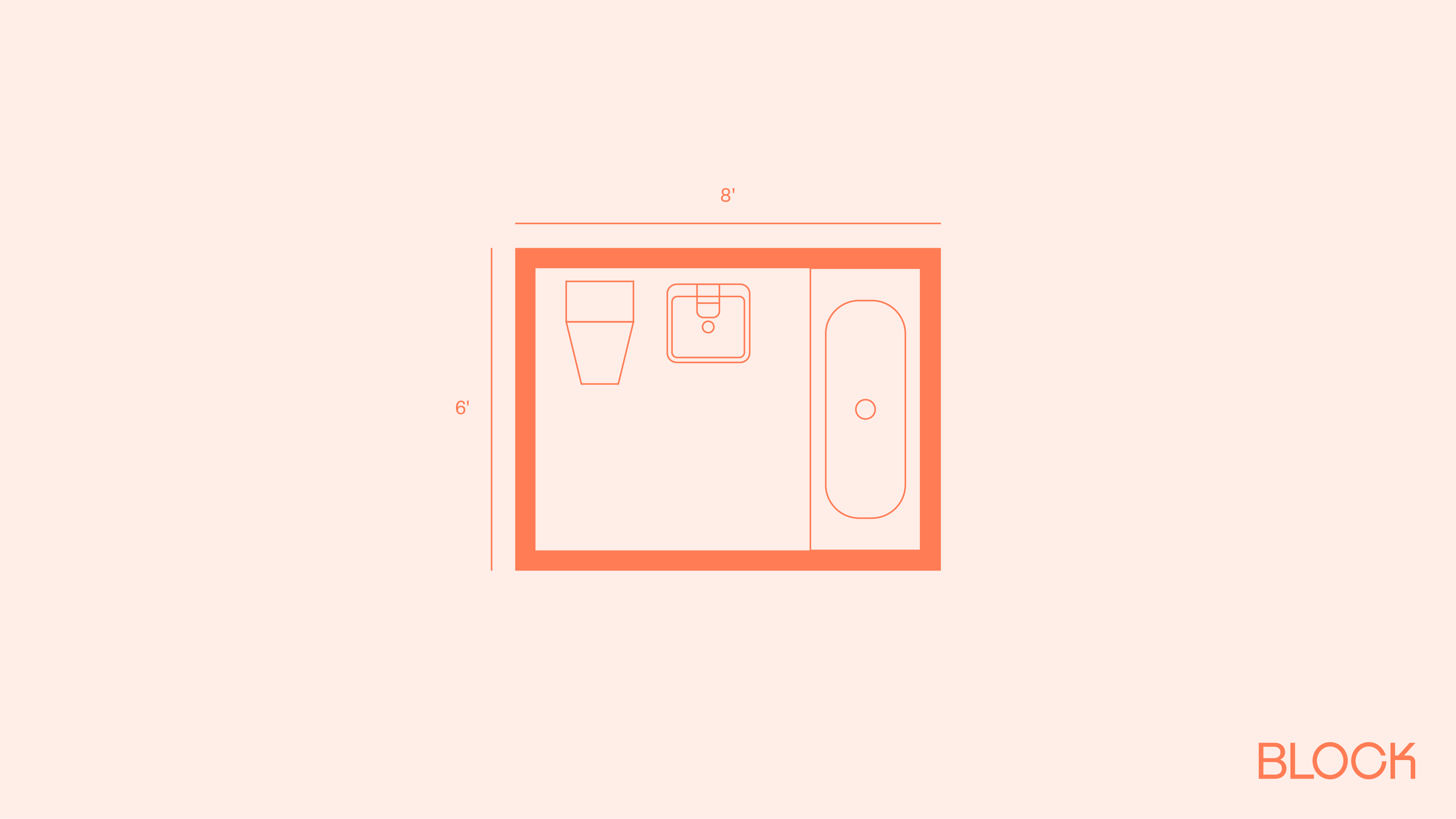
A rectangular 6x8 with the tub on the short wall and the toilet and vanity stacked along the adjacent long wall behaves differently from a 5x10 with similar square footage. The wider proportions feel more like a room and less like a corridor. The vanity wall is shorter, so a 30-inch vanity is the realistic maximum, but the floor area in the center is more usable.
This shape is common in homes built between 1950 and 1980, when builders were giving slightly more space to secondary baths. It's a forgiving rectangle for renovations because the door has options on either of the long walls.
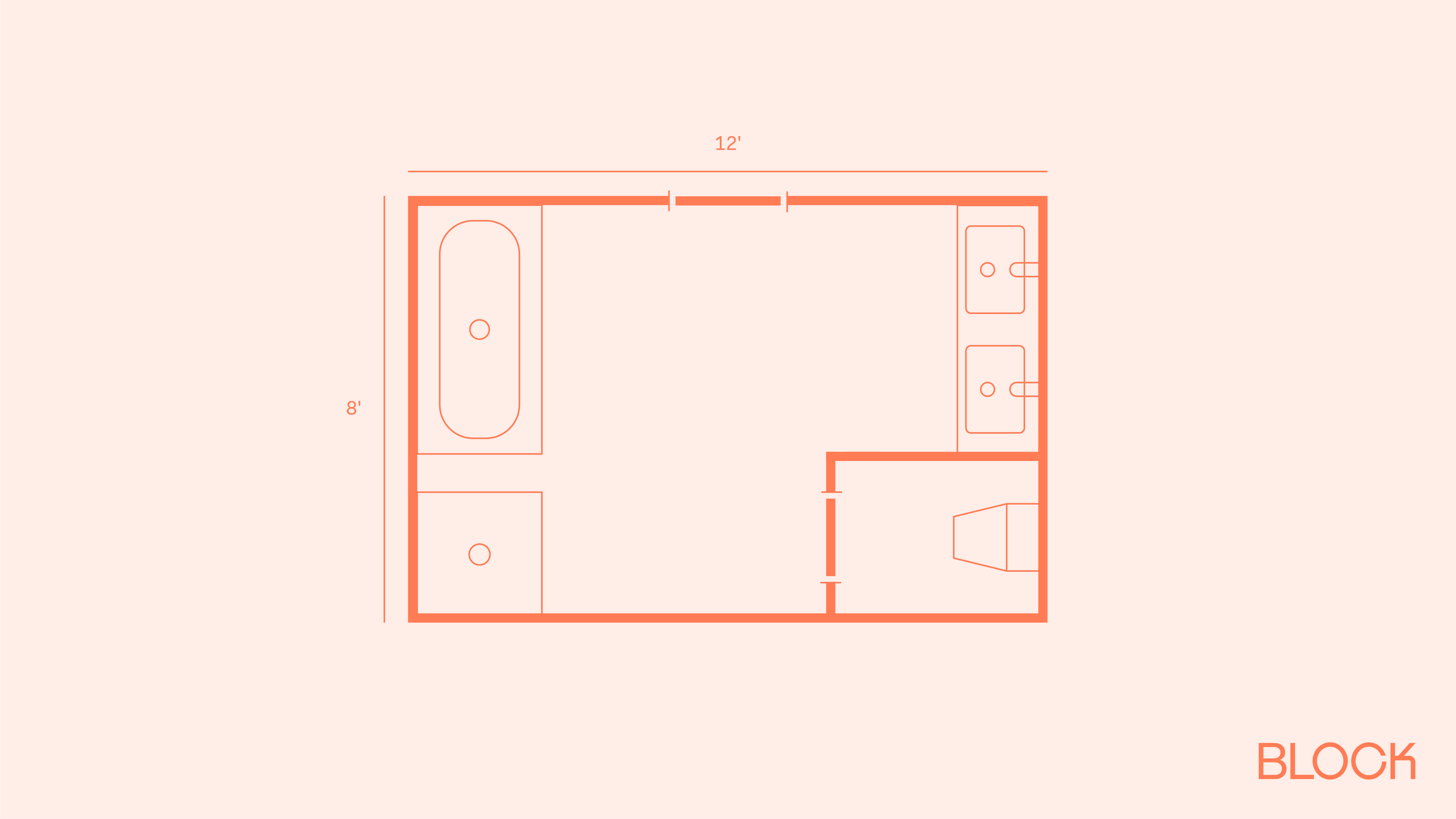
At 96 square feet, an 8x12 layout enters a different category. There's room for a separate tub and shower, a double vanity along one wall, and an enclosed water closet for privacy. The rectangle's geometry handles this well, with enough length to give each zone breathing room and enough width to accommodate a double vanity at comfortable proportions.
The tradeoff is cost. A bathroom this size with separated zones almost always involves moving plumbing, expanding electrical, and adding ventilation capacity. Primary bathrooms of this scale typically cost $25,000 to $40,000 to renovate, and premium materials in expensive metros can push the total well past $60,000.
This shows up when length-to-width ratios exceed about 1:2.5. A 5x14 long rectangular bathroom layout has plenty of square footage but no good place to put a vanity that doesn't make the room feel like a tunnel. Solutions usually involve borrowing space from an adjacent closet to widen the room, or accepting a long single-line layout with the vanity on the short wall.
The other workable move is to break the long axis visually. A glass shower enclosure two-thirds of the way down the room creates a natural stop that shortens the perceived length, and a change in tile or paint at that same break reinforces the effect without costing square footage.
If the door swings into the toilet or vanity, you've lost the ability to use that fixture freely while the door is open. Pocket doors and reversed swings (door opens outward) solve this, though both require coordination with the surrounding hallway.
A window above where the tub or shower needs to go forces a choice: relocate the plumbing (expensive), relocate the window (also expensive, and changes the exterior), or design around it with a shorter tub or a window-friendly tile detail. None of these are easy, and all of them are common in homes built before central ventilation was standard.
The single biggest variable in a rectangular bathroom renovation is whether you're keeping the wet wall or relocating fixtures. Keeping plumbing in place is the cleanest budget, and moving it gets expensive fast.
Toilet relocation typically runs $2,500 to $3,500 for a moderate move (new drain line, no major structural changes) and $4,000 to $6,000 for a full relocation involving water supply, venting, and extensive floor plumbing. Cast iron pipe modifications add 30 to 40 percent. Slab foundations cost more than crawl spaces because the concrete has to be cut.
A few rules of thumb worth holding onto:
The cleanest budget move in a rectangular bathroom is to swap fixtures within the existing wet wall rather than relocate them. New tub, same spot. New vanity, same spot. New toilet, same spot. Layout improvements come from upgrading what's there.
A renovation contingency of 15 to 20 percent of total budget is the industry norm, and most contractors will tell you it gets used more often than not. Plumbing upgrades, water damage, and structural repairs that only show up after demo are the usual culprits. For a $20,000 bathroom, a 15 to 20 percent contingency means $3,000 to $4,000 held in reserve for whatever shows itself once walls come down.
Rectangular bathrooms reward certain investments more than others.
Block's free Renovation Studio lets you sketch your footprint, place fixtures along the wet wall, swap a tub for a shower, and watch the cost estimate update as you go. The pricing reflects real material and labor data, so the budget you see is grounded in what your project will actually cost rather than a generic per-square-foot guess.
Once your layout is clear, the next step is finding contractors who can build it. Tell Block about your project once and have your area's vetted contractors compete for the work. Every quote comes with an expert-reviewed scope to catch missing line items early, and payments are released through Block's secure system as the project progresses, so contractors stay aligned with your timeline.

Renovate confidently with Block
Easily compare quotes from top quality contractors, and get peace of mind with warranty & price protections.
Bathroom Floor Plans
4x10 Bathroom Floor Plans With Showers
08.26.2026
Bathroom Floor Plans
Bathroom With 2 Doors: Layout Ideas That Work
08.24.2026
Bathroom Floor Plans
Single Wall Bathroom Layout: Pros, Cons, and Tips
07.22.2026
.jpg?width=640&name=5301c89b-3165-4f83-af34-a6b02eaa6c48%20(2).jpg)
Bathroom Floor Plans
Long, Narrow Bathroom Floor Plans: Layouts That Work
07.21.2026
.jpg?width=640&name=2a430d6c-5cf0-4596-9a89-601f3d2d6391%20(7).jpg)
Bathroom Floor Plans
Square Bathroom Floor Plans & Layout Tips
07.18.2026