



Outdoor Spaces
Board and Batten with Brick - Perfecting This Look
08.19.2026
04.09.2026


In This Article
Split-level homes have a front entry problem. The staggered levels that define the style, practical, efficient, distinctly mid-century, tend to produce a front facade that feels closed off. No place to sit. No transition between the street and the door. You arrive, you go inside, and that's it.
A front porch fixes that. It also happens to be one of the harder additions to pull off on a split-level, because the elevated entry, the asymmetrical roofline, and the narrow horizontal footprint all create constraints you don't face on a ranch or colonial. This guide covers what those constraints actually mean for design, what the project costs, and what to sort out before you hire anyone.
Split-level homes were built primarily in the 1950s through 1970s. They're characterized by staggered floor levels, usually three, connected by short flights of stairs. The entry point often sits between levels, which means the front of the home tends to have a raised or partially raised facade with limited horizontal space at grade.
This layout creates a few considerations specific to porch additions on split-level homes:
None of these factors make a front porch impossible. They just mean that smart design and an experienced contractor will make the difference between a porch that looks bolted-on and one that feels like it belongs.
Renovate with confidence every step of the way
Step 1: Personalize Your Renovation Plan
Step 2: Receive Quotes from Trusted Contractors
Step 3: Let Us Handle the Project Details
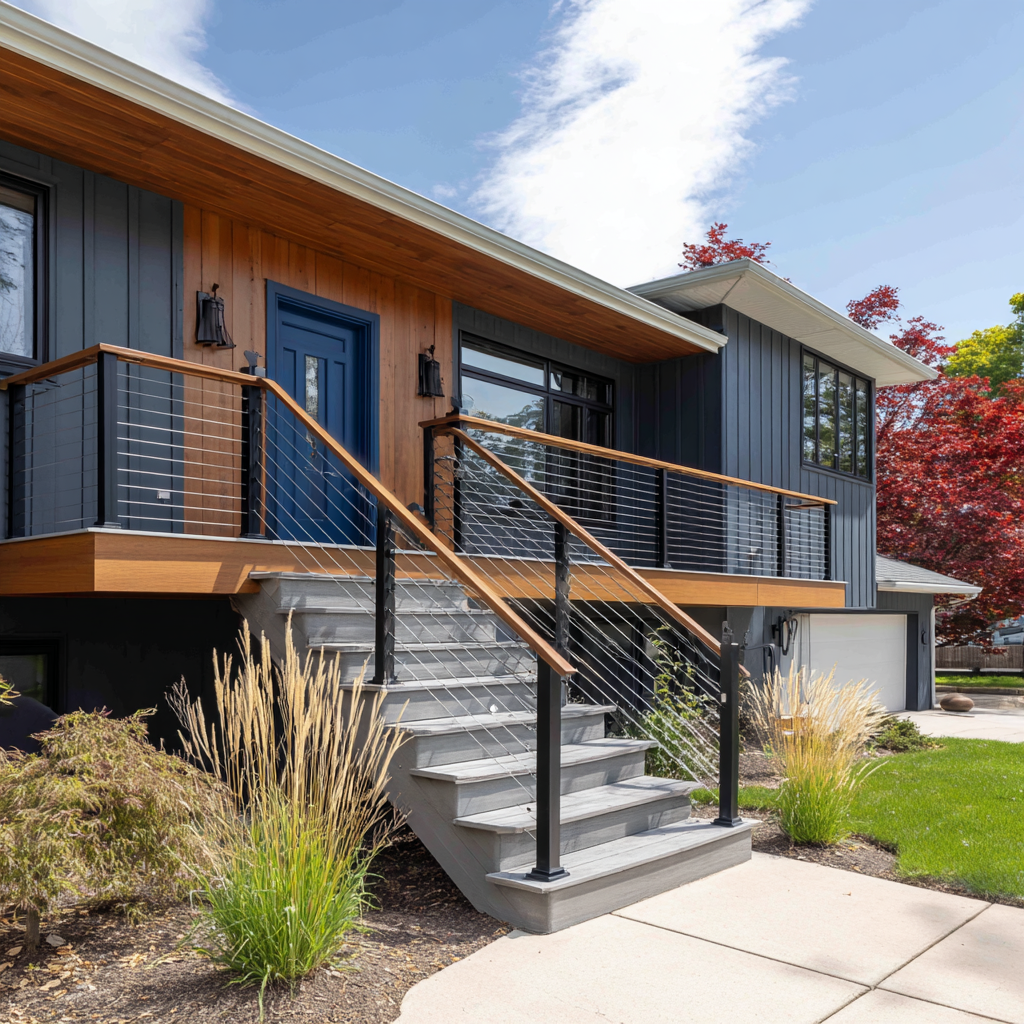
One of the most popular approaches for split-level homes is to build a wide entry platform at the front door level, with a staircase descending to the yard or driveway. Think of it as a generous landing. By widening the platform, you create a true porch feel: enough space for a couple of chairs, a planter, and room to linger. The stairs become a design feature in their own right, especially when flanked with low walls, built-in lighting, or planters.
This approach works well because it doesn't require a roof structure. It's more of an elevated deck than a traditional covered porch, which keeps costs manageable and permitting simpler.
The main downside for split-level homes specifically is that an elevated platform without overhead coverage offers no protection from rain or sun, which can limit how much you actually use the space day to day.
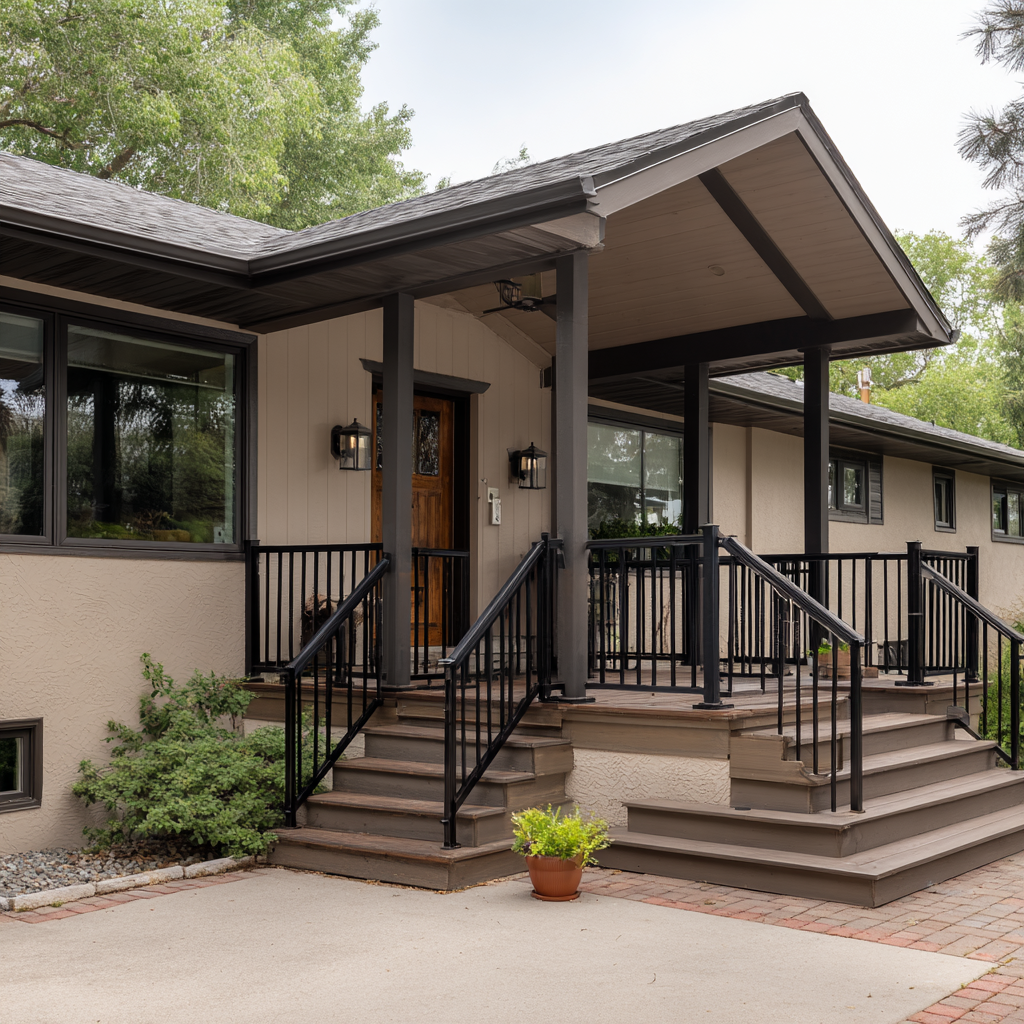
For homeowners who want the full porch experience, including shade, rain protection, and an architectural focal point, a covered porch with its own roof structure is the way to go. A shed roof (a simple single-pitch roof) is the most cost-effective option and works well with the clean lines of a mid-century split-level. A gabled roof is more traditional and creates a stronger visual anchor at the front of the home.
The key challenge here is integrating the new roof with the existing roofline and siding so the porch doesn’t look randomly tacked on. Contractor experience matters more here than on most porch projects.
On a split-level specifically, the asymmetrical roofline makes this tie-in harder than on most homes. If the pitch doesn't align, the addition shows.
If your split-level's entry is only slightly elevated, say two or three steps up, a low-profile open porch can be a natural fit. Think a simple wood or composite deck extending from the front door, with minimal railing and clean sight lines. This style tends to suit more modern or updated split-levels well and keeps the project scope relatively contained.
For homes where the entry is flush with a garage or connected by a small landing, this approach can also tie those two elements together into a more cohesive front facade.
That said, many split-levels have enough grade change at the entry that getting to truly low-profile requires grading work. Make sure your contractor assesses this potential need prior to handing you a proposal to spare you the headaches of future change-orders.
Some homeowners use the front porch addition as an opportunity to create a functional three-season space: a covered, partially screened area that bridges indoor and outdoor living. Screens keep insects out while maintaining airflow. This works particularly well in climates with strong summers or shoulder seasons where an outdoor sitting area would otherwise be unusable.
Keep in mind that screened or partially enclosed porches typically require additional permitting and may be treated differently than an open deck by your local building department.
For split-level homes, the limited horizontal footprint at the front facade can also constrain how large a screened enclosure can realistically be. Therefore, measure the front facade before committing to a size.
For split-level homes where the entry footprint is genuinely narrow, a stoop-style porch with built-in seating can be the most practical and charming solution. Rather than trying to fit freestanding chairs onto a platform that wasn't designed for them, built-in bench seating runs along the edges of the platform, making use of every inch without the space feeling crowded.
The benches themselves can double as storage, with hinged lids providing access to a compartment below. Paired with a simple railing on the open side and a clean staircase, this approach gives the entry real character and function. The downside specific to split-level homes is that the seating height needs to work with the platform elevation. On a higher entry, the bench-to-railing proportions require careful planning so the space doesn't feel closed in or disproportionate from the street.
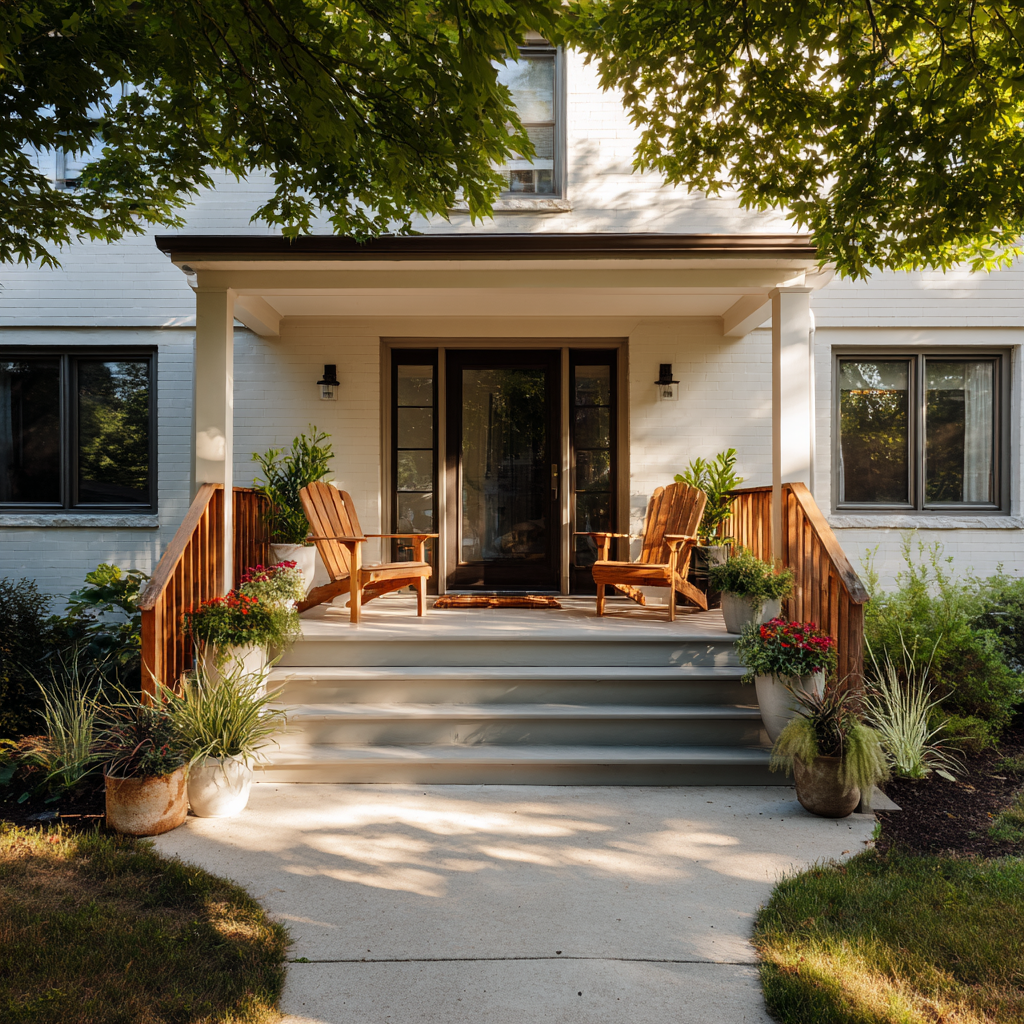
Front porch additions vary considerably in cost depending on size, materials, structural complexity, and your location. Here's a general range to help you plan:
|
Porch type |
Estimated cost range |
|
Open entry platform (no roof) |
$8,000–$18,000 |
|
Covered porch with shed roof |
$18,000–$35,000 |
|
Covered porch with gabled roof |
$25,000–$50,000+ |
|
Three-season screened porch |
$20,000–$45,000 |
These ranges reflect national averages and will shift based on your market. Labor costs in major metro areas like New York, Boston, and San Francisco tend to run 20–40% higher than national averages. Material choices can push costs up or down significantly within any range.
A few factors make split-level porch additions more complex and potentially more expensive than a standard ground-level porch:
A front porch addition almost always requires a building permit. Depending on your municipality and project scope, permit fees typically run $500–$2,500. If your home is in an HOA community, you'll need approval before work begins, which often requires architectural drawings and a formal submission. Factor these into your timeline as well as your budget. Planning ahead is more critical than ever, as Block Renovation's 2026 data indicates that average project lead times have extended to 4 months due to increased permit processing times in suburban zones. Depending on where you live, approvals can take weeks to months, so starting the design phase early is key.
A project involving structural work, roofing, and permit coordination calls for a contractor with real experience in home additions. Block Renovation connects homeowners with vetted, licensed contractors matched to their project type and location. Tell Block about your project and get competitive bids from professionals who know what a split-level porch addition actually involves.
Remodel with confidence through Block

Connect to vetted local contractors
We only work with top-tier, thoroughly vetted contractors

Get expert guidance
Our project planners offer expert advice, scope review, and ongoing support as needed
Enjoy peace of mind throughout your renovation
Secure payment system puts you in control and protects your remodel

Renovate confidently with Block
Easily compare quotes from top quality contractors, and get peace of mind with warranty & price protections.
Outdoor Spaces
Board and Batten with Brick - Perfecting This Look
08.19.2026
Outdoor Spaces
Deck Remodeling: Costs, Materials, and Structure
08.09.2026
Outdoor Spaces
Sunroom Roof and Glass Types: Finding the Right Style
07.13.2026

Outdoor Spaces
Porch to Mudroom Conversion: Cost and Surprises
06.09.2026
Outdoor Spaces
Building a Pool House: Costs & Design Tips
05.21.2026