




.png?width=640&name=u5821215421_A_moody_maximalist_mezzanine_loft_the_open_edge_o_fb2c4d70-9740-4734-b87b-8cf6d392cd55_0%20(2).png)
New York
Planning a Rochester Home Addition? Start Here
06.19.2026

02.05.2026


In This Article
In Albany, homeowners in neighborhoods like Center Square, Pine Hills, and the Helderberg area often look to the basement once the main floors already feel spoken for. With the right planning, you can turn underused square footage into a quiet office, a family hangout, or flexible guest space without changing the home’s footprint.
Basement work in the Capital Region comes with real constraints, from seasonal groundwater to older foundations in early-20th-century Colonials and city rowhouses. Getting the space comfortable and code-compliant depends less on décor and more on moisture control, egress planning, and durable materials that suit Albany’s climate.
Turn your renovation vision into reality
Get matched with trusted contractors and start your renovation today!
Find a Contractor
Albany basements often show the effects of freeze-thaw cycles, aging concrete and masonry, and sloped lots that can send water toward the house during storms and spring melt. On tighter city blocks, runoff from neighboring properties can matter as much as grading on your own lot. You’ll also see a mix of stone, brick, and early poured concrete foundations, each with different moisture patterns and repair needs. Before you sketch layouts, you want to know that the basement can be kept reliably dry, safely ventilated, and legally occupiable.
Before you set a budget, it helps to define what “finished” means for your Albany basement. Costs shift dramatically between a clean utility space and a full additional living level.
|
Basement level |
One sentence definition |
Cost range in Albany |
|---|---|---|
|
Unfinished |
A clean, safe utility space with basic lighting, accessible mechanicals, and no “living-space” finishes. |
$3,000–$15,000 |
|
Partially finished |
A hybrid basement with one or two finished zones (like a rec room or office) while storage/mechanical areas remain open. |
$20,000–$60,000 |
|
Fully finished |
A basement built out as true conditioned living space with durable finishes, lighting plan, and often a bathroom or wet bar. |
$60,000–$140,000+ |
Unfinished basements. An unfinished basement can still be a major upgrade if you focus on safety and cleanliness. In Albany, that usually means addressing minor seepage, sealing obvious cracks, improving general lighting, and sealing the slab so dust and moisture are easier to control. Homeowners often choose breathable masonry paint on walls, a practical utility sink, and heavy-duty shelving that keeps boxes several inches off the floor. If you want a workshop, you can add dedicated GFCI outlets and brighter task lighting without installing full insulation, drywall, or floor systems. This approach keeps everything accessible for plumbers and HVAC techs, which is helpful when you have older boilers, steam piping, or radiators fed from the basement.
Partially finished basements. A partially finished layout works well if you want one or two comfortable, conditioned rooms but still rely on the basement for storage and mechanical access. Many Albany homes, especially those with older stone foundations, have one corner that stays drier and has better headroom. You can focus your budget there: frame and insulate those walls, install LVP over a vapor-rated underlayment, and add layered LED lighting. The utility area can stay open, with a sealed slab, painted joists, and accessible valves and cleanouts. Options like a glass-paneled door or a wide cased opening keep the finished space connected to the stairs without forcing you to build soffits around every pipe. This is also a lower-risk approach if you’re still testing how well a new drainage system performs through a full Albany winter and spring.
Fully finished basements. A fully finished basement is closer to adding a new floor to your home than just cleaning up storage. In Albany, that means paying careful attention to continuous insulation, air sealing, and ventilation so rooms feel as comfortable in February as they do in August. Layouts typically include a central lounge or media area, a closed-door office or guest room, and often a full or half bath. You’ll likely consolidate mechanicals into a defined closet with proper clearances. For finishes, materials such as fiberglass-faced drywall, PVC or composite trim, and below-grade-rated flooring give you better insurance against humidity swings or the occasional minor leak. Because basements seldom get much natural light here, investing in a thoughtful lighting plan—ambient fixtures, task lighting, and a few accent elements—makes just as much difference as the flooring you choose.

In New York renovations, opening walls often reveals issues like water damage or outdated wiring, making a 10–20% contingency essential.
Below-grade spaces in Albany have to deal with cool foundation walls, shoulder-season dampness, and humid summers. The most successful basements combine solid building science—drainage, air sealing, insulation—with finishes that tolerate those conditions without constant worry.
Your flooring choice should assume that the slab will be cooler than upstairs floors and that relative humidity will climb during late spring and summer. It also needs to match how you plan to use the space, from quiet office work to kids’ play to heavy gym equipment.
One of the most common basement flooring choices—luxury vinyl plank (LVP)—stands up well to humidity, is simple to clean, and many products are specifically labeled for below-grade use. In an Albany basement, pairing it with a thin, moisture-rated underlayment can add a bit of cushioning and thermal break from the cold slab, while still allowing you to lift and replace planks if you ever have a leak.
Avoid fully adhered wall-to-wall carpet directly on the slab, because it can trap unseen moisture and develop long-lasting odors. Be cautious with engineered hardwood below grade in Albany unless you have very reliable moisture control and written approval from the flooring manufacturer for below-grade use.
Wall assemblies in a basement need to keep interior air off cold masonry, allow a predictable drying path, and hold up to the occasional plumbing drip. In Albany’s climate, condensation on foundation walls during cold snaps can be just as damaging as small leaks if walls are built incorrectly.
Avoid standard MDF trim and baseboards below grade, as they swell and crumble quickly when exposed to moisture. Also avoid wall assemblies with no clear drying path; if you are unsure how your proposed wall layers will handle moisture, ask your contractor to explain where any trapped water would go and how it would be detected.
A basement ceiling has to juggle several jobs: hiding or exposing mechanicals in a controlled way, supporting a good lighting plan, and keeping whatever height you have. In Albany’s older homes, existing joists can be uneven and plumbing may have been added over decades, so flexibility is useful.
Try to avoid low-quality acoustic tiles that warp or stain in higher humidity, as they can date the space quickly. Also be cautious about boxing every pipe and duct into soffits; a simpler ceiling plan is usually easier to maintain and feels less crowded.
Across Albany—from brownstone-style rowhomes near Center Square to early-1900s Colonials around Buckingham Lake—homeowners describe similar basement frustrations. The climate magnifies small issues, but good design can address comfort and maintenance at the same time.
Bring Your Dream Bathroom to Life
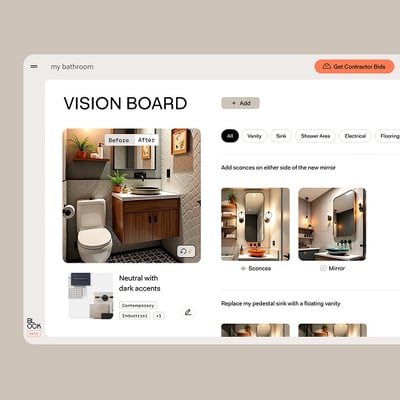
Renovation Studio, Block Renovation’s planning tool, helps you explore a renovation virtually before any demolition begins. You can compare layouts, finishes, and fixture styles in a realistic way instead of guessing from single product photos. For an Albany basement, that might mean testing how different wall colors work with lower ceilings, or comparing LVP tones against tile in a potential bath and laundry corner.
Seeing combinations on screen can make it easier to commit to bolder choices—such as darker flooring with lighter walls—when natural light is limited. It also reduces the chance of piecemeal decisions that look disjointed once everything is installed.
Block connects you with vetted contractors so you can compare who is best suited to your Albany basement project. The process is designed to bring planning, design, and construction into a single, coordinated path instead of leaving you to juggle separate contacts for every step.
For a basement remodel, that coordination can help with sequencing: confirming drainage and foundation repairs first, then lining up framing, mechanical work, and finish installations around permit inspections. Block Protections build safeguards and staged payments into the project structure, which encourages work to progress in clearly defined phases rather than heavy upfront payment.
Remodel with confidence through Block

Connect to vetted local contractors
We only work with top-tier, thoroughly vetted contractors

Get expert guidance
Our project planners offer expert advice, scope review, and ongoing support as needed

Enjoy peace of mind throughout your renovation
Secure payment system puts you in control and protects your remodel


Renovate confidently with Block
Easily compare quotes from top quality contractors, and get peace of mind with warranty & price protections.
New York
Planning a Rochester Home Addition? Start Here
06.19.2026
.png?width=640&name=2nd%20Story%20Addition%20(1).png)
New York
Home Additions in Buffalo: Budget, ROI & Financing Guide
05.26.2026
Cost
Bathroom Remodeling Cost: 2026 Pricing & Real Examples
05.11.2026

New York
Custom Home Building in Syracuse, New York: Local Guide
04.20.2026

New York
Custom Home Build Costs in Buffalo, NY | Block
03.26.2026