



.png?width=640&name=u5821215421_Mediterranean_apartment_kitchen_with_a_rounded_is_b5261b9d-7d5a-498f-955d-d2ccbf7355fc_3%20(1).png)
Texas
Katy Home Additions: What Pays Back (Cost Guide)
05.29.2026
.png?width=640&name=u5821215421_Single_photograph_Apartment_Therapy_style_exterio_ad4a23c3-b656-4a69-9bf1-f1fc04660eef_3%20(1).png)
05.13.2026


In This Article
Southwest style is not a style. In the wrong hands it becomes one: a stucco facade on a frame house, a decorative viga with no structural purpose, a saltillo tile floor over a slab designed without thought for what the tile is doing. That version is everywhere, and most of it will not age well.
El Paso is one of the few places where the alternative is genuinely available. The city sits at nearly 4,000 feet of elevation in the Chihuahuan Desert, with a 400-year building tradition that predates the stucco facade. Adobe is local. Rammed earth is local. Stone from the Franklin and Hueco mountains is local. The design vocabulary that evolved here worked because it had to: thick walls that moderate the 100-degree summer days and the 40-degree winter nights, deep-set windows that control sun angle, courtyards that create protected microclimates.
A custom home in El Paso is an unusual opportunity to build in a real regional vernacular. The opportunity is mostly about material choices: what to use, where to use it, and how to use it honestly rather than as costume.
Turn your renovation vision into reality
Get matched with trusted contractors and start your renovation today!
Find a Contractor
Start with the big four: adobe, rammed earth, stucco over appropriate substrate, and local stone. Each has a place, each has a wrong way to use it, and the right combination depends on the specific site and the budget.
Traditional adobe is sun-dried earth brick, typically local soil mixed with straw and water, formed and cured in the sun. Stabilized adobe adds a small percentage of cement for improved weather resistance and structural consistency, and is what most modern El Paso adobe builds actually use. Both behave the same way thermally: a 14- to 18-inch-thick adobe wall has enormous thermal mass, which means it absorbs heat slowly during the day and releases it slowly at night. In a climate where daytime and nighttime temperatures routinely differ by 30 degrees, this free thermal regulation is real and measurable.
The tradeoffs are real. Adobe construction is slower than frame, requires skilled labor that is available in El Paso but not in most American markets, and adds somewhere between 15 and 35 percent to the structural cost compared to equivalent frame construction. Adobe walls also need appropriate roof overhangs (minimum 18 inches, ideally 24 to 30 on the sunny side) and proper drainage detailing. Done right, a modern adobe home will outlast its owners. Done wrong, water intrusion can cause structural failure in a decade.
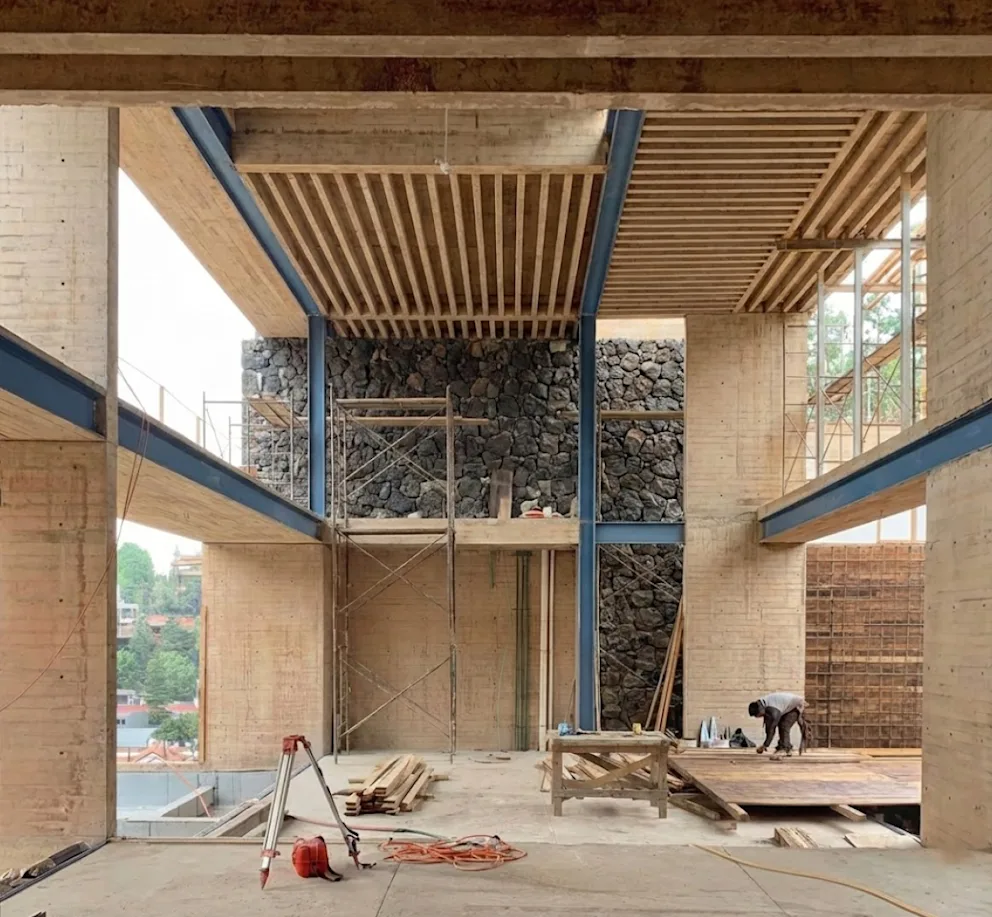
Rammed earth is the more contemporary regional material. Earth and a stabilizer are compacted in layers into formwork to create monolithic walls, often left exposed on the interior to show the natural stratification. The thermal behavior is similar to adobe, the aesthetic is distinctive, and the structural performance is consistent. It is more expensive than adobe on a per-square-foot-of-wall basis, typically running 20 to 40 percent more than frame construction, but it requires less specialized labor than traditional adobe and installs faster.
Rammed earth reads as contemporary in a way adobe often does not. It pairs well with clean-lined modern architecture, large glazing systems, and mixed material palettes. A rammed earth wall running from exterior to interior is one of the most striking moves available in desert residential design, and it only works honestly where the material itself is part of the regional context.
Most El Paso custom homes are stucco at some point. The question is what is under the stucco, because stucco over frame behaves differently from stucco over masonry or stucco over adobe. Frame with properly applied three-coat stucco can be durable and attractive, but it has none of the thermal mass of masonry and it cannot deliver the solid feel of a thick-walled home. A stucco facade on frame is not a Southwest home. It looks like one.
When frame is the right choice for budget or schedule reasons, owning that decision is the right move rather than masking it. A well-designed frame home with thoughtful orientation, good glazing specifications, deep overhangs, and appropriate insulation can perform well in El Paso’s climate.
The Franklin Mountains and surrounding ranges produce stone in colors and textures that are genuinely regional: warm beiges, pinks, reds, and grays that read as part of the landscape rather than imported from somewhere else. Using local stone for feature walls, entry elements, fireplaces, and site walls anchors a home to its setting. It is also often cheaper than stone trucked in from distant quarries.
El Paso custom construction generally runs more affordably than major coastal markets, though authentic material choices can close that gap. The Block guide on the most cost-effective homes to custom build lays out general principles for stretching a budget intelligently. In an El Paso context, the specific advice is this: spend on the envelope and the orientation, save on the finishes that can be upgraded later.
The envelope is everything in a desert climate. Wall thickness, insulation quality, air sealing, window specifications, and roof assembly drive whether the house is comfortable and affordable to operate. These are also the hardest elements to upgrade later. Low-E glazing with a low solar heat gain coefficient on east, west, and south elevations is a baseline. Insulation above code minimum in the roof assembly pays for itself in a decade or less. A properly sized and zoned HVAC system, with attention to duct sealing, is worth more than a granite countertop upgrade that looks identical to quartz from two feet away.
Finishes are the place to save. Stock cabinets with good hardware often photograph identically to custom cabinets. Quartz counters cost less than stone and perform better in desert dryness. Porcelain tile can read as natural stone at a third the price. None of these affect the fundamental quality of the house, and all of them can be upgraded in a kitchen remodel eight years from now. A poorly insulated wall cannot be upgraded without opening it.

“Cabinets aren’t just about looks. Storage inserts, pullouts, and organization inside the cabinets determine how functional a kitchen truly is.”
Beyond materials, a real Southwest home works with the climate rather than against it. The design moves that matter:
Lay the groundwork for a successful custom home
Match with vetted builders
Receive quotes from experienced contractors aligned to your vision.
Hire with confidence
Partner with Block experts to review quotes and timelines for end-to-end clarity.

Stay in control
Avoid surprises with Block Protections and a progress-based payment system.
Block’s Renovation Studio lets homeowners design their space, try different material combinations, and see real-time cost estimates before committing to a full design contract. For an El Paso custom, where the choice between adobe, rammed earth, frame with stucco, or a hybrid has real cost and thermal implications, being able to explore scenarios early saves meaningful time. Start seeing what your El Paso custom could look like before you are locked into a direction.
Not every El Paso contractor has hands-on experience with adobe, rammed earth, or traditional stone and stucco detailing. The specialty skills still exist in the region (El Paso has one of the stronger pools of adobe and earthen-construction expertise in the United States), but they are concentrated among a subset of builders who have chosen to preserve and practice them.
When evaluating builders, ask specifically about recent projects using the materials you are considering. Ask to see completed work, not just photos. Ask about approach to waterproofing and drainage detailing, which is where earthen construction most often fails. And ask about approach to change orders when existing site conditions surface unexpected issues, which on desert parcels often means caliche (a hard calcium carbonate layer common in the soils) or unexpected rock. For a broader sense of how financing works on a build that might use less conventional construction methods, the Block guide on how to finance building a home walks through the options including construction-to-permanent loans and how lenders evaluate non-standard construction.
Block matches homeowners with vetted local builders who have genuine experience with the project type, and every scope is reviewed before bids come back. For an El Paso custom using regional materials, upfront scope alignment catches the issues (waterproofing detailing, specialized labor estimates, longer schedule requirements) that standard scopes miss.
El Paso custom construction currently runs approximately $200 to $350 per square foot for conventional frame builds with mid-range to upper-mid-range finishes. Adobe and rammed earth projects run higher, typically 15 to 35 percent above equivalent frame construction, bringing the range to $250 to $450 per square foot depending on the extent of earthen walls and the specification of everything else. A 3,000-square-foot custom in conventional construction lands in the $600,000 to $1.05M range before land, site work, and soft costs. The same home with significant adobe or rammed earth can land between $750,000 and $1.35M.
Timelines are influenced by material choice. A frame build typically runs 10 to 14 months from signed design contract to move-in. Adobe or rammed earth adds 2 to 5 months, both because the walls themselves take longer and because the trades working on them are fewer and more scheduled. Budgeting the extra time is part of choosing the material honestly.
Block Renovation is a technology-powered renovation and custom home platform that protects homeowners from the common pitfalls of large construction projects. From scope review to contractor matching to progress-based payments, Block is built around the homeowner. For an El Paso custom, where material choices are simultaneously the most interesting design decisions and the most specialized construction ones, Block’s expert team provides ongoing guidance from initial planning through final walkthrough. Thousands of homeowners have renovated and built with Block.
Remodel with confidence through Block
Connect to vetted local contractors
We only work with top-tier, thoroughly vetted contractors
Get expert guidance
Our project planners offer expert advice, scope review, and ongoing support as needed
Enjoy peace of mind throughout your renovation
Secure payment system puts you in control and protects your remodel

Renovate confidently with Block
Easily compare quotes from top quality contractors, and get peace of mind with warranty & price protections.
Texas
Katy Home Additions: What Pays Back (Cost Guide)
05.29.2026
Texas
The Best Dallas-Fort Worth Renovation Contractors
05.28.2026
Texas
Custom Home Building in El Paso, TX: A Regional Guide
05.13.2026

Texas
Custom Home Building in Abilene, Texas: Local Guide
04.28.2026

Texas
Luxury Remodeling in Dallas | Room-by-Room Guide to High-End Renovations
04.27.2026