



Cabinets
Brown Cabinets With White Countertops: Design Guide
06.04.2026
12.06.2025


In This Article
Choosing the right color for your walls is one of the most impactful decisions you’ll make when living with gray floors. Gray, unlike more saturated wood stains or tiles, comes in a surprisingly wide spectrum—ranging from soft, warm greiges to dramatic, cool charcoals. That range is actually what makes gray floors workable; they don't dictate a direction the way a warm oak or a dark walnut does.
The key is to first recognize the specific undertones and depth of your floors, and then select wall colors that harmonize rather than compete.
If you're not sure whether your floors lean warm or cool, here's a handy trick: hold a plain white piece of paper against the floor in natural daylight. If the floor looks brown or tan by comparison, it has warm undertones. If it looks blue, green, or silvery, it runs cool. Manufacturer language is also a reliable clue; words like "greige," "taupe," or "driftwood" point warm; "slate," "ash," or "steel" point cool.
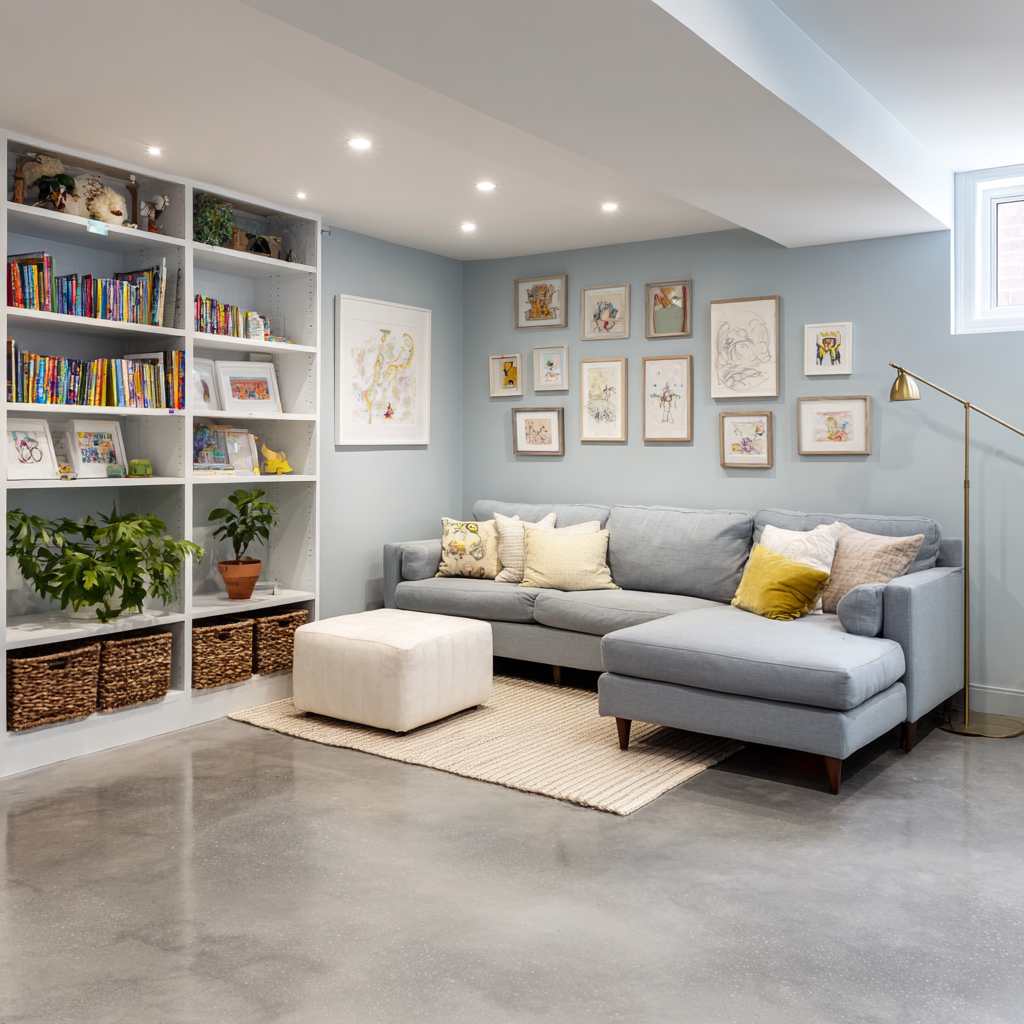
A warm gray floor often features subtle notes of taupe, beige, or brown. Warm gray floors are forgiving. They work with a lot, but they work best when you lean into the warmth rather than fight it. Once you know which way your gray floor leans, your top paint colors will naturally click into place.
Soft creamy white - A warm white (like Benjamin Moore White Dove OC-17 or Sherwin-Williams Alabaster SW 7008) enhances the inviting quality of dark warm gray floors without going stark. This pairing makes even a light-starved room feel more open, while the warmth keeps everything cohesive. It's especially effective in living rooms and bedrooms where a calm, tranquil atmosphere is the goal.
Greige - Greige walls sit right at the intersection of gray and beige, echoing the warmth in the floor while providing enough contrast to prevent a washed-out look. Sherwin-Williams Agreeable Gray SW 7029 and Benjamin Moore Edgecomb Gray HC-173 are the two most widely used options. Both flex between warm and cool depending on the light, which makes them reliable in almost any space. This is an ideal color for transitional interiors, open-plan layouts, or anywhere you want a calm core that lets furniture and art do the talking.
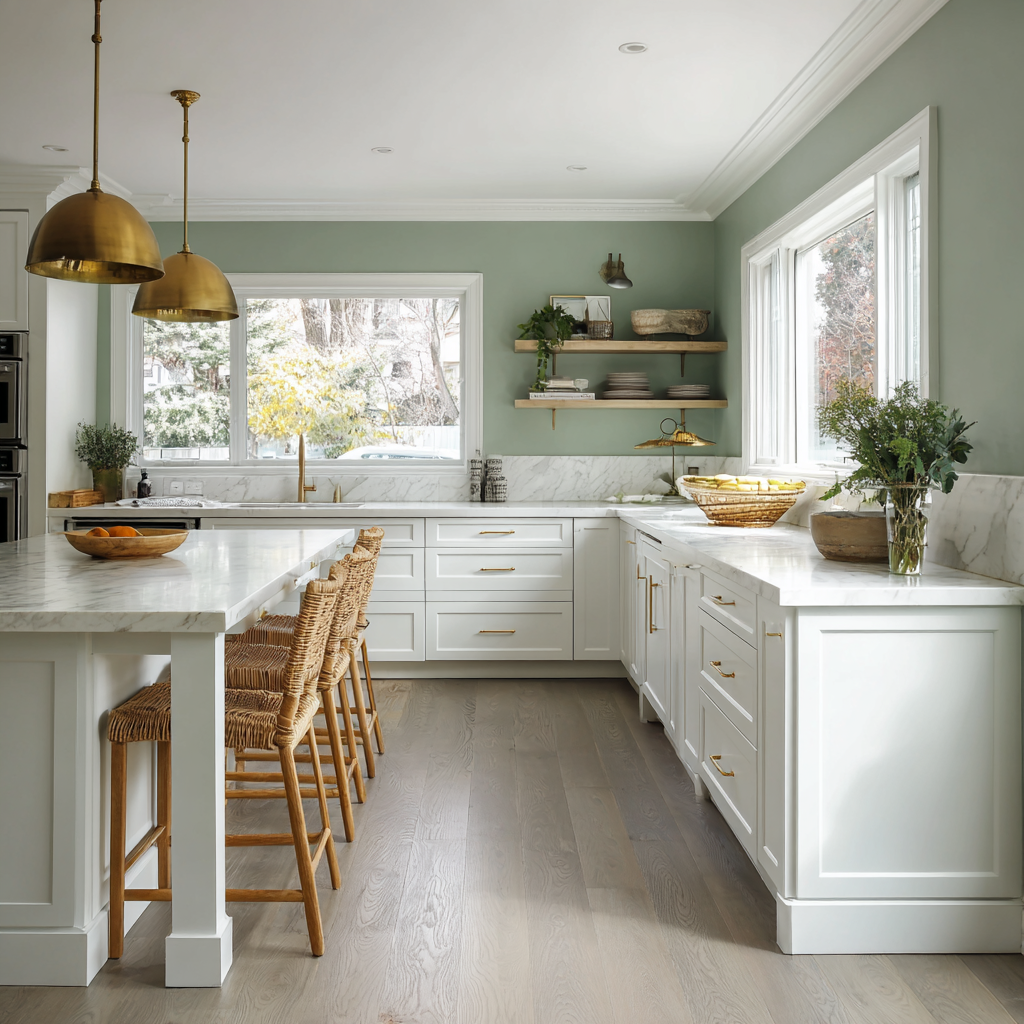
Sage green - A muted, earthy green is right at home with dark warm gray floors, offering a gentle color presence that stays rooted in nature rather than competing with the floor. It's one of the quieter combinations on this list, which is exactly why it works as neither element is competing for attention. Sherwin-Williams Clary Sage SW 6178 or Benjamin Moore Saybrook Sage HC-114 both work well here.
Rich terracotta or muted clay - Deep earthy reds and burned orange tones add striking depth to gray floors without overwhelming. Sherwin-Williams Cavern Clay SW 7701 is the most widely cited true terracotta: warm, burnt orange with brown undertones, and still one of the best paint colors for warm gray floors. For something lighter, Sherwin-Williams Redend Point SW 9081 offers a more muted, dusty take. For a darker, richer appearance, tur to their Rookwood Terra Cotta; its reddish-brown quality that works especially well in dining rooms.
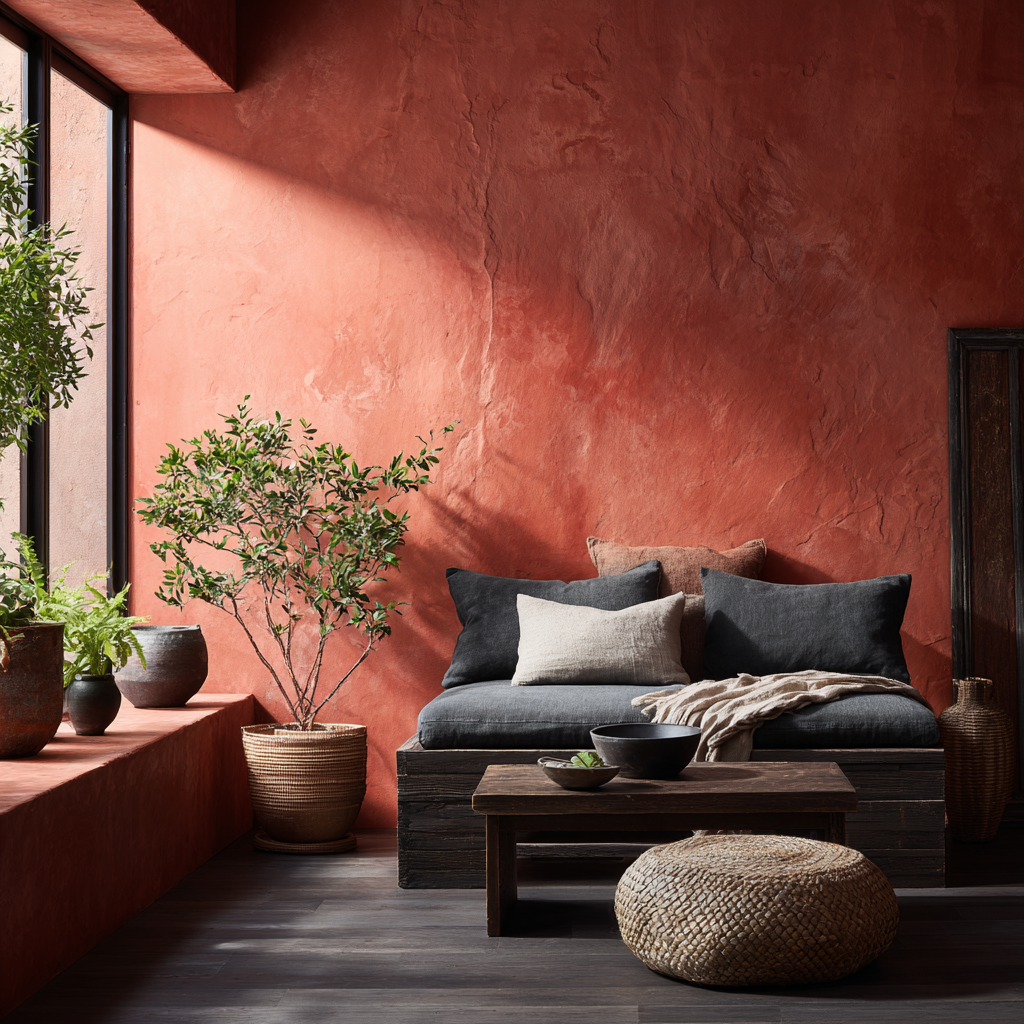
Subtle blush or pale peach - Hints of warm pink or peach bring a soft vibrancy to light warm gray: energetic without being loud. It gives foyers, nurseries, or creative spaces a gentle warmth that feels cheerful but grown-up. The light warm gray floor anchors the sweetness, so the result stays inviting rather than saccharine.
Warm taupe - Taupe provides an understated, earth-inspired backdrop that adds real depth to hallways and open-plan layouts with gray flooring. Sherwin-Williams Accessible Beige SW 7036 and Benjamin Moore Pale Oak OC-20 are both reliable choices. Each carries soft warm undertones that pair naturally with gray floors without veering into orange or pink territory.
Pale buttery yellow - Soft yellow is a classic way to push warm, diffused light into kitchens, breakfast nooks, or play spaces. The grounding effect of the gray floor keeps it from feeling sugary, and the combination works especially well with casual, comfortable decor and vintage pieces.
Light olive or moss green - A soft, earthy green connects with the warmth in the flooring for an organic, comfortable feel. Benjamin Moore October Mist 1495 (BM's 2021 Color of the Year) is one of the most approachable options: a soft sage-meets-olive that reads as a gentle neutral in most lighting. Sherwin-Williams Evergreen Fog SW 9130 offers a slightly grayer, cooler take. Both are particularly good in bedrooms or reading corners.
Cool gray floors are less forgiving than warm ones. They feel clean and 100% modern, meaning that wall colors that differ tend to look like mistakes rather than choices.
Bright crisp white - A pure, clean white (Benjamin Moore Chantilly Lace OC-65 is the standard-bearer) creates bold contrast that accentuates the depth of dark cool gray floors and maximizes light. This is the right call for modern interiors, entryways, or anywhere architectural features deserve attention. The result: a space that feels deliberate and sharp.
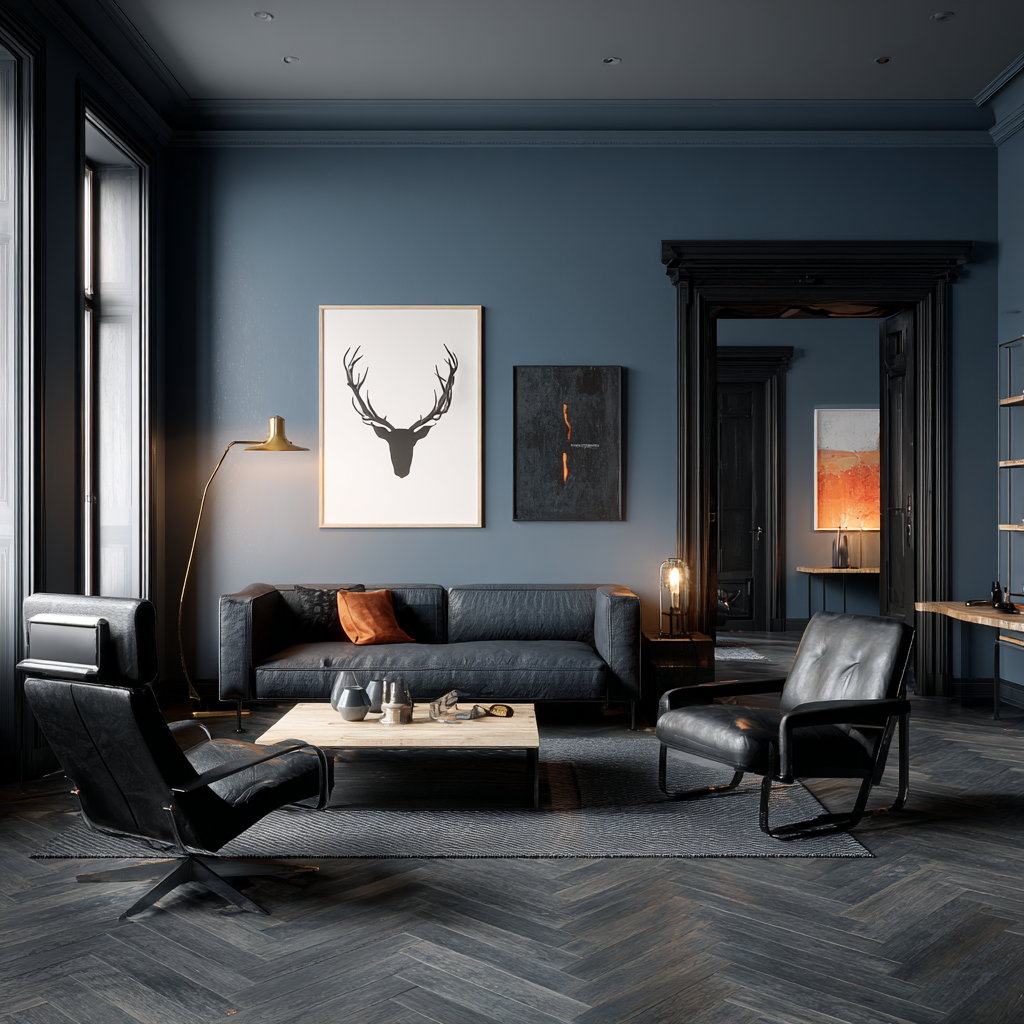
Navy blue - Deep blues add richness and a cocooning quality that makes them a natural fit for dining rooms or bedrooms. Benjamin Moore Hale Navy HC-154 is one of the most reliable dark navy options on the market. It complements cool gray's undertones and can be the perfect backdrop for metallic finishes and bold artwork.
Dusty lavender or muted violet - Muted purples share cool undertones with blue-gray floors and introduce subtle individuality without being loud. This pairing works particularly well in guest rooms and creative studios, where a bit of personality is welcome. Soft lavender bridges traditional and modern without effort, feeling both fresh and settled.
Steel blue or slate - Cool steel or slate blues reinforce the contemporary, almost industrial quality of gray flooring while adding clear visual depth. Benjamin Moore Slate Blue 1648 is the most direct choice: a classic weathered slate with versatile undertones. Sherwin-Williams Rainstorm SW 6230 goes deeper with a more pronounced slate-gray quality, well suited to libraries, offices, or urban living rooms. This is one of the most cohesive wall color choices for cool gray floors.
Misty blue - Light cool gray floors partner naturally with quiet blue walls. Sherwin-Williams Misty SW 6232 is a soft, barely-there blue that establishes instant calm without the room feeling cold. It's a particularly great paint choice for bathroom walls or any space where reducing visual noise and creating openness is the goal.
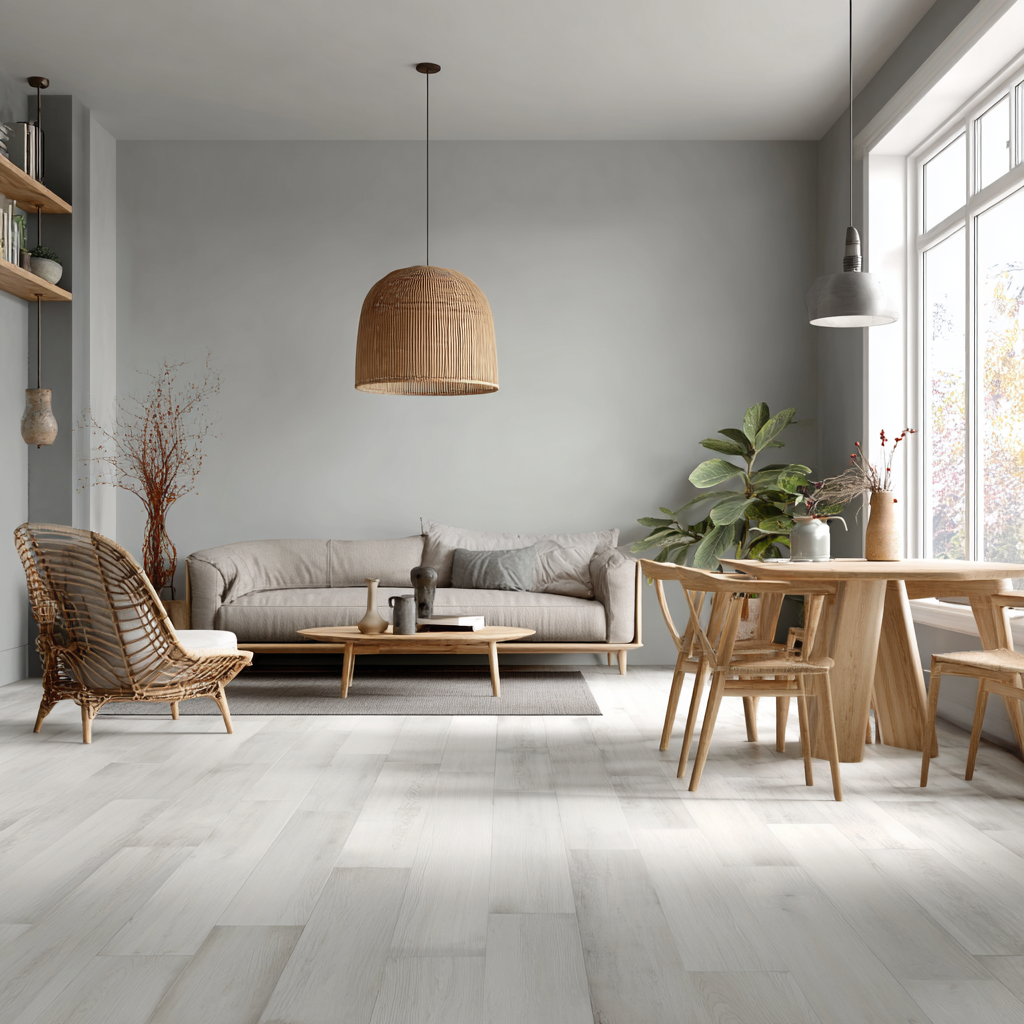
Soft silvery gray - Choosing a wall color slightly lighter or darker than your flooring, in the same cool family, gives definition without disruption. Sherwin-Williams Repose Gray SW 7015 is one of the most dependable options: a balanced, true gray that reads silvery in good light without leaning too warm or too cool. Sherwin-Williams Silver Strand SW 7057 is lighter and more distinctly cool, with blue-green undertones that suit Scandinavian and minimalist spaces. Benjamin Moore Gray Owl OC-52 is the standard for a clean, honest silvery gray with no strong undertones to navigate. This palette is particularly soothing and works well when texture and layering do the heavy lifting in a room.
Pale mint or seafoam green - Hints of mint or green feel invigorating but not loud, keeping your space feeling cool and fresh. A gentle green wall is an especially brilliant paint choice in kitchens, studios, or baths—places that benefit from clean energy. The color brightens, without ever overwhelming the calm foundation of gray.
Icy blue-gray - Almost-white blue-gray provides the gentlest hint of color for those drawn to subtle, spa-like environments. Use this combination in open concept spaces lending itself to natural wood and glass, where soft transitions matter. It’s a pale shade that makes any room feel larger and gently illuminated.
Test paint samples in various lighting - A color that looks perfect at noon can read completely different under evening lights or on a cloudy morning. Buy a few peel-and-stick samples (Samplize works well) and live with them for a couple of days before committing. It's a much better use of ten dollars than repainting a room.
Mix in texture and layered decor - Gray floors paired with flat walls and minimal furniture can feel cold, fast. Wool rugs, linen cushions, matte ceramics, and natural wood all push back against that. The materials matter as much as the paint color.
Choose grout color carefully - For rooms with tile gray flooring, grout color impacts the entire visual effect. A matching grout creates subtlety and continuity, while contrasting grout lines (darker or lighter) can emphasize pattern, add interest, and either ground or lift the space. The right grout selection is especially influential in kitchens and bathrooms.
Coordinate undertones in furnishings - The wall and floor are only two pieces of the puzzle. Warm gray floors sit best alongside earth-toned woods, linen, and brass. Cool gray floors work better with lighter woods, crisp whites, and chrome or brushed nickel. If the metals and textiles in a room are fighting the floor's undertone, no wall color will fully fix it.
Don't shy away from bold colors - Gray floors are more forgiving than people give them credit for. A saturated wall color, a dark built-in, a pattern — they can all work. The floor is already doing the neutral heavy lifting.
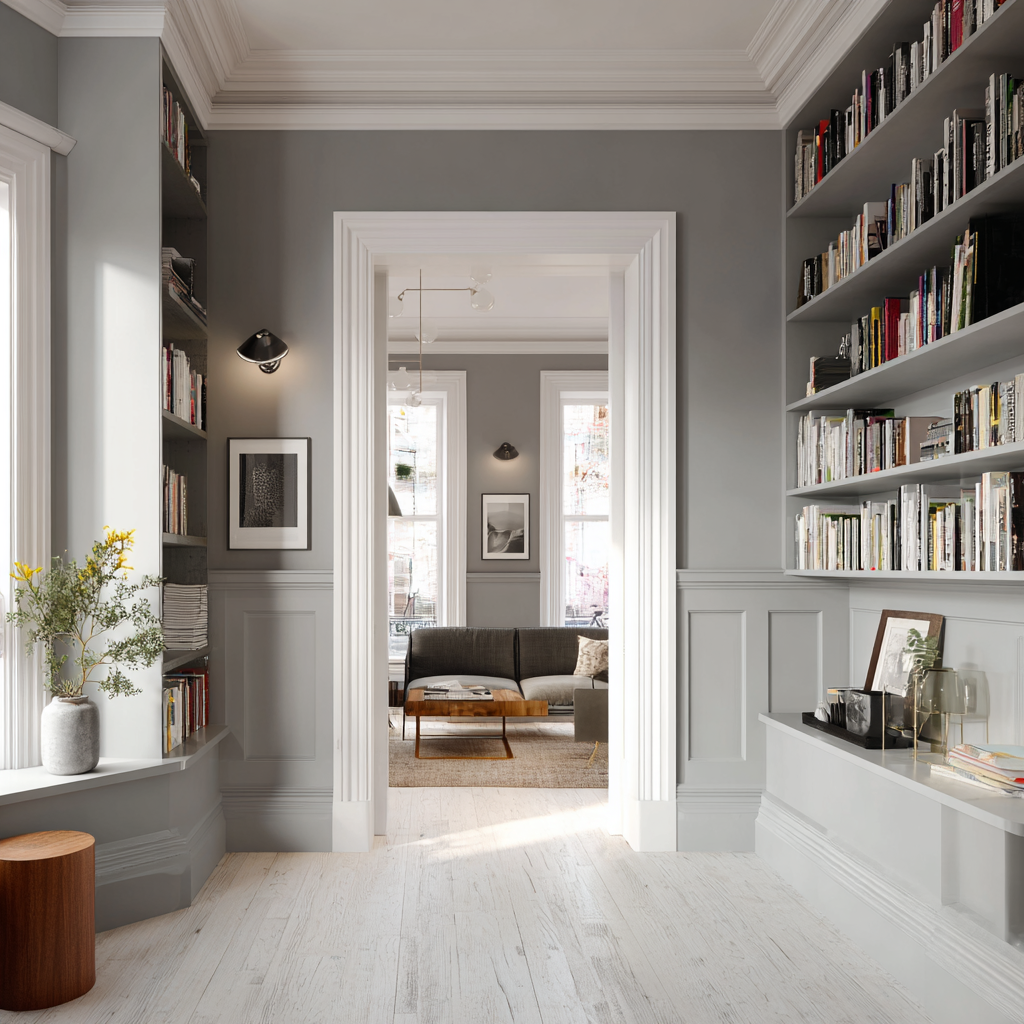
Allie Weiss, Block’s Head of Brand: “Follow the 60/30/10 rule. This means about 60% of your space should be dedicated to your dominant color—think your kitchen cabinets or your wall paint. Then use about 30% of your space for your secondary color. This might be the color that you use on your sofa, your curtains, or pieces of furniture. About 10% of your space should be reserved for your accent colors. This might come into play with things like lamps, art on the wall, or small decor objects.”
Choosing the perfect wall color to complement your gray floors can sometimes feel abstract—after all, paint swatches tell only part of the story. That’s where Renovation Studio makes all the difference. This free, interactive tool lets you experiment with wall colors, flooring styles, and finishes tailored to your actual space. You can upload a photo or use our visualizer to explore endless combinations, seeing how subtle undertone shifts or bold contrasts impact the feel of your room.
When you’re ready to move from inspiration to action, Block makes it easy to find the right contractor for your project. By telling us about your renovation goals, you’ll be matched with a select group of licensed, vetted professionals who are chosen for both their skill and compatibility with your vision. Each contractor’s proposal is reviewed for clarity and completeness, with transparent reviews and references to help you decide with confidence. With Block, you gain a trustworthy partner committed to making sure your renovation feels possible and aligns with your goals.
Remodel with confidence through Block

Connect to vetted local contractors
We only work with top-tier, thoroughly vetted contractors

Get expert guidance
Our project planners offer expert advice, scope review, and ongoing support as needed
Enjoy peace of mind throughout your renovation
Secure payment system puts you in control and protects your remodel

Renovate confidently with Block
Easily compare quotes from top quality contractors, and get peace of mind with warranty & price protections.
Cabinets
Brown Cabinets With White Countertops: Design Guide
06.04.2026
Paint & Color
Wall Colors for Light Wood Floors: Grays, Whites & More
05.13.2026
Paint & Color
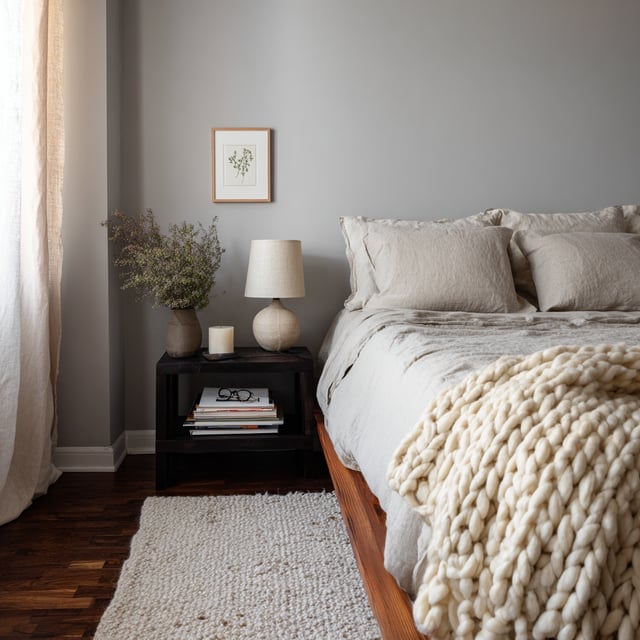
Gray Walls with Dark Hardwood Floors: Pull Off the Look
05.06.2026
.png?width=640&name=Moody%20Dining%20Room%20Painted%20Ceiling%20Walls%20(2).png)
Paint & Color
Painting Ceilings the Same Colors as the Walls: Pros & Cons
04.22.2026
Paint & Color
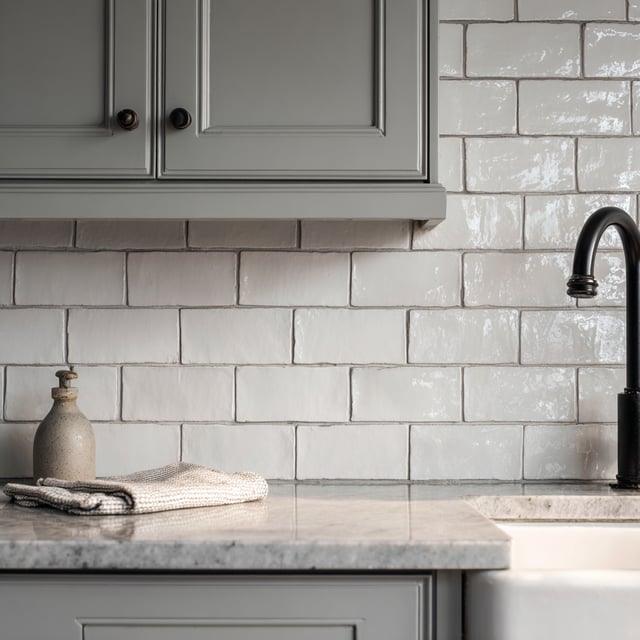
Backsplash Ideas to Flatter Gray Cabinets
04.17.2026