



Kitchen Floor Plans
Galley Kitchen Floor Plans and Ideas That Work | Block
07.15.2026
05.14.2026


In This Article
An island is the single most requested feature in kitchen renovations, and the single most common reason a kitchen layout fails. Get the dimensions right and an island makes the room feel generous. Get them wrong and a beautiful island will block traffic and force you to renovate twice.
This article walks through six real floor plans, ordered from largest to smallest, and explains the layout principles that make each one work. By the end, you'll be able to match your room's footprint to a plan and refine the details that drive cost and daily livability.
Not every island does the same job. The four configurations below cover most of what gets built in real kitchens.
A quick clarification on terminology. An island is freestanding and accessible from all four sides. A peninsula is attached to a wall or run of cabinetry on one end. Most "peninsula vs. island" debates come down to whether the room has enough width for true four-sided access.
Before picking a plan, three constraints decide whether an island is realistic at all.
As a working minimum, you need about 10 feet of clear interior width to fit an island with proper aisles. Below that, even a small island will choke circulation. Below 11 feet, the island starts to function more like a freestanding table than a working surface (you'll see this in plan six).
The non-negotiable numbers:
These aren't preferences. They come from how far cabinet doors swing, how much space a person occupies when bent over an open dishwasher, and how two bodies pass without contact.
An island sink means running supply and waste lines under the slab or through the floor framing. An island cooktop means a dedicated circuit (240V for electric) and a ventilation strategy: either a ceiling-mounted hood (visible, ducted through the ceiling) or a downdraft system (hidden, less effective on high-output burners). Budget at least $3,000 to $8,000 in additional rough-in costs for an island that carries a sink or a cooktop, more if it carries both.
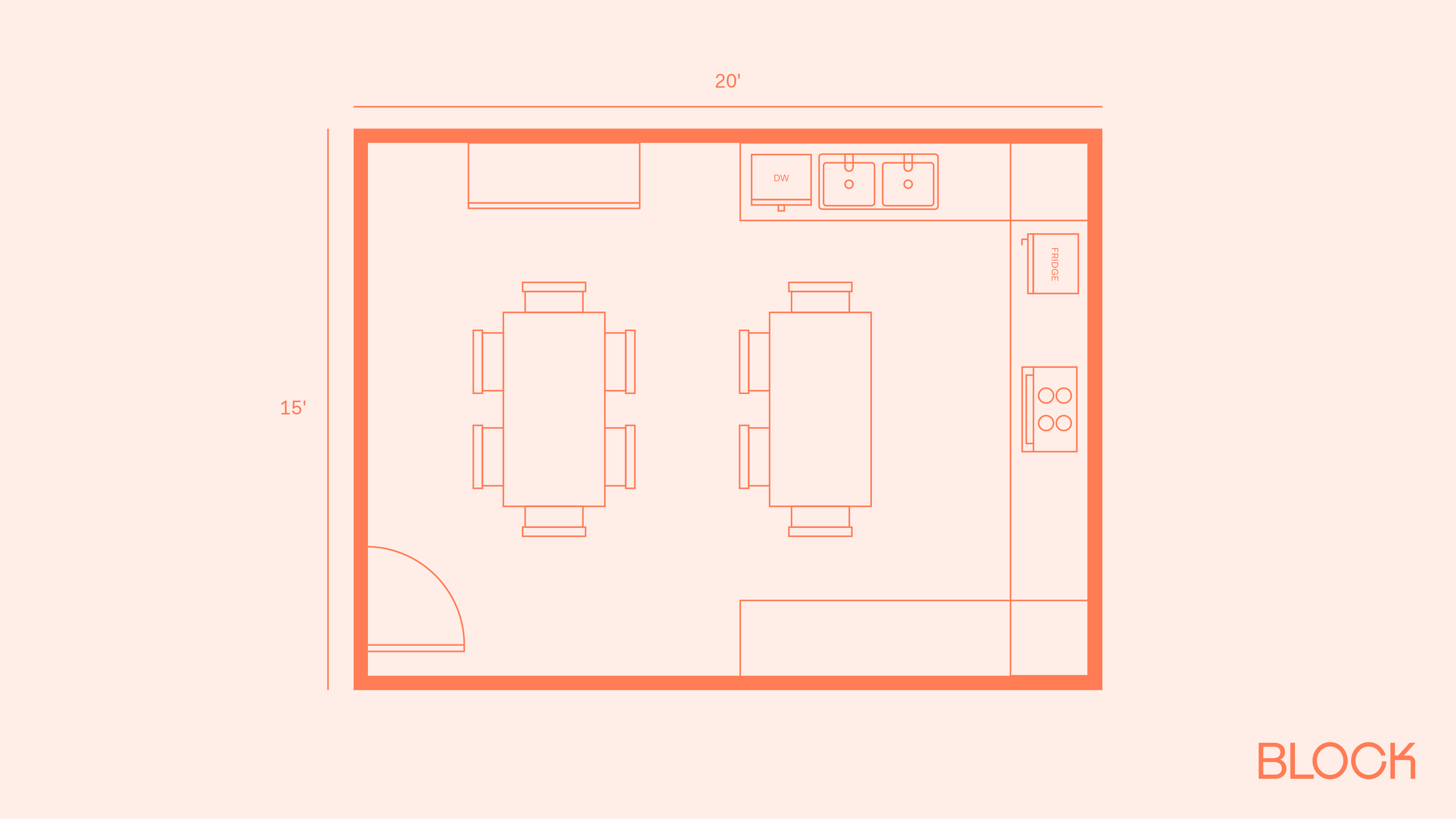
|
Spec |
Detail |
|
Footprint |
300 sq ft |
|
Layout |
L-shape with two parallel islands |
|
Island role |
One for prep and seating, one for dining |
|
Seating |
Up to 12 stools across both islands |
|
Appliances |
Cooktop and refrigerator on right wall, sink and dishwasher along top wall |
The defining move is splitting the center of the room into two distinct zones. One island handles prep and casual seating. The other works as a dining table or homework space. The two islands run parallel with a generous aisle between them, which makes the space functional for multiple people working at once.
The cooking flow keeps the cook on one side of the room. Sink, fridge, and range form a tight triangle along the right wall and the top wall, so the cook never crosses traffic to reach a major appliance. Children eating at one island stay clear of the prep zone, and guests gathered at the other island stay clear of cleanup. The parallel arrangement also makes pendant lighting straightforward, since each island gets its own dedicated fixture run rather than competing for ceiling space.
Twin islands stop making sense below roughly 14 feet of width, because the aisles between them collapse below 42 inches. This is also one of the most expensive plans to build. It roughly doubles the cabinetry and counter budget compared to a single-island plan in the same footprint. Families that entertain often get the most out of this layout, particularly in open-plan homes where the kitchen doubles as the dining room. View more 15x20 kitchen layouts here.
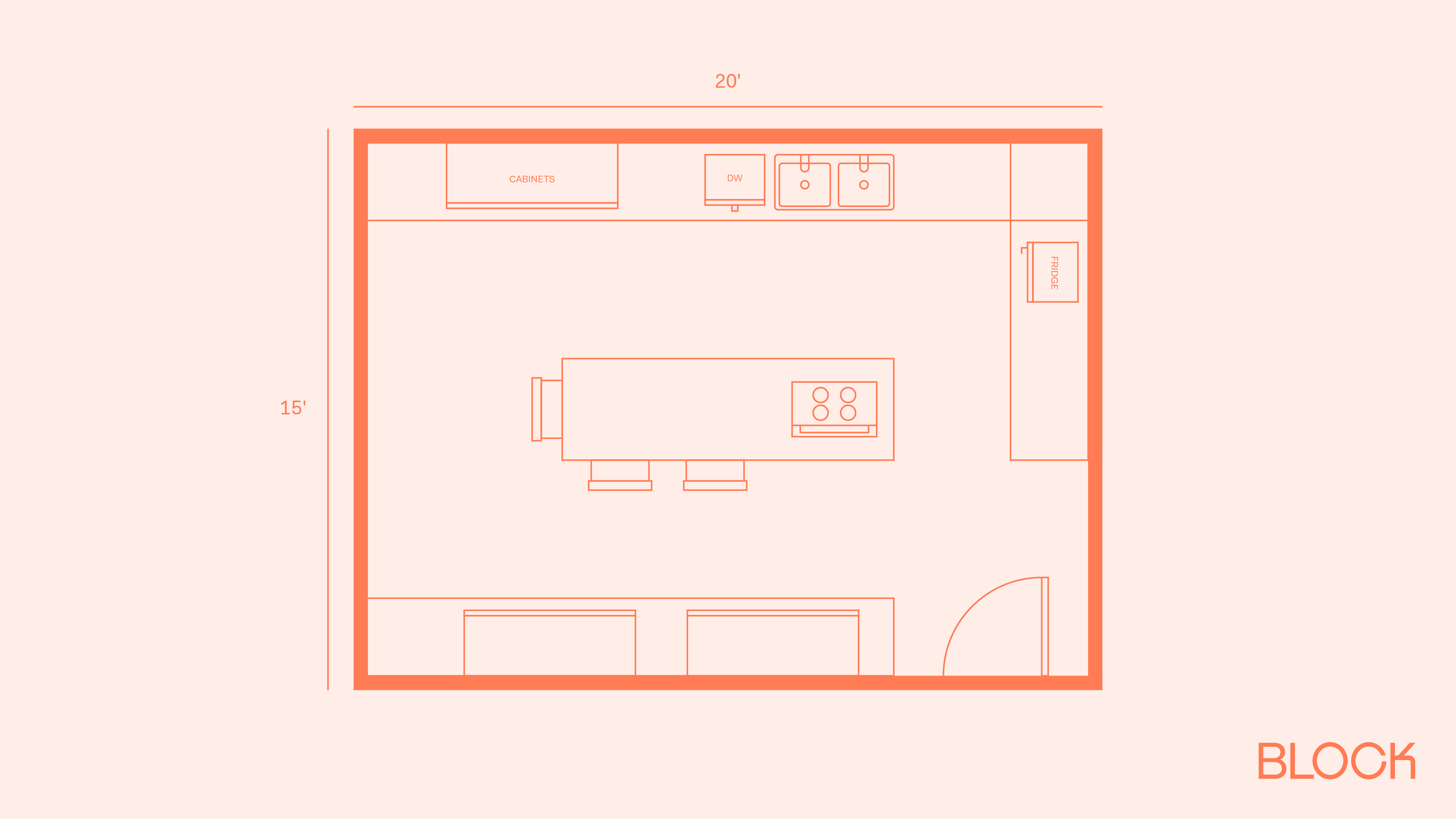
|
Spec |
Detail |
|
Footprint |
300 sq ft |
|
Layout |
L-shape with central working island |
|
Island role |
Cooking and seating |
|
Seating |
2 stools at island overhang |
|
Appliances |
Cooktop on island, refrigerator and oven on perimeter |
This is the 300-square-foot kitchen built around one substantial island instead of two. The island carries an integrated cooktop and a two-stool overhang. The cook faces the room while sautéing, which is why this configuration is often called a conversation kitchen.
The cooktop-on-island decision drives everything downstream. You'll need either an architectural hood (a real budget line, often $2,000 to $5,000 installed) or a downdraft system that vents through the slab. Downdrafts struggle to pull effectively against the rising heat from gas burners, so high-output cooks typically choose a ducted island hood despite the visual commitment. Plan for at least 30 inches of clearance between the cooktop surface and the bottom of the hood, more if the cook is tall. Seating drops to two stools because most of the island length is taken up by the cooktop and the required landing zone on either side. This works best for cooks who want to face guests while preparing meals and who can stomach a visible architectural hood. If the second cook is rare rather than constant, the two-stool limit won't be a constraint.
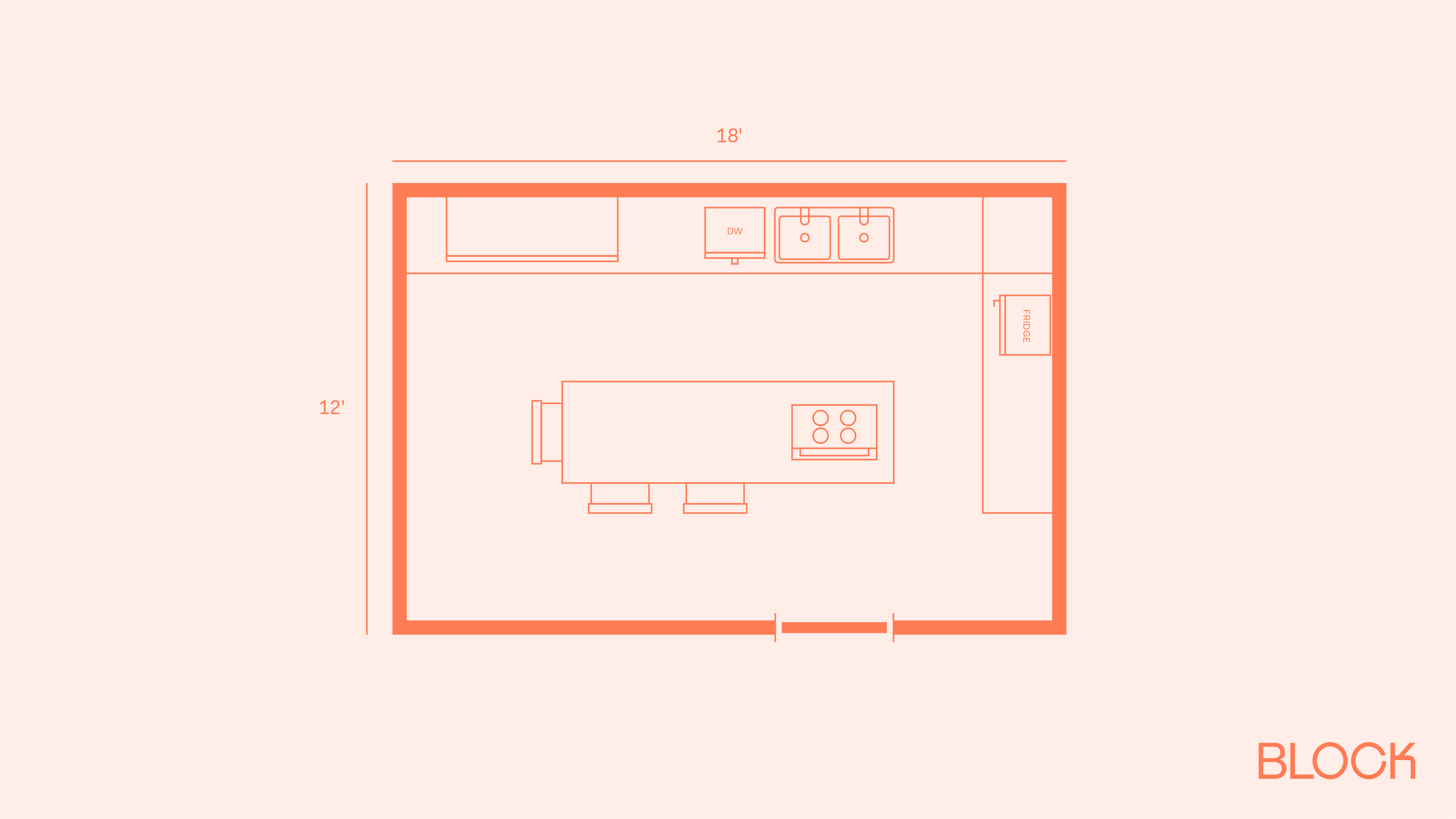
|
Spec |
Detail |
|
Footprint |
216 sq ft |
|
Layout |
Single-wall kitchen plus island |
|
Island role |
Cooking, prep, and seating |
|
Seating |
2 stools at island overhang |
|
Appliances |
Sink and dishwasher on top wall, cooktop on island, refrigerator on short right wall |
A tighter version of the conversation kitchen. The working perimeter compresses to one long wall plus a short return for the refrigerator. The island carries the cooktop and the seating, with roughly 4 feet of aisle between island and back run.
This is one of the most efficient plans in the set. Turn from sink to island cooktop. Step right for the fridge. Nothing requires walking more than a few feet. The trade-off is the doorway at the bottom of the room. Traffic enters between the island and the back counter, which is fine in a closed kitchen but disruptive if children regularly cut through to another room. The configuration fits mid-sized homes well, particularly couples who don't typically cook simultaneously and renovations of long rectangular kitchens where load-bearing walls limit reconfiguration. Find more 12x18 kitchen floor plans here.
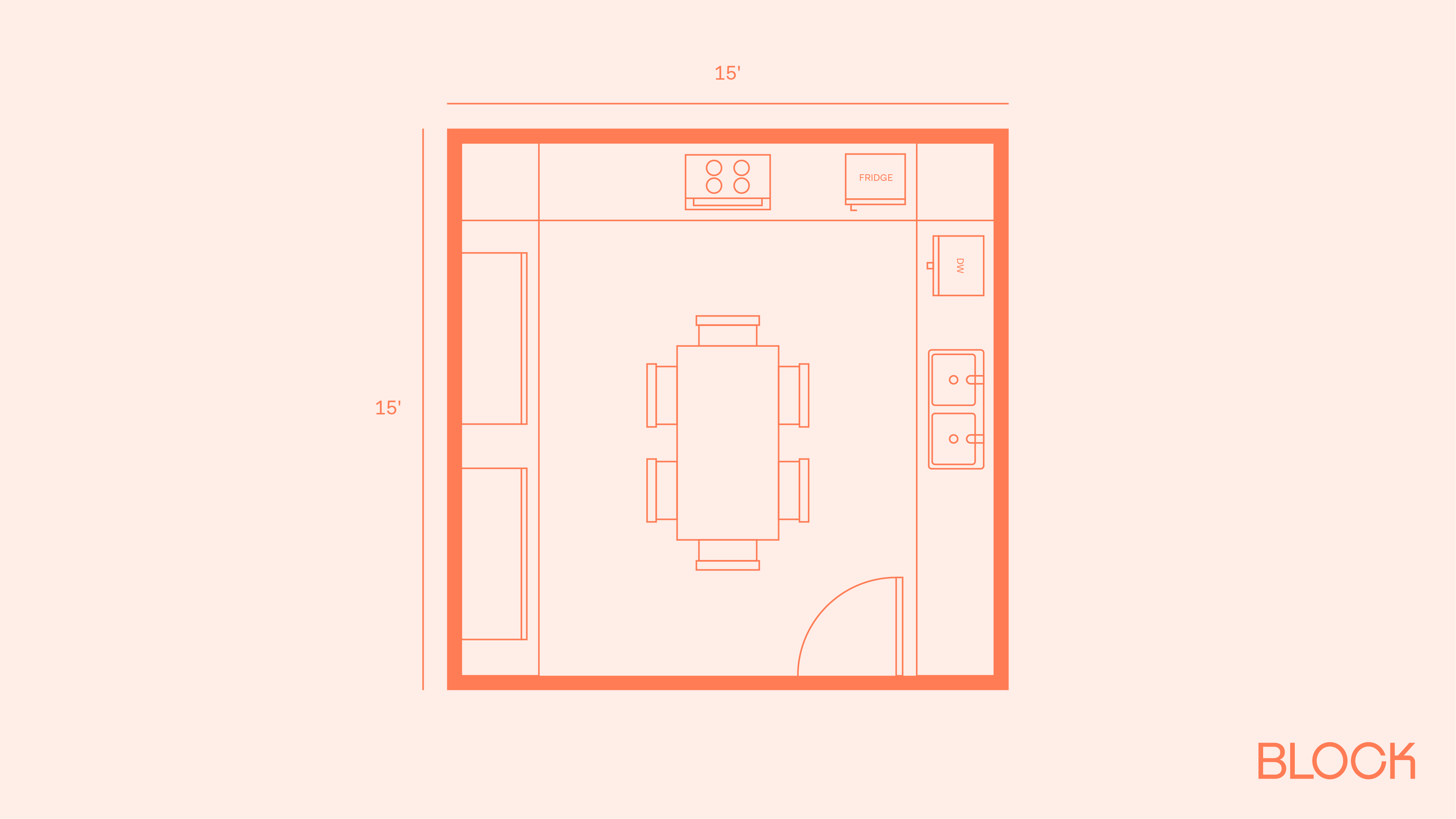
|
Spec |
Detail |
|
Footprint |
225 sq ft |
|
Layout |
U-shape with central freestanding table |
|
Island role |
Dining and overflow prep |
|
Seating |
6 chairs |
|
Appliances |
Cooktop and fridge on top wall, sink and dishwasher on right wall, additional cabinetry on left wall |
Three walls of built-in cabinetry surround a freestanding table with six chairs. The "island" here is unfitted by design, not by limitation. Farmhouse and English-country kitchens use this configuration intentionally.
The U creates a tight work triangle, with cooktop, sink, and fridge all within a few steps. The central table handles prep and dining without requiring any plumbing or wiring underneath, which means you can rearrange or replace it later without renovating. The configuration suits homeowners drawn to farmhouse aesthetics, or anyone who wants to keep the option of swapping the centerpiece later without renovating around it. Click here for 15x15 floor plans and other square kitchen layouts.
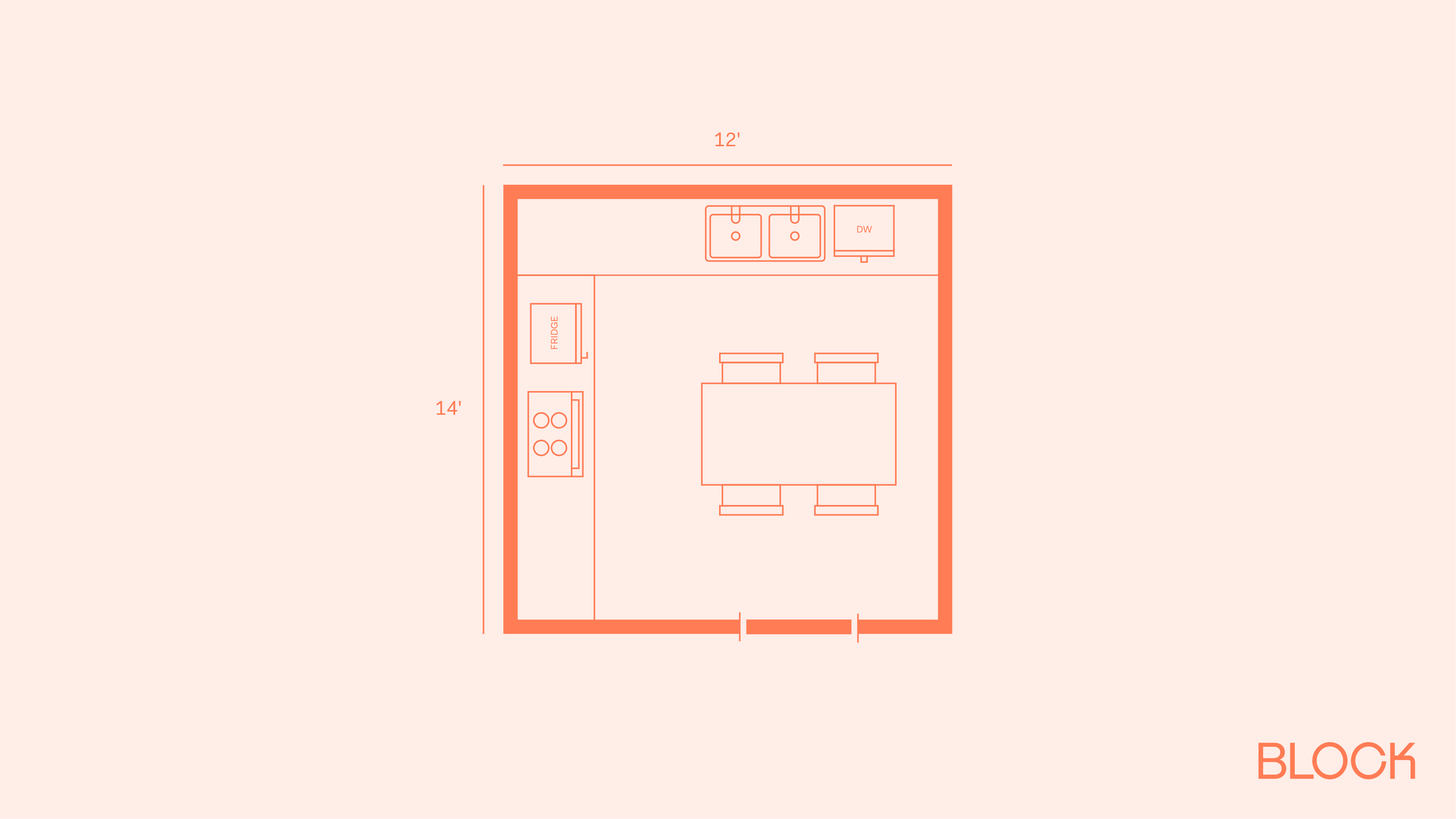
|
Spec |
Detail |
|
Footprint |
168 sq ft |
|
Layout |
L-shape with small island |
|
Island role |
Prep and seating |
|
Seating |
2 stools |
|
Appliances |
Sink and dishwasher on top wall, fridge and cooktop stacked on left wall |
The L runs across the top and down the left side. A small rectangular island floats in the center-right, positioned perpendicular to the cooktop wall. It functions as a landing zone for the range (pivot from cooktop to island to plate) and as a casual two-seater for breakfast or coffee.
This is the smallest footprint where a true island still makes sense. Aisles are tight, likely 36 to 42 inches, so two cooks will bump. The cooktop and fridge stacked on the same short wall is efficient but leaves limited landing counter on either side of the burners, so plan for at least 15 inches of counter on the burner side opposite the fridge.
Appliance sizing has an outsized impact at this footprint. A 24-inch dishwasher instead of the standard 30, and a counter-depth refrigerator instead of standard depth, can buy back the few inches that make 42-inch aisles possible. Urban condos and smaller homes benefit most from this layout, especially when the household is one or two people who value a central work surface over generous aisles. Look to our collection of 12x14 floor plans for more inspiration.
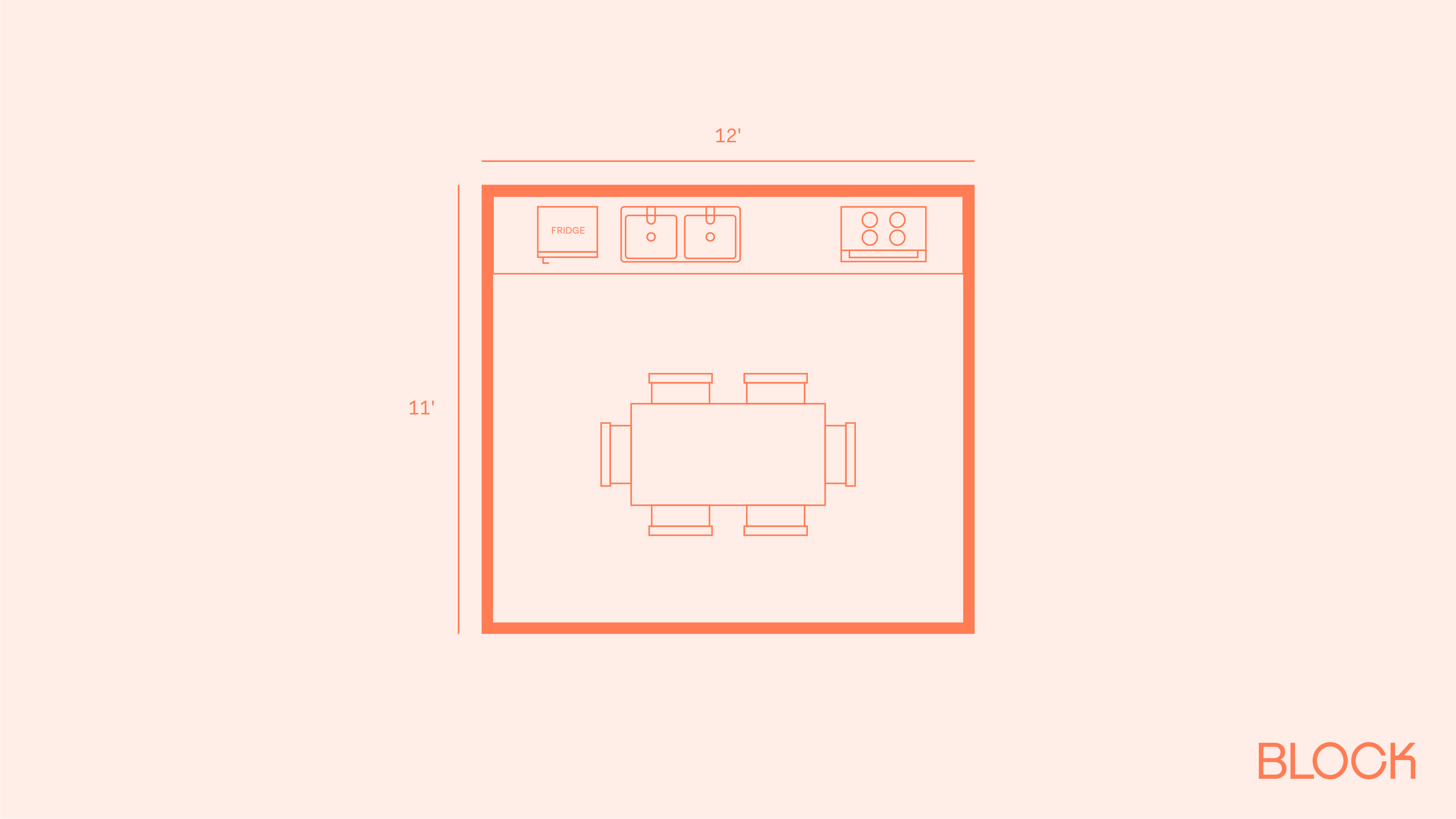
|
Spec |
Detail |
|
Footprint |
132 sq ft |
|
Layout |
Single-wall kitchen with freestanding table |
|
Island role |
Dining only |
|
Seating |
6 chairs |
|
Appliances |
Fridge, double sink, cooktop along top wall (no dishwasher) |
Including this plan in the set is useful precisely because it shows where the island concept breaks down. The entire working kitchen is one wall. The "island" is a six-chair table that lives in the same room. Below roughly 11 feet of width, the table can't be plumbed or carry a cooktop, and any real prep work conflicts with the chairs.
If you're working with this footprint, the honest question is whether you want a kitchen with seating in it, or a small kitchen and a dining table that happen to share an open space. This is the plan for studios and vacation rentals, where the kitchen is part of a larger open room rather than a discrete space.
These two get confused because both involve eating in the kitchen. The distinction matters when you're sizing a renovation budget.
A kitchen island is freestanding cabinetry with counter on top, accessible from all four sides. It can include a cooktop, sink, storage, and seating.
A breakfast bar is a raised or extended counter for seating, typically attached to a wall, peninsula, or one face of an island. It's a seating solution, not a work surface.
You can have a breakfast bar without an island (a counter that extends from the wall, for example). You can have an island without a breakfast bar (no seating, all storage and prep). And most modern islands include a breakfast bar as one face of the island, which is where the confusion starts.
Most working islands include a breakfast bar by extending the countertop 12 to 15 inches past the base cabinets on one face. Twelve inches is the minimum for stool seating. Fifteen inches is comfortable for adults eating a meal. Anything less than 12 inches forces seated guests to turn sideways to fit their knees.
Stool count works out to roughly 24 inches of overhang per person. A 6-foot island can seat three. An 8-foot island can seat four comfortably.
Three decisions shape everything else, from cost to where the trash pulls live.
Cooktop on the island. Cook faces the room. Better for entertaining. Requires ducted hood or downdraft ventilation, both of which cost more than a wall-mounted hood. Budget an extra $2,000 to $5,000 for the ventilation alone, plus the cost of running a dedicated circuit through the floor.
Cooktop on the perimeter. Simpler ventilation, since a wall-mounted hood vents directly through the exterior wall. Lower cost. The cook faces a wall instead of the room, but the entire island stays free for prep and seating.
The decision usually comes down to whether the visible hood over the island fits your aesthetic and your budget.
The default answer in most renovations is to keep the sink on a perimeter wall, ideally the "wet wall" where existing plumbing already runs. Island sinks require routing waste lines through the floor, which means cutting the slab in a concrete house or working through joists in a framed floor. Both add cost and limit future reconfiguration.
Reasons to put a sink on the island anyway:
Reasons to keep the sink on the perimeter:
Stools are the default and the most flexible. Counter-height stools (24 to 26 inches) work with standard 36-inch counters. Bar-height stools (28 to 32 inches) work with raised 42-inch breakfast bars.
Benches are increasingly popular for family kitchens because they fit more children per linear foot and reduce visual clutter, but they're harder to slide in and out of.
No seating at all is a legitimate choice if the kitchen opens to a dining area or breakfast nook. It frees up the entire island for prep and turns the cabinet-side face into storage.
These are the recurring issues that show up in renovation post-mortems:
A kitchen renovation with an island touches more trades than almost any other home project. Plumbing reroutes and dedicated electrical circuits at minimum. Ducted ventilation if the cooktop sits on the island. Structural work if walls are coming down. The contractor you hire decides whether those trades arrive in the right order and whether the finished island sits level on a floor that may not be.
Block Renovation matches homeowners with vetted local contractors who've completed comparable kitchen projects. Tell Block your renovation details once, and the platform sends your scope to qualified contractors in your area who compete for the project. Every contractor in the network is vetted, with licensing verified and past work reviewed.
What you get with Block:
Remodel with confidence through Block

Connect to vetted local contractors
We only work with top-tier, thoroughly vetted contractors

Get expert guidance
Our project planners offer expert advice, scope review, and ongoing support as needed
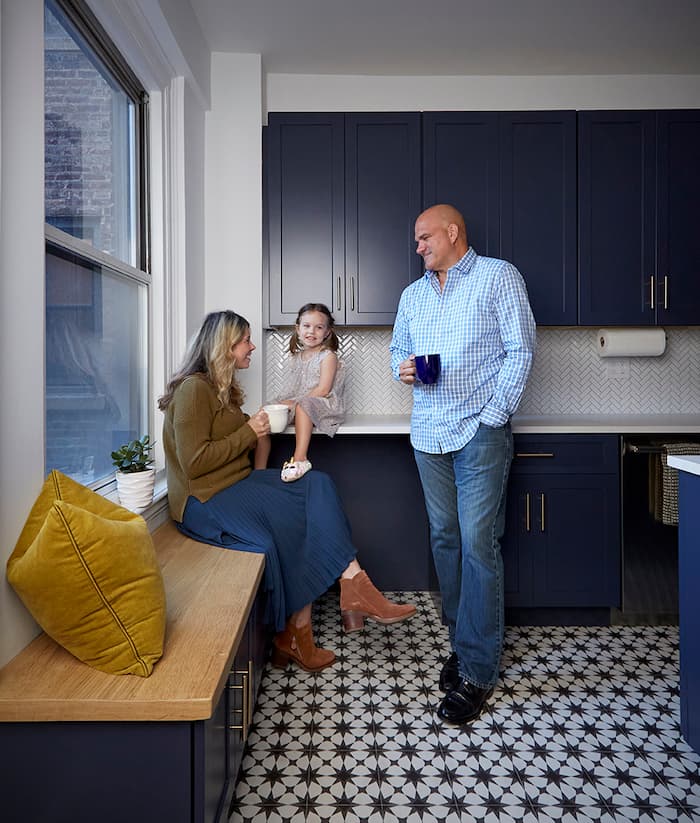
Enjoy peace of mind throughout your renovation
Secure payment system puts you in control and protects your remodel

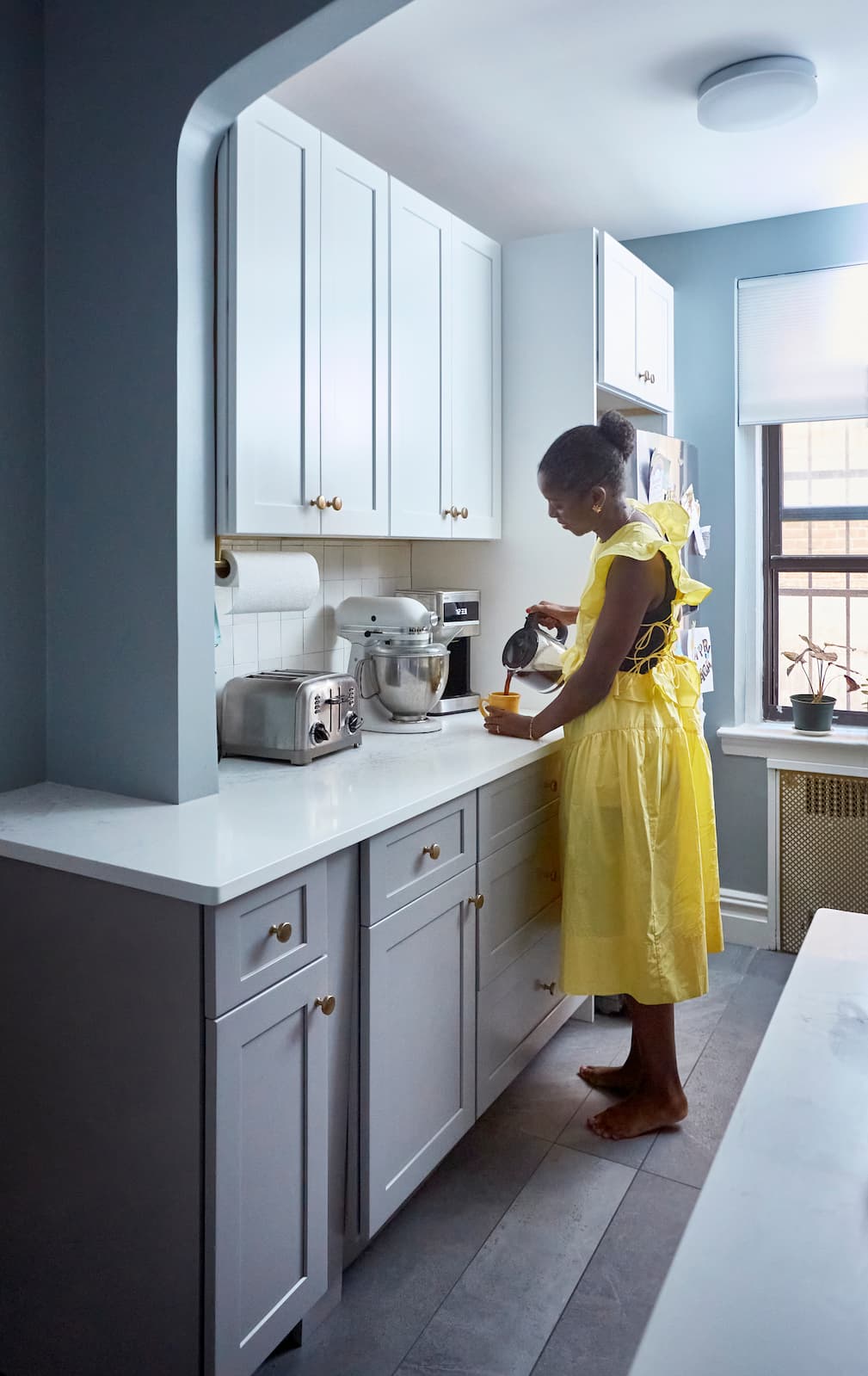
Renovate confidently with Block
Easily compare quotes from top quality contractors, and get peace of mind with warranty & price protections.
Kitchen Floor Plans
Galley Kitchen Floor Plans and Ideas That Work | Block
07.15.2026
.webp?width=640&name=King%20-%20Final%20Kitchen%20(1).webp)
Kitchen Floor Plans
AI Floor Plan Generator: Best Free & Paid Software
06.26.2026
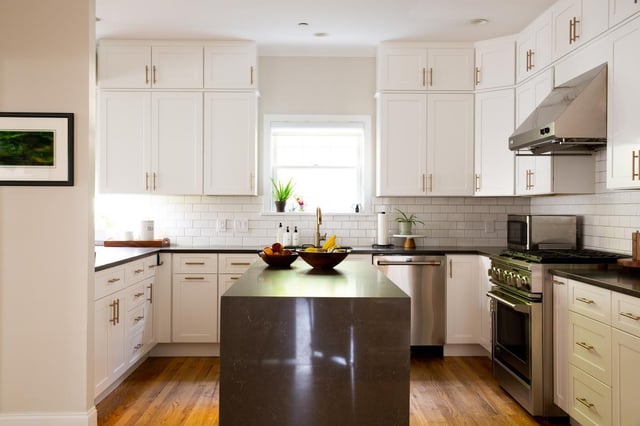
Kitchen Floor Plans
U-Shaped Kitchen Layouts & Floor Plans: 8 Designs
05.28.2026
Kitchen Floor Plans
Kitchen Floor Plans With Islands: 6 Layouts That Work
05.14.2026

Kitchen Floor Plans
12x10 Kitchen Layouts: 5 Designs That Work
04.26.2026