


Building Your Custom Home in Lubbock, Texas

Budget your upcoming Lubbock custom home build with help from Block
How we get your estimate
Fill out the form above to either connect with contractors for a personalized quote or estimate your costs with Block's Renovation Studio.
 Tan kitchen and living area with island stools and a sofa.

In This Article

    Lubbock sits on the southern High Plains at an elevation just over 3,200 feet, and the city's identity has always been tied to the Texas Tech University community, the surrounding agricultural economy, and an entrepreneurial culture that has recently attracted technology, healthcare, and energy sector investment. The Buddy Holly Center, a thriving food scene anchored by the Depot District, and a cost of living that leaves homeowners with real purchasing power have made Lubbock increasingly attractive to young professionals who might otherwise drift toward Dallas or Houston. Land in the Lubbock metro remains genuinely affordable by Texas standards, and that accessibility makes custom home building a realistic option for a wider range of buyers than in the state's larger metros.

    Building on the South Plains introduces conditions specific to this corner of Texas: expansive Pullman clay soils that treat improperly engineered foundations as seasonal puzzles, wind that is more or less constant, and a tornado and severe hail exposure that requires construction decisions most parts of the country never need to consider.

    Design a Home That’s Uniquely Yours

    Block can help you achieve your renovation goals and bring your dream remodel to life with price assurance and expert support.

    Get Started

    Cost and timeline overview for future Lubbock homeowners

    Lubbock is one of the more affordable Texas markets in which to build custom, and understanding what drives costs in this specific environment helps you take full advantage of that position.

    Custom home construction in Lubbock typically runs between $145 and $240 per square foot for the structure, excluding land. Higher-end builds with premium finishes, storm shelters, and elaborate outdoor kitchens can push toward $280. Land costs remain accessible across much of the metro, with lots in established southwest Lubbock neighborhoods like Lakeridge, Raintree, and the area around Baylor Scott and White Medical Center carrying modest premiums relative to newer development corridors in Wolfforth, Shallowater, and south Lubbock. Texas Tech's presence shapes neighborhood demand in the southwest quadrant, where proximity to campus and the medical district is consistently valued.

    Lot selection in Lubbock involves less terrain complexity than in hillside Texas markets but more foundation engineering complexity than buyers from other flat-land markets typically anticipate. The Pullman clay soils that dominate the South Plains are among the most expansive in the country, and a lot's drainage pattern and its relationship to irrigation from adjacent agricultural or residential land meaningfully affects the moisture cycling that drives foundation movement.

    The largest factors in determining cost

    Foundation engineering is the single largest local cost variable in Lubbock custom home construction, and it is the line item most likely to shift based on soil conditions specific to a given lot. Pullman clay, the dominant soil series across the Lubbock area, has shrink-swell potential among the highest of any agricultural soil in North America; it can shrink several inches during the dry summer months and expand back with fall and spring moisture in ways that destroy a conventional slab foundation within a few years of construction. Post-tensioned slabs are the standard response among experienced Lubbock builders, and the cost difference between a conventionally reinforced slab and a properly engineered post-tensioned system can run $15,000 to $35,000 on a mid-sized home.

    Storm shelter installation, either a below-grade concrete unit or an in-home reinforced safe room, is expected by most Lubbock buyers and adds to the budget but is a genuine safety necessity in tornado alley.

    Wind-resistant construction requirements add to roofing, sheathing, and structural connection costs relative to calmer-weather markets, and Class 4 impact-resistant roofing is worth specifying given the frequency of damaging hail events in the Lubbock area.

    Examples of upgrades that will push your budget higher

    Line items that most consistently expand Lubbock custom home budgets beyond initial estimates:

    • Engineered post-tensioned slab: In Lubbock's expansive clay environment, a post-tensioned slab is not an upgrade but the baseline responsible specification for a home built to last more than a decade without foundation distress.
    • In-home reinforced safe room: A FEMA 320-compliant safe room integrated into the floor plan as a closet, pantry, or dedicated shelter room is the most valued safety feature among Lubbock custom homeowners and should be designed in from the start.
    • Class 4 impact-resistant roofing: Lubbock averages multiple significant hail events per year, and Class 4 roofing materials generate insurance premium discounts that partially offset the upfront premium while delivering meaningfully better performance in the hail events that are a routine part of West Texas spring weather.
    • Covered outdoor living with wind screens: Lubbock's persistent southwest winds make unprotected outdoor spaces uncomfortable for much of the year, and covered patios with windscreen walls or privacy fencing oriented to block prevailing winds extend comfortable outdoor use significantly.
    • Spray foam insulation throughout: Lubbock's temperature swings, from winter cold fronts that drop below zero to summer stretches above 100 degrees, make a well-sealed building envelope one of the highest-return investments in the construction budget.
    • Three-car garage with workshop area: Lubbock's automotive and outdoor recreation culture drives demand for garages with extra storage bays, utility sinks, and dedicated workshop space that exceed the standard two-car configuration.
    • Whole-home water softening and filtration: Lubbock's municipal water supply, drawn from the Ogallala Aquifer, is hard and carries dissolved minerals that affect plumbing fixture longevity and appliance performance; whole-home treatment is a common specification in custom builds.

    Finding the right site in Lubbock for your custom home

    Lubbock's flat topography makes lot selection feel straightforward until you factor in soil moisture patterns, drainage relationships, and the varying depth of the Pullman clay profile across different parts of the metro. An experienced local builder who has built across Lubbock County and the surrounding municipalities can identify drainage issues and soil conditions that aren't visible from the surface and that materially affect what the foundation will cost and how it will perform.

    Considerations will include:

    • Soil quality and site stability: The Pullman clay loam series is the dominant agricultural soil across the Southern High Plains and underlies most of the Lubbock metro's buildable residential land. Pullman clay has a linear extensibility rating that puts it in the "very high" shrink-swell category, meaning it expands and contracts more per unit of moisture change than most clay soils in the country, and that movement is directly transmitted to any foundation resting on it without a properly engineered isolation system. Lots that receive irrigation runoff from adjacent agricultural fields or that have historically wet drainage patterns will experience more extreme moisture cycling and more severe foundation movement than lots in drier, well-drained positions, making the drainage context of a specific lot a critical factor in foundation design.
    • Utilities access: The City of Lubbock provides water, sewer, and electric service to most developed areas in the city limits, with Lubbock Power and Light serving the electric distribution system, and access to these utilities is generally straightforward for lots within established subdivisions. Outlying parcels in Lubbock County, particularly toward the Slaton highway corridor and the areas east and south of the city, rely on water cooperatives, private wells, and septic systems where the depth to the Ogallala Aquifer and local water quality vary. Confirming utility service availability, connection fees, and any required extension costs before lot purchase is a basic due diligence step that prevents timeline and budget surprises.
    • Zoning and restrictive covenants: The City of Lubbock administers zoning under its development code, with residential zone types governing setbacks, lot coverage, and accessory structure rights across the city. Many of Lubbock's established southwest neighborhoods carry deed restrictions enforced by active homeowner associations that govern exterior materials, fence heights, and landscaping standards beyond what base zoning requires, and violations of those restrictions can trigger HOA enforcement independent of the city's permitting process.
    • Lot slope and drainage: Lubbock's topography is famously flat, which means surface drainage is entirely a function of site grading rather than natural terrain, and lots that are graded without careful attention to positive drainage away from the foundation will accumulate water against the foundation perimeter during rain events that saturate Pullman clay and dramatically increase moisture-driven foundation movement. Lubbock's playa lakes, shallow ephemeral wetlands that are a characteristic feature of the South Plains landscape, are scattered across the metro area, and lots adjacent to or downslope of playas can receive significant stormwater inflow during the spring storm season.
    • Proximity to amenities: The Texas Tech campus and the surrounding medical district corridor in southwest Lubbock drive consistent neighborhood demand from students, faculty, and healthcare professionals who prioritize proximity to their primary institutions. The Depot District entertainment corridor and the Marsha Sharp Freeway access corridor also shape buyer preferences, with convenient access to daily services and entertainment remaining important in a city where driving is the primary mode of transportation.
    • Environmental concerns or hazards: Lubbock's most pervasive environmental concern for homebuilders is the Ogallala Aquifer's declining water table, which affects both the long-term water availability for the region and the performance of private wells in outlying areas where aquifer depth continues to decline with agricultural and municipal pumping. Caliche layers, which are common in the South Plains subsurface, complicate planting, irrigation system installation, and below-grade utility trenching across many Lubbock lots. Some portions of the city and county also have documented playa lake floodplain designations on FEMA maps that restrict construction or require elevated first floors.
    • View, orientation, and privacy: South-facing orientation in Lubbock reduces peak summer cooling load on east and west walls during the long hot season and takes advantage of the South Plains' exceptional solar resource, which averages over 270 sunny days per year. Privacy from adjacent properties and from Lubbock's persistent southwest winds can be achieved through strategic placement of privacy walls, windbreak plantings of drought-tolerant native shrubs, and covered patio orientations that face away from the prevailing wind direction.

    School quality is among the strongest drivers of suburban lot selection in the Lubbock metro. Frenship Independent School District, which serves the Wolfforth and western Lubbock area, draws consistent buyer demand, as does the Lubbock-Cooper ISD in the southern metro corridor. Texas Tech proximity shapes demand for buyers affiliated with the university, and the medical district corridor in southwest Lubbock attracts healthcare workers who want short commutes to the major hospital campuses.

    Preparing for unique local challenges

    Building on the South Plains presents conditions that are specific to this corner of Texas and that differ meaningfully from what builders encounter in the DFW Metroplex, the Hill Country, or Houston. The soils, the wind, and the severe weather exposure are the defining planning challenges.

    Expansive Pullman clay and foundation engineering

    Pullman clay's shrink-swell behavior is the dominant engineering challenge in Lubbock custom home construction, and no amount of general construction competence substitutes for specific experience with how this soil behaves under a foundation over time. Post-tensioned slabs designed by a geotechnical engineer using site-specific soil testing data are the standard response among experienced local builders, with cable spacing, slab thickness, and perimeter grade beam depth determined by the plasticity index and moisture profile of the soil at the specific building site.

    Tornado and severe wind exposure

    Lubbock is in tornado alley, and the city has experienced multiple significant tornado events, including a devastating 1970 tornado that tracked directly through the downtown and resulted in the city's landmark Red Raider mascot connection to local resilience. The area averages several tornado warnings per season, and the risk is real enough that most Lubbock custom homeowners treat a FEMA 320-compliant storm shelter as standard rather than optional. In addition to tornado risk, the South Plains experiences frequent high-wind events, with the spring dust storm season producing winds that exceed 50 miles per hour for extended periods and that test exterior cladding connections, window seals, and garage door structural ratings. Wind-rated garage doors, properly anchored roof sheathing, and continuous load path framing connections add cost but deliver meaningful performance improvements under the sustained wind loads that are a normal part of the West Texas weather calendar.

    Not sure how to begin your renovation?

    Get free, expert guidance from a dedicated Block Project Planner who can help you navigate proposals, timelines, contractor selection, and more.

    Book A Free Consultation

    Hail frequency and roofing specification

    The Lubbock area is consistently ranked among the top hail-impact markets in the United States, with multiple significant hail events averaging each spring season that can produce stones two inches or larger. Standard three-tab asphalt shingles typically sustain functional damage in events with one-inch hail or larger, and homeowners who specify them on a new custom home in Lubbock should expect to file insurance claims within the first several years of occupancy. Class 4 impact-resistant shingles or metal roofing are the most defensible choices for new construction in Lubbock, and both qualify for significant insurance premium discounts.

    Dust storms and building envelope management

    Lubbock's position on the Southern High Plains makes it one of the dustiest metros in the country, with the spring haboob season producing dense dust storms that penetrate poorly sealed buildings and create air quality issues for occupants. A tight building envelope, including continuous air barriers, sealed penetrations at all exterior wall openings, and high-quality weatherstripping on all exterior doors and windows, does double duty in Lubbock: it reduces both dust infiltration and the heating and cooling loads that drive energy costs in a climate with extreme temperature swings. HVAC systems with MERV-13 or higher filtration media capture dust particles that pass through lower-grade filters, and whole-home air filtration is worth specifying in any Lubbock custom home where indoor air quality during dust storm season is a priority. Exterior finishes should be evaluated for their maintenance requirements in a high-UV, high-abrasion environment where fine dust carried by persistent winds accelerates the weathering of painted and composite surfaces.

    Practical tips for keeping your custom home build drama-free

    Lubbock's custom home process has specific pressure points that careful early planning can address.

    • Commission a geotechnical investigation before finalizing the foundation budget: In Lubbock's Pullman clay environment, the foundation budget without soil testing data is an estimate with wide error bars. A geotech report typically costs $1,200 to $2,500 and can prevent $20,000 to $40,000 in foundation change orders when soil conditions differ from assumptions.
    • Design the storm shelter into the floor plan from the first draft: In-home safe rooms that are integrated into the original design as pantries, closets, or dedicated rooms cost less and look better than those that are retrofitted into an existing floor plan, and deciding on the shelter type, size, and location before design is finalized is the most cost-effective path.
    • Build schedule flexibility around the spring severe weather season: Lubbock's spring tornado and hail season from March through May can interrupt exterior work, damage materials stored on site, and create liability concerns that responsible builders manage through material coverage protocols and schedule contingency. Schedules that acknowledge this reality will perform better than those that don't.
    Meredith Sells

    “Design decisions should happen before demolition, not during construction.”

    Additional articles to help prepare you for the home building process

    Vetting potential builders for your Lubbock custom home

    In a market where foundation performance on Pullman clay separates competent builders from excellent ones, vetting your contractor beyond standard qualifications is worth the effort. The right questions reveal whether a builder has the local soil experience and severe weather construction knowledge that Lubbock specifically demands.

    • Ask specifically how many post-tensioned slabs they have designed and built on Pullman clay, and request references from those homeowners: References from Lubbock homeowners who have lived in a post-tensioned slab home for at least five years will tell you whether the foundation is performing as designed under real West Texas soil conditions.
    • Confirm their standard storm shelter specification and ask to see an installed example in a completed home: Safe room quality varies significantly, and a builder who installs shelters as a coordinated part of the floor plan rather than as an afterthought typically delivers a better-integrated result.
    • Evaluate their roofing specification and ask whether they typically recommend Class 4 materials in their standard contract: A builder who proactively recommends Class 4 roofing rather than waiting to be asked is demonstrating knowledge of the local hail risk that should inform other decisions throughout the project.
    • Ask how they manage subcontractor scheduling during the spring severe weather season: Builders who have a specific protocol for site protection, schedule contingency, and material storage during Lubbock's storm season are operating professionally in a market where ignoring that risk is a real planning failure.

    Partner with Block to find your ideal Lubbock home builder

    Block connects Lubbock homeowners with vetted custom home builders who have been screened through a rigorous multi-step process covering license verification, insurance, background checks, and references from completed West Texas projects. Rather than navigating the local contractor market on your own, you receive personalized matches based on your project's scope, your lot's soil conditions, and your timeline. A dedicated Project Planner guides you through proposal comparison and builder selection at no cost and with no obligation to hire.

    Every Lubbock project managed through Block benefits from a progress-based payment system that releases contractor funds only as work is verified complete, keeping your investment protected through each phase of a build where soil conditions and weather can introduce unexpected variables. Block Protections include expert-reviewed project scopes that catch missing line items before they become change orders, along with a workmanship warranty backed by every builder in the network. Your full timeline and payment schedule are visible through Block's dashboard from first contact through final walkthrough.

    Lay the groundwork for a successful custom home
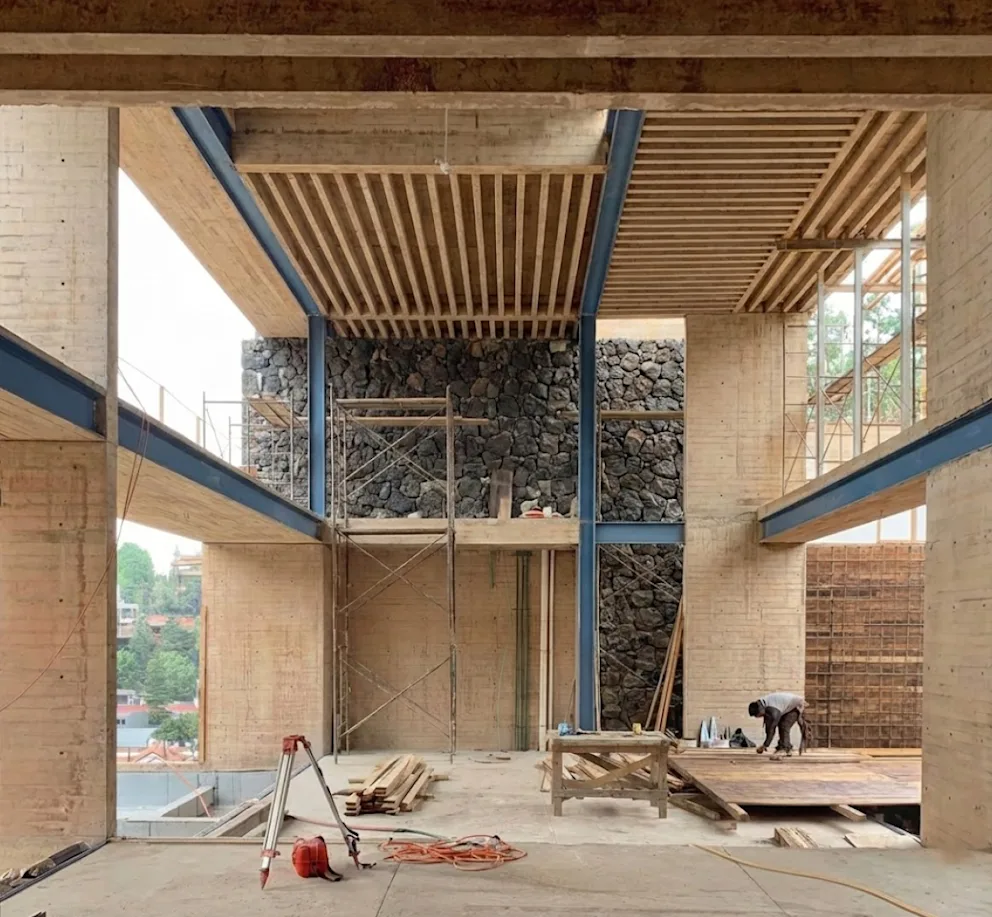
    New construction home build

    Match with vetted builders

    Receive quotes from experienced contractors aligned to your vision.

    Block experts reviewing quotes and timelines

    Hire with confidence

    Partner with Block experts to review quotes and timelines for end-to-end clarity.

    Homeowner staying in control of their renovation

    Stay in control

    Avoid surprises with Block Protections and a progress-based payment system.

    Get Started

    Frequently asked questions

    I want to build a second home on my property; how do I know if it qualifies as an ADU?

    In the City of Lubbock, accessory dwelling units are regulated under the city's zoning ordinance, which allows ADUs in single-family residential zones subject to specific standards governing size, setbacks, height, and design compatibility with the primary structure. An ADU qualifies if it is a complete independent dwelling unit with its own kitchen, bathroom, and sleeping area, located on the same lot as the primary residence, and it can be either attached to the main home or a separate detached structure. The maximum floor area for a detached ADU in Lubbock's standard residential zones is generally limited to a percentage of the primary structure's floor area or an absolute square footage cap, and you should confirm the applicable limit with the city's Planning and Zoning department for your specific zoning district. Parking requirements, which mandate a minimum number of off-street spaces for the combined primary and accessory dwelling units, are a common constraint that affects where and whether a detached ADU can be placed on a smaller Lubbock lot. A pre-application meeting with Lubbock's Development Services office, which is free and available by appointment, is the most efficient way to determine what is permitted on your property before investing in design work.

    How much cheaper is it to build a ranch home versus a multi-story house?

    Ranch homes are typically more expensive per square foot to construct than two-story homes of equal total area because they require a larger foundation footprint and a larger roof area, both of which are significant cost drivers in any construction budget. In Lubbock specifically, where foundation engineering for Pullman clay adds cost to every square foot of slab area, the larger foundation footprint of a ranch home amplifies this differential compared to markets with simpler soil conditions. A two-story home concentrates the same living area over a smaller slab and roof, reducing the cost of these two expensive elements per square foot of finished living space. The practical premium for a ranch versus a comparable two-story in Lubbock's market tends to run $12 to $25 per square foot, with the foundation differential being the largest contributor. That said, ranch homes are strongly preferred by Lubbock's retiree and accessibility-conscious demographic, and the resale premium for single-story living in the local market can partially offset the higher construction cost over a typical ownership period.

    What are common issues that cause permits to be denied?

    In Lubbock, permit applications are most commonly returned for incomplete documentation rather than outright code violations, with the most frequent triggers being missing engineered foundation plans, incomplete energy code compliance documentation, and site plans that don't show required setback dimensions from all property lines. Drainage plans that fail to demonstrate positive drainage away from the foundation and toward the street or an approved drainage easement are flagged during plan review, as Lubbock's flat topography and clay soils make drainage design a genuine public infrastructure concern rather than a formality. Storm shelter plans, when a shelter is included in the project scope, need to meet FEMA 320 or 361 standards and require specific documentation that is sometimes submitted without the required manufacturer certifications or engineer's stamp. Electrical and plumbing plans that reference fixtures or equipment not permitted under the current edition of the relevant code adopted by the City of Lubbock are another common source of plan review comments. Working with a builder and architect who have recently permitted in the city and who maintain current knowledge of what Lubbock's Building Inspection department requires is the most reliable way to get through plan review efficiently.