



Architectural Styles
Raised Ranch Remodel Ideas: Challenges & Tactics
07.16.2026
05.02.2026


In This Article
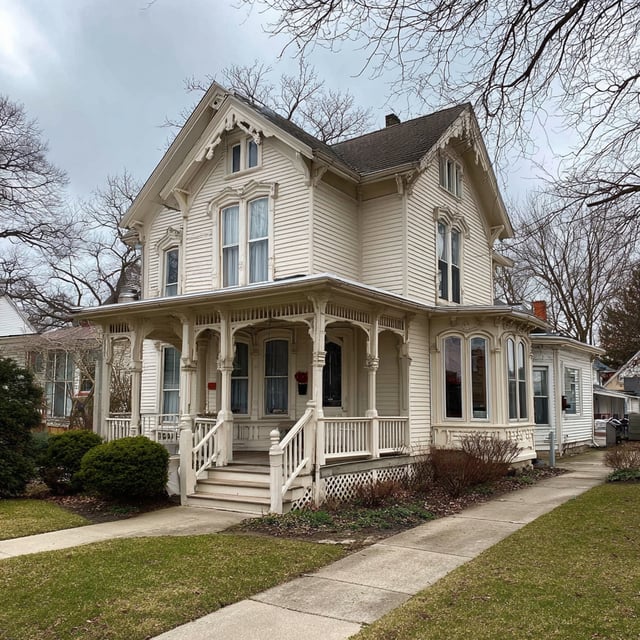
A Victorian home is the kind of house that stops you on the sidewalk. Bay windows, turned newel posts, fish-scale shingles, plaster medallions on the dining room ceiling. The details are the reason people buy these houses, and the details are also why renovating one is nothing like renovating a 1990s colonial.
Victorian architecture in the United States runs roughly from 1840 to 1900, covering styles like Italianate, Second Empire, Queen Anne, Folk Victorian, and Shingle. If your house has ornamental trim, tall ceilings, decorative brackets, asymmetrical massing, and rooms that feel carved out rather than opened up, it's almost certainly in this family. Most of these homes are now between 125 and 185 years old. That age shows up everywhere: in the good (heart pine floors, thick plaster, solid wood millwork that no contractor can replicate today) and in the hard parts (knob-and-tube wiring, galvanized plumbing, coal-era chimneys, balloon framing, lead paint, settled foundations).
Renovating one well means making a lot of small calls, room by room, about what's worth keeping and what has to go.
The fastest way to wreck a Victorian is to treat it like any other old house. People tear out the original trim because it's painted thirty times over and looks muddy. They rip out plaster because drywall is easier. They pull out a cast-iron tub because it has a chip.
Almost always, those are the wrong calls.
Original millwork in a Victorian is usually made from old-growth pine, chestnut, or oak, milled with profiles that modern lumber yards don't stock. Stripping eight layers of paint off a baseboard is tedious work, but the baseboard itself is irreplaceable. Same with plaster walls, which are denser and better at sound-dampening than drywall. Same with wavy original window glass, clawfoot tubs, interior transoms, pocket doors, and built-ins.
The biggest wrong call, though, is the open-concept renovation. Knocking down the wall between the parlor and dining room has been the default move since HGTV made it one, and it's almost always the wrong decision for a Victorian. These houses were designed as a sequence of rooms. Each one has its own proportion, light, and purpose, and removing the walls between them usually flattens the whole floor plan. A Victorian with its walls taken out tends to read as an oversized ranch with fancy trim. If better flow is the goal, a widened cased opening usually does the job. There are exceptions (later Shingle-style homes were already fairly open, and some kitchens genuinely benefit from being pulled into the dining room), but the presumption should be against the sledgehammer.
Before any demolition, walk through the house with a contractor who has renovated Victorians specifically. Ask them to flag what's original, what's a later addition, and what's failing. A scope that says "save the entry hall wainscoting, replace the 1970s kitchen cabinets, rewire throughout" is worth ten times more than "update the house."
Design a Home That’s Uniquely Yours
Block can help you achieve your renovation goals and bring your dream remodel to life with price assurance and expert support.
Get Started
The vinyl replacement window industry has spent two generations convincing homeowners that old windows are energy sieves that need to go. They're not. A restored double-hung wood window with a good storm window added performs within a few percentage points of a mid-range vinyl replacement, and it keeps the proportions of the facade intact. Replacement vinyl sashes in a Victorian almost always look slightly wrong, with thicker frames, different glass patterns, and none of the subtle imperfections of wavy original glass.
The financial case is also weaker than it looks. The ROI math on vinyl replacement assumes the new window lasts forever. It won't. Most vinyl windows need replacement again in 20 to 25 years. The wood window has already lasted 125 years, and if it's properly restored it can last another century. Restoration runs $300 to $800 per window depending on condition. Full vinyl replacement typically runs $800 to $1,500 per window. Over a 50-year horizon, restoration usually wins on cost, and it definitely wins on how the house looks.
Most contractors will tell you the windows have to go. Find a sash restoration specialist and get a second opinion before you agree.
Systems. All of them.
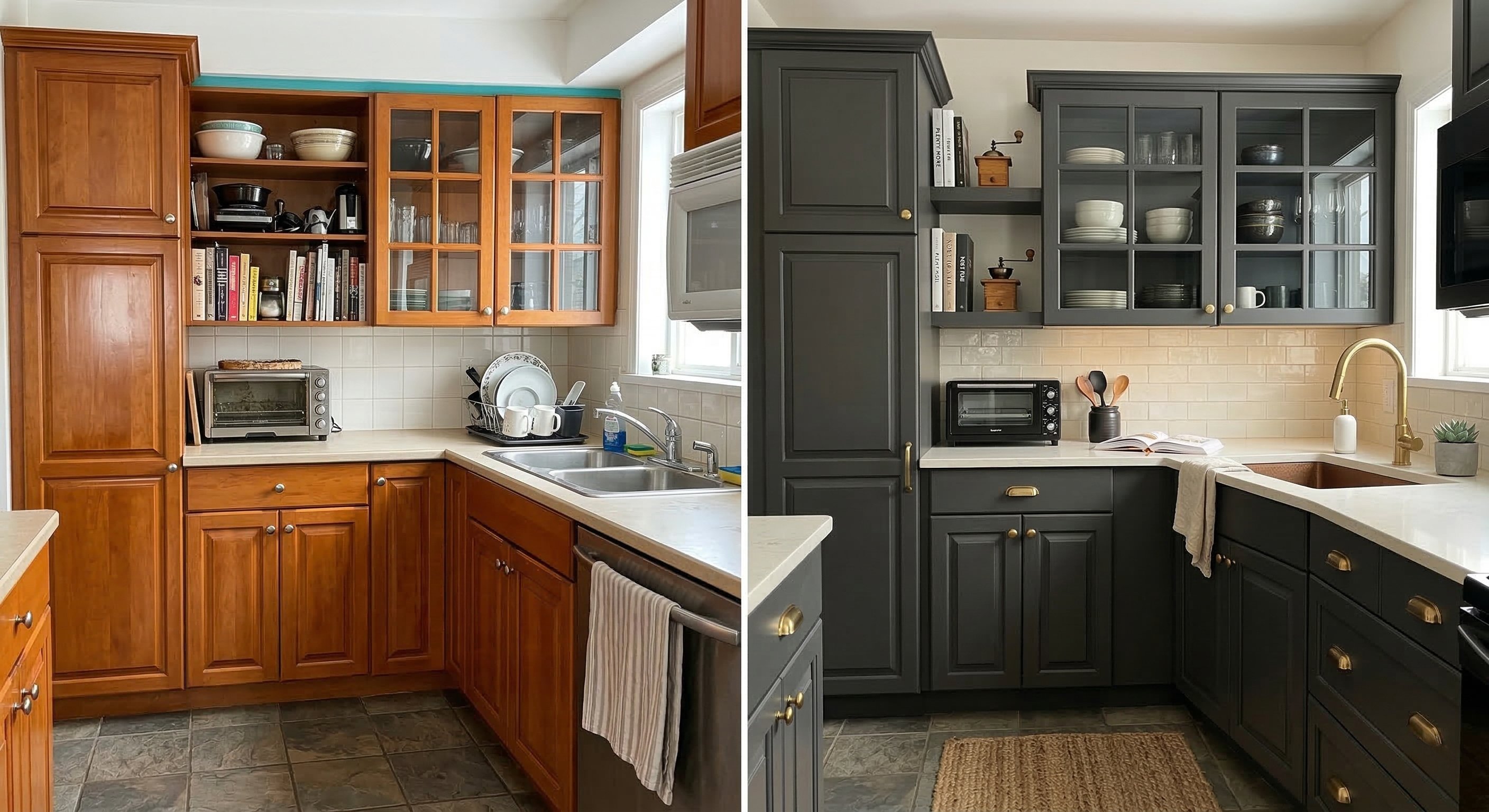
The original Victorian kitchen was a workspace for servants, closed off from the rest of the house, lit by a single window, and not designed for the way people cook and gather now. This is usually the room that has already been remodeled once or twice, badly, with cabinets from the 1980s and vinyl floors.
Kitchens are also where most renovation budgets concentrate. A full kitchen remodel in a Victorian typically runs $40,000 to $120,000, depending on whether you're moving walls, relocating plumbing, or restoring period details.
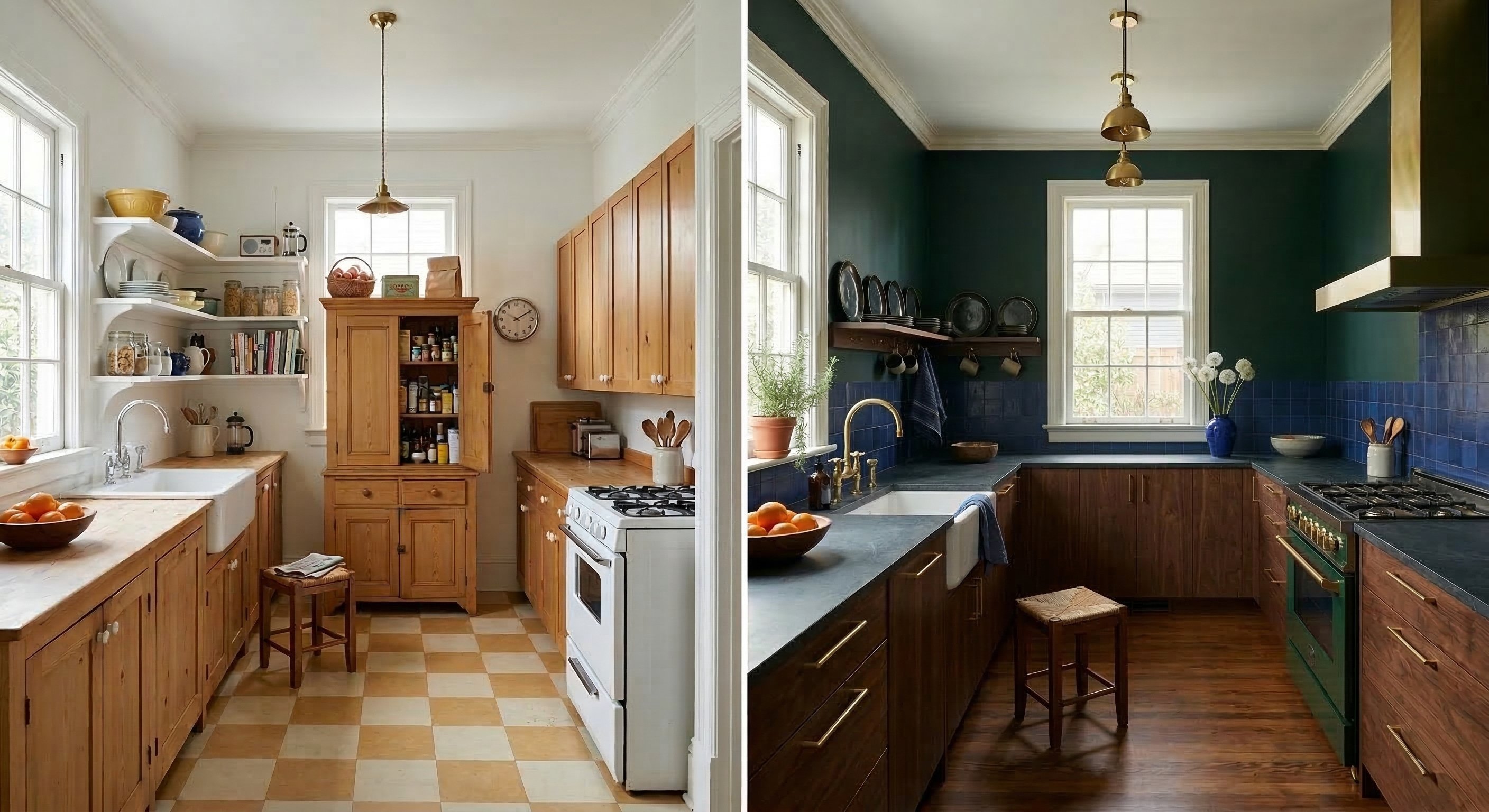
A few principles for a Victorian kitchen that actually works:
Most Victorian bathrooms look beautiful in photos and function badly in real life. There's one pedestal sink with no counter space, a clawfoot tub with a shower ring stuck onto it, hex tile that's seen better days, and nowhere to put a towel.
The preservation-minded approach is to keep the tub, keep the tile if it's in decent shape, and solve storage with a piece of freestanding furniture rather than a wall of built-ins. A bathroom renovation at this level runs $25,000 to $50,000.
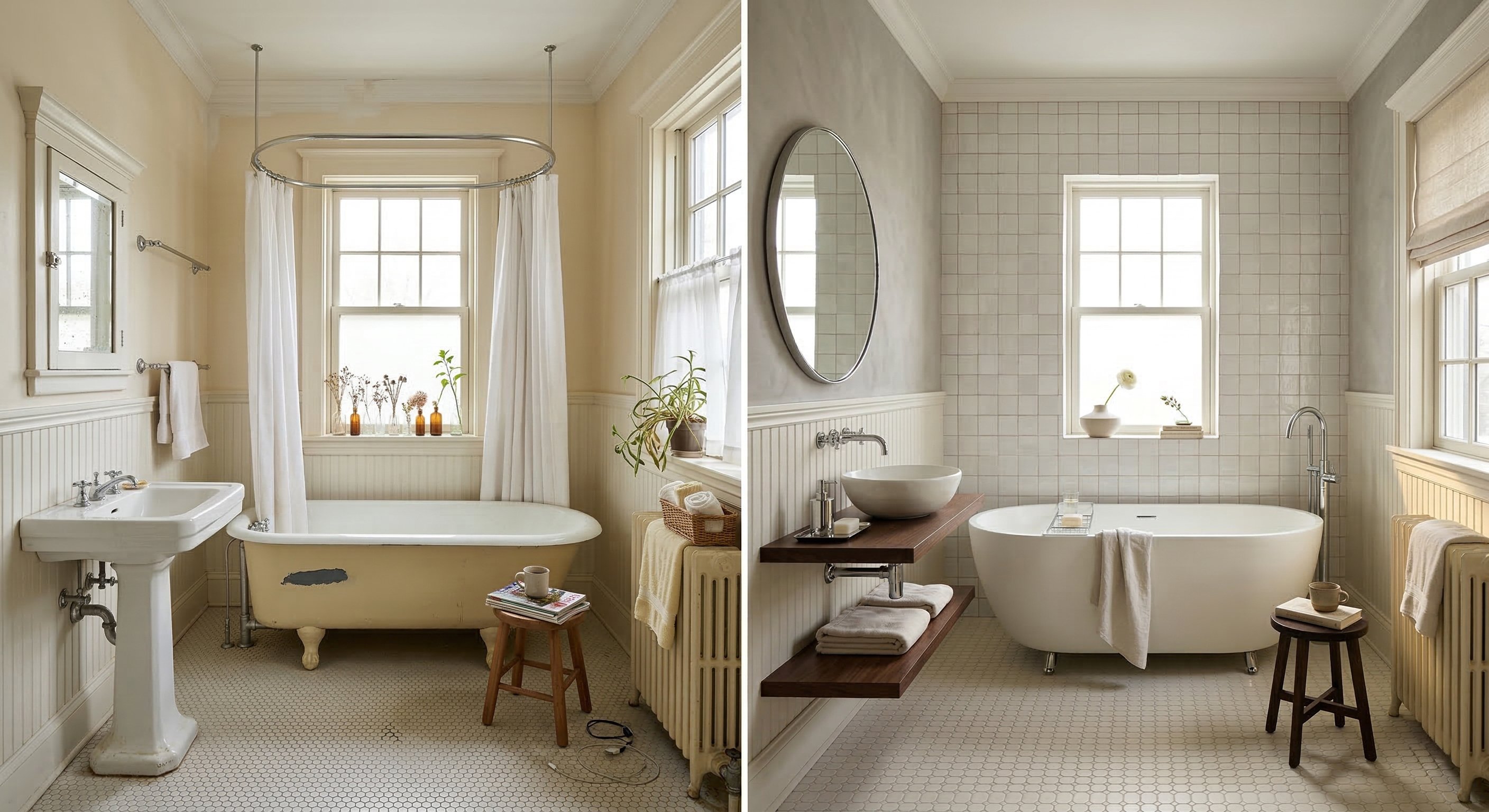
A few specifics for a Victorian bathroom that works:
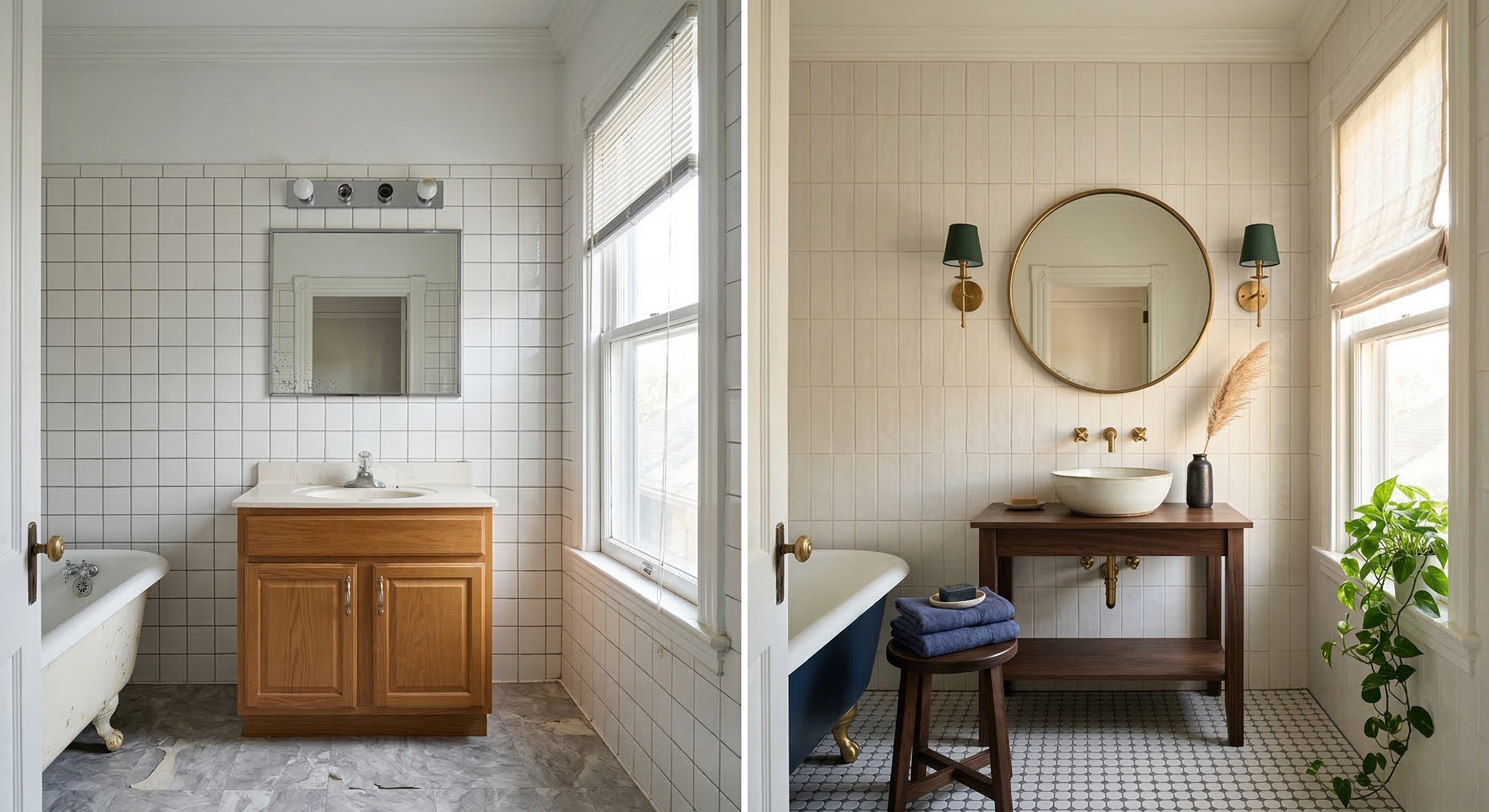
For more tips, look to our guide about blending vintage and modern influences within a bathroom’s design.
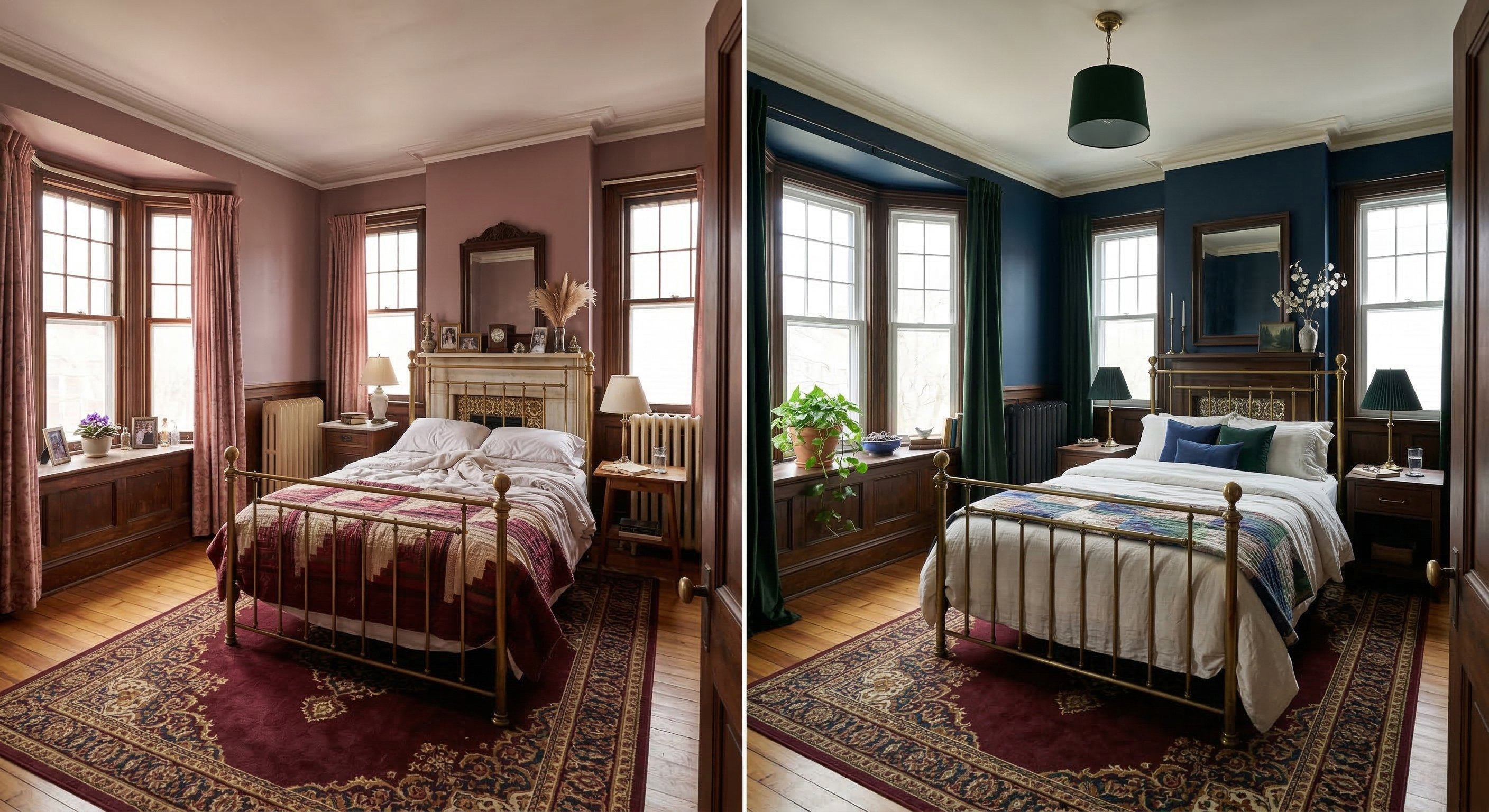
A lot of Victorian bedrooms and parlors don't actually need much structural work. The floors are solid, the trim is intact, the fireplaces are there. What they need is a coherent design decision.
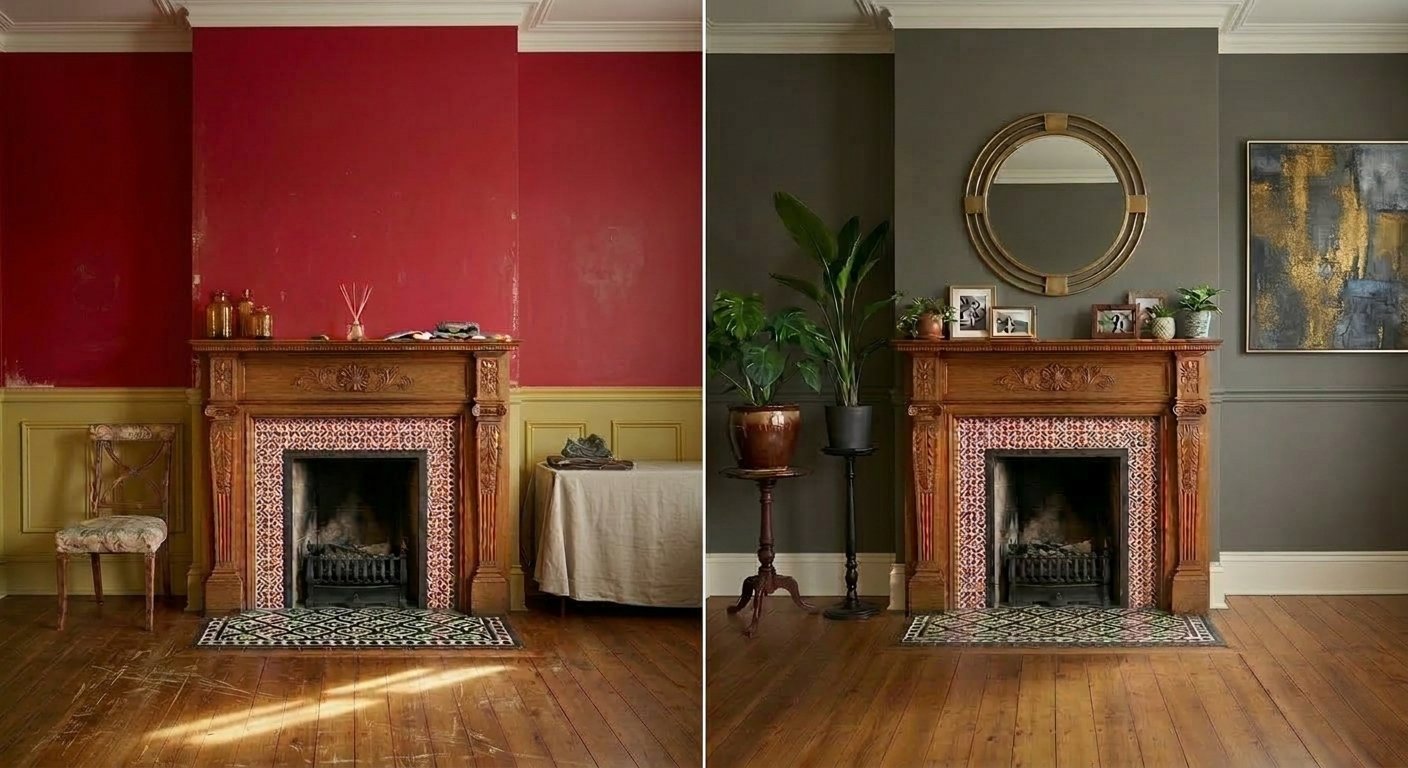
Victorian homes were originally painted in far richer colors than most people realize. Oxblood, deep forest, mustard, teal, plum, and navy were period-appropriate. The all-white, all-gray approach that dominates contemporary remodels fights the architecture. Walls with picture rails and tall baseboards want saturated color. Ceilings often benefit from a softer contrasting tone rather than stark white.
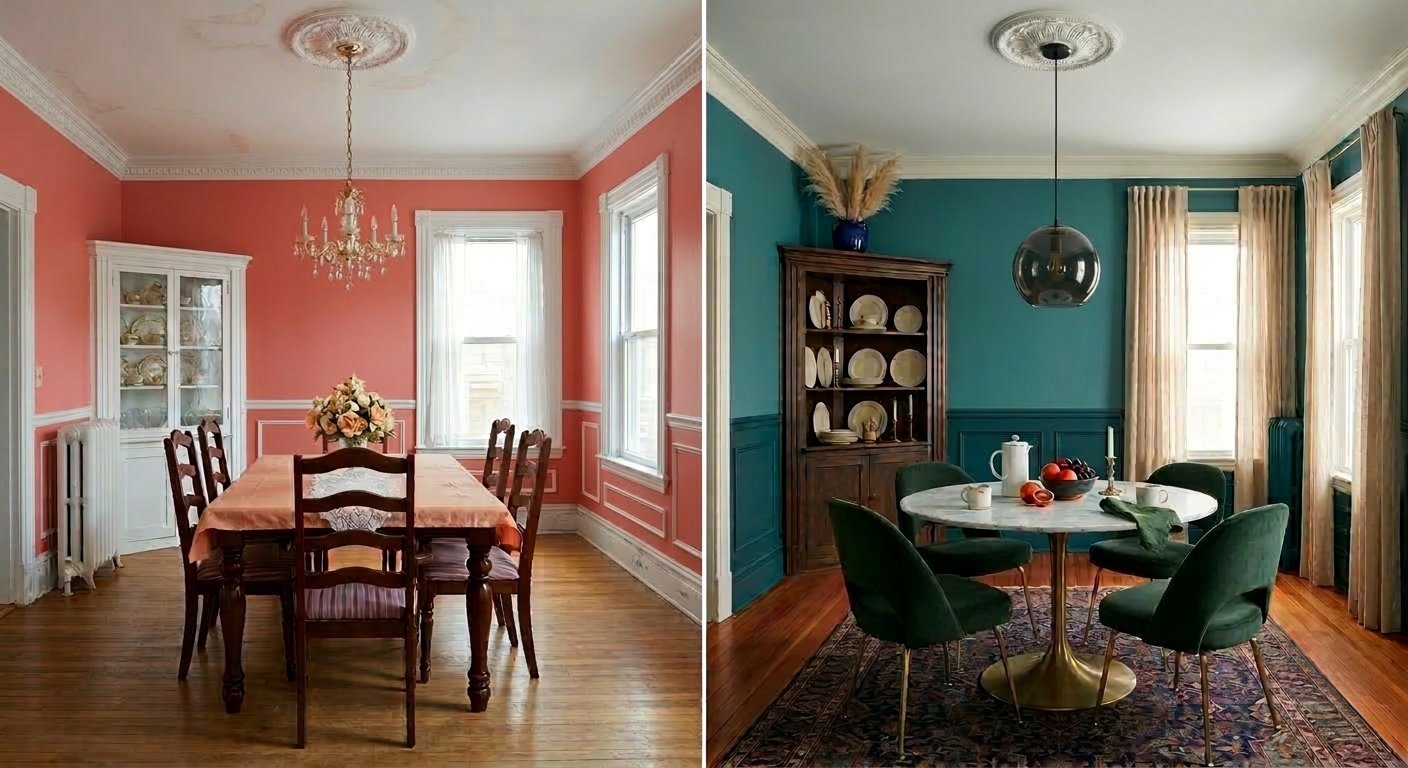
A few rules for paint in a Victorian:
Saturation isn't the only valid direction. Some Victorian rooms benefit from the opposite approach, where the walls get quieter and the original architecture gets to carry the drama on its own.
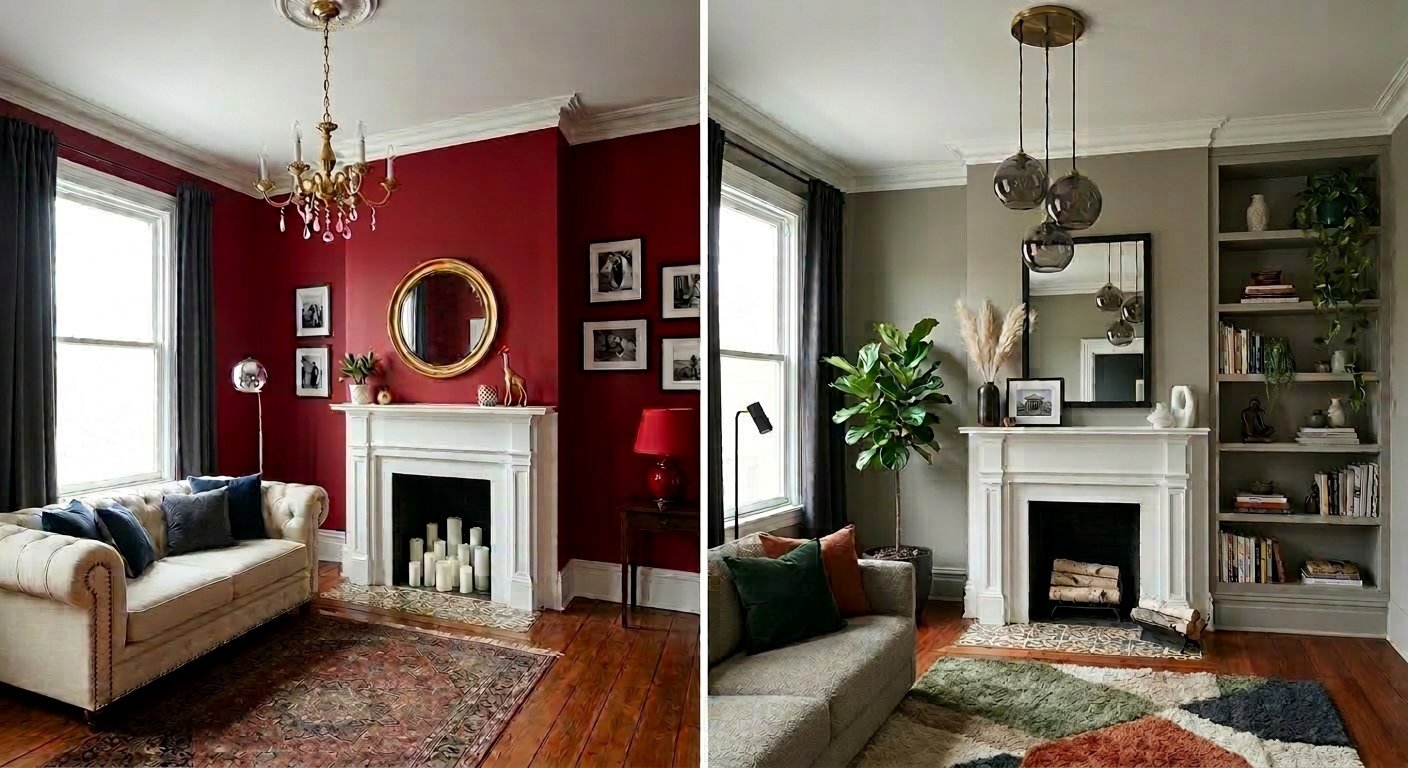
Victorian hallways are narrow, long, and often dim. They also contain some of the best details in the house: turned newel posts, carved balusters, transom windows, built-in coat nooks. These spaces respond dramatically to paint, runner rugs, and lighting.
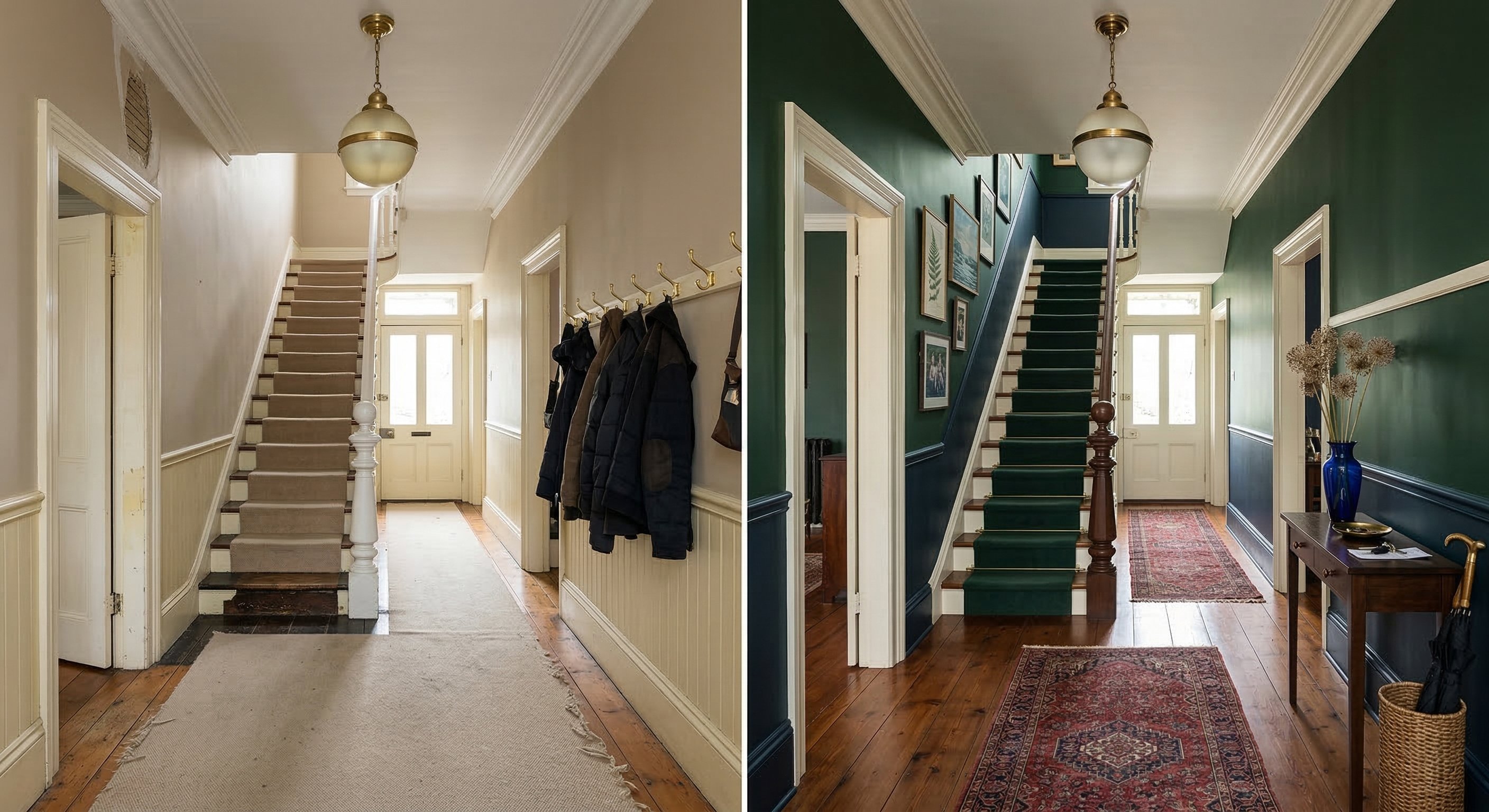
Runner rugs are essential. They dampen sound, protect the stair treads, and add color in a space that otherwise has very little horizontal surface to work with. Brass stair rods are a small detail that costs about $200 for a full staircase and reads unmistakably period.
Lighting in Victorian hallways was originally gas, then retrofitted to electric with small sconces and pendants. A single central pendant, one or two wall sconces, and a table lamp on a console give these spaces the layered light they were designed for.
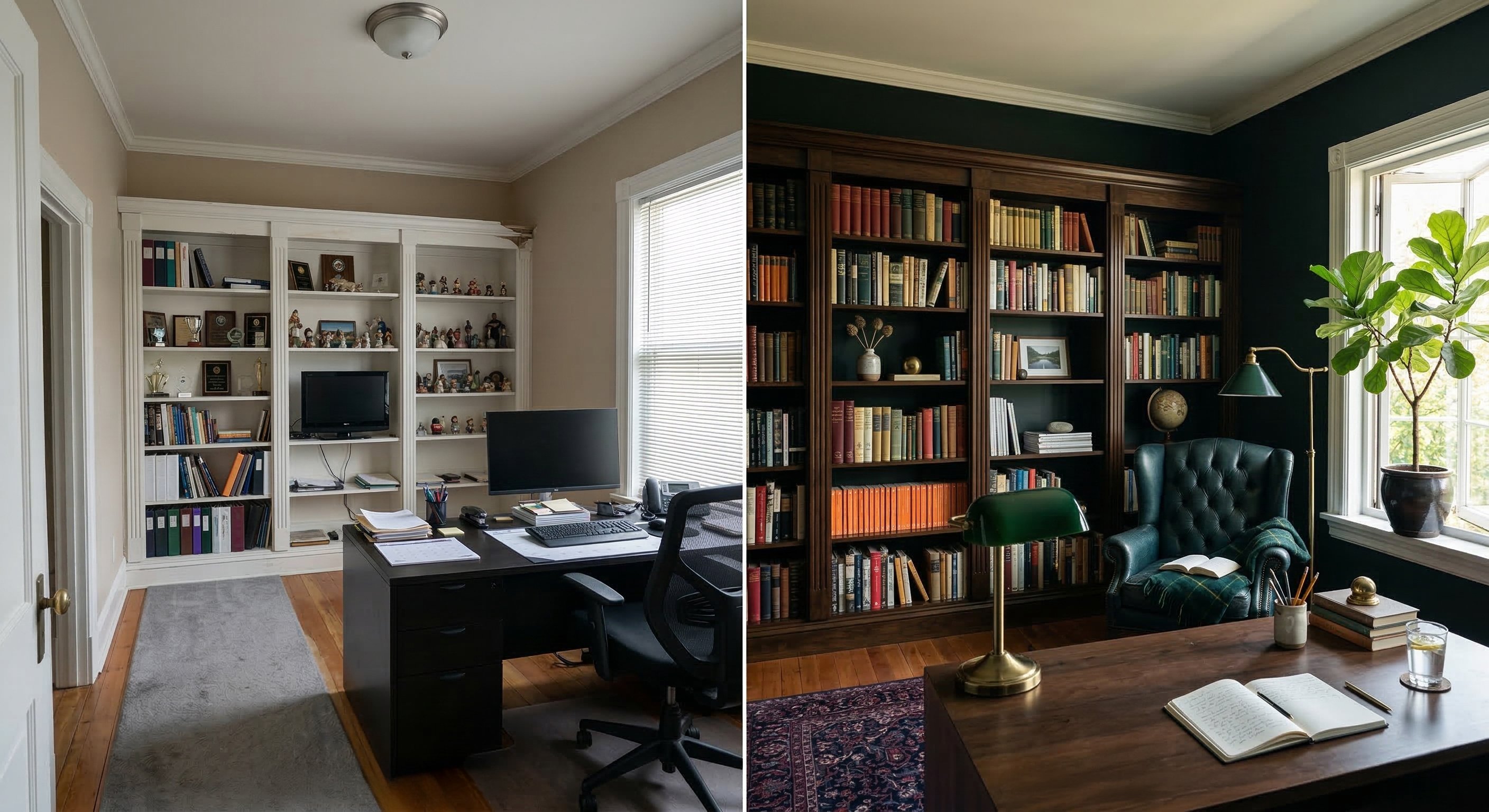
Most Victorians weren't built with a home office. They were built with parlors, sitting rooms, studies, and sewing rooms, and one of those typically gets drafted into office duty. These rooms are often small, which works in their favor. A small room with dark paint, built-in shelving, and a real desk feels like a serious space for thinking.
These houses were built at a moment when architecture and craft weren't separate things. The carving on the fireplace mantel, the profile on the baseboard, the shape of a stair baluster. All of it was decided by someone, and most of it was done by hand.
A good renovation respects that and still fixes the things that genuinely need fixing. Rewire it. Insulate it. Replumb the bathrooms. Put in a kitchen you actually want to cook in. The parts of the house worth keeping are almost always the parts a previous homeowner would have recognized, and the parts worth changing are almost always the systems buried in the walls.
Get the scope right before the finishes. Find a contractor who has worked on Victorians specifically. Build in real contingency. That's most of what separates a Victorian renovation that works from one that doesn't.
Remodel with confidence through Block

Connect to vetted local contractors
We only work with top-tier, thoroughly vetted contractors

Get expert guidance
Our project planners offer expert advice, scope review, and ongoing support as needed
Enjoy peace of mind throughout your renovation
Secure payment system puts you in control and protects your remodel

Renovate confidently with Block
Easily compare quotes from top quality contractors, and get peace of mind with warranty & price protections.
Architectural Styles
Raised Ranch Remodel Ideas: Challenges & Tactics
07.16.2026
Architectural Styles
Craftsman Bungalow Renovation Ideas & Practicalities
07.09.2026
Architectural Styles
Remodeling a 1920s House Without Losing Its Style
07.07.2026
Architectural Styles
Colonial Home Renovation: What to Modernize & Preserve
07.05.2026

Before and After
Kitchen Island Remodel: Before and After Inspo
06.26.2026