


Tempe Kitchen Remodel Guide: Costs, Layout Ideas, and Local Design Moves

Budget your upcoming Tempe kitchen remodel with help from Block
How we get your estimate
Fill out the form above to either connect with contractors for a personalized quote or estimate your costs with Block's Renovation Studio.
A compact modern A-frame kitchen features light wood cabinetry and flooring, a white marble countertop, a white subway tile backsplash, and natural light streaming in from an angled skylight.

In This Article

    A kitchen remodel in Tempe can do more than update finishes—it can make daily life easier in a city where mornings can be hectic and evenings often revolve around quick meals, homework, and catching up. In neighborhoods like Maple-Ash, Daley Park, and South Tempe, kitchens range from compact originals to heavily modified layouts that reflect decades of additions and DIY upgrades. Renovating is a chance to improve storage, smooth out awkward traffic patterns, and add lighting that actually works from sunrise to late-night cleanup. Done thoughtfully, kitchen renovations Tempe homeowners plan today can also help with energy performance and resale confidence tomorrow.

    Design a Home That’s Uniquely Yours

    Block can help you achieve your renovation goals and bring your dream remodel to life with price assurance and expert support.

    Get Started

    Budgeting kitchen remodeling costs in Tempe

    Design choices and square footage will be the largest influence on what you spend, but geography matters too. Compared with the national average, a Tempe kitchen remodel often lands slightly higher for like-for-like finishes. Strong demand, a steady pipeline of older homes needing updates, and skilled-trade labor pricing in the Phoenix metro all shape your budget.

    Project size

    Typical kitchen size (sq ft)

    Common scope

    Estimated cost range

    Small kitchen remodels

    60–120 sq ft

    Cosmetic refresh, limited layout changes

    $25,000–$55,000

    Medium-sized kitchen remodels

    120–200 sq ft

    New cabinets, counters, lighting, moderate rework

    $55,000–$100,000

    Larger kitchen remodels

    200–350+ sq ft

    Layout changes, upgraded appliances, premium finishes

    $100,000–$180,000+

    Examples of projects that drive costs up

    Some upgrades do more than add a few line items—they change the scope, trades involved, and timeline, which is why they can push a budget up quickly.

    • Choosing premium stone counters and detailed edges. Quartzite, thick mitered waterfall edges, and large islands need careful fabrication and multiple installers, which increases both material and labor costs.
    • Installing commercial-style appliances. A 36–48 inch range usually calls for a larger hood, dedicated circuits, potential gas work, and, in some cases, makeup air, which adds coordination with mechanical trades.
    • Removing soffits and rebuilding ceilings with full new lighting. Taking soffits out in an older Tempe home uncovers ductwork or wiring that may need rerouting before you can add a clean, modern ceiling with recessed cans.

    Typical kitchen remodeling labor costs in Tempe

    Labor for kitchen remodeling Tempe projects commonly falls around $15,000 to $45,000+, depending on complexity and how many trades are involved. A straightforward refresh leans on carpentry, painting, and basic electrical, while a reconfiguration adds plumbing, drywall repair, and more finish work. Labor can climb when your project involves tight sites, short timelines, or specialty installs like slab stone, custom millwork, or intricate tile patterns.

    You can usually keep labor more predictable by making decisions before demolition. When your layout, appliance specs, and finish selections are set early, trades are less likely to sit idle while you resolve questions or reorder materials.

    Permitting costs for kitchen renovations

    Tempe permitting for kitchen renovations often runs roughly $300 to $2,500, depending on project valuation and which systems you touch. Costs and requirements increase once you move plumbing lines, alter electrical beyond fixture swaps, or modify structural elements.

    • Plumbing changes near sinks, dishwashers, and fridges. New or relocated supply and drain lines usually trigger plumbing permits and inspections, especially for slab cuts or exterior wall penetrations.
    • Wall removals and structural adjustments. Taking out a bearing wall to open your kitchen can require engineering, load calculations, and framing inspections before drywall goes back up.
    • Changes to windows and exterior doors. Enlarging an opening for a slider or multi-panel door requires a permit and may include energy and safety requirements tied to Tempe’s climate and codes.

    Most homeowners rely on a licensed contractor to pull these permits and coordinate inspections. During planning, ask how permit fees are handled in your contract so you know if they are included in the bid or passed through at cost.

    Want to expand your Tempe kitchen? Know your options

    Many Tempe homes, especially mid-century ranches and 1970s tract houses, have compact kitchens compared with newer construction. You have a few reliable strategies to gain space, each with different levels of cost and disruption.

    • Bump out additions. Extending the kitchen a few feet into the yard can create room for a better island, longer counter run, or breakfast nook. In Tempe’s sun, you may want to pair a bump out with shading, upgraded glazing, and thoughtful roof tie-ins so the new wall does not overheat in late afternoon light.
    • Borrowing space from adjacent rooms. If you have a dining room that rarely gets used or an oversized laundry area, you can reclaim a few feet for the kitchen. This usually costs less than a full addition but can still involve HVAC adjustments, door moves, and continuous flooring, so the new layout feels intentional.
    • Opening the kitchen to the living area. Removing a wall between the kitchen and family room can make both spaces feel larger. You will see the kitchen from more angles, so venting, storage, and noise levels matter more, especially if you often run the dishwasher at night to take advantage of off-peak power rates.

    Tips from Block for keeping kitchen renovation budgets in check

    Your biggest savings often come from clarifying decisions early, not from cutting quality in places that affect daily life. These strategies can help you direct money toward what you will feel every day in your Tempe kitchen.

    • Lock your layout early. Finalize appliance sizes, clearances, and door swings before ordering cabinets, so you avoid change fees, returns, and delays.
    • Choose one or two “hero” finishes. Maybe it is a strong backsplash or an upgraded counter. Keep other surfaces quieter so the overall cost and visual effect feel balanced.
    • Keep major plumbing fixtures in place when you can. Leaving the sink and dishwasher along the existing plumbing wall avoids slab trenching in many Tempe homes and keeps your permit scope simpler.
    Danny Wang-Block Renovation copy-Jan-27-2026-02-22-35-1884-PM

    “A renovation budget should always include a 10–20% contingency to account for unknown conditions discovered once walls are opened.”

    Find greater budgeting clarity with Renovation Studio

    Renovation Studio is Block’s renovation planning tool that helps you visualize and organize remodel decisions before construction begins. You can explore layouts, see how different cabinets and counters work together, and test lighting and hardware directions without relying on your imagination alone.

    For a Tempe kitchen remodel, that might mean comparing a peninsula layout against a small island, trying cabinet colors that complement desert light, or checking how a darker floor feels against light walls. By making these calls ahead of time, you give your contractor a clearer target, which supports a more predictable schedule and budget.

    Remodeling strategies for making Tempe kitchens feel larger

    Because many Tempe homes have smaller-than-average kitchens, especially mid-century and 1970s block homes, your goal may be to make the room feel larger, even if you cannot add square footage. Smart storage, lighting, and appliance choices can relieve tight spots and give you more usable counter space.

    • Install a single-bowl undermount sink. A wide, uninterrupted basin gives you more room to work in a narrow counter run and makes cleanup simpler. Undermount installation also keeps the surface cleaner along the front edge.
    • Run one continuous flooring material into nearby rooms. Carrying the same flooring from the kitchen into the dining or living area helps the space feel broader and avoids visual breaks at thresholds.
    • Consider a slimmer island or a small table. When clearances are marginal, a narrow island or a dining table used as a prep surface can provide work area without turning circulation into an obstacle course.

    Renovating an older Tempe kitchen? Here’s what to know

    Tempe’s older housing stock brings character and quirks. Many homes from the 1950s through the 1980s have had piecemeal updates, so a remodel often uncovers mixed wiring, patchwork plumbing, and layers of flooring. Planning for these realities helps you protect your budget and keep decisions grounded.

    Ways to embrace your home’s history

    In Maple-Ash and central Tempe, you will see early bungalows and Spanish Revival homes, while much of the city features mid-century and ranch-style houses. Using those cues as a guide can help your new kitchen feel connected to the rest of the home instead of competing with it.

    • Preserve or recreate arched openings when they fit the style. A single well-proportioned arch at a doorway or over a range can echo Spanish-influenced architecture and soften the straight lines of modern cabinetry.
    • Use warm, natural wood in specific places. A wood island, open shelves, or a wood-wrapped hood can tie into original trim or doors without overwhelming the room in darker tones.
    • Choose satin or honed surfaces. Slightly matte finishes on counters, tile, and hardware feel grounded in older homes and are easier to keep looking clean in a busy household.

    Affordable ways to modernize the aesthetic

    If your cabinets are structurally sound, you may not need a full gut renovation to get a fresher look. A few concentrated updates can brighten the space and make cooking feel more pleasant.

    • Install a new backsplash in a lighter tone. Replacing dark or heavily patterned tile with a simple, light backsplash can immediately change how large and clean the kitchen feels.
    • Change hardware to something more substantial. Heavier pulls and knobs in a cohesive finish give existing cabinets a more considered appearance at a relatively low cost.
    • Repaint walls in a desert-appropriate neutral. Soft whites, greige, or clay-influenced tones respond well to Tempe’s bright sun and pair with both cool and warm materials.

    Preparing for the costs of remodeling older kitchens

    Older Tempe kitchens can carry hidden conditions that only show up once cabinets and finishes come out. Building a contingency into your budget for these items makes it easier to address them correctly instead of cutting corners later.

    • Electrical capacity and code updates. Many mid-century kitchens were not built for multiple high-draw appliances. You may need more dedicated circuits and possibly a panel upgrade to support today’s loads safely.
    • Uneven floors and layered substrates. Multiple layers of vinyl or tile can hide dips or humps. Correcting these issues before new cabinets and flooring go in protects door alignment and appliance fit.
    • Hidden water damage around wet zones. Long-term leaks near sinks, fridges, or dishwashers may have damaged the subfloor or framing. Repairing that structure is non-negotiable and can expand your scope.

    Many homeowners set aside an extra 10–20 percent of the construction budget as a contingency for behind-the-walls issues. When something surfaces, you can make a steady choice to fix it instead of sacrificing finishes you care about.

    Renovate now, pay later

    Achieve the space you're looking for today, while financing it over time with our trusted partner.*

    *Not available in NYC

    Learn More
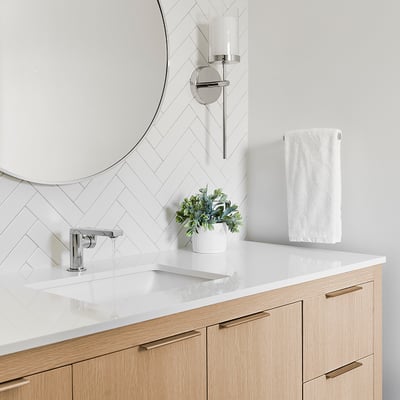
    Renovations that welcome the outdoors inside your Tempe kitchen

    Tempe’s climate encourages outdoor living for much of the year, so it often makes sense to plan your kitchen around easy access to patios and backyards. The goal is a layout that works for hot summers and cooler months, not one that overheats the kitchen in July.

    • Create a pass-through window to a serving counter. A counter-height opening with a shelf or exterior bar can make casual dining feel easier, especially for smaller yards where guests end up close to the house.
    • Plan a beverage or snack station near the exterior door. A small undercounter fridge, cabinet for glasses, and a bit of counter let guests help themselves without walking through your main cooking zone.
    • Choose finishes that tolerate dust and frequent cleaning. Matte counters, medium-tone cabinet colors, and durable flooring like porcelain tile handle desert dust and repeated wipe-downs without showing every streak.

    Ways to bring Tempe flavors into your kitchen remodel

    Local food habits and the Sonoran landscape can give you direction when you are making design choices. You can echo Tempe’s environment subtly through color, texture, and how you plan your work zones.

    • Use clay-toned neutrals and warm whites. Colors that echo sandstone, stucco, and late-afternoon light feel natural in Tempe and soften the contrast between interior and exterior views.
    • Incorporate a zellige-look or handmade-style tile moment. A slightly irregular glaze on a backsplash or niche can catch sunlight in a way that feels right for the desert without going into themed territory.
    • Plan a prep zone for citrus, chiles, and fresh ingredients. A bit of extra counter by the sink, good knife storage, and bright task lighting make regular cooking and entertaining easier.

    Taking design cues from your Tempe home’s architecture

    Tempe includes mid-century ranch neighborhoods, 1970s–1990s tract homes, Spanish-style houses, and older bungalows closer to the historic core. Letting your home’s architecture guide cabinet style, sightlines, and material choices usually yields a kitchen that feels like it belongs there.

    Ideas for mid-century ranch kitchens in Tempe

    Mid-century ranch homes often have long, low rooflines and practical floor plans. Kitchens can be modest in size and partially separated from living areas, which gives you decisions to make about openings and storage.

    • Choose flat-panel or slim-shaker cabinets. Clean, simple fronts echo mid-century lines and keep the room from feeling heavy, especially with lower ceilings.
    • Run cabinets to the ceiling where possible. Full-height cabinets or stacked uppers add storage without cluttering the counter surface, which matters in smaller ranch kitchens.
    • Stay consistent with hardware. Simple pulls and knobs in a single finish keep focus on the architecture and proportions rather than busy details.

    Ideas for 1970s tract home kitchens in Tempe

    Many 1970s tract homes have efficient footprints with U-shaped or L-shaped kitchens that feel a bit closed off today. The structure is usually straightforward, which helps when you want to adjust a wall or doorway.

    • Improve the work triangle through appliance moves. Relocating a fridge that blocks a doorway or corner can relieve congestion and improve prep flow without changing the whole footprint.
    • Refine or replace a bulky peninsula. A slimmer peninsula or small island can open sightlines to the dining or living area while maintaining seating and storage.
    • Keep trim and door profiles simple. Straightforward casing and baseboards keep the update aligned with the home’s original character.

    Ideas for bungalow kitchens in Tempe

    Bungalows near older parts of Tempe tend to have smaller rooms and charming details. The challenge is fitting modern appliances and storage into a more compact, sometimes segmented kitchen.

    • Choose classic backsplash patterns. Simple rectangles in a running bond or stacked layout keep the room from feeling busy while still giving it texture.
    • Consider slightly smaller or panel-ready appliances. A 30-inch range or counter-depth fridge can be easier to fit without overpowering the room.
    • Maximize storage with interior fittings. Pull-out organizers, corner solutions, and tray dividers make the most of every cabinet in a compact footprint.

    Upgrade your kitchen with Tempe contractors found by Block

    Block connects homeowners with vetted contractors for renovation projects, including kitchen remodeling Tempe residents plan. Instead of starting from a long list of unknown names, you can start with contractors who are already aligned with residential remodel work.

    Project payments are structured around milestones rather than ad-hoc checks, which can help you track progress and stay organized. You still make the design and scope decisions, while your contractor focuses on building the kitchen that fits your home and budget.

    Remodel with confidence through Block
    Happy contractor doing an interview

    Connect to vetted local contractors

    We only work with top-tier, thoroughly vetted contractors

    Couple planning their renovation around the Block dashboard

    Get expert guidance

    Our project planners offer expert advice, scope review, and ongoing support as needed
    Familty enjoying coffee in their newly renovated modern ktchen

    Enjoy peace of mind throughout your renovation

    Secure payment system puts you in control and protects your remodel

    Get Started

    Frequently asked questions

    How do I handle old appliance removal during a Tempe kitchen remodel?

    Most Tempe homeowners either use retailer haul-away services when new appliances are delivered or coordinate removal through their contractor or a junk removal company. If your current appliances still work, local resale or donation can be an option, but schedule pickup before demolition so the site does not get crowded. Aligning removal with the start of construction keeps pathways safer and gives crews room to work.

    When do kitchen appliances and materials usually go on sale in Tempe?

    Major retailers in Tempe often run sales around national holidays such as Presidents’ Day, Memorial Day, Fourth of July, Labor Day, Black Friday, and year-end. These can be good times to purchase appliances or fixtures as long as the delivery window fits your construction schedule. Aligning purchases with a confirmed start date helps you avoid storing large items in the garage for months.

    Do I need an interior designer for my Tempe kitchen remodel?

    You do not have to hire a designer, but one can be very helpful if your kitchen has layout challenges, you are opening walls, or you want a strong, cohesive look. Designers can coordinate cabinets, counters, hardware, tile, paint, and lighting so you do not end up with near-miss combinations. For higher-end kitchen renovations Tempe homeowners undertake, a designer can also help prioritize which upgrades will make the biggest difference visually and functionally.