




Before and After
Kitchen Island Remodel: Before and After Inspo
06.26.2026
05.13.2026


In This Article
The 90s left a particular mark on American bathrooms. Builders were chasing a kind of warm, suburban formality: lots of wood tones, brass, cultured marble, and pastel coordination that felt fresh at the time and now feels dated to almost every buyer who walks through. Most 90s bathrooms were built on solid bones. The layouts often work. The plumbing rough-ins are usually fine. What you're really renovating is the finishes and a few decisions about lighting and ventilation that have aged poorly.
Walk into a 90s bathroom in Atlanta, Denver, or Long Island, and you'll find a lot of the same things. The dated finishes get most of the attention, but the bigger issues sit behind them.
Code and safety items worth checking before you start:
A 1990s bathroom rarely needs a full gut to the studs. Most of these projects are about updating finishes, opening up a layout that's working too hard, and fixing the few code or function issues that have caught up with the room.
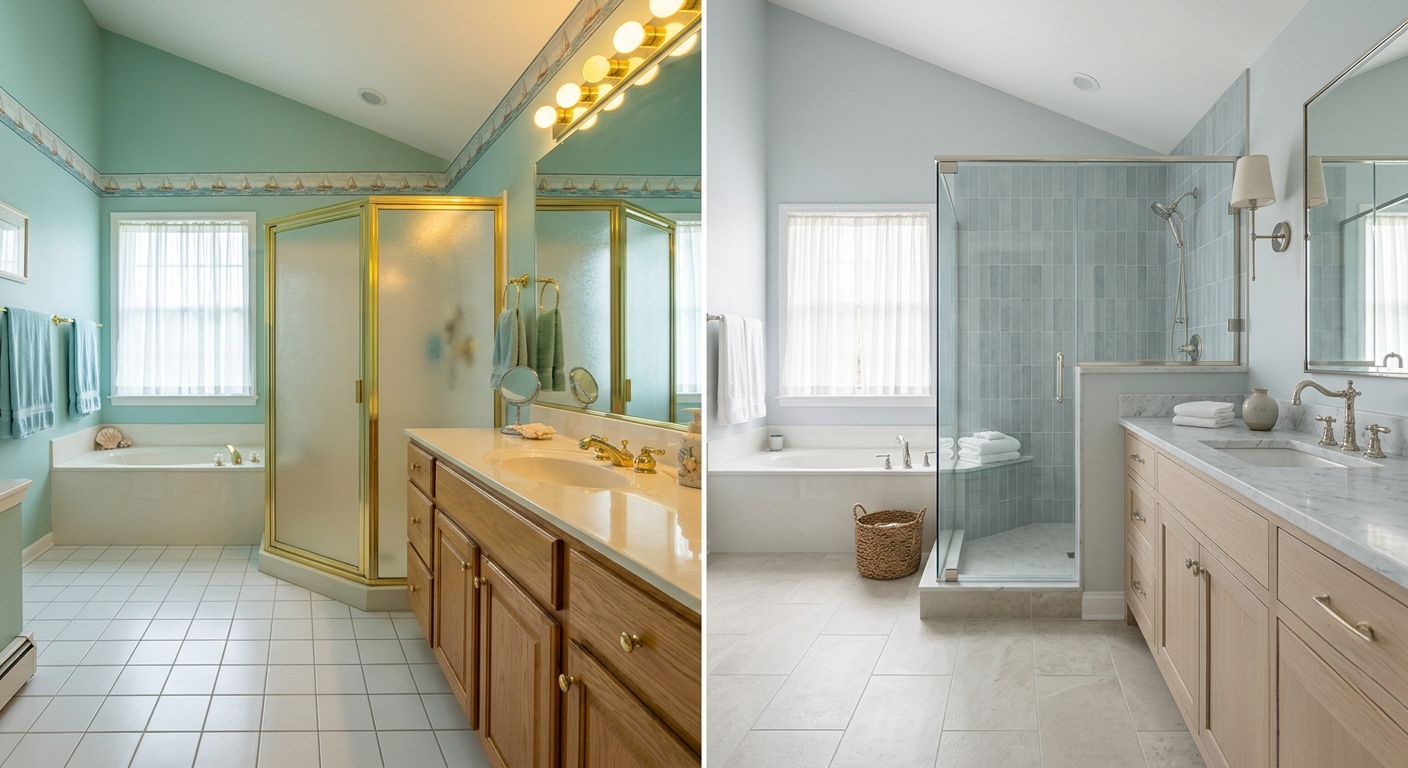
90s bathrooms tend to get crowded by their own design choices. Brass framing, wallpaper borders, raised-panel cabinets, and decorative tile inserts each add visual weight to a small room. Look at the before vs. after of this cathedral-ceiling remodel: the brass-framed corner shower and the sailboat wallpaper border are gone, and the space finally feels as tall as it actually is.
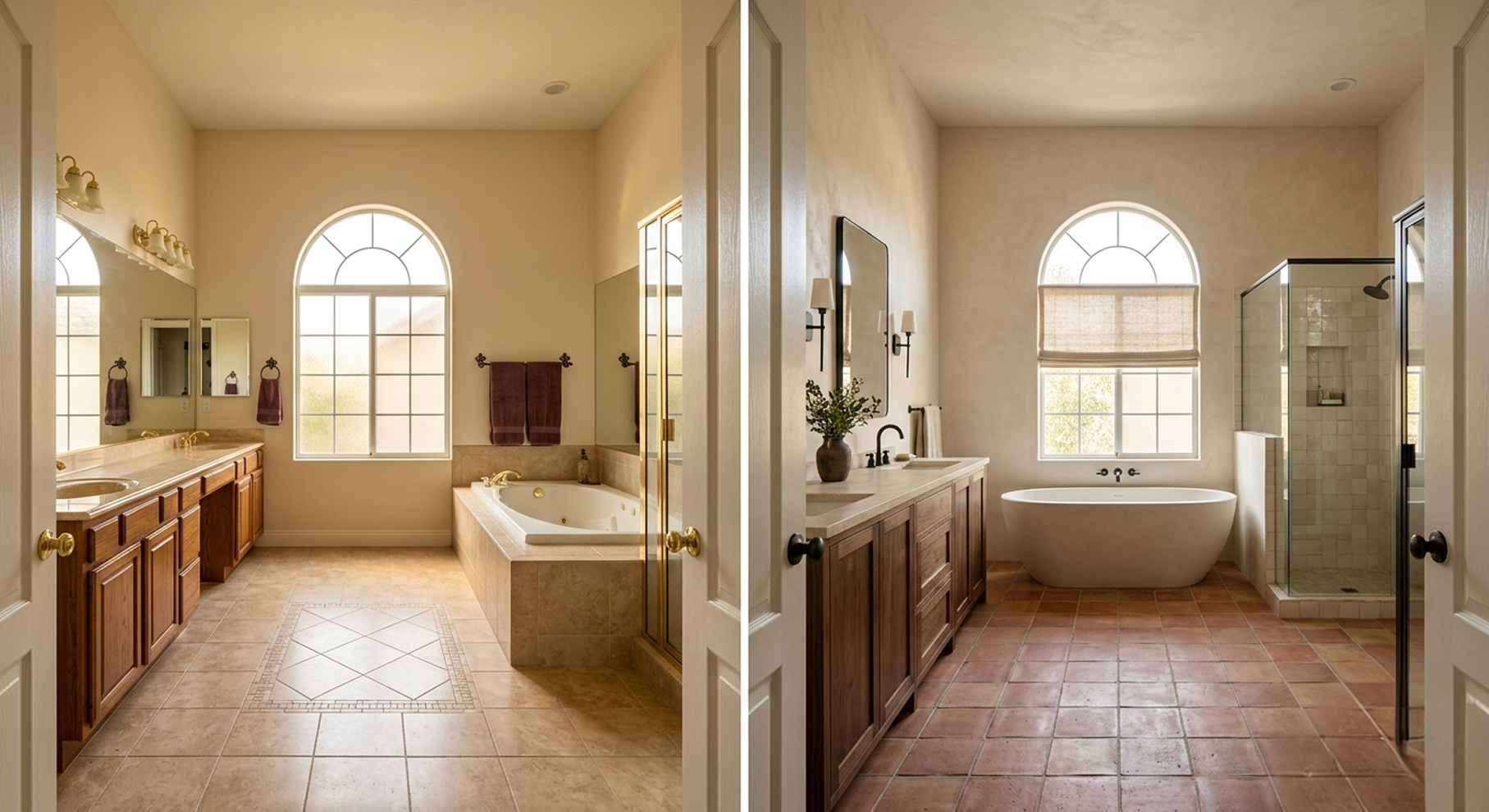
Builder-grade materials are made to disappear. Beige tile and oak cabinetry are engineered to be inoffensive. Materials with a story do the opposite: terracotta shows wear over time, and walnut reveals the grain of the tree it came from. The premium over builder-grade is smaller than most people expect. The Mediterranean remodel above keeps the original arched window and lets these materials carry the rest of the room.
.png?width=1024&height=559&name=1990s%20Bathroom%20Remodels%20Before%20%26%20Afters%204%201%20(1).png)
Maximalism takes a designer's eye to pull off. Most renovations succeed by editing, not adding. Subtraction usually costs less, too.
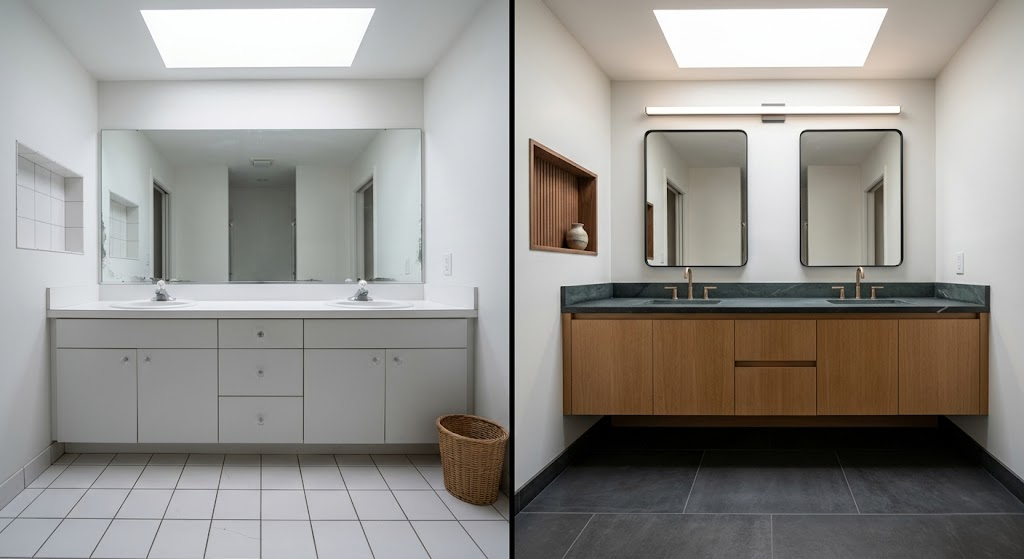
The before-and-after above shows the forest-green-to-white remodel: a busy double-sink vanity replaced by one floating piece with an open shelf, and the room gained breathing room it never had at twice the gear. Going from two sinks to one isn't the right call for everyone, but it's a real option worth considering when storage and counter space aren't actually getting used.
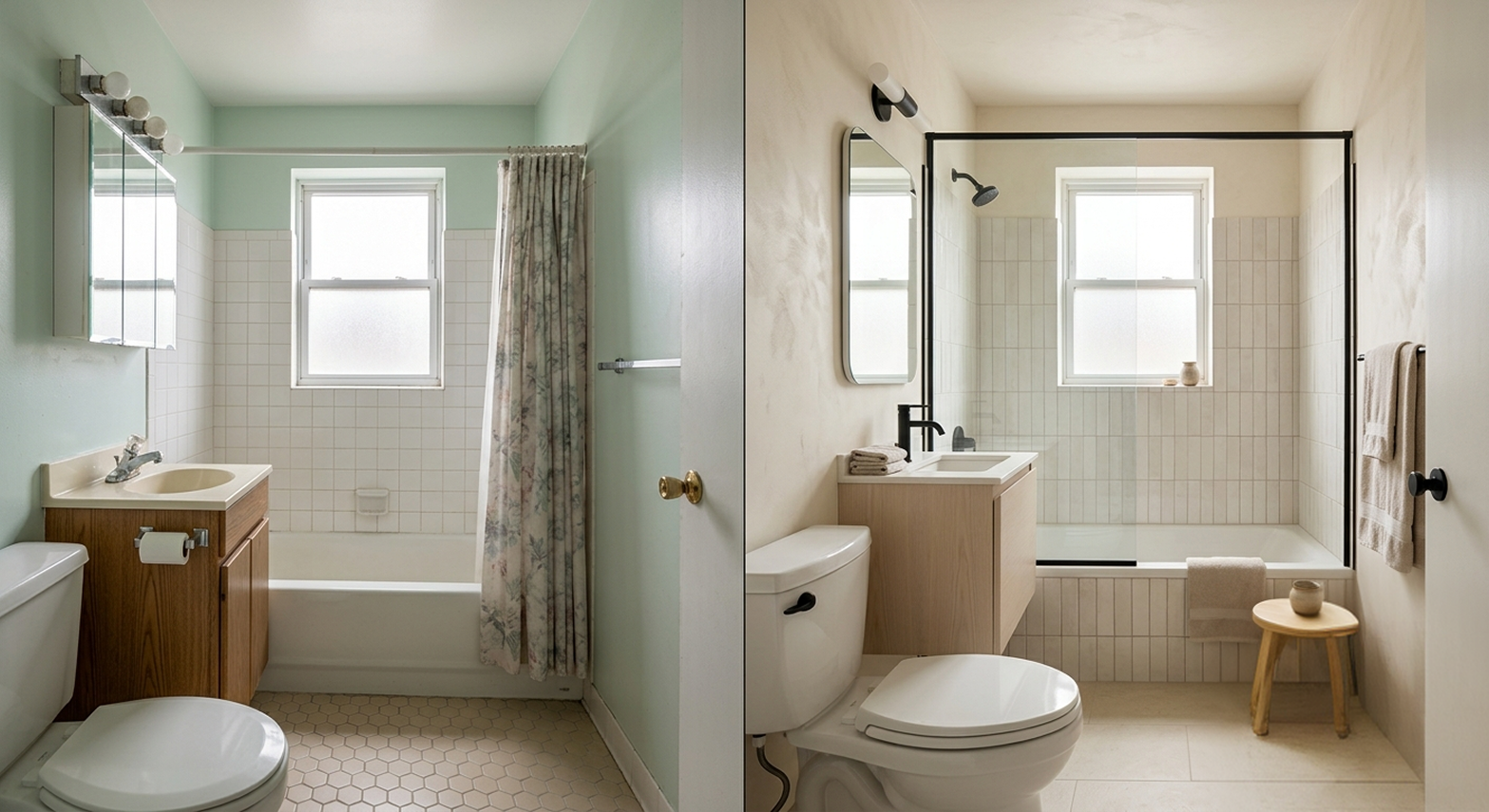
Small bathrooms feel smaller when shower curtains and frosted partitions break up the sightline. A clear glass enclosure does the opposite. The eye travels all the way to the back wall, and the same square footage feels like more. The Japandi-inspired before-and-after above traded a floral curtain for a glass panel and gained visual square footage without moving a wall.
.png?width=1024&height=559&name=1990s%20Bathroom%20Remodels%20Before%20%26%20Afters%203%201%20(1).png)
In a small bathroom, the vanity and mirror take up a small share of the floor and an outsize share of the visual attention. A floating vanity gives the floor back to the room, and a framed or backlit mirror finally feels like a chosen object rather than something installed by code. In the before-and-after above, the new floating vanity and backlit mirror do all the modernizing work.
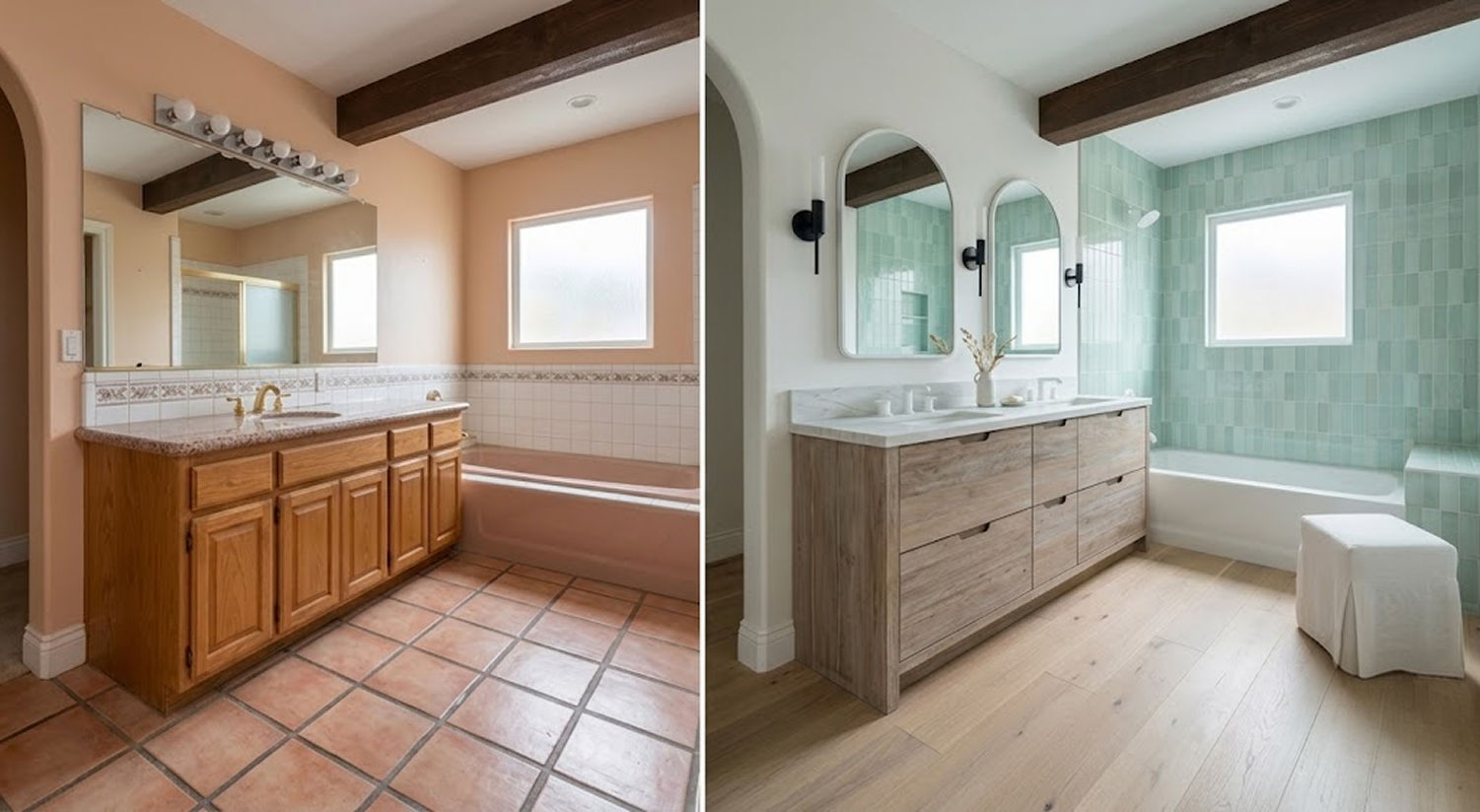
Nothing telegraphs "this bathroom hasn't been touched in 25 years" faster than a row of decorative tile inserts above the wainscot. Add dark grout lines on a 4x4 tile field, plus bullnose cap pieces every place tile meets paint, and the room looks dated even if the rest of it is fine.
Modern tile work uses larger formats and narrower grout, with almost no trim pieces. A 12x24 tile costs roughly the same per square foot as a 4x4. The peach-and-oak remodel above replaces a tile-bordered drop-in tub with a clean run of vertical sage tile; that single move results in an "after" that feels noticeably more modern than the "before."
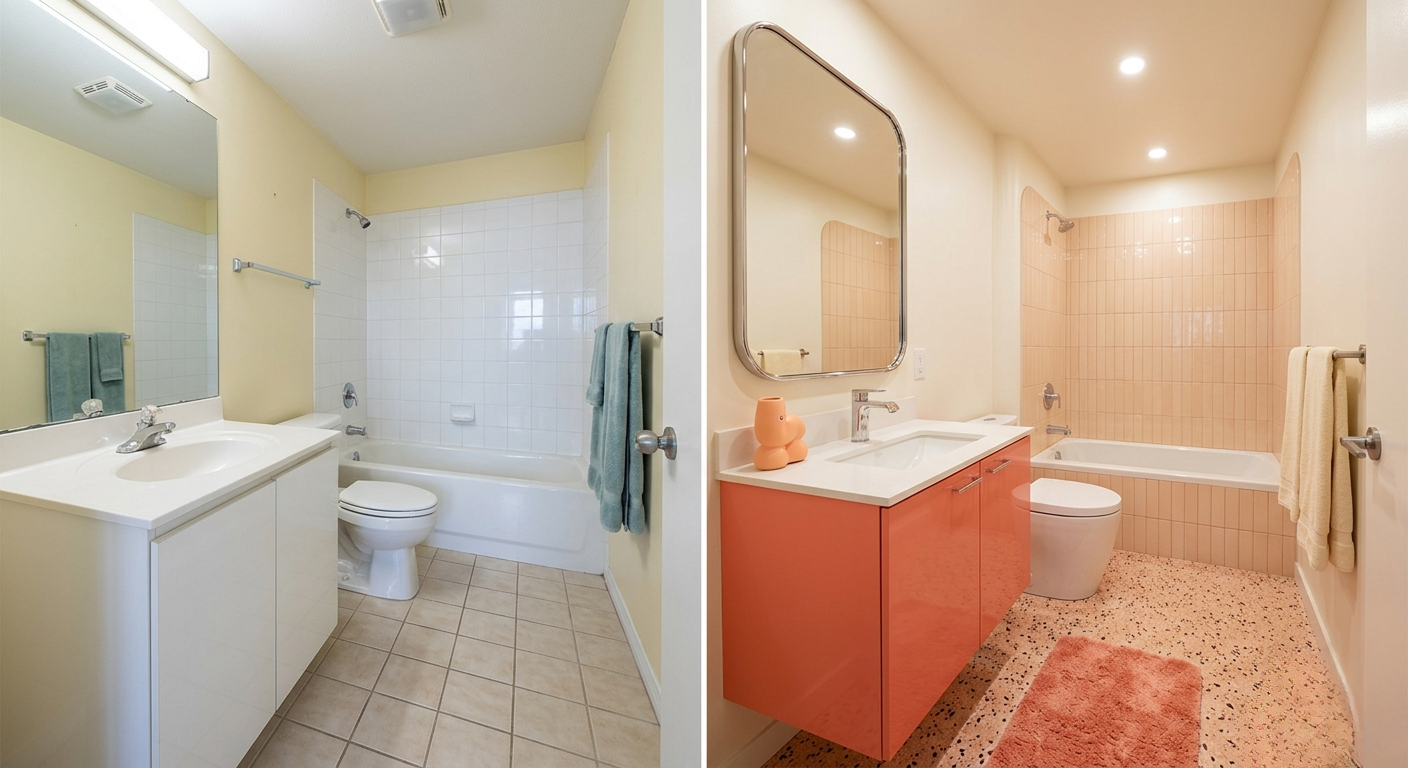
Pastel paint over a builder-grade bathroom doesn't make it retro. You have to commit the floor and the fixtures to the same idea. The remodel above pairs a glossy coral floating vanity with terrazzo flooring and a coordinated pink tile shower surround, and every choice points the same direction. The "after" has a clear retro vision that feels much more intentional than its 1990s "before" counterpart.
Before you start tearing things out, take stock of what's already working. A 90s bathroom often has more going for it than a quick walk-through suggests.
The hardest part of starting one of these projects is picturing what could replace what's already there. A garden tub feels permanent until you see the layout without it. An oak vanity wall feels like a fixed boundary until you swap it for a floating one and the room reads twice as big.
Block's Renovation Studio is a good place to start. Pick a style, trade the oak for walnut or white oak, drop in a curbless shower where the garden tub used to be, and watch the cost estimate update as you go. It's free, and you can save what you build to come back to later.
When you're ready to get quotes, Block matches your project with vetted contractors in your area who compete for the work. Every scope gets reviewed by Block experts before you sign, so missing line items and red flags get caught early, not three weeks into demolition.
Remodel with confidence through Block

Connect to vetted local contractors
We only work with top-tier, thoroughly vetted contractors

Get expert guidance
Our project planners offer expert advice, scope review, and ongoing support as needed
Enjoy peace of mind throughout your renovation
Secure payment system puts you in control and protects your remodel

Renovate confidently with Block
Easily compare quotes from top quality contractors, and get peace of mind with warranty & price protections.
Before and After
Kitchen Island Remodel: Before and After Inspo
06.26.2026

Before and After
Modern Farmhouse Kitchen Renovations Before and After
06.16.2026
Before and After
Limewash Brick Before and After: Photos and What to Know
06.10.2026
Before and After
Budget Small Kitchen Remodel: Before and After Ideas
06.08.2026
Before and After
Mid-Century Modern Exterior Before and After Ideas
06.04.2026