




Bathroom Floor Plans
300 Sq Ft Bathroom: 7 Large Master Bath Layouts
06.05.2026

04.17.2026


In This Article
A half bath doesn't need much space to make a big impact on your daily life. At just 16 square feet, a 4x4 layout is compact—but it's enough to fit a toilet and a sink comfortably, and that's all a powder room needs to do its job.
If you've ever had a dinner guest wander upstairs to use the only bathroom, or if mornings in your home feel like rush hour, adding a half bath is one of the most practical improvements you can make. According to the National Association of Home Builders, a half bath addition can increase a home's resale value by 10–15%. And because you're only installing two fixtures—no shower, no tub, no waterproofing a wet zone—the construction timeline and budget are significantly more manageable than a full bathroom build.
The standard minimum for a workable half bath is about 15 square feet, which means a 4x4 room (16 square feet) clears that threshold with a small amount of breathing room. It's a realistic footprint to carve out of underused spaces like a hallway closet, an area beneath a staircase, or a corner of a mudroom or laundry room.
A 4x4 layout won't feel spacious—it's a purpose-driven room. But with the right fixture placement and smart design decisions, it can feel polished, functional, and genuinely welcoming for guests. The key is choosing a layout that gives you adequate clearance around the toilet, leaves enough room for the door to swing (or eliminates the swing entirely with a pocket door), and positions the sink where it's easy to use without bumping into anything.
We developed four distinct floor plan options for a 4x4 half bath, each placing the toilet and sink in a different configuration.
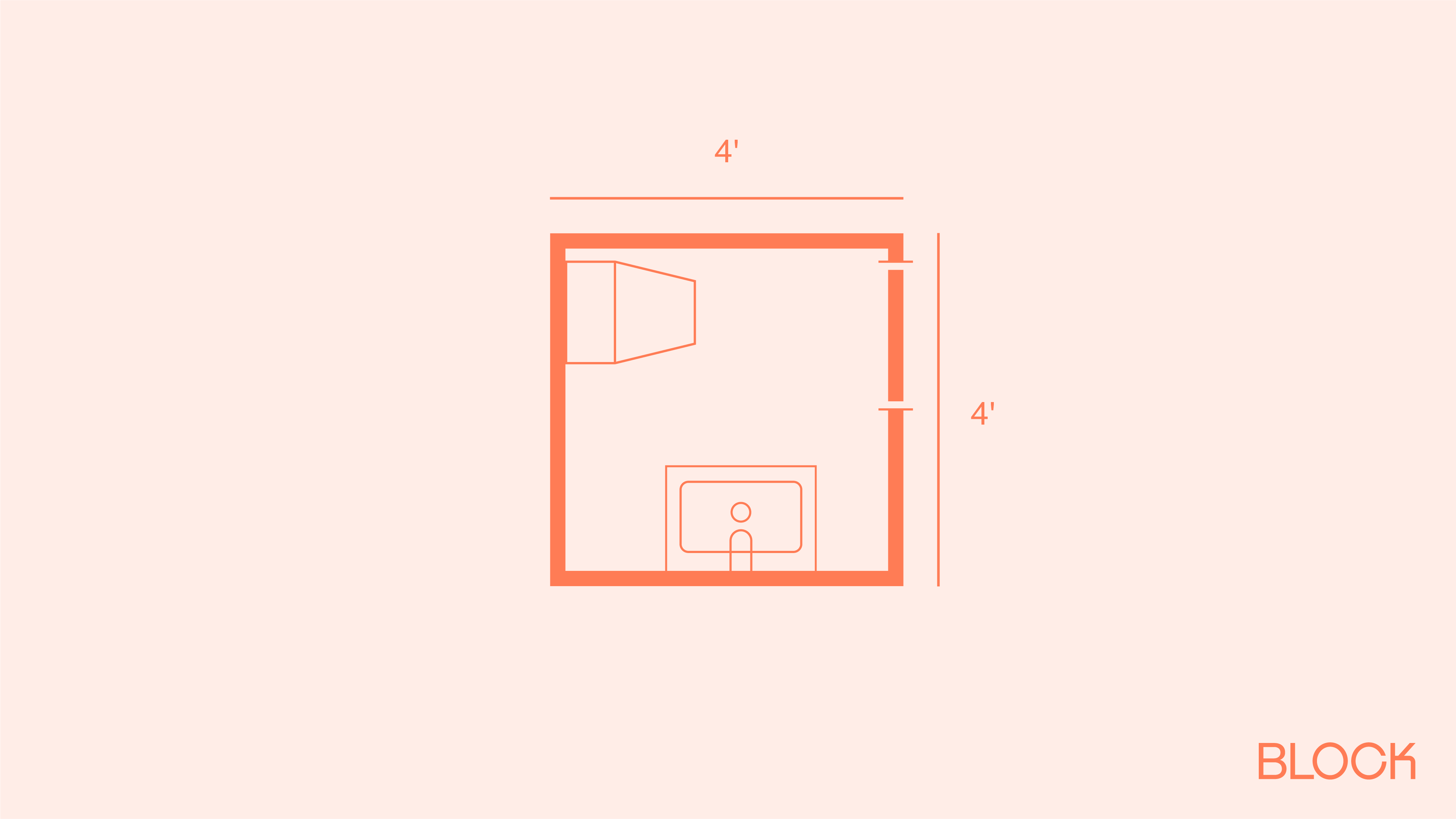
Why it works best: This layout places the toilet in the upper-left corner of the room, with the sink (a small vanity) centered along the bottom wall. The door opens from the right side. This configuration gives you the clearest path from door to fixtures, with strong separation between the toilet and sink. There's adequate clearance on both sides of the toilet and enough room to stand comfortably at the sink without feeling hemmed in.
Best for: Homeowners who want a traditional powder room feel with a small vanity for countertop storage. This layout also communicates clearly to a contractor—it's a familiar, buildable arrangement that's unlikely to raise questions during construction.
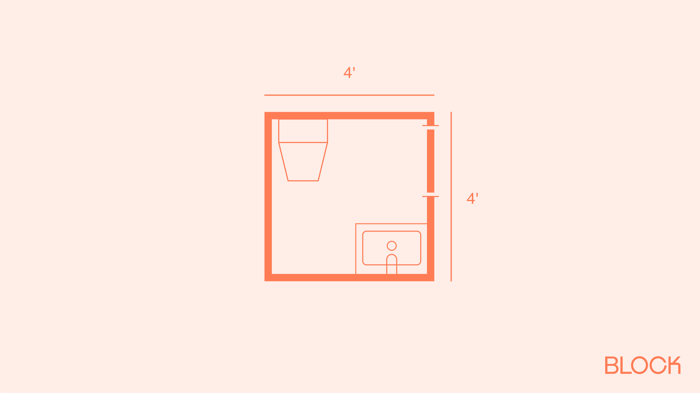
Why it works: Very similar to Layout A, but with a slightly more compact vanity and the toilet rendered in a different style (tank-style versus wall-hung). The overall spatial logic is the same—toilet and sink on opposite ends of the room, door on the right wall. The difference is subtle, but a smaller vanity can make sense if you want more open floor space or if you're prioritizing a lower material cost.
Best for: Budget-conscious builds where a pedestal or wall-mounted sink keeps costs and visual weight to a minimum.
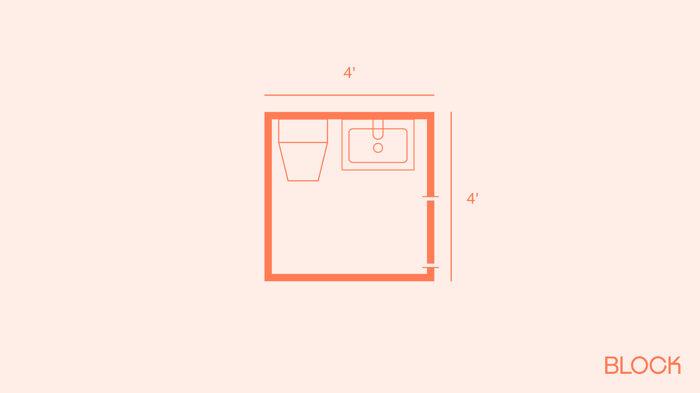
Why it works: Both fixtures are lined up along the same wall, which is a real configuration that plumbers sometimes prefer because it consolidates the water supply and drain lines on a single wet wall. This can reduce rough-in costs. The tradeoff is that the lower portion of the room is entirely open—functional for circulation, but it can make the layout feel unbalanced if the design isn't handled carefully.
Best for: Projects where keeping plumbing costs down is a priority, particularly when the available wall for water lines is limited to one side of the room. This layout also works well when the half bath backs up to an existing bathroom or kitchen, since you can tap into supply and waste lines on that shared wall.
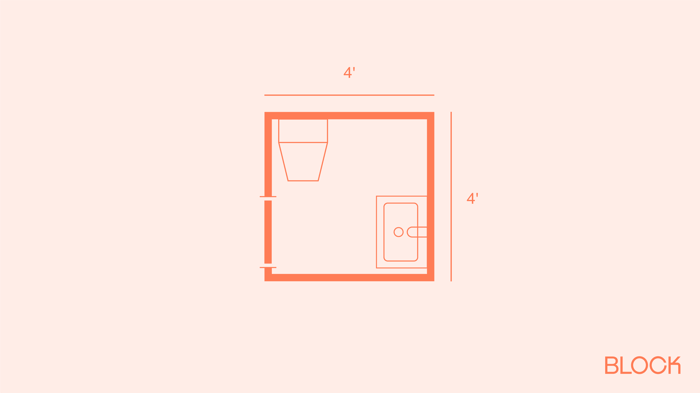
Why it works: The toilet sits in the upper-right area and the sink is placed on the right wall toward the bottom, with the door on the left. Both fixtures are clustered on the same side of the room, which leaves the left half relatively open. It's a functional layout, but the tight proximity between the toilet and door swing could create clearance issues in practice—especially if the door opens inward. You'll want to confirm with your contractor that there's enough room between the toilet and the nearest obstruction.
Best for: Rooms where the plumbing access point is on the right-hand wall and moving it would be cost-prohibitive. If this is your only option due to existing pipe locations, it can work—but it benefits from a pocket door to avoid the swing conflict.
In a small half bath, the biggest variable in your construction cost isn't the square footage—it's how far your new fixtures are from existing plumbing lines. Every additional foot of pipe that needs to be run adds labor and material costs, and rerouting a drain line is significantly more expensive than tapping into one that's already nearby.
With that in mind, here's how the four layouts compare from a cost perspective:
Beyond plumbing, your fixture choices have a direct impact on cost. A pedestal sink runs significantly less than a vanity with countertop, and a standard round-front toilet is less expensive than a wall-hung model (which requires a carrier system inside the wall). In a 4x4 half bath, choosing a pedestal or wall-mounted sink and a standard floor-mounted toilet is the most budget-friendly combination.
Bring Your Dream Bathroom to Life
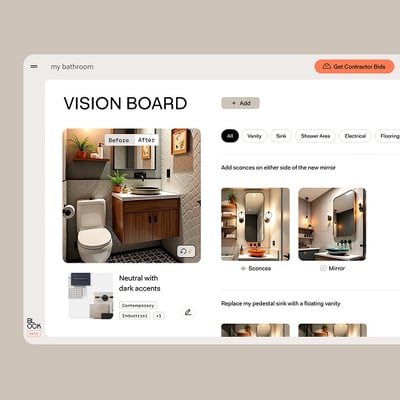
The cost of adding a half bath varies widely depending on whether you're converting an existing space or building new square footage from scratch.
Converting an existing space (such as a converted closet, under-stair area, or section of a laundry room): Most homeowners spend between $5,000 and $15,000. If the space is adjacent to existing plumbing, you'll land closer to the lower end. If walls need to be moved or new drain lines need to be run through concrete, expect the higher end.
While building an addition for your bathroom is indeed possible, it makes little sense to take on the additional cost and labor for only a small powder room; in such a scenario, I’d recommend opting for at least a three-quarters bathroom.
Here's a general breakdown of where the budget will go:
One important note: these ranges reflect national averages. If you're in a higher-cost market like New York City, San Francisco, or Boston, expect labor rates (and therefore total project costs) to skew toward the upper end. Use this tool to find localized estimations for your 4x4 bathroom remodel.
Here are the most common placements and what to keep in mind for each:
Find more tips for your 4x4 space with our guide Half Bathroom Remodel Ideas to Make the Most of Small Spaces.
Adding a half bath is one of those projects that punches above its weight—it's a relatively modest investment that improves daily convenience, impresses guests, and adds real value to your home. But even a small bathroom involves plumbing, electrical, permitting, and careful space planning.
Block Renovation connects you with up to four vetted, licensed contractors matched to your specific project. You'll receive detailed proposals you can compare side by side, with expert support from a dedicated project planner to help you understand every line item. And Block's built-in protections—including price assurance, progress-based payments, and a one-year workmanship warranty—give you confidence throughout the process.
Remodel with confidence through Block

Connect to vetted local contractors
We only work with top-tier, thoroughly vetted contractors

Get expert guidance
Our project planners offer expert advice, scope review, and ongoing support as needed

Enjoy peace of mind throughout your renovation
Secure payment system puts you in control and protects your remodel


Renovate confidently with Block
Easily compare quotes from top quality contractors, and get peace of mind with warranty & price protections.
Bathroom Floor Plans
300 Sq Ft Bathroom: 7 Large Master Bath Layouts
06.05.2026
Bathroom Floor Plans
100 Square Foot Bathroom Layout: Make It Work
06.02.2026
Bathroom Floor Plans
Rectangular Bathroom Layout Guide: Plans & Costs
05.11.2026
Bathroom Floor Plans
5x7 Bathroom Floor Plans: Layouts & Fixture Guide
04.29.2026

Bathroom Floor Plans
7x9 Bathroom Layout: 4 Floor Plans + Real Costs
04.27.2026