



Los Angeles
Garage Conversion to ADU Los Angeles: Top Contractors & Tips
08.14.2026
04.07.2026


In This Article
The difference between a backyard ADU that feels like it belongs and one that feels like it was dropped in by a crane comes down to design intention. Not just what the structure looks like on its own, but how it relates to your main home, your yard, and the space in between. These backyard ADU ideas focus on that relationship, helping you plan an ADU that complements your property rather than competing with it.
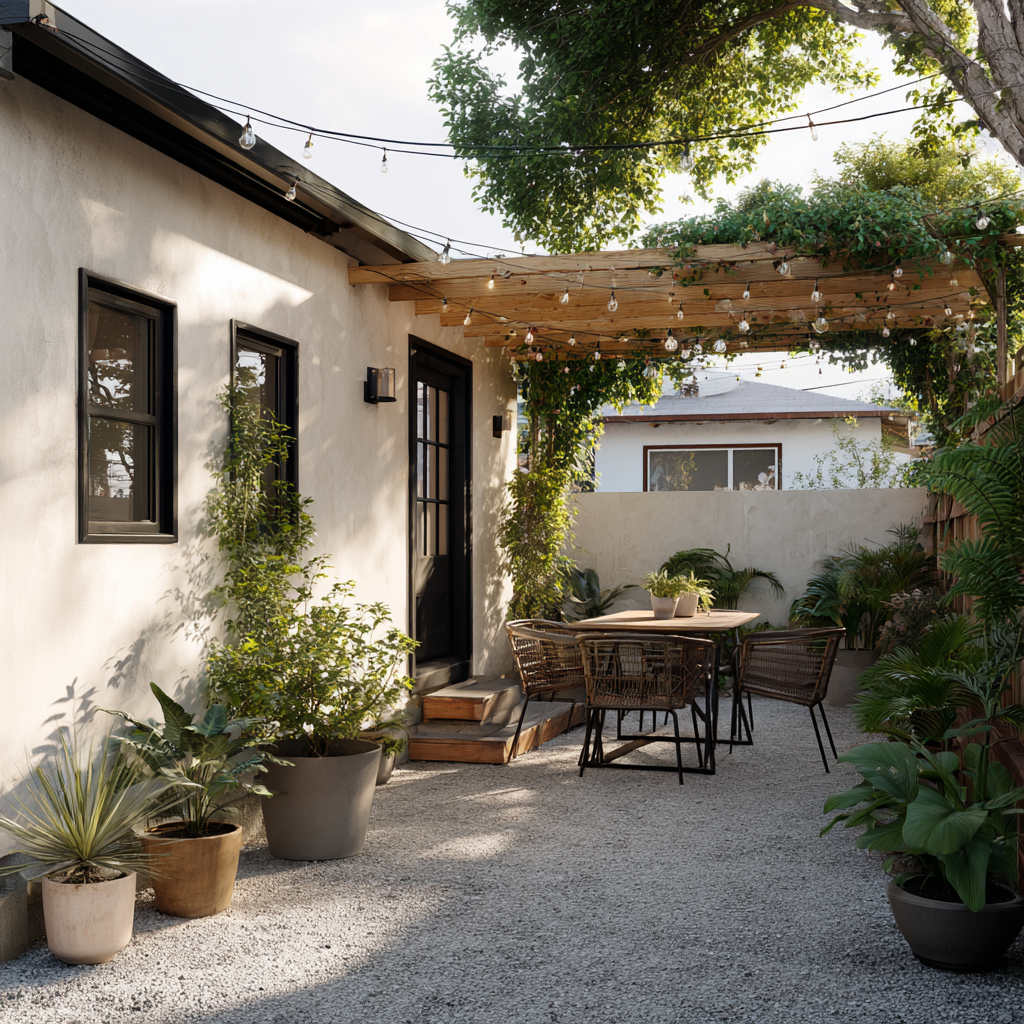
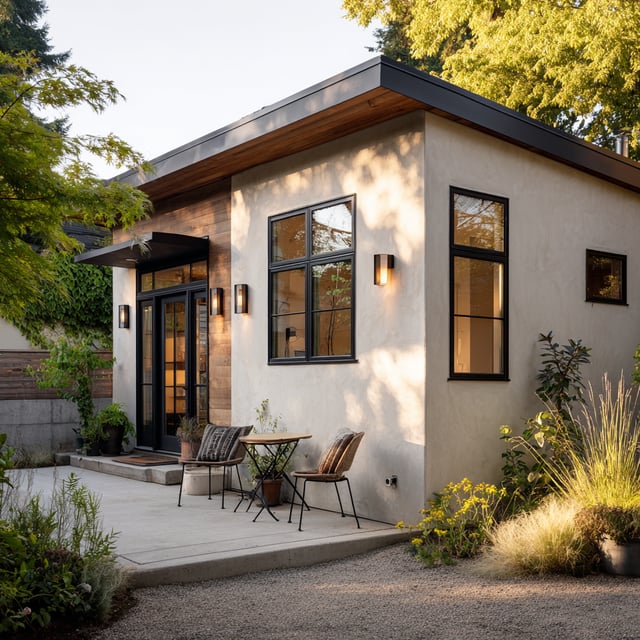
One of the most reliable backyard ADU ideas is borrowing your main home's exterior materials and applying them to a smaller structure. For example, cedar siding on a craftsman home becomes cedar siding on the ADU, or stucco on a Spanish-style house carries over to the backyard unit.
What keeps this from feeling like a miniature replica is the shift in scale and detail. The ADU doesn't need to mirror every architectural element of the main house. A smaller footprint, a simpler roofline, and fewer decorative details let the ADU read as a companion to the main home rather than a copy of it. The shared materials create visual continuity while the difference in scale signals that this is its own structure with its own purpose.
In historic districts or areas with HOA guidelines, material continuity can also make the permitting and approval process smoother.
Design consideration: If your main home's exterior material is expensive (natural stone or custom brick, for example), you don't need to cover the entire ADU in it. Using it as an accent on one facade or at the entry, paired with a complementary but more affordable material elsewhere, can create the visual connection without doubling your cladding budget.
Design a Home That’s Uniquely Yours
Block can help you achieve your renovation goals and bring your dream remodel to life with price assurance and expert support.
Get Started
Your ADU's roof is one of the first things the eye registers from the main house, from a neighbor's yard, and from inside the ADU itself.
A gable roof that echoes your main home's pitch creates an immediate visual relationship between the two structures, even if the siding or trim is different. A shed roof (a single plane sloping in one direction) reads as more contemporary and can work well as a deliberate contrast to a traditional main home. A flat roof with a parapet keeps the profile low and minimal, which is helpful on smaller lots where you want the ADU to recede rather than compete for attention.
Design consideration: In regions with heavy snowfall (the Mountain West, parts of the Northeast, the Pacific Northwest), roof pitch is functional as well as aesthetic. Steeper pitches shed snow more effectively. If you're building in a climate with significant precipitation, talk to your contractor about how your preferred roofline performs in local weather conditions, not just how it looks.
Designing your backyard as a destination in its own right is one of the strategies with the highest payoff for the least additional costs for your ADU.
A small courtyard with a dining table, a simple gravel patio with a couple of chairs, or a well-placed bench under a pergola can turn the in-between zone into the social heart of your property. When both structures open onto this shared space (through a back door on the main house and a front door or large window on the ADU), it creates a sense of connection without sacrificing the ADU's independence.
This is particularly valuable for homeowners building an ADU for their family or paid guests. An aging parent in the ADU and adult children in the main house can share a courtyard dinner without either party feeling like they're in the other's living room.
Design consideration: Think about how this space will function at different times of day. Morning sun for coffee, afternoon shade for reading, evening lighting for dinner. Orienting the courtyard and choosing the right combination of overhead cover and open sky will determine how many hours a day the space is actually comfortable.
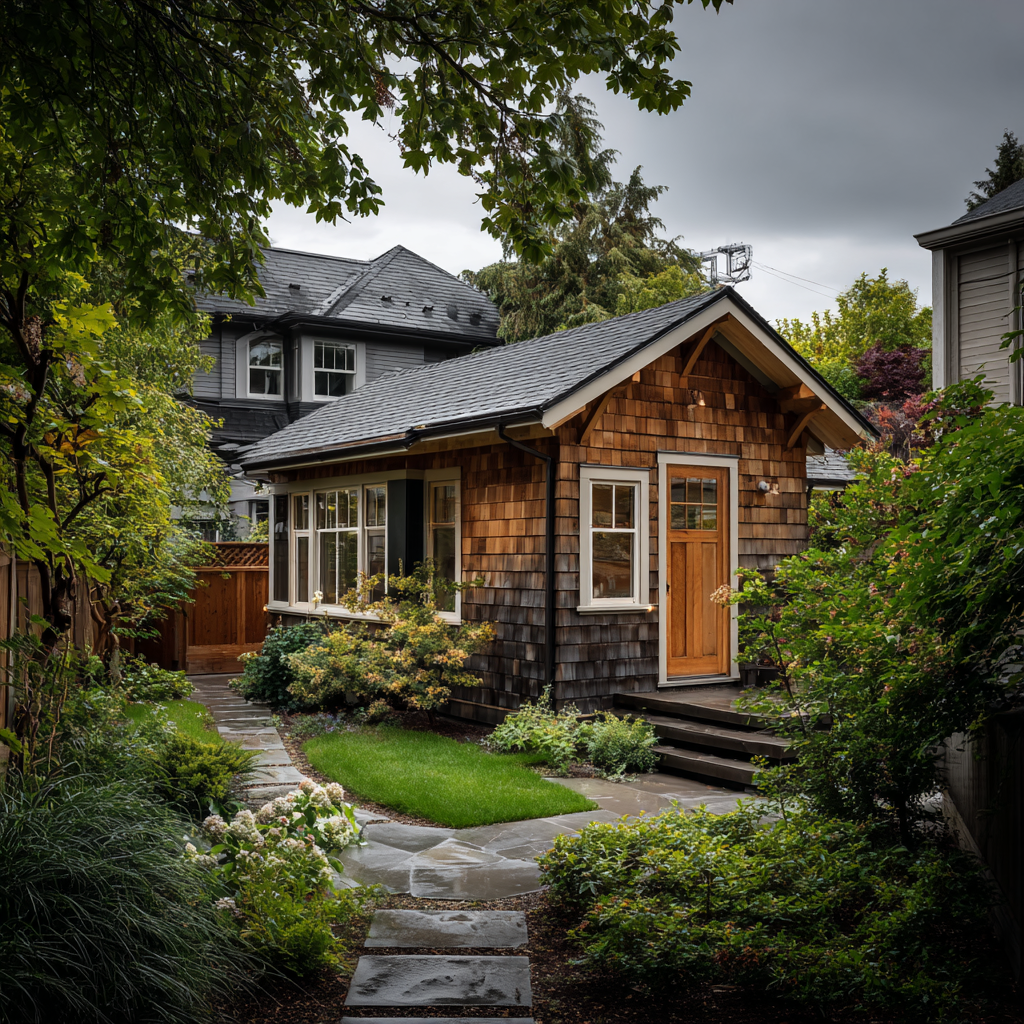
Even a backyard ADU that doesn't share a single material with your main home can feel like it belongs if the landscape between and around both structures is cohesive. Plantings, pathways, and ground cover are the thread that stitches the two buildings into one property.
A flagstone or gravel path that runs from the main house to the ADU's entrance creates a sense of arrival, even if the walk is only twenty feet. Native grasses or perennial borders that line the path soften the transition and make the ADU feel nestled into the yard rather than placed on top of it. Larger plantings like ornamental trees or tall shrubs near the ADU's corners can help the structure settle into its surroundings, breaking up the hard lines of a new build.
The plant palette matters. Choosing species that are already present in your yard, or that are native to your region, helps the ADU feel like it's been part of the property longer than it has. In drought-prone areas like Southern California or the Southwest, water-wise landscaping (gravel, succulents, native grasses) can look intentional and refined rather than sparse. In the Southeast or Pacific Northwest, lusher plantings create a sense of enclosure and maturity.
Design consideration: If you're planning to landscape around the ADU, coordinate the planting timeline with your construction schedule. Getting plants in the ground shortly after the build wraps gives them a growing season to establish before the space is fully in use. Your contractor can advise on how much clearance to leave between plantings and the foundation for drainage and maintenance access.
Privacy is one of the most common concerns homeowners have when adding a backyard ADU, both for themselves and for whoever will be living in the unit. The good news is that landscaping can establish a sense of separation without building a wall between the two structures.
Tall evergreen hedges (like arborvitae, privet, or holly, depending on your climate) create a year-round visual screen that softens over time as the plants mature. Bamboo in contained planters offers fast-growing height and a natural, textured look, though it needs to be managed to prevent spreading. For a lighter touch, ornamental grasses or a trellis with climbing vines can provide partial screening that feels open rather than closed off.
The goal isn't to hide the ADU from the main house entirely. It's to give both spaces a sense of boundary, so that someone sitting in the ADU's living room doesn't feel like they're on display and someone in the main house's kitchen doesn't feel like they're staring at a building. Even a modest planted buffer, just a few feet deep, changes how both spaces feel.
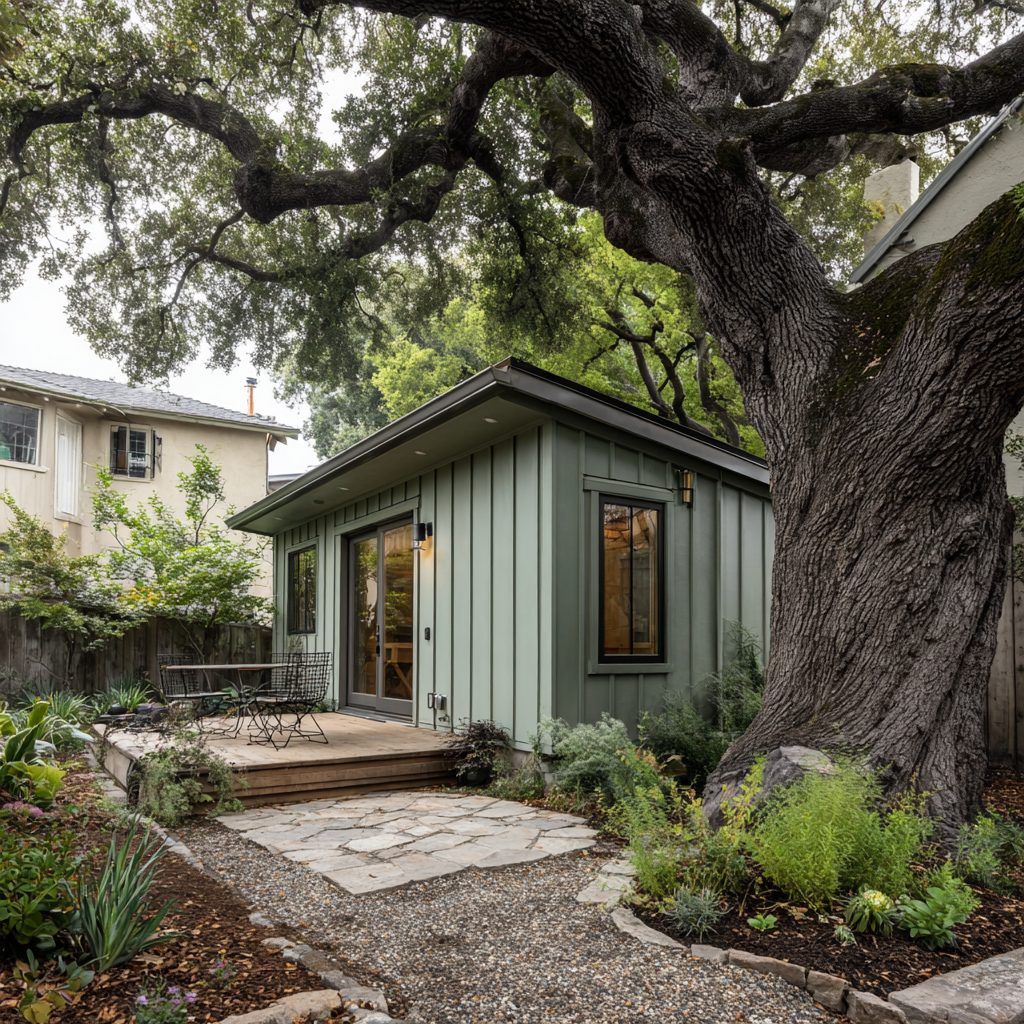
Where you place windows on your ADU affects more than the interior. It shapes how the structure interacts with the yard and what you see from the main house.
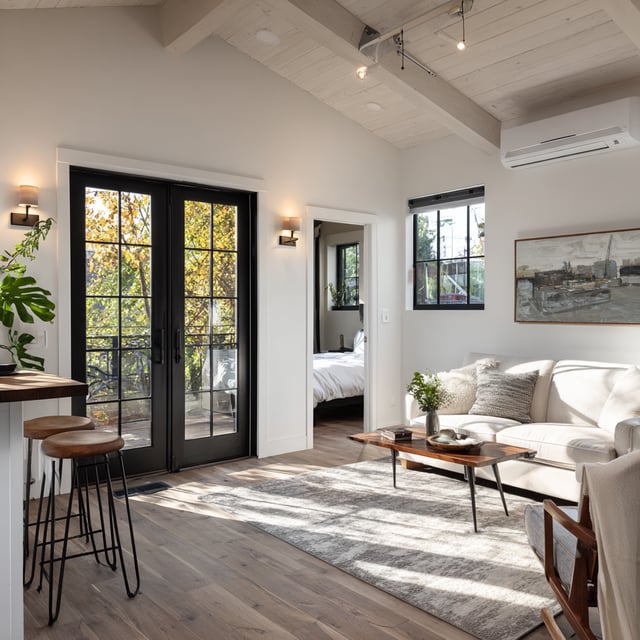
A wall of windows or a large sliding door facing your garden turns the ADU into a frame for the yard, almost like a living picture window when viewed from inside. From the outside, that same glass wall creates a sense of openness that keeps the ADU from feeling like a solid mass in the middle of your backyard.
Conversely, a more solid wall facing the main house (with windows concentrated on the side or rear) gives the ADU a quieter presence and provides built-in privacy for the occupant. This is especially useful on smaller lots where the ADU sits close to the back of the main home.
Clerestory windows (narrow windows placed high on the wall, near the roofline) are also worth considering: they flood the interior with natural light without sacrificing wall space or privacy on any side.
Design consideration: Walk your backyard at different times of day before finalizing window placement. Note where the sun hits, where existing trees cast shade, and what you'd want to see (and not see) from inside the ADU. Those observations will give your architect or designer much more useful direction than a standard floor plan can capture on its own.
Not sure how to begin your renovation?
Get free, expert guidance from a dedicated Block Project Planner who can help you navigate proposals, timelines, contractor selection, and more.
Book A Free Consultation
A smaller-sized ADU can feel surprisingly spacious if the outdoor space around it is designed to function as an extension of the interior. When you're working with a compact footprint, the yard isn't just scenery. It's usable square footage that doesn't count against your building envelope. Enhancements can include:
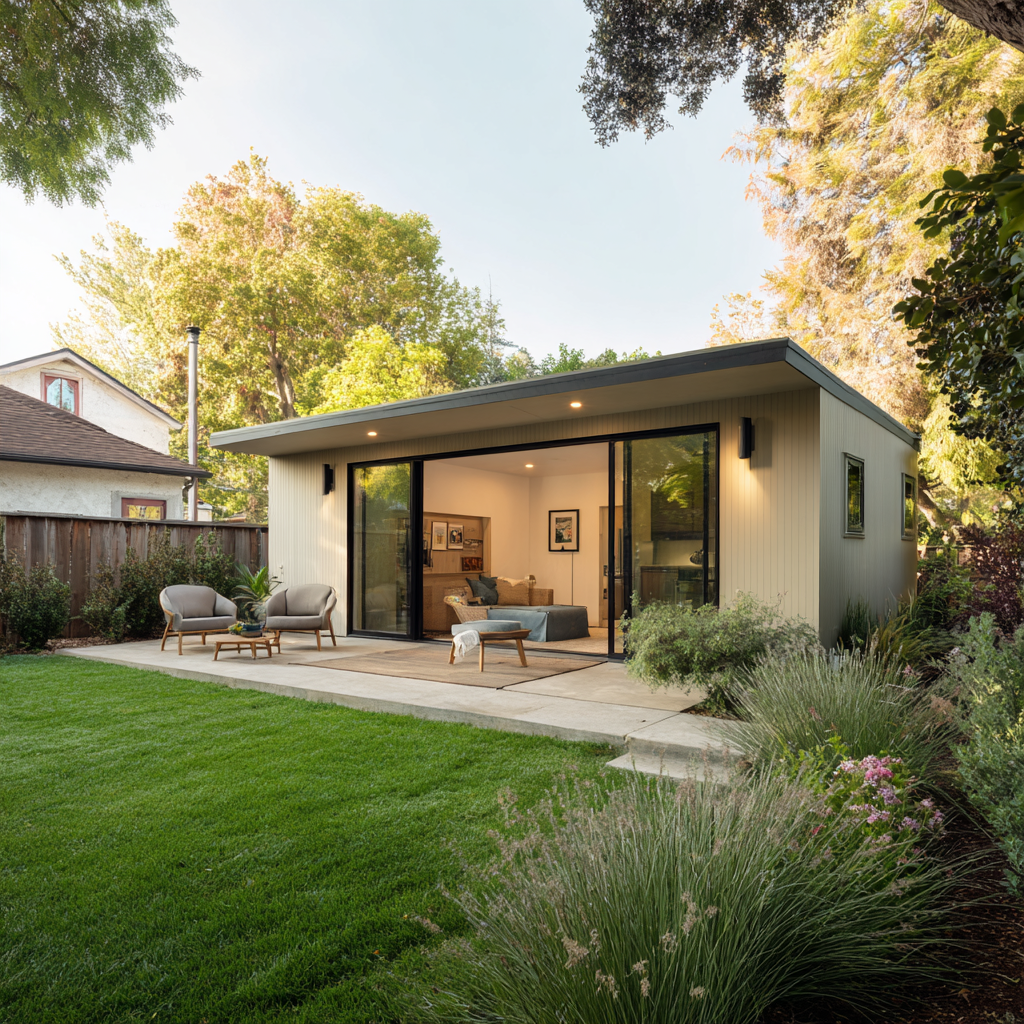
It's easy to focus on how a backyard ADU looks and forget about how it feels to actually use it every day. The occupant's daily routine will involve repeated trips between the ADU and other parts of the property: the driveway, the trash and recycling bins, the mailbox, the laundry (if it's in the main house). If those paths aren't considered during design, you end up with worn-out grass, muddy shortcuts, and a yard that feels like a thoroughfare rather than a living space.
Map out the most likely daily routes and design for them. A paved or graveled path from the ADU to the driveway or street means the occupant isn't cutting across the lawn every morning. A dedicated side-yard walkway keeps foot traffic from running through the main house's patio or garden. If the ADU is a rental, the occupant will appreciate having a route that feels like their own, separate from the homeowner's primary outdoor spaces. Matching the walkway material to other hardscaping on the property ties things together visually, and landscape lighting along the path adds safety after dark.
This was a point that was very important to Margo Stein when talking about her backyard ADU. "My mother still likes to have friends over. It's nice for them to walk straight to her door without having to ring our bell first. She has her own entrance, her own path . . . It doesn't feel like they're coming through our house to get to her. I think small things like that helped her feel independent while adjusting to moving onto our property.”
The entry to your backyard ADU sets the tone for the entire structure, and for how it relates to the rest of your property. An ADU with a front door that faces a blank fence or opens directly onto a patch of grass will always feel like an afterthought, no matter how well the rest of the design comes together.
Small moves make a big difference here. A short path of stepping stones leading to the door. A porch light and a small overhang that signal "this is an entrance." A potted plant or low planting bed flanking the doorway. These details tell the visitor (or the occupant coming home) that this is a place that was designed with care.
Design consideration: Think about how the entrance will look and function in the rain. A small overhang or recessed entry keeps the occupant dry while unlocking the door and protects the threshold from water damage over time. It's a practical detail that also adds architectural definition to what might otherwise be a flat facade.
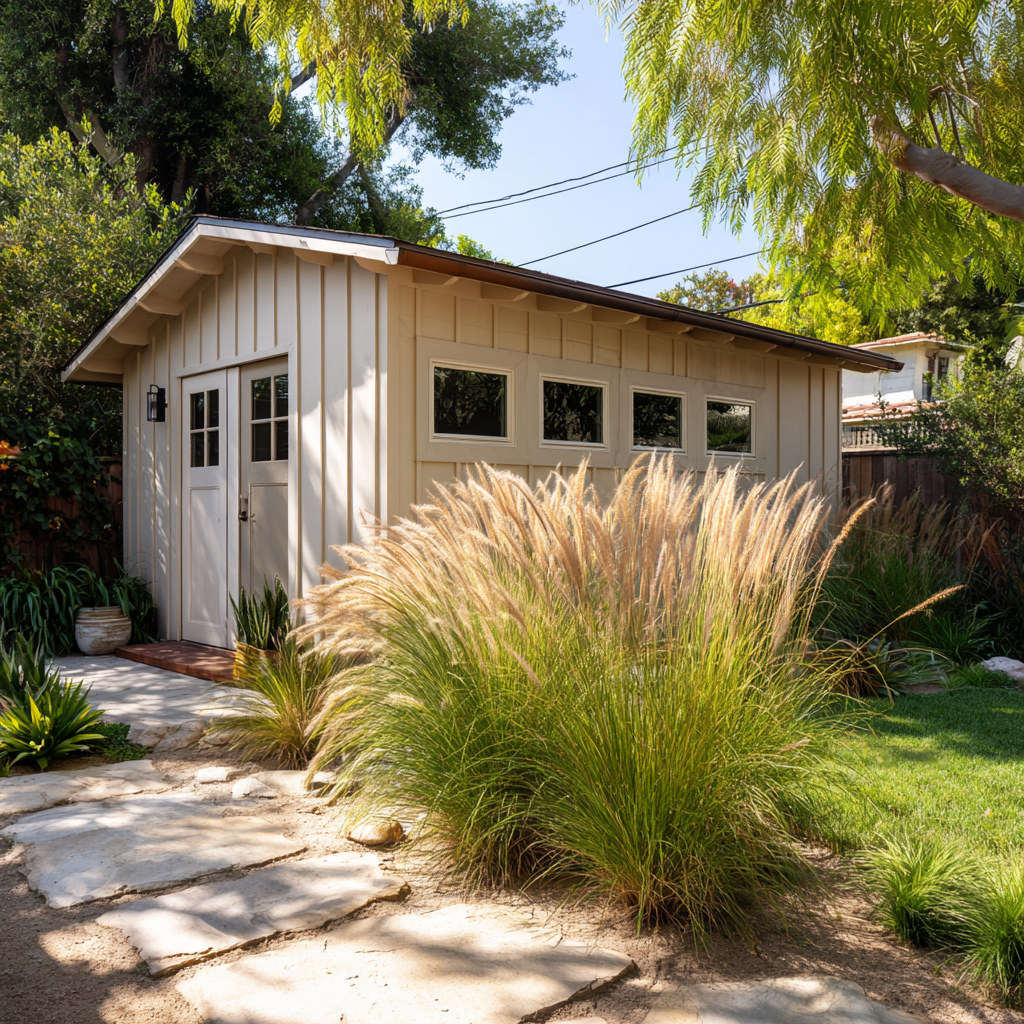
Some of the best backyard ADU ideas come from working with your yard's existing features rather than clearing everything to start fresh. A mature tree, a natural slope, a garden you've spent years cultivating: these aren't obstacles to build around. They're assets that can make the ADU feel more rooted and more personal than a structure placed on a blank slate.
Positioning the ADU to preserve a large shade tree, for example, gives the structure an immediate sense of maturity and context. The tree provides natural cooling and a canopy that frames the ADU in the landscape. A slope can be used to create a partially tucked-in design where the ADU sits into the grade, reducing its visual height from the main house and creating opportunities for a walk-out patio at the lower level.
Design consideration: If your yard has mature trees you want to keep, get an arborist's assessment before construction begins. Heavy equipment and excavation can damage root systems even if the tree itself isn't in the direct building footprint. Your contractor can coordinate with an arborist to establish protection zones that keep existing trees healthy through the build.
A backyard ADU is one of the more complex residential projects you can take on, involving everything from foundation and framing to plumbing, electrical, and local permitting, all coordinated carefully with your existing home and yard. The contractor you choose will shape not just the quality of the build, but how well the finished ADU integrates with your property.
Block Renovation connects you with thoroughly vetted, licensed contractors who have experience building ADUs and who are matched to your specific project and location. You'll receive detailed proposals you can compare side by side, and your dedicated project planner can walk you through every scope and estimate so you feel confident before any work begins. Block also provides built-in protections, including price assurance, progress-based payments, and a one-year workmanship warranty, so your investment is protected from start to finish.
Remodel with confidence through Block

Connect to vetted local contractors
We only work with top-tier, thoroughly vetted contractors

Get expert guidance
Our project planners offer expert advice, scope review, and ongoing support as needed
Enjoy peace of mind throughout your renovation
Secure payment system puts you in control and protects your remodel

Renovate confidently with Block
Easily compare quotes from top quality contractors, and get peace of mind with warranty & price protections.
Los Angeles
Garage Conversion to ADU Los Angeles: Top Contractors & Tips
08.14.2026
ADUs
Backyard Office Shed: Is Prefab Right for You?
07.25.2026
ADUs
L-Shaped ADU Plans: Layouts, Costs, Pros and Cons
07.13.2026
ADUs
Detached ADU Cost: What You'll Really Pay
06.19.2026
Garage
1-Bedroom Garage Apartment Floor Plans | Block
06.11.2026