


Building Your Custom Home in Flagstaff, Arizona

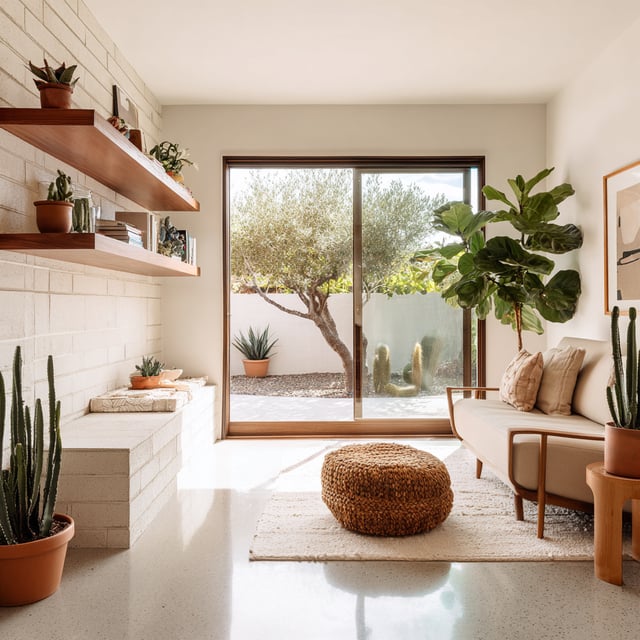
A cozy, bright living room with large windows and a view.
How we get your estimate
Fill out the form above to either connect with contractors for a personalized quote or estimate your costs with Block's Renovation Studio.
A cozy, bright living room with large windows and a view.

In This Article

    Flagstaff sits at 7,000 feet on the Colorado Plateau, surrounded by the largest contiguous ponderosa pine forest in North America, and it attracts a specific kind of homeowner: one who values four genuine seasons, proximity to the Grand Canyon, and a university town culture that keeps the community intellectually alive year-round. Northern Arizona University anchors a steady local economy, and a growing remote-work population has discovered that Flagstaff offers mountain living without the land costs of Colorado resort markets. The combination of clean air, dark skies, and a downtown anchored by Route 66 nostalgia and genuine culinary depth makes it a compelling place to put down roots.

    That said, building custom in Flagstaff means confronting conditions that are unique even within Arizona. The altitude, the volcanic geology, the wildfire exposure, and a building season compressed by heavy snowfall all require a builder who knows Northern Arizona specifically, not just the general Southwest.

    Design a Home That’s Uniquely Yours

    Block can help you achieve your renovation goals and bring your dream remodel to life with price assurance and expert support.

    Get Started

    Cost and timeline overview for future Flagstaff homeowners

    Flagstaff's construction costs look different from both Phoenix and mountain resort markets in Colorado, and understanding where the local premiums concentrate helps you build a budget that holds.

    Custom home construction in Flagstaff typically runs between $225 and $360 per square foot, with high-performance builds featuring passive solar design, metal roofing, and extensive fire-resistant landscaping pushing toward $400. Land within the city limits, particularly in established neighborhoods like Sunnyside and Linwood, commands meaningful premiums given limited infill supply. Lots in the broader Coconino County corridor toward Bellemont or Doney Park offer more acreage for less money but require longer utility runs and accept trade-offs on access to services. Contractor availability in Flagstaff is tighter than in Phoenix — the local labor pool is smaller, specialty trades sometimes commute from the Valley, and that travel time is baked into bids.

    An undeveloped lot outside city limits sounds affordable until you price in well drilling, septic design, propane infrastructure, and road grading through volcanic rock. Those site prep costs can add $50,000 to $100,000 before the foundation pour begins.

    The largest factors in determining cost

    Foundation engineering on Flagstaff's volcanic basalt and cinder soils is the most variable and least predictable cost line in any local custom home budget. Cinder soil, common across much of the Flagstaff basin and surrounding areas, is highly permeable and lacks the bearing capacity required for a standard spread footing without modification; builders often need to over-excavate, import engineered fill, or specify deeper pier systems to reach competent bearing material.

    The altitude compounds mechanical costs: HVAC systems, water heaters, and even combustion appliances need to be derated for operation at 7,000 feet, which affects equipment sizing and sometimes requires specialized units not stocked by standard distributors. Snow load engineering for roofs is mandatory in Coconino County, where ground snow loads can exceed 40 pounds per square foot, and the structural cost of meeting those requirements adds to both the framing and the engineering budget. Wildfire-resistant materials, including Class A roofing, noncombustible exterior cladding within the first few feet of grade, and ember-resistant vents, are increasingly standard specifications rather than optional upgrades in Flagstaff's wildland-urban interface neighborhoods.

    Examples of upgrades that will push your budget higher

    Common additions that expand Flagstaff custom home budgets past their initial targets include:

    • Metal standing-seam roofing: Snow shedding performance and long service life make metal the preferred roofing specification in Flagstaff, at a meaningful premium over architectural shingles.
    • Passive solar design with thermal mass: Properly orienting the home, sizing south-facing glazing, and incorporating concrete or masonry thermal mass adds design cost upfront but reduces heating bills substantially in a climate with 250 frost days per year.
    • Attached heated garage with extra height: Flagstaff homeowners commonly spec a third bay and extra ceiling height for snowmobiles, ski gear, and workshop use, with in-floor heat to keep the space functional year-round.
    • Whole-home generator: Winter storms regularly interrupt power in Coconino County, and a standby generator with automatic transfer is standard infrastructure for homes outside the city's core utility grid.
    • Custom timber framing and exposed structural elements: Flagstaff's forest setting inspires interior timber treatments, and custom exposed beam systems, timber trusses, and log accent elements add meaningfully to the finish budget.

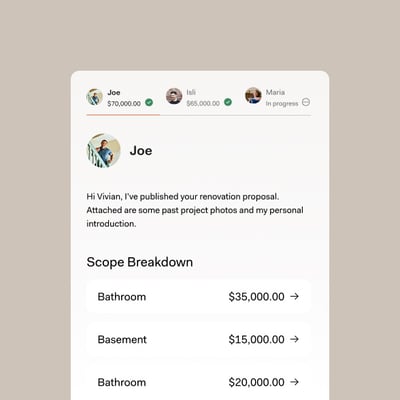
    Compare Proposals with Ease

    Easily compare contractor quotes with intuitive layouts, and side-by-side comparisons to help you make the best choice.
    Get a Quote

    Finding the right site in Flagstaff for your custom home

    Flagstaff's volcanic landscape, forest cover, and altitude create conditions that shift considerably from one parcel to the next. An experienced local builder who has worked across Coconino County can assess a site's soil profile, drainage behavior, and wildfire exposure in ways that no listing description will capture.

    Considerations will include:

    • Soil quality and site stability: Flagstaff's soils are predominantly volcanic in origin, ranging from dense basalt and rhyolite to highly permeable cinder deposits that provide almost no bearing capacity for conventional foundations. The San Francisco Peaks volcanic field has distributed cinder cone material across much of the Flagstaff basin, and lots with shallow cinder profiles require over-excavation and engineered fill before a slab or footing can be placed. A geotechnical investigation with soil borings is the responsible starting point on any Flagstaff lot outside a well-characterized subdivision, because cinder depth can vary dramatically within a single parcel.
    • Utilities access: City of Flagstaff water and sewer service is available throughout the incorporated area, but properties in unincorporated Coconino County often rely on private wells and septic systems where the volcanic geology affects both well yield and septic field performance. Cinder soils drain exceptionally fast, which makes them poor septic absorption field media and can require engineered alternatives; conversely, basalt layers can impede well casing installation and drive up drilling costs. Propane is the predominant heating fuel for homes outside the city's natural gas service territory, and tank sizing, placement, and access road requirements add to the site development budget on rural parcels.
    • Zoning and restrictive covenants: The City of Flagstaff administers zoning under its Land Development Code, with specific provisions for forest interface areas, dark sky lighting standards, and wildfire mitigation setbacks that apply across much of the buildable residential land in the city. Coconino County has its own zoning code for unincorporated areas, and many rural subdivisions carry CC&Rs governing rules that are enforced independently of underlying zoning.
    • Lot slope and drainage: Flagstaff's topography shifts from the relatively flat volcanic plateau north and east of the city to the more rolling terrain near the base of the San Francisco Peaks, where lots at the toe of slopes can experience concentrated runoff during the summer monsoon season.
    • Proximity to amenities: Access to Northern Arizona University's campus resources, the downtown Route 66 corridor, and Flagstaff Medical Center shapes neighborhood demand among the city's professional and academic community. Proximity to the extensive Flagstaff Urban Trail System, which provides non-motorized access to forest recreation, is a consistent priority among Flagstaff homebuyers who chose the city specifically for its outdoor access.
    • Environmental concerns or hazards: Wildfire is the dominant environmental risk for Flagstaff homeowners, with the 2010 Schultz Fire and the 2022 pipeline fire both burning in close proximity to residential areas north and east of the city. The Coconino National Forest boundary sits within walking distance of many Flagstaff neighborhoods, and homes in the wildland-urban interface face genuine annual ignition risk during dry spring conditions before the monsoon season arrives.
    • View, orientation, and privacy: South-facing lots in Flagstaff capture passive solar gain that is genuinely valuable across 250 frost days per year, and homes designed to take advantage of that orientation can reduce heating loads significantly without adding mechanical cost. Views of the San Francisco Peaks, which dominate the northern skyline and are sacred to multiple Indigenous nations in the region, carry consistent pricing premiums that reflect both their beauty and the permanence of the forest and mountain backdrop.

    Preparing for unique local challenges

    Snow load engineering and winter construction

    Flagstaff averages over 100 inches of snow annually, with individual storms capable of depositing two to three feet in 48 hours, and Coconino County requires roof systems engineered for ground snow loads up to 40 pounds per square foot in designated areas. Every Flagstaff custom home roof needs a structural engineer's stamp confirming that the framing, ridge beam, and bearing wall system can carry those loads without deformation or collapse, and that engineering adds both design cost and framing cost relative to a standard roof system. Winter construction management is a real constraint: foundation pours, masonry work, and roofing all require temperature management during Flagstaff's long cold season, which can extend from October through April.

    Wildfire risk and defensible space

    Flagstaff's position within the Coconino National Forest interface means that wildfire is not a background risk but an active annual planning consideration. Arizona requires that homes in the wildland-urban interface maintain defensible space through vegetation management, and Flagstaff's local fire code specifies requirements for ember-resistant venting, noncombustible materials within the first 0 to 5 feet of the structure, and Class A roofing across most of the residential land within and adjacent to the city. The ponderosa pine forest that makes Flagstaff beautiful is also a continuous fuel source, and the fire behavior of a stand of ponderosa in drought conditions is fundamentally different from the chaparral and grass fires more common at lower Arizona elevations.

    Volcanic soil and foundation unpredictability

    The cinder and basalt soils that define Flagstaff's geology require geotechnical investigation before any custom home foundation is designed, because the difference between a lot with 18 inches of cinder over competent basalt and one with 8 feet of loose cinder over unconsolidated fill is enormous in foundation cost terms. Loose cinder has essentially no bearing capacity for a conventional spread footing and can require helical piers driven to basalt, imported structural fill compacted in lifts, or a grade beam and pier system that transfers loads around the problematic surface material. Post-tension slabs, which work well for expansive clays in Phoenix, don't address the bearing capacity problem in cinder and are not the right solution here. The cost difference between a standard slab and an engineered foundation system on a challenging Flagstaff lot can exceed $35,000 to $60,000, making the geotechnical report one of the best investments in the pre-construction phase.

    Altitude effects on mechanical systems and construction

    At 7,000 feet of elevation, combustion appliances produce less heat per unit of fuel, water boils at a lower temperature, and HVAC systems require larger equipment to move the same volume of conditioned air as at sea level. Gas furnaces, water heaters, fireplaces, and boilers all need to be derated for Flagstaff's altitude, and some equipment designed for lower elevations requires carburetor or gas valve adjustments to function safely and efficiently. Mechanical contractors who routinely work at Flagstaff's elevation will size and spec equipment correctly from the start; those who don't may install equipment that runs continuously without meeting the home's heating demand.

    Practical tips for keeping your custom home build drama-free

    • Lock in your builder before finalizing your lot purchase: Flagstaff's smaller contractor market means the most experienced local builders carry wait lists, and securing a builder commitment before you close on a lot gives you honest site assessment input that can change whether or where you buy.
    • Commission a geotechnical report before finalizing the foundation budget: In a market with volcanic soil variability as high as Flagstaff's, the foundation budget without a geotech report is a guess. The report typically costs $1,500 to $3,500 and can prevent $30,000 to $60,000 in change orders when subsurface conditions differ from assumptions.
    • Front-load your material procurement for long-lead items: Flagstaff's distance from major distribution hubs in Phoenix means that specialty windows, mechanical equipment, and custom millwork carry longer lead times than in metro markets. Builders who order long-lead items six to eight months before installation avoid the schedule compression that results from missing a delivery window during the compressed building season.
    • Build a realistic weather contingency into your schedule: Flagstaff's construction season runs roughly from April through October for outdoor work, and even within that window, late-spring snowstorms and summer monsoon rains can interrupt site work.
    • Confirm wildfire insurance availability before designing the exterior: Flagstaff's wildland-urban interface designation has prompted some insurance carriers to limit or decline new policy issuance in certain neighborhoods, and discovering that your planned exterior materials don't qualify for coverage is a much better outcome at the design stage than after construction. Ask your insurance broker to weigh in on materials specifications before the architectural drawings are finalized.
    Danny Wang-Block Renovation copy-Mar-03-2026-03-40-56-0956-PM

    “Vague bids are a red flag. A detailed scope shows a contractor truly understands your project.”

    Additional articles to help prepare you for the home building process

    Vetting potential builders for your Flagstaff custom home

    Flagstaff's limited contractor pool makes builder selection a higher-stakes decision than in larger markets with more competitive options. The right vetting process goes beyond reviewing portfolios and checking license status to understanding how a builder operates under the specific pressures of high-altitude, forest-interface construction.

    • Verify direct experience with Flagstaff's soil and foundation conditions: Ask specifically how many custom homes the builder has completed on cinder or volcanic basalt soils and whether they have working relationships with local geotechnical engineers.
    • Confirm current Coconino County and City of Flagstaff permit familiarity: Builders who permit regularly in both jurisdictions understand which projects require wildfire interface review, dark sky lighting compliance, and forest setback documentation that can delay permits for those who are unfamiliar.
    • Ask for references from homeowners who lived through a full Flagstaff winter in a home the builder completed: The first winter stress-tests snow load engineering, thermal envelope performance, and mechanical system sizing in ways that no walkthrough inspection can replicate.
    • Understand their subcontractor stability and trade scheduling: Flagstaff's smaller trades pool means builders with established, long-term subcontractor relationships are in a materially better position to staff your project than those who bid each trade out fresh each season.

    Ready to move ahead? Partner with Block to find the ideal Flagstaff home builder.

    Flagstaff is the kind of place where the decision to build a custom home feels like the right long-term investment every time you look north toward the Peaks or walk out the door into a forest that starts at the edge of your property. The path here has genuine technical complexity, but the builders who know this landscape can navigate it. Connect with Block today to be matched with experienced Flagstaff custom home builders and take the first step from planning to foundation.

    Lay the groundwork for a successful custom home
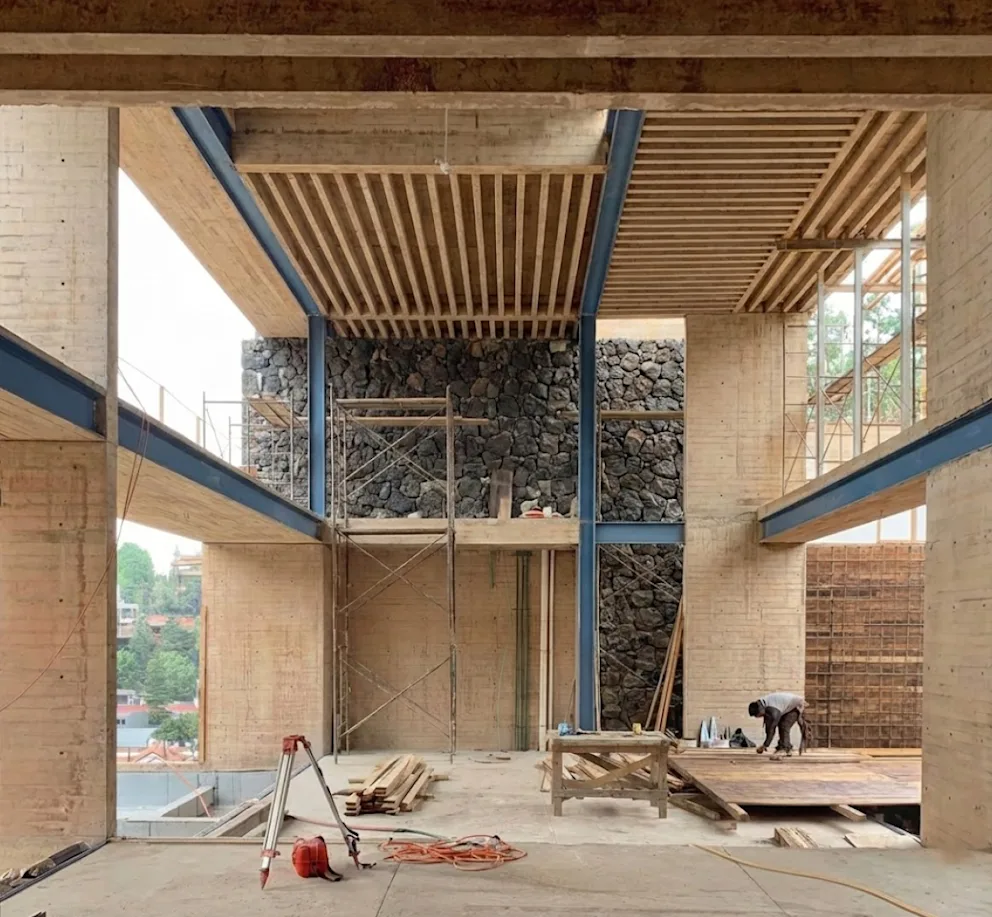
    New construction home build

    Match with vetted builders

    Receive quotes from experienced contractors aligned to your vision.
    Block experts reviewing quotes and timelines

    Hire with confidence

    Partner with Block experts to review quotes and timelines for end-to-end clarity.

    Homeowner staying in control of their renovation

    Stay in control

    Avoid surprises with Block Protections and a progress-based payment system.

    Get Started

    Frequently asked questions

    I want to build a second home on my property; how do I know if it qualifies as an ADU?

    In Flagstaff, accessory dwelling units are regulated under the City of Flagstaff's Land Development Code, which allows ADUs by right in most residential zoning districts subject to specific size, setback, and design standards. The City defines an ADU as a secondary dwelling unit on the same lot as a primary single-family home, and it can be attached, detached, or created through conversion of existing space. Key qualifying criteria include a minimum lot size (typically 6,000 square feet in standard residential zones), a maximum ADU floor area that varies by zone (commonly up to 800 to 1,000 square feet), and compliance with the same setback and height limits as the primary structure. In unincorporated Coconino County, ADU regulations differ and are governed by the county's zoning ordinance, so rural property owners need to verify the applicable rules with the county's Community Development Department. The best first step is a pre-application meeting with the City of Flagstaff's Development Services division or the County's planning staff, which is typically free and will clarify what is permitted on your specific parcel.

    How much cheaper is it to build a ranch home versus a multi-story house?

    Ranch homes in Flagstaff typically cost more per square foot to build than two-story homes of equivalent total area, because they require a larger foundation footprint and a larger roof area relative to the conditioned square footage they deliver. A two-story design concentrates the same living area over a smaller foundation and roof, which are two of the most expensive elements in any custom home budget. In Flagstaff's volcanic soil environment, where foundation engineering costs are already elevated, the larger footprint of a ranch adds even more to the foundation line than it would in a market with simpler subsurface conditions. That said, ranch homes eliminate stair construction and the structural complexity of floor system cantilevers and load transfers, which partially offsets the foundation and roof differential. The practical cost difference in Flagstaff's market tends to run $15 to $30 per square foot more for a ranch than a comparably appointed two-story home, though site-specific foundation conditions can push that spread wider.

    What are common issues that cause permits to be denied?

    In Flagstaff, permit applications are most commonly denied or returned for revision due to incomplete documentation rather than outright code violations. Missing a required geotechnical report for foundation design, failing to include a wildfire mitigation plan for properties in the wildland-urban interface overlay, and submitting architectural drawings that don't address Coconino County's snow load requirements are among the most frequent triggers for a returned application. Dark sky compliance documentation is another Flagstaff-specific requirement that catches applicants unfamiliar with the city's outdoor lighting ordinance, which restricts fixture types and light trespass across most of the residential buildable area. Utility coordination letters confirming water and sewer service availability are required before the City will accept a building permit for new construction, and missing those confirmations delays submission. Working with an architect and a builder who permit regularly in Flagstaff and understand these local requirements is the most reliable way to submit a complete application the first time.