



Paint & Color
Two Tone Bathroom Walls: 15 Ideas & Where to Split
08.14.2026
05.13.2026


In This Article
Light wood floors are forgiving in a way dark hardwoods and gray floors aren’t. A pale white oak or maple base reflects light, neutralizes color casts, and quietly absorbs whatever decisions get made above it, which means almost any wall color can work. The harder question is which one will work best in your actual room, with your actual light, against your actual furniture. To help spur your own ideas, below are examples that naturally flatter lighter wood.
The floor itself is already a neutral, so my wall choices in this family need to do something specific: warm the space, cool it down, or create the kind of contrast that makes the wood look intentional.
Not every neutral will work with light floors. Pure builder-grade white feels cold against warm wood. Standard "designer gray" can flatten a room. The neutrals below earn their place by having clear undertones that work with the floor rather than against it.
Benjamin Moore White Dove is a soft creamy off-white with subtle warm yellow undertones. It works in rooms with limited natural light because the warmth keeps it from going gray, and it works in bright rooms because the LRV (around 85) bounces light without going stark. For anyone specifically considering light wood floors and white walls, this is the safest starting point I can recommend.
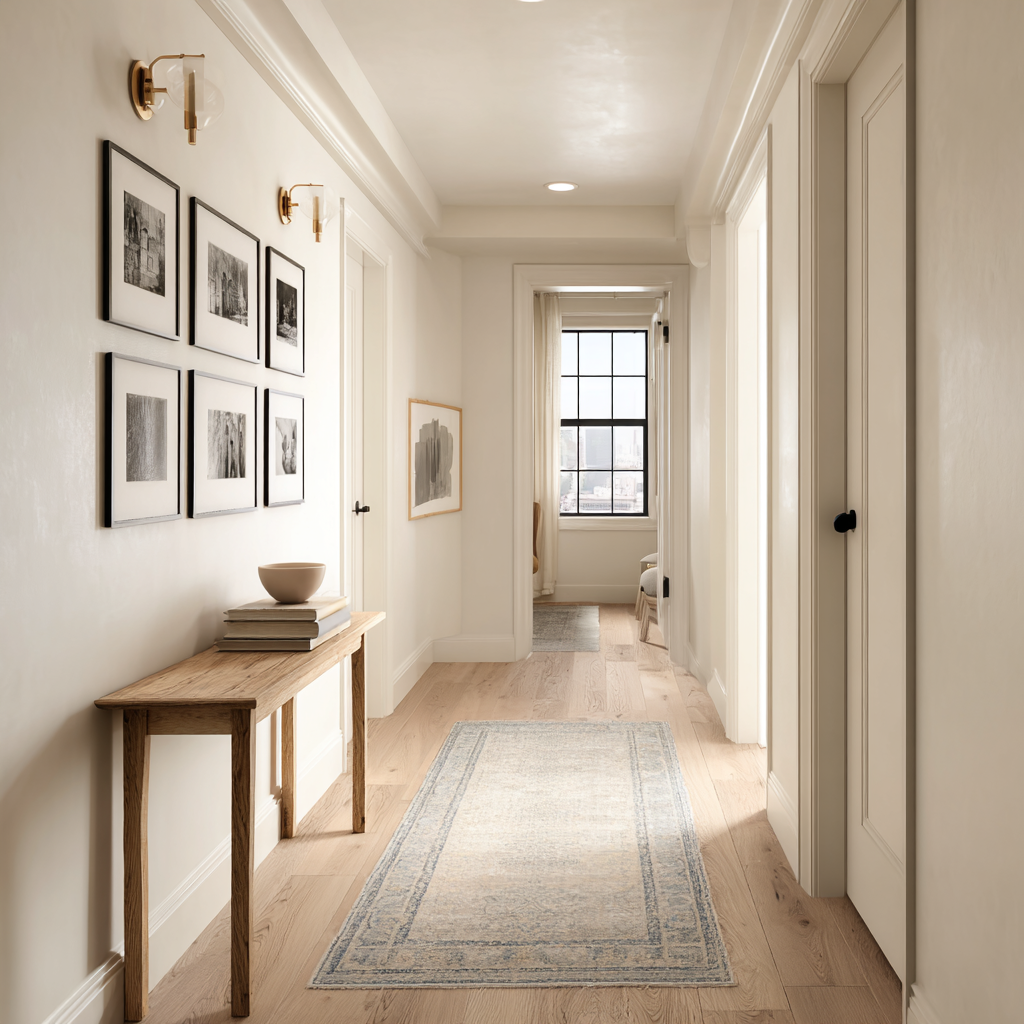
In a hallway, White Dove does its quietest and best work. The walls don't draw attention to themselves, but they warm up the corridor enough that a console table, runner rug, and small gallery wall all read clearly against the backdrop. A cooler white would have made the same scene feel clinical.
One thing I always watch for: White Dove can lean creamy in north-facing rooms with cool natural light. If you're working with a space that gets very little direct sun, sample a section before committing. The color shifts more than people expect.
Benjamin Moore Revere Pewter is a soft warm gray with subtle green undertones, and it's my go-to recommendation for anyone considering light wood floors with gray walls. It comes across as a true neutral in most lighting, an outcome rarer than it sounds. The green undertone, rather than the more common taupe or violet, cancels out any orange in light oak or maple floors. The result is a calm, balanced palette without the muddiness taupe-based greiges tend to produce.
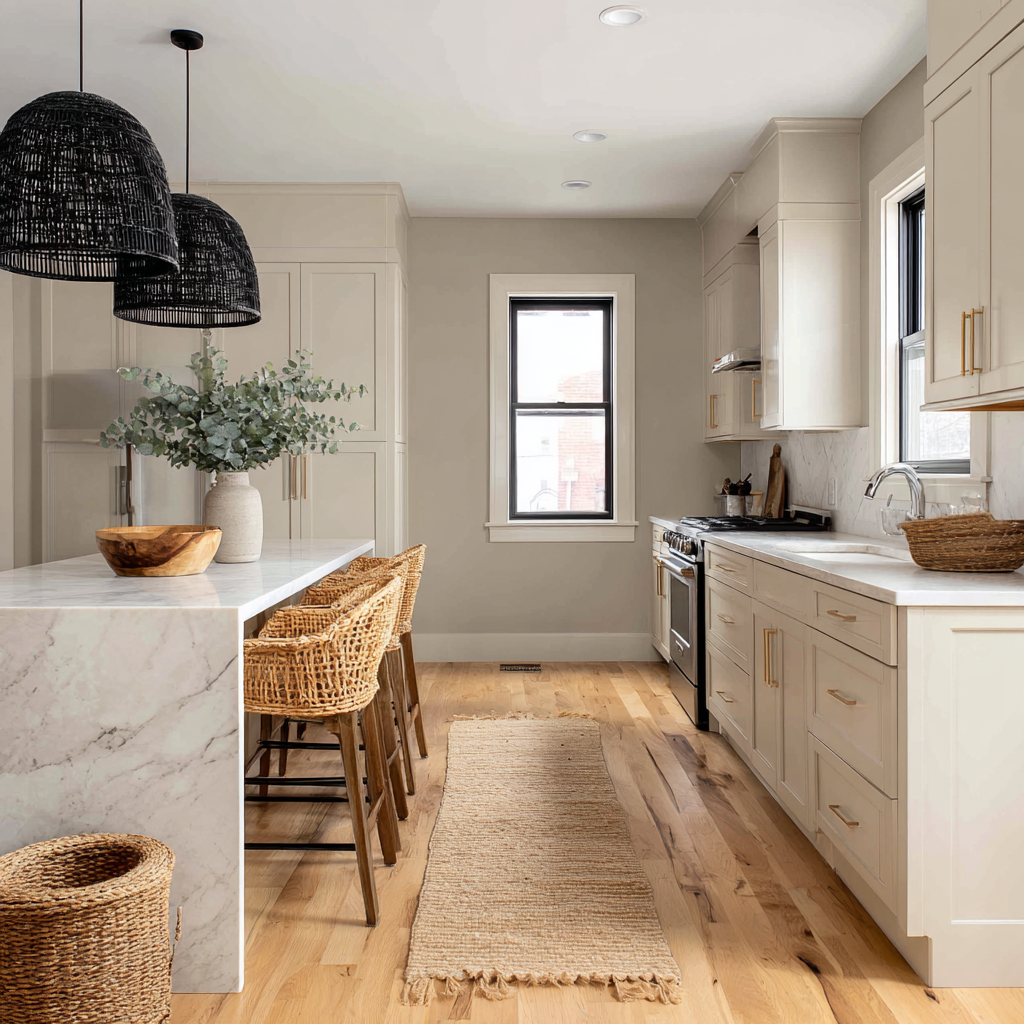
It's been on Benjamin Moore's most-popular list for over a decade because it transitions cleanly across rooms in an open floor plan. In a kitchen with cream cabinetry and brass hardware, the green-gray walls hold their own without competing.
The one situation where I've watched Revere Pewter struggle is under very warm artificial lighting, like incandescent or 2700K LEDs, where it can shift toward beige and lose its gray character. Cooler 3000K bulbs preserve the intended look.
Benjamin Moore Mascarpone is a creamy off-white with a clear soft yellow undertone, named after the buttery Italian cheese it resembles. Comparatively, White Dove pulls back its warmth and to be more neutral, Mascarpone leans fully into the cream end of the spectrum. The yellow base is what makes it a strong pair for honey-toned light wood floors like maple, birch, and golden white oak.
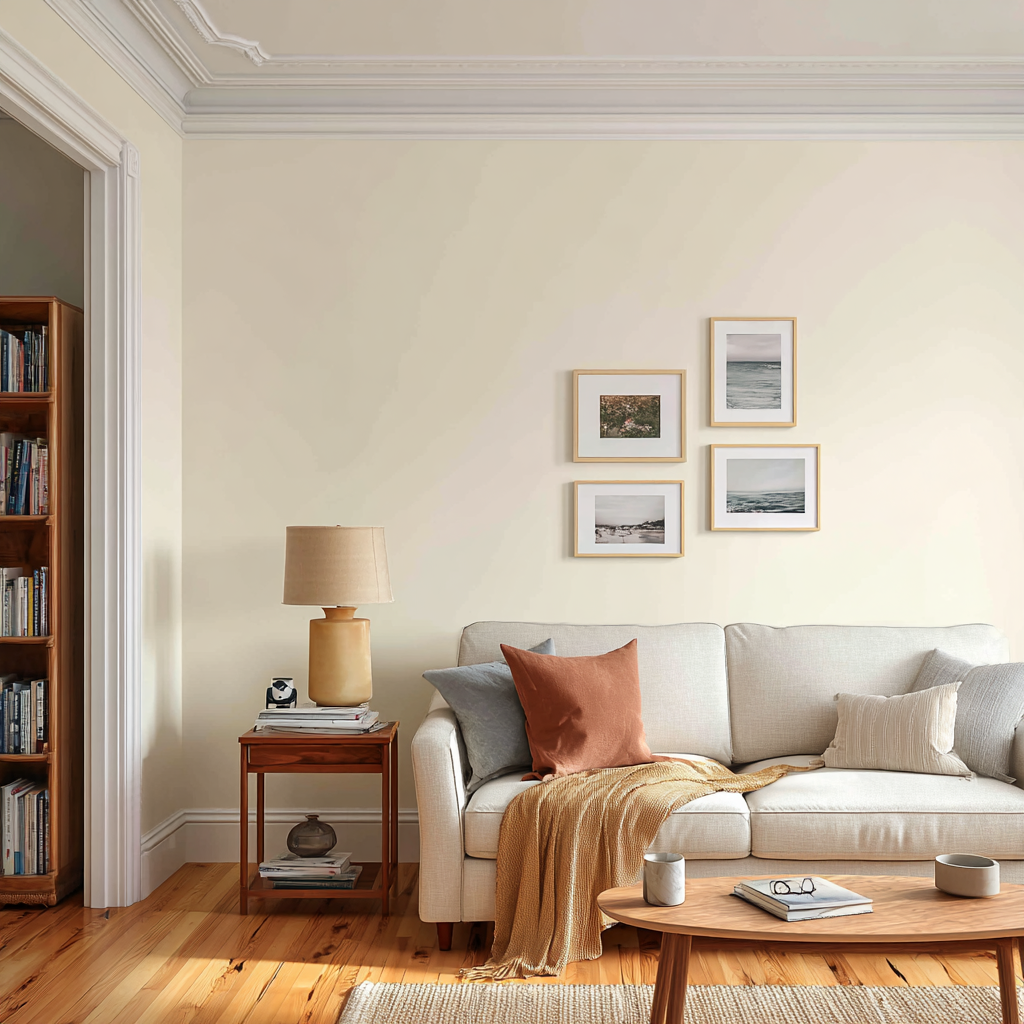
In a small living room, Mascarpone creates a lived-in feel that's hard to manufacture with cooler whites. Walnut furniture, oatmeal upholstery, and warm metals like brass and aged gold all read richer against the creamy backdrop. The art on the wall doesn't have to fight the paint to register, since the wall itself is doing some of the warmth-building work.
A note on pairing: Partner this white with other warm-toned finishes to avoid looking yellow-dingy. It clashes with cool-toned grays, stark whites, and silver hardware, all of which expose its yellow base in unflattering ways. If your existing trim is a bright cool white, either repaint the trim to match the warmer palette or choose White Dove instead.
Benjamin Moore Chelsea Gray is a true medium gray with subtle warm undertones. It sits between light gray, which can wash out against light wood, and charcoal, which can feel heavy in small spaces.
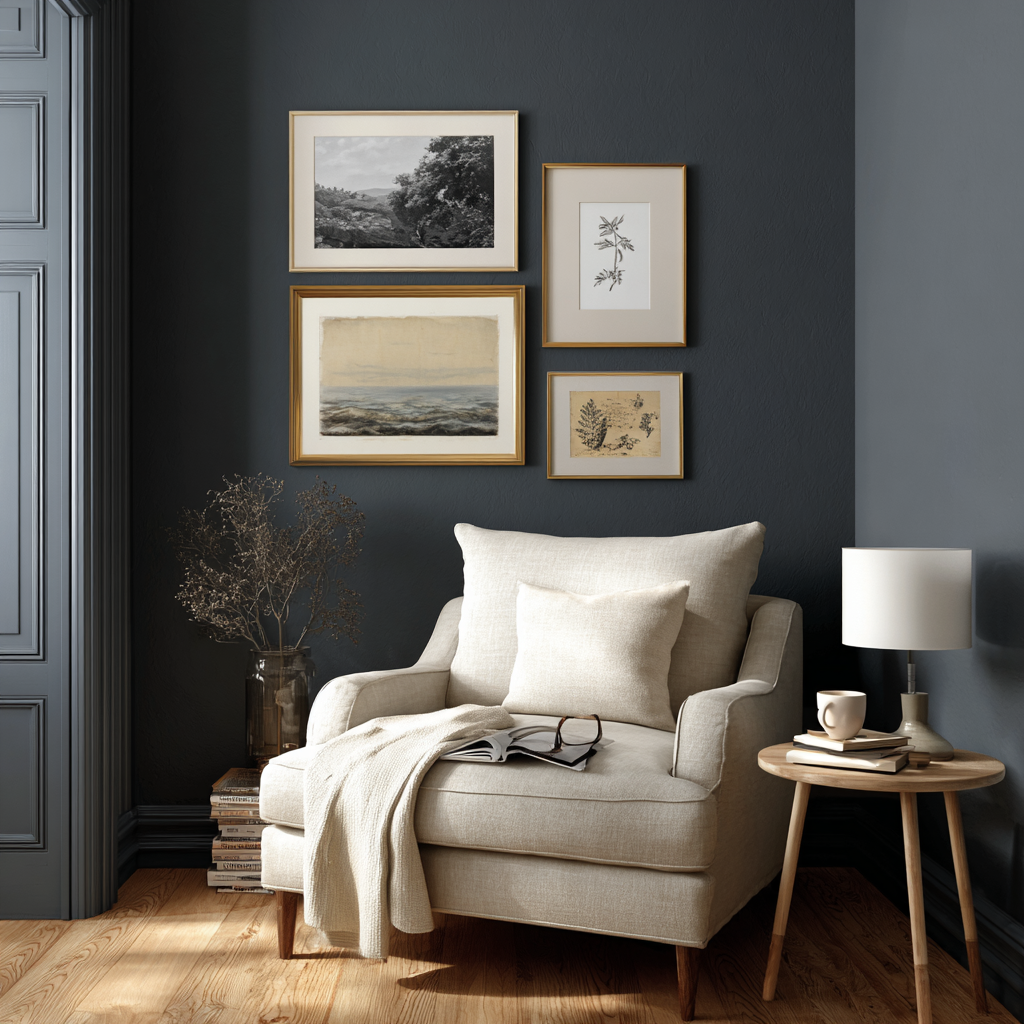
Against light oak floors, Chelsea Gray creates clear contrast without the moody intensity of a true charcoal, so rooms still feel livable rather than theatrical. Pair it with brass or warm wood accents to reinforce the warm undertone, or with chrome and matte black to push it cooler.
Benjamin Moore Black Beauty is a deep near-black with subtle green-charcoal undertones. It isn't true black, and that distinction is what lets it work in residential spaces.
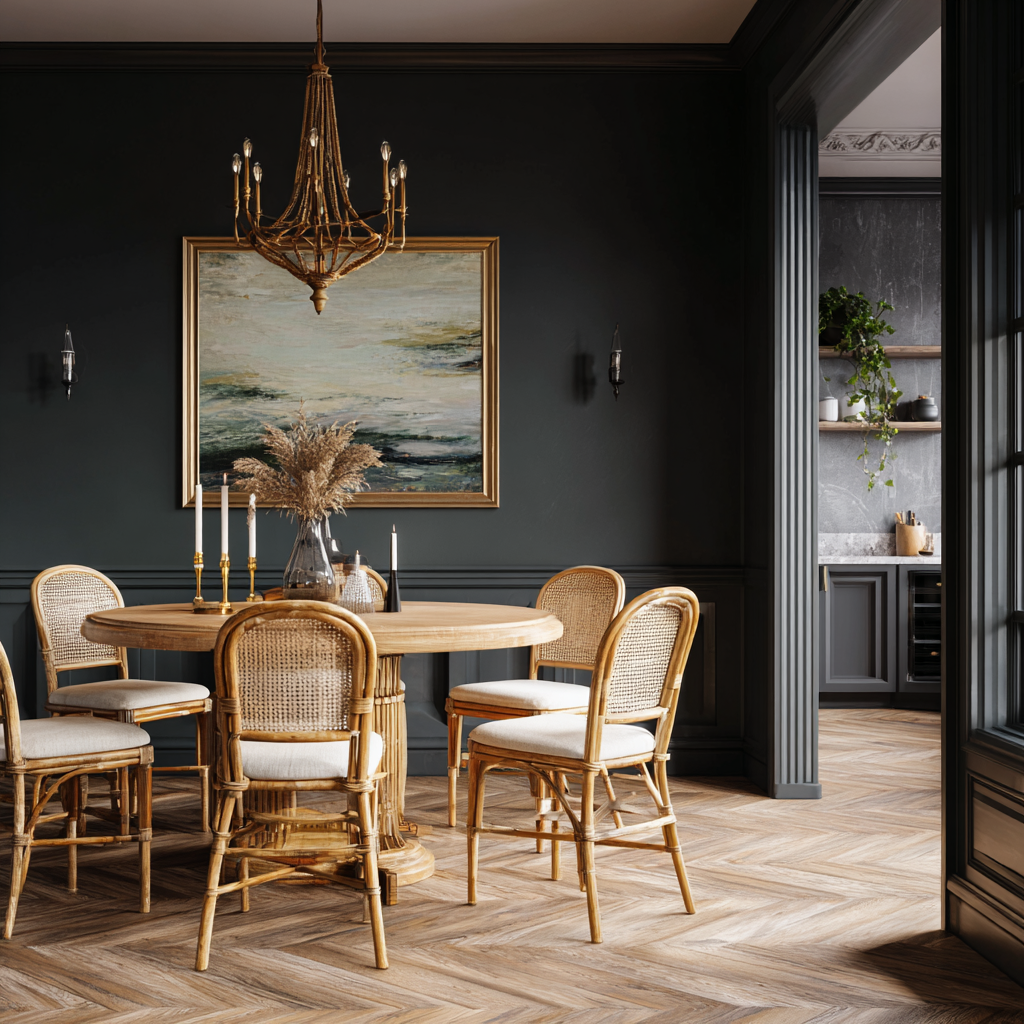
Against light wood floors, the contrast is high but not jarring. The floor effectively becomes the light source for the room, and warm-toned furniture like rattan, cane, and oak glows against the dark walls. Choose this color when you want a room to feel intentional and immersive, not just dark. It works especially well in dining rooms, where the saturated walls create an evening-appropriate atmosphere even during the day.
Before committing to anything this dark, examine your wall surface in raking light. Drywall flaws, nail pops, and patch jobs all become visible against deep colors.
Green and wood are a natural pairing because both come from the same place. Muted, dusty, or grayed-out greens tend to be my safest choices.
Farrow & Ball Card Room Green is a muted dusty sage with significant gray undertones. It feels historic and aged rather than fresh or springy. The gray base keeps it from feeling cottage-y, the trap most sage greens fall into.
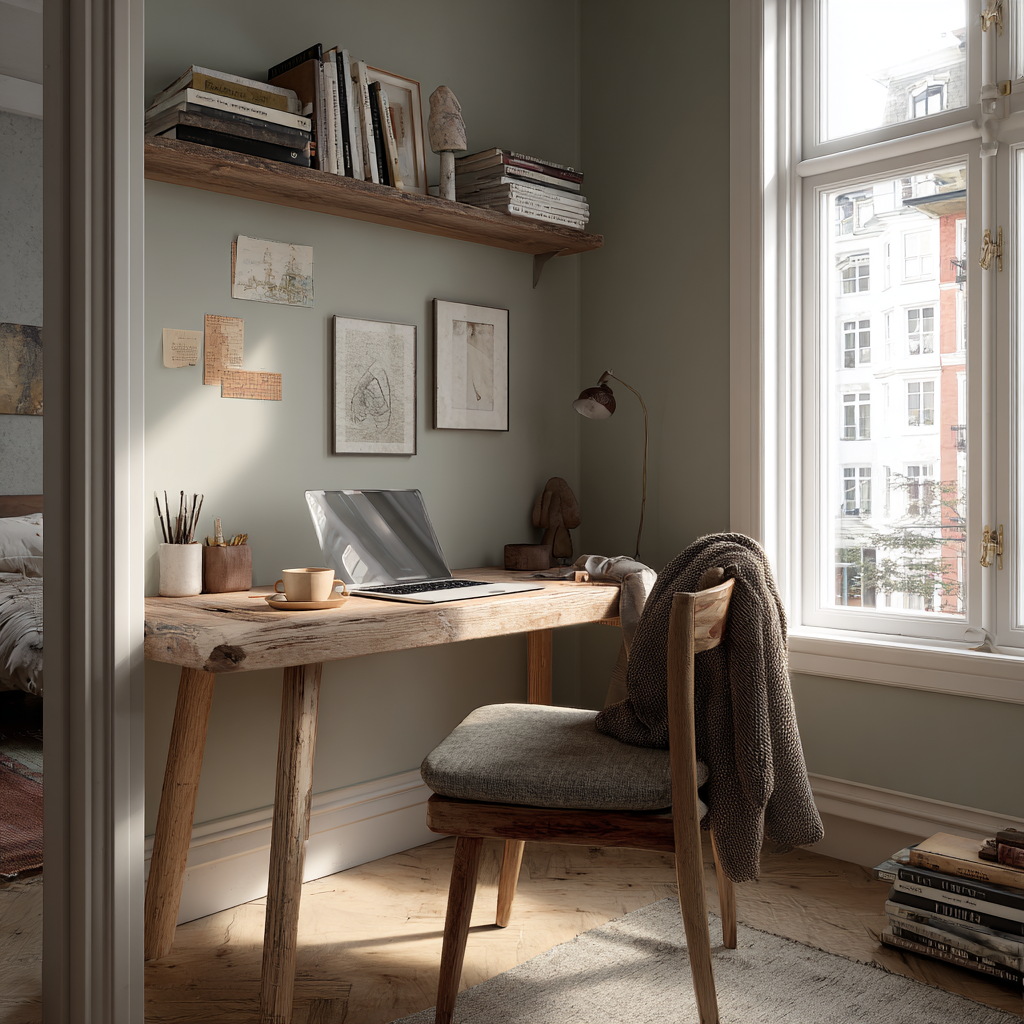
In addition to pairing beautifully with light floors, this green enhances with mahogany, leather, and brass along with lighter materials like ash and oat-toned linen.
This is one of the more chameleon-like colors on my list; it can come across as gray in cool light, more olive in warm light, and noticeably greener in rooms with a lot of natural foliage outside the windows.
Benjamin Moore Hunter Green is a deep saturated forest green with cool blue undertones.
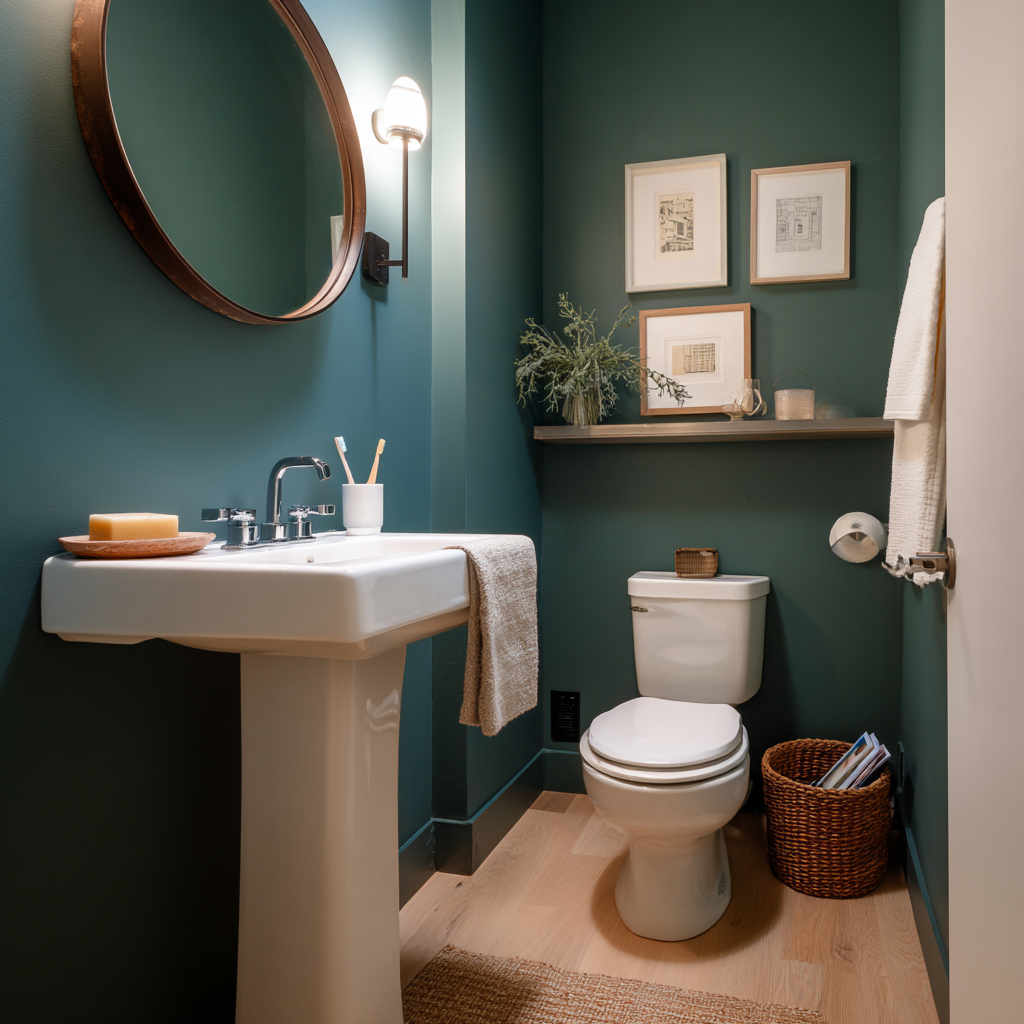
The contrast between dark saturated walls and pale floors creates a jewel-box effect particularly effective in small rooms like powder rooms. The light floor prevents the room from feeling oppressive, while the green walls add the visual weight a tiny space needs to feel intentional. In high-gloss lacquer finish, the color reflects light and creates depth; in matte, it absorbs light for a more enveloping mood.
Blue with light wood is a balance act. The wood is warm; most blues are cool. The pairing works when the blue has enough gray or muted character to bridge the temperature gap, and fails when the blue is too clean or saturated.
Benjamin Moore Van Courtland Blue is a dusty grayed-blue that appears similar to faded denim. The significant gray undertone is what makes this color work with warm floors, since pure blues tend to clash with the orange notes in oak.
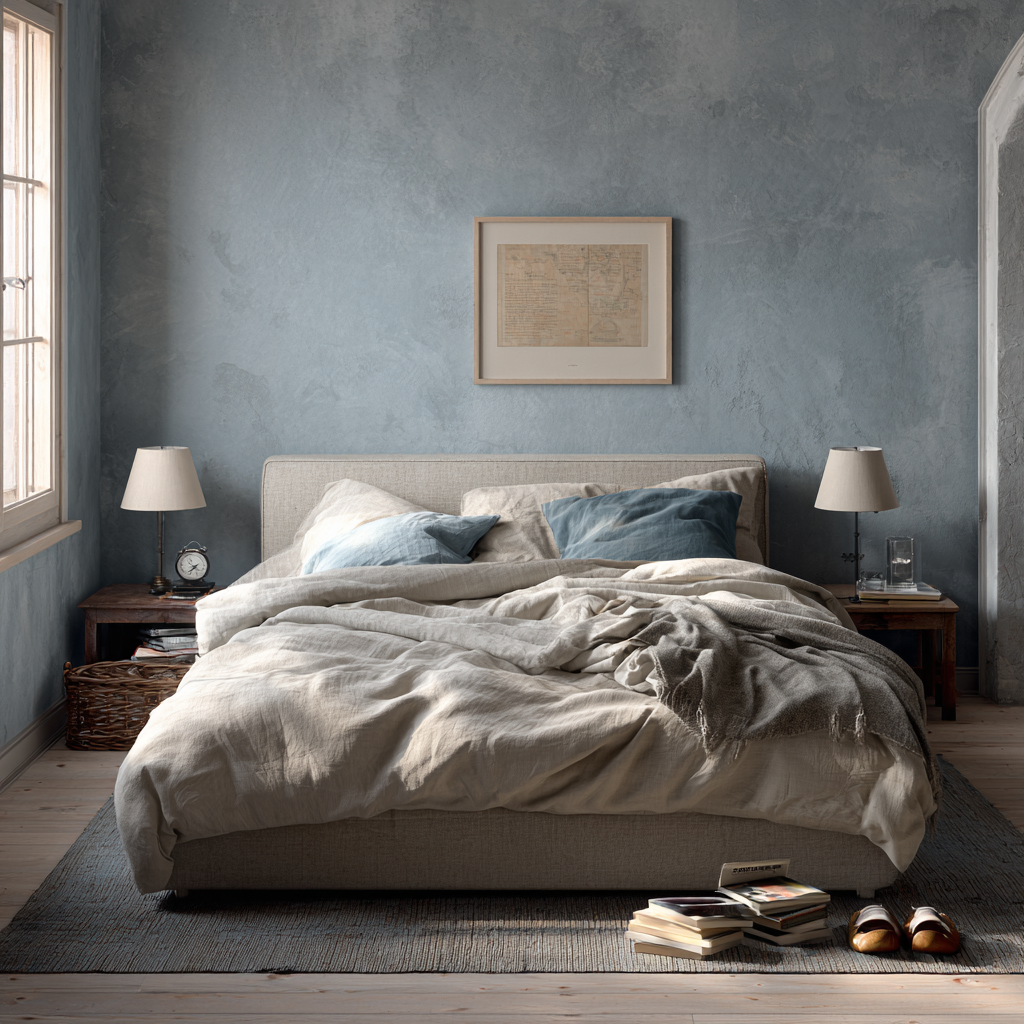
This is a particularly good bedroom color because the dusty quality is restful rather than energetic. Layered with soft textiles and warm wood furniture, the blue feels like a backdrop rather than a statement. While it looks lovely with light flooring, it is equally lovely with black flooring.
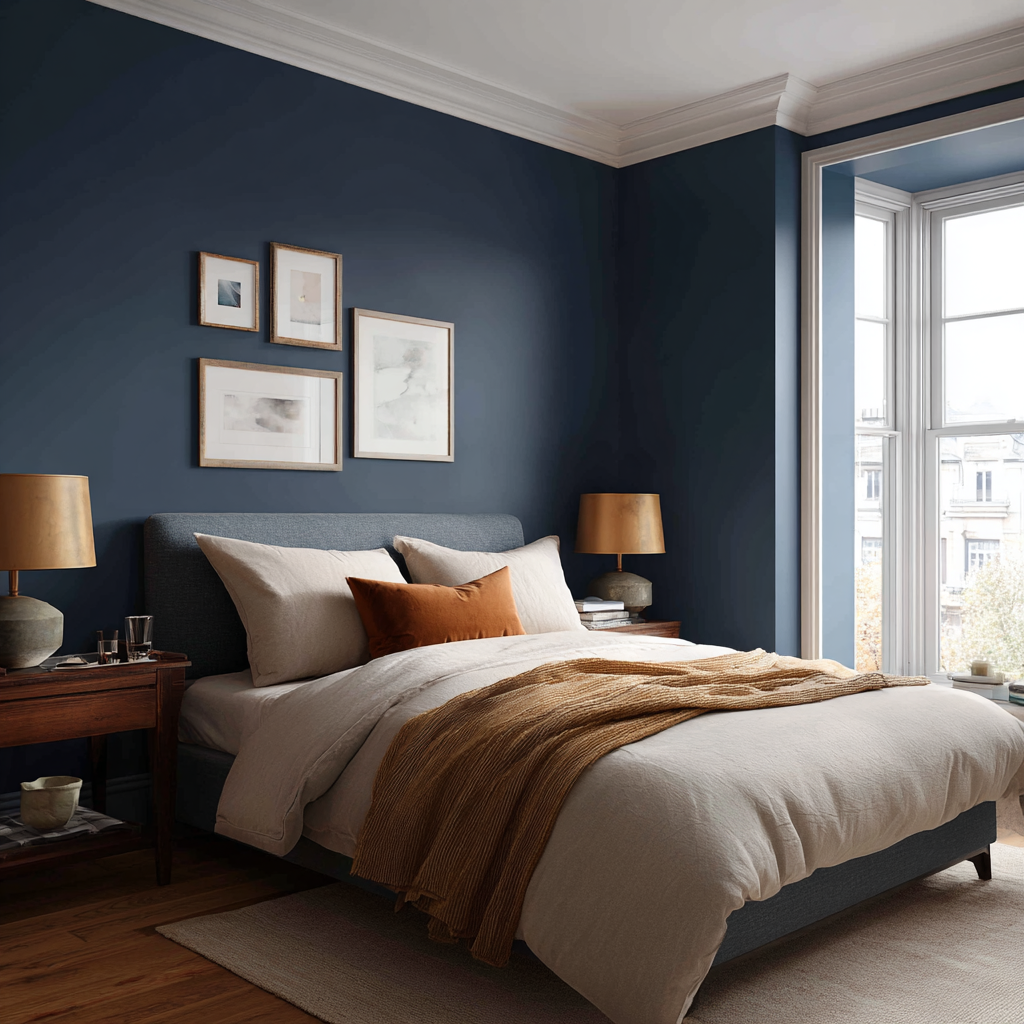
In a bedroom with light oak floors, navy walls create a cocooning effect ideal for sleep while making light floors pop. The warm cream bedding and brass lamp bases prevent the room from feeling cold, while the dark walls give the space a sense of grounding that lighter colors can't provide. Pair it with walnut or warm-toned wood furniture rather than white painted pieces, since white can read too high-contrast against the saturated walls. Hale Navy is also one of the safer dark colors for resale, since navy is classic rather than trendy.
Practical consideration: like all deep saturated colors, Hale Navy typically needs at least two coats, often three, to achieve full coverage. Factor the additional paint and labor into your budget, and ask your contractor whether a tinted primer would reduce the number of finish coats needed.
Pinks that pair successfully with light floors are dusty, muted, and shifted toward terracotta or plaster.
Farrow & Ball Setting Plaster is a warm dusty pink with peach and beige undertones. It reads like aged terracotta or faded blush, never like bubblegum or millennial pink. The brown and peach base is what keeps it sophisticated.
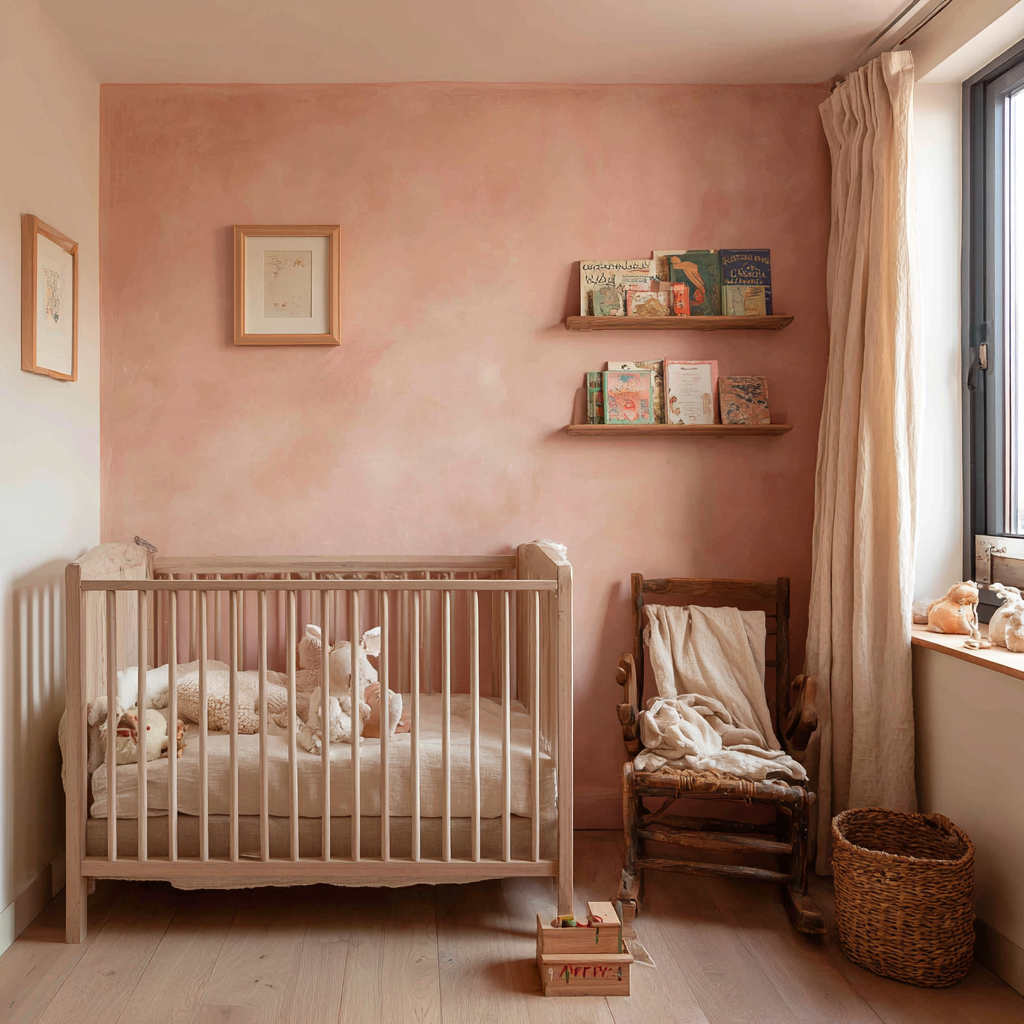
In a nursery, the warm pink creates a soft, enveloping feel without being saccharine. The color also ages well as a child grows, since it doesn't read as specifically "baby" the way pastels do. Setting Plaster is a strong choice for adult bedrooms and small living spaces where you want warmth without going to true terracotta or red.
Sherwin-Williams Redend Point is a muted blush-mauve with brown and rose undertones. It sits at the intersection of pink and beige, more flexible than either family alone. It was Sherwin-Williams' 2023 Color of the Year, so it's everywhere right now. Worth keeping in mind for anyone concerned about a color reading dated in five years, since "color of the year" picks tend to peak quickly.
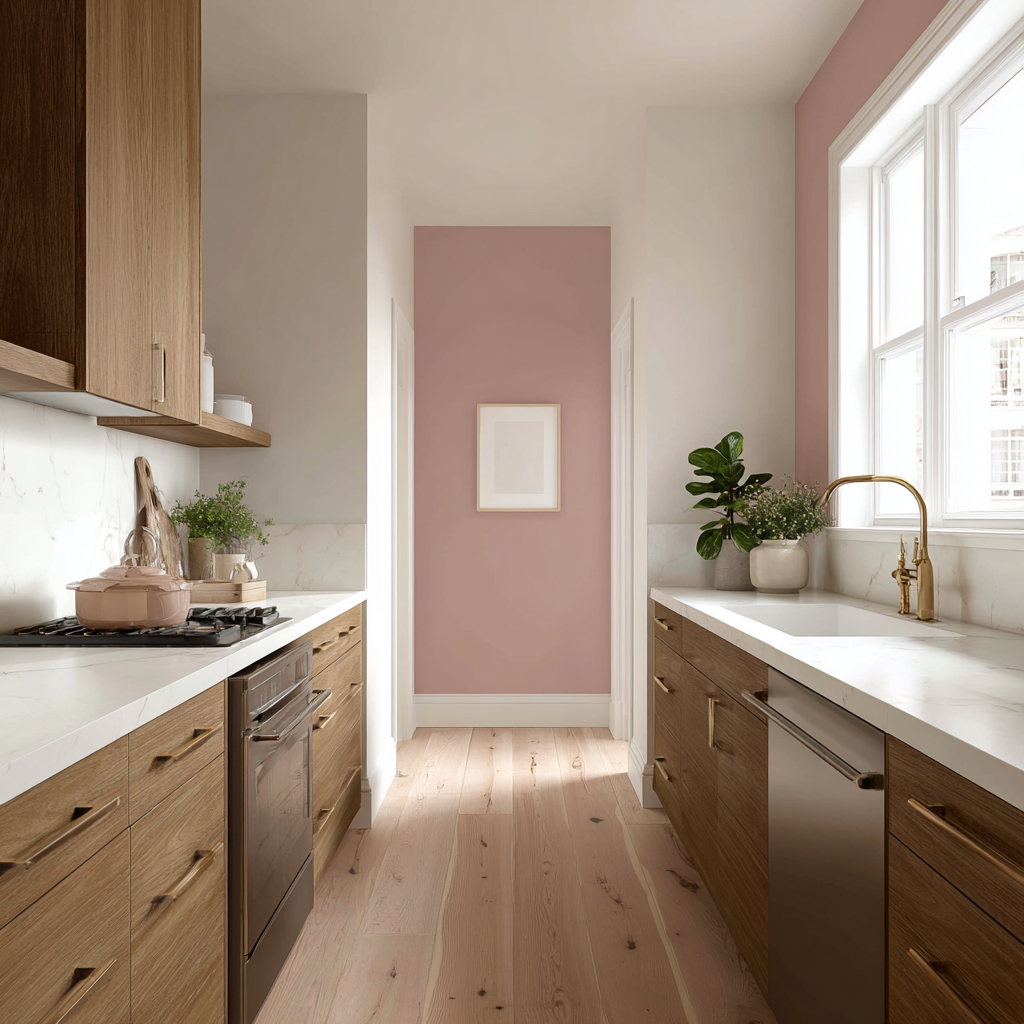
In a small galley kitchen, Redend Point works particularly well as an accent wall rather than a full-room color. The warm pink-clay tone provides a focal point at the end of the galley while the side walls stay neutral, and the kitchen avoids feeling overwhelmed by color. This is the strategy I recommend when a color appeals to you but feels too much for an entire room: paint one wall and let the rest of the space breathe.
The right wall color for light wood floors comes down to a handful of principles I apply consistently across rooms. Use these as a checklist when narrowing down samples:
Transparent Pricing You Can Trust

Choosing the right wall color is one piece of a larger renovation puzzle. Block Renovation is a technology-powered platform that helps homeowners plan, visualize, and execute renovations with vetted contractors and protected payments.
Block's free Renovation Studio lets homeowners design their space, estimate costs, and see how finishes and colors will read in their actual room before committing. Personalized renders show how a paint color interacts with cabinetry, flooring, and lighting choices, which catches the kind of clashes that paint chips can hide. Real-time cost estimates update as design choices change, so the budget stays in view from the first decision forward.
Once a design is in place, Block matches each project with vetted local contractors who compete on price and scope. Every quote goes through expert scope review to catch missing line items and red flags before work begins. Payments run through Block's secure progress-based system, so contractors are paid as milestones are met rather than upfront. Thousands of homeowners have renovated with Block.
Remodel with confidence through Block

Connect to vetted local contractors
We only work with top-tier, thoroughly vetted contractors

Get expert guidance
Our project planners offer expert advice, scope review, and ongoing support as needed
Enjoy peace of mind throughout your renovation
Secure payment system puts you in control and protects your remodel

Renovate confidently with Block
Easily compare quotes from top quality contractors, and get peace of mind with warranty & price protections.
Paint & Color
Two Tone Bathroom Walls: 15 Ideas & Where to Split
08.14.2026
Cabinets
Brown Cabinets With White Countertops: Design Guide
06.04.2026
Paint & Color
Wall Colors for Light Wood Floors: Grays, Whites & More
05.13.2026
Paint & Color
Gray Walls with Dark Hardwood Floors: Pull Off the Look
05.06.2026
.png?width=640&name=Moody%20Dining%20Room%20Painted%20Ceiling%20Walls%20(2).png)
Paint & Color
Painting Ceilings the Same Colors as the Walls: Pros & Cons
04.22.2026