



Garage
How to Convert a Garage Into a Living Space: Costs, Steps, and Ideas
08.09.2026

04.01.2026


In This Article
Tampa throws a lot at a garage. Six months of hurricane season, year-round humidity that hovers between 70 and 90 percent, salt air from the bay that corrodes steel hardware in neighborhoods like Davis Islands and Westshore, and a housing stock that spans a century of construction — from 1920s Craftsman bungalows in Seminole Heights to concrete-block ranches in Carrollwood to large new-build homes in New Tampa and Wesley Chapel. Each of those contexts produces a different renovation question, and the answers that work in one often fail in another. Before committing to a scope, it helps to know what kind of Tampa garage you're actually dealing with.
Design a Home That’s Uniquely Yours
Block can help you achieve your renovation goals and bring your dream remodel to life with price assurance and expert support.
Get Started
Florida Building Code sets a high technical floor for garage work in Hillsborough and Pinellas counties, and that code compliance — particularly around wind load ratings and fire separation — adds cost that homeowners upgrading from cooler, drier markets sometimes don't anticipate. The prices below reflect current market conditions for licensed work meeting code requirements.
A garage door is the largest opening in a home's building envelope and the one most likely to fail in a high-wind event. Florida requires that replacement doors carry a Florida Product Approval number confirming they meet the wind load rating for the specific wind zone where the home sits — and in Hillsborough County, wind zones vary by proximity to the coast, so the required rating for a home in Brandon differs from one in South Tampa. A hurricane-rated insulated steel door for a two-car garage runs $1,800 to $4,500 installed; aluminum impact-rated doors, popular on newer coastal-adjacent homes, run $5,000 to $8,000. Beyond the hardware, the full installed cost includes reinforced tracks, hurricane bracing hardware, and the labor required to meet the installation specifications tied to the Florida Product Approval. Many Tampa homeowners who make this upgrade see property insurance premium reductions that partially offset the cost over the following years.
Florida slab-on-grade construction has a specific vulnerability: slabs poured without adequate vapor barriers — which describes the majority of homes built before 1990 in Tampa — allow moisture to migrate upward from the ground, particularly during the warm months when ground temperature differentials drive vapor movement. Applying any floor coating without first testing and addressing that moisture emission is the primary reason coatings fail prematurely across this region. A moisture vapor emission test costs $150 to $300 and determines whether standard coating chemistry will adhere or whether a vapor-tolerant primer system is required. A professional polyaspartic coating for a two-car garage runs $1,500 to $4,000 depending on prep requirements; surface grinding and crack repair, nearly always necessary on pre-1990 slabs, adds $400 to $900. Polyaspartic outperforms standard epoxy in Tampa's climate because it cures reliably in warm temperatures and maintains adhesion through the humidity swings that cause standard epoxy to blister.
Mold, rust, and premature material degradation are not theoretical concerns in an unventilated Tampa garage — they are predictable outcomes. Passive ventilation using soffit vents and a ridge vent costs $400 to $1,200 for a standard two-car structure and moves enough air to prevent the worst moisture accumulation. Active exhaust ventilation adds $600 to $1,800 and is more effective when the garage is used regularly and doors are frequently closed. For homeowners converting garage space to a workshop, home gym, or hobby area, a mini-split with dedicated dehumidification mode — not just cooling — runs $2,500 to $5,500 installed and treats the core problem rather than masking it with cold air. The dehumidification function is the critical specification; in Tampa's climate, removing moisture from the air matters as much as reducing temperature, and units without a dedicated dehumidification mode do only half the job.
Three garage types cover the vast majority of Tampa's residential stock, each with distinct renovation priorities.
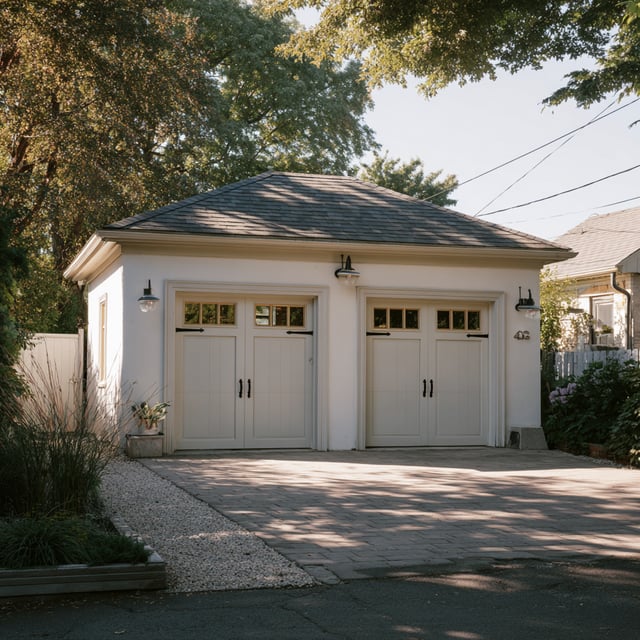
The historic neighborhoods north and west of downtown — Seminole Heights, Tampa Heights, Ybor Heights, and Hyde Park — developed around Craftsman and Florida bungalows built between roughly 1910 and 1940, and the small detached garage behind the house was as standard to these properties as the front porch. These structures are wood-framed, typically 12 by 20 feet or smaller, and accessed from an alley or a side-yard driveway. They were not built for hurricane resistance, and they were not built for the demands of 21st-century storage, hobbies, or workspace. That gap between original design intent and current need is exactly where renovation investment makes sense.
The condition of wood framing in these structures varies considerably with the attention they have received. Tampa's humidity accelerates rot at sill plates and lower wall framing, and pest pressure is a constant factor. A structural inspection before committing any budget to finishes is the appropriate first step — discovering compromised framing after a floor coating is installed is far more expensive than discovering it before. Hyde Park's Historic District designation means the City of Tampa's Architectural Review Commission must approve exterior changes to contributing structures; interior upgrades including insulation, electrical, and flooring do not require historic review.
Not sure how to begin your renovation?
Get free, expert guidance from a dedicated Block Project Planner who can help you navigate proposals, timelines, contractor selection, and more.
Book A Free Consultation
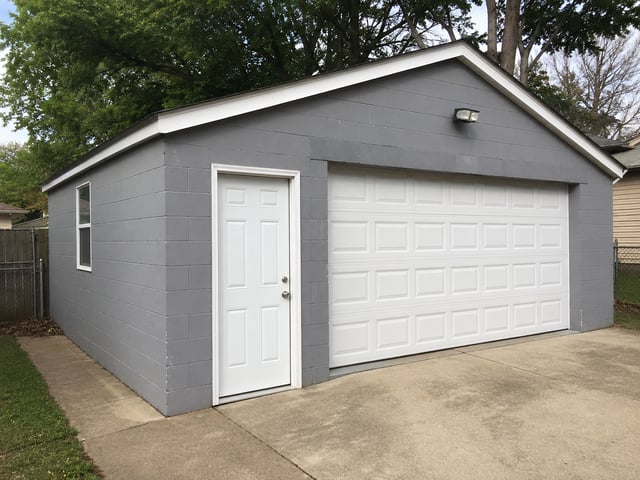
Tampa's postwar suburban growth produced dense concentrations of single-story concrete-block ranch homes across Carrollwood, Temple Terrace, Brandon, and the South Tampa corridor, and most of them came with one- or two-car attached garages that share a wall with the kitchen or utility room. These structures have held up well structurally — concrete block is inherently resistant to the moisture and pest issues that plague wood-framed construction — but their original doors rarely meet current Florida wind load standards, and the garage interior was typically left unfinished without insulation or climate management.
Storm-rated door replacement is the most urgent project on these properties from both a safety and insurance standpoint. The second-most impactful upgrade is insulation on the shared wall and ceiling, which directly reduces the cooling load on the adjacent living space — a real and ongoing cost in a city where air conditioning runs ten months out of twelve. The concrete-block walls themselves do not need interior insulation to perform adequately, but the ceiling cavity above and the shared wall with living space both benefit substantially.
Drive through New Tampa, Wesley Chapel, FishHawk Ranch, or the Wiregrass communities and a pattern becomes obvious: two- and three-car front-load garages are the dominant architectural feature of the street-facing facade. These structures are modern in every practical sense — built to Florida Building Code with insulated doors, engineered roof trusses, drywall-finished interiors, and prewired electrical. The typical footprint runs 22 by 22 feet or wider for a two-car configuration, with 9-foot ceilings standard and 10-foot available on larger homes.
The storm-preparedness upgrades that define renovation projects in older Tampa housing are largely already addressed in these newer builds. What drives renovation activity here is finishing: epoxy or polyaspartic flooring, overhead storage systems taking advantage of the ceiling height, wall-mounted organization, and EV charging circuits. Every community in this segment has an active HOA with architectural review requirements for exterior changes; any door replacement, window addition, or exterior modification requires written board approval before work begins, with most boards operating on a 30-day review cycle.
Florida's building code is technically demanding, and Hillsborough County's enforcement is active. Getting ahead of the permitting process — rather than working around it — protects you at inspection, at closing, and in the event of an insurance claim.
These Block Renovation guides address the project types Tampa homeowners encounter most often, from conversion planning to material selection.

“Most renovation chaos starts with rushing. When planning is skipped, costs rise, timelines stretch, and stress multiplies.”
Block Renovation connects Tampa homeowners with thoroughly vetted local contractors handpicked for the project's scope and style. Every contractor undergoes background checks, insurance verification, and reference reviews through a rigorous multi-step vetting process. A dedicated Project Planner provides expert guidance through proposals, timelines, and contractor selection at no cost.
Block manages payments through a secure, progress-based system ensuring contractors are paid as work gets done. Every project scope is reviewed by renovation experts and AI-enabled tools to spot gaps and minimize change orders. Every contractor in the Block network provides a workmanship warranty.
Remodel with confidence through Block

Connect to vetted local contractors
We only work with top-tier, thoroughly vetted contractors

Get expert guidance
Our project planners offer expert advice, scope review, and ongoing support as needed
Enjoy peace of mind throughout your renovation
Secure payment system puts you in control and protects your remodel
Renovate confidently with Block
Easily compare quotes from top quality contractors, and get peace of mind with warranty & price protections.
Garage
How to Convert a Garage Into a Living Space: Costs, Steps, and Ideas
08.09.2026
Garage
Garage Roof Replacement: Costs, Materials, and Timing
07.26.2026
Remodeling
Cinder Block Garage Cost: Prices by Size & Material
07.23.2026
.webp?width=640&name=u5821215421_A_renovated_attached_garage_interior_used_for_dai_be957847-8779-47d0-80bc-5a7ad148320e_0%20(1).webp)
Cost
Garage Remodel Costs in 2026: Makeovers to Conversions
07.07.2026
Garage
1-Bedroom Garage Apartment Floor Plans | Block
06.11.2026