




Countertops
Slate Countertops vs. Granite, Quartz and Soapstone
09.20.2026
02.09.2026


In This Article
Walk into any kitchen showroom and you'll see the same parade: white quartz, speckled granite, maybe some marble if the designer's feeling bold. Safe choices. Predictable choices. Choices that look like every other kitchen renovation happening on your block right now.
Then there's slate and soapstone—two stones that make people stop and stare because they don't look like anything else. These aren't materials you pick when you want your kitchen to blend in. You choose them because you're tired of bland, because you want surfaces with actual personality, because you'd rather have counters that age interestingly than ones that try desperately to look new forever.
But here's what nobody mentions until you're already invested: these stones behave completely differently from each other despite both being dark, dramatic, and decidedly not mainstream. One will scratch if you look at it wrong. The other might flake if installed poorly. One stays roughly the same color for decades. The other transforms from gray to near-black whether you want it to or not.
Understanding these differences matters more than falling in love with a sample chip under showroom lighting.
Slate forms when clay and volcanic ash get squeezed under massive pressure until they transform into fine-grained metamorphic rock. The defining characteristic—the thing that makes slate look like slate—is cleavage, which is geologist-speak for how the rock naturally splits along flat planes. This creates the layered, textured surface you see on slate countertops. Depending on what minerals were present during formation, you get colors ranging from standard gray and black to surprising greens, purples, and rusty reds. Vermont, Pennsylvania, and Virginia produce most domestic slate, though Brazil and China export significant quantities too.
Soapstone takes a completely different geological path. It's metamorphic rock dominated by talc—usually 50-80% of its composition—which explains why it feels almost soft and waxy compared to harder stones. That high talc content makes soapstone unique: it's non-porous (truly, completely non-porous, not "sealed so it acts non-porous"), incredibly heat resistant, and softer than most countertop materials. Brazil, India, and parts of the U.S. including Vermont and Virginia quarry it commercially.
Renovate with confidence every step of the way
Step 1: Personalize Your Renovation Plan
Step 2: Receive Quotes from Trusted Contractors
Step 3: Let Us Handle the Project Details
|
Feature |
Slate |
Soapstone |
Winner |
|
Cost (installed) |
$50–$100 per sq ft |
$70–$120 per sq ft |
Slate |
|
Hardness |
Moderate to hard |
Soft (scratches easily) |
Slate |
|
Heat resistance |
Excellent |
Exceptional |
Soapstone |
|
Maintenance |
Annual sealing |
Monthly oiling (optional) |
Tie |
|
Surface texture |
Naturally textured/cleft |
Smooth, honed |
Soapstone |
|
Color evolution |
Stable |
Darkens significantly |
Depends on preference |
|
Scratch resistance |
Good |
Poor (scratches visible) |
Slate |
|
Visual character |
Varied, layered |
Uniform, veined |
Depends on preference |
|
Ease of cleaning |
Moderate (texture traps debris) |
Easy (wipes clean) |
Soapstone |
|
Repairability |
Difficult (chips/flakes visible) |
Easy (scratches sand out) |
Soapstone |
|
Water resistance |
Requires sealing |
Naturally non-porous |
Soapstone |
Both materials anchor specific aesthetic directions while resisting others. Understanding where each stone naturally fits helps avoid expensive mistakes.
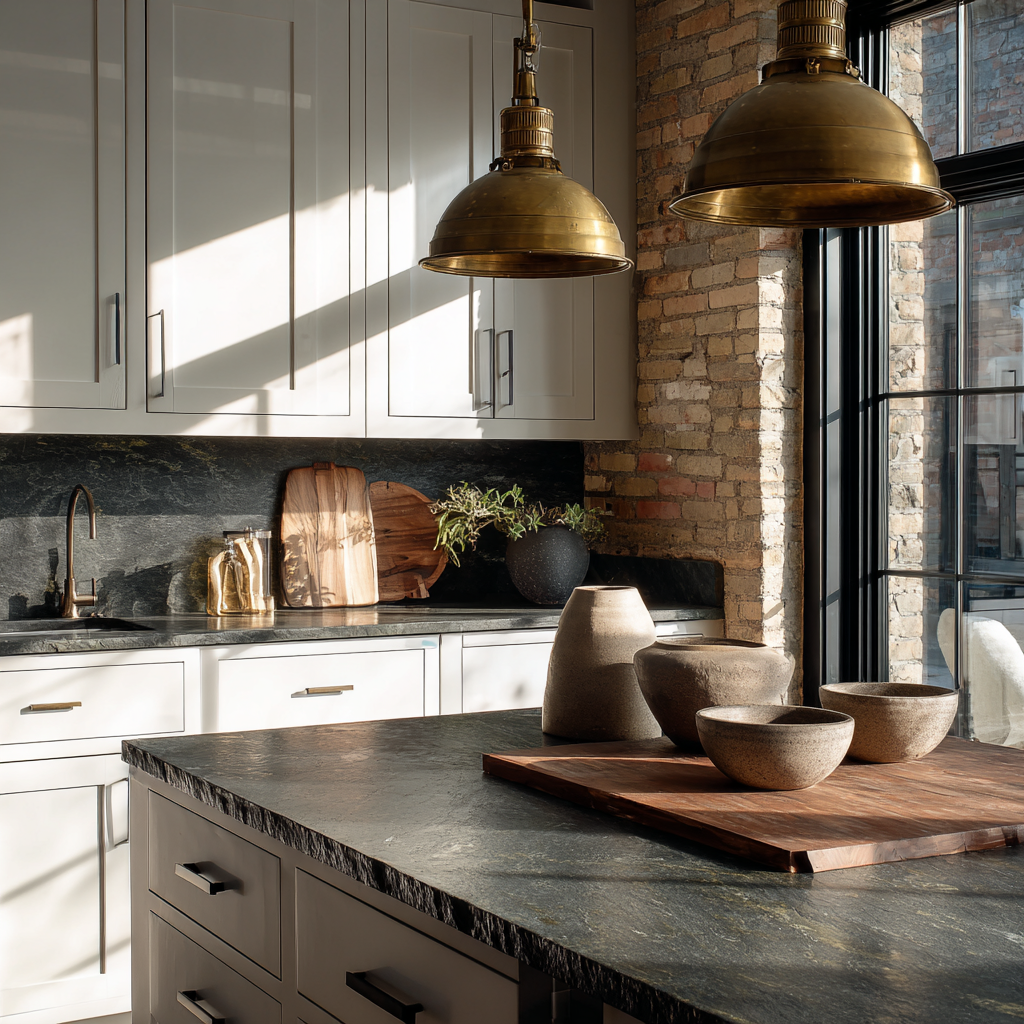
Industrial and urban loft spaces love slate's raw texture. The cleft surface, visible layers, and moody tones suit exposed brick, steel beams, concrete floors, and utilitarian fixtures. Slate countertops read as intentionally unfinished—the geological equivalent of showing ductwork instead of hiding it. Pairing slate with polished chrome or glossy cabinetry creates jarring contrast; brushed metals, matte finishes, and reclaimed wood feel cohesive.
Soapstone belongs in colonial, farmhouse, and period-appropriate renovations. This is the countertop material in 18th and 19th century American homes before granite became accessible. Its smooth, dark presence suits wood cabinetry in traditional profiles, apron-front sinks, and simple hardware. Modern farmhouse designs benefit from soapstone's authentic rather than manufactured rusticity. It's the real thing, not a Pinterest interpretation.
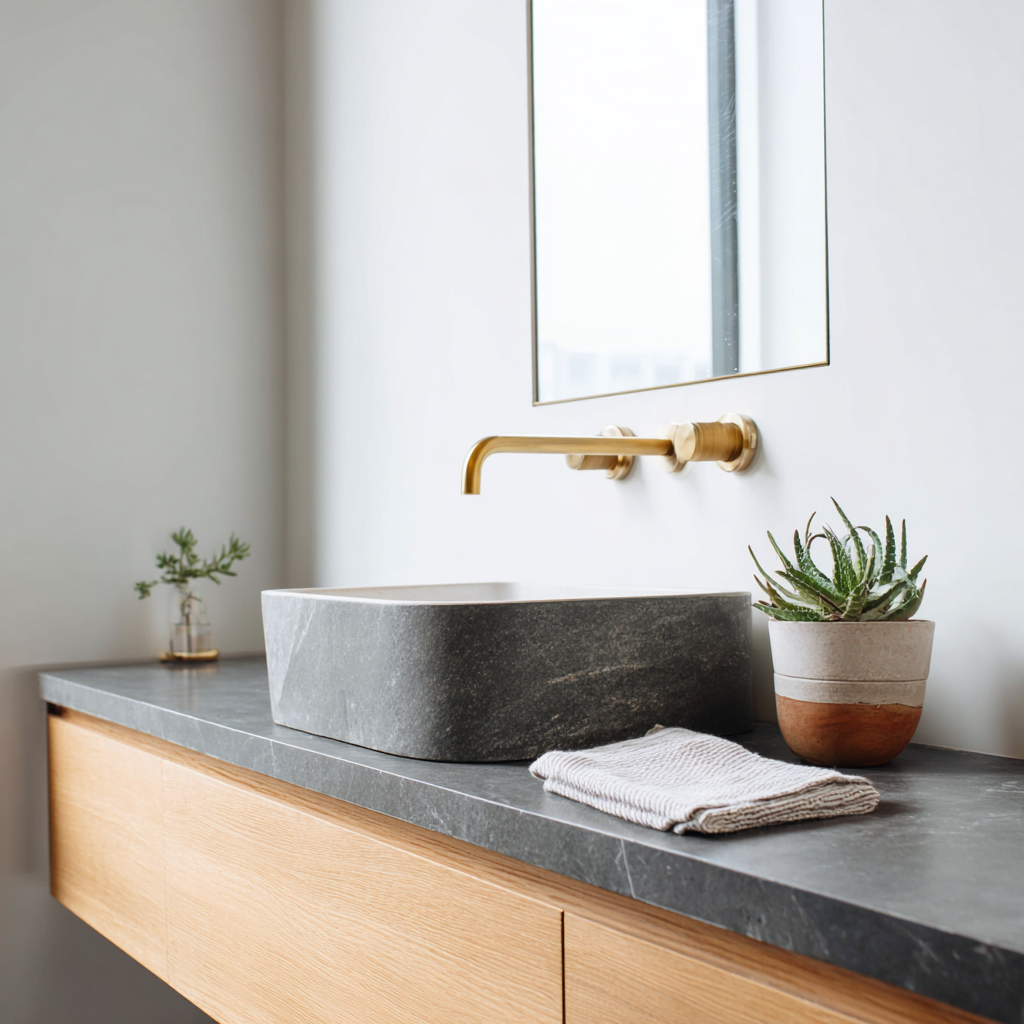
Minimalist Japandi kitchens embrace soapstone's simplicity. The uniform surface, subtle veining, and lack of busy patterning create visual calm. Light wood cabinets, white walls, and simple forms let soapstone provide grounding weight without competing for attention. The darkening patina adds warmth that prevents stark white kitchens from feeling sterile.
Rustic and mountain homes pair naturally with slate's geological drama. Stone counters echo stone fireplaces and natural surroundings. The varied colors—especially greens and purples—connect indoor spaces to outdoor landscapes. Heavy timber beams, natural wood finishes, and organic shapes harmonize with slate's unrefined character.
Contemporary spaces can use either material strategically. Slate works when the design leans industrial or textural—think concrete counters' cooler, more geological cousin. Soapstone succeeds in restrained contemporary kitchens emphasizing craft and material honesty over flashy finishes. Both fail in contemporary spaces chasing high-gloss perfection or seamless minimalism.
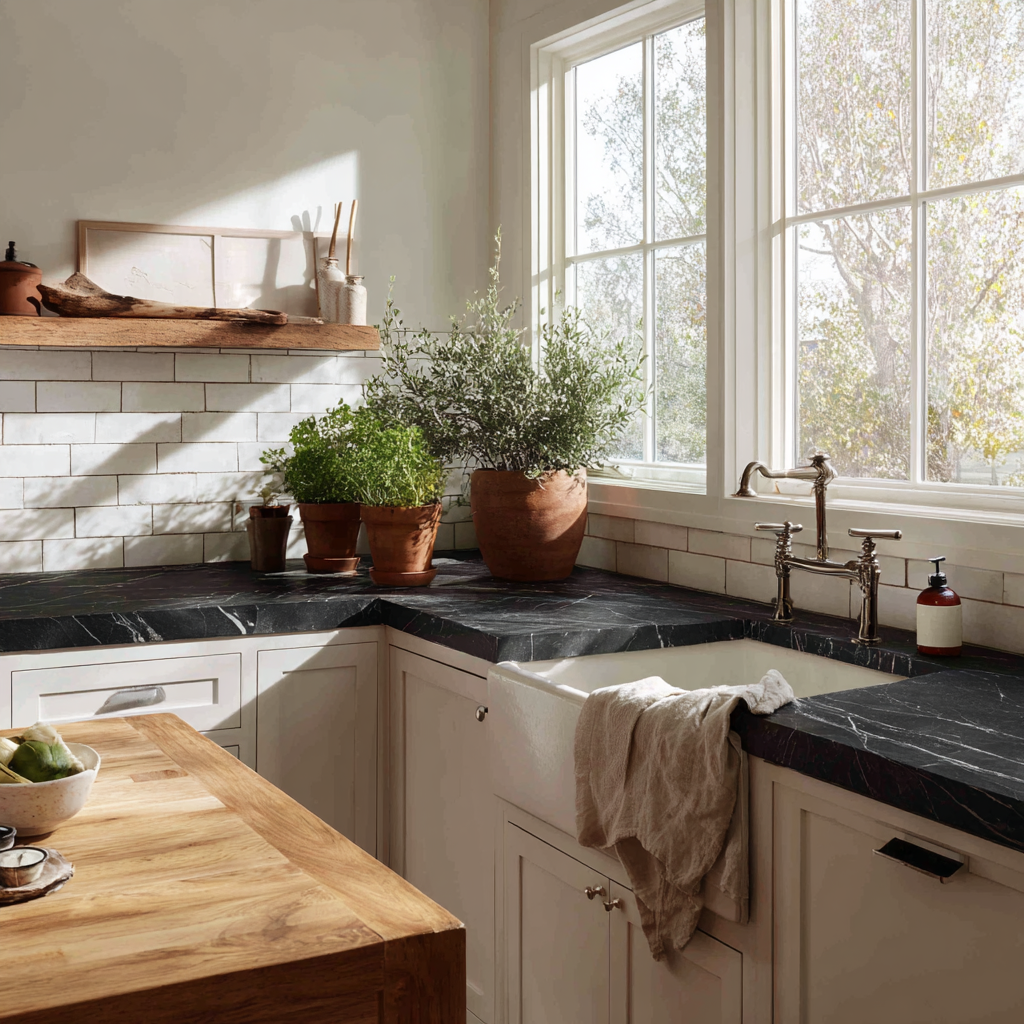
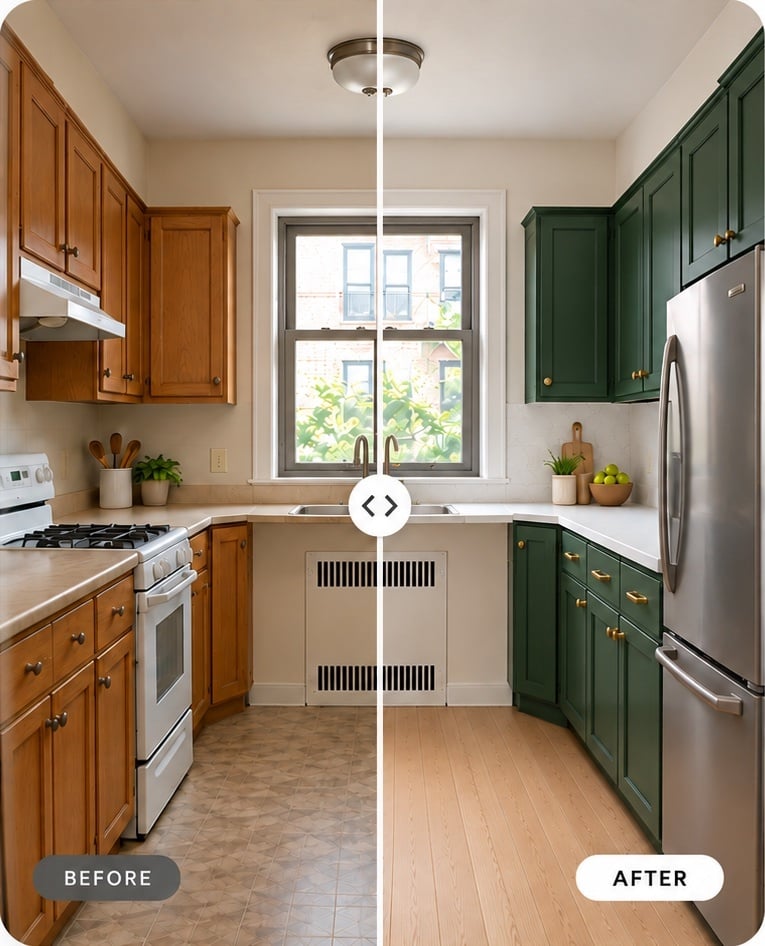
Kitchens test durability and practicality constantly. Slate's hardness handles dropped jars, knife impacts, and heavy pot abuse better than soapstone's scratch-prone surface. But soapstone counters this with exceptional heat resistance—set boiling pots directly down without trivets or concern. Choose based on your cooking style: if you prep heavily with knives and cutting boards occasionally slip, slate forgives more. If you juggle hot cookware and forget where you set things down, soapstone eliminates worry.
Texture affects daily cleaning significantly. Slate's cleft surface traps flour, sugar, and crumbs in its valleys, demanding multiple wipes to get truly clean.
Bathroom vanities favor soapstone for practical reasons. The non-porous surface means toothpaste, soap residue, and water can't penetrate. Wipe and you're done, no sealing required ever. Slate's texture collects grime in surface irregularities and needs consistent sealing to prevent water damage from bathroom humidity.
That said, slate brings drama to powder rooms and guest baths where impact is minimal and visual interest matters more than daily convenience. Soapstone's smooth functionality serves master bath vanities better, especially for applying makeup, styling hair, or handling small items without navigating texture.
Bring Your Dream Bathroom to Life
Slate installed runs $50 to $100 per square foot. Basic gray or black falls toward the lower end; unusual colors like purple or green, thicker slabs, or intricate edges push higher. Textured slate requires more careful installation, affecting labor costs—not every fabricator handles it confidently.
Soapstone installed costs $70 to $120 per square foot. The premium reflects scarcity, labor-intensive quarrying, and fabrication challenges. Despite being softer than granite, soapstone is more fragile during cutting and transport. Slabs crack more easily, waste rates run higher, and fabricators charge accordingly.
Both cost less than high-end granite or exotic quartzite but more than laminate or butcher block. You're paying for genuine natural stone with character, not engineered uniformity.
Hidden costs affect both. Slate's texture favors simpler edge profiles, saving money, but sometimes requires thicker slabs for stability, increasing material costs. Soapstone's softness demands extra care during sink cutouts and faucet holes, potentially increasing fabrication time and cost.
Slate demands an annual sealing minimum. Miss this and you'll regret it. The process isn't difficult—clean thoroughly, apply sealer, wait, wipe excess—but it requires remembering and following through. Bathroom slate or slate near sinks might need sealing twice yearly. The cleft texture means sealer application takes more effort than smooth surfaces because you're working product into valleys and crevices, not just wiping across a flat plane.
Soapstone wants monthly oiling but doesn't need it. Here's the thing: mineral oil darkens soapstone and evens out the patina, but it's cosmetic. The stone doesn't require oiling to function or survive. If you hate maintenance, you can ignore oiling entirely—the stone will darken on its own from hand oils and food contact, just unevenly. Some homeowners love the organic randomness of natural darkening. Others find the splotchiness during transition unbearable and oil religiously until the stone reaches uniform deep charcoal.
Soapstone is infinitely easier to clean than slate countertops. Slate's texture traps crumbs, flour, and small debris in its surface valleys. You'll find yourself wiping counters multiple times to get them truly clean, or using slightly damp cloths to capture what dry wiping misses. It's not difficult, just more involved than smooth surfaces. Soapstone wipes clean effortlessly—the smooth, non-porous surface releases everything with a single pass. So, in the battle of slate vs. soapstone countertops for inherent cleanliness, the latter takes the crown.
Repairing damage follows opposite logic. Slate chips or flakes can sometimes be filled or patched, but repairs are usually visible. You're hoping to minimize noticeability, not restore perfection. Soapstone scratches—no matter how deep—can be sanded out. You literally sand the affected area with progressively finer grits, then oil, and the scratch disappears.
Choosing between slate and soapstone is just the beginning—all of which can be assisted with our free countertop visualizer. Installing these materials correctly—understanding their quirks, managing their challenges, respecting their geological personalities—requires fabricators who've worked with them extensively.
Block connects you with general contractors experienced specifically in slate and soapstone installation. They can assess your kitchen or bathroom, explain how each material will perform in your specific space, and provide realistic timelines and costs based on your actual conditions rather than idealized scenarios.
You'll receive detailed proposals covering material selection, fabrication, edge profiles, and installation complexity unique to your chosen stone. Our project planners help you compare bids accurately, identify missing elements, and understand what drives pricing differences. Block's milestone-based payment system protects you financially while your counters move from slab selection through fabrication to final installation.
Remodel with confidence through Block

Connect to vetted local contractors
We only work with top-tier, thoroughly vetted contractors

Get expert guidance
Our project planners offer expert advice, scope review, and ongoing support as needed
Enjoy peace of mind throughout your renovation
Secure payment system puts you in control and protects your remodel

Renovate confidently with Block
Easily compare quotes from top quality contractors, and get peace of mind with warranty & price protections.
Countertops
Slate Countertops vs. Granite, Quartz and Soapstone
09.20.2026
Countertops
Laminate Countertops vs. Quartz: How to Choose
09.15.2026
Countertops
Kitchen Counter Overlay: Cost, Durability and More
09.13.2026
Countertops
What Color Countertops Go With Oak Cabinets?
09.01.2026
Countertops
Walnut Cabinets With White Countertops
08.24.2026