




Bathroom Floor Plans
Single Wall Bathroom Layout: Pros, Cons, and Tips
07.22.2026
03.20.2026


In This Article
A 6x6 bathroom gives you 36 square feet. That’s not a lot of room—but it’s more than enough for a shower, a toilet, and a vanity that all fit comfortably if the layout is right. The square footprint actually works in your favor here: unlike narrow rectangles where the width becomes a bottleneck, a 6x6 room distributes space evenly in every direction, giving you more flexibility in where fixtures land and how the room flows.
Bathrooms this size are common in metropolitans like New York and Chicago, where older building footprints and converted spaces regularly produce compact bathrooms that need to function as well as rooms twice their size.
The key constraint at 6x6 isn’t total area—it’s that no wall is longer than 6 feet. A standard 60-inch bathtub won’t fit without consuming an entire wall, which is why most 6x6 bathrooms use a shower stall instead. That trade-off is actually a design advantage: a shower takes up less floor space than a tub, leaving more room for the vanity, the toilet, and the open floor you need to move comfortably.
Turn your renovation vision into reality
Get matched with trusted contractors and start your renovation today!
Find a Contractor
A 6x6 bathroom is compact, but it still involves the same core trades as a larger bath—plumbing, electrical, tile, and finish work. The room’s small footprint means you’ll use less material, but labor minimums don’t scale down with square footage. A plumber’s day rate is the same, whether the bathroom is 36 square feet or 80.
Labor accounts for 60–70% of total cost in a typical 6x6 renovation. The room is small, but the work is the same—and in tight quarters, trades often need more time to sequence tasks and work around each other.
Renovate with confidence every step of the way
Step 1: Personalize Your Renovation Plan
Step 2: Receive Quotes from Trusted Contractors
Step 3: Let Us Handle the Project Details

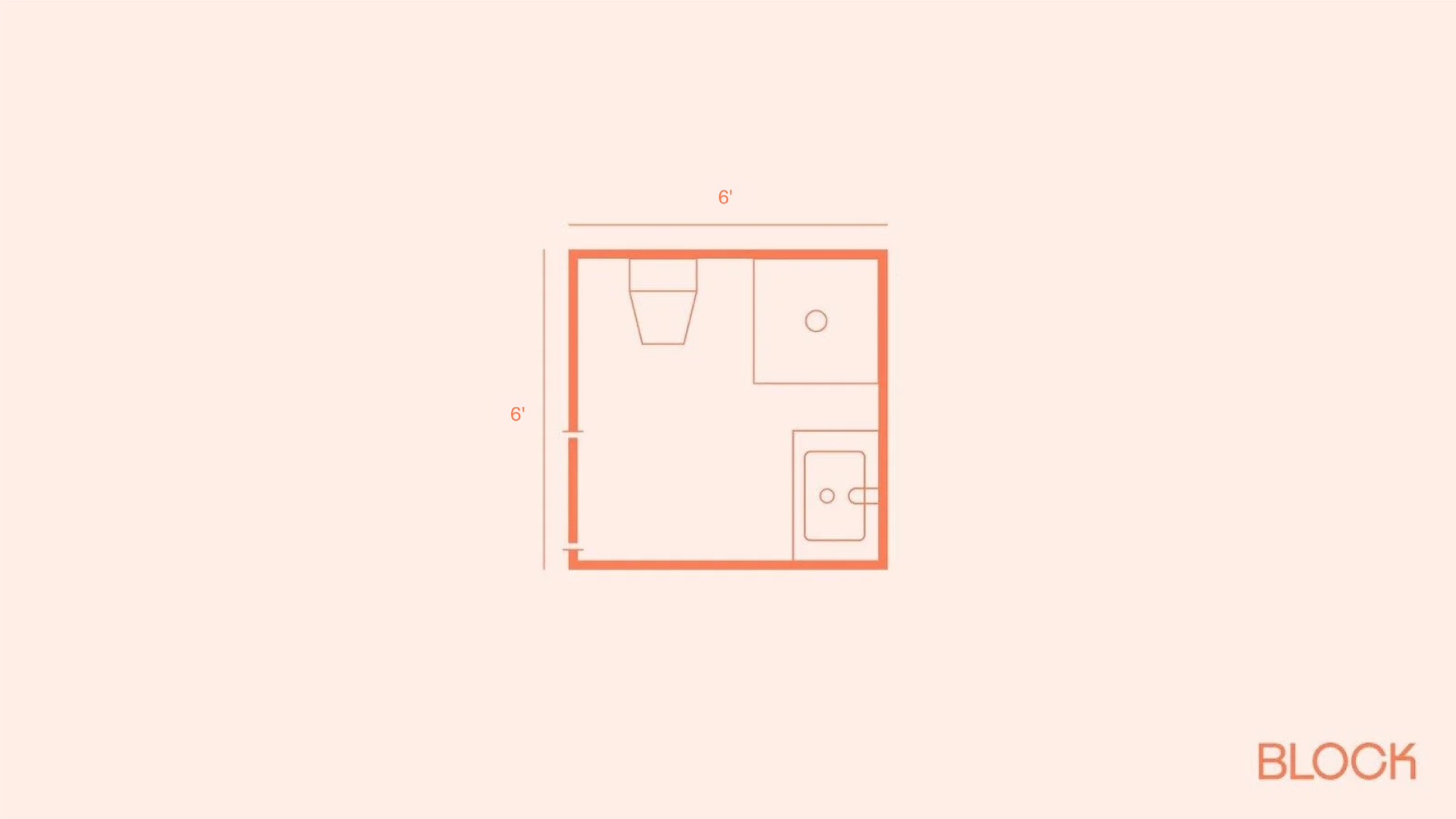
The toilet sits on the upper-left wall. A shower stall with a drain occupies the upper-right quadrant. The vanity is positioned on the lower-right wall. The door opens on the left wall.
This layout groups the two plumbing-heavy fixtures—toilet and shower—on the same wall, which keeps drain and supply lines concentrated in one zone. That’s the most efficient arrangement from a plumbing standpoint and typically the least expensive to rough in.
The vanity on the lower-right wall is the first thing you see from the doorway, which gives the room a clean entry impression. The open floor between the vanity and the shower is generous for 36 square feet, giving enough to stand, dry off, and move without brushing against fixtures.
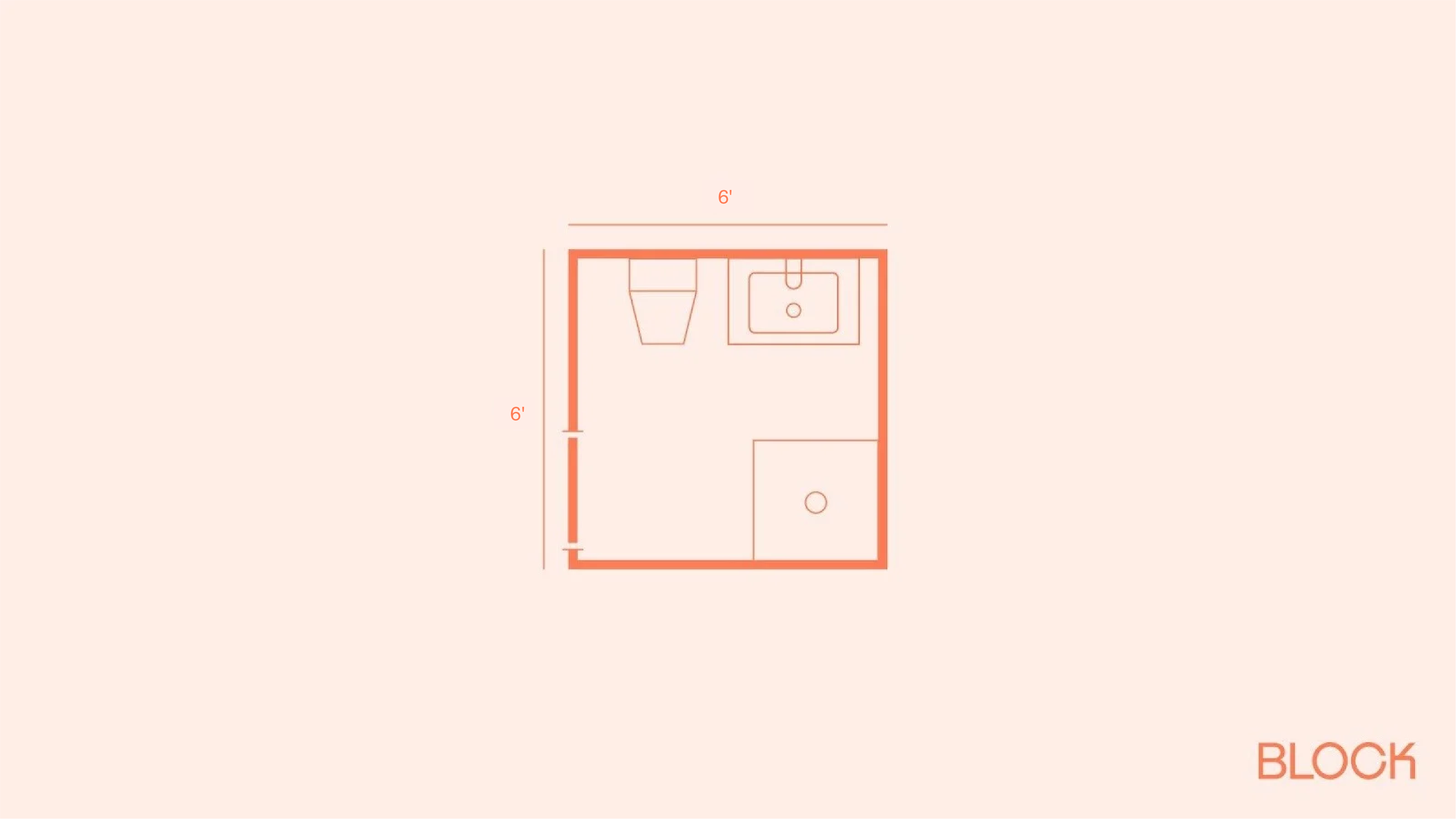
The toilet sits on the upper-left wall. The vanity is positioned on the upper-right wall. A shower stall occupies the lower-right corner. The door opens on the left wall.
Putting the vanity and toilet together on the upper wall means both dry-zone fixtures are handled the moment you walk in. The shower is tucked into the far corner of the room, separated from the entry by an open floor. That separation gives the bathroom a sense of depth that compact rooms often lack.
This configuration works well for a bathroom where grooming is the primary daily activity and showers are quick. The vanity gets prominent wall space with room for a mirror and sconces above it, and the toilet is adjacent but not the first thing you notice.
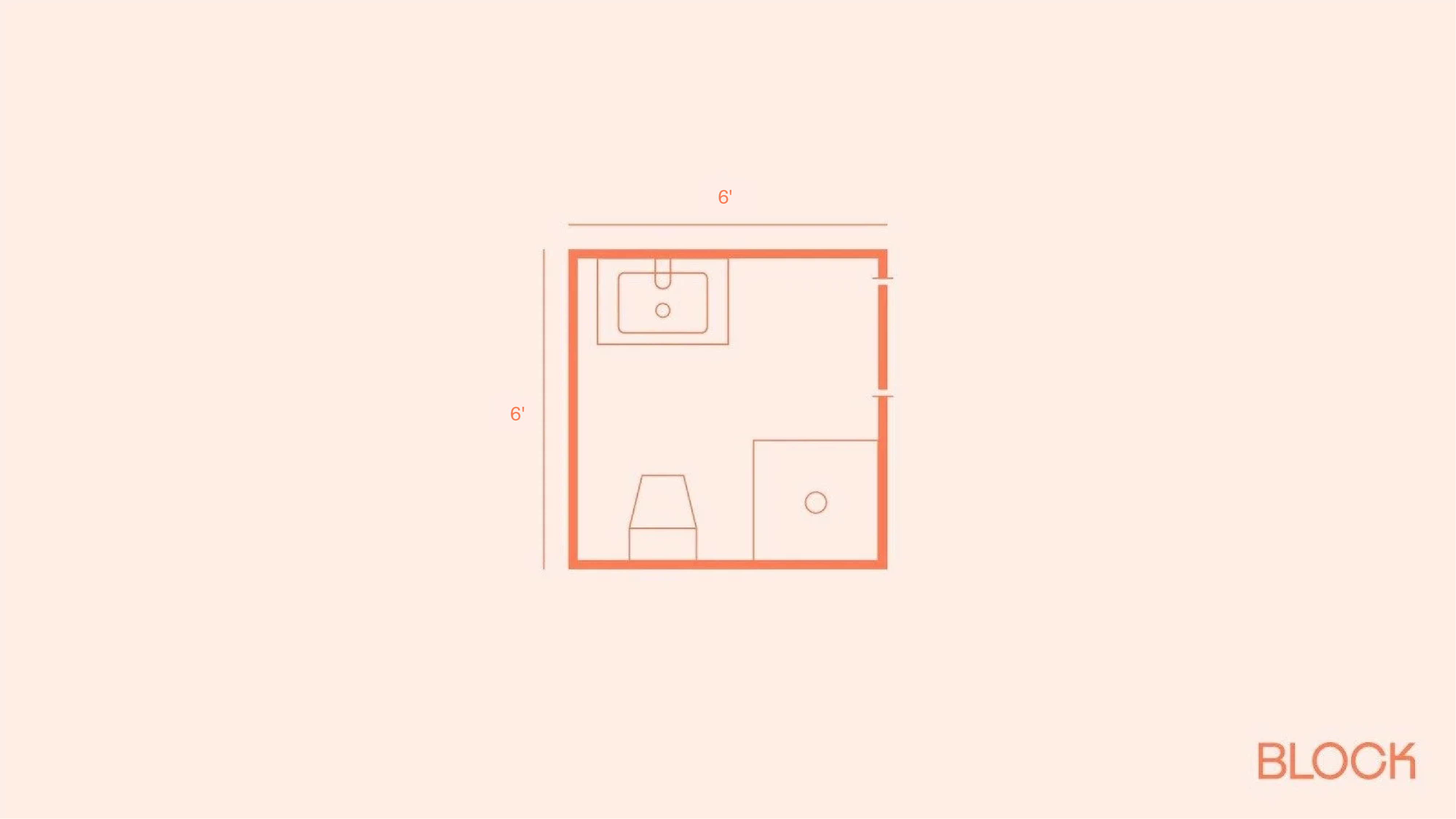
The vanity sits on the upper-left wall. The toilet occupies the lower-left corner, and a shower stall is in the lower-right. The door opens on the right wall.
This layout dedicates the entire upper-left portion of the room to the vanity, giving it the most wall space and the best sightline from the door. The toilet and shower share the lower wall, which keeps the plumbing concentrated and creates a clear divide between the grooming zone (upper) and the wet zone (lower).
The open floor in the center of the room is the largest in this set. If you’re adding accessibility features—a wider shower entry, grab bars, or a fold-down bench—this layout gives you the most room to work with.
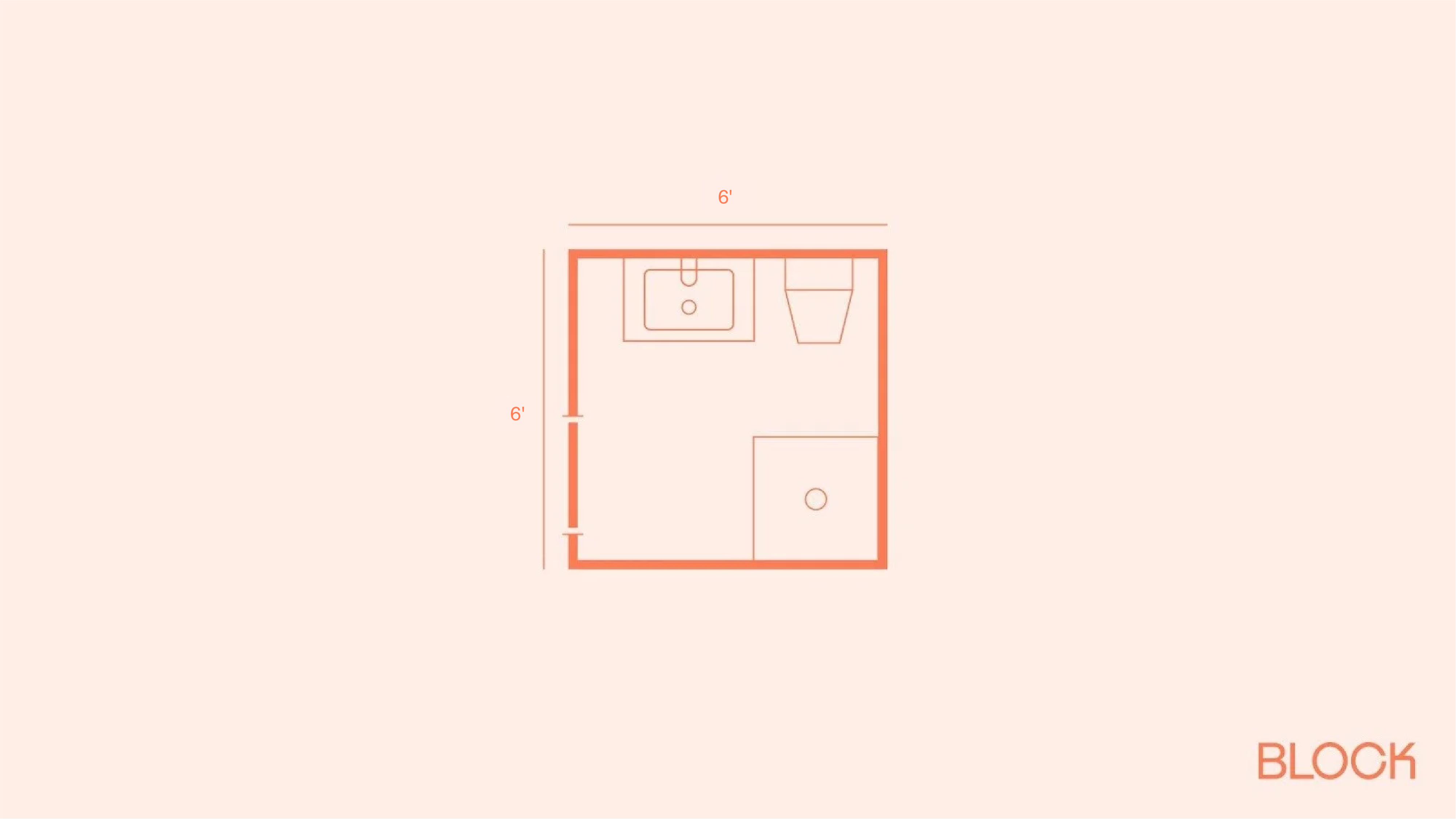
The vanity sits on the upper-left wall. The toilet is positioned on the upper-right. A shower stall occupies the lower-right corner. The door opens on the left wall.
This is the most perimeter-focused layout in the set. Every fixture is pushed to the walls, and the center of the room is entirely open. That central clearance makes the bathroom feel bigger than its dimensions and gives you a clear path from the door to any fixture without navigating around another one.
The corner shower in the lower-right gets two walls for enclosure, which simplifies the glass or curtain configuration. A neo-angle shower base—the triangular shape designed specifically for corners—fits this position well and can feel more spacious than a standard square stall of the same footprint.
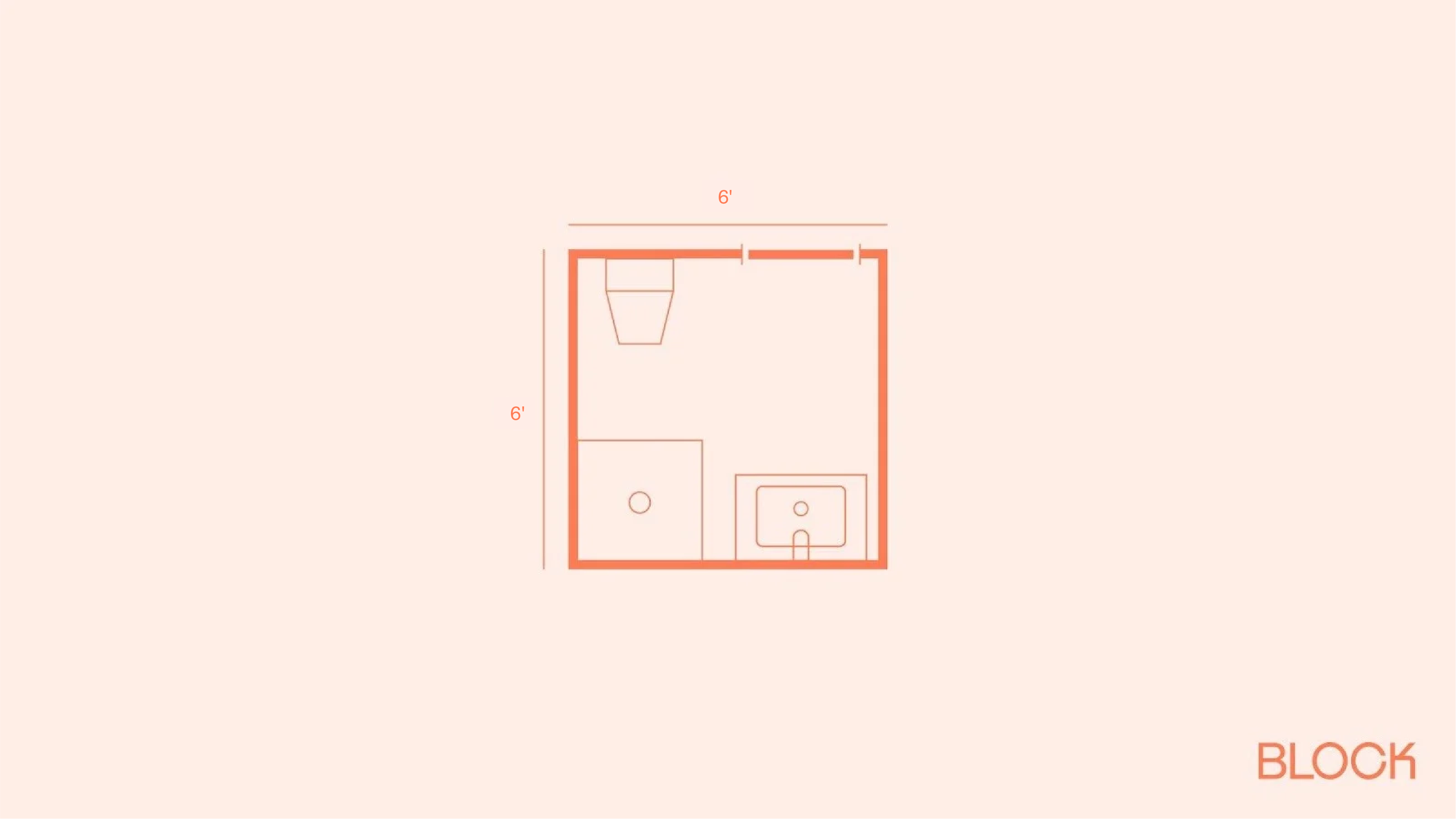
The toilet sits on the upper-left wall. A shower stall occupies the lower-left, and the vanity is positioned on the lower-right. The door opens on the upper wall.
With the door on the upper wall, this layout puts the toilet immediately beside the entry and the shower and vanity in the far half of the room. That arrangement works best when the door opens outward or is a pocket door—an inward swing would conflict with the toilet clearance in a 6-foot room.
The shower and vanity share the lower wall, which means both can be accessed without passing the toilet. For a bathroom used primarily by guests or as a secondary bath, keeping the vanity and shower together creates a natural use sequence: enter, pass the toilet, wash up, shower, and exit.
Renovate with confidence every step of the way
Step 1: Personalize Your Renovation Plan
Step 2: Receive Quotes from Trusted Contractors
Step 3: Let Us Handle the Project Details
Bathrooms this size are rarely part of a home’s original floor plan. More often, they’re the result of converting an existing space—a closet, an attic corner, a basement alcove—into a functioning bathroom. If you’re considering adding a compact bathroom to your home, here’s what to know about the most common approaches.
A walk-in closet or linen closet adjacent to an existing bathroom’s plumbing wall is often the most cost-effective space to convert. The proximity to existing supply and drain lines keeps plumbing costs manageable, and the footprint of a standard closet—typically 5x6 to 6x8 feet—maps directly onto a functional shower bathroom. The biggest challenge is ventilation: the converted space will need an exhaust fan ducted to the exterior, which may require routing through the attic or an adjacent wall. For a detailed walkthrough, read Converting Closets Into Bathrooms.
Attic bathrooms are one of the best ways to add a full or three-quarter bath without sacrificing living space on the main floors. The challenge is the sloped ceiling—the shower and toilet need to sit under the highest point of the roofline, and the vanity can often tuck under a lower section. Plumbing needs to run down through the floor to connect with existing lines, which adds cost but is standard for any attic renovation. For design ideas and practical considerations, read Attic Bathrooms: Ideas & Design Variables and Slanted Roof Bathrooms and Shower Design Ideas.
Basement bathrooms are highly practical—they serve finished basements, home gyms, and guest suites without requiring trips upstairs. The main consideration is the drain: if the main sewer line sits above the basement floor, you’ll need an up-flush system or a sewage ejector pump to move waste upward to the drain line. Waterproofing is also critical, since basement environments are naturally more prone to moisture. For a full breakdown of the process and costs, read How to Build a Bathroom in a Basement.
A 6x6 bathroom doesn’t need to feel small. It needs to feel considered. The layouts that succeed at this size are the ones where the shower has enough room to be comfortable, the vanity has enough wall for a mirror, and the toilet isn’t the first thing you see when the door opens.
With Block Renovation, you can test different configurations and finish levels through the free Renovation Studio—seeing how each decision affects your budget before any demolition begins. When you’re ready, Block connects you with vetted local contractors who provide detailed, comparable proposals backed by progress-based payments and a one-year workmanship warranty.
The best compact bathrooms aren’t the ones that try to hide their size. They’re the ones that own it—using smart fixture placement, clean finishes, and deliberate design to make 36 square feet feel like exactly the right amount of room.
Remodel with confidence through Block

Connect to vetted local contractors
We only work with top-tier, thoroughly vetted contractors

Get expert guidance
Our project planners offer expert advice, scope review, and ongoing support as needed
Enjoy peace of mind throughout your renovation
Secure payment system puts you in control and protects your remodel


Renovate confidently with Block
Easily compare quotes from top quality contractors, and get peace of mind with warranty & price protections.
Bathroom Floor Plans
Single Wall Bathroom Layout: Pros, Cons, and Tips
07.22.2026
.jpg?width=640&name=5301c89b-3165-4f83-af34-a6b02eaa6c48%20(2).jpg)
Bathroom Floor Plans
Long, Narrow Bathroom Floor Plans: Layouts That Work
07.21.2026
.jpg?width=640&name=2a430d6c-5cf0-4596-9a89-601f3d2d6391%20(7).jpg)
Bathroom Floor Plans
Square Bathroom Floor Plans & Layout Tips
07.18.2026
Bathroom Floor Plans
300 Sq Ft Bathroom: 7 Large Master Bath Layouts
06.05.2026
Bathroom Floor Plans
100 Square Foot Bathroom Layout: Make It Work
06.02.2026