Split level homes were built in massive numbers from the late 1950s through the early 1980s, with peak production in the 1960s. That means most of them are now 45 to 70 years old, and the exterior systems (roof, siding, windows, drainage) are usually overdue for real attention. A split level's geometry actually rewards thoughtful renovation work, since the staggered rooflines and strong horizontal bands give a designer real material to work with. The catch is that a lot of those decisions are easy to get wrong.
Why split level home exterior remodels are different
Split level homes have a few defining features that shape how an exterior renovation needs to be approached:
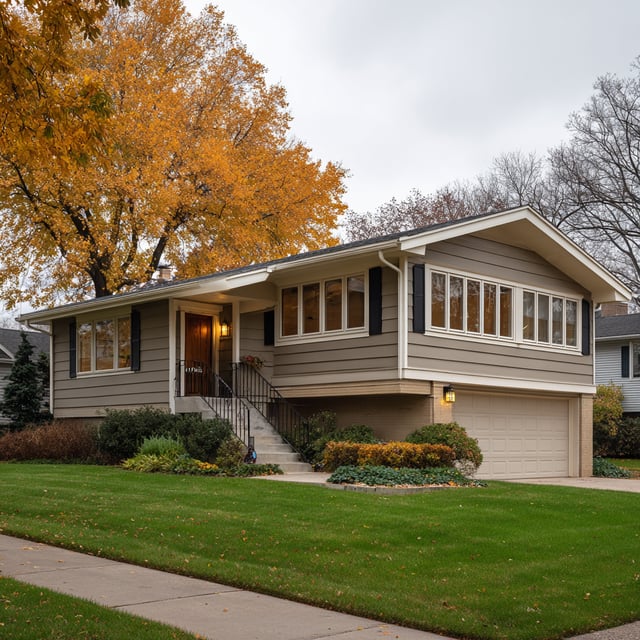
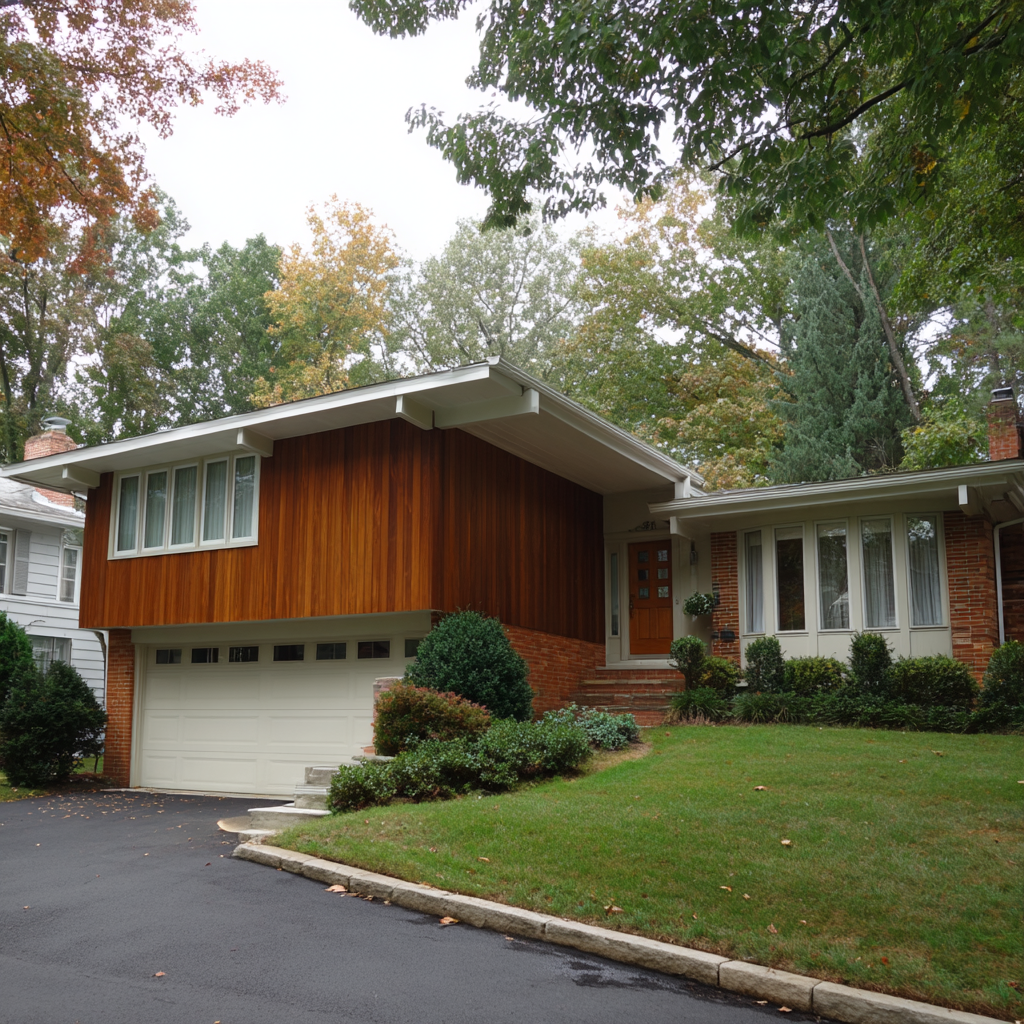
- Multiple short staircases inside translate to staggered floor levels outside, which create distinct horizontal bands across the facade.
- Two or three different cladding materials were often used to break up those bands, so a typical original has brick or stone on the lower section, vertical siding on the mid-level, and horizontal siding up top.
- Rooflines are usually low-pitched with deep overhangs that throw shadows across the upper third of the elevation.
- Garages are commonly front-facing and prominent, sometimes taking up a third or more of the street-facing wall.
- Windows tend to be smaller and inconsistent in size between levels.
The mix gives the style its character, but it also magnifies any clumsy choice. Slapping one color of vinyl siding across every plane flattens the architecture, and replacing a low-pitched roof with the wrong shingle profile throws the proportion off entirely. Choices that work on a colonial often don't work here.
Practical upgrades for a split level home exterior remodel
These matter most for long-term performance. They're not always the most visible, but skip them and a renovation budget can triple within five years.
Roofing
A split level roof usually has multiple planes meeting at different elevations, which means more flashing and more valleys where water can find a way in. If the roof is near the end of its life, replace it before doing anything else.
Signs it's time:
- Granules are collecting in the gutters.
- Shingles are curling, cracking, or missing.
- Water stains have appeared on the ceilings below the roof.
- The current roof is 20+ years old for 3-tab asphalt, or 25 to 30+ years old for architectural shingles.
Material comparison:
- 3-tab asphalt shingles: expect $4 to $6 per square foot installed with a 15 to 20 year lifespan. They're the cheapest option, but they look flat and show wear quickly.
- Architectural (dimensional) asphalt shingles: these run $5 to $9 per square foot installed with a 25 to 30 year lifespan. It's the most common modern choice because it offers better wind resistance at a price most budgets can absorb. Color choice matters more than people expect on a split level: a charcoal or weathered-wood blend tends to flatter the low-pitched rooflines, while lighter grays can wash out under the deep eave shadows. If the existing roof decking is more than 30 years old, plan for the cost of replacing damaged plywood underneath, which usually runs $50 to $80 per sheet plus labor.
- Standing seam metal: budget $10 to $16 per square foot installed for a roof that lasts 40 to 70 years. It performs especially well on the low-pitched planes common on split levels and pairs naturally with a modernized exterior. Pay attention to panel width when specifying it, because narrower 12-inch panels feel more residential, while 16- to 18-inch panels can overwhelm a smaller facade.
- Synthetic slate or shake: plan for $12 to $20 per square foot installed. The lifespan is long and the look is distinctive, but it's usually overkill for a split level unless the design is heading in a very specific direction.
For a typical 2,000 to 2,400 square foot split level, an architectural shingle replacement usually lands between $12,000 and $22,000.
Siding
Siding drives the biggest aesthetic shift in any exterior project, and most of the expensive mistakes along with it. Original split levels often used three siding materials at once, and a modernized version usually pulls that back to two, sometimes one with a single accent zone.
Common options:
- Vinyl siding: expect $4 to $9 per square foot installed with a 20 to 30 year lifespan. Newer vinyl products are noticeably better than what was on the market 20 years ago, but the material still flexes in heat and fades in direct sun.
- Fiber cement (often known by the brand name James Hardie): budget $9 to $15 per square foot installed for cladding that lasts 30 to 50 years. It holds paint well and resists fire, which makes it the standard choice for a quality mid-range exterior. The trade-off is weight: at roughly 2.5 pounds per square foot, fiber cement requires more labor to hang and sometimes structural reinforcement on older split level walls. Most reputable installers will also require a manufacturer-approved rainscreen or housewrap behind it, which adds $1 to $2 per square foot but adds another decade to the cladding's life.
- Engineered wood (LP SmartSide is the common product): these cost $7 to $12 per square foot installed and last 25 to 40 years. It's lighter than fiber cement and a strong middle ground on price. The painted finish is factory-applied and typically carries a 15 to 30 year warranty, which is roughly double what site-painted cedar can offer.
- Real cedar or wood: plan for $8 to $15 per square foot installed and a 20 to 40 year lifespan under strict maintenance. It looks beautiful, but it demands repainting or restaining every 5 to 7 years.
- Stone or stone veneer accents: these run $15 to $30 per square foot installed and are typically used on the lower section rather than the whole house. Manufactured veneer costs less than full natural stone and weighs less, which matters for retrofits.
For a full siding replacement on a 2,000 square foot split level with around 1,800 to 2,200 square feet of exterior wall, fiber cement is the most expensive of the three options at $18,000 to $35,000. Engineered wood typically lands at $14,000 to $26,000, and vinyl can run anywhere from $8,000 to $20,000 depending on grade.
If your existing siding is older vinyl or aluminum, this is also the moment to add a layer of rigid foam insulation behind the new siding. That single decision tightens the building envelope and pays back over years of lower energy bills.
Windows
Original split level windows are often single-pane aluminum units, and undersized by current standards. Replacing them is one of the highest-impact upgrades, both functionally and visually.
What to consider:
- Glass packages: double-pane with low-E coating is the baseline for new replacements. Triple-pane is worth it in cold climates and noisy neighborhoods, with a 10 to 20% cost premium.
- Frame materials: vinyl is the budget option at $500 to $900 per window installed, fiberglass is more durable and accepts paint at $700 to $1,400, and wood-clad sits at the premium tier of $1,000 to $2,000+.
- Size and placement: split levels often have room to enlarge a window or change a small window to a larger picture window, which is a structural change but transforms the facade on the right wall. Budget $2,000 to $6,000 extra per window for a structural enlargement.
A whole-house window replacement on a typical split level (12 to 18 windows) usually runs $10,000 to $25,000 for standard sizes with vinyl frames, or $20,000 to $45,000 for fiberglass or wood-clad.
Drainage, gutters, and grading
Less glamorous, but a new roof and new siding don't help if water is pooling against the foundation.
- Replace bent or undersized gutters, since 6-inch K-style gutters handle heavier rain than the older 5-inch versions.
- Add downspout extensions or buried drain lines that carry water at least 6 feet from the foundation.
- Confirm the grade slopes away from the house at roughly 6 inches over the first 10 feet.
- Look for soft spots in the soil near corners, where downspouts have eroded the grade.
Gutter replacement on a typical split level runs $1,500 to $4,000 depending on linear footage and gutter material.
High-impact curb appeal for a split level home exterior renovation
Once the protective layer is sound, the design decisions take over. Split levels have a few unique opportunities here.
Rethink the material mix
The original split level used three materials, often clashing. A modernized version usually does one of two things:
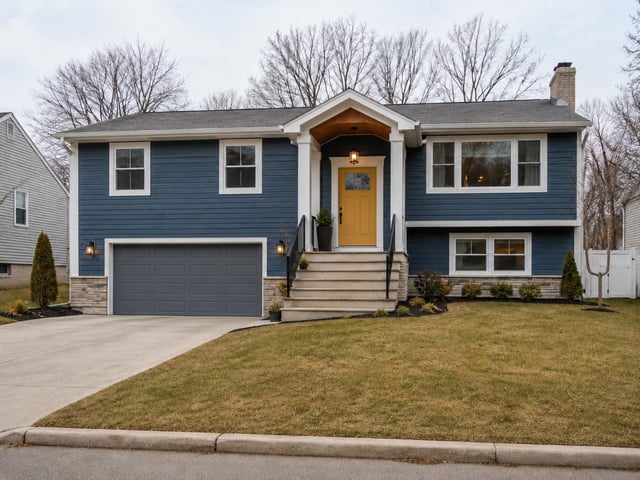
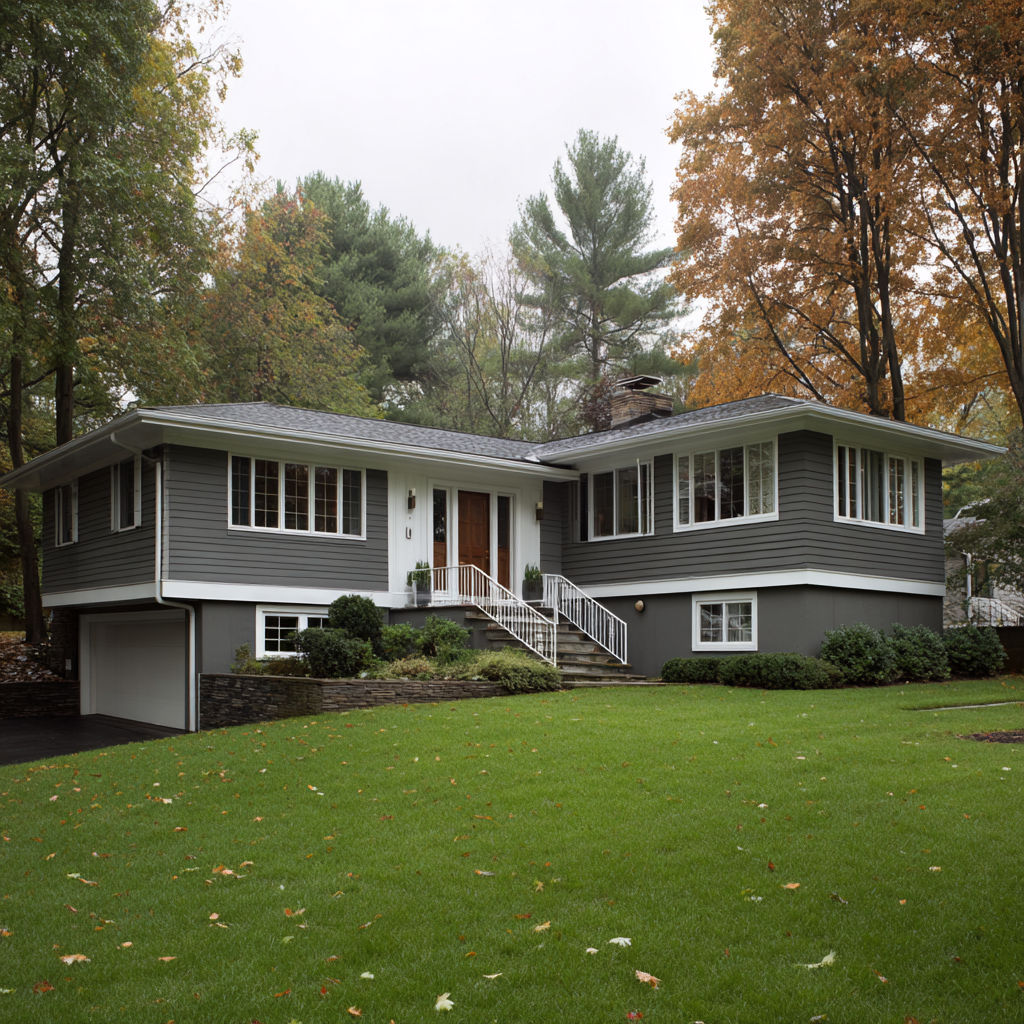
- Simplify to two materials with one dominant: for example, run fiber cement lap siding across 80% of the facade and add a vertical board-and-batten section on the mid-level or around the entry.
- Use one material with strong color separation: stick with a single siding type throughout, then choose two complementary colors that emphasize the staggered levels rather than fight them.
Stone veneer is still a popular accent, and where you put it matters more than how much of it you use. Wrapping the entire lower level is the traditional move. A more current approach is a single tall column of stone around the entry, or stone only on a chimney chase.
Remodel with a current color palette
Split levels were originally painted in browns and pale yellows. A palette that flatters the style today usually includes:
- Body color: deep charcoal, warm gray, navy, sage green, and warm white all work well as the primary field color.
- Trim color: bright white or a creamy off-white pairs cleanly with any of the body options above.
- Accent color for the door (and any shutters): black, a natural wood tone, or a saturated color like terracotta or deep teal tends to land well.
Painting previously stained or unpainted brick is a major commitment because it's hard to undo, but limewash and German smear treatments are softer alternatives that age more naturally.
Transform your split level’s front entry
Split level entries are often set back and easy to miss from the street. Fixing that is one of the highest-impact moves in the whole project.
- New door: a steel or fiberglass insulated door runs $1,000 to $2,500 installed, and adding sidelights or a transom adds another $1,000 to $3,000.
- New lighting: scaled-up exterior sconces (look for fixtures at least 1/4 the height of the door) plus a path light run usually cost $500 to $2,000 installed.
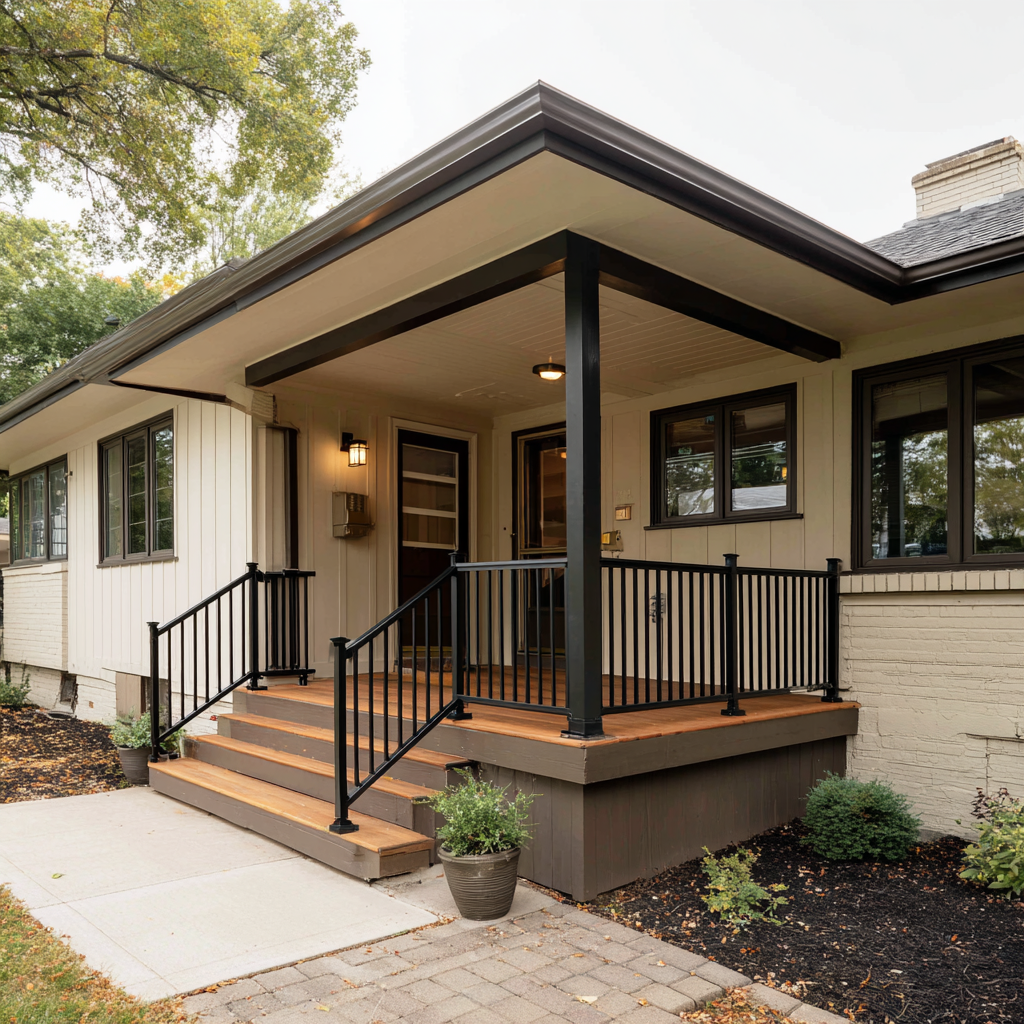
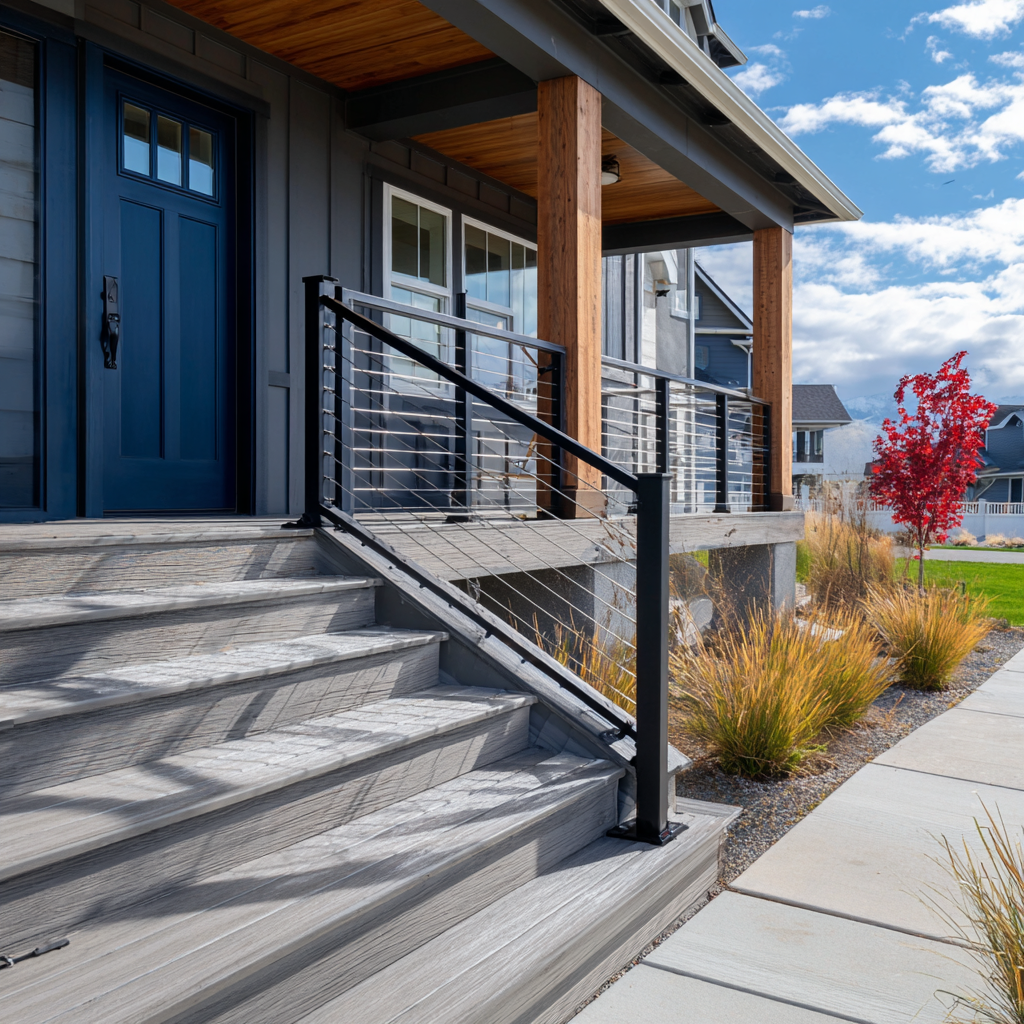
- Covered entry or small portico: a simple gabled portico over the door costs roughly $3,500 to $10,000, while a larger covered porch with columns runs $15,000 to $35,000. A portico is one of the few changes that actually fixes the most common split level complaint, which is that the entry feels lost behind the garage, and even a modest 4-foot-deep overhang shifts the visual center of the house away from the driveway and back toward the front door. At the larger end, building a full split level porch brings its own design considerations around landing height and roof tie-in that go well beyond a basic portico.
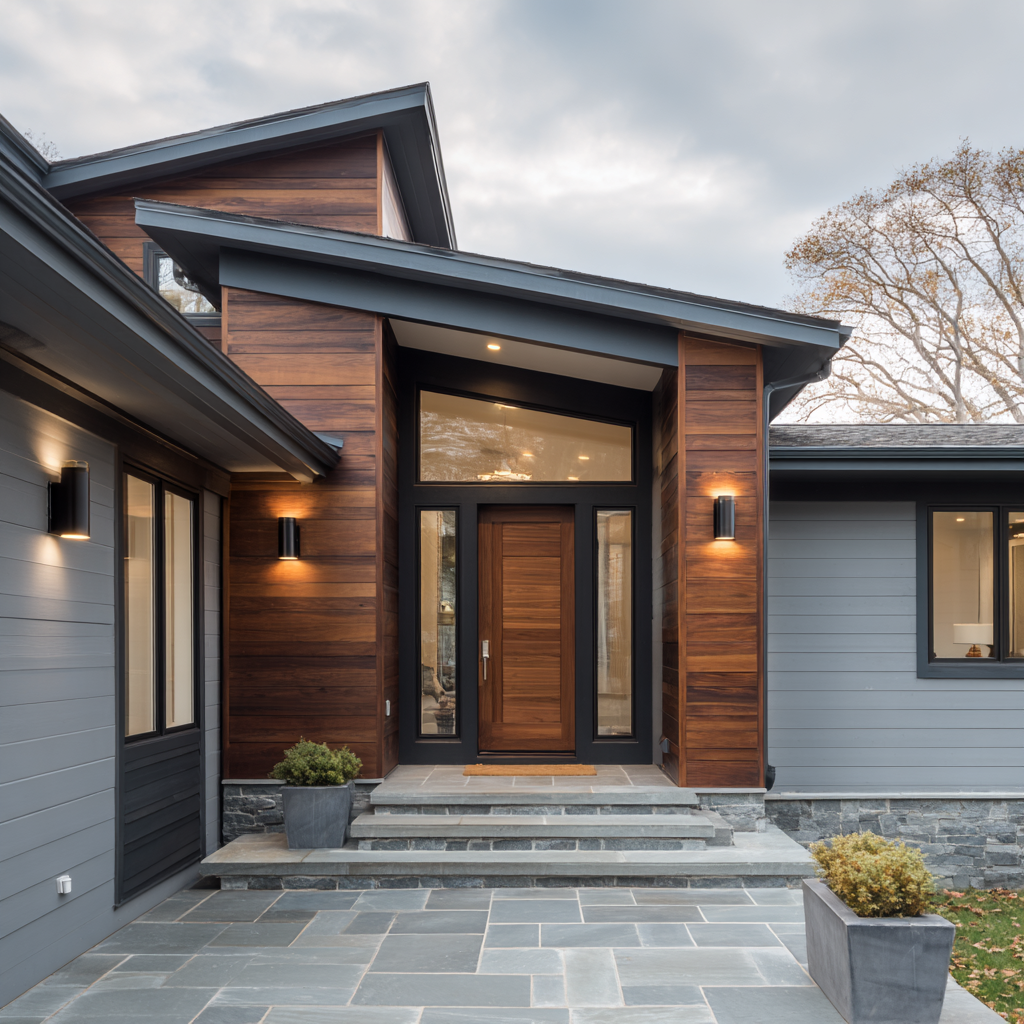
- Reframing the entry with a tall accent column: a vertical band of stone or natural wood draws the eye up and signals where the front door is, typically costing $4,000 to $12,000.
Replace the garage door
On a split level, the garage door usually takes up more of the front facade than any other feature. Getting the choice wrong can drag the entire facade down with it, while the right one carries more visual weight than almost any other line item in the renovation.
- Standard steel insulated door: expect $1,200 to $2,500 installed for a single bay, or $1,800 to $4,000 for a double.
- Carriage-style or panel-detailed steel: $2,500 to $5,500 installed buys a noticeable upgrade from the street without committing to a fully custom door.
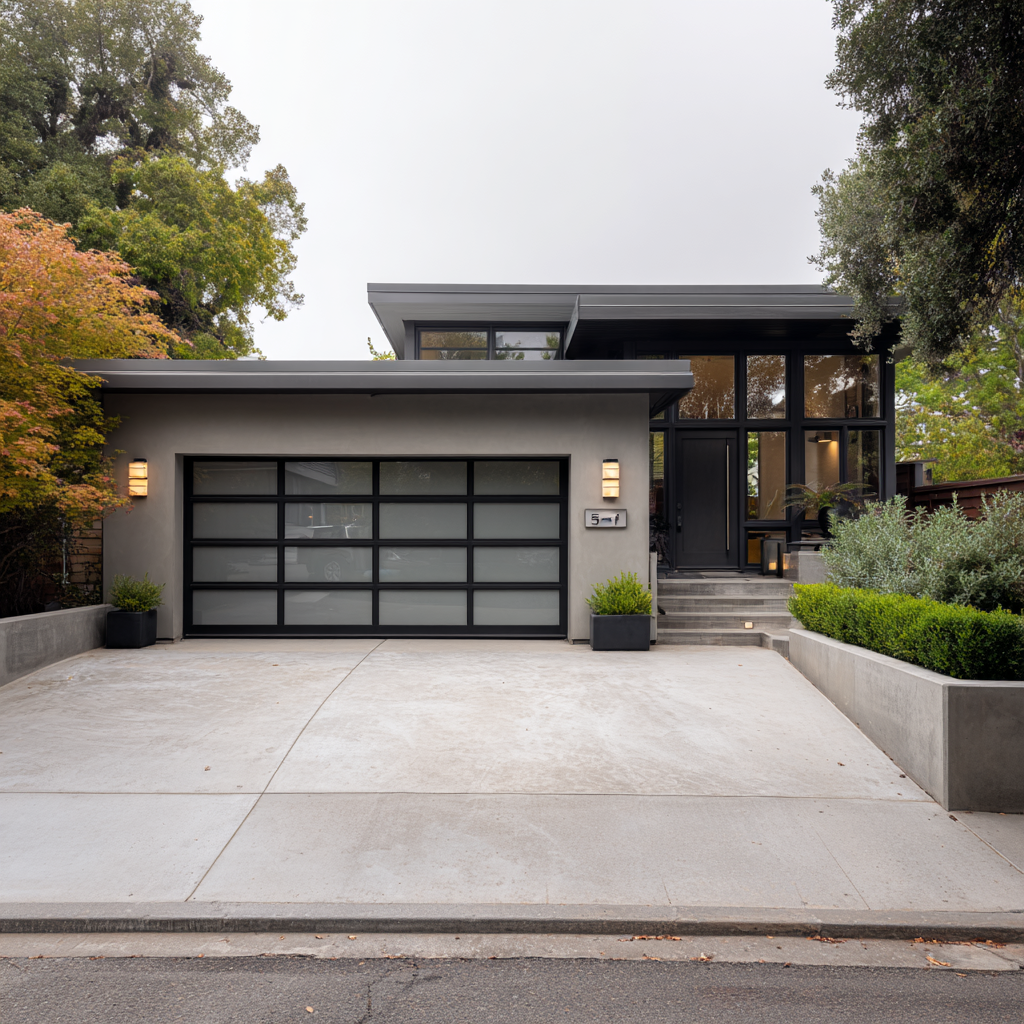
- Aluminum and glass modern style: budget $4,000 to $9,000 installed for a door that lets natural light into the garage and pairs well with modernized exteriors. Ask the installer about the insulation rating on the glass panels, since uninsulated versions can drop the garage's winter temperature by 10 to 15 degrees compared to a solid steel door.
- Real wood or wood-clad: plan for $5,000 to $12,000+ installed. It looks the part, though it requires the same refinishing schedule as any other exposed wood surface.
For a split level where the garage faces the street, no single change does more curb appeal work per dollar.
Add architectural detail where it's missing
Split levels often lack the trim details newer homes have. A few targeted additions can change the whole feel:
- A shed dormer or small gable over the entry breaks up a long, flat roofline.
- Cedar or composite brackets under deep eaves add visible structure to an otherwise plain overhang.
- Board-and-batten accent walls on the upper level emphasize the horizontal stack.
- A horizontal cedar slat screen over a blank section of wall is common in 1960s-revival designs.
These details belong in the design phase, since houses that skip that step end up with new siding and no soul.
Landscape with the architecture
Foundation plantings on a split level look best when they mirror the staggered horizontal lines of the house. Tall vertical evergreens on either side of the entry ground the front of the home, while lower mounded shrubs like boxwood or hydrangea carry the eye across.
A new flagstone or concrete walkway with low path lighting often does as much for curb appeal as a new front door. Budget $1,500 to $6,000 depending on length and grade changes.
Budget planning for a split level home exterior remodel
A full exterior project on a typical 2,000 to 2,400 square foot split level usually lands in one of three tiers:
- Refresh tier ($25,000 to $50,000): this covers a new architectural shingle roof, paint or stain on the existing siding, a new front door, a new garage door, new gutters, and refreshed landscaping.
- Replacement tier ($60,000 to $120,000): this includes a new roof, full siding replacement in fiber cement or engineered wood, new windows, a new entry door with sidelights, a new garage door, and new gutters with drainage corrections. This tier is where most committed renovations land because it addresses both the protective envelope and the curb appeal in a single coordinated project. The labor savings from doing all of this at once (instead of spreading work across three or four years) typically run 15 to 25%, since the same crew can stage scaffolding and pull permits once instead of repeatedly.
- Transformation tier ($130,000 to $250,000+): this includes everything in the replacement tier plus structural changes like a covered porch addition, window enlargements, a relocated entry, masonry accents, hardscaping, and high-end materials throughout.
Projects that push past these tiers, like split level additions that extend a wing or convert the lower level into new living space, sit outside the scope of an exterior remodel and need their own planning track.
Set aside 10 to 20% of the total budget as a contingency. Older split levels frequently hide surprises behind the siding: rotted sheathing and outdated wiring run through exterior walls. On a $90,000 project, that's $9,000 to $18,000 in reserve.
Hiring a contractor for split level home exterior renovations
The architecture has specifics that not every general contractor handles well. When interviewing contractors:
- Ask to see at least two completed split level exteriors in their portfolio.
- Rule of thumb, never get less than three quotes, and compare the project scopes line by line. The goal isn't the lowest number. It's the clearest picture of where your budget is going and what each contractor is and isn't including.
- Confirm who pulls permits for window enlargements, structural additions, or anything that changes the roofline.
- Ask how they handle hidden damage discovered behind old siding, and what the change order process looks like.
- Verify the contractor carries general liability insurance and workers' compensation, and ask for copies of the certificates.
A contractor mismatch is one of the most common avoidable problems on a project like this. Block Renovation matches each project with vetted local contractors who specialize in the work the project actually needs. Our network includes renovators familiar with the ins and outs of split level architecture, whether you’re overhauling the exterior or updating a 1970s kitchen.
Every scope gets expert review before bids come in, which catches gaps and red flags early. Payments are released in stages as the work progresses rather than upfront, and any change orders are reviewed before they're locked in.