



Home Addition
How to Plan a Home Addition: Process and Timeline
07.01.2026

04.03.2026


In This Article
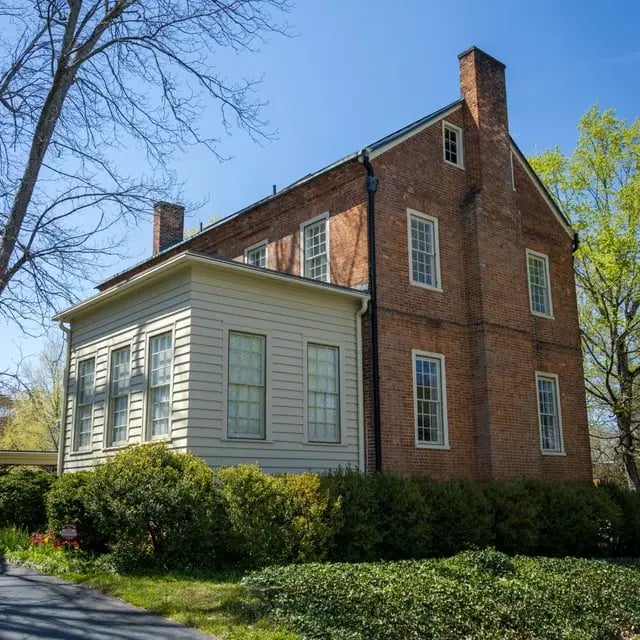
St. Louis is a brick city. Not in the way that other cities have brick buildings, but in the way that brick is the defining material of nearly every residential neighborhood, from the Second Empire rowhouses of Lafayette Square to the gingerbread Tudors of Dutchtown to the Foursquares of Tower Grove. The richest clay deposits in the United States sit in eastern Missouri, and after a catastrophic fire in 1849 prompted an ordinance requiring noncombustible construction, St. Louis built almost exclusively in brick for the next century.
That history is the first thing any homeowner needs to understand before planning an addition. In St. Louis, you're not building onto a house. You're building onto a brick structure with masonry walls, limestone foundations, and architectural details that your neighbors, your alderman, and possibly a historic review board will expect you to respect.
The good news: St. Louis is also one of the most affordable major-city markets for renovation in the country. The cost of entry, both for the home itself and for the construction labor to improve it, is significantly lower than coastal cities. That affordability creates real opportunity for homeowners willing to invest in additions that expand their living space while honoring the character of their home and neighborhood.
Design a Home That’s Uniquely Yours
Block can help you achieve your renovation goals and bring your dream remodel to life with price assurance and expert support.
Get Started
Nearly every addition conversation in St. Louis starts with the same question: does the new construction need to be brick?
The answer depends on where the addition goes. Rear additions, which account for the majority of residential projects, are often framed with wood and clad in siding, stucco, or cementitious panels, since they aren't visible from the street. This is standard practice in neighborhoods throughout the city, from Shaw to Tower Grove South to Holly Hills.
Street-facing additions are a different story. If your home is in a local historic district (and St. Louis has 14 of them, plus 112 individually designated landmarks), the Cultural Resources Office will review your plans and require that new construction be compatible with the existing structure and the surrounding streetscape. That often means brick. Not necessarily the same brick, since matching century-old St. Louis brick is expensive and sometimes impossible, but a material, color, and bond pattern that reads as compatible.
Even outside of historic districts, street-facing additions on brick homes look best when they continue the masonry. Tying new brick into an existing wall requires a mason who understands toothing (interlocking the new brick with the old) or who can execute a clean vertical joint. This isn't specialized artisan work in St. Louis the way it would be in other cities. The metro area still has a deep bench of masons with experience in residential brick construction. But it is a line item that homeowners in frame-construction markets don't encounter.
One option gaining traction in neighborhoods like Dogtown and the Hill: additions designed with a deliberate material transition. Rather than trying to match the original brick exactly, the addition uses a complementary material (painted brick, metal panel, or fiber cement) with a clear architectural break. Done well, this reads as intentional rather than mismatched, and it avoids the uncanny valley of almost-right brick.
St. Louis homeowners in local historic districts sometimes assume that the preservation requirements make additions impractical. That's not accurate. The Cultural Resources Office reviews exterior changes, not interior renovations, and their standards are focused on compatibility, not replication. Additions that are set back from the primary facade, subordinate in scale, and respectful of the existing roofline and material palette are routinely approved.
The review process does add time. Permit applications in historic districts are routed through the Cultural Resources Office before a building permit can be issued, and approvals that would take 10 to 15 working days in a non-historic area may take several weeks longer. The key is engaging with the review process early, ideally during schematic design, rather than submitting finished construction drawings and hoping for the best.
For homeowners in neighborhoods like Lafayette Square, Soulard, Benton Park, and the Central West End, this process is a known quantity. Local architects and contractors who work regularly in these districts understand what the Cultural Resources Office is looking for and can design additions that satisfy both the homeowner and the review board without excessive revision cycles.
Outside of the local historic districts, many St. Louis neighborhoods contain homes that are individually eligible for or listed on the National Register of Historic Places. National Register listing does not restrict what a private homeowner can do with their property unless federal funds or tax credits are involved. It's the local historic district designation that carries regulatory weight.
Lot sizes in St. Louis vary dramatically by neighborhood, but many residential parcels, particularly in south city neighborhoods and the inner-ring suburbs, are narrower and deeper than lots in newer Sunbelt developments. A typical south city lot might be 25 to 30 feet wide and 125 feet deep, with the home set relatively close to the front property line.
This configuration favors rear additions. There's often 40 to 60 feet of backyard behind the house, which is more than enough for a single-story family room or kitchen expansion, and potentially enough for a detached garage with living space above.
Side-yard additions are more constrained. On a 25-foot-wide lot with a 3-foot setback on each side, the house already occupies most of the buildable width. Homeowners on wider lots (40 feet and above, common in neighborhoods like St. Louis Hills, Lindenwood Park, and parts of Southwest Garden) have more lateral flexibility.
For two-story additions, the structural condition of the existing foundation matters. Many St. Louis homes sit on limestone rubble foundations, adequate for the original single-story or two-story structure, but not necessarily rated to support additional loads from a second-story addition cantilevered off the existing footprint. A structural engineer's assessment is an essential early step, not an afterthought.
Bungalows are everywhere in St. Louis, in both brick and wood versions, concentrated in south city but scattered across the metro. They're typically small (1,000 to 1,400 square feet), which is exactly why their owners are looking to add space. Rear bump-outs for kitchens are the most common project, followed by dormered second-floor additions that convert attic space into bedrooms. Because many St. Louis bungalows have partially finished attics with sloped ceilings, a dormer addition can double the usable upstairs square footage without changing the home's footprint.
Foursquares, the two-story, hip-roofed homes with symmetrical rooms that populate neighborhoods like Tower Grove and Holly Hills, have solid bones and enough structural capacity for most addition types. The boxy form makes rear additions relatively straightforward to integrate, and the two-story height means you can add at both levels without the roof complications that come with single-story homes.
Tudor Revivals and the gingerbread style present the most aesthetic challenge. These homes have ornamental brickwork (arched doorways, patterned facades, decorative chimneys) that's specific enough to make seamless additions difficult. The most successful additions to Tudor homes tend to be rear-facing and designed with a simpler vocabulary that defers to the original rather than competing with it.
Ranches and split-levels in the inner-ring suburbs (Maplewood, Brentwood, Webster Groves, Kirkwood) sit on larger lots with attached garages and fewer architectural constraints. These are prime candidates for primary suite additions, sunroom extensions, and garage-to-living-space conversions. The single-story structure simplifies foundation and roofing work, and the post-war construction techniques are familiar to every contractor in the region.
Not sure how to begin your renovation?
Get free, expert guidance from a dedicated Block Project Planner who can help you navigate proposals, timelines, contractor selection, and more.
Book A Free Consultation
St. Louis sits in a transitional climate zone: humid subtropical with genuine four-season variation. Summers are hot and muggy (regularly above 95°F with high humidity), and winters bring sustained cold spells, ice storms, and enough freeze-thaw cycling to test every masonry joint on your house.
For additions, this means a few specific things.
Foundation depth requirements in the St. Louis metro are more moderate than the upper Midwest. Frost footings need to reach approximately 30 to 36 inches. But the region's expansive clay soils create their own challenges. Clay soils swell when wet and shrink when dry, exerting lateral pressure on foundation walls. Additions need properly engineered foundations with adequate drainage to prevent this movement from cracking walls over time.
HVAC sizing is a two-season problem. Your addition needs to handle 95°F heat and 90% humidity in July and single-digit cold in January. Extending the existing HVAC system is sometimes possible for smaller additions, but a 200-square-foot or larger expansion will typically need either a supplemental system or a full HVAC upgrade. Given St. Louis's humidity, dehumidification capacity matters as much as cooling capacity.
Moisture management in masonry construction requires attention to flashing, weep holes, and the air gap between the brick veneer and the structural wall. These details are standard practice for experienced St. Louis contractors but are worth understanding as a homeowner, because failures here show up as interior water damage years after construction.
St. Louis is significantly more affordable than coastal markets for addition work. General contractor rates, material delivery costs, and permitting fees are all lower than what homeowners pay in cities like San Diego, Denver, or Miami.
Rough cost ranges for common addition types in the St. Louis metro:
These numbers reflect 2025 and 2026 pricing in the St. Louis metro. They include contractor markup and standard permitting but not design fees or significant site work.
St. Louis City and St. Louis County operate separate permitting systems. The city handles projects within the independent city limits, while the county manages permitting for the dozens of municipalities in the surrounding area. If your project is in the city, you'll work through the Building Division at City Hall. In the county, you'll work through the Department of Transportation and Public Works.
Permitting timelines are generally reasonable. The city reports that roughly 70 percent of building permits are issued same-day. More complex projects (additions requiring structural review, historic district approval, or floodplain assessment) take 10 to 15 working days, sometimes longer.
A few things worth noting:
Your contractor should identify these requirements during the preconstruction phase.
St. Louis's combination of affordable housing stock, deep craft labor in masonry and residential construction, and strong neighborhood identity makes it one of the more compelling markets for home additions in the Midwest. The cost per square foot for quality construction is well below national averages, and the return, in both livability and resale, is strong in the city's established neighborhoods.
Start with the bones of your home: foundation type, structural capacity, lot dimensions, and zoning. If you're in a historic district, reach out to the Cultural Resources Office early. Then find a contractor with specific experience in your home type and neighborhood, someone who knows the difference between south city brick and county frame, and who won't flinch when they see a limestone rubble foundation.
The best additions in St. Louis look like they belong. In a city where the architecture tells you exactly where you are, where Soulard doesn't look like Dogtown, and Dogtown doesn't look like Webster Groves, that's the standard worth building to.
Remodel with confidence through Block

Connect to vetted local contractors
We only work with top-tier, thoroughly vetted contractors

Get expert guidance
Our project planners offer expert advice, scope review, and ongoing support as needed
Enjoy peace of mind throughout your renovation
Secure payment system puts you in control and protects your remodel

Renovate confidently with Block
Easily compare quotes from top quality contractors, and get peace of mind with warranty & price protections.
Home Addition
How to Plan a Home Addition: Process and Timeline
07.01.2026
Home Addition
Bump Out Addition Cost, Ideas & Planning Guide
05.29.2026

Home Addition
Family Room Addition Ideas - Know Your Options
05.28.2026
Home Addition
How to Calculate the Cost of a Room Addition
05.23.2026
Home Addition
Cantilevered Bump Out Addition: When It Makes Sense
05.15.2026