
06.30.2026


In This Article
If your bathroom layout puts the toilet where you want the vanity, the cost of the project depends less on the new fixtures than on how far the plumbing has to follow them. Moving a toilet, sink, or shower means opening walls or floors, rerouting the supply and drain lines, and sometimes cutting into framing or concrete to do it. That last part is where budgets swing by thousands, because a fixture three feet from the existing waste line and a fixture across the room are two different jobs even when they look identical on the plan.
Bathroom remodel plumbing is the work most likely to surprise you on price, so this guide covers what it costs to relocate the fixtures that carry water, what pushes the number up or down, and the layout decisions worth settling before anyone breaks ground. Break ground means the day demolition starts and the walls come open, which is also the last cheap moment to change your mind.
Keep fixtures close to the stack to lower plumbing costs
Every bathroom connects to a main waste line, usually a vertical pipe called the stack that carries drainage down and out of the house. The closer your fixtures sit to that stack, the shorter the new drain runs, the less framing a plumber has to cut, and the lower the labor. Distance is the variable you control earliest and for free, on paper, before a single fixture is ordered.
Plumbing is the biggest swing factor in a bathroom budget, a point Steven Morgan, Licensed Master Plumber and Head of Plumbing Operations at 24hr.Supply, makes first when homeowners ask where to save. "The best cost-saving move I know in plumbing is also the simplest. Keep your rough-in locations close to existing stacks," he says. "Every foot you move a toilet or sink away from the main waste line adds labor, material, and usually some compromised framing from cutting floor joists." He points to one project where he repositioned a powder room three feet toward the existing stack and saved a client several thousand dollars with zero impact on how the space looked or functioned.
That kind of saving never shows up in the finished room, which is exactly why it gets skipped. Homeowners pick the layout they like, then ask the plumber to make it work, and the bill absorbs the distance. Reverse the order. Find out where the stack and existing drains sit, then design the room so the fixtures that need a drain stay near them.
Why moving a toilet costs more than moving a sink
Not every fixture costs the same to move, so it helps to know which one sets the rules. A sink runs on flexible supply lines and a small drain, both of which reroute easily. A shower needs a 2-inch drain and a trap, with some slope to work with. The toilet is the demanding one: it needs a 3-inch drain, a consistent slope of about 1/4 inch per foot, and proper venting, all of which limit where it can physically and legally go.
Because the toilet drain is the hardest line to move, treat its location as the fixed point and arrange the lighter fixtures around it. A layout that keeps the toilet near the stack and lets the sink travel will almost always cost less than one that drags the toilet across the room to free up a corner.
|
Fixture |
What its drain needs |
How hard it is to move |
|
Sink |
Small drain, flexible supply lines |
Easiest and cheapest |
|
Shower or tub |
2-inch drain, trap, floor slope |
Moderate, depends on floor access |
|
Toilet |
3-inch drain, 1/4 inch per foot slope, venting |
Hardest and most expensive |
What drives bathroom remodel plumbing costs
Two bathrooms with the same square footage and the same new fixtures can land thousands apart on plumbing alone. These are the factors that decide what your bathroom remodel plumbing actually costs:
- Distance from the stack, since every foot of new drain run adds pipe, labor, and often a joist that has to be cut and reinforced.
- What sits under the floor, which determines whether a plumber works from below or has to break into the surface to reach the drain.
- How much finish has to come out and go back, including drywall, tile, and flooring that gets destroyed to reach the lines and rebuilt afterward.
- Venting, because a relocated fixture needs a code-compliant vent, and running a new one is more involved than reusing what's there.
- Permits and inspections, which most fixture relocations require and which add fees and a scheduling step.
- Regional labor rates, which set the baseline before any of the above applies.
Turn your renovation vision into reality
Get matched with trusted contractors and start your renovation today!
Find a Contractor
Bathroom remodel plumbing costs by type of move
The figures below are representative ranges for the plumbing work plus the finish repair that comes with it. Local rates, how easily a plumber can reach the lines, and the finishes you put back all move the final number.
|
Move type |
Typical range |
Main cost driver |
|
Shift a sink within the same wall |
$500 to $1,200 |
Mostly finish repair |
|
Relocate a sink or vanity to a new wall |
$1,000 to $3,000 |
New drain and supply runs |
|
Move a toilet a few feet toward the stack |
$500 to $1,500 |
Short drain reroute |
|
Move a toilet across the room |
$2,500 to $5,000 |
Long 3-inch drain run, framing |
|
Relocate a shower drain |
$1,000 to $3,000 |
Floor access and waterproofing |
A toilet that moves toward the stack stays near the low end, because the drain run gets shorter and the slope is easy to hold. The same toilet pushed to the far wall climbs fast, since the 3-inch line has to travel farther while keeping its slope, which usually means cutting and reinforcing joists along the way. On a concrete slab, every one of these ranges runs higher, for reasons worth their own section.
Common bathroom remodel projects and their plumbing needs
Most remodels fall into a handful of recognizable projects, and each carries a predictable plumbing scope. Knowing what a project asks of your plumbing before you commit helps you price it honestly.
Tub-to-shower conversion
A tub drain sits in a different spot from a shower drain, so the drain usually has to move several inches and reset to hold slope. Switching from a tub spout to a shower valve also changes the in-wall valve and supply lines. Budget for drain relocation, a new mixing valve, and waterproofing the new pan. Learn more with our tub-to-conversion guide.
Adding a double vanity
Going from one sink to two means adding hot and cold lines for the second basin and tying it into the existing drain. The cost stays modest when both sinks share one wall and one drain run, and climbs if the second basin needs its own drain path.
Curbless or walk-in shower
A walk-in shower is plumbing-heavy because the floor itself has to slope to the drain, which often means lowering or re-framing part of the floor and resetting the drain. Many use a linear drain along one wall to make the slope work.
Freestanding tub
A freestanding tub installation usually needs its supply and drain near the center of the room rather than against a wall. Reaching that spot means extending the lines out into the floor, which is why a freestanding tub often costs more to plumb than it does to buy.
Adding a new bathroom
A new powder room or full bath is the largest scope here, since nothing exists yet. The project ties a new drain into the stack, adds venting, runs fresh supply, and has to size the drain for the added load. This is where the sewer connection warning applies: tying into an old drain that can't carry it leads to backups, so keeping a new bathroom close to existing plumbing keeps it contained.
Design a Home That’s Uniquely Yours
Block can help you achieve your renovation goals and bring your dream remodel to life with price assurance and expert support.
Get Started
How your foundation affects bathroom plumbing costs
The single largest cost variable in a plumbing move is something you already own and probably never think about. A bathroom built over a basement or crawlspace gives a plumber access from below, so relocating a drain is a matter of working in open space under the joists. A bathroom on a concrete slab hides its drain lines inside the concrete, so moving a fixture means cutting the slab, rerouting the pipe, and pouring it back.
That difference can add $1,000 to $3,000 or more to the same layout change, plus days of disruption and curing time. It also narrows what's practical, since some moves that are routine over a basement become hard to justify on a slab.
Find out what's under your bathroom during planning, not during demolition. If you have a basement or crawlspace below, you have more freedom to move fixtures affordably. If you're on a slab, the design should lean harder on keeping drains where they already are.
Where to never cut corners on bathroom plumbing
Most ways to trim a bathroom budget are harmless. You can choose a less expensive tile, keep the existing tub, or do your own painting. Two cuts are different, because they save a little now and cost a lot later.
Morgan draws the line at the same two places every time. "Where to never cut corners is the water heater and the sewer connection. I see it regularly: a homeowner saves $500 by buying an undersized tankless unit or tying a new bathroom into an old drain that can't handle the added load. Then they get cold showers, backups, or both." His instruction is to size the drain line correctly for what you're adding and buy a quality water heater matched to the demand, because everything else in the project sits on top of those two things working properly.
The trap here is that both cuts are invisible at the finish stage. The bathroom looks finished and works for a week, then the undersized water heater can't keep up or the overloaded drain backs up under real use. Fixing either after the walls are closed costs far more than sizing them right the first time.
Cluster fixtures on one wet wall to cut plumbing runs
The open, spread-out bathroom reads well in photos, with the tub under a window and the vanity floating on its own wall. The plumbing pays for that spacing. When the toilet, sink, and shower each sit on a different wall, each one needs its own drain run and its own venting, and the lines fan out across the floor in different directions.
Group those fixtures along a single wet wall and one drain run with shared venting can serve all three. The waterproofing scope shrinks, the framing takes fewer hits, and the fixtures stay close to the stack. You can keep a good measure of the open feel by clustering the plumbing on one side and giving the rest of the room to clear floor and storage.
One of Block's 4x6 bathroom floor plans shows the cost of ignoring this in a footprint where space is already tight. In the split layout below, the shower drain and the toilet land on opposite walls, so the project pays for two separate drain runs in a room that could have shared one.
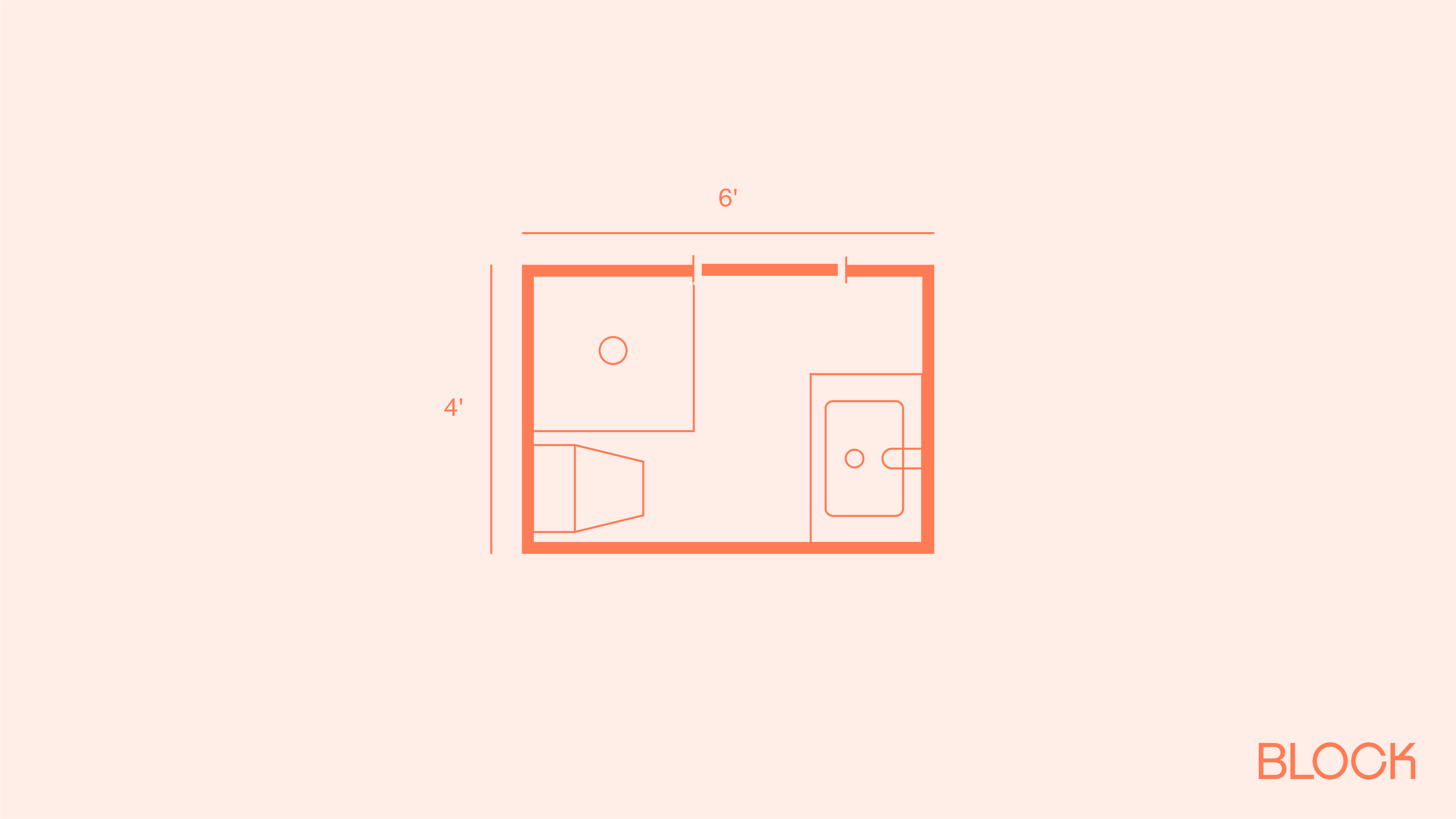
Splitting the drains across opposite walls like this adds roughly $1,000 to $3,000 to the same room, more on a slab where each run means a separate cut. The fixtures and the square footage are identical to a clustered version. The only thing that changed is where the water leaves the room, and that alone moved the plumbing bill.
How to plan bathroom remodel plumbing before demolition
A few decisions made early decide most of the plumbing cost, so the preparation is mostly about settling them in the right order.
- Lock the layout before demolition, because rough-in happens early and a fixture moved after the drain is set means tearing out finished work to redo it.
- Confirm what's under the floor during planning, so your budget reflects slab or basement reality instead of guessing.
- Decide where the toilet goes first, then place the sink and shower around it.
- Ask each contractor who pulls the permit, whether wall and floor repair is included in their number, and how they're handling venting and drain sizing.
That last question matters most during scope review. A quote that leaves out finish repair or assumes the existing drain can carry a new fixture looks cheaper on paper and turns into a change order once the walls are open. The clearest scope, with every line item spelled out, protects the budget better than the lowest bid.
Coordinating your plumber and general contractor
Bathroom remodel plumbing rarely happens in isolation. The plumber, the tile setter, and whoever frames the walls all have to work in the right order, since rough-in has to pass inspection before anything closes up. You can manage that schedule yourself, or a general contractor can handle it on your behalf, hiring and sequencing the trades so the drain is set before the floor goes down. For most full remodels, letting a general contractor own the coordination is what keeps the plumbing on schedule and the inspections from stalling the job.
Plan your bathroom remodel plumbing with Block Renovation
Bathroom remodel plumbing lives or dies on the scope. The gap between a clean estimate and a stack of change orders is whether someone caught the stack distance, the drain sizing, the venting, and the slab question before a contractor broke ground. Those are the details that don't show up in a quick walkthrough and do show up in the final invoice.
Block Renovation matches your project with vetted local contractors and reviews each scope to catch the missing line items early, the finish repair that got left out or the drain that can't handle the added load. You see detailed, comparable quotes from contractors who have already been vetted, so the bid you accept reflects the real work. Tell Block about your bathroom and get matched with contractors who can price the move accurately and stand behind it.
Remodel with confidence through Block

Connect to vetted local contractors
We only work with top-tier, thoroughly vetted contractors

Get expert guidance
Our project planners offer expert advice, scope review, and ongoing support as needed

Enjoy peace of mind throughout your renovation
Secure payment system puts you in control and protects your remodel


Renovate confidently with Block
Easily compare quotes from top quality contractors, and get peace of mind with warranty & price protections.



