

Flooring
Top Rated Luxury Vinyl Tile Brands Worth Sampling
09.11.2026
07.14.2026


In This Article
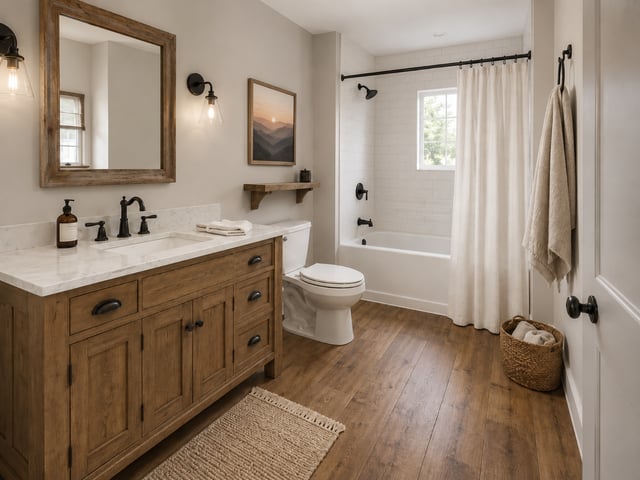
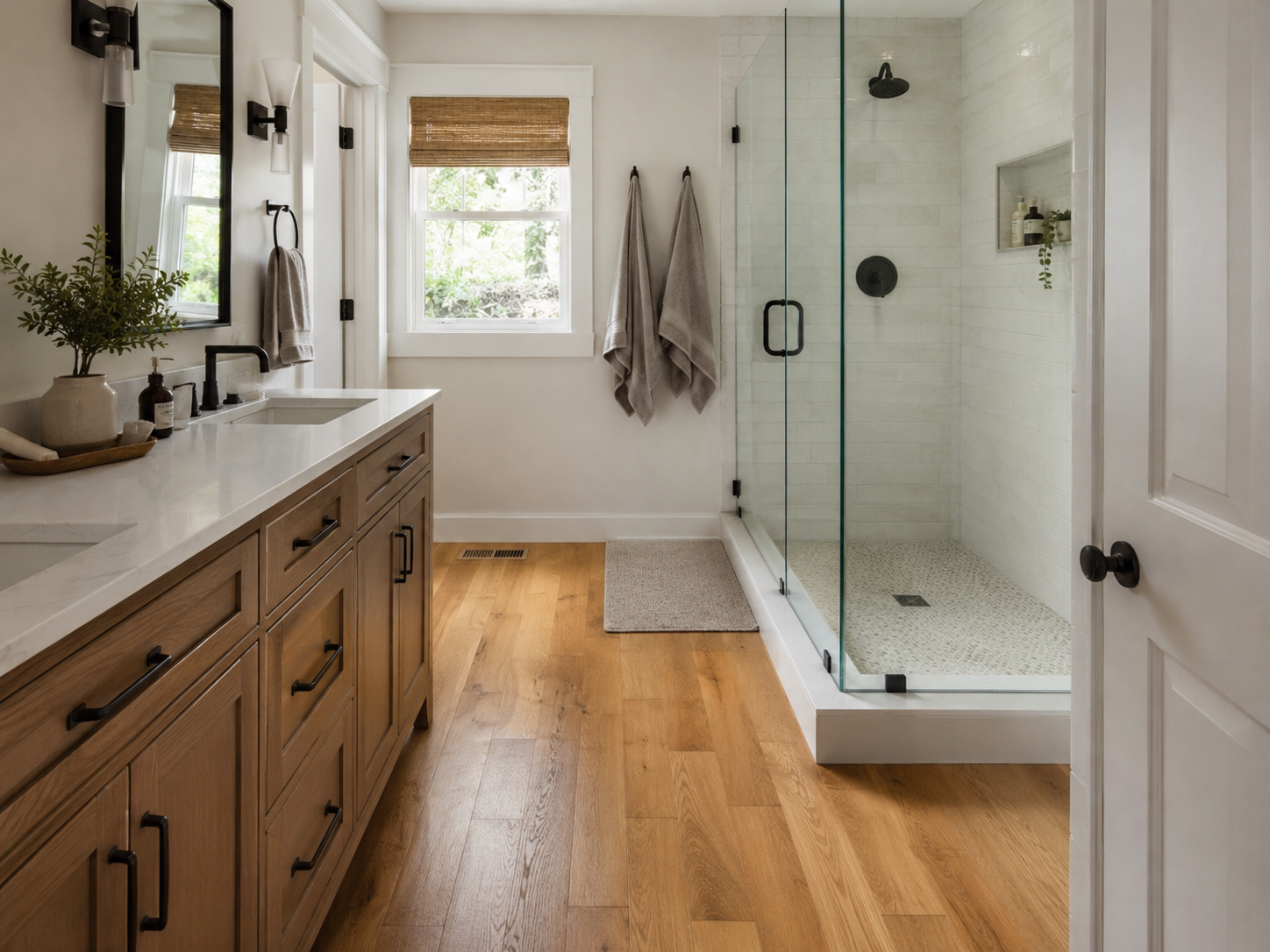
Wood flooring in a bathroom used to be a decision people made once and regretted for a decade. Between better sealants, engineered construction, and wood-look alternatives that are hard to distinguish from the real thing, that's changed.
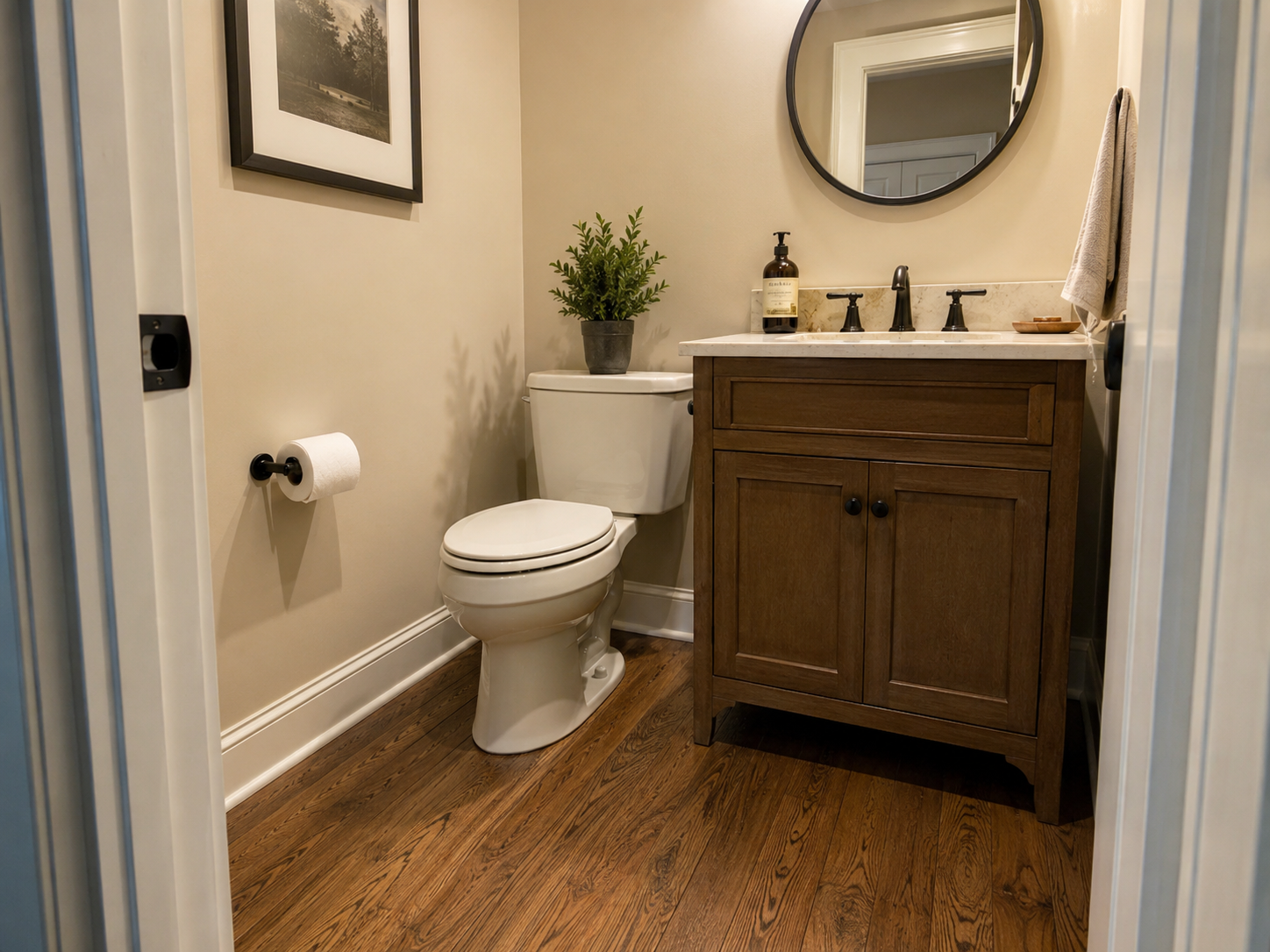
Wood in a powder room is close to a sure thing. Wood in a full bath that three kids splash through every night is a maintenance commitment, and you should walk into it knowing that. This guide covers how the materials compare, what upkeep really involves, what it costs, and what to ask your contractor before anyone starts pulling up tile.
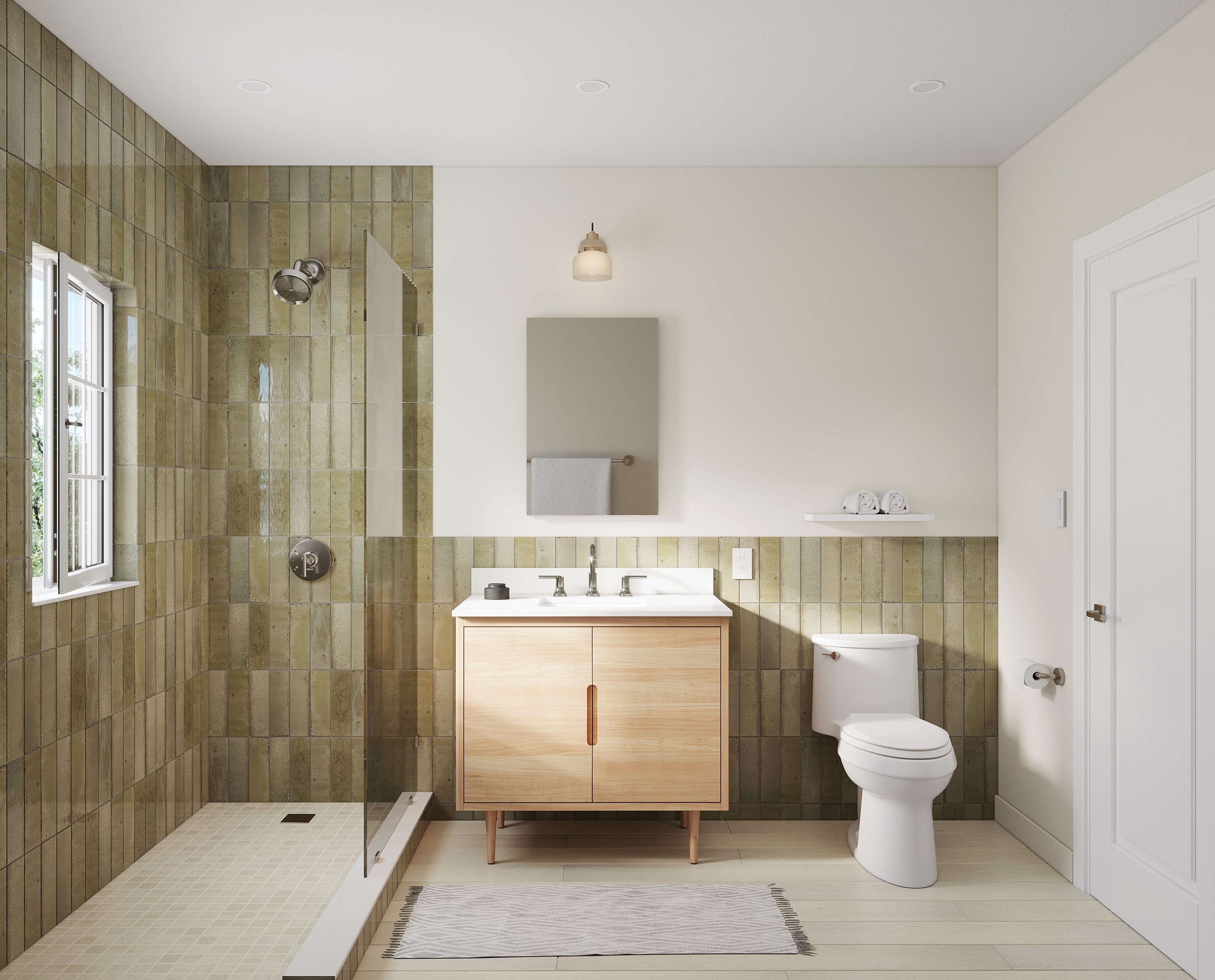
If you're weighing hardwood floor in bathroom pros and cons, the list tilts more favorably than most people expect, as long as you match the material to the room.
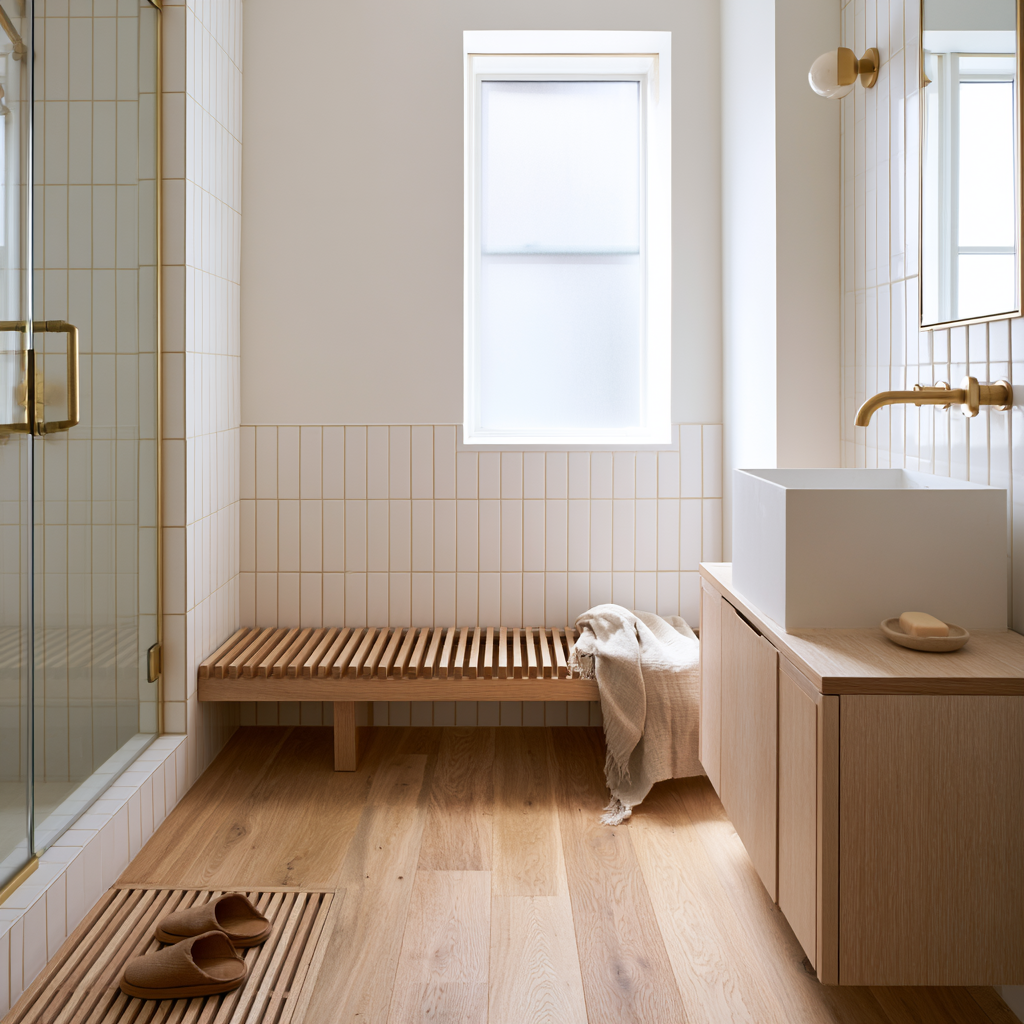
Before you budget, know that "wood floors add value to your home" gets repeated in every flooring article, but it doesn't hold up in bathrooms specifically. Buyers reward hardwood in living areas. In a full bath, plenty of them mentally budget for replacing it. Install bathroom wood flooring because you want it, not because you expect a return on the renovation.
Renovate with confidence every step of the way
Step 1: Personalize Your Renovation Plan
Step 2: Receive Quotes from Trusted Contractors
Step 3: Let Us Handle the Project Details
|
Bathroom |
Best choice |
Why |
|
Powder room |
Solid hardwood or engineered wood |
Sink-only moisture; the lowest-risk place for real wood |
|
Adult primary bath |
Engineered wood, or hardwood with disciplined upkeep |
Controlled use and ventilation habits make real wood workable |
|
Kids' bath |
Wood-look porcelain tile or LVP |
Daily splashing and standing water defeat wood eventually |
|
Rental bathroom |
Wood-look tile or LVP |
Tenants won't maintain wood, and turnover damage adds up |
|
Small full bath |
Engineered wood minimum; tile if showered in daily |
No dry zone means every plank is in splash range |
The material decision matters more than any installation detail. Here's how the five realistic options stack up.
|
Material |
Water resistance |
Cost installed (per sq ft) |
Feel underfoot |
Realistic bathroom lifespan |
Best for |
|
Solid hardwood (sealed) |
Low to moderate |
$8 to $15 |
Warm, slight give |
10 to 20 years with strict maintenance |
Powder rooms, adult-only primary baths |
|
Engineered wood |
Moderate |
$7 to $13 |
Warm, slight give |
15 to 25 years |
Primary baths, half baths |
|
Wood-look porcelain tile |
Excellent |
$6 to $12 |
Cold, hard |
30+ years |
Full baths, kids' baths, rentals |
|
Luxury vinyl plank |
Excellent |
$3 to $7 |
Slightly soft, warmer than tile |
10 to 20 years |
Budget projects, high-traffic full baths |
|
Waterproof laminate |
Good |
$3 to $8 |
Firm, hollow-sounding |
10 to 15 years |
Budget projects with light moisture exposure |
Solid hardwood is real wood, sealed against moisture. Species matters here: teak, white oak, and cedar handle humidity better than maple or red oak, which absorb moisture readily. Solid hardwood is the only option on this list you can refinish repeatedly, which is its strongest argument. It's also the option where skipped maintenance shows up fastest and most visibly.
Engineered wood is a real wood surface layer bonded over a plywood core in crossed layers. That construction resists the expansion and contraction that humidity causes in solid planks, which is why an engineered wood bathroom floor is the default recommendation for anyone set on real wood in a full bath. The tradeoff is that the wear layer limits how many times it can be refinished, typically once or twice, sometimes never on thinner products.
A bathroom with wooden floor tiles gets you the visual of wood with the water resistance of porcelain, and current printing technology has closed most of the visual gap. Grain patterns repeat less than they did five years ago, plank formats run up to 48 inches, and matte finishes read convincingly as wood from standing height. A wood-look tile bathroom wins the decision for most full baths. It's cold and hard underfoot, which is the one problem money can solve: wood-look tile pairs well with radiant heat, which real wood tolerates less reliably.
Get one thing right at the spec stage: the weak point of wood-look tile isn't the plank face, it's the grout. Wide, light grout lines are what give the floor away as tile, and they're a permanent cleaning chore in a wet room. Ask for rectified tile with 1/16 inch joints and a grout color matched to the tile body. Skip that step and you've bought a striped floor that needs grout scrubbing forever, which is close to the exact maintenance you chose tile to avoid.
Luxury vinyl plank is fully waterproof, warmer than tile, and cheap enough to replace without grief. LVP earns its place in bathrooms that get heavy daily use while the budget is doing other work elsewhere in the renovation. The tradeoff is that it's vinyl: it dents under dropped items, it can't be refinished, and it adds nothing at resale.
Waterproof laminate is the cheapest option, with one caveat that matters. "Waterproof" laminate resists surface water well, but standing water that reaches the seams can still swell the core on lower-grade products. That's fine for a half bath, but in a full bath, spend the extra dollar per square foot on LVP or tile.
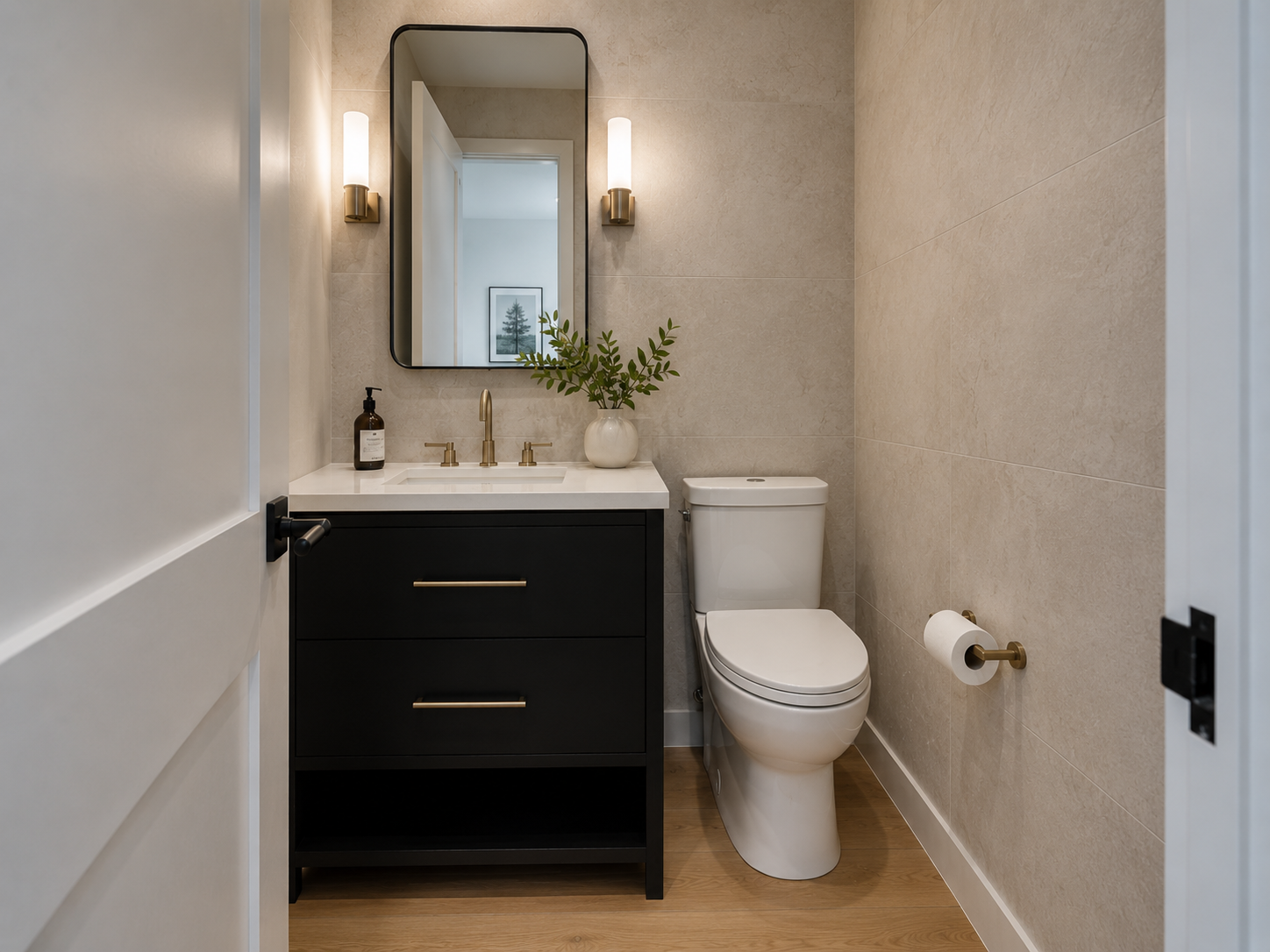
Once you've picked a material, a few smaller decisions determine how well the floor holds up.
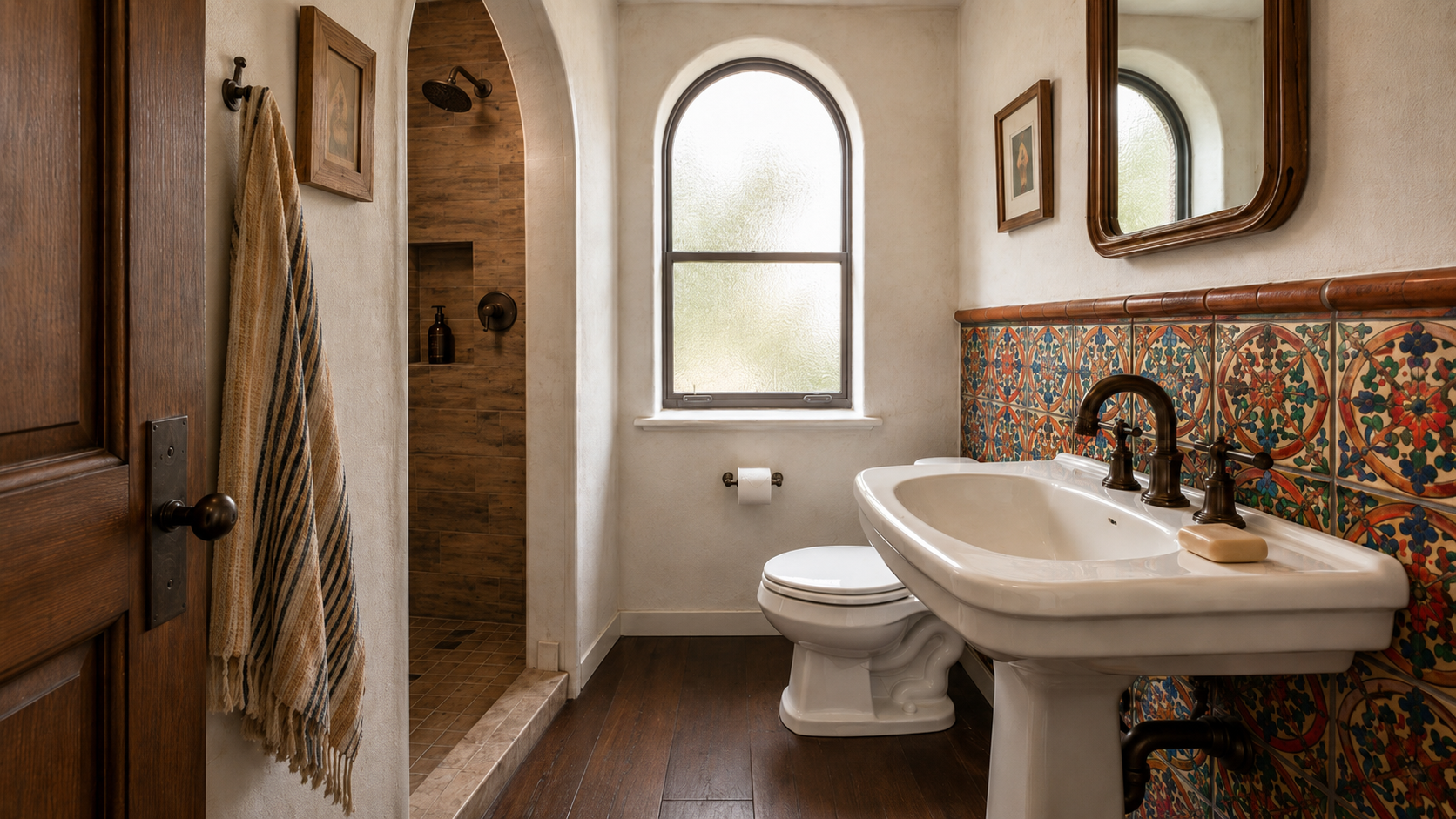
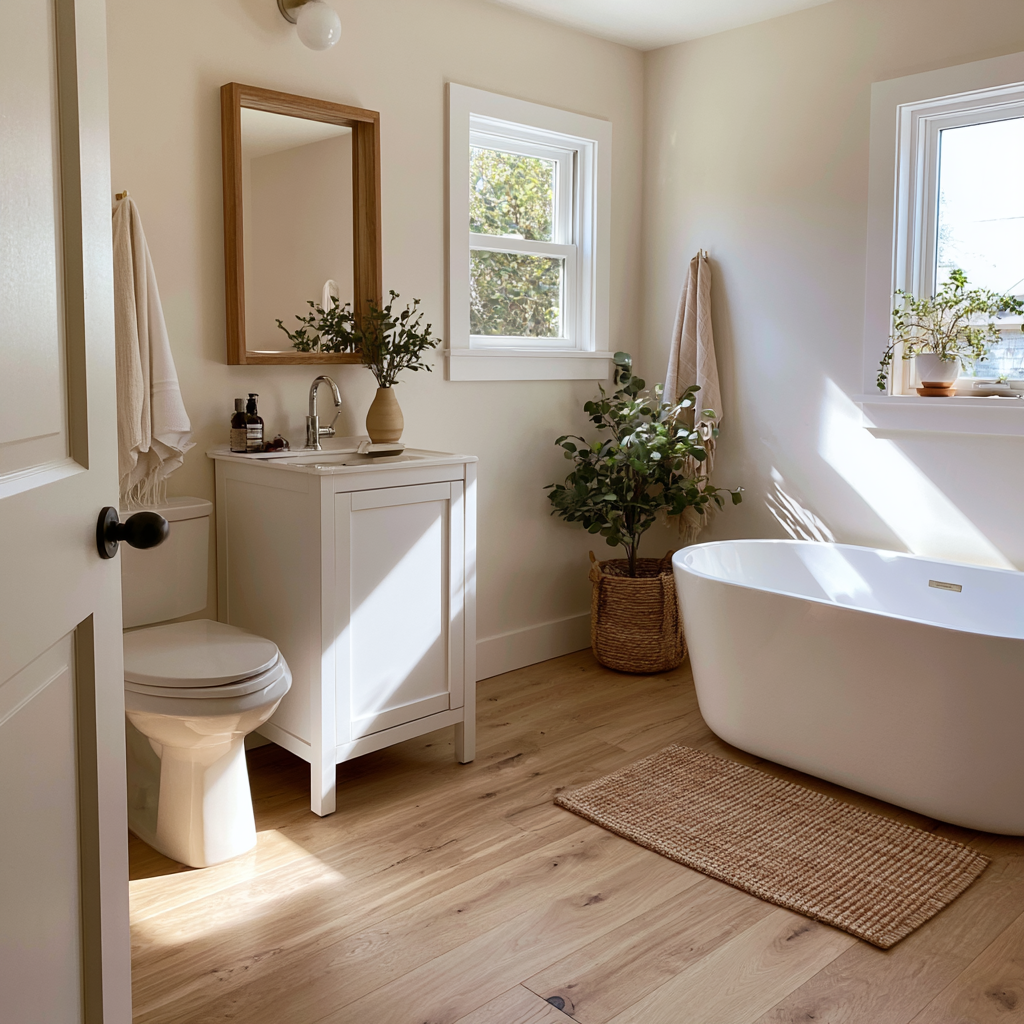
A small bathroom with wood floor treatment can work better than the same floor in a large bath, for two reasons. First, less floor area means less exposed wood, less seam length, and a resealing job that takes an afternoon instead of a weekend. Second, running plank flooring in a small room makes it read larger, especially when planks run parallel to the longest wall.
The catch is proximity. In a 5x8 bathroom, every square foot of floor is within splash range of the tub, sink, or toilet. There's no dry zone. So in small full baths, the material bar rises: engineered wood at minimum, wood-look tile if the room sees daily showers. In a small powder room, where the only water source is a sink, solid hardwood is a reasonable pick and one of the cheapest places in the house to get the look. For layout ideas that pair with plank flooring, see small bathroom flooring ideas.
Turn your renovation vision into reality
Get matched with trusted contractors and start your renovation today!
Find a Contractor
Water damage in wood floors shows visible warning signs well before boards fail. Knowing the signals is the difference between refinishing a few boards and paying to replace the floor.
For repairs, plan on $100 to $300 per board to replace individual solid hardwood planks, assuming matching stock exists. Plank-level repair is often impossible with floating floors without disassembling the room from the wall inward, which is why the repair question belongs in your contractor conversation before installation, not after. A common contractor rule of thumb says that once damage reaches roughly a fifth of the floor, replacement beats repair on cost. And if the damage traces to an unresolved leak, no repair is worth doing until the plumbing is fixed.
The installation itself is your contractor's job. Your job is knowing whether it's being done right, and what the decisions cost you. Here's what affects your project.
Maintenance advice for wood bathroom floors tends to be a long list. In practice, four habits cover almost all of it.
As planning ranges, materials and installation for wood flooring in a bathroom typically land between $250 and $1,200 for a standard 40 to 80 square foot room, depending on material. Solid hardwood sits at the top of that range, LVP at the bottom, with engineered wood and porcelain tile in between. Flooring costs vary with subfloor condition; if the existing subfloor needs repair or leveling, budget an additional $500 to $1,500.
Upkeep rarely makes it into the initial quote, and it should factor into the decision. A resealing every two to three years typically runs $200 to $500 on a bathroom-sized floor. Over 15 years, solid hardwood's maintenance can add up to more than the original installation. Wood-look tile and LVP have effectively zero recurring costs. Factor that into your renovation budget honestly, because the cheapest floor over a decade is rarely the one with the lowest install quote.
A wood floor in a bathroom is a good idea in the right room with the right material, and getting it right comes down to the subfloor prep, seam sealing, and material judgment covered above. That's contractor-dependent work, and it's exactly where Block Renovation helps. Block pairs you with vetted contractors who have done this work before, lets you compare quotes side by side, and backs your project with warranty and price protections. Start with a free estimate and plan your bathroom with real numbers instead of guesswork.
Remodel with confidence through Block
Connect to vetted local contractors
We only work with top-tier, thoroughly vetted contractors

Get expert guidance
Our project planners offer expert advice, scope review, and ongoing support as needed
Enjoy peace of mind throughout your renovation
Secure payment system puts you in control and protects your remodel

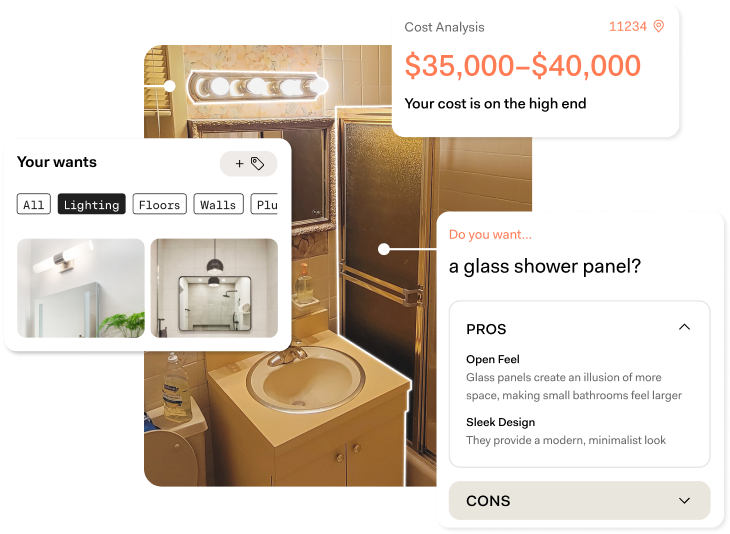
Calculate the true cost of your bathroom remodel
Get real-time cost estimates for materials and labor, so you can budget your renovation with confidence—no guesswork.
Flooring
Top Rated Luxury Vinyl Tile Brands Worth Sampling
09.11.2026
Flooring
Best Carpet Brands: 7 Lesser-Known Names Worth Sampling
09.02.2026
Flooring
Maple vs Oak Flooring: Which Hardwood Is Right for Your Home?
08.31.2026
Bathroom
Non-Tile Bathroom Flooring Options
08.26.2026
Flooring
Comparing Different Types of Natural Stone Flooring
08.25.2026