Block Renovation Logo
Renovation StudioNew
How It Works
Locations
Gallery
Resources

Kitchen Renovation Costs in Minneapolis MN

Kitchen renovations are a steady investment across Minneapolis, with over 1,843 permits pulled since early 2021 reflecting consistent activity from Uptown bungalows to North Loop condos and everything in between. At an average project cost of $20,235, Minneapolis kitchen remodels come in well below the national average of $46,623 - roughly 57% less - making the city one of the more affordable major metros for kitchen work. That gap reflects the Midwest's moderate labor market, a practical homeowner base, and a wide range of project scopes from targeted refreshes to full-scale overhauls. The data below will help you see where your project fits.
Get Estimate
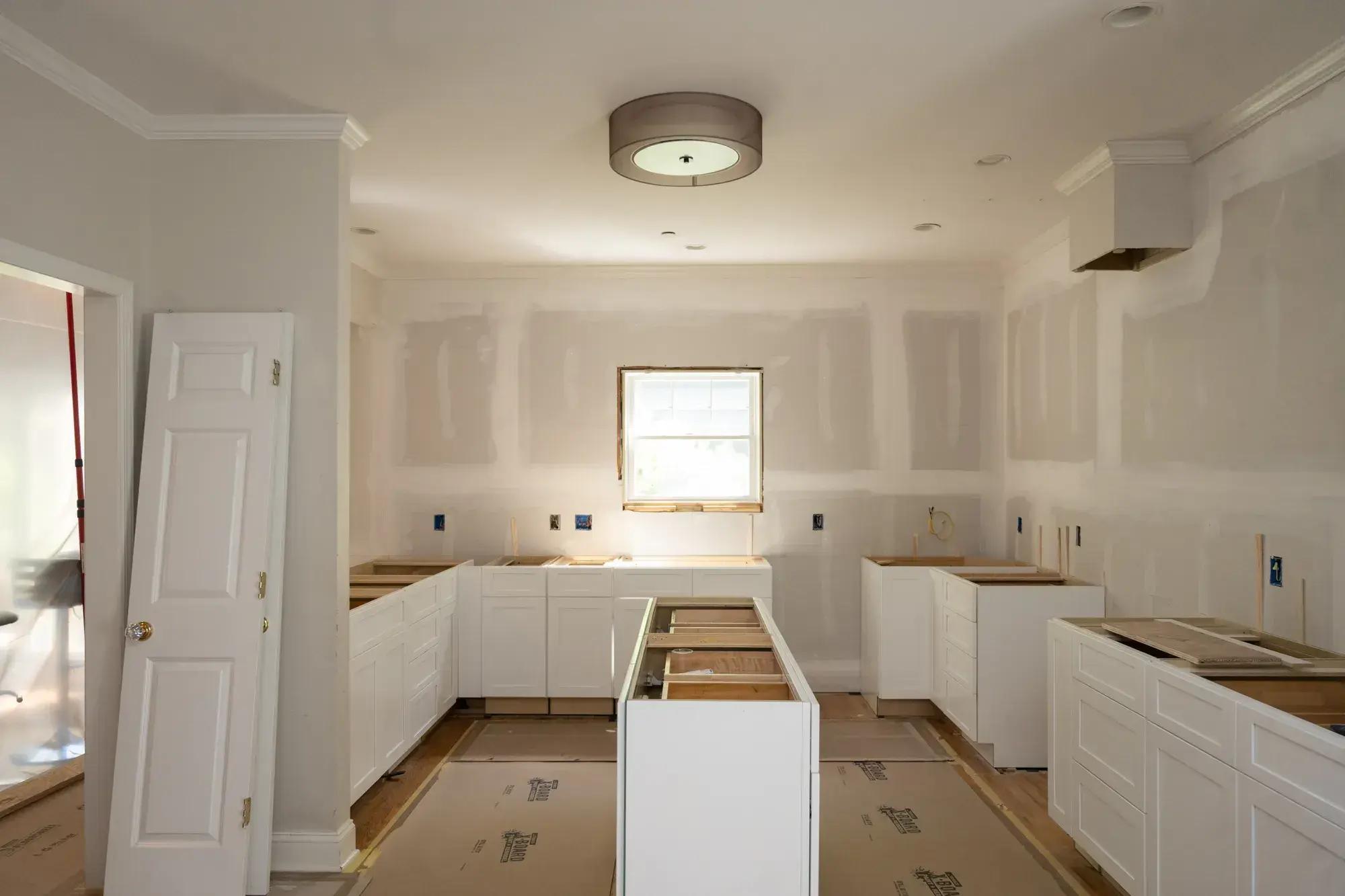
Kitchen renovation

Average Project Costs

$20,235

vs National Average

57% below

How does your renovation budget compare in Minneapolis?


Your Budget$20,235
$0$255,000

This is right around the average renovation cost in Minneapolis.

How we calculate these costs

A renovation permit is official documentation filed with the local Department of Buildings when homeowners undertake construction work. It serves as proof that work is being done to code and represents your best data point for understanding real kitchen renovation costs in Minneapolis. The declared permit value - the estimated cost submitted by contractors or homeowners when filing - provides a reliable baseline for typical project investments, though actual costs may vary. This analysis focuses exclusively on kitchen renovation permits, excluding other room types and new construction to ensure the data accurately reflects what homeowners like you are spending on kitchen upgrades.

Cost calculation methodology for Minneapolis

Cost data summary

Typical kitchen remodeling cost data in Minneapolis, MN based on renovation permits.


Meet kitchen contractors serving Minneapolis

Block Renovation partners exclusively with top-rated Minneapolis contractors who meet our strict standards for quality, reliability, and customer satisfaction. Every professional in our network is vetted, licensed, and committed to delivering exceptional kitchen renovations.
Top-rated contractors serving Minneapolis

Understanding labor costs in Minneapolis

Labor costs are a key variable in kitchen renovation pricing and vary meaningfully by region. In Minneapolis, hourly rates for core kitchen trades tend to run 10-20% below national averages, reflecting the Twin Cities' moderate cost of living compared to coastal and Sun Belt metros. General contractors typically charge $60-$80 per hour, while plumbers and electricians fall in the $75-$95 range. Cabinet makers and finish carpenters charge $75-$95 per hour. These lower labor costs are one reason Minneapolis kitchen renovations come in well below the national average, though material choices and project scope remain the bigger cost drivers for any individual remodel.

General Contractor

$60-$80

per hour

Plumber

$75-$95

per hour

Electrician

$70-$90

per hour

Cabinet Maker

$75-$95

per hour

Design and budget your next renovation with our free AI tool

A great renovation brings together style, layout, and cost in a way that works for your life. Renovation Studio, our free AI-powered tool, helps you create a personalized plan that aligns your vision with your space and budget.

Visualize diverse remodeling options

See how design decisions affect your budget in real time

Save and share project plans to guide your renovation journey
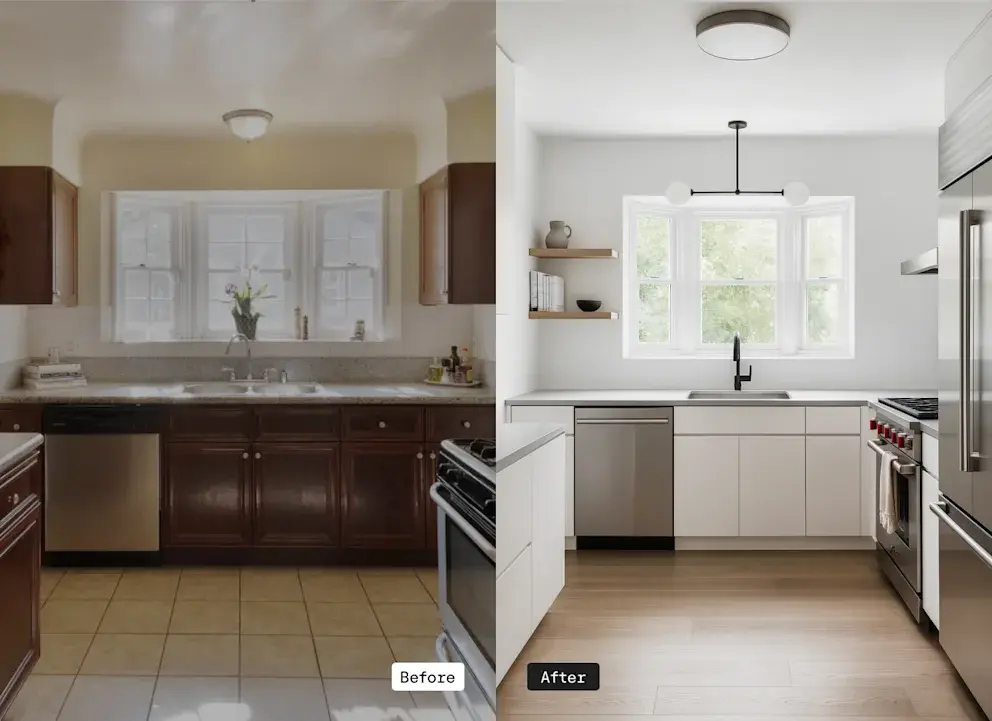
Renovation Studio kitchen design tool

How Minneapolis compares to other cities

Monthly renovation permit activity in Minneapolis over the past 5 years.


Average Renovation Cost by City

Tulsa

$78,753

289% higher
Chicago

$60,573

199% higher
Omaha

$34,493

70% higher
Indianapolis

$25,338

25% higher
Milwaukee

$18,249

10% lower
Kansas City

$17,720

12% lower

Regional insights for Minneapolis kitchen remodeling costs

Minneapolis sits toward the lower end of its regional peer group in renovation costs. Milwaukee and Kansas City come in at comparable or slightly lower averages, confirming a broader Midwest pattern of affordable kitchen renovation pricing. Indianapolis and Omaha both run higher than Minneapolis - Omaha by roughly 70% - suggesting those markets carry somewhat higher labor or material costs. Chicago stands out at nearly triple the Minneapolis average, driven by its higher labor rates, stricter permitting, and elevated cost of living. Tulsa's high average likely reflects a smaller dataset skewed by a handful of premium projects. For Minneapolis homeowners, this comparison confirms the city offers one of the more affordable renovation markets among major Midwest metros.

How Minneapolis compares to state & national averages

Understanding how kitchen remodeling costs stack up against national benchmarks helps you budget more accurately.


Average in Minneapolis

$20,235

MN State Average

$22,149

US National Average

$46,623

vs National Average

-56.6

Cost Comparison

Local vs. National Insights

At $20,235, Minneapolis kitchen renovation costs sit about 9% below the Minnesota state average of $22,149 and a significant 57% below the national average of $46,623. This places Minneapolis squarely in the below-average renovation cost category among major U.S. cities. The gap reflects the Midwest's moderate labor and material costs, along with a market where many homeowners choose practical mid-range updates rather than luxury overhauls. For Minneapolis homeowners budgeting a kitchen remodel, national cost estimates will significantly overstate what local projects actually cost - use these local benchmarks for more accurate planning.

Seasonal kitchen renovation trends

Month-by-month patterns in kitchen renovation costs and permit activity in Minneapolis.


Average Renovation Cost

Avg. Cost

Data represents 5-year average trends (2021-2026) to smooth out year-to-year variations and reveal consistent seasonal patterns in Minneapolis's kitchen renovation market.

Peak Season

Spring and Summer Drive the Most Activity

April through August represent Minneapolis's busiest renovation window, with April (177 permits) and July (178 permits) leading the pack. Homeowners kick off projects once the long winter breaks, creating a spring surge that carries through summer. Interestingly, average project costs dip during summer months - July averages just $15,912 - suggesting more homeowners tackle smaller refreshes alongside the bigger remodels. February carries the highest average cost at $25,281, indicating that winter projects tend to skew toward more ambitious scopes.

Transitional Months

Fall Holds Steady Before the Winter Slowdown

September through November remain solid renovation months, each posting 150-167 permits. Average project costs range from $17,000 to $20,400, with November's higher average suggesting homeowners who push into late fall tend to commit to more substantial projects. This stretch offers a reasonable window to start a renovation before winter sets in and before the holiday season tightens contractor availability.

Slower Period

Winter Is Quieter but Can Work in Your Favor

December and February are Minneapolis's slowest months for kitchen renovation starts, with 116 and 122 permits respectively. The harsh winter makes homeowners less inclined to disrupt their kitchens during the coldest stretch. However, winter projects often carry higher average costs - February leads the year at $25,281 - pointing to more comprehensive remodels from homeowners willing to plan ahead. The off-season can mean better contractor availability and potentially more competitive pricing, and interior kitchen work is entirely feasible year-round.

About this data

Here's how we collect, process, and present kitchen renovation cost data for Minneapolis.

Permit Data Explained

Renovation permits are filed with the Department of Buildings when homeowners undertake construction. The declared permit value - the estimated cost submitted by contractors - serves as a reliable proxy for actual kitchen renovation costs in Minneapolis.

Data Scope

We analyze residential kitchen renovation permits only, excluding commercial projects and new construction. This ensures the data reflects what homeowners are actually spending on kitchen renovations in Minneapolis.

Source and Methodology

1,843 permits sourced from Minneapolis DOB open data via BuildZoom, covering Mar 2021 to Jan 2026. Records are validated and filtered to remove duplicates and incomplete filings.

Permit Data Explained

Renovation permits are filed with the Department of Buildings when homeowners undertake construction. The declared permit value - the estimated cost submitted by contractors - serves as a reliable proxy for actual kitchen renovation costs in Minneapolis.

Data Scope

We analyze residential kitchen renovation permits only, excluding commercial projects and new construction. This ensures the data reflects what homeowners are actually spending on kitchen renovations in Minneapolis.

Source and Methodology

1,843 permits sourced from Minneapolis DOB open data via BuildZoom, covering Mar 2021 to Jan 2026. Records are validated and filtered to remove duplicates and incomplete filings.

Permit data provided by BuildZoom. Data last updated Jan 2026.
© 2026 Block Renovation. All rights reserved.

Ready to start your Minneapolis renovation?

Easily compare quotes from top quality contractors in Minneapolis, and get peace of mind with warranty & price protections.

Top quality contractors

Warranty & price protections

Expert resources

Kitchen renovation in Minneapolis

Learn more about kitchen renovations

Expert advice and practical tips for planning your Minneapolis kitchen renovation.


Frequently asked questions about renovating in Minneapolis

How should Minneapolis's extreme cold and dry winter air factor into my kitchen material selections?

Minneapolis winters regularly drop below zero, and indoor heating creates extremely dry air that can fall below 20% humidity. This matters for your kitchen because solid hardwood flooring and natural wood cabinetry can shrink, crack, or warp with repeated humidity swings between summer and winter. Engineered hardwood or luxury vinyl plank handle moisture fluctuations better and are popular choices in the Twin Cities. For countertops, natural stone like granite performs well in any climate, while butcher block may need more regular oiling in dry conditions. If you prefer solid wood cabinets, look for finishes that seal the wood on all sides - including interiors - to minimize moisture exchange. A whole-home humidifier, if you don't already have one, helps protect both your kitchen materials and the rest of your home during the long heating season.

Are there energy efficiency upgrades I should consider adding during a kitchen renovation in Minneapolis?

A kitchen renovation is an ideal time to improve your home's energy efficiency, and in Minneapolis - where heating costs are a major household expense - the payoff can be meaningful. If your renovation opens up exterior walls, upgrading insulation is one of the highest-return improvements you can make. Replace older windows with double- or triple-pane units rated for cold climates. Swap aging appliances for Energy Star models, which can cut energy use by 10-50% depending on the appliance - and check Xcel Energy and CenterPoint Energy rebate programs, which often offset the cost. LED lighting throughout the kitchen is a low-cost, high-impact upgrade. If your remodel includes plumbing work, a tankless or heat pump water heater can cut water heating costs by 20-30%. Induction cooktops are also more energy-efficient than gas or traditional electric and reduce heat output in the kitchen.

What are worthwhile kitchen upgrades to make if I plan on selling my Minneapolis home within the next few years?

In the Minneapolis housing market, buyers expect functional, updated kitchens without necessarily demanding luxury finishes. A minor kitchen remodel - refaced cabinets, new countertops, updated hardware, and modern appliances - typically returns 70-80% of its cost at resale. Focus on quartz or granite countertops, which are now standard buyer expectations, and a cohesive stainless steel appliance suite. An open or semi-open layout appeals to most buyers, so removing a non-structural wall between the kitchen and living area can be a high-impact change. Fresh paint in neutral tones and updated lighting fixtures offer strong returns for minimal investment. With an average renovation cost around $20,235 in Minneapolis, the market supports practical mid-range updates well - avoid over-improving beyond your neighborhood's price ceiling.

What are some Minneapolis kitchen upgrades that can help lower my utility bill?

With Minnesota's long heating season, energy-efficient kitchen upgrades lead to noticeable savings. Replacing an old refrigerator or dishwasher with an Energy Star model is one of the most impactful changes - a modern refrigerator uses about half the energy of a model from 15 years ago. Upgrading to LED lighting throughout the kitchen can cut lighting energy costs by 75%. If your kitchen has older windows, replacing them with double-pane, low-E glass reduces heat loss during winter months. A low-flow kitchen faucet aerator is a simple $15-$25 upgrade that reduces hot water use with no noticeable loss of functionality. Induction cooktops are more energy-efficient than gas or traditional electric, converting more energy directly into heat. If your renovation touches plumbing, a tankless water heater eliminates standby heat loss and can cut water heating costs noticeably.

I live in an HOA in Minneapolis - in what ways can that impact kitchen renovation planning and costs?

HOA restrictions in Minneapolis most commonly affect condominiums and townhomes. Most condo HOAs require you to submit renovation plans for approval before work begins, and some restrict construction hours - typically limiting work to weekdays between 8 AM and 5 PM. Noise-related rules may require sound-dampening measures during demolition phases. Some HOAs mandate the use of licensed and insured contractors, which is already advisable but limits options for cost-saving DIY work. Plumbing and electrical changes in shared-wall buildings may need HOA engineering review, adding time and cost. Specific flooring requirements - like minimum sound-dampening underlayment - are common in multi-unit buildings. Budget an extra 2-4 weeks in your timeline for the approval process, and check your association's rules on material deliveries, debris removal, and use of common areas like elevators and hallways during construction.

What are common plumbing issues I should anticipate in a Minneapolis kitchen?

Minneapolis's housing stock spans from early 1900s craftsman and bungalow homes to mid-century ramblers to newer construction, and the plumbing issues you encounter depend heavily on when your home was built. In homes built before the 1960s, galvanized steel pipes are common - they corrode from the inside over time, reducing water pressure and eventually failing. If your kitchen renovation opens walls and reveals galvanized supply lines, budget to replace them with copper or PEX while access is easy. Lead solder on copper joints was standard until the late 1980s and should be replaced for safety. Cast iron drain lines in older homes may be cracked or deteriorating and should be inspected via camera before you close up walls. Freeze protection is a practical concern in Minneapolis: pipes running through exterior walls are vulnerable during severe cold snaps, and a kitchen renovation is a good opportunity to add insulation or reroute exposed lines. Have a licensed plumber assess the condition of adjacent lines early in the project.