



Bathroom Floor Plans
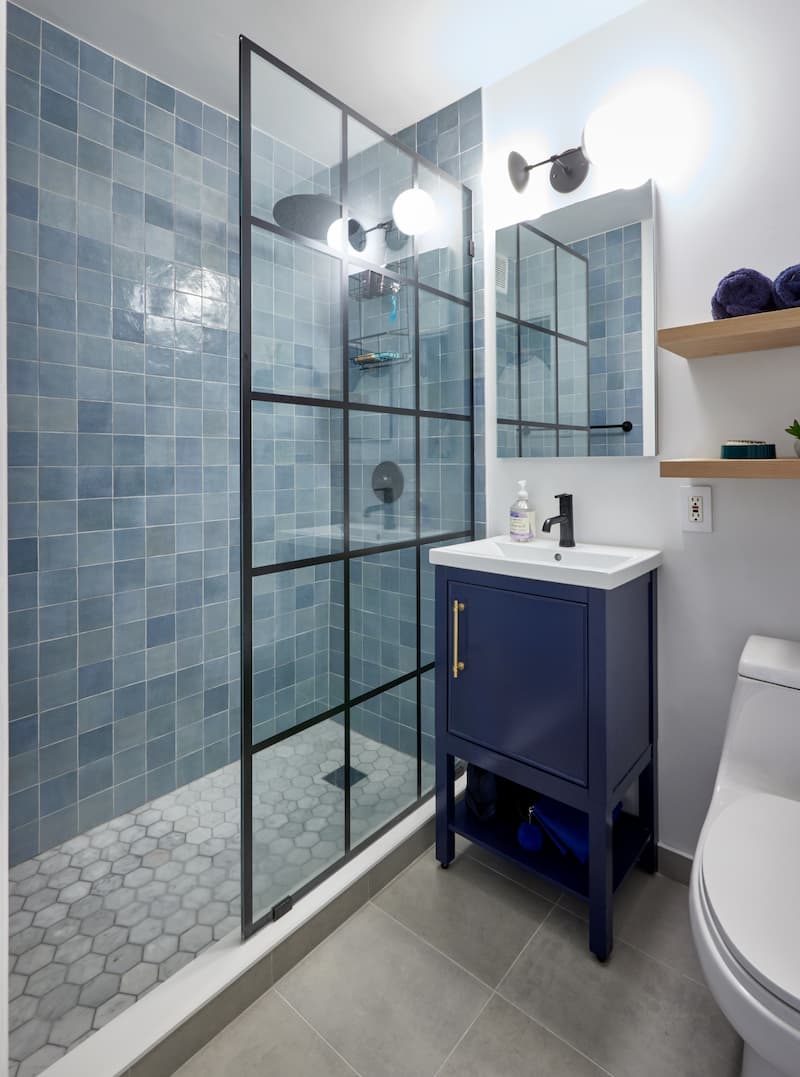
4x10 Bathroom Floor Plans With Showers
08.26.2026
06.02.2026


In This Article
A 100 square foot bathroom sounds tight until you run the numbers. Ten feet by ten feet holds a double vanity, a separate shower, and a soaking tub, the same fixture lineup you would find in a primary bath that costs twice as much to build. Designers call this size the point where your money goes furthest, because you can afford better tile and finishes before the per-foot cost starts climbing fast.
The catch is that a 100 square foot bathroom layout can look balanced on paper and still feel cramped the first morning two people share it. The fixtures will fit, but the harder part is deciding which ones get real breathing room and which get squeezed to the minimum to make that possible.
Building code sets the floor for how close fixtures can sit. A toilet needs 21 inches of clear space in front of it and 15 inches from its centerline to the nearest wall or fixture. A shower has to measure at least 30 by 30 inches, though anything under 36 inches square starts to feel like a phone booth. Hit those minimums everywhere and you can technically pack a four-piece bathroom into 100 square feet. There is even room to wall the toilet into its own private compartment if privacy is a priority.
Those minimums keep you legal, but comfort starts a few inches above them. Widen a walkway from 30 inches to 36 and you stop turning sideways to pass the vanity when someone else is at the sink. In a 100 sq foot bathroom you can afford that breathing room at two or three spots, though stretching every clearance at once is when the layout stops adding up.
Two rooms can both measure 100 square feet and behave nothing alike. A true 10x10 square is the easiest version to work with. You can center a tub on one wall, put a separate shower beside it, and run a double vanity along the opposite wall without anything feeling jammed together.
A long, narrow 5x20 room is a different animal. Everything has to line up single file, and a double vanity becomes a single. Before you commit to a layout you saw online, measure your actual walls and read our guide to narrow bathroom remodeling choices.
Turn your renovation vision into reality
Get matched with trusted contractors and start your renovation today!
Find a Contractor
Whatever shape you are working with, a few arrangements come up again and again because they respect both code clearances and daily traffic. Treat them as starting points, then adjust to your door and window placement, which you are stuck with.
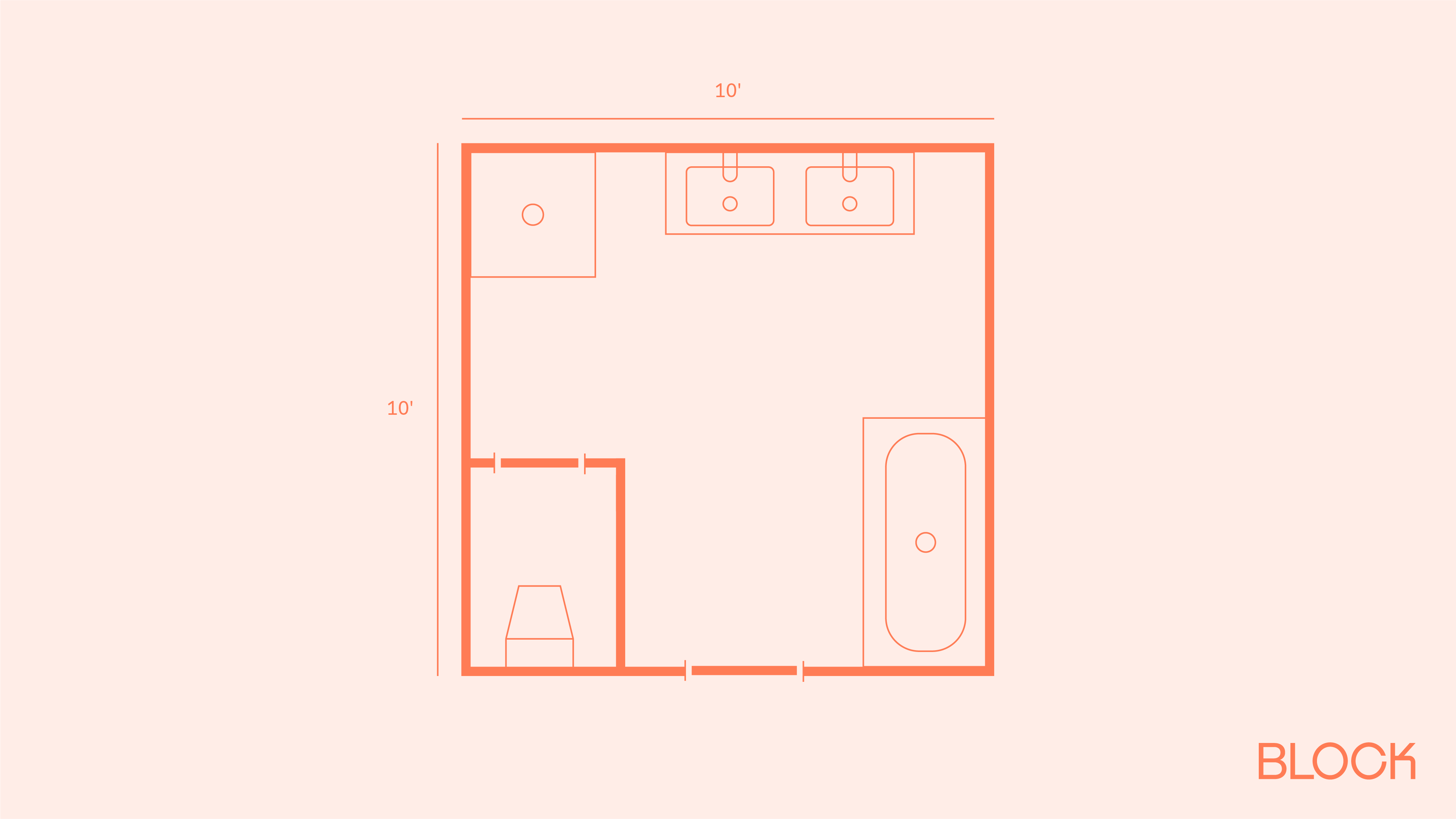
In a 10x10, run a 60-inch double vanity along one wall, ideally under the window for natural light. Place a separate shower and tub on the opposite wall, and tuck the toilet into a spot that is not the first thing you see when the door opens. This is the layout that makes a 100 square foot bathroom feel like a primary bath. The plan below shows why it works: the door opens onto a clear center aisle, with nothing to squeeze past on the way in.
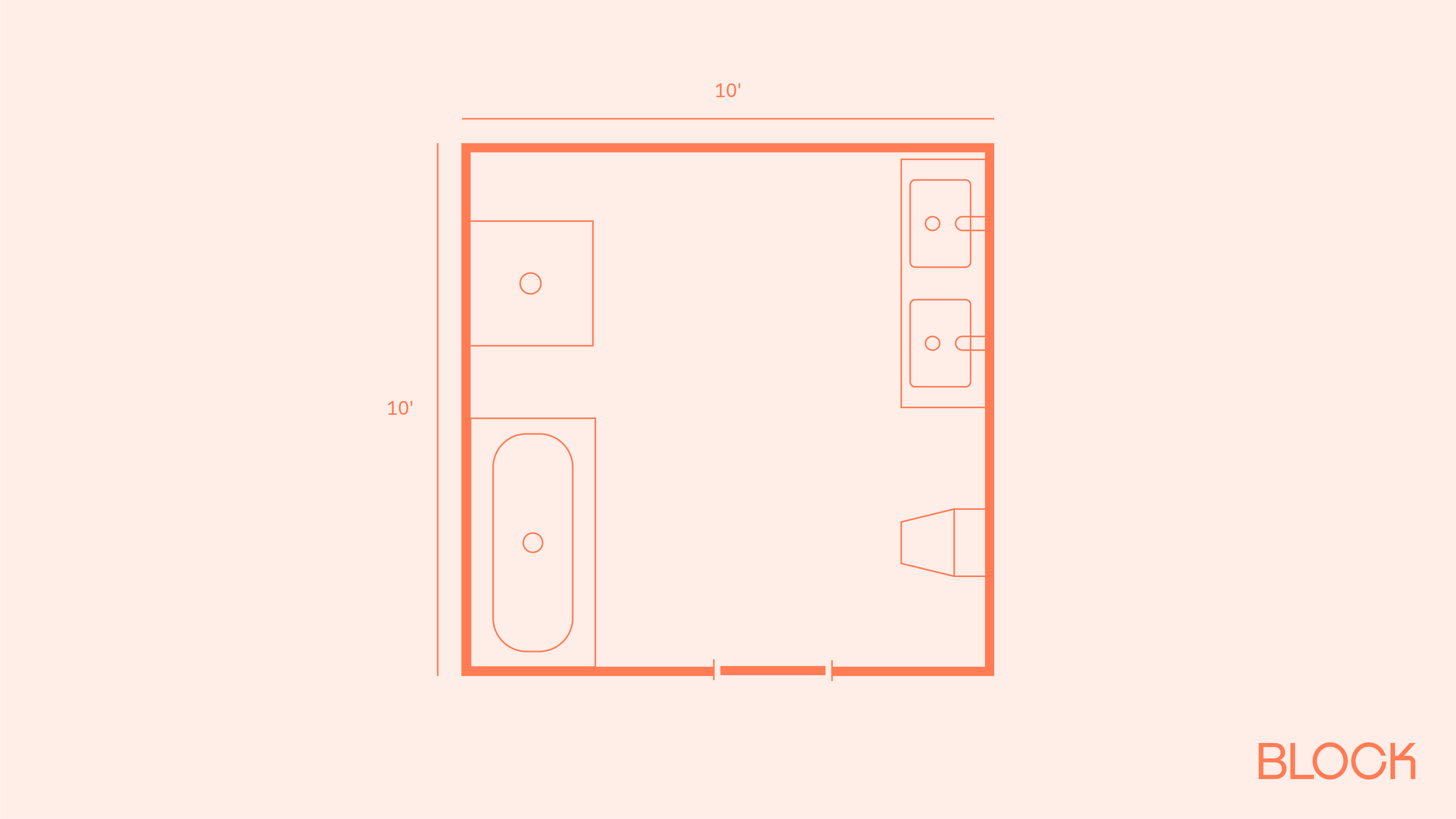
It stays livable because of the traffic pattern: with the wet fixtures grouped on facing walls, two people can reach the vanity, the shower, and the toilet without crossing the room or each other. Keeping the plumbing along two walls rather than spreading it across four also holds the cost down and leaves the middle of the room open.
If you skip the tub, a single oversized walk-in shower with a glass panel can anchor one wall while a long vanity runs the other. This setup suits two people who share a morning routine and want counter space more than a bathtub.
In a long, 5-foot-wide room, keep all the plumbing on a single wall to save on cost and open up the floor. A tub-shower combo at one end, the toilet in the middle, and a single vanity at the other end gives you a clean, usable line. A pocket door at the entrance reclaims the floor space a swinging door would waste.
A floor plan you like still hinges on two calls that ripple through the whole project: where the toilet goes, and whether you keep a tub. Each one shapes the budget and the floor plan together, so settle both before you fall for a set of finishes.
The single biggest lever on a 100 square foot bathroom remodel is plumbing, and most homeowners reach for it in the wrong place. Moving the toilet is the most expensive change in the room, and the payoff is invisible once the work is done. Toilets run on large waste pipes that need a precise downward slope, so relocating one means opening the floor and rerouting the drain.
Here is what plumbing changes tend to add:
Keep the toilet on its existing drain and you free up thousands of dollars. Put that money into the things people see and touch every day, like the shower tile or a better vanity. The exception is when the toilet placement is the problem itself, such as a toilet you stare at from the hallway every time the door opens. In that case, moving it can be worth the cost, though for most homeowners it is not.
With the plumbing settled, the next call is how you actually bathe, and the right answer depends on your room shape and who lives in your home. In a square 10x10, a separate tub and shower earns its place. You have the wall space for both, and keeping a tub somewhere in the house protects resale value. The plan below fits both and gives the toilet a short privacy wall so it does not sit in the open.
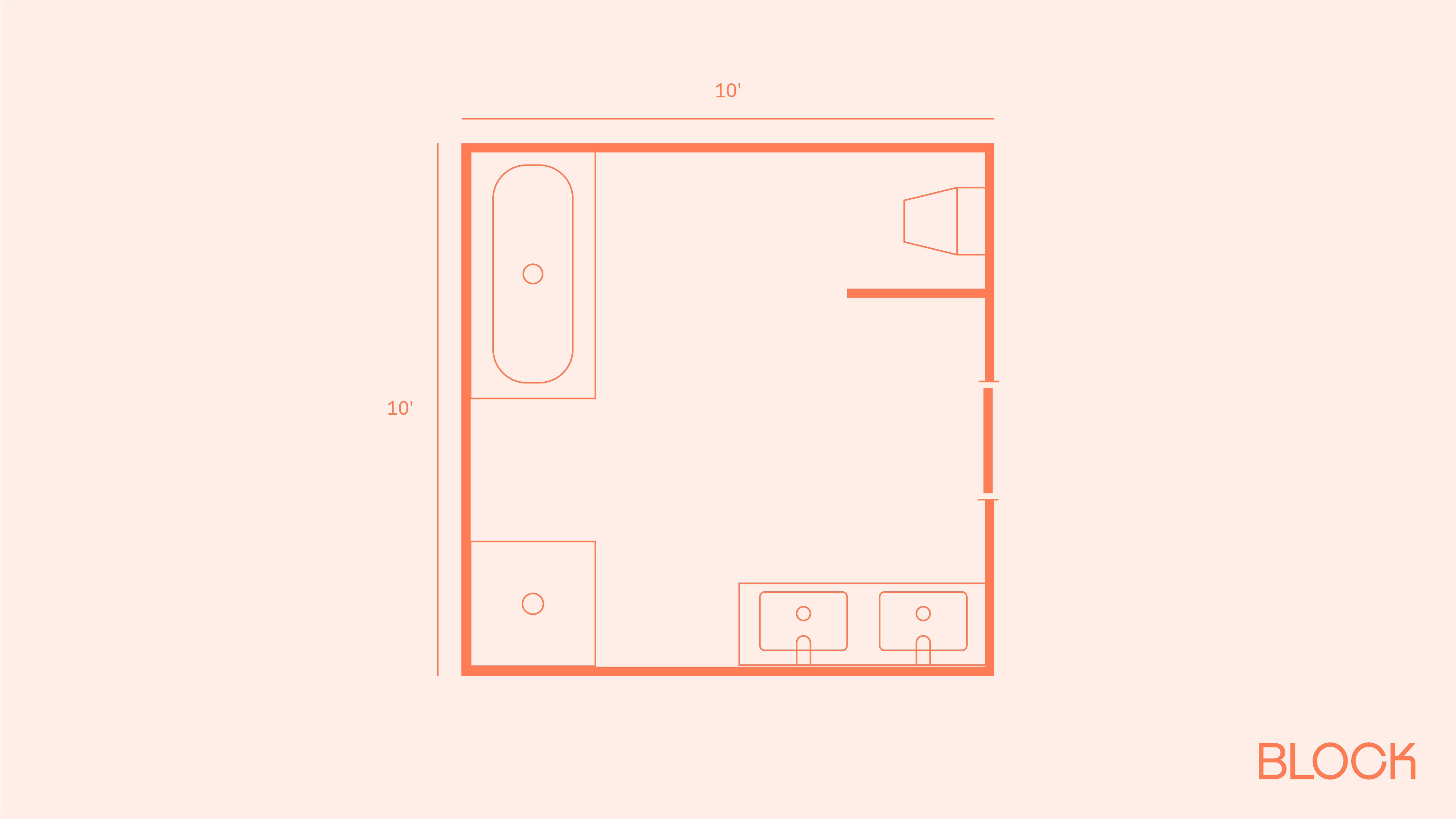
A narrow room changes the math, because lining up a separate tub, a shower, and a vanity along one long wall leaves you with cramped versions of all three. You are better off choosing one generous walk-in shower, or a tub-shower combo, and giving it the room the three-fixture version never had.
Who keeps the tub comes down to a few honest guidelines:
If you only use your tub to store bath toys you have not touched in a year, that is your answer. A walk-in shower with a glass panel will give you back floor space and make the room feel larger. Let how you actually live make the call.
Every choice so far, from the plumbing you leave alone to the tub you keep or drop, lands in the same place: the final bill. Costs swing more on location and scope than on square footage. National 2026 figures land around $80 to $120 per square foot for budget work, $180 to $280 for mid-range, and $300 to $450 for high-end, with fully custom luxury running $500 to $800 and up. In higher-cost metros like New York or San Francisco, even a small bathroom rarely comes in under $25,000, because labor and permit costs run far above the national average. The low and mid-range tiers below assume you keep the existing plumbing layout.
This tier still buys a full renovation, as long as you keep the footprint and spend where it counts. Floors come in porcelain or ceramic tile, or in luxury vinyl plank at $2 to $7 per square foot. A prefab acrylic shower kit runs $1,000 to $3,000 installed, or you swap an aging alcove tub for a new one at $1,500 to $3,000.
The fixtures are basic but durable: a stock 30 to 36 inch vanity at $200 to $600, a two-piece toilet around $200 to $400 installed, a chrome or brushed nickel faucet at $60 to $120, and a single light bar at $75 to $120. Add demolition, basic plumbing, and tile labor, and a realistic build lands near $12,000 to $14,000.
Even here, you can afford one real luxury: heated floors. An electric radiant mat for a room this size runs about $600 to $1,600 installed on top of the tile, small enough to fit a tight budget and the kind of upgrade you feel every cold morning. A budget tile floor is exactly the right place for it, since the mat sits under tile or stone anyway.
This is where a 10x10 starts to show off, with real tile work and room for one statement feature. While the real-world costs may vary, you can estimate the budget using the following figures:
That comes to about $24,500, which leaves headroom in the range for a 10 to 20% contingency or a step up in tile. Drop the separate tub for a larger walk-in and the total barely moves, because most of the cost sits in the tile and the labor.
At this level you get custom work and the freedom to move plumbing when the layout calls for it. Floors are natural stone or premium large-format porcelain at $6 to $20 and up per square foot, with heated floors built in. The shower becomes a custom curbless walk-in with frameless glass, a linear drain, and floor-to-ceiling tile, which can reach $12,000 to $20,000 on its own.
The fixtures match: a custom double vanity with a natural stone top at $3,000 to $8,000 and up, a wall-hung or smart toilet at $1,500 to $5,000, solid brass fixtures, a backlit mirror, and dimmable lighting. A full build of this kind lands around $50,000, and patterned stone or a relocated toilet pushes it past $60,000. Find inspiration with our overview of luxury brands for bathroom fixtures.
For a sense of the ceiling, one 100 square foot bathroom built as part of a custom home took about $75,000 of the construction budget once materials, labor, and design fees were counted. That figure reflects a fully custom build, and it shows how fast costs climb once you stop reusing what is already there.
The fastest way to turn a layout you like into a real plan is to get matched with contractors who have built bathrooms this size before. Tell Block Renovation what you are planning, and your area's vetted contractors compete for the project with detailed, expert-reviewed scopes you can compare side by side. You see real numbers before anyone picks up a tool, so the budget you set is the budget you keep.
Your payments stay protected the whole way through. Instead of paying a contractor directly, you pay Block, and funds release in stages as each milestone is approved, with a one-year workmanship warranty behind the finished work. Get matched with your contractor, and get peace of mind from the first estimate to the final walkthrough.
Remodel with confidence through Block
Connect to vetted local contractors
We only work with top-tier, thoroughly vetted contractors

Get expert guidance
Our project planners offer expert advice, scope review, and ongoing support as needed
Enjoy peace of mind throughout your renovation
Secure payment system puts you in control and protects your remodel

Renovate confidently with Block
Easily compare quotes from top quality contractors, and get peace of mind with warranty & price protections.
Bathroom Floor Plans
4x10 Bathroom Floor Plans With Showers
08.26.2026
Bathroom Floor Plans
Bathroom With 2 Doors: Layout Ideas That Work
08.24.2026
Bathroom Floor Plans
Single Wall Bathroom Layout: Pros, Cons, and Tips
07.22.2026
.jpg?width=640&name=5301c89b-3165-4f83-af34-a6b02eaa6c48%20(2).jpg)
Bathroom Floor Plans
Long, Narrow Bathroom Floor Plans: Layouts That Work
07.21.2026
.jpg?width=640&name=2a430d6c-5cf0-4596-9a89-601f3d2d6391%20(7).jpg)
Bathroom Floor Plans
Square Bathroom Floor Plans & Layout Tips
07.18.2026