



Bathroom Floor Plans
4x10 Bathroom Floor Plans With Showers
08.26.2026
06.05.2026


In This Article
A 300 square foot bathroom is larger than many bedrooms. At that size, a soaking tub, a separate shower, a double vanity, a private toilet, and a wall of storage can all share the room without anyone bumping elbows. The harder question is how to arrange them so the space feels considered rather than empty, and so the plumbing budget does not run away from you. The seven layouts below show different ways to solve that, along with the planning calls that matter most before a single tile gets ordered.
Most full bathrooms in American homes run 35 to 100 square feet. A generous primary bath might reach 150 to 200. At 300 square feet, you are well into large bathroom layout territory, closer to a small bedroom than to the hall bath most people grew up with. That extra room buys options, and it raises the stakes, because every fixture you add brings its own plumbing, waterproofing, and ventilation load.
A 300 square foot bath can comfortably hold:
Turn your renovation vision into reality
Get matched with trusted contractors and start your renovation today!
Find a Contractor
Each plan below fits inside 300 square feet. They share the same building blocks and differ in how those blocks get arranged, which is the part worth studying when you collect large bathroom layout ideas. The footprint shapes vary, so a few of these work in rooms that are not simple rectangles.
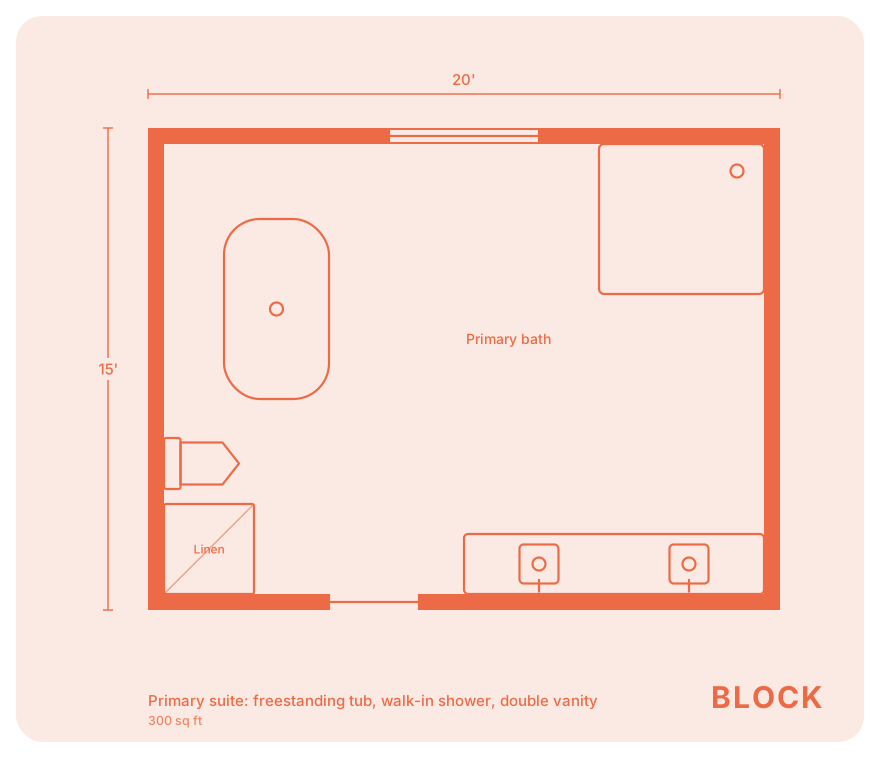
This is the layout most people picture for a large master bathroom. The room runs 20 by 15 feet, and the fixtures line the perimeter, which leaves the center open and keeps every plumbing run close to the walls. A freestanding tub sits in one corner and a walk-in shower in another, while a double vanity spans a full wall and a linen closet handles storage. The toilet stands in the open here, which is the one thing the next plan sets out to fix.
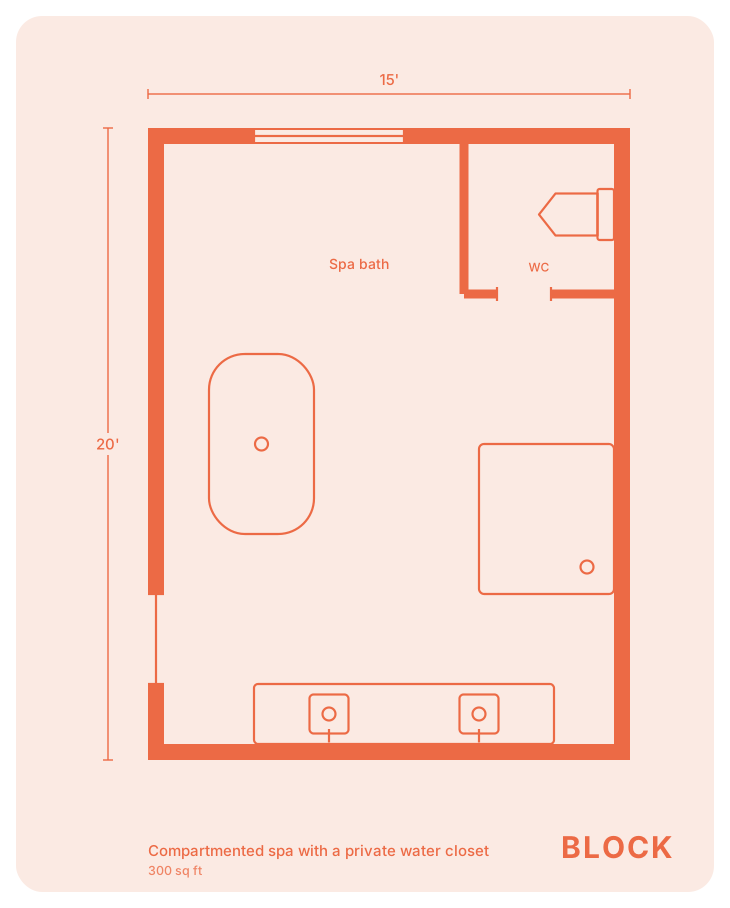
Same square footage, turned to a 15 by 20 footprint, with the toilet walled into its own compartment. A freestanding tub anchors one side and a glass shower sits opposite, with the double vanity running along the bottom wall. The private water closet is the change worth noticing. It lets two people share the room without anyone waiting, and it keeps the toilet out of sight from the tub and the doorway. The wall costs you a little openness and a few square feet.
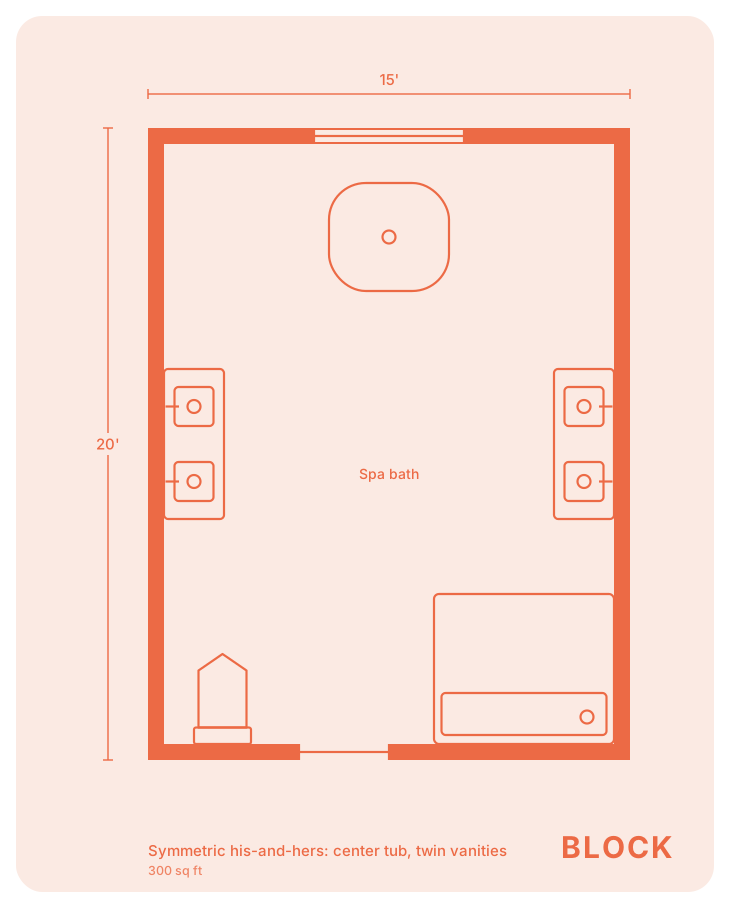
A mirror-image plan built around a center tub, with a matching vanity on each side wall and the shower and toilet grouped at the back. The catch is that two full vanities mean two sets of supply and drain lines, which adds plumbing cost, and most households never use both sides at the same moment. If your mornings genuinely overlap, the symmetry earns its cost, but if they rarely do, that second vanity wall is space you could give to storage or a bigger shower. Click here for more tips about Jack and Jill bathroom remodeling.
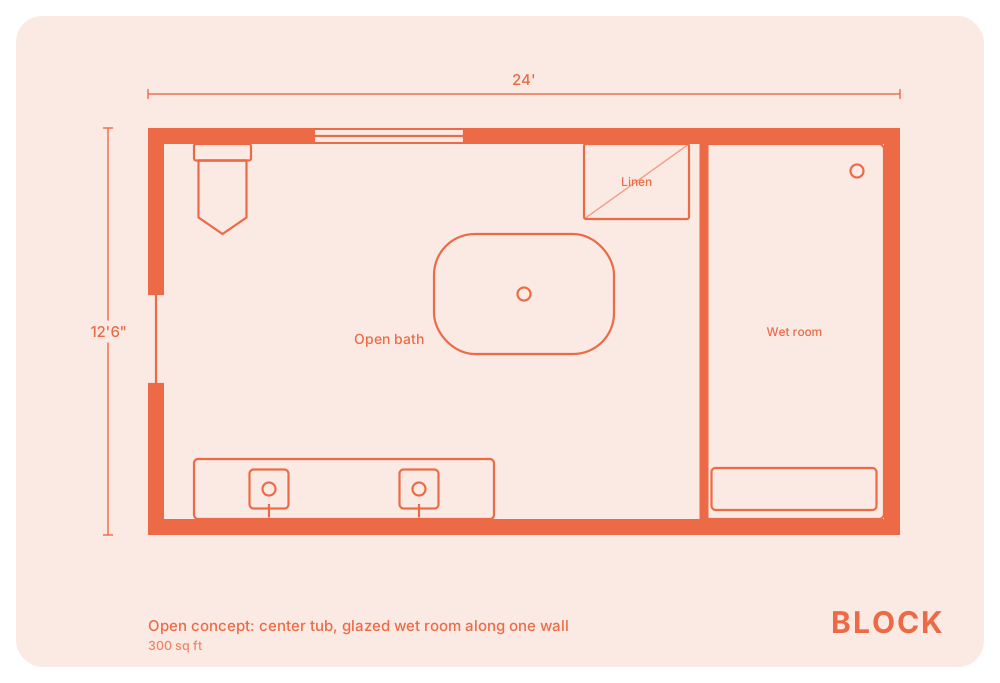
A 24 by 12.5 foot room with a glazed wet room running the full length of one wall. Inside that zone the shower has no curb, and the whole area drains to a single linear drain, so water is free to go where it likes. A freestanding tub sits in the open near the center, with the double vanity and a walled toilet along the opposite side. Glass instead of solid walls keeps the room feeling open while containing the spray. A curbless entry also makes the room easier to use as you age, since there is no lip to step over. A wet room leans hard on waterproofing, since the entire floor and the lower walls have to be tanked and sloped correctly, and done right it is the easiest large bathroom to clean.
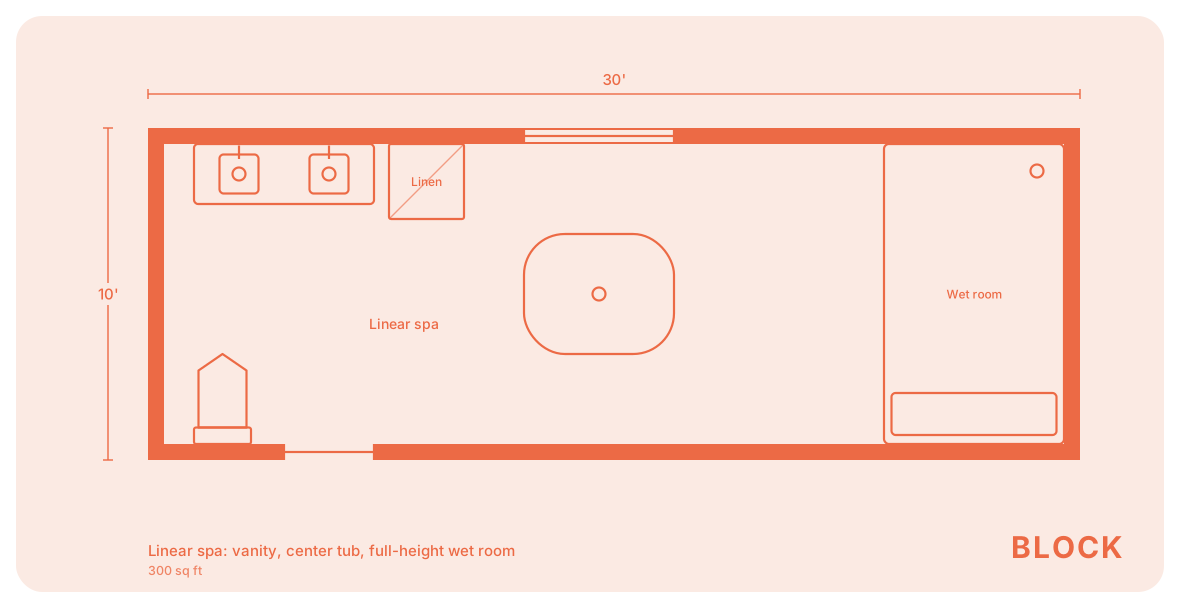
Not every large bathroom is a square. This one is 30 by 10 feet, a long narrow run that suits a space carved from an attic, an addition, or a few small rooms knocked together. The plan reads left to right, with the double vanity and storage first, a center tub in the middle, and a full wet room at the far end. Keeping the heavy plumbing toward one end holds the cost down, because the supply and drain lines stay grouped instead of stretched across the whole room.
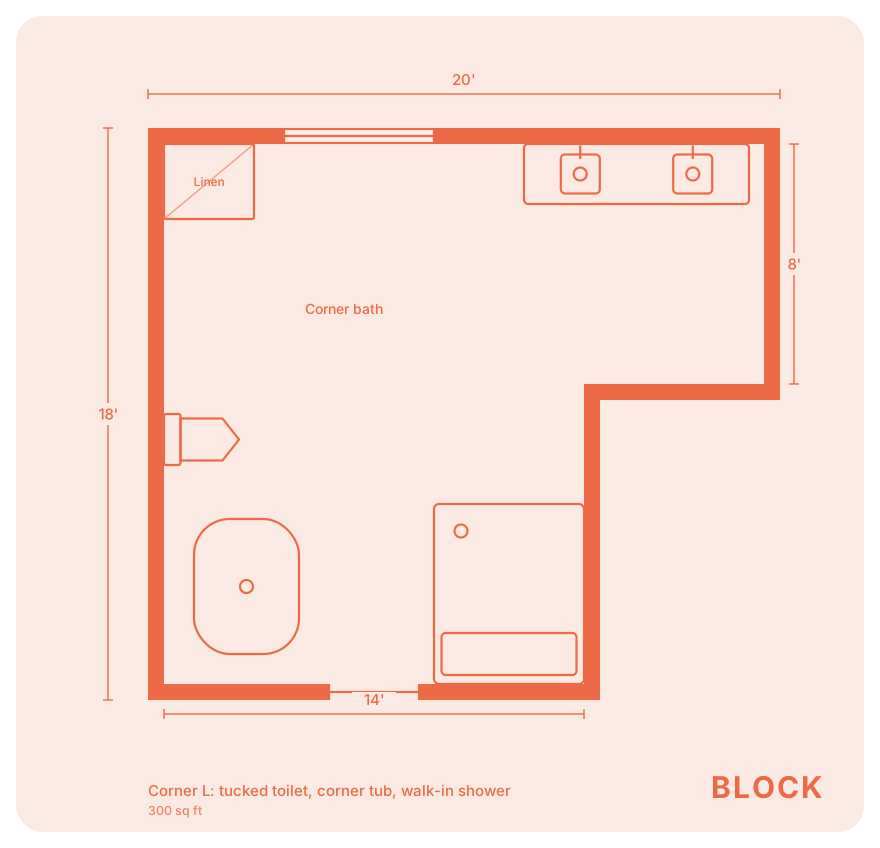
When a bathroom has to wrap around a closet, a stairwell, or a chimney, an L-shaped footprint makes the most of the leftover space. Here the double vanity and linen sit along the long top wall, the toilet tucks into the short leg where it stays private, and a corner tub and a walk-in shower fill the lower section. The thing to watch is the inside corner, since fixtures placed there can be awkward to reach and to clean.
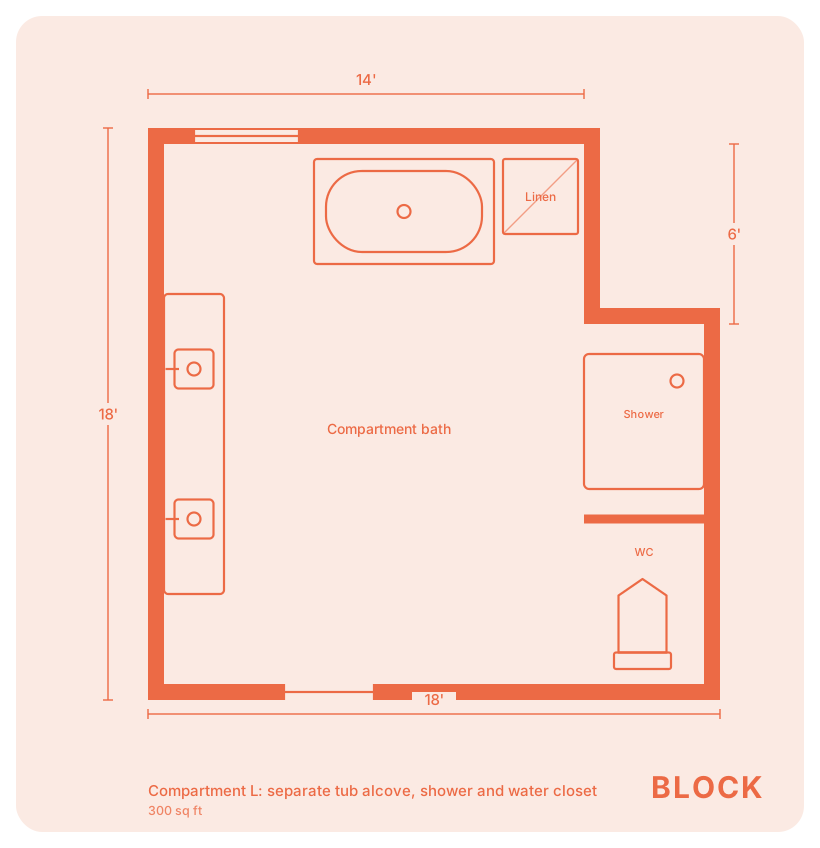
This L-shaped plan takes privacy further by giving the shower and the toilet their own compartments along one leg, with the tub set into its own alcove. A double vanity runs down the long wall, and storage tucks in near the toilet. Each compartment gets its own door, so the leg of the L reads almost like a row of small private rooms.
The payoff is that three people can use the room at once without crossing paths, one at the vanity while another showers and a third uses the toilet. That kind of separation is hard to retrofit later, so it is worth deciding on early. The cost is more interior walls and doors, which eat into the open feeling and add a little to the build.
Square footage does not guarantee comfort. A big bathroom layout still fails if the fixtures crowd each other or sit too close to a wall. A few clearances are worth holding to:
These are minimums drawn from common code and design practice. In a 300 square foot room you usually have the space to exceed them, and the layout feels better when you do.
The finishes are the fun part, and they are also where people start when they should be starting somewhere else. Four decisions shape the budget and the daily comfort of a large bath far more than the tile you pick.
Doubling the floor size does not double the price. An open stretch of tiled floor is one of the cheaper things in the room. The cost climbs with each fixture you add and each surface you have to waterproof: the second sink, the floor-mounted tub filler, the shower valve, the wet room drain. Relocating the toilet or the main drain stack is the expensive move, especially on a concrete slab, because it means opening the floor and re-running the line.
The cheapest large bathroom layout is usually the one that keeps its fixtures near the existing plumbing wall.
This is the part most large bathroom budgets get backwards. A good thermostatic shower valve, strong and steady water pressure, quiet drainage, and lighting you can actually control will do more for your daily life than a television over the tub or a chandelier you dust twice a year. The features people show off at the housewarming are usually the first ones they stop noticing. The shower valve you reach for every morning keeps earning its place.
A bigger room has more exposed floor, more hard surface, and more air to heat. Tile that felt fine in a compact bath reads as cold underfoot across 300 square feet, and the soaking tub usually sits far from any heat register. Sound carries too, bouncing off stone and glass with nothing soft to absorb it. This is why radiant floor heat earns its cost in a large bath, why a heated towel bar stops being a gimmick, and why warm materials like wood or textile matter more here than they would in a small room.
Ventilation gets sized to the room, and a 300 square foot bath with a tub and a shower asks a lot of it. The common rule of one cubic foot per minute of exhaust per square foot of floor only holds up to about 100 square feet. Past that, you size by fixture, allowing roughly 50 CFM each for the toilet, the shower, and the tub, with more for a steam shower or a jetted tub. The total usually lands beyond what a single builder-grade fan moves, so a large bath often needs a higher-capacity unit or two fans, plus a way for replacement air to enter.
If you skip this step, the moisture has nowhere to go and shows up as mildew in grout that was new last month.
A bathroom this size is rarely a small project. In 2026, full bathroom renovations with mid-range finishes commonly run about $150 to $300 per square foot, while high-end and luxury builds run $300 to $500 or more. Applied to 300 square feet, a complete renovation often lands between $45,000 and $90,000 for mid-range work, and from roughly $90,000 into six figures for luxury finishes and layout changes. Several things move the number:
Set aside 10 to 20% of the budget as a contingency for whatever the demolition uncovers. On a $90,000 bath, that is $9,000 to $18,000 held in reserve. On resale, a mid-range bathroom remodel returns around 74% of its cost in added home value, and high-end work returns less.
The fastest way to see which of these large bathroom layouts fits your space is to draw it. Block Renovation's free Renovation Studio lets you lay out a 300 square foot bath, swap fixtures and finishes, and watch the cost estimate move as you go, so you can test a wet room against a compartmented plan before you spend anything. Once the layout feels right, Block matches you with vetted local contractors who bid on the same detailed scope, which keeps the quotes honest and the plumbing surprises to a minimum.
Remodel with confidence through Block
Connect to vetted local contractors
We only work with top-tier, thoroughly vetted contractors

Get expert guidance
Our project planners offer expert advice, scope review, and ongoing support as needed
Enjoy peace of mind throughout your renovation
Secure payment system puts you in control and protects your remodel

Renovate confidently with Block
Easily compare quotes from top quality contractors, and get peace of mind with warranty & price protections.
Bathroom Floor Plans
4x10 Bathroom Floor Plans With Showers
08.26.2026
Bathroom Floor Plans
Bathroom With 2 Doors: Layout Ideas That Work
08.24.2026
Bathroom Floor Plans
Single Wall Bathroom Layout: Pros, Cons, and Tips
07.22.2026
.jpg?width=640&name=5301c89b-3165-4f83-af34-a6b02eaa6c48%20(2).jpg)
Bathroom Floor Plans
Long, Narrow Bathroom Floor Plans: Layouts That Work
07.21.2026
.jpg?width=640&name=2a430d6c-5cf0-4596-9a89-601f3d2d6391%20(7).jpg)
Bathroom Floor Plans
Square Bathroom Floor Plans & Layout Tips
07.18.2026