




Kitchen
50k Kitchen Remodel: What $50,000 to $60,000 Buys
09.21.2026
07.02.2026


In This Article
The galley kitchen in this small New York apartment had a layout problem long before it had a style problem. Two cabinet runs faced each other across a narrow strip of floor, the only window sat at the dead end over a brick airshaft, and there was barely enough counter to cook on, let alone room to sit. The remodel hinged on one choice: opening the wall.
Removing that wall made room for a breakfast bar and connected the kitchen to the rest of the apartment, so whoever was cooking was no longer sealed off in a corridor. The white cabinets, quartz counters, and slim pendants came after. They help, but the wall is what made the rest of it work.
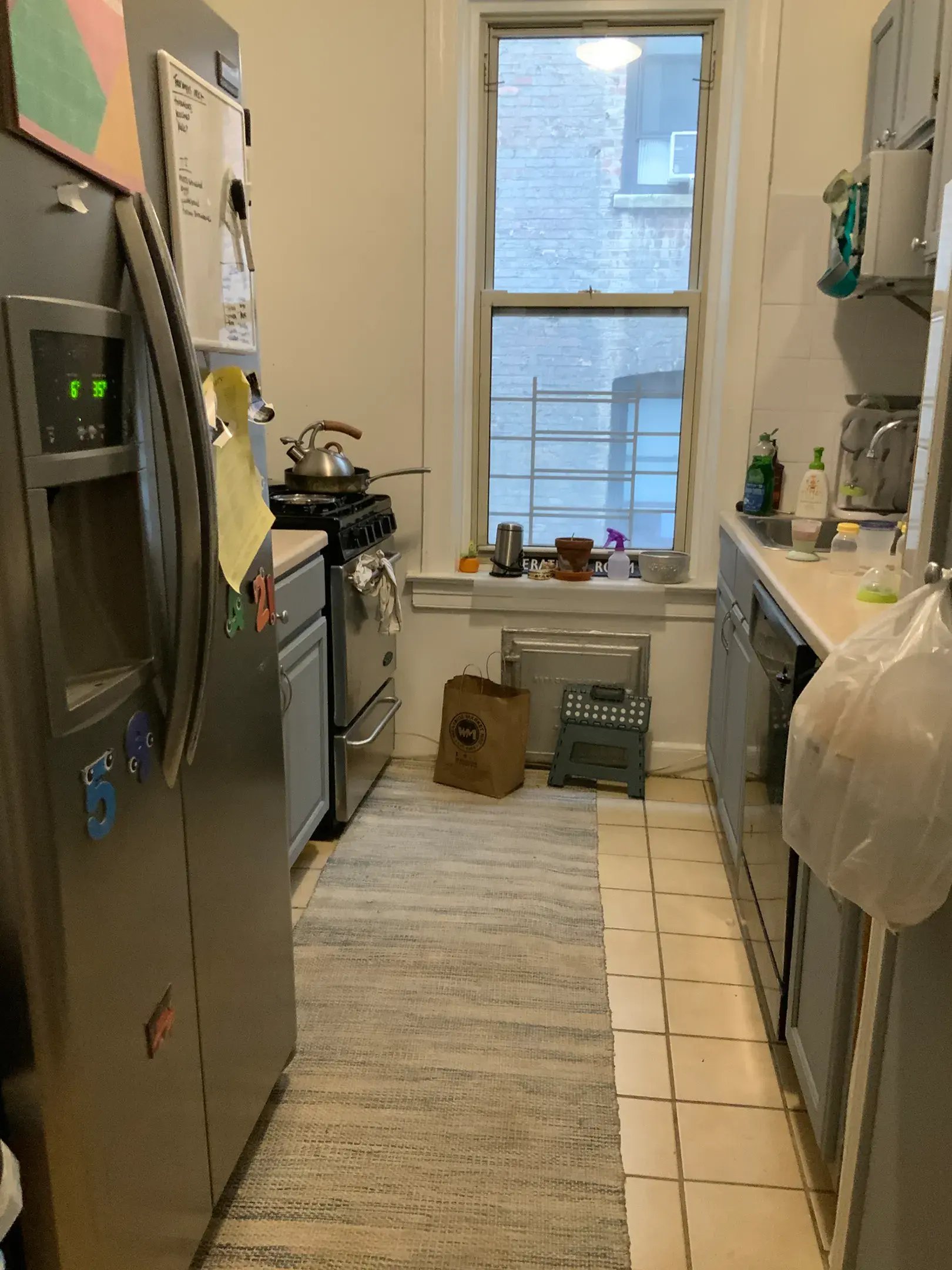
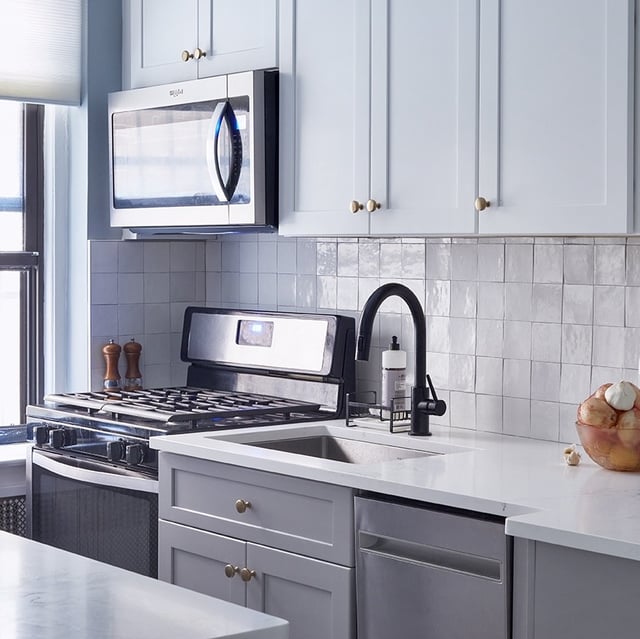
The old kitchen was gray and tight. Flat gray cabinets ran down both walls, with white square tile on the backsplash and a white laminate counter that gave up only a few feet of usable surface. The single window faced a brick airshaft, so even at midday the room stayed dim.
The bigger issue was function, not just the dated finishes. There was almost no counter to prep on, not enough cabinets for a full kitchen's worth of gear, and nowhere for anyone to sit or stand out of the way. With the fridge, range, sink, and dishwasher packed into a few feet, two people could not be in the room at once.
Taking out a wall in a New York apartment is rarely quick, and in a pre-war co-op it comes with a checklist before demolition starts. The wall might be structural, in which case an engineer has to confirm what it carries and design a beam to replace it. Behind the plaster, older buildings tend to hide brittle wiring and pipes that have to be rerouted once the wall is open.

Most co-op and condo boards also require sign-off first, usually through an alteration agreement that spells out insurance, work hours, and rules for the building's elevators and hallways. Block Renovation plans for these steps before the crew shows up, because a missing approval or an undersized beam can stall a job for weeks.
Opening a wall costs more than money. You give up the wall itself, which might have held cabinets, anchored a table, or kept some separation between the kitchen and the next room. For plenty of layouts that separation is worth protecting. Here it was not: the adjoining room could spare the wall, and the kitchen needed what the opening would give back.
Renovate with confidence every step of the way
Step 1: Personalize Your Renovation Plan
Step 2: Receive Quotes from Trusted Contractors
Step 3: Let Us Handle the Project Details

The new opening did not technically make the kitchen much bigger, but it made the kitchen work harder. The breakfast bar picks up the jobs the galley had no room for. Most of the time it is extra prep space, or the spot where mail and groceries get dropped. When dinner is ready it works as a table, and when no one is cooking, someone can sit there with a laptop or a coffee while another person is at the range.
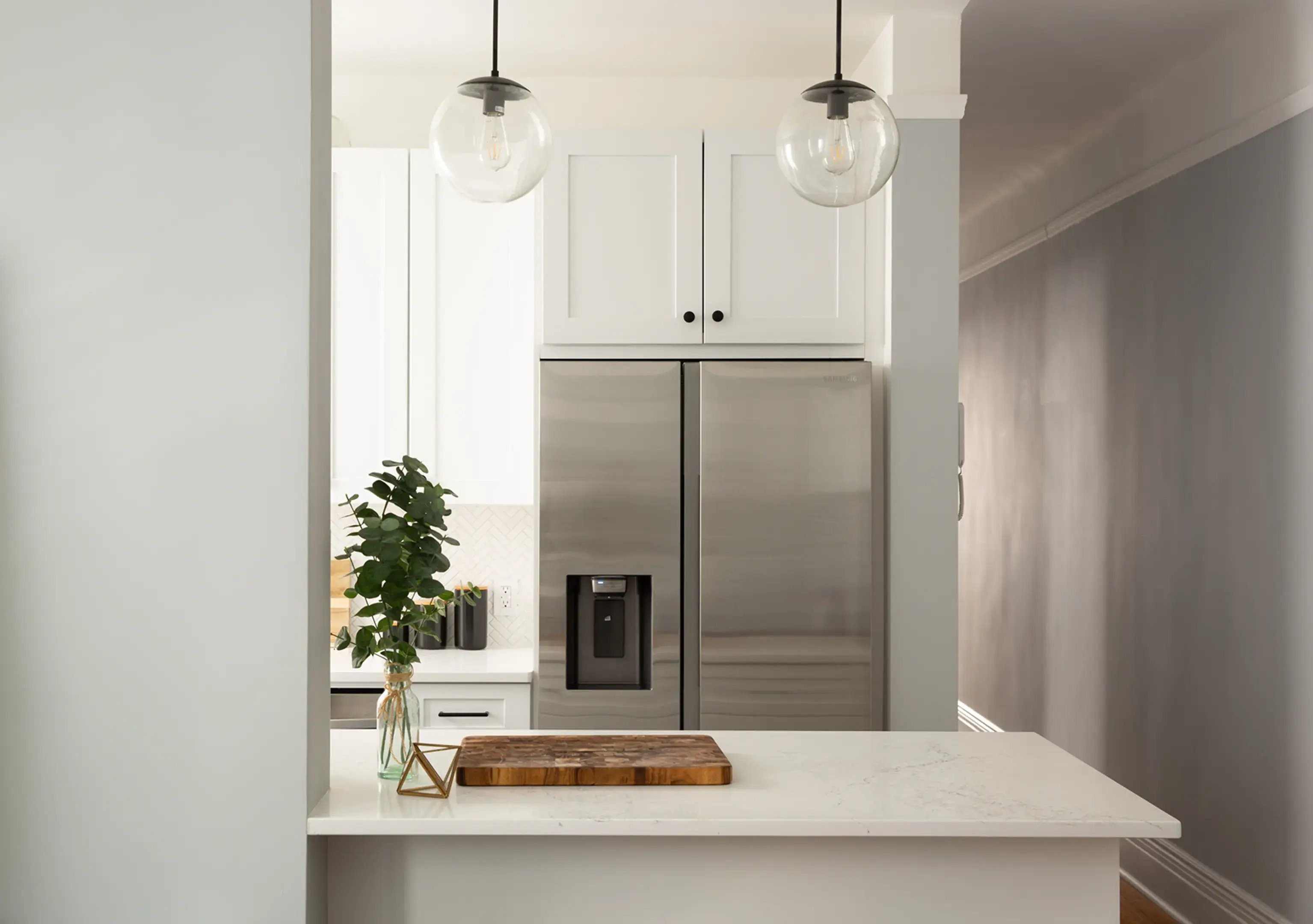
A galley with two facing runs has no spare wall for a table, so the old kitchen had nowhere to eat at all. The bar solves that without widening the footprint, since it sits where the wall used to be rather than cutting into the walkway.
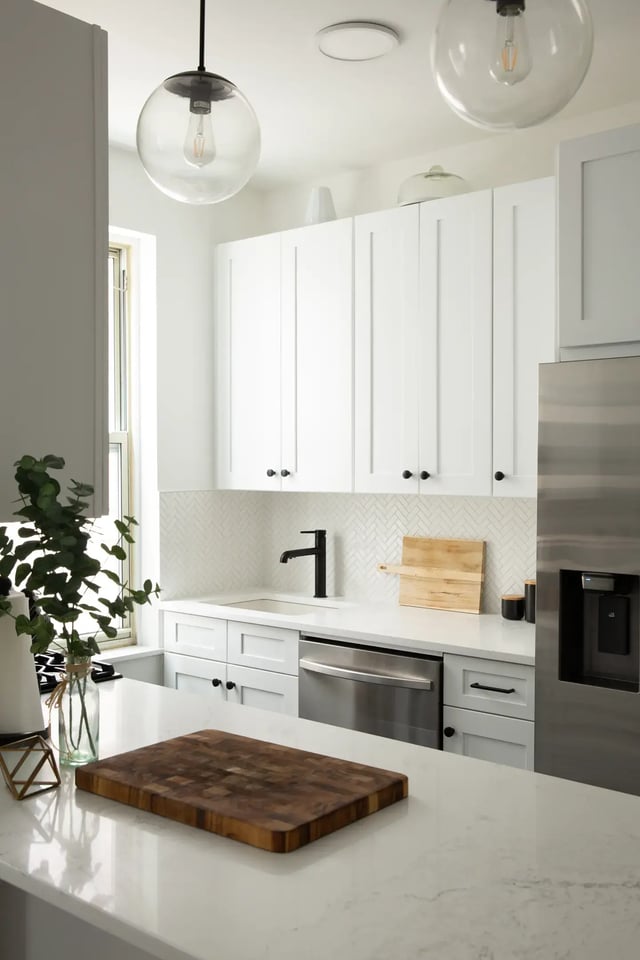
White shaker cabinets were a practical call before a stylistic one. With a single window facing an airshaft, the kitchen gets little daylight, and two full runs of dark or even medium-toned cabinets would have pressed in on the narrow walkway. White keeps both runs from feeling heavy, so the galley does not feel like a tunnel lined with boxes.
The uppers run nearly to the ceiling, which earns more in a galley than it would in a larger kitchen. The footprint cannot grow, so the storage has to go up. That top tier swallows the things you reach for less often and keeps everyday clutter off the counter, where there is no surface to lose to a stand mixer that lives out.
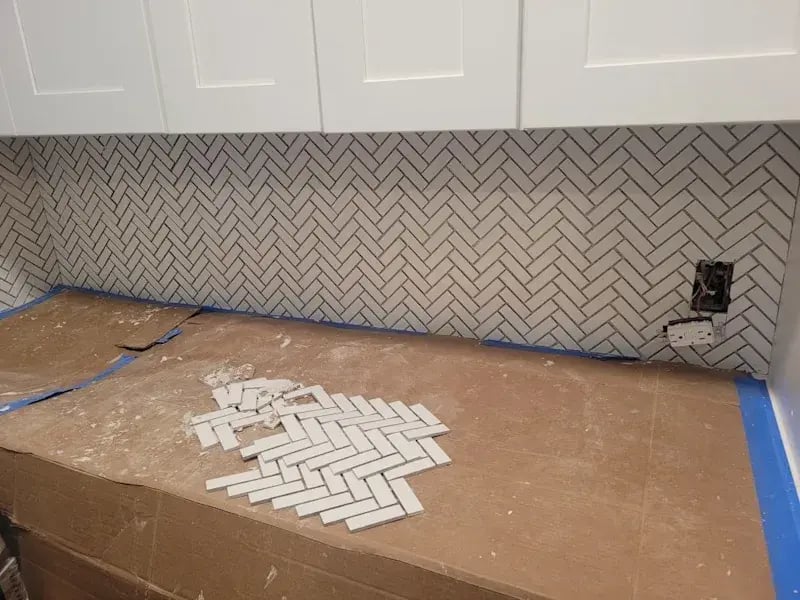
The backsplash is white herringbone tile, picked to add texture without dropping a bold color or a heavy material into a small room. A dark or busy backsplash can make a galley feel smaller. This one keeps the walls calm without going flat, and the herringbone angle puts a little movement along the runs that a straight stack of subway tile would not.
In a kitchen this small, the same few feet of counter handle everything: prep, serving, mail, coffee, and cleanup. Quartz takes that kind of daily use, the knife work, the spills, the hot pans, without staining or etching the way some natural stone can. It also comes in a steady light tone, which keeps the counters looking like one clean surface instead of a busy slab in a tight room. The pale shade here is one of many countertop colors that pair well with white cabinets.
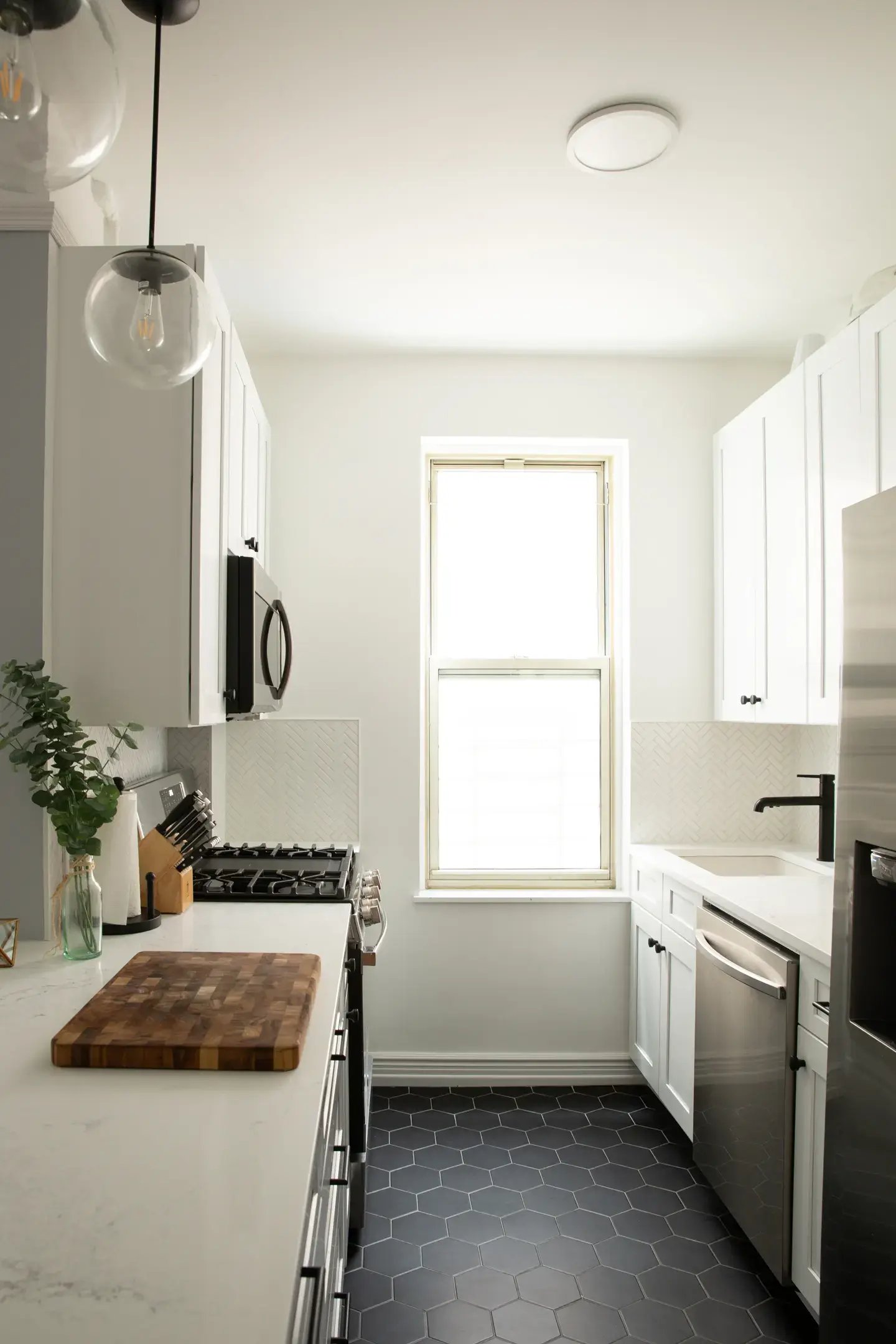
The hardware is matte black: knobs, bar pulls, and the faucet. Against all-white cabinets, the black gives the kitchen edges and detail it would otherwise lack, and it does that without darker cabinetry that would have weighed the runs down. It is a cheap way to add contrast, and an easy one to change later if the look wears thin.
Two clear glass globe pendants hang over the breakfast bar. In a tight kitchen the fixture matters as much as the bulb. A pair of opaque drum shades or oversized pendants would have blocked the view into the next room and dragged the ceiling down. Clear glass globes throw light without taking up visual room, so they mark the bar without boxing it in.
The refrigerator is counter-depth, which is no small thing in a galley. A standard-depth fridge can jut six or more inches past the cabinets, and in a walkway this narrow that overhang decides whether two people can pass or one has to turn sideways. Counter-depth appliances sit nearly flush with the runs, so the path down the middle stays usable.
The rest of the appliances line up along the two runs instead of scattering: range and microwave on one wall, dishwasher beside the sink to keep the plumbing in one place. Lining them up is what leaves the floor open in a kitchen with no inches to give.
A galley kitchen remodel in New York usually runs $30,000 to $60,000. As with most condo kitchen remodels, where a given project lands depends less on the room's size than on how much of it actually changes.
A project stays near the lower end when:
It climbs toward the top, and past it, when the job adds:
This kitchen sat on the higher side, mostly because of the wall and the waterfall edge on the bar. Both were about how the kitchen works day to day, and the budget followed from that.
The look depends on a short list of repeatable choices:
Want more inspiration? See this collection of kitchen before and after photos, plus our project gallery.
A small kitchen in an old New York building is a hard project to run on your own. The layout leaves no margin for error, the building may require board approval and an alteration agreement, and you often do not know what is behind the walls until they are open. Block matches your project with vetted local contractors, reviews the scope in detail so structural work and approvals get caught before they turn into change orders, and releases payments in stages as the work gets done. Tell Block about your kitchen to start getting matched with contractors who have worked in buildings like yours.
Remodel with confidence through Block

Connect to vetted local contractors
We only work with top-tier, thoroughly vetted contractors

Get expert guidance
Our project planners offer expert advice, scope review, and ongoing support as needed
Enjoy peace of mind throughout your renovation
Secure payment system puts you in control and protects your remodel

Renovate confidently with Block
Easily compare quotes from top quality contractors, and get peace of mind with warranty & price protections.
Kitchen
50k Kitchen Remodel: What $50,000 to $60,000 Buys
09.21.2026
Kitchen
New York City Kitchen Remodels: Cost, Permits & Contractors
09.18.2026
Kitchen
20k Kitchen Remodel: What $20,000 to $30,000 Buys
09.07.2026
Kitchen
Best Time to Remodel Your Kitchen Plumbing & Other Projects
09.05.2026
Kitchen
Kitchen Remodel Mistakes to Avoid When Planning
08.13.2026