



Bathroom
York City Bathroom Remodel: Costs, Planning & Design
09.17.2026
06.23.2026


In This Article
The second floor is the most natural place to add a second bathroom, since it's where the bedrooms are, and one bathroom downstairs means a trip up and down the stairs at each end of the day. Deciding you want one is the easy part. The harder step is figuring out whether you can afford it, because the cost of adding a bathroom to the second floor depends more on the plumbing hidden under the floor than on the fixtures you pick. Build it directly over your first-floor bathroom and most of what you pay just ties the new fixtures into pipes that already run up that wall. In a far corner with no plumbing nearby, the same bathroom can run close to twice as much.
That spread is why a second-floor bathroom can run anywhere from about $8,000 to $35,000 or more. The three placements below explain why two with identical tile and fixtures can still land thousands of dollars apart.
Design a Home That’s Uniquely Yours
Block can help you achieve your renovation goals and bring your dream remodel to life with price assurance and expert support.
Get Started
Every fixture you add has to connect to one pipe: the soil stack, the vertical line that carries waste down and out to your sewer or septic. A toilet, sink, and shower all drain into it, and each one also needs a vent so the traps stay sealed and the system can breathe. On a ground floor, those connections sit a few feet from the stack and a short crawl from the main drain. Upstairs, that drain is now a full floor below the fixtures, so the waste has to travel down through the structure to reach it, and the route it takes is what moves the price.
Two facts govern that route. A drain line falls about 1/4 inch per foot, so the toilet's drain hangs lower the farther it sits from the stack. And building code caps any hole bored through a solid wood joist at one-third its depth, 2 inches off the edges.
Those two facts collide at the toilet. A toilet needs a 3-inch drain, and a 3-inch pipe measures about 3 1/2 inches across the outside. A standard 2x10 floor joist is 9 1/4 inches deep, which caps a legal bored hole at roughly 3 inches, so the toilet line will not fit through it. The drain has to run the long way instead, parallel to the joists inside a single bay, or the contractor furs down the ceiling below and boxes the pipe into a soffit.
This is the half of the bathroom you never see, and it carries much of the money on a second-floor job:
Where you put the bathroom decides which of those costs you take on. The same 40-square-foot full bath can sit in three very different spots, and the gap between them is mostly plumbing.
The cheapest upstairs bathroom is the one you do not design from scratch. Place it directly above your first-floor bathroom, kitchen, or laundry, and the new fixtures tie into a stack and vent that already run up the wall. The drain lines stay short, the vent is already there, and the work downstairs stays limited. A hall closet, or a slice of an oversized bedroom sitting over that same wall, is the classic candidate. Even converting a closet into a half bath stays simple when the plumbing is already underfoot.
A half bath in this spot can land around $8,000 to $15,000. A full bath with a shower runs roughly $12,000 to $22,000, with the fixtures and tile, not the pipe, driving most of that difference.
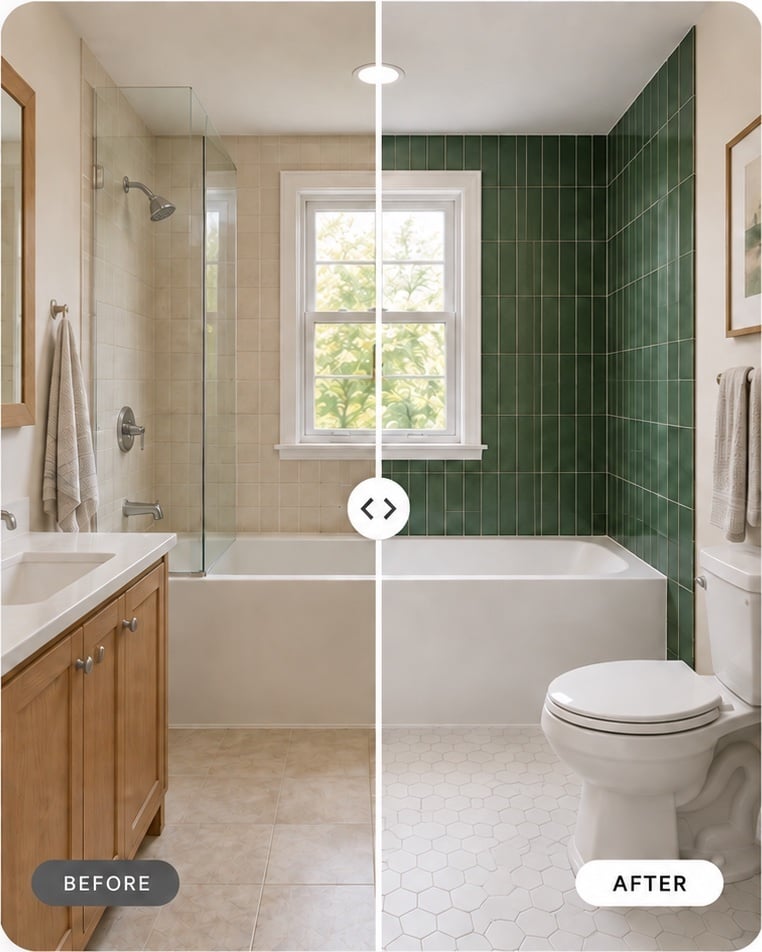
Move the bathroom a room or two away, still on the stack's side of the house, and the plumbing scope grows. The drain travels farther before it ties in, which means more pipe, more careful routing around joists, and more of the first-floor ceiling opened and closed. This is often the point where it pays to look at rerouting the existing plumbing so the new lines join the system somewhere sensible. A full bath here generally runs $18,000 to $28,000, with the added money buying pipe, labor, and drywall repair rather than nicer fixtures.
Put the bathroom where no plumbing has ever run, on the opposite side of the house from the stack, and the project changes character. It often needs a new stack of its own, a fresh vent cut up through the roof, and a long drain run that may drop below the joists into a built-out soffit on the floor below. Because the ceiling has to open across much of that path, the downstairs disruption is real. A full bath in this scenario tends to run $25,000 to $35,000. A primary suite with a soaking tub or a double vanity climbs from there.
|
Placement |
What the plumbing involves |
Typical cost for a full bath |
|---|---|---|
|
Stacked over existing plumbing |
Short tie-in to an existing stack and vent |
$12,000 to $22,000 |
|
Same side, near the stack |
Longer drain run, more ceiling opened below |
$18,000 to $28,000 |
|
Far corner, no plumbing nearby |
New stack, new roof vent, long drain run |
$25,000 to $35,000 |
The numbers above cover the bathroom itself: the plumbing and drain work, the framing, the fixtures and finishes, and the ceiling repair below. Permits and a contingency for what the crew finds once the ceiling opens sit on top, and an older house can add cost the placement alone never predicts:
Labor runs 40 to 55% of a bathroom addition, and an upstairs bath sits at the higher end of that range. The job needs several licensed trades who do not overlap: a plumber for the supply, drain, and vent work; an electrician for circuits, lighting, and the GFCI outlets and exhaust fan that code requires; plus carpentry, tile, and drywall.
A plumber typically bills $75 to $150 an hour and an electrician $50 to $150, with rates climbing in high-cost metros and skilled plumbers among the harder trades to book.
What pushes second-floor labor toward the top of that range is the work that happens away from the bathroom. Crews spend hours overhead running lines through a finished ceiling, then return to patch and repaint a first-floor room that was never part of the renovation you pictured. That second trip is priced into the bid even though none of it shows up in the finished bathroom.
Renovate with confidence every step of the way
Step 1: Personalize Your Renovation Plan
Step 2: Receive Quotes from Trusted Contractors
Step 3: Let Us Handle the Project Details

The visible half of the project is the part you control. Fixtures and finishes can swing the total by thousands without touching the plumbing behind the wall. A standard toilet, a basic vanity, and a fiberglass tub-shower hold a full bath toward the low end of its range; a freestanding tub, a tiled walk-in shower, stone counters, and a custom vanity push it past the high end.
Among the finishes, tile is the biggest single lever. A fully tiled bathroom costs far more in both material and labor than one where you tile the walls partway and paint above. Both are reasonable; they are budget calls you make knowing what each one adds. None of them change the plumbing path, which is why two homeowners can pick wildly different finishes and still pay nearly the same for the rough-in underneath.
A second-floor bathroom needs a permit almost everywhere, since it touches plumbing, electrical, and sometimes structure. Permit fees commonly run $150 to $2,000 depending on your jurisdiction and the scope. The project draws at least two inspections: one of the rough-in plumbing and wiring before the walls and ceiling close, and a final one after the fixtures go in.
Active construction usually takes two to four weeks. That stretches when the drain run forces heavy work on the floor below, because the ceiling there has to be opened, inspected, closed, and repainted on top of the bathroom itself. Material lead times and inspection scheduling add calendar days that have nothing to do with how fast the crew works.
At resale, a bathroom addition is one of the weaker returns in remodeling. On the national Cost vs. Value Report, a midrange bath addition recouped only about 35% of its cost at resale, while remodeling an existing bathroom returned closer to 71%. If the resale number is your goal, remodeling the bathroom you already have tends to return more per dollar than building a new one upstairs.
The case for adding gets much stronger in two situations. The first is daily life, where a second bathroom on the floor everyone sleeps on removes a morning bottleneck that no resale spreadsheet captures. The second is the specific jump from one full bathroom to two. Appraisers and buyers weigh that jump heavily, because it widens the pool of people who will consider the house at all. A fourth bathroom added to a home that already has three barely moves the needle.
The plumbing plan makes or breaks a second-floor bathroom, which is why the contractor you hire is the most important decision in the project. Block Renovation matches you with vetted local contractors who price the work against a detailed scope, so the drain routing, the ceiling repair below, and the venting are accounted for before work starts. Every scope gets reviewed by Block experts to catch the missing line items that turn into change orders halfway through. Payments release in stages as the work passes inspection, instead of all at once. Compare real quotes from contractors who have run pipe through a finished floor before, and start the project knowing what the number covers.
Remodel with confidence through Block
Connect to vetted local contractors
We only work with top-tier, thoroughly vetted contractors

Get expert guidance
Our project planners offer expert advice, scope review, and ongoing support as needed
Enjoy peace of mind throughout your renovation
Secure payment system puts you in control and protects your remodel

Renovate confidently with Block
Easily compare quotes from top quality contractors, and get peace of mind with warranty & price protections.
Bathroom
York City Bathroom Remodel: Costs, Planning & Design
09.17.2026
Bathroom
Walk-In Tub vs. Walk-In Shower for Seniors
09.16.2026
Cost
The Cost to Add a Half Bath & How to Plan for It
09.04.2026
Bathroom
Non-Tile Bathroom Flooring Options
08.26.2026
Design
Bathtub to Shower Conversion: Cost, Ideas, Examples & More
08.11.2026