




Flooring
Top Rated Luxury Vinyl Tile Brands Worth Sampling
09.11.2026
06.24.2026


In This Article
If the carpet in your living room is the original beige from two owners ago, you have probably thought about tearing it out for more than one reason. Wall-to-wall carpet holds dust and dander, which matters when someone in the house has allergies. It catches underfoot and shifts on the subfloor, which makes a home harder to move through safely as you age, and a real obstacle for anyone using a walker or wheelchair. It also covers radiant floor heat, insulating warmth you are paying for instead of letting it into the room. Hardwood answers all three, and the floor you pick to replace the carpet sets the look of the entire space.
Each before and after below pairs carpet removal with a new hardwood floor, grouped by what that floor is meant to do. Engineered and solid wood both work in most of these rooms. Over radiant heat, engineered planks handle temperature swings better than solid does, which is the one material call worth making up front.
A darker floor gives a room more visual weight and a more formal feel. It works best when there is light and contrast around it, from trim, a mantel, upholstery, or windows, so the room feels rich rather than heavy.
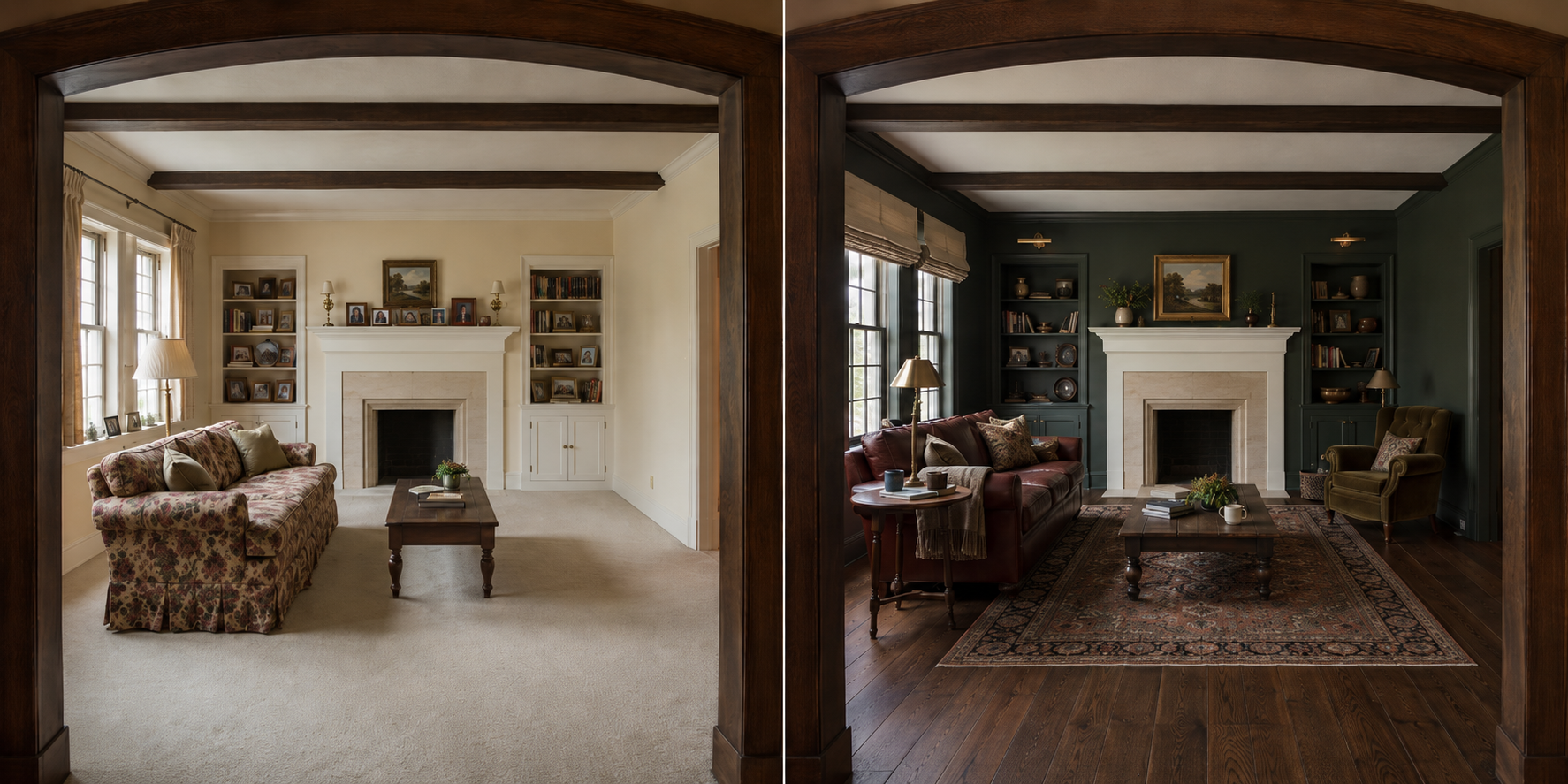
The moody English country look leans on depth, and a light beige carpet works against that depth. Swapping it for dark oak grounds the room and lets the rest of the palette go richer: deep green walls, a leather sofa, a patterned rug that would look muddy over carpet. The white fireplace and mantel keep the dark floor from closing the room in, and the windows do the rest.
This kind of change suits rooms that already have good natural light and some built-in contrast. A dark floor in a dim room with beige everything tends to fall flat. Give it bright trim, a stone surround, or tall windows, and the same floor looks deliberate.
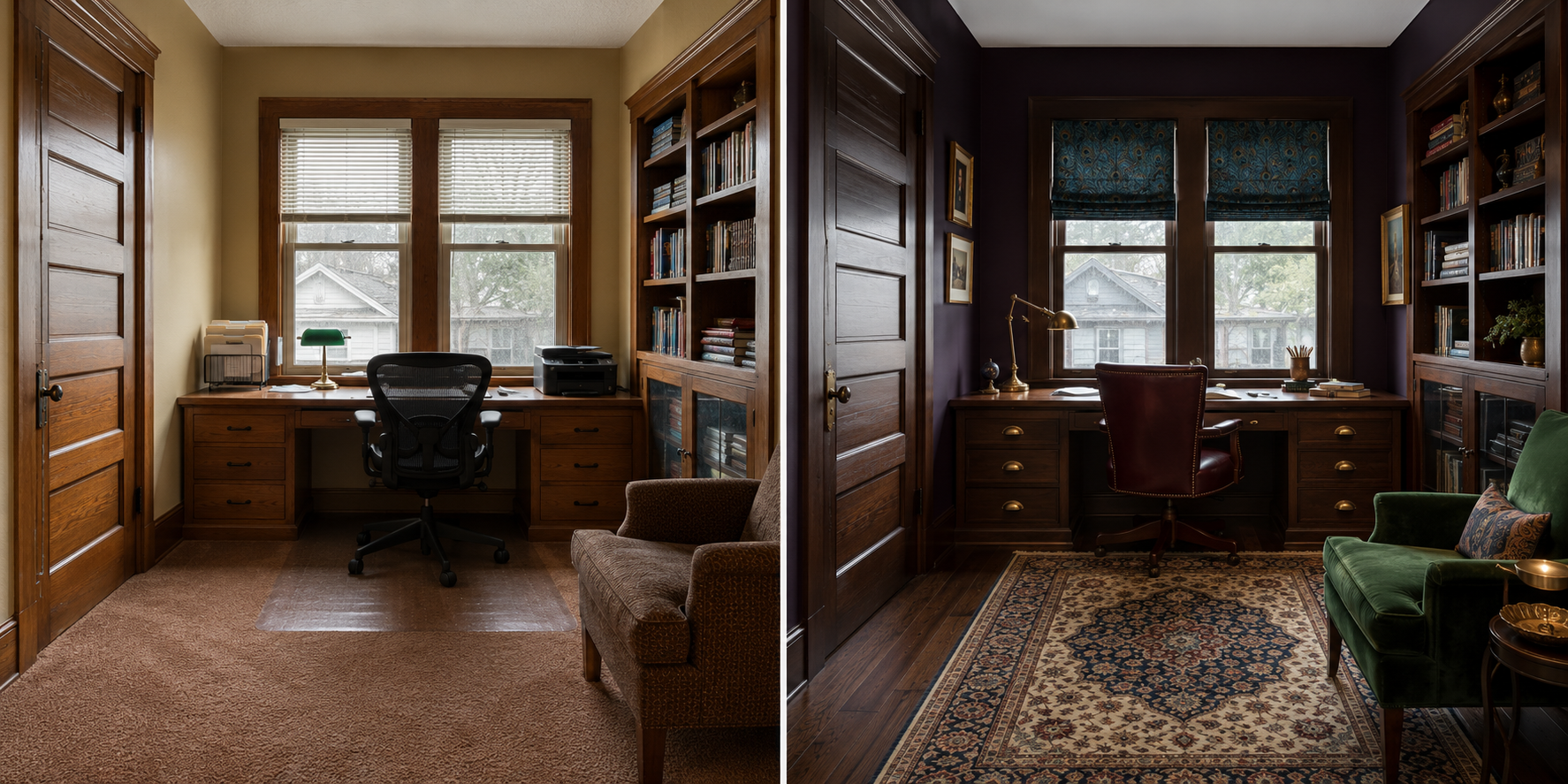
Paint a home office a deep jewel tone and the floor matters more than you would expect. Over brown carpet, a dark, saturated wall can feel cramped and a little dated. Walnut hardwood gives that color something solid to sit against, and it pulls the other materials together: the leather chair, the brass lamp, the wood built-ins, the patterned rug. The whole room then looks permanent and built-in, with none of the floating-on-old-carpet feel a bold paint choice can have on its own.
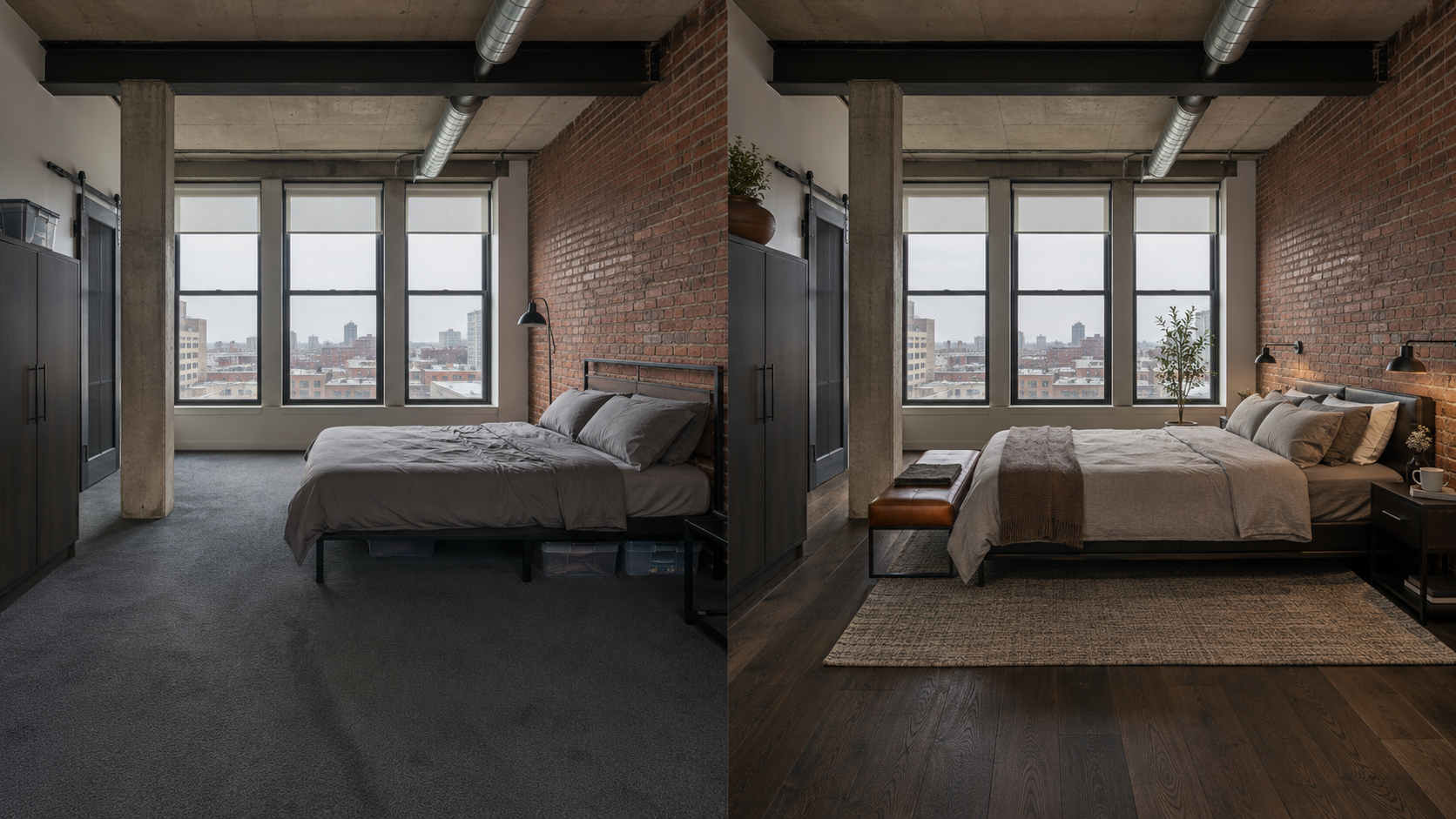
Exposed brick, concrete columns, and steel beams give a loft its character, but they also run cold and hard. Carpet was the old fix, and it flattens the look while collecting dust. Smoked oak or another dark hardwood keeps the loft feeling like a loft while softening the surfaces around it. The dark plank picks up the tone of the brick and the steel without competing with them, so the room gains depth and a more livable, residential feel.
Pale wood does the opposite of a dark floor. It reflects light rather than absorbing it, so a room feels larger and brighter, and the floor stays in the background under simple furniture. It fits when the goal is calm and brightness.
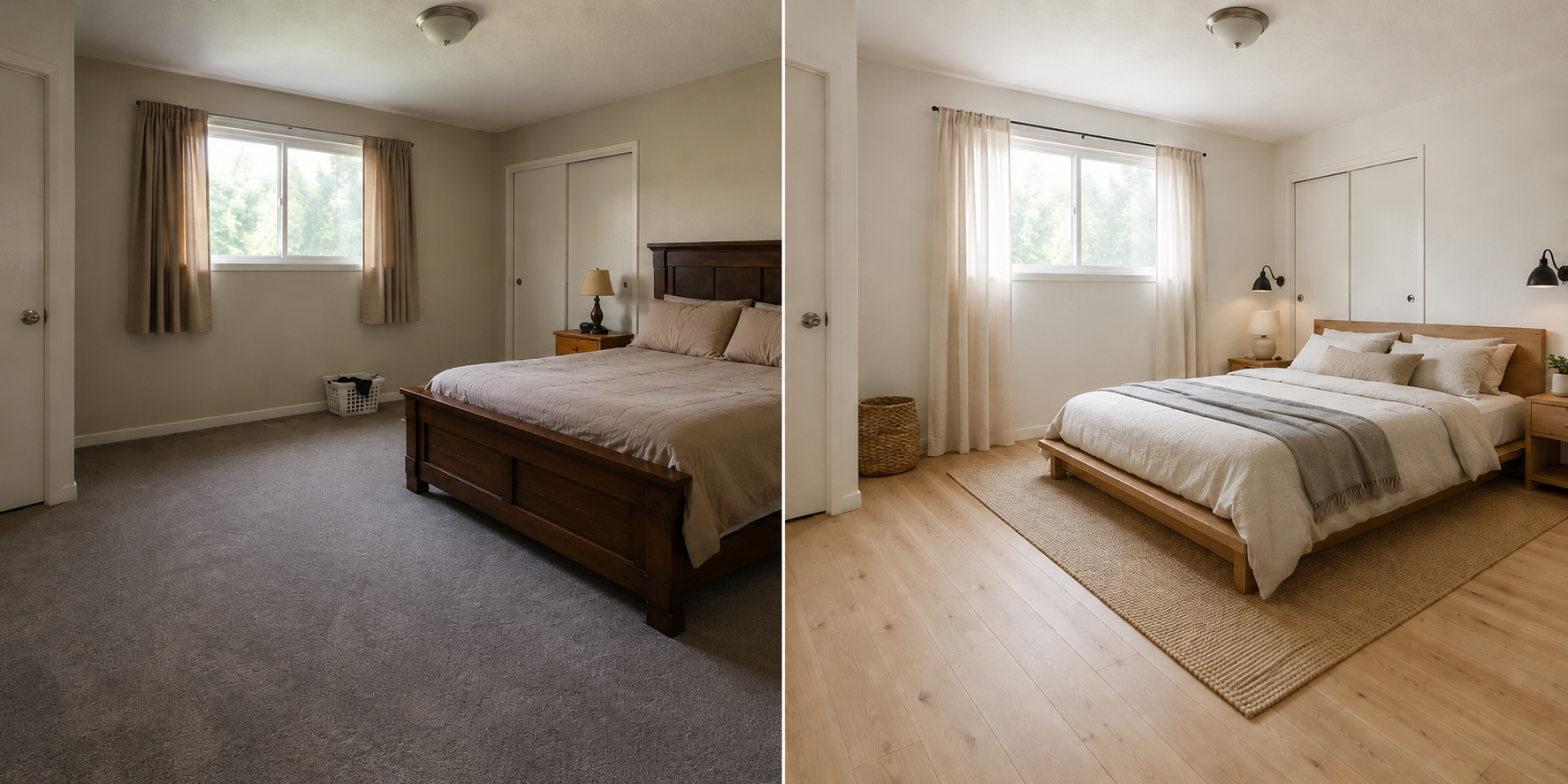
A primary bedroom is one of the easiest rooms to lighten. You are usually working with simple furniture and soft bedding already, so the floor is the main thing standing between the room and a brighter feel.
Pulling up gray carpet and laying pale white oak opens the space up with no wall removal and no window changes. Pale planks pair well with neutral linens, a low wood bed frame, and airy curtains. For a bedroom, that calm is usually the whole point of the project.
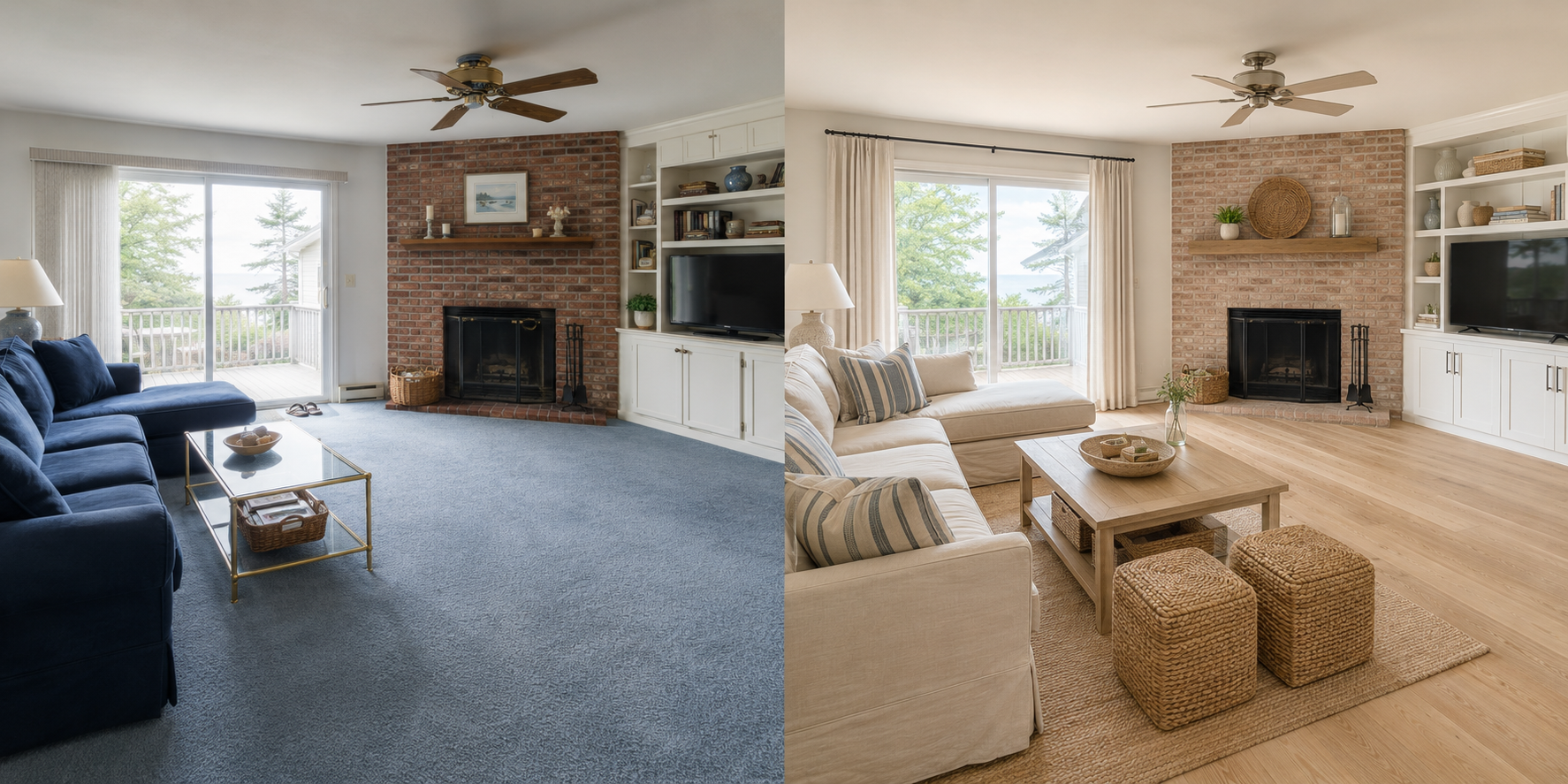
Blue or gray carpet dates a family room faster than almost anything else in it. Swapping it for blonde or light oak resets the whole room toward something current and relaxed, even before you change the furniture. The light wood gives coastal pieces, like slipcovered sofas, jute, and woven textures, a more natural base than colored carpet ever did. A family room also takes real daily abuse, so if you have kids or dogs, it is worth looking at scratch-resistant wood floors.
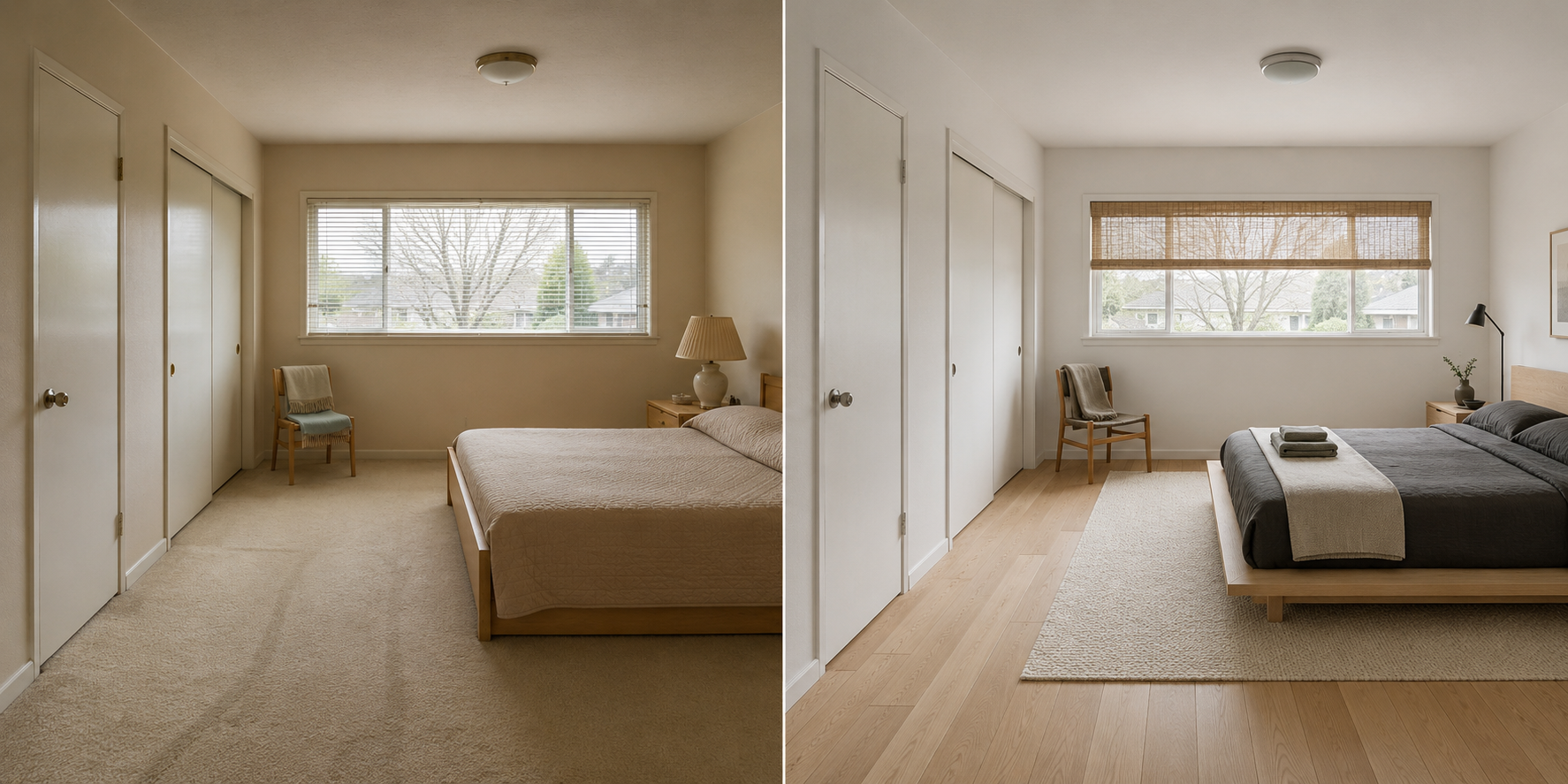
Minimalist rooms have a thin margin for error. With little furniture and few colors, the floor accounts for more of the look than it would in a fuller room. Natural ash or another pale, low-grain wood adds just enough texture and softness to keep a spare guest room from feeling empty or cold. A bamboo shade, a simple wood bed, and one stem of greenery finish it, so the restraint feels deliberate.
The first two groups treat the floor as a backdrop. These last two let it carry more of the design, either by pairing a mid-tone wood with a patterned rug or by laying the wood in a pattern of its own.
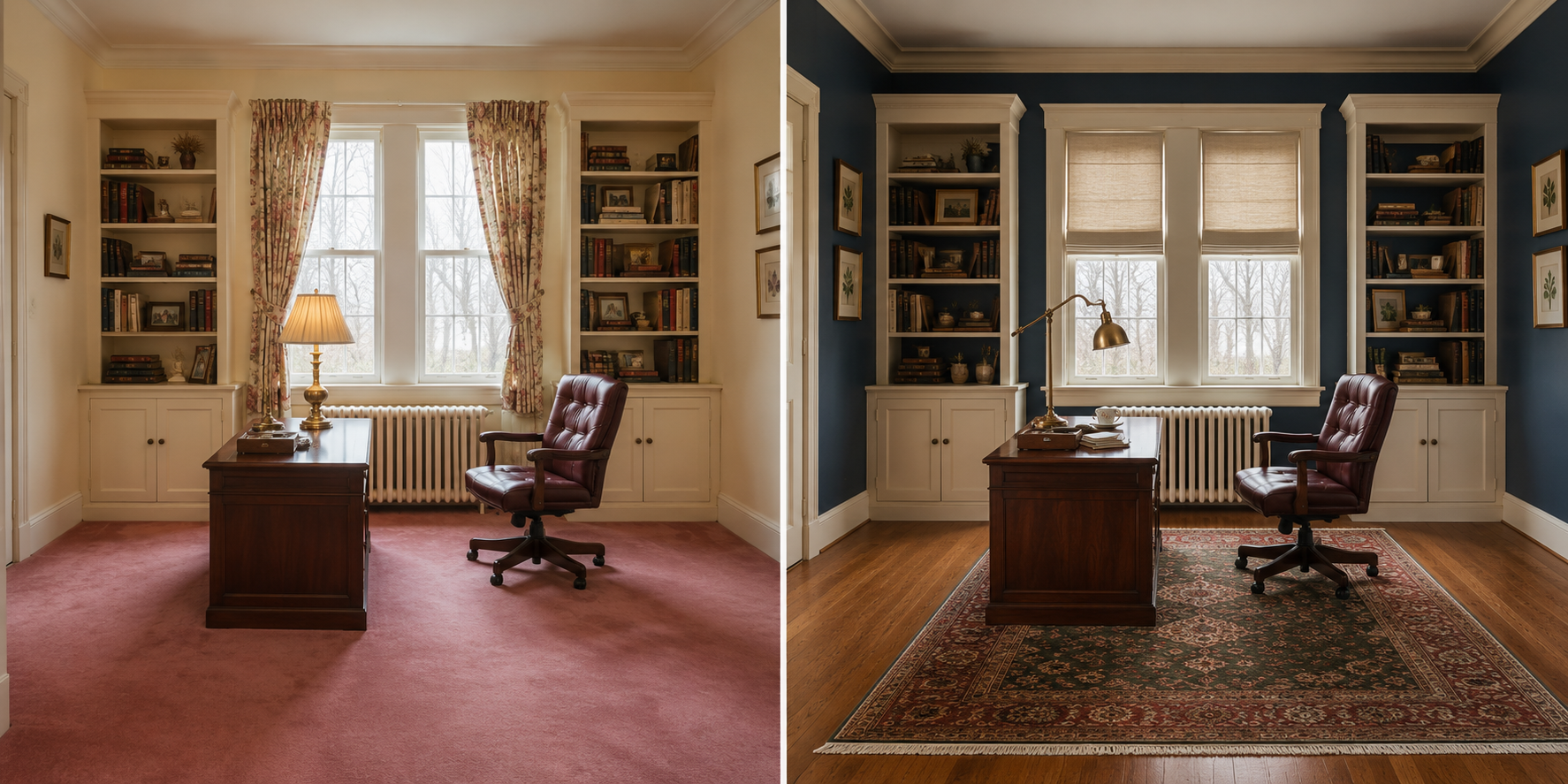
A traditional study built around dark wood and books can feel stuck in a particular decade when rose-colored carpet covers the floor. Red oak changes that. The wood lets the built-ins, the desk, the leather chair, and the old radiator look like a collected room.
A patterned area rug then brings back the softness and color the carpet used to provide, without committing the whole floor to it. You get pattern where you want it and bare wood everywhere else.
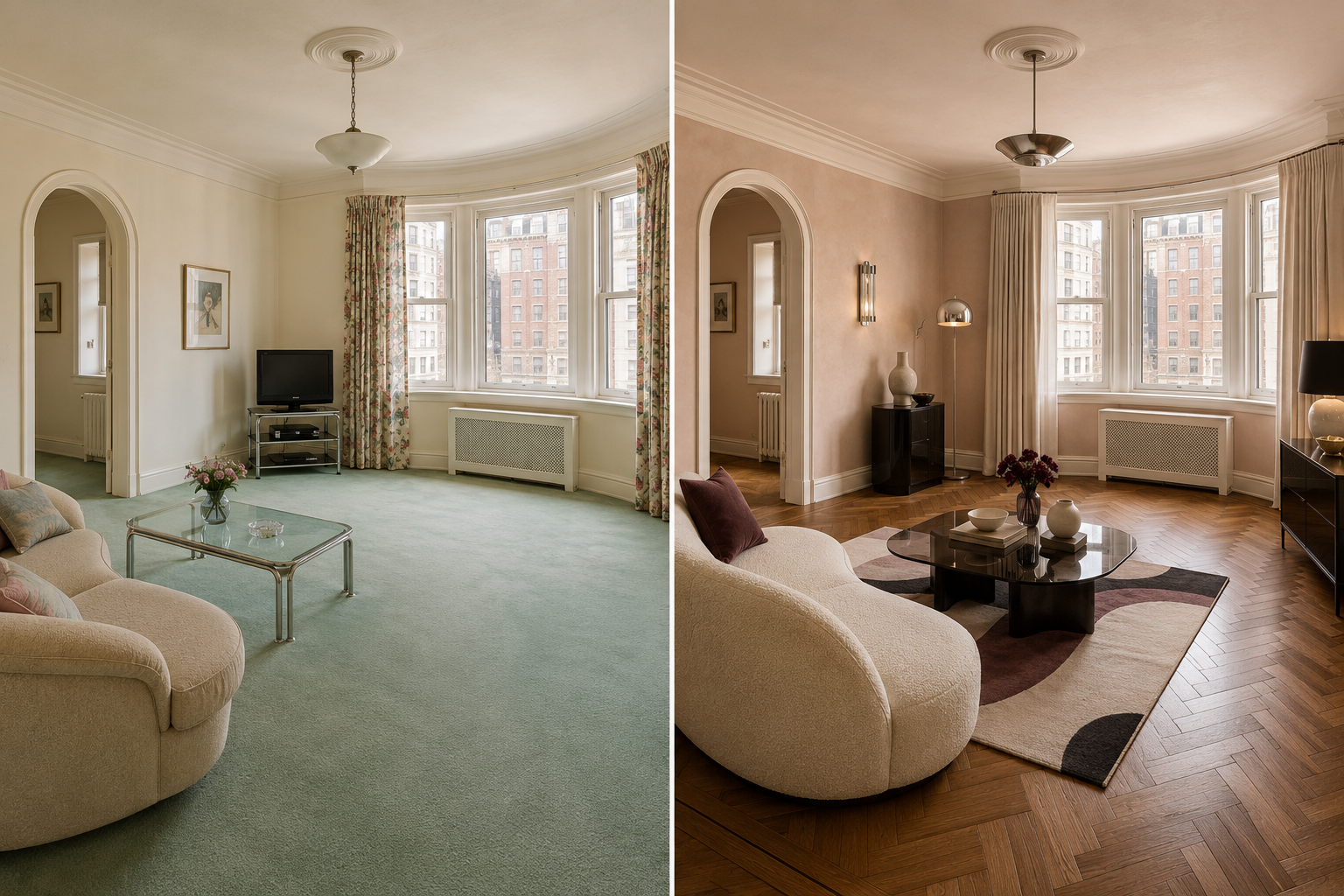
A herringbone floor is more than a background material. Laid in a chevron or herringbone pattern, hardwood becomes an architectural detail in its own right, which suits a formal sitting room with curved walls, a bay window, or period molding. In this art deco room, the herringbone pairs with the rounded sofa and the soft pink walls, and it gives the space a structure a plain plank floor or carpet would not. Floors like this cost more to install, because the extra cutting and layout take more labor.
Stairs are the hardest carpet to live with and the most satisfying to remove. Carpeted treads wear into a visible path down the middle and hold dust in every corner. They also get slick enough to be a real fall risk. Pulling the carpet off and refinishing or replacing the treads is one of the bigger before and after changes in a house, because the staircase is usually the first thing you see from the entry.
The work is more involved than a flat floor. Each tread and riser has to be stripped of staples and tack strips, the wood underneath checked for damage, and the nosing rebuilt or capped if the original treads are not finish-grade. That extra handling is why stairs cost more per step than open floor, often $40 to $75 per step depending on condition and whether the treads can be refinished or need replacing. The payoff is a staircase that matches the new hardwood and looks like part of the house.
Design a Home That’s Uniquely Yours
Block can help you achieve your renovation goals and bring your dream remodel to life with price assurance and expert support.
Get Started
In this kind of project, the carpet is the cheap part. Most of the budget goes to the new floor and the labor to install it. Carpet removal itself is inexpensive. Expect roughly $1 to $2 per square foot to tear out old carpet and padding and haul it away, and less if you are willing to rip it up yourself.
Hardwood is where the budget moves. Installed, solid or engineered wood usually runs about $6 to $12 per square foot, and higher for premium species or patterned layouts. A few things push a project toward the top of that range:
Radiant heat adds one more decision. If you have, or are adding, heated floors, engineered planks handle the temperature swings better than solid wood, which can gap or cup over a hot subfloor. The heating system is its own line item, with typical heated floor costs worth checking before you commit.
For a full breakdown of materials, labor, and what drives price across flooring types, Block Renovation keeps a complete guide to flooring costs.
Carpet covers whatever is underneath it, and not all of it is good news. Plan for a few things that tend to surface once the carpet and padding come up.
Pulling up carpet is the easy part. A level subfloor, a clean install, and a finish that lasts take a flooring contractor who has done plenty of them. Block matches you with vetted local contractors who compete for your project on a clear, expert-reviewed scope. Payment is held and released as each stage of the work is finished, which keeps the contractor on schedule. Tell Block what you are flooring, and the best contractors in your area will bid on it.
Remodel with confidence through Block

Connect to vetted local contractors
We only work with top-tier, thoroughly vetted contractors

Get expert guidance
Our project planners offer expert advice, scope review, and ongoing support as needed
Enjoy peace of mind throughout your renovation
Secure payment system puts you in control and protects your remodel

Renovate confidently with Block
Easily compare quotes from top quality contractors, and get peace of mind with warranty & price protections.
Flooring
Top Rated Luxury Vinyl Tile Brands Worth Sampling
09.11.2026
Flooring
Best Carpet Brands: 7 Lesser-Known Names Worth Sampling
09.02.2026
Flooring
Maple vs Oak Flooring: Which Hardwood Is Right for Your Home?
08.31.2026
Bathroom
Non-Tile Bathroom Flooring Options
08.26.2026
Flooring
Comparing Different Types of Natural Stone Flooring
08.25.2026