




Countertops
Slate Countertops vs. Granite, Quartz and Soapstone
09.20.2026
07.17.2026


In This Article
If countertops are the line item you're hoping to squeeze after cabinets and labor ate most of the kitchen budget, the sticker prices can look deceptively simple. The cheapest countertop material by the square foot is not always the cheapest to own, because fabrication, cutouts, and lifespan decide what a surface really costs over 10 to 20 years. Premium laminate with upgraded edges can approach entry-level granite pricing once installation and tear-out are included, and the granite lasts two to three times longer.
The five materials below cover the affordable countertop options that hold up in real kitchens, with representative installed ranges and specific product lines to price locally. Two sections after that cover the cheap materials that tend to disappoint, and the decisions beyond material choice that keep the total in check.
|
Material |
Installed cost per sq ft |
Typical lifespan |
|
Laminate |
$15 to $50 |
10 to 15 years |
|
Solid surface |
$50 to $100 |
20 to 30 years |
|
Butcher block |
$55 to $110 |
20+ years with upkeep |
|
Level 1 granite |
$40 to $80 |
30+ years |
|
Entry-level quartz |
$45 to $85 |
25+ years |
Fabrication, cutouts, and installation make up a large share of every stone quote, so compare installed prices rather than slab prices. That share is also why the jump from laminate to granite is smaller than the raw material prices suggest.
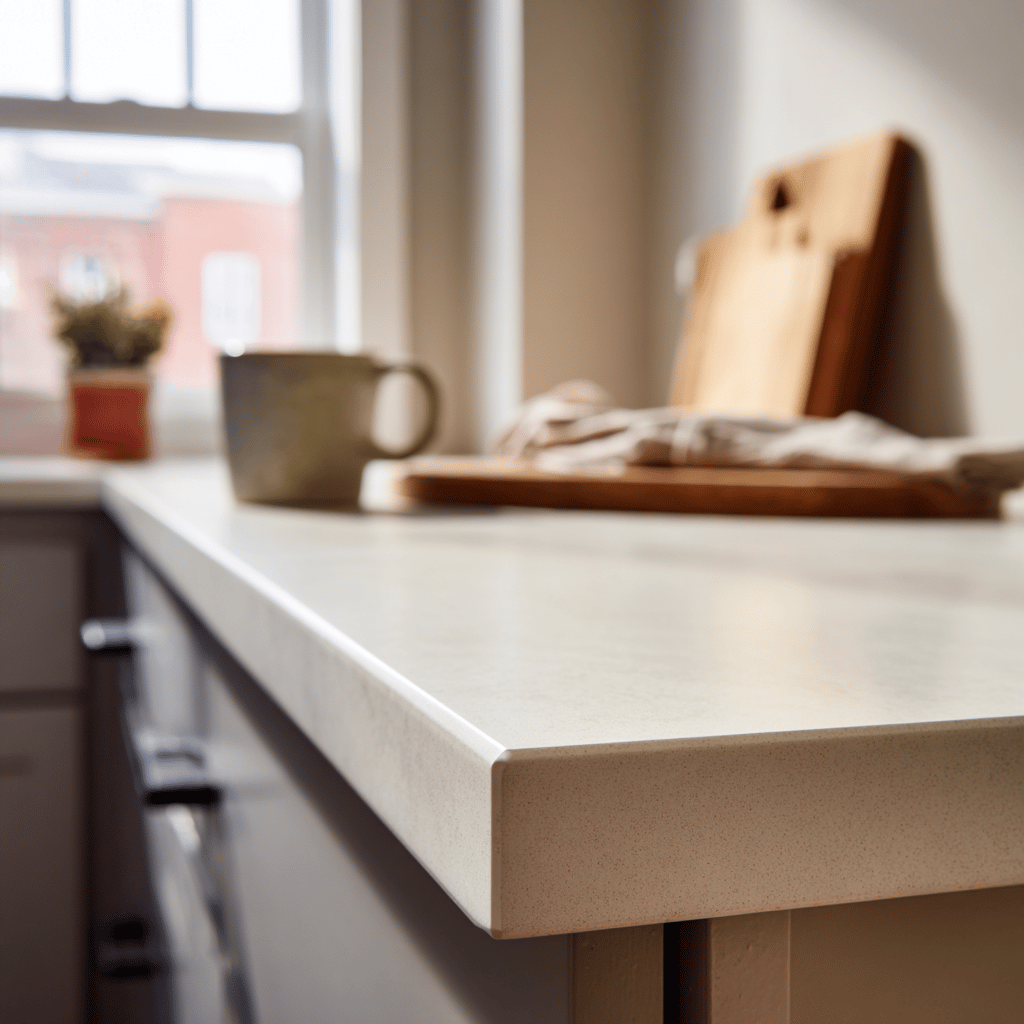
Laminate is the cheapest countertop material sold in any volume, and modern printing has closed most of the visual gap with stone. High-definition lines reproduce granite and marble patterns at full scale, so the surface no longer repeats the same 18-inch swatch across the counter.
The quality catch is permanence of damage. Laminate is a thin decorative layer over particleboard or MDF, so a scorch mark, a chipped edge, or a swollen seam cannot be sanded or refinished the way most other materials in this guide can. A burn in year six often means a full replacement, where a solid surface counter would sand out and a stone counter could be repaired by a fabricator. That repair gap erodes laminate's price advantage over a 15-year horizon.
It’s for these and related reasons that some contractors actively steer clients away from laminate countertops, despite its cheap price tag, as is explained by Kur Win, CEO of MyRenoService.

“I will no longer install laminate countertops. They are great for a rental or flip but they chip at the seaming after a few years of use and they make your kitchen look dated.”
Product line to know: Formica 180fx. The 180fx line prints stone patterns at true slab scale, and Formica's IdealEdge profiles remove the brown seam line that gave older laminate away. Formica puts its own installed pricing at $14 to $38 per square foot, and full projects with tear-out and edge upgrades typically land between $20 and $60. Wilsonart's HD line competes in the same range.
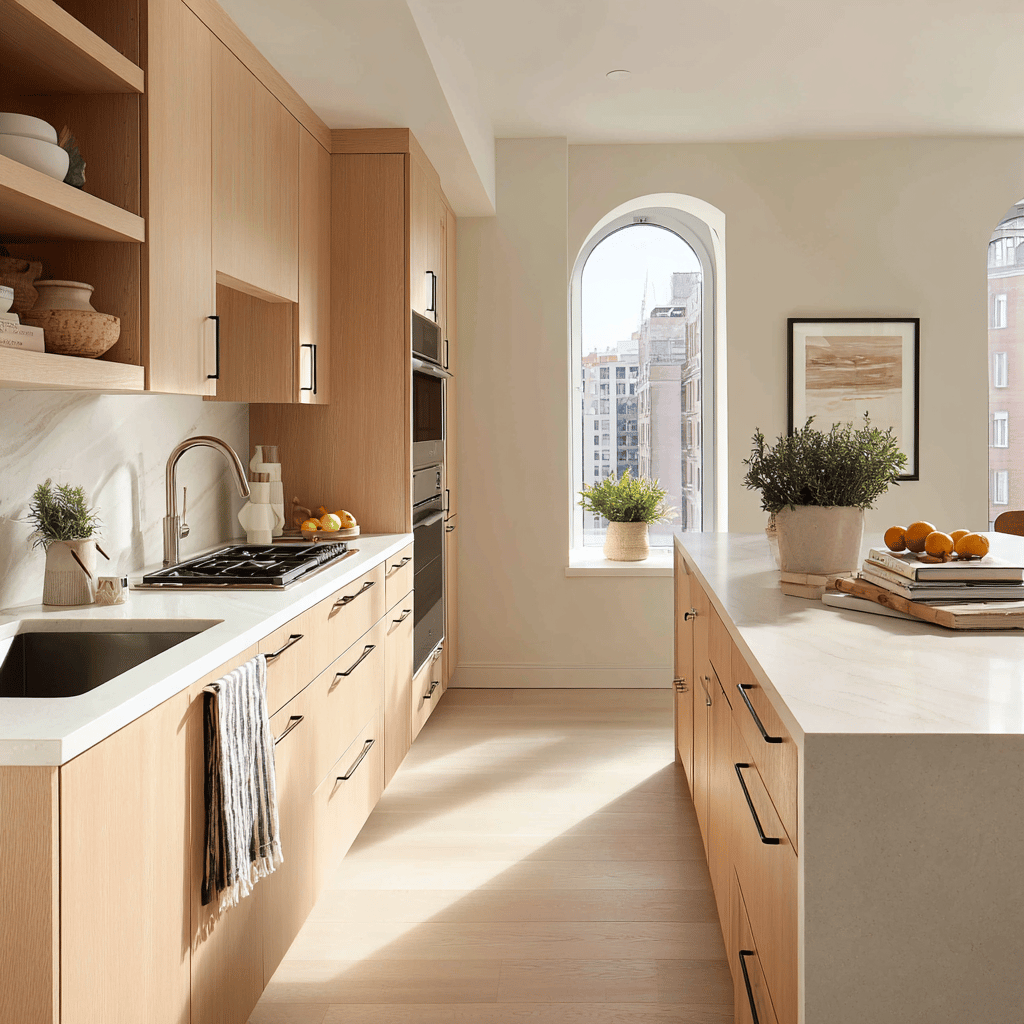
Solid surface counters (Corian is the original brand) are acrylic resin blended with minerals, formed into a nonporous slab with invisible seams. The material occupies a useful middle ground: it costs more than laminate, less than most installed stone, and it's the easiest countertop material to sand and refinish after scratches or light burns.
Solid surface scratches and scorches more easily than quartz, but most of that damage sands out. That makes it worth considering for busy households where easy repair matters more than maximum scratch resistance.
Two product lines cover the price range:
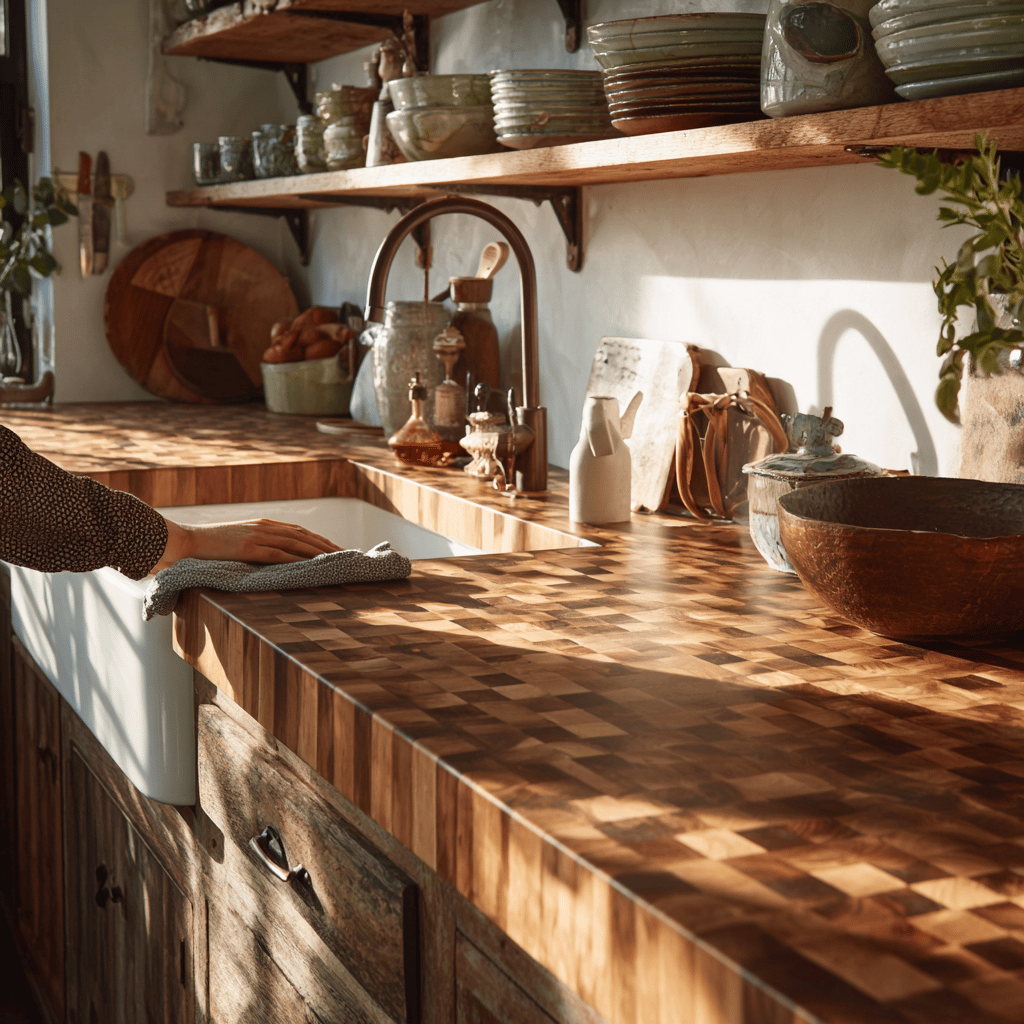
Butcher block delivers more warmth per dollar than any other affordable countertop, and it's the most DIY-friendly surface to source. It's also the material homeowners most often buy for the look and least often maintain, and the difference shows within two years. Wood counters need oiling every few months and prompt attention to standing water, especially around the sink. Skip the upkeep and the result is gray water staining and raised grain exactly where you look every day. Buy butcher block only if the maintenance schedule is realistic for your household, or keep it away from the sink run entirely.
Product line to know: IKEA's Karlby countertop. Pre-cut Karlby sections (oak veneer over particleboard) run roughly $149 to $279 depending on length and wood, which is a fraction of custom pricing, though IKEA adjusts prices often enough that the listing is worth checking before you plan around it. The veneer construction saves money but limits refinishing to a couple of light sandings, so treat Karlby as a budget island top rather than a lifetime surface. Custom solid maple or oak butcher block from a fabricator runs $55 to $110 per square foot installed and can be sanded back to new repeatedly.
Level 1 granite is the strongest value in the affordable category. Entry-tier colors (Uba Tuba, Santa Cecilia, Luna Pearl, Giallo Ornamental) start around $40 to $60 per square foot installed in many markets, though fabrication and cutouts push some quotes toward $80. Even at the top of that range, you get a surface that resists heat, scratches, and 30+ years of daily use with occasional sealing, and real stone still carries weight with buyers when the house sells.
Familiarity is the downside worth weighing. Level 1 colors are priced low because quarries produce them in volume, so these are the patterns buyers recognize from builder-grade kitchens of the 2000s. Lighter Level 1 options and a simple eased edge read more current than the speckled browns that defined the era.
Granite at this tier is sold by fabricators rather than by brand, so the product line question is really a slab question. Ask your fabricator to quote two or three Level 1 colors specifically, and ask whether a remnant from a previous job can cover a smaller run.
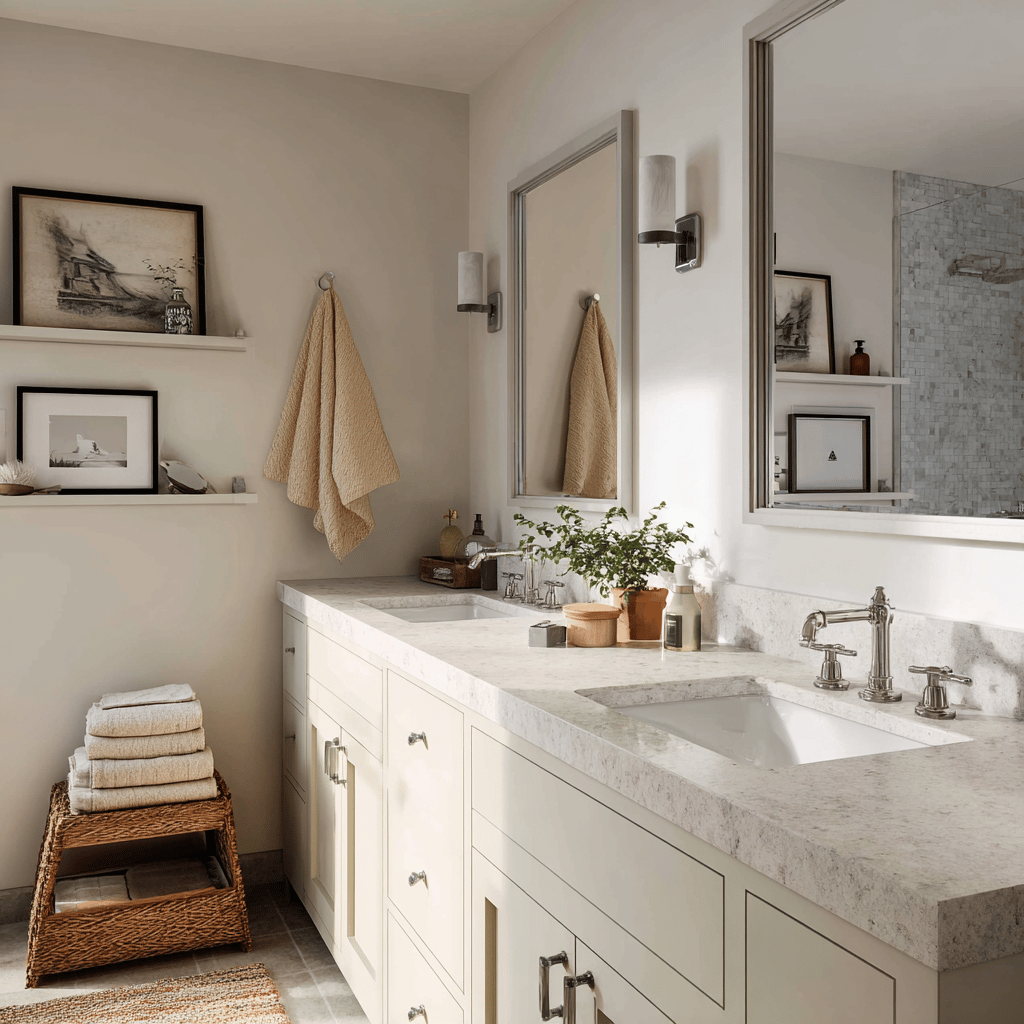
Quartz is the most popular countertop material in American kitchens, and its entry tier has drifted down into budget range. The surface is nonporous, never needs sealing, and holds up against everyday scratching and staining better than most materials on this list. Its one weakness is heat: the resin binder can scorch above roughly 300°F, so trivets are non-negotiable.
Two product lines anchor the budget tier:
Design a Home That’s Uniquely Yours
Block can help you achieve your renovation goals and bring your dream remodel to life with price assurance and expert support.
Get Started
Some cheap countertop options save money at purchase and cost more within a few years. These are the ones that underperform their price:
Material choice sets the baseline, but several other decisions move the final number by hundreds or thousands of dollars.
A single kitchen doesn't need a single surface. Putting quartz or granite on the island where guests gather and laminate or solid surface on the perimeter runs concentrates the budget where it's visible. The approach also lets you place butcher block away from the sink, where it performs best. A full breakdown of pairings that work is in this guide to mixing two or more countertops in a kitchen.
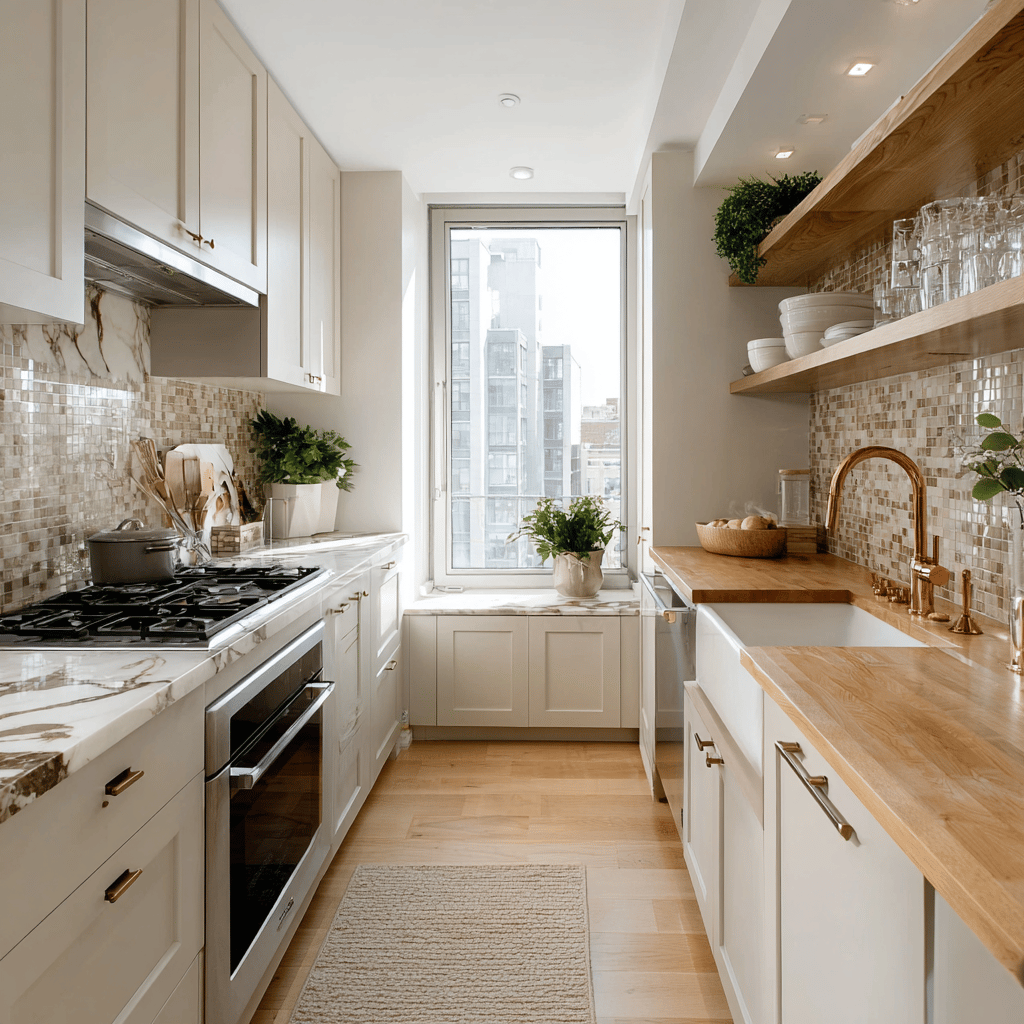
Decorative edge profiles add cost without adding function, which makes them the easiest line to cut on a budget project. A standard eased or square edge is included in most quotes, while ogee, bullnose, and beveled profiles add $10 to $30 per linear foot. On 25 linear feet of counter, skipping the decorative edge saves $250 to $750, and current design taste favors the simple edge anyway.
Fabricators keep partial slabs from previous jobs, and remnant stone can drop to $10 to $15 per square foot for the material, depending on local inventory and minimum fabrication fees. A bathroom vanity, a coffee bar, or a small island section often fits within a remnant, which puts premium stone on a laminate budget for that piece.
Every hole in a countertop costs money: sink cutouts commonly run $100 to $300, cooktop cutouts add more, and moving the sink location adds plumbing labor and can trigger cabinet or backsplash work on top of it. Keeping the sink, faucet, and appliances in their existing positions turns a countertop project into a true swap and keeps labor at the minimum.
Tear-out and disposal ($8 to $13 per square foot), plumbing disconnection, and backsplash work are where a low headline quote grows. Ask every fabricator to itemize these lines so quotes compare like to like, and never settle for fewer than three.
Affordable countertops still deserve careful installation, because fabrication and labor make up a large share of the total on stone projects and a bad template wastes the whole slab. Block Renovation matches homeowners with vetted contractors who compete for the project, and every scope gets an expert review before work begins, so quotes cover the same line items: templating, fabrication, cutouts, edge work, tear-out, and disposal. Payments release as milestones are approved, which keeps the project moving without the homeowner fronting the risk.
Remodel with confidence through Block

Connect to vetted local contractors
We only work with top-tier, thoroughly vetted contractors

Get expert guidance
Our project planners offer expert advice, scope review, and ongoing support as needed
Enjoy peace of mind throughout your renovation
Secure payment system puts you in control and protects your remodel

Renovate confidently with Block
Easily compare quotes from top quality contractors, and get peace of mind with warranty & price protections.
Countertops
Slate Countertops vs. Granite, Quartz and Soapstone
09.20.2026
Countertops
Laminate Countertops vs. Quartz: How to Choose
09.15.2026
Countertops
Kitchen Counter Overlay: Cost, Durability and More
09.13.2026
Countertops
What Color Countertops Go With Oak Cabinets?
09.01.2026
Countertops
Walnut Cabinets With White Countertops
08.24.2026