



Structural Changes
How to Close an Open Concept Floor Plan
07.11.2026
06.15.2026


In This Article
If a room stays dim no matter how you light it, the window is usually the problem. Making it bigger fixes more than lamps or paint ever will, but the project changes the structure of the wall, and the cost to enlarge a window runs anywhere from $2,500 to $8,000 or more.
However, when done right, the increased light and indoor-outdoor connection are well worth the expense. "A window addition or an expanded window is a much less expensive option than a kitchen renovation, but it alters the emotional reaction that buyers have to a room before they even consider the finishes," says JoAnne Loftus, president and owner of Archival Designs.

The first 90 seconds that a buyer spends walking through a home is when they make the majority of their decision. That reaction is more strongly driven by light and flow than by any surface material.
Every window opening has a header above it: a beam that carries the weight of the wall, floors, and roof across the gap. The header is sized for the width of the opening it spans, which is why the direction your window grows matters so much to the budget.
Going wider means the existing header comes out and a longer, engineered one goes in. The wall above has to be temporarily supported while that happens, and on a load-bearing wall the new header usually needs an engineer's sign-off.
Going taller usually means dropping the sill closer to the floor. The header stays put, the framing changes below the window are minor, and the structural risk is far lower. If your goal is more light rather than a wider view, growing downward is often the better value.
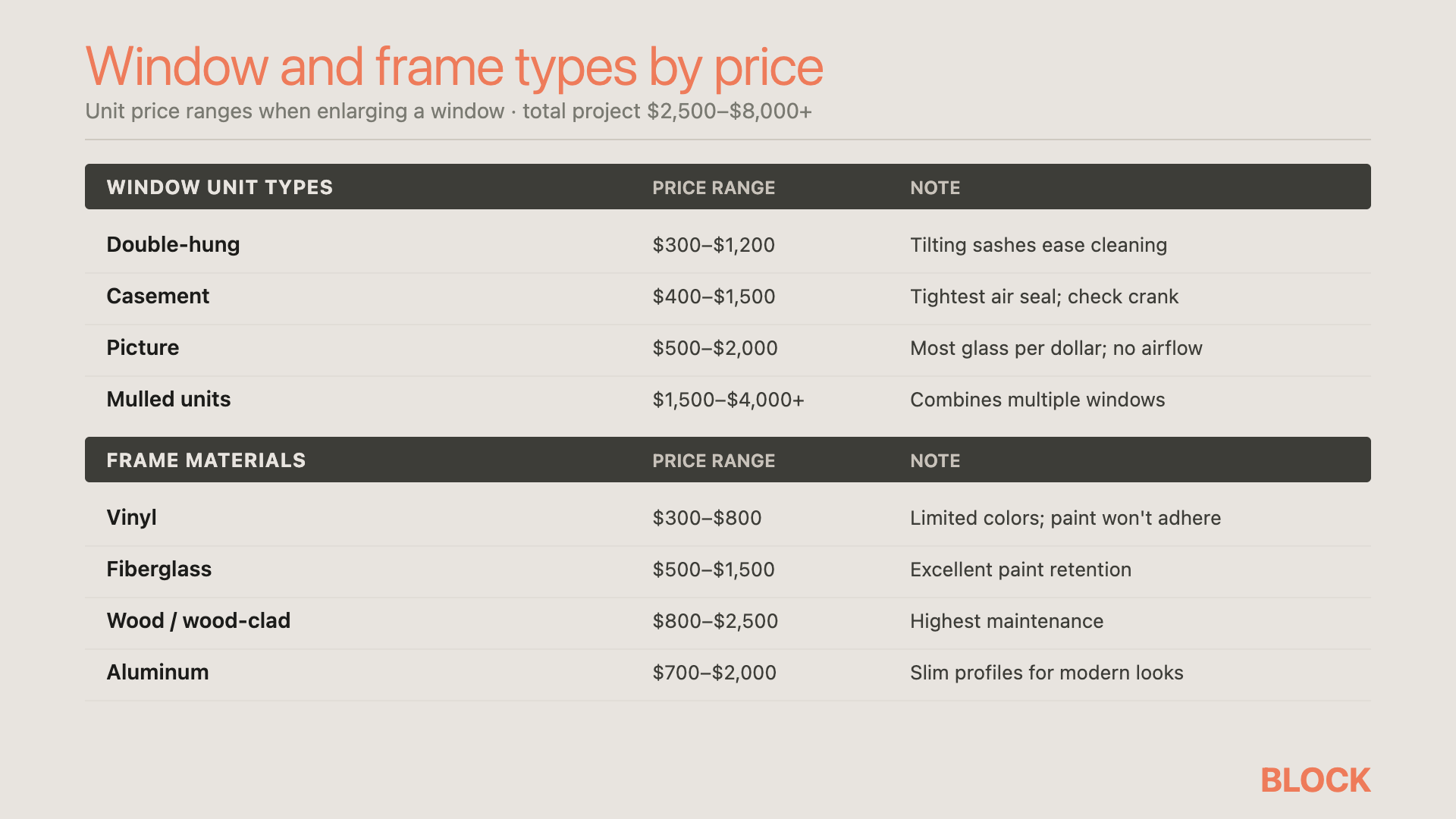
Most of the price difference between two windows of the same size comes down to material. So does the upkeep you sign up for.
|
Material |
Typical cost per window |
What to know |
|
Vinyl |
$300 to $800 |
Performs well at the lowest price, but colors are limited and paint doesn't hold reliably |
|
Fiberglass |
$500 to $1,500 |
Holds paint and barely expands or contracts with temperature swings |
|
Wood and wood-clad |
$800 to $2,500 |
Suits older houses, with the highest purchase and maintenance costs |
|
Aluminum (thermally broken) |
$700 to $2,000 |
The slimmest profiles for a modern look |
Pick the color carefully, since the frame shows from the street and from inside the room. Many manufacturers now offer split finishes, dark outside and white inside, so the exterior and interior choices don't have to match. That split matters more than it used to: East Cobb Real Estate Expert, Sandra Daniels cautions against defaulting to black on the interior side, noting that future buyers gravitate toward warmer, more natural finishes.

Black interior window frames can work in certain architectural styles, but they’ve become so overused that they often feel dated before the home is even sold. They can also create decorating challenges because homeowners feel obligated to incorporate black throughout the interior design.
Frame thickness, grille profiles, and glass tint vary between manufacturers, and a single enlarged window from a new supplier can look subtly off next to the originals on the same wall. If the rest of the facade keeps its windows, match the sightlines and grille pattern as closely as the new size allows. If matching isn't possible, make the new window clearly different on purpose, since almost identical looks worse than deliberately distinct.
In a wood-framed wall, the cost to enlarge a window typically lands between $2,500 and $8,000, and the window unit itself is often less than half of that. The rest is framing, exterior and interior patching, and labor. Brick, stucco, and structural complications push past the top of the range.
The cost of installing bigger windows also scales with how many you do at once. Mobilization, permits, and exterior patching overlap, so the second and third openings on the same wall cost less per window than the first.
The window grows taller rather than wider, the wall is sided in vinyl or fiber cement, the header stays untouched, a stock-size window fits the new opening, and nothing important runs through the wall cavity.
Flip every one of those conditions and the price follows. The opening grows wider in a load-bearing wall, the exterior is brick or stucco, the window is a custom or mulled unit, and the crew finds wiring or a plumbing vent inside the wall that has to be rerouted before framing can continue. Hidden utilities are among the most common sources of mid-project change orders, so carry a 10 to 20% contingency even on a simple-looking job.
Most exterior walls carry weight, so assume yours does until a professional says otherwise. Widening an opening in a bearing wall calls for an engineered header, and many municipalities require stamped structural drawings before they'll issue the permit. The engineering runs $300 to $700, and the header replacement itself, including temporary shoring and framing labor, adds $1,000 to $3,000 to the total cost of enlarging windows.
A few line items push window enlargement costs past the estimate more often than any others:
Most jurisdictions enforce a version of the International Energy Conservation Code, which sets a maximum U-factor (a measure of how much heat the window lets through) and a solar heat gain coefficient limit based on your climate zone. For instance, in northern climates, the U-factor ceiling commonly sits at 0.30 or lower.
That number matters because the permit reviewer will check your window spec against it, and the entry-level unit you priced online may not pass. Some jurisdictions also cap total glazing as a share of wall area under the prescriptive compliance path, which can constrain a very large opening. Confirm the local requirements before ordering, and budget for the window the code requires rather than the cheapest one that fits the hole.
An oversized or misplaced window costs just as much to install as one that fits the house. Before you order anything, check the size against the rest of the facade:
Floor-to-ceiling glass dominates renovation mood boards and photographs beautifully. A growing camp of designers argues the instinct behind it is wrong, though: more glass is not always better, and a floor-to-ceiling unit dropped into an otherwise traditional facade draws more criticism from design professionals than almost any other renovation move. Their position is that proportion beats size, and a window that ignores the rhythm of the house looks from the street like a mistake rather than an upgrade.
Whatever you think of the look, four costs come with it:
A glass wall can still be the right call. Go in knowing these costs, and put it on a house whose architecture supports the size.
A window enlargement involves structural framing, exterior finish work, and code compliance at once, and the contractor you choose needs real experience with all three. Block matches homeowners with vetted local contractors who compete for the project, so you compare real quotes against the same detailed scope. Every scope gets an expert review before you commit, which is how missing line items like header engineering, tempered glazing, and exterior patching get caught before they become change orders. Payments are progress-based and held securely, released only as the work moves forward, so you stay in control throughout the project.
Remodel with confidence through Block

Connect to vetted local contractors
We only work with top-tier, thoroughly vetted contractors

Get expert guidance
Our project planners offer expert advice, scope review, and ongoing support as needed
Enjoy peace of mind throughout your renovation
Secure payment system puts you in control and protects your remodel

Renovate confidently with Block
Easily compare quotes from top quality contractors, and get peace of mind with warranty & price protections.
Structural Changes
How to Close an Open Concept Floor Plan
07.11.2026
Structural Changes
Cost to Enlarge a Window: What to Expect and Decide
06.15.2026
Structural Changes
Minimum Hallway Width: Residential Code Guide
06.03.2026
Flooring
Subfloor Replacement Costs and Processes
05.15.2026
.webp?width=640&name=Contractors_-_What_you_c_an_expect%20(2).webp)
Structural Changes
Duplex Conversion to Single Family Home: A Practical Guide
05.11.2026