



Ceiling
Ceiling Medallion Installation: Costs and Modern Ideas
09.04.2026
06.19.2026



In This Article
If the lowest thing in your basement is a grid of water-stained ceiling tiles, pulling them out can give you back a few inches of headroom and a room that looks a decade newer.
A drop ceiling isn’t without its upsides. It hides ductwork, pipes, and wiring while keeping them reachable, it quiets sound moving between floors, and it lets you swap one damaged tile for a few dollars instead of patching a whole ceiling. Those upsides are real, and in a true utility space they can outweigh anything a different ceiling would offer.
The grid also caps a room at the height of its lowest tile and flattens whatever style sits below it. Removing the tiles, painting the structure above them, or swapping the grid for drywall changes how tall and bright a room feels. The before and after pairs below show six rooms that went about it in six different ways, including a couple that kept a ceiling grid and still came out looking polished.
Not every room here needed the tiles gone, and the ceiling is rarely the whole story. In most of these before and afters, the flooring, lighting, wall color, furniture, and styling are doing as much work as the ceiling change. An exposed ceiling over a poorly designed room still looks like a poorly designed room. Some of these before-after renderings exposed the structure, some replaced the grid with a finished ceiling, and one kept the grid and dressed it up.
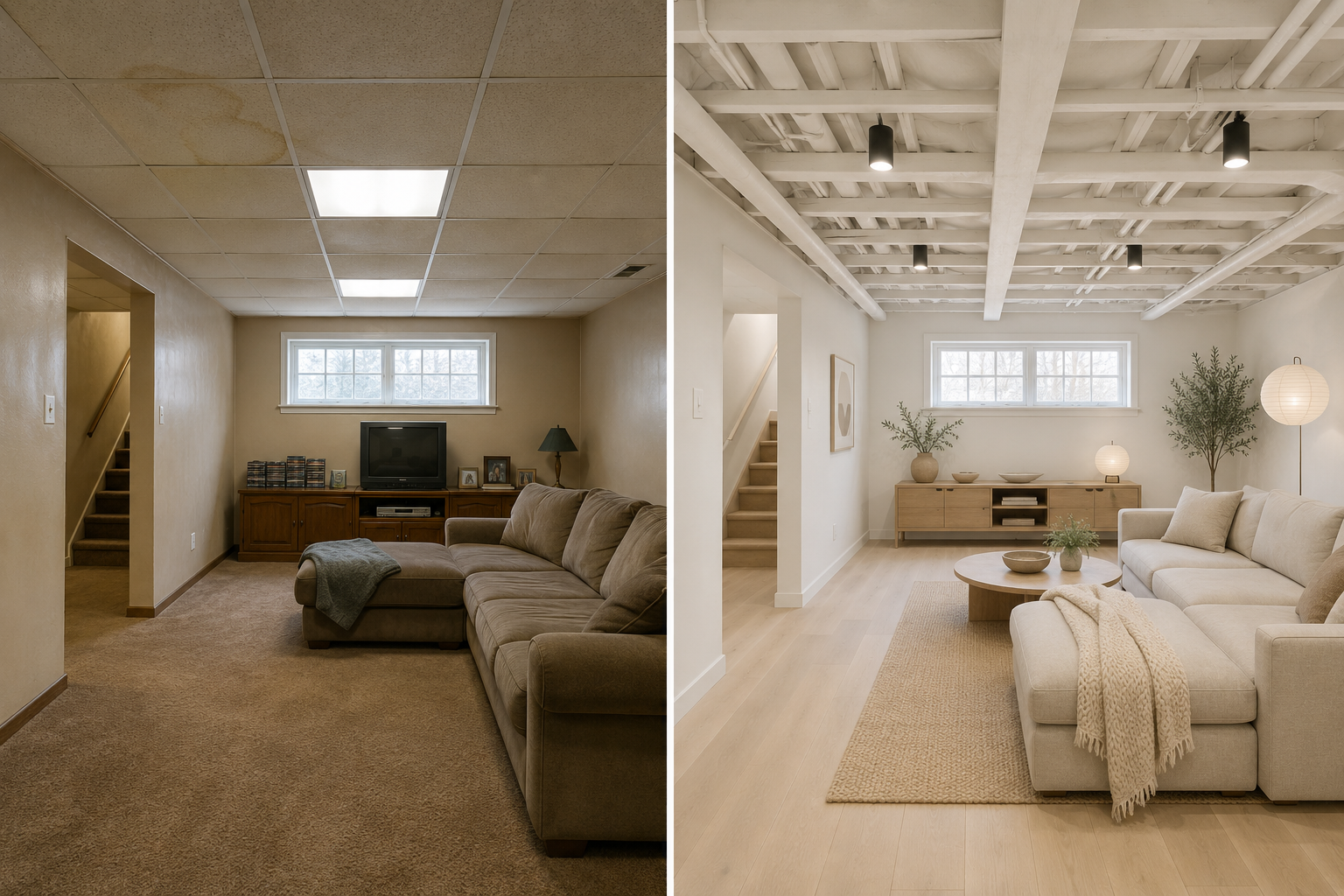
When the tiles come down in a basement, what is left is rarely pretty on its own: joists, ducts, pipes, and beams in whatever colors they happened to be. Painting all of it one light color is what turns that jumble into something that looks chosen. In this Scandinavian family room, the joists and beams are the same soft white as the walls, so the ceiling looks like one continuous plane instead of a tangle of mechanicals, and the room gains the height the old grid was eating.
This approach works best when the structure above is reasonably tidy to begin with. If ducts cross at odd angles or wiring droops between joists, a contractor can reroute or fasten the worst of it before paint, so the finished ceiling looks intentional rather than just uncovered.
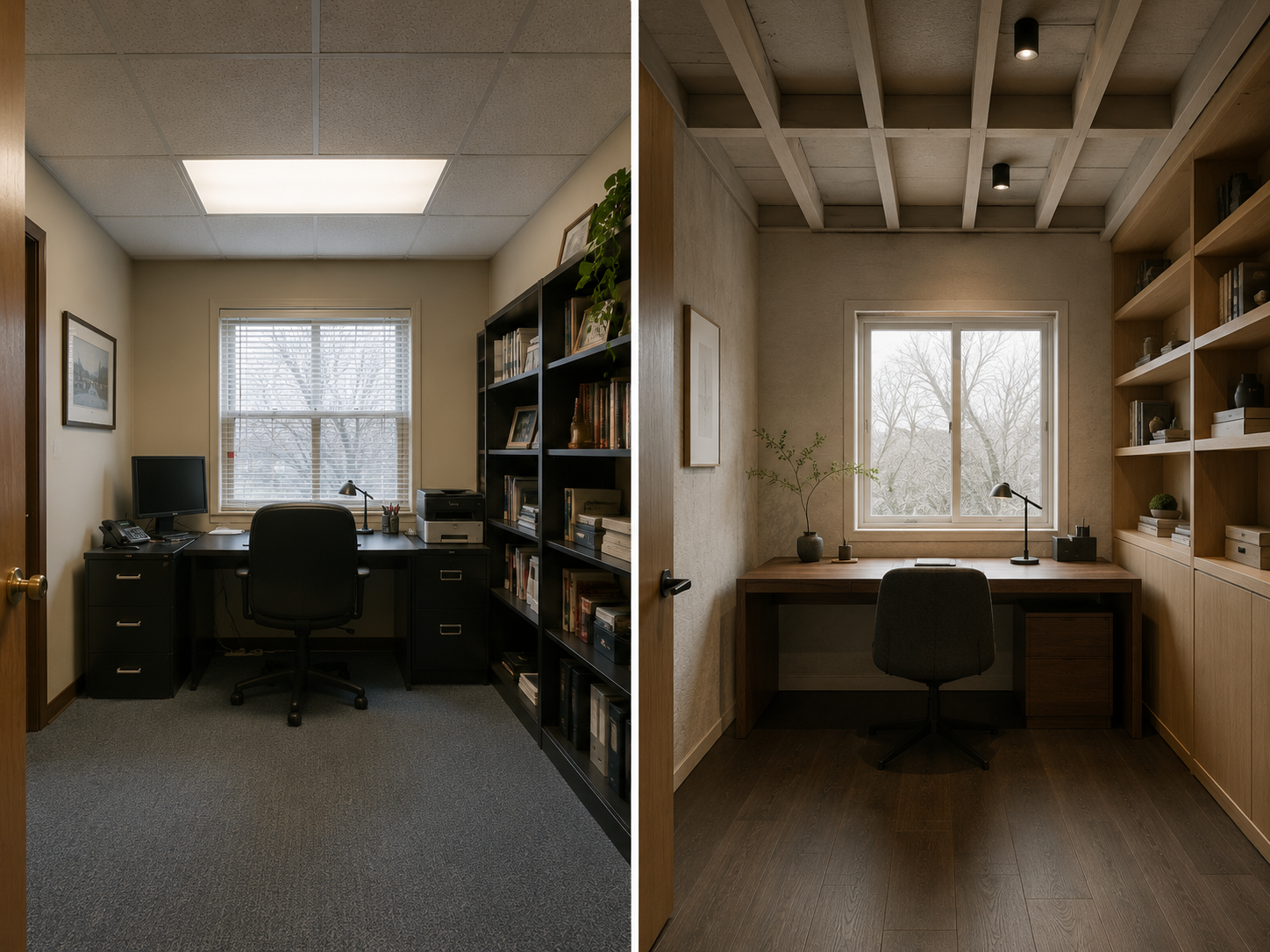
A bare ceiling gets called industrial by default, but the look depends on what you pair it with. This home office kept the exposed coffered structure, painted it in soft tones, and warmed the room below with white oak shelving, a wood desk, and a single recessed fixture in place of the old fluorescent panel. The lesson for any exposed ceiling is to commit to a style before demolition starts. Wood built-ins, warm paint, and quiet lighting send the same bare joists in a completely different direction than black pipe and bare bulbs would.
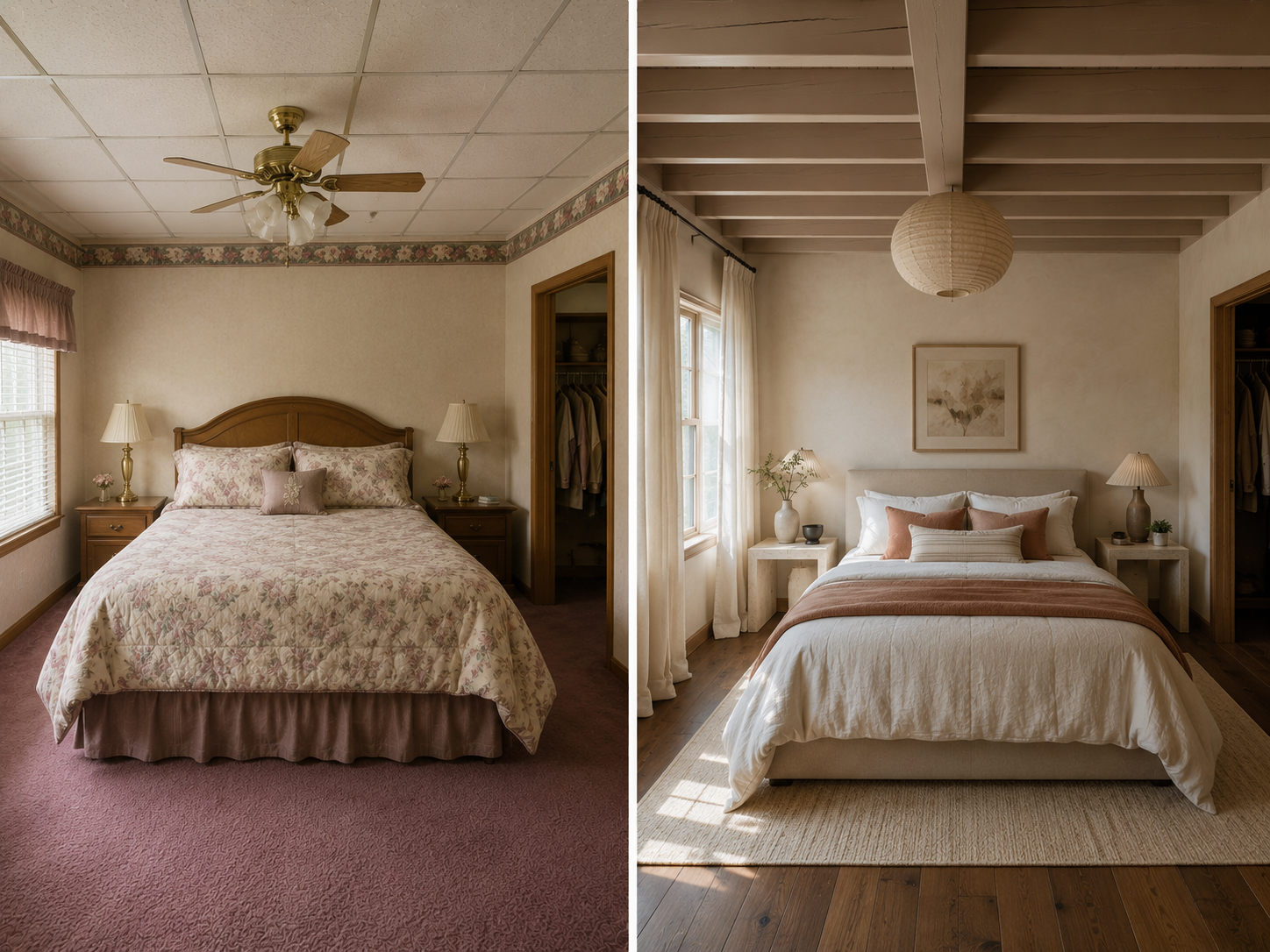
Exposed beams bring character to a bedroom, but the ceiling cannot carry the room by itself. Here the painted beams set the tone, and then the warm wood floor, the linen curtains, the layered bedding, and a simple paper pendant fill in the softness that keeps the space from feeling like a workshop. Without those elements, the same beams would look unfinished.
This is the difference between an exposed ceiling that looks residential and one that looks like a project someone walked away from. The texture and color you add at eye level and underfoot decide which one you end up with.
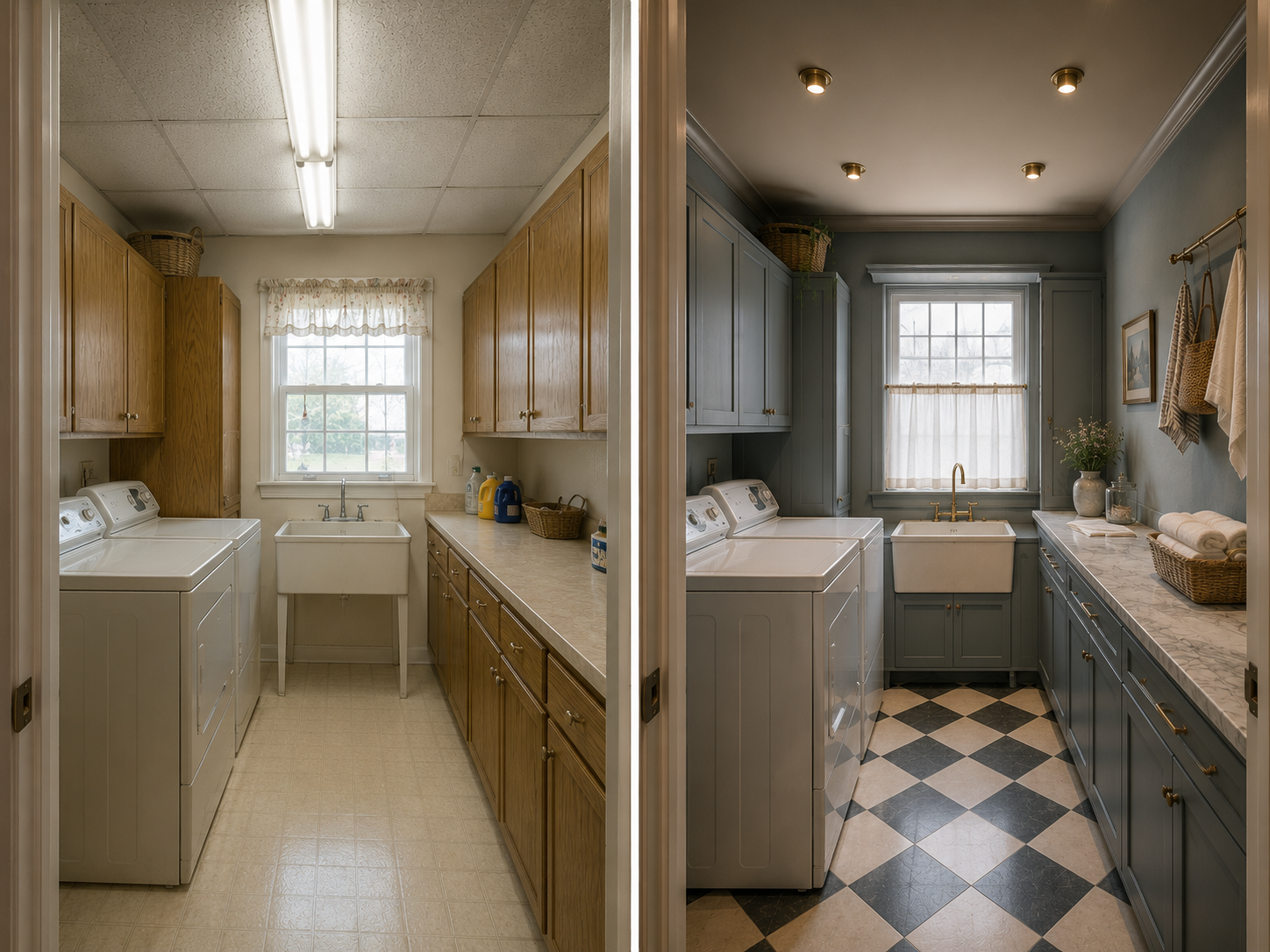
Exposing the structure is not the right move everywhere. A laundry room collects dust, lint, and steam, and an open ceiling full of joist bays gives all of it more places to settle, so a smooth finished ceiling is usually the more practical call here. This Parisian-inspired laundry kept a clean, flat ceiling and put the budget into the surfaces you actually touch: repainted cabinets, a farmhouse sink, brass fixtures, checkerboard flooring, and recessed lights where a fluorescent box used to hang. The ceiling stays simple, and the room still feels completely upgraded.
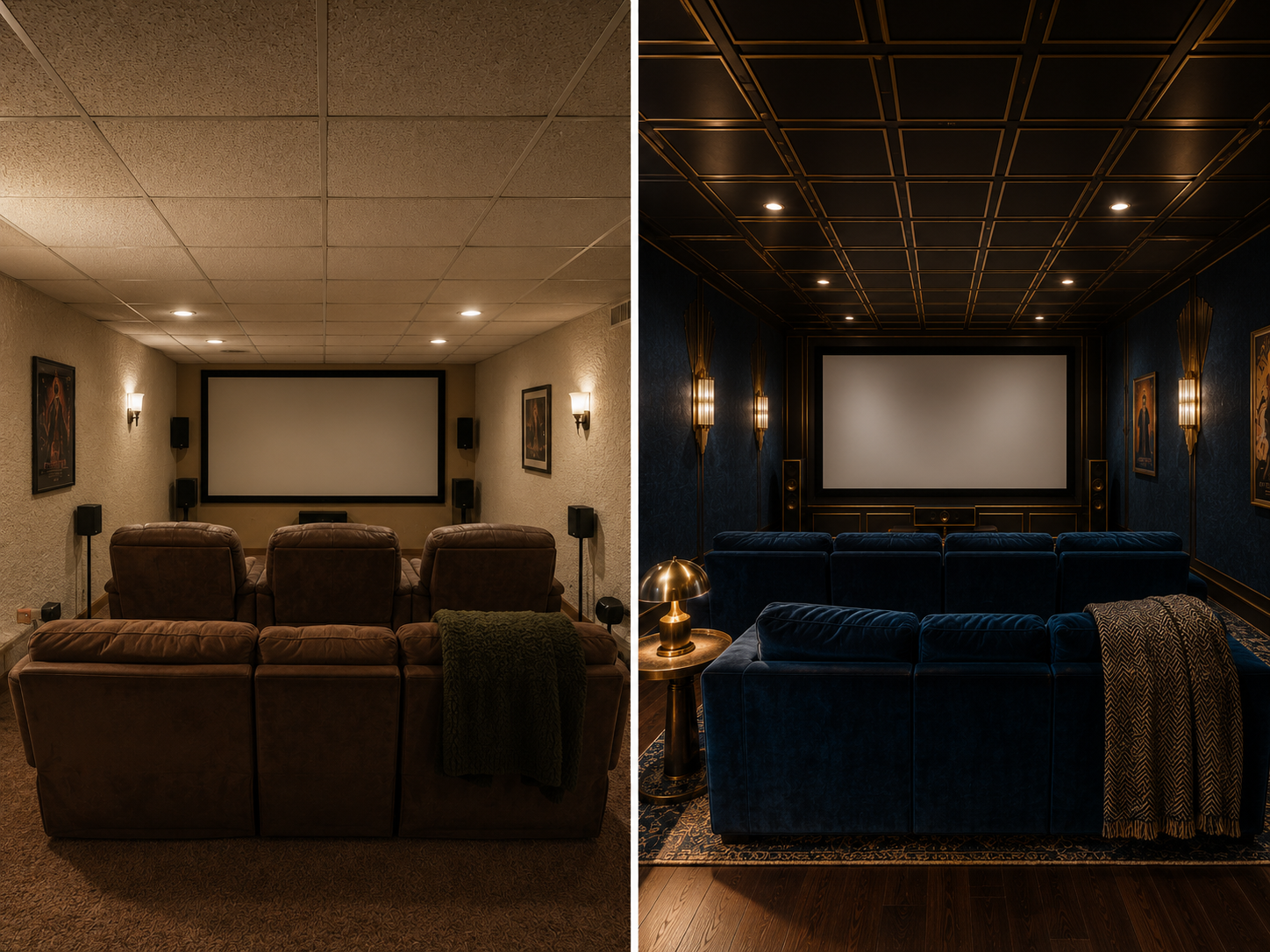
Low basement ceilings get treated as a problem to hide, but a dark, detailed ceiling can become the best part of the room. This basement theater swapped the beige acoustic grid for a deep coffered ceiling in near-black with bronze trim, and instead of shrinking the space, the dark color makes it feel enveloping, which is exactly what a theater wants. Blue velvet seating, brass sconces, and wood floors finish the Art Deco direction.
Going dark overhead works in rooms where you want the lighting low and the mood set, like a theater or a lounge. In a low basement, a dark ceiling can come across as intentional rather than as a low ceiling you would rather not notice.
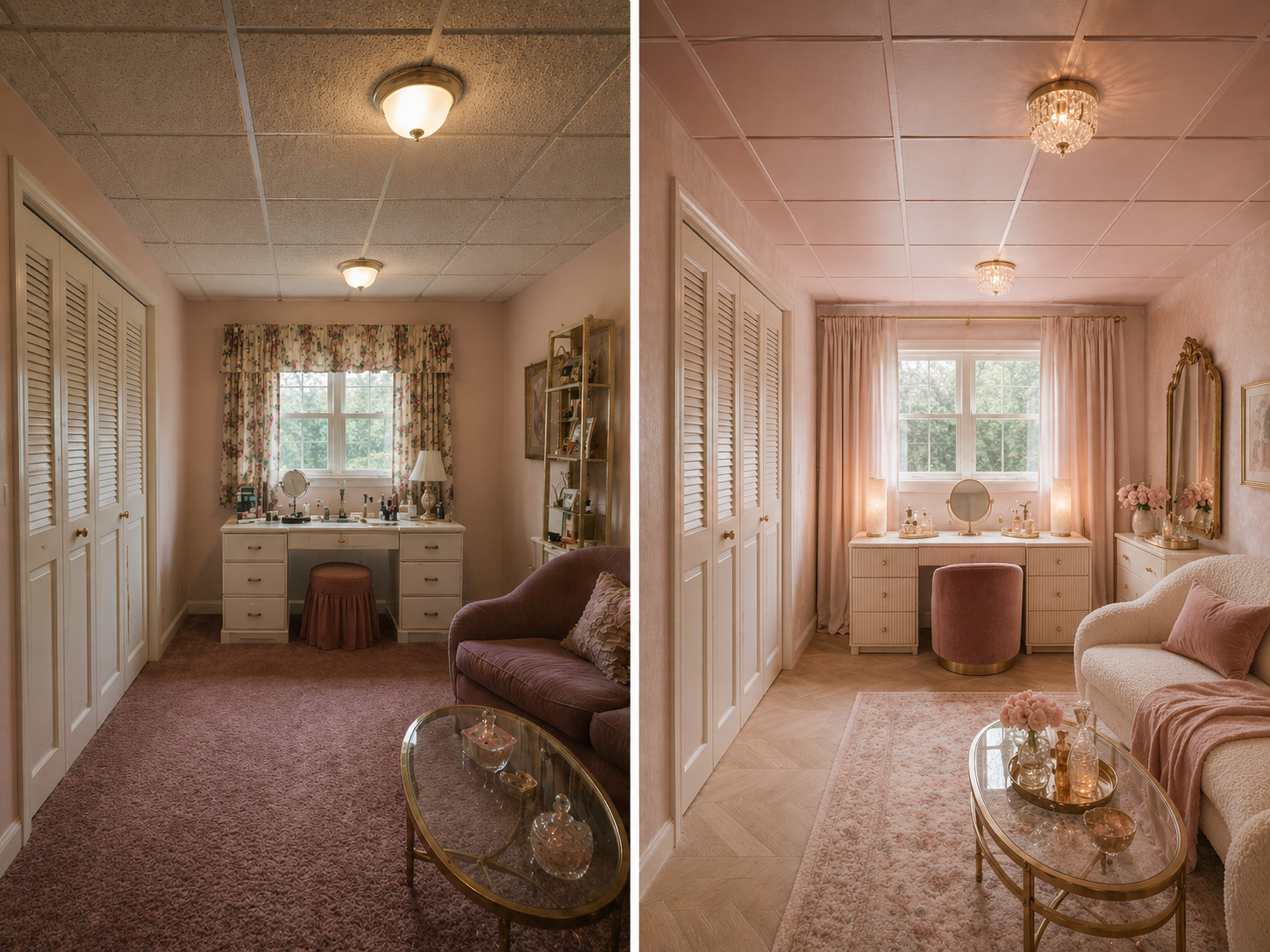
Sometimes the smartest makeover keeps the drop ceiling exactly where it is. A grid does not have to look like a basement at all once it is handled with intent. This dressing room left the existing grid in place, painted it the same blush tone as the walls, swapped the dated flush mounts for small glass fixtures, and coordinated everything with new flooring and drapery. The grid is still there if you look for it, but it no longer stands out against the rest of the room.
If your tiles are stained or yellowed but the ceiling is otherwise sound, new panels, a painted grid, better lighting, and color that matches the walls can make the ceiling feel intentional while you keep full access to the utilities above. It costs a fraction of full removal and skips the dust, the asbestos questions, and the rerouting that exposure can involve.
Costs swing based on which direction you go and what is hiding above the tiles. Three rough ranges cover most projects.
Older tiles are the biggest unknown. Acoustic tiles and the mastic behind them in homes built before the mid-1980s can contain asbestos, and abatement by a certified crew can run $4 to $20 per square foot, far more than the removal itself. Testing a sample before anyone starts is cheap insurance.
Lighting is the other line item people forget, because a drop ceiling usually hides recessed cans or a fluorescent panel that has to be replaced with new fixtures and the wiring to support them.
The work starts above the tiles, not below them. Before deciding whether to expose or replace, a contractor looks at what the grid has been hiding and how much usable height removal would actually return. A few things get checked first:
From there the sequence is fairly consistent. The tiles and grid come out and get hauled off. If you are exposing the ceiling, the crew reroutes or fastens any loose mechanicals, primes, and sprays everything one color. If you are finishing it, they frame, hang, and finish drywall, then cut in for lighting. Either path usually brings in an electrician, since the old fluorescent fixtures rarely fit the new plan and new lighting needs wiring and sometimes a permit.
Plan for dust and a few surprises. Opening a ceiling is a common place to find something unexpected, like a junction box buried against code or a duct that needs a damper. A good contractor builds a little margin in for that and walks you through whether exposing or finishing makes more sense once the structure is visible.
A ceiling project rarely stays just a ceiling project. Once the grid comes down you are into electrical, HVAC, and sometimes framing, which is why the contractor you hire matters more than the tiles or the paint color you pick. Block matches you with vetted local contractors who compete for your project, with each scope reviewed up front to catch the line items people miss, like rerouting a duct, abating old tiles, or adding the recessed lights an exposed ceiling needs. [Get matched with a contractor through Block] (CMS: link to contractor matching) and price out your ceiling alongside the rest of the room.

Renovate confidently with Block
Easily compare quotes from top quality contractors, and get peace of mind with warranty & price protections.
Ceiling
Ceiling Medallion Installation: Costs and Modern Ideas
09.04.2026
Ceiling
Cathedral Ceiling Ideas - Trim, Molding, Beams & Lighting
08.28.2026
Ceiling
Concrete Ceiling Repair and Replacement
08.22.2026

Ceiling
Wallpaper on Ceiling: Ideas and Cost Ranges
08.01.2026
Ceiling
Drop Ceiling Makeover: Before and After Ideas
06.19.2026